The Great Nutrient Pollution Challenge

The word nutrients sounds like a good thing—they make our food healthy, for example. But in our rivers, lakes, and bays, nutrients can pose water quality challenges. In the right amounts, nutrients such as nitrogen and phosphorus support plant and animal growth in key waterways such as the San Francisco Bay and the Sacramento-San Joaquin Delta. Excess amounts can cause toxic algae blooms and reduced oxygen in the water. Consequences can include die-offs of fish, mammals and birds, and human illness.

The main sources of nutrients in the Bay-Delta are sewage plant discharge and agricultural runoff. Jim Cloern, a USGS scientist and member of PPIC’s water policy research network, has been studying water quality in the Bay-Delta since the late 1970s.

“San Francisco Bay has historically shown resistance to the harmful consequences of nutrient pollution, but in recent decades there are signs this resistance is weakening,” Cloern says. Algae levels in the bay have increased, oxygen levels have declined, and algal toxins and toxin-producing species are sometimes present at levels to cause concern, he notes.

In the Delta, nutrient pollution has contributed to the spread of invasive aquatic plants such as water hyacinth and recurrent blooms of the toxic blue-green alga Microcystis. The role of nutrients in the collapse of many fish species in the Delta has prompted lively debates, but one thing is clear: they are a significant source of stress on California’s struggling native species. Conditions are worsening with the drought, which has reduced freshwater flows into the Bay-Delta and increased temperatures.

There is a growing understanding among wastewater managers and regulators that a new round of investments is needed.

“The Bay Area’s wastewater treatment plants will need to continually adapt to growing water quality challenges, either voluntarily or through regulations,” Cloern says.

One option on the table is increasing levels of treatment, which can be costly. For example, Sacramento’s wastewater treatment plant is undergoing a $2 billion upgrade to reduce the volume of nutrients entering the Delta. Other options can complement or substitute for treatment plant upgrades. For instance, restoring wetlands can filter out nutrients and other pollutants, while also providing valuable habitat and protection from floods.

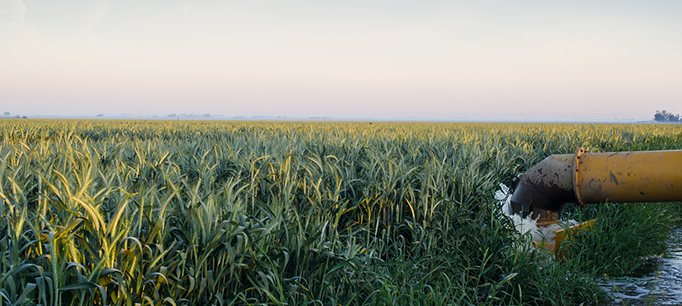
Another tough question is how to manage agricultural runoff from animal production and fertilizer use in the Central Valley, the main source of nutrients in the Delta. These sources are dispersed, which makes treatment difficult and expensive. Controlling farm pollutants at the source is likely the most cost-effective solution. This will require working with farmers to adjust their practices.

Thankfully, the days when untreated sewage and industrial waste poured directly into the Bay-Delta are long gone. But the next water quality challenge is on the horizon. Climate change will intensify our current challenges, as invasive plants and toxic algae thrive in warmer temperatures. Cloern suggests that we need a nutrient management strategy for the Bay-Delta that “anticipates these future changes so that investments are designed in a thoughtful and scientifically grounded way.”

Learn More

Read California’s Water Quality Challenges (PPIC Water Policy Center fact sheet, October 2015)
Visit the PPIC Water Policy Center water quality resource page
Coming Together Over Groundwater

California’s groundwater management took a forward-looking turn with last year’s passage of the Sustainable Groundwater Management Act (SGMA), which requires local planning efforts to protect the long-term viability of this critical resource. Sarge Green—a water management specialist at California State University, Fresno, and a member of the PPIC Water Policy Center’s research network—is working to put the groundwater law into practice at the local level. We talked to him about creative approaches being tried in the San Joaquin Valley.

PPIC: Talk about the regional groundwater management effort you’re involved in.

Sarge Green: I’ve been participating in a joint effort of eight counties in the San Joaquin Valley, which is looking at key issues—education, air quality, water, transportation. Water is now the top priority for this planning effort, not surprisingly.

The San Joaquin has the largest overdrafted groundwater area in the state. Our task is to find common tools or projects to improve our groundwater situation, and try to get support for them with state or federal grants. We’re designing a local groundwater ordinance with elements that address unsustainable groundwater extraction impacts and permits for new wells.

This valley is a study in contrasts. At one end is the Delta, and at the other end is a major importer of Delta water. Getting all the counties together was groundbreaking. Our organizing principal is: we agree on a majority of things having to do with water, but historically we’ve spent most of our time on the things we disagree on. We’re focusing on what we agree on and getting things done.

PPIC: What is a logical scale for managing groundwater?

SG: Groundwater knows no political boundaries. Basically there’s one big basin. The logical planning scale is the watershed—the areas around the rivers and the mountains that contribute to our valley groundwater. But one constraint in this part of the state is that a lot of people don’t want bigger government. So what’s happened is we’re working at smaller levels within the watershed, and breaking into governing units called groundwater sustainability agencies. Hopefully over time we’ll migrate to something more logical. Ultimately, we’ll need to tie groundwater management to the larger watershed.

PPIC: What’s currently keeping you up at night regarding the state’s groundwater reserves?

SG: It’s the loss of shallow water in rural communities, which is causing drinking water problems. In many cases, rural residents can’t afford to drill much deeper. In others they’re drilling to bedrock and still not getting water. Our basins will refill, but that won’t happen overnight. Financing is also an issue. Some counties are offering low-interest loans to help folks drill deeper. Some people will get covered by hooking into larger systems, which is being promoted by the state’s new push for consolidation. I’ve worked for a long time in rural communities, so I know many rural residents want to remain independent. Some don’t even complain when their wells run dry—they just wait on a drillers’ list and get the job done.

Learn More

Read Reforming California’s Groundwater Management (PPIC fact sheet)
Read “Getting to Groundwater Sustainability” (PPIC blog, June 16, 2015)
Visit the PPIC Water Policy Center’s water supply resource page

Saving Native Fishes from Extinction

Native fishes have been hit hard by the drought, with 18 species—including many salmon runs—at high risk of extinction if warm, dry conditions persist. But there are actions we can take now to avert what could be the largest loss of native freshwater fish biodiversity since the arrival of Europeans in California.

The state and federal fish agencies entrusted with preventing these extinctions face formidable challenges. The species at risk cover a very large geographic area and in many regions the options for emergency management actions are limited. Additionally, the total amount of funding allocated to managing the environment during this drought is very modest: $66 million, or roughly 2% of total state drought spending. (We showed this in our report What If California’s Drought Continues? in Table 1.)

The California Department of Fish and Wildlife has taken many actions despite limited resources (see this summary), with more than 30 projects underway. But more can—and should—be done now to prepare for continued drought. Here are some suggestions:

  • Initiate an emergency conservation hatchery program. This should start with fish at risk of extinction that are not already the focus of intense conservation. These efforts can be as simple as building temporary holding tanks or as elaborate as temporarily converting production hatcheries to rebuild these populations.
  • Establish a robust environmental water emergency fund. This would enable fisheries managers to purchase or trade water to maintain adequate flows and water quality for at-risk fish. It could be modeled after projects by The Nature Conservancy and the Natural Resources Conservation Service. These initiatives use temporary water transfers to flood farm fields in key locations to create waterbird habitat. During times of high stress for native fishes—usually due to low flows and high temperatures—strategic investments that temporarily return water to streams can help keep fish healthy.
  • Develop a reservoir drought-operations plan. State and federal agencies should conserve cold, fish-friendly flows at strategic reservoirs next summer. A margin of safety should be built into these allocations to address unusually warm conditions and modeling uncertainties, such as those that decimated winter-run Chinook salmon below Shasta Reservoir the past two years.
  • Develop a drought biodiversity management plan. The state should harvest the lessons from management successes and failures during this drought to develop this plan. Environmental management will be more efficient and effective if we have a plan in place before a drought that sets priorities for emergency actions intended to improve species’ resilience. We need to start on this now, while the lessons are fresh.

Many more actions can be taken (examples are outlined in California Species of Special Concern). However, it’s essential that some actions be taken now to prepare for continued drought. While it’s tempting to hope that the record El Niño now building in the Pacific will solve our drought problems, the only sure thing about El Niño is that it is not a sure thing.

Learn More

Visit the PPIC Water Policy Center’s ecosystems resource page
Read “Extinction Risk for Native Fish if Drought Persists” (PPIC Blog, September 10, 2015)

Do You Know Where Your Water’s Been?

The twin challenges of water quality and quantity are leading to creative thinking and interesting solutions in California and across the west. David Sedlak is helping find innovations in water re-use and treatment in his various professional endeavors. He’s a professor of environmental engineering at UC Berkeley, co-director of the Berkeley Water Center, deputy director of the ReNUWIt program, and a member of the PPIC Water Policy Center research network. We talked to him about the state’s water quality challenges and efforts to create more sustainable water systems.

PPIC: What might a lay person find surprising about water quality in California?

David Sedlak: Most people don’t realize the extent to which to we use water over and over again in the state. The water that’s flowing down a river might have recently been in a farm field or flowed over a city’s streets. Water picks up different contaminants depending on where it’s been. If it was used on a farm it might pick up salts or pesticides; if it came from a sewage treatment plant it might pick up pathogenic microbes or chemicals used in homes; if it ran off city streets it could pick up metals or oils. It’s still 99.99% water, but that .01% can make all the difference in the world—it’s this tiny amount of contamination arising from human activities that could make it unsafe to drink, spread disease, or kill fish.

PPIC: How does the quality of our drinking water supply constrain California?

DS: During the 20th century we created a system for moving extremely clean mountain snowmelt into our cities. The drought, population growth, and competition among water users have complicated things. New technologies enable us to make use of water resources that were previously thought to be unsuitable for drinking. These advances have allowed us to make major progress in reinventing the water system our grandparents built by making use of diverse sources they weren’t able to tap.

Nonetheless, these impaired water sources are more expensive to treat and deliver than the pristine sources that we relied upon in the past. We have the means to remove many of those contaminants, but it can be expensive. The cost of treatment depends on the source of water. We can turn seawater into drinking water, but that’s probably the most expensive source available to us. We can turn sewage treatment plant effluent into drinkable water for about half the price of desalination. We could also harvest the rain that falls in cities, but we don’t have a lot of experience in scaling it up. Los Angeles is starting to make progress on urban rainwater harvesting but this approach is still in its infancy, and it will require time to figure out if this is a good investment. Our Mediterranean climate means that many of our cities get the bulk of their annual rainfall in a few big storms. So if we’re serious about capturing rainwater we might have to build some pretty large structures, which would make the process expensive.

PPIC: What do you think needs to fundamentally change in our relation to water in the urban environment?

DS: Ultimately, members of public, community leaders and elected officials all need to step up and take responsibility for our water supply. We can’t leave it to the utilities to figure out alone. I’m very optimistic—we’ve already seen great progress. The water suppliers are starting to recognize that the public has to be part of the discussion. We’re definitely seeing positive behavioral changes now that the public is paying attention to the fragility of the water supply. It seems we’re becoming more willing to make sacrifices to pay for a modern water system that we want to leave to our grandchildren’s generation and those that follow them.

Learn More

Visit the PPIC Water Policy Center’s water supply resource page
Read our factsheet California’s Water Quality Challenges

Building a Better Water Safety Net

California’s poor rural communities have been hard hit by the current drought, which has brought drying wells and reduced water quality. Laurel Firestone is co-director of the Community Water Center, where she focuses on advocating for safe, reliable and affordable water supplies for vulnerable communities in the San Joaquin Valley. She was a speaker at an event to launch the PPIC Water Policy Center report What If the California Drought Continues?, which found maintaining safe rural water supply to be one of the biggest challenges of ongoing drought. Here she describes some of our water inequities, and ways to solve them.

PPIC: What are some successes arising from this drought?

Laurel Firestone: I think some of the biggest successes have been at the state level. First of all, the voter-approved water bond included half a billion dollars for small disadvantaged communities. The budget includes a lot of money for emergency drought response. Additionally, the drinking water program at the State Water Board has made huge strides in getting money to the communities. Bigger picture, the passage of the Sustainable Groundwater Management Act was essential. About 90 percent of communities in the San Joaquin Valley rely on groundwater, with many households using shallow wells that have gone dry as commercial wells have been drilled deeper.

On the local level, people are stepping up, too. Some cities have reached out to neighboring communities whose wells are running dry—for example, the city of Farmersville hooked up close to 100 homes whose wells were about to go dry. Some amazing volunteer and local service providers have been going door to door in some of the hardest hit areas. They’re helping get water to people who were already in dire circumstances and now also have to deal with turning on the tap and figuring out how they’re going to shower, feed their children, meet basic sanitation needs.

PPIC: If the drought continues, what needs to be done to improve water supply for poor, rural communities?

LF: There are a few main areas we’ll need to focus on. The first is that we have inadequate information on where households are going dry. We really don’t have a handle on this problem, particularly for private wells. The state’s plan for identifying vulnerable private-well communities and funding solutions to this problem is completely inadequate. We’ll have to quickly come up to speed to address this.

Renters have not been able to get state assistance to buy emergency water tanks. They have been able to get bottled water delivery, or have gotten help from private charities or churches. But we have millions of dollars in emergency drought funding, and it needs to get to people whether they own property or not. I know the state has been trying to get better at this, but there’s an urgent need for better coordination between the state and locals to make sure that the money is getting to those who need it most and in the most effective ways.

As part of our emergency response, we should address inefficiencies in areas that are most acutely impacted by the drought. For example, installing water meters will let people know how much water they’re using and help local water systems find leaks more quickly.

We also must accelerate long term solutions. We need to fundamentally shift how we’re delivering water to rural communities and look at ways we can build resiliency and get economies of scale. That means not having individual homes or small neighborhoods rely on a single well, which makes them incredibly vulnerable to any changes to that water supply. I think there’s a lot of promise with the way the state is looking at drinking water and pushing for consolidation and shared water supplies. More needs to be done to make sure there is diverse water supply in these areas.

The water bond brings a large chunk of capital and technical assistance; we need to invest it in solutions that are sustainable and affordable, and supply safe water to our most vulnerable even in future droughts.

Learn More

Watch a video of the panel discussion What If California’s Drought Continues? (August 2015)

New Water Laws Address Groundwater, Marijuana

As the California legislative session came to a close, Governor Brown signed more than 20 bills that address different aspects of water policy, ranging from water conservation and measurement to water quality. Two bill packages took important steps toward improving groundwater management and reducing the negative environmental impacts of marijuana farming.

New tools for groundwater management

Our recent report What if California’s Drought Continues? noted that improved management of our groundwater resources is critical to weathering droughts now and in the future. The 2014 Sustainable Groundwater Management Act (SGMA) seeks to ensure long-term viability and reduce over-pumping by setting deadlines for local agencies to develop and implement plans for basin sustainability. Before SGMA, groundwater users in some Southern California basins recognized the need to balance their groundwater use and went through a legal process called adjudication, in which courts determine individual rights to groundwater and appoint an entity to oversee its use. By clarifying pumping rights, adjudication makes it much easier to manage basins. But the time and cost of some adjudications have discouraged the use of this tool in other regions. Two new bills will make adjudication more suitable for managing the state’s groundwater resources:

  • AB 1390 streamlines adjudication by expediting the identification of groundwater use in a basin, giving courts new power to quickly resolve disputes among pumpers, and other procedural improvements. The goal of the bill is to create a more affordable, easier, and faster adjudication process that is applicable to any groundwater basin in the state.
  • SB 226 is designed to ensure that streamlined adjudication doesn’t conflict with SGMA by requiring severely over-drafted basins to comply with its provisions and deadlines regardless of ongoing adjudication actions. The bill also is intended to provide guidance for courts to align adjudications with SGMA requirements such as groundwater sustainability plans and groundwater sustainability agencies.

Marijuana regulation

Another challenge highlighted by the current drought is the impact of marijuana cultivation on our water resources and environment. The State Water Resources Control Board and the Department of Fish and Wildlife (DFW) are running a joint pilot project to address these issues in the North Coast region. The Cannabis Pilot Project evaluates potential policy solutions for reducing the environmental impact of cultivation practices and managing illegal use of stream water for irrigation. The medical marijuana bill package —AB 243, AB 266, and SB 643—creates a foundation for making this pilot permanent and building a statewide program to regulate the impact of marijuana on water and the environment.

For example, AB 243 and SB 643 direct the Water Board and DFW to take statewide regulatory actions that protect instream fish spawning, migration, and rearing from the damaging impacts of marijuana cultivation.

Questions remain about how to fund this new effort, however. The Cannabis Pilot Project is funded for just three years, and covers just a small portion of the state. Additional funding will be required to expand regulations to cover California’s estimated 50,000 marijuana growers. AB 243 proposes a $10 million loan from the state’s general fund to jumpstart the new Bureau of Medical Marijuana Regulation in the Department of Consumer Affairs, but these funds will not support the environmental programs run by the Water Board and DFW. A fee on all marijuana cultivators is the best way to fund these programs over the long term, and the Water Board has authority to establish such fees.

Learn More:

Visit the PPIC Water Policy Center drought resource page

Stressful Times for Drought-Stricken Delta

The SacramentoSan Joaquin Delta is one of the West’s most important estuaries, and a critically important water source for millions of Californians. But decades of water exports and human alterations have transformed this aquatic ecosystem, and a few dozen of its native species have dwindled to the point of extinction. We interviewed Phil Isenberg, vice chair of the Delta Stewardship Council and a member of PPIC’s board of directors, about the state of the Delta.

PPIC: How is the Delta faring these days?

Phil Isenberg: From an environmental perspective there’s not a lot of good news. The Delta is a severely damaged environmental site of great importance, and the damage has continued for more than 100 years. Very little restoration activity has taken place compared to the vast development of water supply infrastructure that has gone on in the past century. More housing is being built in flood-threatened areas, and urban growth continues on the boundaries. Some areas like Stockton are rapidly encroaching on agricultural and environmentally sensitive areas in Delta. The state’s Delta tunnel proposal has a greatly reduced environmental restoration plan—only about 30,000 acres of land will be put in protected status or restored for environmental purposes. It’s not insignificant, but certainly not as positive as the 150,000 acres which was part of the Bay Delta Conservation Plan.

PPIC: What is the role of the Delta Stewardship Council in managing this important resource?

PI: Our mandate is to achieve two equally important goals: to provide a more reliable water supply for California, and to protect, restore, and enhance the Delta ecosystem. It’s the latest legislative attempt to create a legally enforceable governance and management plan for the Delta. The Delta Plan was adopted in 2013; within 30 days we were sued by 27 plaintiffs, ranging from agricultural interests, state and federal water contractors, the city of Stockton, and several environmental groups. Interestingly, no state agencies or counties have sued. Their legal argument seems to be either we went too far or didn’t go far enough—which suggests to me that we may have struck the right balance.

PPIC: What does the latest science tell us about the Delta’s condition?

PI: Besides being severely damaged by human actions over centuries, the Delta has also been damaged by the drought and by the diversion of water for human purposes during drought. Scientists are skeptical about the ability of government or society in general to be able to rapidly improve the environmental condition of the Delta. We have altered the ecosystem in too many ways. We’ve channelized its waters, put in more than a thousand miles of levees, allowed people to move into the floodplain, brought in invasive nonnative species, and allowed pollutants to flow in from industry and agriculture. The best science we’ve received over the years is that the Delta’s environmental troubles can be managed better, but we will not likely be able to save all species in face of these threats. The political process demands immediate action, but science tells us that it will take decades to improve a Delta damaged over the past 160 years. A big part of any real solution is to involve independent scientists in decision-making and then follow their advice.

PPIC: What’s the most difficult tradeoff we’re facing in the Delta?

PI: The biggest problem is the conflict between illusion and reality. Basically, the water supply in California has not expanded since we began keeping track in the late 1880s. Worse, the water supply remains highly volatile. As our society has grown, demands for water have increased; our demands now exceed available water in many years. People have unrealistic expectations that ignore the limits of our supply. Although it is state policy to reduce human reliance on the Delta—and to compensate for that with heavy investments in water conservation, recycling, and the like—a lot of folks want more.

PPIC: What’s your biggest hope or aspiration for the Delta’s future?

PI: The Delta is constantly changing; we can’t freeze it in time. The Delta that existed before extensive human changes cannot be recovered. California hasn’t always done the right thing regarding water, but over time we get it right more often than not. So I hold out a reasonable level of hope for an improved Delta in the future. A successful Delta future for me is one that stops urbanization and protects its environment and the agriculture that remains. Will it work? Ask me in 100 years.

Learn more:

Videos: How Should We Price Water?

Most of us probably know the average price for a bottle of water, but do you know how much you’re charged for water coming out of your tap? The price of water—which can have ripple effects throughout our communities, the economy, and the environment—may not be typical water-cooler conversation, but understanding it is essential to addressing key water-management challenges.

We interviewed Ken Baerenklau, a UC Riverside economist and adjunct fellow with the PPIC Water Policy Center, on the role of pricing to mitigate scarcity during droughts, and the need for fair and economically sensible prices. As Baerenklau notes, it can be hard to get pricing right—but critically important that we do. These short videos produced with Marjorie Gelin Goodwin offer an introduction to some key issues that drive the price of water.

Balancing act: The price vs. value of water
Competing goals: The challenges of using pricing to reduce water use

Visit the PPIC Water Policy Center’s resource page on drought and water supply

Managing Wildfires Requires New Strategies

Severe wildfires have been dominating the news this summer, with good reason. The persistent drought, coupled with the legacy of poor forest management practices, has produced historic fire conditions in California and much of the West.

In the month since the publication of our report on the California drought’s major repercussions—which projected a growth in extreme fires if the drought continues another few years—California has experienced several new fires that are among the largest or most damaging in recorded history.

Since this drought began in 2012, California has experienced two of the three largest fires on record, and four of the top 20, as measured by number of acres burned (see table). The newest “top 20” is the Fresno-area Rough Fire, which continues to spread and rise in fire rankings since its start in July. From September 11-17, the Rough Fire consumed around 20,000 additional acres and rose from eighteenth to fifteenth largest wildfire on record.

As of mid-September, this year’s Valley and Butte fires ranked third and seventh on the state’s list of most damaging fires, as measured by number of structures destroyed (see table). At this writing, neither fire was fully contained.

All three of these wildfires continue to burn despite a massive fire-suppression effort by the Department of Forestry and Fire Protection (CAL FIRE).

UC Berkeley wildfire expert Scott Stephens explains that the current statewide drought has affected the frequency and behavior of recent wildfires. Hotter temperatures and dry conditions have “reduced moisture in both live and dead trees, as well as shrub leaves and tree needles, which allows for more efficient fire initiation and high intensity burns,” says Stephens.

A century of wildfire suppression and inconsistent fuel reduction efforts—such as thinning out trees and introducing more frequent, low-intensity fires—has increased the risk of major wildfires in California’s forestlands. Unnaturally dense forests create ample fuel for wildfires once they ignite.

One new drought-induced characteristic is that wildfires are continuing to grow throughout the night, Stephens notes. Historically, lower temperature and higher relative humidity at night would slow wildfire growth and give firefighters a chance to suppress the burn. The Moonlight (2008), Rim (2013), King (2014), and Valley (2015) wildfires burned intensely throughout the night.

Stephens warns that that we need to rethink our approach to forest management. Intense fires have the potential to convert forests to shrublands, permanently altering their ecology. To avoid this, the state must increase fuel-reduction efforts to ten times the area that is currently treated. “The good news is this is possible,” Stephens says. “We have the techniques and research to show forest restoration treatments are in line with the ecology of these ecosystems.”

Short-term fire suppression is extremely important for protecting human life and property, but experts agree that California needs to take a longer range view of forest management to limit damage from wildfires as the climate warms, and reduce the ever-growing cost of fighting fires. Fuel reduction efforts require sustained application over large areas for decades. The fractured ownership of California’s forestland makes implementation difficult. Some efforts are underway on private lands in California, but this has proven more difficult on federal lands (roughly half of our forestlands) due to permitting constraints. Until private and public forestland owners coordinate long term fuel-reduction efforts, California can expect to experience larger, more frequent, and increasingly severe wildfires.

Table notes: *Number of acres burned or structures destroyed may increase until wildfire is fully contained. Wildfires in bold started since the drought began in 2012.

Table source: CAL FIRE, Top 20 Largest California Wildfires (updated by PPIC with current wildfire information as of September 23, 2015); CAL FIRE Top 20 Most Damaging California Wildfires (updated by PPIC with current wildfire information as of September 23, 2015).


Reducing the Costs of Drought: Lessons from Australia

What do droughts in California and Australia have in common, and what lessons from Down Under are best-suited to managing mega-droughts here? At a recent conference of agricultural economists, Americans and Australians shared their experiences and research on the topic.
The meeting covered what worked well—and what did not—in managing Australia’s Millennium Drought, which lasted from 1997-2009. The “worked well” list included: water conservation in urban areas, water pricing, and cooperative governance among water managers. The Australians also depended heavily on water markets to reduce the costs of their mega-drought. The flexibility and autonomy offered by water trading helped communities allocate water quickly and efficiently to competing uses, and also provided an effective way to recover it for the environment.
Several researchers noted that water trading is an important drought response that deserves much wider use in California. Speakers noted that although trading has helped some here, California’s water market still lacks transparency—with only limited information available about trading rules, volumes, and prices.
Australians also benefited from a strong water policy foundation going into their mega-drought, including a national water initiative. This national agreement (which state and territorial governments agreed to abide by) focused on ensuring reliable water use information that is publicly shared, and also mandated the separation of land ownership and water access. These two factors have helped facilitate water management, sharing, and marketing. While separating land and water ownership may not be in the cards for California, there are other ways to improve water marketing here by strengthening water-use information. As elaborated in a 2015 PPIC report on managing our drought, several other policy priorities that were at play in Australia are also within our reach: setting clearer priorities for public health and the environment, managing demand and supply more stringently, and implementing progressive environmental drought management practices.
Australians were able to create a more resilient water system, but some researchers at the conference noted that their drought management was not without fault. One cautionary tale was that much of the costly new infrastructure put into place in response to the drought—mainly desalination and inter-basin pipelines—brought increased water supply benefits only after the drought ended, due to the time it took to plan and build desalination plants, in particular. While desalination is currently providing drinking water in Western Australia, where dry conditions have continued, plants built to serve communities in other regions have not been used because cheaper alternatives are once again available.
A key recommendation made by a number of panelists was to ensure that all other options are exhausted before moving forward with costly infrastructure projects like desalination. In addition, it’s important to take other steps to develop sound policy in areas like water information before the next drought. Because droughts are unpredictable but cyclical, long-term vision and preparedness are critical.
The takeaway from the meeting was that while the challenges and debates in California are similar to those during Australia’s Millennium Drought, the comparison is not perfect. As we continue to adapt and develop our own drought policies, it will be important to take lessons from both the successes and ongoing challenges experienced during Australia’s “big dry.”
Adam Soliman is a graduate student in agricultural, food, and resource economics at Michigan State University. He served as an intern at the PPIC Water Policy Center this summer.