Allow Water Rights Trading

This commentary was published by the New York Times on June 29, 2014, in a discussion of The Water Crisis in the West.


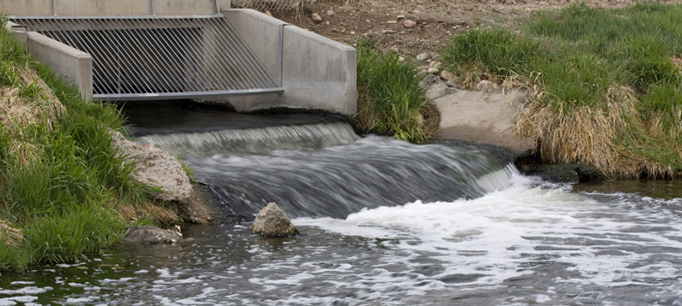
We have an outdated water rights system in the American West: Water goes to those who claimed it first, whether or not they are putting it to the best use.

This system originated out of practicality. The climate in the West is dry for much of the year, and with Western rivers few and far between, it’s often necessary to invest in storage and conveyance to get water to where it is needed. But the rights to use water were allocated many decades ago, when the region had far fewer people, and before it was widely recognized that the system often short-changed the environment. …

Continue reading on nytimes.com.

Drought Watch: Regional Solutions

This is part of a continuing series on the impact of the drought.

Across California, local water agencies are scrambling to apply for new state matching grants authorized under February’s emergency drought legislation. The program aims to accelerate the use of remaining state bond funds for integrated regional water management: activities in which local agencies team up to generate mutual benefits. One example—water suppliers and stormwater agencies that work together to incorporate captured stormwater into local water supplies. Such projects can simultaneously enhance water supply reliability and the quality of water in rivers and coastal areas.

Regional integration has already led to some significant successes, most notably the enhanced ability of urban water suppliers in Southern California and the Bay Area to cope with the current drought. Successes include ramping up water conservation and recycled wastewater storage to increase supplies in storage, and building new connections between local water systems to enable emergency sharing. Outside funds are often needed to jump start these collaborations, both to encourage innovation and to enable some partners—such as stormwater agencies – to participate even if they don’t have the necessary funds.

But as we showed in our study Paying for Water in California, integrated regional water management is on the brink of fiscal failure because state bond funds are running out. Both the legislature and local water agencies have pushed the idea that bonds should continue to provide these dollars, and the major bond proposals under consideration include substantial new funds for this purpose.

But there might be a better way: adding a small statewide surcharge on water use to support regional projects. Local water agencies have often rejected this idea, arguing that if they send money to Sacramento they won’t see it again. But what if the funds go directly to the regions?

Here’s how we think this could work. The legislature (or state voters) would pass the surcharge and set broad criteria for funding eligibility. The funds would be apportioned to the state’s 12 principal hydrologic regions—the large basins that are already used to divvy up bond funds. But rather than having state agencies award the grants, this task would go to new Regional Water Commissions—regional counterparts to the California Water Commission, the state body tasked with awarding matching grants for storage projects under most bond proposals.

Though more politically tricky to pass than a bond, the statewide water surcharge would have numerous advantages. The revenues would be more reliable than bond funds. And relying on Regional Water Commissions to allocate these dollars could encourage broader collaborations than we have seen from the state-sponsored grant program, which has nearly 50 planning regions, often too small to reap the real benefits of integration. Many groundwater basins, for instance, have different boundaries than the current planning regions, and groundwater agencies could use assistance from these regional funds to support better management.

Finally, this statewide option is preferable to creating local or regional surcharges, which can be difficult to raise without approval of two-thirds of local voters. To raise $200 million annually—the amount that’s been available through bonds—a surcharge 7.5 cents/1,000 gallons on urban water bills would suffice. This would increase the average cost of tap water by just 2.8 percent, while creating a valuable incentive fund that helps local water managers enhance the quality and reliability of regional water supplies. As part of a package with a new bond devoted to areas of true statewide need, a statewide water surcharge would help ensure that our water system can support a healthy economy, society, and environment.

The Future of Online Education in Public Colleges

Policymakers and educators have a lot of questions these days about whether new communication technologies can be helpful in higher education. Will they lower the cost of teaching, provide access to those who are otherwise left out, or provide more effective individualized instruction? With encouragement from Sacramento, California’s three public higher education segments are pursuing new initiatives in online education. On Tuesday, PPIC hosted a lunch event on this topic.

Hans Johnson, PPIC Bren Fellow, talked about his recent study, co-authored with PPIC research associate Marisol Cuellar Mejia, about online education in the state’s community colleges. The study found that participation in online courses has soared in the last decade but that success rates—in terms of course completion and passing grades—are lower for online students.

An expert panel expanded the discussion, with Joseph Moreau, executive sponsor of the Online Education Initiative at the California Community Colleges; Ashley Skylar, quality assurance manager for academic technology services at the California State University; and Arnold Bloom, who teaches an online course in climate change at UC Davis. Panelists talked about efforts to improve the quality of online instruction—the course materials and training of instructors. They also said it is too soon to tell whether online education may save money, but the size of California’s higher education systems provides opportunities for collaboration among campuses, which may produce more cost-effective education.

The Vanishing Line-Item Veto

California officially has a budget for the coming fiscal year. The state plans to spend $156 billion, about 7.5% more than last year.

As in most other states, in California the governor has line-item veto power. After the budget passes, he can remove or reduce individual provisions without the legislature’s approval. That’s a lot of potential authority over the budget.

What did Jerry Brown do with such tremendous power? Not much. He removed or reduced only 10 budget items, cutting a total of $37.9 million. In the context of a $156 billion budget, that’s a rounding error.

And that’s par for the course with this governor. Brown made his highest number of vetoes (42) in the first budget after his election in 2011; these cuts amounted to one-fifth of one percent of the $267.4 million ultimately spent that year. Last year, he vetoed 30 items that added up to only $40.7 million—that’s like a typical California household reducing its annual spending by about $17.

Many governors have gone light on line-item vetoes, but Brown’s veto numbers are low even in historical context. His vetoes have averaged about a tenth of one percent of each year’s final budget. By contrast, Schwarzenegger (2004–2010) averaged two-thirds of a percent, Davis (1999–2003) and Wilson (1991–1998) about three-quarters of a percent, and Deukmejian (1983–1990) a whopping 2.5 percent. Brown himself, when he was governor in the late 1970s and early 1980s, averaged about three-quarters of a percent in line-item vetoes (we do not have data for 1975, his first year).

There are a number of reasons for the recent harmony between the governor and the legislature. But an important one is likely the new threshold for passing the budget. It used to take a two-thirds vote in each chamber, which required at least some members from each party to sign on. As of 2011, only a simple majority of each chamber is required, so Brown has been able to conduct all the negotiations within his own party. In today’s polarized political environment, that simplifies the process enormously—it also helps explain why each of Brown’s budgets has been approved roughly on time, ending a decades-long trend of budgets passing later and later.

Of course, this streamlining of the process entails sidelining Republicans from budget negotiations. Whether that is too high a price to pay depends very much on one’s perspective. But for better or worse, we may be settling into a new budget status quo.

Fulfilling the Promise of Online Education

Online learning has become a topic of great debate in higher education. Its advocates have high hopes that it will expand opportunities and rein in costs. Policymakers in Sacramento have taken note. The new state budget provides tens of millions of dollars to support online learning.

When most people think of on online education, they think of MOOCs—massive open online courses—which provide free access to classes taught by faculty from the nation’s top universities. MOOCs have garnered headlines and been the subject of much debate about their potential to reinvent higher education. Meanwhile, California’s community colleges have quietly created an extensive set of offerings in online education. They now provide more online credit courses than any other public higher education institution in the country—a testament to the community colleges’ willingness and ability to innovate.

Enrollment has soared from just a few thousand students a dozen years ago. By 2012, online course enrollment in the state’s community colleges totaled almost one million, representing about 11 percent of total enrollment. Among students taking credit courses in 2011–12, one of every five took at least one online course. Indeed, practically all of the community college enrollment increases over the past ten years have occurred in online courses.

The Public Policy Institute of California has completed an analysis of student success in these courses that points out both the opportunities and challenges in providing online education. We found that online courses are providing some students with an important and useful tool that helps them achieve their community college goals. For example, students who take at least one online course are more likely to earn a degree, transfer to a four-year college, or earn a certificate than students who take only traditional courses.

But there are significant problems. First, the digital divide is evident. Latino students are less likely than students from other ethnic groups to take online courses. Moreover, the achievement gap is exacerbated in online settings. African Americans and Latinos have lower success rates in traditional classes than Asians and whites, and the achievement gaps are even wider in online courses.

And finally, even though online students tend to be stronger academically, they are less likely to successfully complete online courses than traditional courses. This lower course success rate is true across all types of students, a wide set of subjects, and almost all colleges. Indeed, once we controlled for student characteristics—such as overall grade point averages and other factors such as colleges and course subject—students are at least 11 percentage points and as many as 14 points less likely to successfully complete an online course than otherwise similar students in traditional format classes.

California’s community colleges need both more information and a more strategic approach before online learning can fulfill its promise. Little is known about the cost of developing and providing online courses. We won’t know if online learning is less expensive than traditional course work—as some of its advocates believe—unless we begin to systematically collect cost information.

The colleges won’t be able to improve outcomes for the rich diversity of their students unless they take a number of steps. They need to evaluate the online courses being taught now, identify the most successful instructional and technological approaches, and provide professional development for faculty to create and deliver high-quality online learning. They need to provide services for online students to help improve success rates. And they can use the power of technology to track students’ progress in detail, and offer instruction that is more targeted and customized.

Once high quality courses are identified and developed, it will be a challenge to ensure that those courses are readily available to students across California’s vast community college system. The community college’s Online Education Initiative is an important step in the right direction. Its goals are consistent with our recommendations to identify best practices and implement them widely. Its success will depend on identifying and implementing effective policies and programs that improve student outcomes. Going forward, a strong strategic approach will help California to make the most of its investments in online learning.

Expanding Health Insurance—to Jail Inmates

The federal Affordable Care Act provides an opportunity for local governments to enroll jail inmates in health insurance programs that could lower costs and improve health conditions. Moreover, California has recently passed legislation that facilitates the use of jails as sites of health care enrollment.

PPIC researchers Mia Bird and Shannon McConville address this topic in a recent report titled Health Care for California’s Jail Population. The report, presented at a public event this week in Sacramento, finds that nearly 2.3 million health care visits were recorded in county jails statewide in 2012. Inmates have disproportionately high health needs and typically have had little access to health care prior to incarceration. Connecting inmates to health coverage before they are released from custody may help to reduce county costs, lower recidivism, and improve public health.

Local Water Funding in the June Primaries

Much of the current water talk in Sacramento surrounds a new state water bond for the November ballot. Yet as we show in our study Paying for Water in California, most water spending—84 percent—is actually raised locally. While passage rates on local water measures have been fairly high since 1995 (72 percent passing), few make it on the ballot (on average only six per year). This is largely because funding for many critical water services—including stormwater management, flood protection, and ecosystem and watershed improvements—often requires two-thirds of voters to approve, and local officials are reluctant to put such measures on the ballot unless they think they can win. In the June 3 primary election, only two local water measures were proposed. The results illustrate the challenges of funding water services that require direct voter approval.

In Contra Costa County, Orinda’s Road and Storm Drain Repair Bond passed with 75 percent approval. It authorizes the city to issue $20 million in general obligation bonds to fund the restoration and repair of roads and storm drains, plus a property tax increase to pay for the bonds. Broader funding measures like this—which include a water service along with something else—have generally been more successful than exclusively water-focused measures. Local governments seem to have recognized this reality and have increased these kinds of measures in recent years. Unfortunately, measures that fund multiple activities may generate less funding than is needed to fill water service gaps.

The second local water measure, the Lake County Healthy Lake Tax, failed with 64 percent approval (repeating an earlier failed attempt in 2012 that had 63 percent approval). It would have increased the local sales tax by one-half cent for 10 years to pay for the eradication of weeds, algae, and invasive mussels from Clear Lake, the restoration of wetlands, and the improvement of water quality.

As the Lake County example suggests, the two-thirds voter threshold for local special taxes and bonds is a significant obstacle. Orinda twice failed to pass measures in the mid-2000s, despite 64 percent approval. Since 1995, 65 percent of the measures requiring two-thirds approval passed, but 84 percent would have passed at the 50 percent threshold that is required for local general taxes and statewide fiscal measures. We can’t know how many more measures would have been put on the ballot had the voter threshold been lower.

Funding these essential water services through local tax and bond measures is a marked contrast to funding for water supply and sewer services, which are paid for with revenues from monthly customer bills. These services are generally in good fiscal shape because when new funds are needed, providers are required only to give customers the opportunity to protest rate increases.

To help address water funding gaps, California should consider treating flood and stormwater services like water and wastewater. It would also be helpful to treat local special taxes like local general taxes and statewide fiscal ballot measures—requiring a simple majority vote. Of course, this would require constitutional reforms. But without these changes, the state will need to provide much more support to local governments to pay for services that are essential to all Californians.

Evaluating Corrections Reforms

Three years into California’s dramatic experiment in decentralizing the adult criminal justice system, we still have very limited knowledge of which correctional programs and services are most effective at reducing recidivism and which counties are achieving success under realignment. Even more troubling, this is not the first time the state has made a major corrections policy change without putting in place the tools to evaluate it. Nearly 20 years ago, California initiated a similar experiment with the juvenile justice system, and we still lack the necessary data to evaluate its success. This time, the stakes are even higher.

To understand whether and how well corrections reforms work, we need individual-level data, records that allow us to follow people as they move through the corrections system. Unfortunately, neither reform effort mandated this type of data collection. Neither charged a single state entity with devising a means of collecting, standardizing, and integrating data across the myriad components of the criminal justice system—police, courts, jails, prisons, and parole and probation departments. In fact, in both cases realignment magnified data integration problems. It transferred responsibility for certain offenders from the state to the counties, further decentralizing authority over offender management and data collection.

Troubled state correctional facilities were an impetus for both juvenile and adult reform. In each case populations in youth and adult state facilities declined—as intended—after lower-level offenders were transferred from state to county authority. In the case of juvenile justice, the youth population in state facilities dropped by 69 percent between 2007 and 2013; in the adult system, the state prison population dropped by 17 percent between 2011 and 2013.

But the impact at the county level differed for juveniles and adults. Adult county jail populations have increased by 14 percent since reform of the adult system began. By contrast, juvenile populations—held in county juvenile halls, camps, and ranches— have dropped by 37 percent. This decline occurred even though the reform gave counties the incentive—and later the obligation—to retain lower-level offenders.

The juvenile justice reforms coincided with a steady drop in juvenile felony arrest rates. This decline undoubtedly played a role in the dwindling number of youths in county confinement. But what remains unknown is the role of county corrections programs in rehabilitating juveniles and, in turn, driving arrest rates down. Good data would help us to make those assessments.

Any sense of urgency to create an integrated data system may have been diminished by the decline in juvenile crime rates that followed the 2007 reform. These rates are still near historic lows. Similarly, adult crime rates are also near historic lows. Realignment of that system has resulted in only a modest rise in crime so far. If these historically low crime rates are the new normal, California may choose the same path it followed after juvenile justice realignment.

However, before choosing this path we should consider the stakes. About 200,000 adults, most of whom will return to their communities at some point, are incarcerated in California’s jails and prisons. This is 26 times larger than the number of youth confined in all state juvenile facilities, county juvenile halls, ranches, and camps. Californians should ask themselves if they want to forego a greater understanding of what will be most effective in helping to rehabilitate these offenders—now and in the future.

PPIC Honors Statesman George Shultz

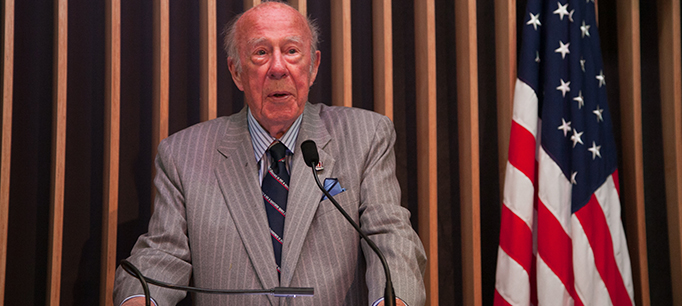
PPIC yesterday dedicated the George P. Shultz Forum at its Bechtel Conference Center, in honor of the U.S. statesman, economist, and businessman.

Shultz attended the dedication in the Bechtel Conference Center, a meeting and learning space located on the ground level at PPIC’s San Francisco headquarters. The George P. Shultz Forum is the main convening area at the conference center.

Mark Baldassare, PPIC president and CEO, noted that the George P. Shultz Forum will be a gathering place for a growing number of civic-minded groups. Speaking to an audience that included the PPIC board of directors, staff, donors, and special guests, Baldassare said, “This is a fitting way to honor George Shultz’s remarkable career in public service and his reputation for bridging policy divides on issues ranging from climate change to nuclear proliferation. It will be an inspiration to our guests.”

Senator Dianne Feinstein, speaking on video from Washington, noted key accomplishments in Shultz’s career. “When it comes to public policy and public service, there is no better model than George Shultz,” she said.

Shultz, who has a Ph.D. in industrial economics, was appointed secretary of labor in 1969, director of the Office of Management and Budget in 1970, and secretary of the treasury in 1972. He was president of the Bechtel Group from 1974 to 1982. He also served as chairman of the President’s Economic Policy Advisory Board from 1981 to 1982 and secretary of state from 1982 to 1989. He was awarded the Presidential Medal of Freedom, the nation’s highest civilian honor, in 1989. Since then, he has been a distinguished fellow at the Hoover Institution at Stanford University.

In his comments, Shultz reflected on lessons he had learned in his career of government service—including the importance of nonpartisanship. He said it is important that “PPIC keep the nonpartisan spirit alive.”

“Democracy is not a spectator sport,” he added. “And nonpartisan work is a very important part of it. You identify problems, get the facts straight, figure out how people feel, and put the information forward in a way that people can understand.”

The PPIC event also included a conversation between Lieutenant Governor Gavin Newsom and Baldassare. They talked about climate change and energy policy—issues that Shultz has focused on for many years. Newsom noted that Shultz’s career is a reminder that environmental stewardship and sustainability used to be bipartisan issues. He also said California needs to step up its leadership on climate policies and work to expand the clean technology sector.

Other guests at the event included former San Francisco mayor Willie Brown; Stephen D. Bechtel, Jr., retired chairman and a director of the Bechtel Group, Inc., and his family; and John Gunn, chairman emeritus of Dodge & Cox.

The Bechtel Conference Center was made possible by a gift from the Stephen Bechtel Fund in 2009. Its design and operation reflect PPIC’s focus on neutrality, consensus building, and respect for different perspectives. And the center’s LEED Gold certification highlights the emphasis that both PPIC and the Bechtel family place on environmental and technological innovation. This year, a group of donors led by Stephen D. Bechtel, Jr., provided a gift to dedicate the forum to Shultz. The gift will be used to upgrade the technology in the forum and establish a fund to make the space available to and affordable for other civic-minded organizations.

How Can California Increase Voter Turnout?

Days after a California primary that may set a record for low voter turnout, election experts gathered to take stock: What happened last week and how can the state engage more Californians in elections?

PPIC research fellow Eric McGhee first provided a brief overview of how California’s electoral reforms have worked so far. He noted that the top-two primary probably did not worsen voter turnout but did nothing to reverse the decline either. In the absence of an exciting race or issue, it’s unlikely that a primary reform alone will draw more voters to the polls, he said.

The consensus among panelists is that there is no single reform that will reverse declining primary turnout. Improving outreach, educating voters, making registration and voting easier—all are needed to increase engagement.

Jill LaVine, Sacramento County voter registrar, highlighted the importance of voter education. Because there were no high-profile candidates or issues in the June primary, there wasn’t much advertising on television—where many voters get information. She noted the efforts that election officials have made to make voting easier—for example, an app to help voters find polling places, and phone banks to help answer questions. But many Californians are confused by the number of changes in the state’s primary, from the date to the process of voting itself. Along with other panelists, she stressed the importance of fully funding election programs that are mandated by the state. For example, the state no longer provides funding to counties to carry out the permanent vote-by-mail program, which is used by a majority of the state’s voters.

Ethan Jones, chief consultant of the Assembly Elections and Redistricting Committee, said the legislature is addressing structural barriers to voting, such as allowing residents to register and vote on the same day. This reform, which will go into effect in future elections, will allow Californians who become engaged in an issue or candidate at the last minute to participate. There have also been efforts to address attitudinal barriers, to allow 16- and 17-year-olds who are taking civics classes to “pre-register” to vote and be added to the voter rolls when they are 18, for example.

Astrid Garcia, deputy director of the nonpartisan Future of California Elections, noted that in a state as large and diverse as California, it’s crucial to address all the steps that lead up to voting and make the experience positive, so that voters turn out again in the next election. She noted that beginning this year, legal permanent residents can be poll workers, which will educate these Californians about the process and train a cadre of bilingual poll workers for the future. She also noted the importance of “meeting voters where they are,” by allowing residents to register to vote when they seek government services. She also said that it will take time to realize the results of these reforms.