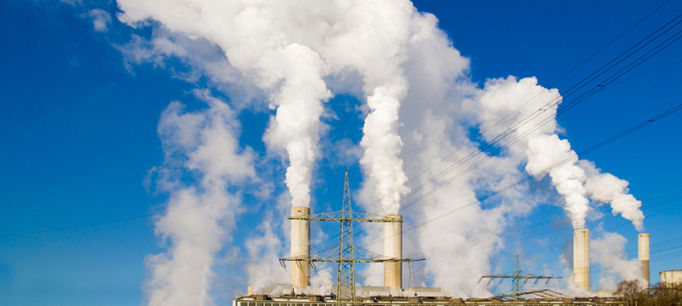
Californians and the Carbon Tax

California is leading efforts to address climate change, and public support for state action on this policy has been strong and steadfast. In the July PPIC Survey, six in 10 likely voters say that global warming’s effects have already begun and favor the state’s requirements that greenhouse gas emissions be reduced to 1990 levels by 2020.

The landmark law laying out these efforts—AB 32—relies on a “cap-and-trade” program for companies to reduce their greenhouse gas emissions. The state government currently enforces emissions “caps” by issuing permits that can be “traded” among companies at quarterly auctions. The state is getting ready for the AB 32 legislation to impact transportation fuels in 2015, with costs—which are unknown—likely passed on to Californians at the gas pump. Under these circumstances, some policymakers are having second thoughts about the cap-and trade program and are reconsidering a carbon tax on companies for their greenhouse gas emissions.

In our polling over the past five years, Californians have been more likely to express support for a carbon tax than a cap-and-trade system. In the July PPIC Survey, 54 percent of likely voters favor a carbon tax on companies’ greenhouse gas emissions—identical to the support that we found in July 2009. By comparison, 43 percent of likely voters favor the current cap-and-trade system when read a description in the July PPIC Survey—similar to the 44 percent who supported this proposal in July 2009. This support for a carbon tax doesn’t appear to be a simple reflection of a desire to tax business. A carbon tax on companies is a more popular proposal than raising overall state taxes paid by California corporations, which had a mixed response (48% favor, 47% oppose) in the March PPIC Survey.

What are the attitudes underlying majority support for a carbon tax on companies? Most likely voters are concerned about global warming and want the government to take action. Those who express the most concern and support tend to favor a carbon tax over the cap-and-trade system. For example:

  • Of those who believe the effects of global warming have already begun, 75 percent favor a carbon tax and 56 percent favor the cap-and-trade system.
  • Of those who believe that global warming is a very serious threat to the state’s economy and quality of life, 78 percent favor a carbon tax and 55 percent favor the cap-and-trade system.
  • Of those who favor the state law to reduce greenhouse gas emissions to 1990 levels by 2020, 76 percent favor a carbon tax and 57 percent favor the cap-and-trade system.

There is also a political dimension, reflecting the partisan differences in levels of concern about climate change and support for state action. Democrats are more likely to favor a carbon tax (72%) than a cap-and-trade system (54%), with similar trends for independents (56% carbon tax, 42% cap-and-trade). Republicans show similarly low support for either approach (32% carbon tax, 27% cap- and-trade).

The July PPIC survey also found that potential consumer costs play a striking role in views of climate change policies. Among likely voters, 70 percent, favor requiring oil companies to produce transportation fuels with lower emissions; however, favor for this policy declines to 41 percent if it means an increase in gas prices. What is noteworthy is that most higher-income Californians support lowering emissions—even if gas prices rise. In light of California’s uneven economic recovery, this finding suggests that the state lawmakers should be focusing on ways to limit the financial impacts of new global warming regulations on the state’s less affluent residents, not abandoning current efforts to reduce greenhouse gas emissions that enjoy solid support.

If policymakers are going to debate the pros and cons of these two policy options, it would be worth taking the time to better explain them to the state’s residents—especially since gas prices could increase with either option. Most likely voters have heard only a little or nothing at all about these competing proposals for reducing greenhouse gas emissions. One in four likely voters say they have heard a lot about the cap-and-trade system (24%) and awareness is similarly low for the carbon tax (28%) in the July PPIC Survey. Californians care about climate change and would likely welcome the chance to learn more about the decisions that are being made today to address the challenges of the future.

In Memoriam: Margaret Weston

It is with profound sadness that I share the news that a beloved PPIC colleague, Maggie Weston, has passed away. Maggie was 32 years old—an accomplished educator and policy researcher with boundless potential. My colleagues and I are shocked and heartbroken at this sudden loss. We extend our deepest sympathies to Maggie’s family.

All of us who knew Maggie were awed by her passion for her work. A champion of children, she dedicated her career to improving educational opportunities for disadvantaged youth. As a Teach for America instructor in Baltimore, Maggie experienced first-hand the systemic problems facing public education and sought to be a part of the solution. When she joined PPIC six years ago as a research associate—equipped with master’s degrees in teaching (Johns Hopkins University) and public policy (University of Michigan)—she said she wanted to make a difference on a larger scale.

At PPIC, Maggie brought her intellect and work ethic to the critical, then-unrecognized, topic of school finance in California. Describing the system as inequitable, inadequate, and overly complex, she authored more than a dozen publications documenting its problems and outlining clear steps toward addressing its shortcomings. She bridged the gap between the research and policy communities and created the common knowledge that resulted in important policy change. Her rigorous and objective work helped to provide the basis for the new Local Control Funding Formula, approved as part of the state budget last year.

In recognition of her outstanding contributions to public policy research and in anticipation of her Ph.D. (expected in 2015 from UC Davis), Maggie became a research fellow in 2012. She continued to specialize in education finance, determined to evaluate and communicate the real-world impacts of local control on students. She met with PTAs and community groups across the state, convinced that empowering them with information would help ensure a new level of transparency and engagement in public education.

The impact Maggie had on her colleagues, educators, and the policy community is a testament to her intensity, her intelligence, and above all, her integrity. We will miss her dearly.

Maggie’s family has scheduled a memorial service this Thursday at 2 p.m. in Sacramento. Details of the service and an online guest book are available at http://www.eastlawn.com/obituaries-services.html?obituary_id=1039856

Sincerely,

Mark

Drought Watch: Water for the Environment

This is part of a continuing series on the impact of the drought.

The ongoing drought has heightened tension over how water is allocated in California. In our recent publication on overall water use in California, we show that the environment uses the largest share—50%—of the state’s water. In contrast, agriculture uses 40% and urban users account for only 10%.

The amount going to the environment may look surprisingly high, but this number is not as straightforward as it may seem. Most of what we call “environmental” water is simply too remote for people to use—or is actually reused for irrigation, drinking water, or other human benefits. In other words, most of the water that goes to the environment does not significantly detract from the overall amount of water available for other purposes.

Here, we look more closely at how the California Department of Water Resources breaks down environmental water use (also see related figure below):

  • Managed wetlands make up state and federal wildlife refuges and account for only 4% of total environmental water use. These wetlands provide critical habitat for migratory and resident birds, along with fish, plants, and other wildlife. Some provide other important ecosystem services like flood protection.
  • Delta outflow accounts for 16% of total environmental water use. The state sets standards for how much water should flow into the Delta from the Sacramento and San Joaquin Rivers, and how much should flow out of it, into San Francisco Bay. These standards seek to meet two primary objectives: protection of native fishes listed under state and federal Endangered Species Acts, and maintenance of water quality standards within the Delta—most notably for salinity—to allow irrigation of farms in the Delta and exports of water to cities and farms elsewhere.
  • Instream flows constitute 18% of statewide environmental use. These are minimum river levels set by state regulatory agencies to meet habitat needs for fish and wildlife in waterways.
  • Rivers designated as “Wild and Scenic” use the bulk of water assigned to the environment—63%. Under federal and state laws, these rivers are protected from the construction of water resources projects—such as dams or diversions—that would adversely impact them. However, most of these rivers are in the state’s remote north coast, where there is little agricultural or urban demand for water and no economically viable way to use it elsewhere. Outside of the north coast, most water in Wild and Scenic Rivers (such as those on the west slope of the Sierra Nevada) is captured in downstream reservoirs and used again for hydropower generation, irrigation, and drinking water.

As this discussion shows, the allocation of limited water supplies is not a matter of simple tradeoffs between the environment and humans. Sometimes, water counted toward environmental use gets used again for something else. Other times, there is no practical alternative use (such as in the north coast). Understanding these basic facts is essential to resolving differences over how to manage water in California.

Realignment: Progress and Challenges

Expectations were high when California rolled out public safety realignment in October 2011; many expressed optimism that the reform would significantly address prison overcrowding and reduce the state’s high recidivism rate.

Now that realignment is approaching the three-year mark, has the reform delivered? In some important ways, yes, it has. But a fundamental issue remains: the state still relies heavily on costly incarceration with limited crime preventive effects.

Realignment shifted responsibility for most lower-level felons from the state to the counties and reduced the state prison population by an impressive 27,000. Although most newly sentenced lower-level felons are serving their sentences in county jail instead of state prison, the majority of the prison population drawdown has been accomplished by essentially halting the practice of sending parole violators back to state prison. The one-year return-to-prison rate for released offenders has dropped by about 33 percentage points (from around 41% to about 8%).

Clearly some parole violators are serving time in county jails (there is no currently available statewide data on county sanctioning of parole or probation violations), but the reform’s stricter limit on how violations can be punished means that offenders now have more “street time.” Also contributing, counties now pay for sanctioning and many have limited jail space.

Importantly, our recent recidivism report shows that decreased reliance on incarceration as a sanction has not been accompanied by an increase in re-offending. In fact one-year re-arrest rates have come down by about 2 percentage points (from 61% to around 59%). In other words, significant reduction in the prison population and halting the use of prison as a sanction for parole violations and minor criminal offenses has moved corrections practices in the right direction in a very meaningful way.

However, the prison population is still above the federal limit, and it has recently started to increase. Furthermore, the reduction in the state prison population has been partially offset by an increase in the county jail population. The shift has put pressure on county jails, where the population has increased by about 11,000 since the October 2011 reform rollout and is continuing to grow.

In other words, the state prison system is still under pressure and now county jails face new challenges. Addressing these challenges solely by building more jails will be fiscally painful and is not likely to be a cost-effective way to prevent crime. Instead, the state needs to identify and implement alternative effective crime prevention strategies. This includes, as intended by the reform, targeted efforts guided by evidence-based practices to reduce re-offending. Among other things, this will require the state to support efforts to gather the data necessary to identify what works in California. But even if these efforts are successful, basic forces like population growth and fiscal stress are likely to force the state to consider sentencing reform and take a closer look at who we incarcerate and for how long.

Drought Watch: Our Thirsty Lawns

This is part of a continuing series on the impact of the drought.

The unprecedented restrictions on outdoor water use that the state enacted this week send a message that Californians need to conserve more water. But we can do more to move toward sustainable consumption. To help the state get through this drought—which may continue into 2015—and prepare for a future that will include repeated droughts, local agencies should go further to encourage long-term changes in how we use water outdoors.

Outdoor water demands—which account for roughly half of all urban water use—are highest during the hot, dry summer months. Experts regularly cite reductions in landscape watering as “low hanging fruit” during droughts. But, as we’ve learned, it is not enough to just ask people to cut back: during the 2007–2009 drought, outdoor water use did not significantly decline despite repeated calls for conservation.

The main culprit is Californians’ love affair with lawns. Not only do lawns require a lot of water to look good, but people also tend to overwater them. Water agencies should seize the opportunity presented by the drought—and the publicity surrounding the new restrictions—to offer incentives for switching out thirsty lawns. For instance, Long Beach has a turf buyback program that offers rebates to customers who replace grass lawns with low-water-using plants—which have the added benefit of lending themselves to more-efficient irrigation systems. Finding attractive alternatives to lawns is easier than ever before, now that major garden retailers offer a range of California-friendly plants. Gone are the days of cacti and gravel being the only options.

Water pricing can also motivate customers to make the switch. Tiered rate structures—which charge a higher price per gallon for higher use—help send a message about the real costs of our landscaping choices. More than half of urban water agencies currently have some form of tiered rates, though recent legal challenges to their constitutionality under Prop 218 threaten to undermine these very important tools.

During droughts, it makes sense for water agencies to charge higher prices per gallon than they do in normal years. This provides additional conservation incentives while ensuring that agencies bring in enough to cover costs when they are selling less water. The city of Roseville, for example, implemented a temporary 15 percent drought surcharge starting in June. But according to a State Water Resourses Control Board survey, only 7 percent of agencies have enacted drought pricing strategies this year.

So far, no region has reached the governor’s 20 percent conservation goal, and water use has actually increased in some regions. Over the next few months we will see whether increased watering restrictions and threat of fines can deliver the conservation message to all Californians.

Six Takeaways from the June Primary

For those of us involved in polling and election analysis at PPIC, the just-released California Secretary of State’s (SOS) Statement of the Vote offers a treasure trove of data about how our democracy is working. The latest SOS report also deserves close scrutiny because the top-two primary, which had its debut in June 2012, operated in statewide contests—such as the governor’s race—for the first time this year. My colleagues Eric McGhee and Daniel Krimm have provided an excellent analysis of the outcomes of legislative district races. Here, I’m going to focus on six election trends—regarding statewide offices, state propositions, and voter participation—that surfaced in my read of the final numbers.

  1. Advantage Incumbents. The big winners in the statewide races were current officeholders: the governor, lieutenant governor, attorney general, insurance commissioner, school superintendent, and controller (now running for treasurer). The number two vote-getters trailed these state officials by wide margins in each race, even while PPIC’s polling indicates that half of likely voters say the state is headed in the wrong direction. These primary results underscore the uphill battle faced by political newcomers in statewide elections. This is best exemplified by first-time GOP candidate Neel Kashkari, who received just 839,767 votes or 19% of the vote—even after spending millions of his own dollars on his gubernatorial campaign. The six Democratic incumbents start out with huge numerical advantages in their statewide races in November.
  2. Major Parties Rule. The top-two primary winners in the eight statewide races are all major party members. The November ballot includes seven statewide races in which Democratic and Republican candidates face off. Only the nonpartisan school superintendent’s race has a Democrat facing a Democrat. The candidates from minor parties—which used to have their own primaries—clearly have a harder time prevailing under top-two primary rules. But the statewide candidates with no party preference—also known as independents—were also shut out, even though they are members of a large voting bloc. The absence of minor party and no party preference candidates could result in a depressed voter turnout in November. In California, 28% of voters belong to a minor party or have declared as no party preference, and PPIC polling indicates that many likely voters have unfavorable views about the Democratic and Republican parties.
  3. Legislature Wins Big. Two measures placed on the ballot by the legislature passed easily: State Proposition 41 (Veterans Housing and Homeless Bond Act), with 65 percent of the vote, and State Proposition 42 (Public Records, Open Meetings, Reimbursements), with 62 percent. These two measures attracted little discussion or media interest. Their success in June is consistent with the high pass rate for legislative ballot measures over time. Still, many likely voters say they disapprove of the legislature, making the easy passage of these measures rather surprising. At the same time, this trend bodes well for the legislature’s propositions on the November ballot, such as a rainy day fund proposal and a possible state water bond.
  4. Knowledge Gaps Loom Large. State Senator Leland Yee, who was embroiled in a political scandal, accused of committing felony crimes, and withdrew his name as a candidate, still placed third in the secretary of state’s race. In fact, he received 380,361 votes or 9% of the vote. His surprising showing raises fundamental questions about the level of voter knowledge and the effectiveness of both the state’s media and the official voter guides in providing election information.
  5. Voters Are Disengaged. The primary turnout this June fell to an all-time low of 25% for registered voters and 18% for eligible adults. Even more troubling: turnout among registered voters in Los Angeles (17%), San Bernardino (19%), Riverside (22%), and Orange (24%) Counties was even lower than the statewide average. Since the top-two candidates are chosen in the primary, low primary turnouts may undermine the legitimacy of November elections over time. Moreover, these numbers raise a larger question: Are low turnouts in four populous Southern California counties symptomatic of a deeper civic malaise?
  6. Results Are Slow. A record 69.4% of primary voters mailed in their ballots this year. While this method is growing in popularity, we are learning that it results in a slow vote count that leaves the outcome of tight races in limbo for weeks. This year, the controller’s race was one of the closest in state history, with a 481-vote margin of victory, and the top-two winners were not known until the last day of June. In the future, we could be waiting for weeks to learn the winner in a tight governor’s race, or California’s outdated voting system could be exposed in a close presidential election. The 58 county registrars will need prodding and assistance by the SOS office to apply modern technology to speed up their vote-by-mail counts. Moreover, given the popularity of voting by mail, we should be looking for ways to make it easier for voters to do so—in part to increase voter participation.

Every election occurs in a unique political context. The 2014 primary results could be an anomaly rather than indicative of some flaws with the top-two primary system. The 2016 presidential year and the 2018 gubernatorial year may feature competitive statewide primary races that lead to different outcomes. Still, the six issues that surfaced in this primary also reflect longer-term trends that are worthy of serious consideration.

PPIC has invited California’s two secretary of state candidates to participate in a conversation with me about the future of California’s elections on September 11 in Sacramento. Stay tuned for more information about how you can attend or watch this PPIC event.

Drought Watch: Putting Some Myths to Rest

This commentary was first published by the Sacramento Bee on July 6, 2014. Drought Watch is a continuing series on the PPIC Blog.

As the effects of the drought worsen, two persistent water myths are complicating the search for solutions. One is that environmental regulation is causing California’s water scarcity. The other is that conservation alone can bring us into balance. Each myth has different advocates. But both hinder the development of effective policies to manage one of the state’s most important natural resources.

Let’s consider the first myth, that water shortages for farms are the result of too much water being left in streams for fish and wildlife.

Continue reading on Sacbee.com.

Big Policy Shift Leads to Small Change in Recidivism

A recent briefing in Sacramento focused on PPIC’s new report on recidivism rates since public safety realignment policy began. This policy—which took effect in 2011—shifted responsibility for more than 30,000 offenders from the state to the local level.

The report—Is Public Safety Realignment Reducing Recidivism in California?—found a mixed result. Arrest rates overall are down slightly from the period before realignment. But the proportion of offenders who are convicted after arrest is up about 3 percent. The proportion of those arrested multiple times is up noticeably, probably reflecting the increased time released offenders spend on the streets because of county jails’ limited capacity.

The number of released offenders who return to prison was down more than 30 percent. PPIC research fellow Magnus Lofstrom presented the findings. He was joined on the dais by his two co-authors—PPIC research fellow Ryken Grattet and UC Berkeley policy professor Steven Raphael—for audience questions.