For-Profit Colleges Face an Uncertain Future

California’s private for-profit colleges are in flux now that the US Department of Education has parted ways with the Accrediting Council for Independent Colleges and Schools (ACICS)―one of the largest for-profit accreditation agencies. Former education secretary John B. King Jr. based his decision to reject ACICS’s bid to continue overseeing hundreds of colleges nationwide on findings that ACICS was allowing colleges such as ITT Tech and Corinthian Colleges (known as Everest College in California) to keep their accreditation despite very low graduation rates and allegations of fraud and predatory practices.

This decision—which is being appealed by ACICS—is important because without accreditation, colleges cannot receive federal Pell Grants and student loans. ACICS-accredited schools across the country received $4.76 billion in federal student aid in 2015. Even though these schools have 18 months to gain accreditation through other agencies, some fear they will not meet the deadline since gaining accreditation is a lengthy process. Without accreditation, colleges may be forced to shut down, which could affect up to 600,000 students nationwide.

How might this decision affect students in California? The most recent enrollment data from the Integrated Postsecondary Education Data System and the Bureau for Private Postsecondary Education indicates that campus closures would not have a major effect on overall student enrollment. (This data is from 2014, so to get closer to what for-profit enrollment looks like today, I subtracted enrollment at colleges that have closed since then: Brooks, Everest, Heald, International Academy of Design and Technology, ITT Tech, Sage, TransWestern Truck Driving School, Westwood, and Wyotech.) In California, ACICS oversaw 53 campuses, including Le Cordon Bleu College of Culinary Arts and Kaplan College (which was recently acquired by Brightwood College). In total, 26,478 students attended ACICS colleges; this number represents 11.1% of for-profit college enrollment and only 1.1% of California’s total postsecondary student population.

However, the 26,500 students who could be displaced by campus closures may face difficult decisions. These students have several options: they could transfer to another college, apply to have their loans forgiven by the federal government, or apply to the state student tuition recovery fund for reimbursement. But none of these options are perfect. Community colleges that accept for-profit students may not accept all of their credits. Enrolling in another for-profit carries the risk that it will close, too. Students who apply for federal loan relief may experience long waiting periods, and there is uncertainty about whether this relief will continue. At the state level, the student tuition fund may not refund all of a student’s debt.

It is possible that the Trump administration will loosen for-profit regulations, which may forestall additional campus closures. But given the uncertain future of this sector, along with low graduation rates and high levels of student debt at many for-profit colleges, students may want to find alternative programs in the public and private not-for-profit sectors.

Learn more

Visit the PPIC Higher Education Center
Californians Favor Higher Taxes over Higher Tuition

After six years without tuition increases, California’s public universities are considering proposals to modestly raise tuition for California residents. The University of California (UC) has proposed increasing systemwide tuition and fees for undergraduates by $336 to a total of $12,630 for the academic year. The California State University (CSU) has proposed increasing in-state student undergraduate tuition by $270 to a total of $5,742 for full-time students. Campuses at each system charge additional fees, which currently average about $1,200 at UC and $1,400 at CSU.

A recent PPIC Statewide Survey on Californians and higher education indicates that these proposals are likely to be unpopular with the public. The survey found that Californians are concerned about the cost of college: 57% said that the overall affordability of California’s public colleges and universities is a big problem. Only 23% of Californians would be willing to increase student fees in order to increase funding for California’s public higher education system.

This is not the first time Californians have voiced disapproval of tuition increases. Before UC and CSU raised tuition in 2011, PPIC’s 2010 higher education survey found that only 35% of Californians favored increasing student fees as a way to maintain higher education funding levels in the face of state budget cuts. In 2011, our survey found that 65% of Californians were very concerned about increasing student tuition and fees as a way to deal with decreased funding.

Today, when many policy preferences are often divided along party lines, there is partisan consensus on this issue: at least 70% of Californians across parties say they would be unwilling to increase student fees to fund higher education. Indeed, less than a third of Californians across all regions and demographic groups say they would be willing to increase student fees.

At the same time, a majority of Californians (67%) believe that the current level of state funding for public colleges and universities is inadequate. So what are Californians willing to do to increase funding for public higher education? Overall, they are twice as likely to say they are willing to pay higher taxes as to say they are willing to increase student fees (48% to 23%). However, and perhaps unsurprisingly, we see notable partisan differences when it comes to willingness to pay higher taxes. While 68% of Democrats say they would be willing to pay higher taxes to increase funding for public colleges and universities, only 20% of Republicans say the same.

Another way to increase funding for California’s public colleges and universities would be to admit more out-of-state students, who pay higher tuition. Californians are somewhat divided on this issue, with half saying they would not be willing to admit more out-of-state students, while 46% say they would be willing to do so. However, only 21% of Californians support admitting more out-of-state students if this would mean admitting fewer in-state students. This view holds across party lines: only one in four Republicans (25%), and even fewer independents (21%) and Democrats (16%), are willing to admit more out-of-state students if this would mean admitting fewer in-state students. UC has proposed increasing systemwide out-of-state tuition and fees by over $1,600 to almost $40,000.

Our survey findings suggest that the proposed UC and CSU tuition and fee increases may be unpopular among Californians of all political persuasions—and that Californians’ reluctance to increase the financial burden on the state’s students may be driven by concerns about access and affordability.

Learn more

Read the PPIC Statewide Survey: Californians and Higher Education
Find out more about the PPIC Statewide Survey
Visit the PPIC Higher Education Center

Governor’s Funding Plan for Climate, Drought

Governor Brown has released a proposed budget that reaffirms the state’s commitment to boosting drought resiliency and battling climate change. While specifics are likely to change before the budget is finalized in June, here is a summary of key proposals.

  • Cap and trade. California’s recent efforts to combat climate change have been funded from its cap-and-trade program. The program faces an uncertain future because its statutory authority is set to expire in 2020. Partly due to this uncertainty, 2016 cap-and-trade auctions raised a fraction of the money raised in previous years. At the governor’s budget press conference, he announced legislation that would extend the program beyond 2020. Appropriation of cap-and-trade funds in the new budget is dependent on the passage of this bill—which will require a two-thirds vote in both the senate and the assembly. Should it pass, the governor proposes appropriating $2.2 billion for cap and trade, a decrease from last year’s $3.1 billion. As in past years, 60 percent of the proceeds would be for ongoing funding of public transit, affordable housing, sustainable communities, and high-speed rail. The rest is split among one-time investments. This year, the largest sum in the one-time investment pot ($863 million) is for public transit improvements aimed at increasing ridership and decreasing greenhouse gas emissions. Smaller sums include $142 million to fund local climate actions in the state’s most disadvantaged communities and $128 million for projects in forests and urban and agricultural landscapes that remove carbon dioxide from the atmosphere and store it in vegetation or soils.
  • Emergency drought spending. While recent rains have drenched California, the governor’s emergency drought declaration is still in effect, and the new budget appropriates an additional $188 million in one-time resources for drought relief. Roughly half ($91 million) is allocated to CAL FIRE—the agency dedicated to fire protection and stewardship of the state’s forests—to enhance its firefighting capacities and support the removal of dead trees. The drought has contributed to widespread tree mortality, which has raised concerns that the dead trees might fuel future destructive wildfires.
  • Water bond updates. Nearly 80 percent of Proposition 1 water bond funding has already been appropriated (though far less has been awarded for spending). This year, the governor proposes appropriating $248 million from the bond for an Integrated Regional Water Management grant program. These funds are meant to incentivize regional cooperation with the goal of resolving complex water management challenges at a broad scale while balancing social, environmental, and economic objectives. For instance, these funds could foster a regional approach to helping water systems adapt to climate change. An additional $3.8 million would enable the State Water Resources Control Board to enforce the implementation of California’s groundwater law.

Although state money represent only a fraction of California’s total water sector spending (13%—the rest is mostly locally funded), it is an important piece of the funding pie. While the governor’s proposed budget would bring welcome funding to a number of critically important areas, key water challenges continue to experience long-term funding gaps—especially safe water for small rural communities, flood control systems, stormwater management, and ecosystem management.

Learn more

Read California’s Water: Paying for Water (from California’s Water briefing kit, October 2016)
Visit the PPIC Water Policy Center

College Costs Could Rise for Some Students

The governor’s budget proposal includes increased funding for UC and CSU but likely not enough to keep the systems from raising tuition—which the governor said he expects. The proposed tuition increases (about 5% at CSU and 3% at UC) are modest compared to the large increases from 2006 to 2011 (104% at CSU and 92% at UC). PPIC has shown that while financial aid increases protect most students from low income families from tuition hikes, students from middle- and upper-class families see their costs increase.

The governor’s proposed budget also phases out the Middle Class Scholarship program. Created by the legislature in 2013—after CSU and UC costs climbed rapidly—this program aimed to help students from families too wealthy to receive Cal Grants (state grants that cover tuition for low-income students). The scholarships cover 10% to 40% of tuition (depending on family income and assets) for eligible students from families with incomes up to $156,000. About 37,000 students benefitted from the scholarship this year.

How much do middle-class students pay?
To characterize what a student pays to attend college, we often use the term “net price”—a comprehensive accounting of student costs and assistance. To determine the net price, we add books, room and board, and other expenses to tuition, and subtract federal, state, institutional, and local grants and scholarships (money that a student doesn’t have to pay back).

Students who receive some form of federal financial aid (grants, loans, work study, etc.) generally pay much less than the full cost of college. For students from families making less than $80,000, federal, state and local grants usually cover at least the full tuition at both CSU and UC—but these students pay a net price that could be as high as $11,000 a year at CSU and $13,000 at UC in order to cover expenses other than tuition. Students from families making $75,000 to $110,000 are generally too wealthy for federal and state grants; they pay a much higher average net price of about $16,000 at CSU and $21,000 at UC. (Also, many students pay close to the full cost because they do not apply for and/or are ineligible for federal aid.)

The most recent cost data is from 2013‒14—this was the first year of the Middle Class Scholarship program. Average awards that year were $1,100 or less, and once the program was fully implemented awards were slated to range from $1,300 and $5,400 at UC and $700 and $2,700 at CSU, depending on the income and assets of eligible students and on the number of applicants.
Not surprisingly, the phasing out of the Middle Class Scholarship and the impending tuition increase are expected to have a disproportionate impact on middle- and upper-class students. As a result, those students will probably pay more for their degrees.

Learn more

Read “Higher Education in California: Student Costs”
Visit the PPIC Higher Education Center

Video: Legislative Leaders Look Ahead

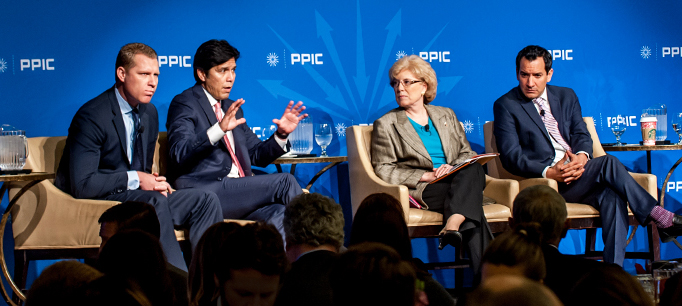
Despite their political differences, California’s legislative leaders have similar views of the state’s most pressing challenges. In a conversation facilitated by PPIC this week in Sacramento, the two top legislators from both major parties provided a preview of the issues they expect to tackle this session. With the impact of federal policy changes still unclear, the legislative leaders focused on longstanding challenges.

Asked to list the top issues the legislature and governor need to work on this session, Anthony Rendon, the Democratic speaker of the state assembly, named housing and transportation—topics he heard about repeatedly as he campaigned around the state. He said he saw the impact of a housing and transportation crisis first hand when walking precincts in the Inland Empire. “If you knock on someone’s door at 7:00, 7:30 p.m., they’re not home yet. They’re still on the freeway.”

Jean Fuller, the Republican leader of the state senate, sees the top issues as affordability in California generally and jobs. “We are concerned about housing, but we are also very concerned about jobs.” She noted that in her district, which stretches from Visalia to Twenty-Nine Palms, there is double-digit unemployment.

Kevin de León, the Democratic state senate president pro tem, said the past legislative session had been particularly productive; he highlighted minimum wage, gun safety, and climate change legislation. In this session, he said, “we have to deliver on the issues of housing and transportation and the issue of economic growth.”

For Chad Mayes, Republican leader of the assembly, poverty is the number one issue in the state, which has the highest poverty rate in the nation. “If you use that as a performance measure for how well our board of directors—the state legislature—is doing, I think you’d have to say we have been failing.” He added: “We’re failing, in large part because of housing costs.”

The speakers acknowledged major policy differences. But they pointed to past successes in bridging them as a sign that they can do so again.

“Things are not broken here, in comparison to DC,” said de León.

Understanding the New Federal Water Law

A new law signed by President Obama in December alters federal water policy in the Sacramento–San Joaquin Delta. These changes are complicated, and their likely effects on both future water supply and environmental stewardship are largely unknown.

The legislation is part of the Water Infrastructure Improvements for the Nation Act, which authorizes water-related investments around the United States. It includes funding for an array of projects in California, such as flood protection in the Sacramento Valley, watershed restoration and water quality improvements in the Lake Tahoe Basin, infrastructure for water recycling and desalination, and new surface water supply projects. It also includes funds for new fish hatcheries, acquisitions of water and land to support aquatic habitat, and programs to control invasive species that exacerbate the threats to endangered species. Before these projects can receive these federal dollars, Congress will also have to appropriate funding for them.

The most controversial aspect of the new law is a change in the way federal fisheries agencies must balance water supply for farms and cities with protection of endangered fish species in the Delta—including the Delta smelt and most species of salmon and steelhead. Under the authority of the Endangered Species Act (ESA), these agencies write “biological opinions” about how the projects must operate to minimize harm to ESA-listed species. The biological opinions that currently govern the operation of the federal Central Valley Project (CVP) and California’s State Water Project (SWP) prescribe a flexible range of allowed water exports. The new law requires the agencies to revise several terms of the biological opinions to “provide the maximum quantity of water supplies practicable” to CVP and SWP contractors “without causing additional harm to the protected species.”

Proponents of this change believe that the existing biological opinions require the projects to leave more water in the Delta than the fish need for their survival, especially during periods of high flows. Opponents believe that the legislation will add to the accumulating stresses on the fish and increase their risk of extinction. The actual benefits and risks of the operational changes are difficult to predict.

The amount of additional water the new law will make available to CVP and SWP contractors is uncertain—though it is likely to vary considerably with hydrologic conditions. We estimate that the projects may have been able to export several hundred thousand acre-feet of additional water during high flow periods in 2016—a year with average precipitation. However, it is unlikely that significant additional water would be made available during dry years—such as 2014 and 2015—when water supplies are especially scarce. In such years, most of the uncaptured flows through the Delta are needed to repel salinity and protect the quality of the water that is exported to farms and cities.

The risk of the new legislation to endangered fishes is also unknown. The existing biological opinions allow for flexible responses to account for rapid changes in water flows and temperature, information about fish locations, and new knowledge about how water supply operations affect fish. This flexibility acknowledges the uncertainties inherent in protecting endangered species in a complex and highly variable Delta ecosystem. By removing this flexibility, the new law has the practical effect of removing the margin of error in a complicated and error-prone system.

The latest drought has shown that removing flexibility in how we manage water for vulnerable species can increase the risk of extinction. How the fisheries agencies will strive to maximize water exports while avoiding additional harm to the protected species is an open and vexing question. Much depends on how the new federal administration chooses to interpret and administer the new law. And, as is often the case in California water policy, much depends on the inevitable legal challenges to its implementation.

This post was revised on January 27, 2017.

Learn more

Read a Statement by President Obama on the Water Infrastructure Improvements for the Nation Act
Read California’s Water: The Sacramento-San Joaquin Delta (from the California’s Water briefing kit, October 2016)
Visit the PPIC Water Policy Center’s Delta resource page

The News on Student Debt Is Not All Bad

Californians are rightly concerned about the costs of attending college and the amount of money many students need to borrow in order to pay those costs. In a recent PPIC Statewide Survey, 57% of Californians identified lack of college affordability as a big problem. An even larger majority—78%—agreed with the statement that students have to borrow too much money to pay for a college education.

As college costs have risen, the share of students taking out loans has grown substantially in both California and the nation. Just ten years ago, only about one-third of freshmen at four-year colleges and universities in California took out loans compared to 44% in 2014. Equally troubling is the growing size of those loans. Even after adjusting for inflation, average loan amounts for freshmen increased 14% in California between 2004 and 2014 (from just over $6,000 to almost $6,900). Among graduating seniors at California colleges in 2015, cumulative student debt totaled just over $24,000 for those who took out loans.

But not all of the news is bad. There are some encouraging and newly emerging trends in student debt, especially in California.

  • Over the past few years the trend toward more loans and higher loan amounts has reversed, with declines in both the share of freshmen taking out loans and the amount borrowed. In California, the share of freshmen at four-year colleges taking out loans has declined from 48% to 44%, and average loan amounts (adjusted for inflation) have declined from over $7,700 in 2010 to under $6,900 in 2014.
  • Student debt remains lower in California than in the rest of the nation, with California freshmen less likely to take out a loan (44%) than their counterparts in the rest of the nation (54%). Among those who do borrow, loan amounts are lower in California ($6,851) than in the rest of the US ($7,014).
  • The vast majority of students in California attend public colleges, and these students are much less likely to take out loans than students at private colleges. Very few California community college students take out loans, and less than 40% of freshmen at UC and CSU take out a loan, compared to more than 50% of freshmen at private nonprofit colleges and 70% at private for-profit colleges. Among those who take out loans, the amounts borrowed are also lower at California’s public colleges. Graduating seniors in 2015 at UC and CSU who took out loans had a median cumulative debt of $16,600, compared to $23,400 at private nonprofit colleges and $30,500 at private for-profit colleges. The lower rates of student debt at California’s public colleges and universities are related to institutional and state policies that provide scholarship and grant support to many low- and middle income students.
  • Finally, and perhaps most importantly, strong job prospects for college graduates, especially in California, mean that the vast majority of students are able to pay back their loans. Loan default rates are very low for students graduating from the state’s public and nonprofit private universities. Students at private for-profit colleges fare much worse. They often accumulate large amounts of debt, and this—coupled with low graduation rates—often makes it a struggle to pay back their loans.

It is important to remember that loans are an important and useful source of financial aid for many students. Indeed, taking on debt can be a very smart economic choice if it allows a student to enroll in and complete college. Policymakers and educators should seek to provide more opportunities for students to strategically use loans to reach their educational goals. Student debt becomes a problem when graduates are not able to pay back their loans—especially if they received a low-quality education and/or took on an exorbitant amount of debt. These are outcomes we should work to prevent.

Learn more

Read Higher Education in California: Making College Affordable
Read the PPIC Statewide Survey: Californians and Higher Education
Visit the PPIC Higher Education Center

From Drought to Deluge

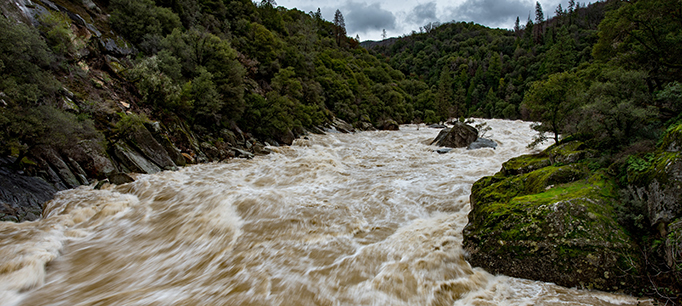
The recent change in the weather is prompting many Californians to shift their worry over drought to fretting about floods. That’s an understandable response to California’s volatile climate, which is the most variable in North America. Most notable this year is the return of atmospheric rivers—river-like bands of moisture that periodically stream into California, often from the tropics. These storms are responsible for most of our large, devastating floods. They are also critical for our water supply, providing roughly half of our precipitation in normal and wet years. When atmospheric rivers don’t occur, we usually have a drought.

Here are a few key takeaways from this welcome stretch of wet weather:

  • This is likely to be the end of the surface-storage drought for most of the state. In other words, by next week almost all the major reservoirs will be at or above their seasonal averages (there’s a good summary here)—conditions we have not seen in six years. This is great news since reservoirs are the primary source of water for cities and farms.
  • Many multipurpose reservoirs—those that supply water, hydropower, and flood storage—are well above historic averages. To maintain their flood management capacity for future winter storms, these reservoirs are required by federal rules to release large amounts of water, which is why so many rivers below dams are running high.
  • It is reasonable to be optimistic that our reservoirs will fill this spring. We rely on melting snowpack to top up reservoirs in the spring and to provide roughly a third of the state’s water supply in an average year. The warmth of the weekend storms washed away some of this snowpack, particularly in the middle elevations of the Sierra Nevada (5,000–7,000 feet). Still, higher elevations accumulated a great deal of new snow with these storms, and more than two months remain in the winter snow season.
  • One wet year is not a drought buster. During the height of the drought, the state’s farmers and others turned to groundwater pumping to make up for surface water shortages. The water deficit in our aquifers is now immense. For example, in 2014 and 2015, surface water supplies to farmers in the Central Valley were cut nearly in half, causing them to make up most of this reduction through additional groundwater pumping or land fallowing. It would take many successive wet years—and more intentional groundwater capture and storage—to restore aquifers to the condition they were in before the onset of drought.

The wet beginning to 2017 is a welcome relief from the past five dry years. Full surface reservoirs take pressure off water users and water regulators. But the rains did not wash away California’s major water challenges. There are big decisions ahead—many to be made this year—about how to sustainably manage groundwater, improve storage, resolve the problems of the Delta, and arrest the decline of our native fish and wildlife. Maintaining momentum on these issues is as critical now as when the reservoirs were low.

Learn more

Read California’s Water (PPIC briefing kit, October 2016)
Visit the Policy Priorities for California’s Water YouTube page
Visit the PPIC Water Policy Center flood resources page

Photo by Carson Jeffres


California’s 4.5 Million Trump Voters

In the November election, California voters passed several ballot initiatives acting on liberal priorities, and votes for Hillary Clinton in the state exceeded votes for Donald Trump by a two-to-one margin. Nevertheless, 4.5 million Californians voted for Donald Trump—7% of his total support across the country. California’s Trump voters stand apart from other voters—both those who supported past Republican presidential nominees and Clinton supporters—in important ways. But many Trump voters align with California’s Democratic majority on issues of taxation and undocumented immigrants.

California Trump voters’ low level of trust in the federal government is one of the major ways that they differ from other voters. The October PPIC Statewide Survey found that 81% of Trump voters say the federal government is run by a few big interests, wastes a lot of taxpayer money, and only does what is right sometimes (or never), compared to only 24% of Clinton voters. The large gap on these questions between Trump and Clinton voters in 2016 stands in sharp contrast to 2008, when McCain and Obama voters were about equally likely to express distrust (55% and 57%, respectively).

Yet there are some areas of overlap between Trump and Clinton voters. In California’s US Senate race between two Democrats, PPIC surveys indicate that about half of Trump voters decided not to participate. Of those who indicated they would vote, though, Trump voters were about evenly split between Kamala Harris—preferred by most Clinton voters (58%)—and Loretta Sanchez. In October, we found a noteworthy 22% of Trump voters saying they would vote for Harris, who was ultimately the winner of the seat.

Another winner in November was Proposition 55, which extended a tax on high incomes in California. While Clinton voters were far more likely than Trump voters (75% to 24%) to say they favored the tax extension, a quarter of Trump voters said they would vote yes. It’s likely that many of them contributed to the success of the measure, which passed with 63% support.

Immigration is another policy area with some notable overlap in opinions between Trump and Clinton supporters. Although Trump voters were far more likely than Clinton voters to support building a wall along the border with Mexico (82% to 7%), a majority of Trump voters (52%) agreed with the 95% of Clinton voters who said undocumented immigrants should be allowed to stay in the country if certain requirements are met. As California policymakers consider potential responses to a change in federal immigration policy, it will be interesting to see how Trump’s voters feel about new federal and state action.

Though California remains a Democratic-majority state, millions of Californians voted for the president-elect in November. While there are large differences in opinion between them and Clinton supporters, neither group is monolithic, and our survey findings suggest some potential areas of cooperation between them.

Learn more

Find out more about the PPIC Statewide Survey

A State of Water Independence

The presidential election has raised questions about how changes in federal environmental policy could affect California’s water resources management. Concerns include the potential loosening of endangered species protections and changes to federal regulatory jurisdiction under the Clean Water Act. These questions are especially pronounced in California, where the United States is both an environmental regulator and operator of several of the state’s largest water projects.

While there are areas of uncertainty, California’s water rights and environmental laws are both robust and comprehensive, and thus will provide something of a firewall to changes in federal policy. Although many of these laws apply in tandem with their federal counterparts, California’s laws are also largely independent of federal environmental standards. Here are a few examples.

Reasonable use and the public trust: The California Constitution’s “reasonable use” requirement and the state’s public trust doctrine recognize a strong and continuing public interest in protecting the ecological integrity of the state’s waters. In 2009, the California Legislature declared that these principles “shall be the foundation of state water management policy.”

Water rights: The State Water Board has permitting authority over a majority of surface water rights, including those for the federal Central Valley Project (CVP) and California’s own State Water Project (SWP). These projects supply water to more than 25 million residents and businesses across the state and to almost four million acres of farmland in the Central Valley. Permit conditions require the projects to release water from reservoirs and to limit pumping from the Delta to protect water quality, fish and wildlife, and other instream uses throughout the Sacramento–San Joaquin Delta ecosystem.

Federal law directs the US Bureau of Reclamation to operate the CVP in compliance with all requirements of California law, including conditions in its water rights permits. This is an important mandate because CVP operations are coordinated with the SWP, and the two projects’ water supply and environmental stewardship functions must be synchronized.

The bureau also controls the distribution of water diverted from the Colorado River for agricultural and urban uses in Southern California. Although federal law generally governs, the State Water Board has significant authority over the use of this water through its constitutional authority to prevent waste and unreasonable use.

Water quality: The State Water Board and the nine Regional Water Quality Control Boards also set water quality standards and issue permits governing discharges of pollutants. California’s water quality laws implement the federal Clean Water Act, but they also function independently. California often sets stricter pollution limits than required under federal standards, and the state permitting system applies more broadly than its federal counterpart (covering discharges to groundwater, for example). Equally importantly, California’s water quality laws do not depend on the Clean Water Act for their existence and would continue even if significant changes are made in federal law.

California’s authority to protect its water resources will be largely insulated from changes in federal environmental policy.

Stream flows: In addition to the State Water Board’s power to protect stream flows through water quality standards and the reasonable use and public trust doctrines, the California Fish and Game Code compels all dam operators to release water to support fish. In litigation to restore flows and salmon to the San Joaquin River, the federal courts ruled that this law applies to the CVP.

Endangered species: The California Department of Fish and Wildlife has extensive authority to protect vulnerable species under the California Endangered Species Act. Although the state statute is more limited than its federal counterpart, it does prohibit the unauthorized “taking” of protected species. If federal endangered species policy were to change, the department could use this authority to place conditions on water project operations to prevent or minimize harm to state-listed species. The department also could expand the list of state-protected species to fill any gaps created by federal policy changes.

Wetlands: The federal government has extensive jurisdiction under the Clean Water Act to regulate activities that may alter wetlands, and the state and regional water boards often implement this federal law. But California also has independent authority to protect wetlands through discharge permits and land use regulations. This regulatory authority would continue even if, as expected, the new administration reduces the scope of the federal wetlands rules.

In light of these laws, California’s authority to protect its water resources will be largely insulated from changes in federal environmental policy. Of course, Congress could amend the statutes that require federal compliance with California law. But such a change would contradict a long history of federal deference to state water rights law and support for state administration of water quality protections.

These policies reflect Congress’ understanding of the benefits of comprehensive and integrated water resource management and its recognition that the states are best suited to decide how to allocate and manage water in light of local conditions and local needs. Indeed, in the recent federal legislation that changes endangered species management in the Sacramento–San Joaquin Delta, a large and bipartisan majority in both houses of Congress reconfirmed the United States’ continuing “obligation to act in conformance with applicable state law, including applicable state water law.”

Going forward, it would be extraordinary for Congress to depart from this foundational policy.

Learn more

Read California’s Water (PPIC briefing kit, October 2016) and Managing California’s Water: From Conflict to Reconciliation (PPIC 2011).
Visit the PPIC Water Policy Center’s water quality resource page.