Overcrowded Housing and COVID-19 Risk among Essential Workers

[vc_row][vc_column][vc_column_text]Some Californians face substantial risk of illness within their own households under the state’s shelter-in-place order. Physical distancing and self-isolation can be virtually impossible in crowded homes, threatening the health of entire households. In crowded living conditions, individuals are at higher risk of transmitting infectious diseases, a factor that may challenge the state’s efforts to manage the pandemic while reopening the economy.

As the high cost of housing is a stark reality for nearly two-thirds of Californians, finding affordable housing can mean cohabiting with several other people. California’s overcrowding rate is well above the national average; the share of housing units with more than one occupant per room is 8.3% compared with 3.4% across the nation. Furthermore, overcrowding is much more common among renters than homeowners (13.4% vs. 4.0%), and in Latino households (18.4% vs. 2.4% of white households).

While most Californians have been staying home to reduce coronavirus transmission, essential workers do not have the option to shelter in place. Over one-third of California’s labor force works in essential occupations that require being physically present. Compared to nonessential workers, they are at higher risk of infection because they continue to circulate among others despite the shutdown.

Essential workers are more likely than nonessential workers to live in overcrowded housing—16 percent versus 12 percent. That share is almost double for workers in farming (31%), and food preparation/serving (29%).
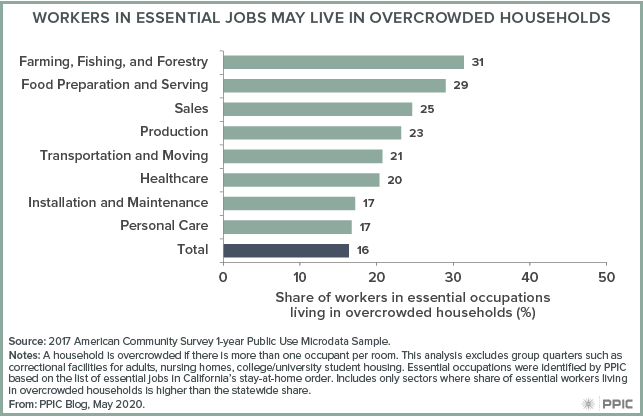
Figure - Workers in Essential Jobs May Live in Overcrowded Households

A recent study confirms that essential workers and those in larger households do face a higher risk of contracting coronavirus. It would be ideal to explore the relationship between COVID-19 cases and workers living in crowded conditions. However, inconsistent testing availability across regions makes cases an unreliable measure of the virus’s geographic spread; deaths, which are better measured, are a valuable proxy.

There is a clear link between COVID-19 deaths and essential workers who live in overcrowded homes, though the relationship is muddied by regional differences in terms of the age structure of the population,  underlying health conditions, and other factors. Santa Barbara (25%), Madera (23%), Los Angeles (21%), Orange (20%), and Tulare (19%) counties have the highest shares of essential workers in overcrowded homes. Los Angeles and Tulare are experiencing large numbers of deaths per capita, at 14 and 9 deaths per 100,000 people, but the other counties are not.[/vc_column_text][/vc_column][/vc_row][vc_row max_width=”80″ visibility=”visible-desktop”][vc_column][vc_column_text][infogram id=”1p375951mzw3k9c0mex60d30kdidymqxjlx?live”][/vc_column_text][/vc_column][/vc_row][vc_row max_width=”80″ visibility=”visible-tablet-landscape”][vc_column][vc_column_text]

[infogram id=”1p375951mzw3k9c0mex60d30kdidymqxjlx?live”]

[/vc_column_text][/vc_column][/vc_row][vc_row visibility=”visible-tablet-portrait”][vc_column][vc_column_text]

[infogram id=”1p375951mzw3k9c0mex60d30kdidymqxjlx?live”]

[/vc_column_text][/vc_column][/vc_row][vc_row visibility=”visible-phone”][vc_column][vc_column_text]

[infogram id=”1p375951mzw3k9c0mex60d30kdidymqxjlx?live”]

[/vc_column_text][/vc_column][/vc_row][vc_row][vc_column][vc_column_text]California will lift some shelter-in-place restrictions in the coming days, and more people will leave their homes to work. Examining work and living conditions together can identify areas where people are least able to take effective actions against the spread of the coronavirus. Designing policies to protect the health of workers and their households will be critical to managing COVID-19 while restarting the state’s economy.[/vc_column_text][/vc_column][/vc_row]

Coping with COVID-19 in California’s Cities

California’s cities have been at the forefront of bold actions to manage the coronavirus pandemic. We talked to Carolyn Coleman, executive director of the League of California Cities, about the big challenges that the pandemic is bringing to cities across the state.

PPIC: How are cities coping with this unprecedented crisis?

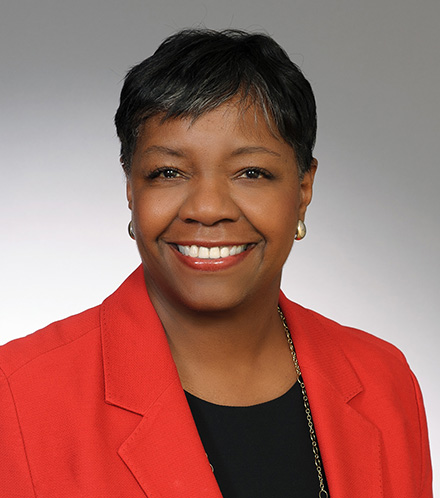
Photo of Carolyn ColemanCAROLYN COLEMAN: Local government leaders are some of the most pragmatic people I know. This comes from being on the front lines and hearing from your constituents everywhere you go—grocery stores, parks, and churches. Local officials are problem solvers, and they signed on to help their residents have a better quality of life. They have approached this crisis with the same dedication and commitment to serve that they brought to dealing with past crises, like the recent wildfires.


Across California, city leaders have stepped up with tools like eviction moratoriums and measures to prevent utility shutoffs or price gouging to protect their residents. Several are creating funds that will provide short-term financial assistance to help keep their small businesses afloat.

City officials are also working with public health entities, hospitals, schools and faith-based organizations to make sure medicines and meals are delivered to vulnerable populations.

Cities have also been very nimble in adapting government business to a virtual model. Council meetings, town halls, and public hearings have moved online with virtual tools that ensure public engagement. They are also using websites, social media, and new technology platforms to engage with their residents and make sure they have needed information.

Early orders by California cities to stay at home or restrict gatherings are being credited with flattening the curve. There was some pushback when these orders were announced, but they’re saving lives here in California, and that started with local government leaders who were out in front of the crisis.

The economic disruption this crisis is having on families, businesses and governments is devastating. While saving lives, stay-at-home orders have led to business closures, furloughs, and layoffs, as well as decreases in tax revenues that local governments use to fund essential services like police, fire, and code enforcement. At the same time, cities are experiencing increased expenses because of COVID-19. We’ll be working closely with federal and state partners to fill revenue gaps so we can continue to provide the services our communities need right now.

PPIC: Are there particular needs in rural communities?

CC: For years, we’ve known that access to high-quality broadband is not as widely available as it should be in our rural communities. With schools closed and some health services moving online, this crisis is a wake-up call to get more broadband deployed across the state.

Rural communities also tend to have smaller budgets with fewer resources to respond to economic disruption caused by this crisis. As they navigate the shortfall in revenues and increase in expenses, their need for fiscal assistance from the state and federal governments could be proportionately as large as our biggest cities.

The federal Coronavirus Aid, Relief, and Economic Security (CARES) Act targets cities with more than 500,000 residents. Most of California’s 482 cities are smaller than that, and yet they may end up with needs that are proportionally as large as those of big cities. That’s why the League will continue to advocate for fiscal assistance for all of our cities, to ensure that none are left behind—during either the pandemic or the financial recovery from it.

PPIC: Talk about the ongoing housing shortages and homelessness in the context of this emergency.

CC: I applaud the governor and local leaders who in recent weeks have partnered closely to safely house more Californians. Every day we hear about cities opening new emergency shelters, putting out more handwashing stations, passing out hand sanitizer in homeless encampments, and taking other steps to protect public health. The governor is sending more trailers to cities for emergency housing, and housing construction is continuing—it’s an essential service. Pandemic or not, we all know we have to increase housing production so more of our families have places to live.

We’re also seeing some new ways to streamline the housing production process, which could become mainstream once the health crisis is over.

PPIC: What gives you hope during these challenging times?

CC: I’m heartened by the public leadership we’re seeing. Local leaders, and leaders at all levels of government, are stepping up to save lives. And the selflessness that surfaces in times like these is a reminder that we’re all connected. People rise.

Video: Californians and Their Government

In California’s March 3 primary, the state ballot will feature several initiatives—including a $15 billion bond for the construction and modernization of public education facilities. Slightly more than half of likely voters approve, while 42% are opposed and 8% are undecided. PPIC researcher Dean Bonner outlined this and other key findings from the latest PPIC Statewide Survey at a briefing in Sacramento last Friday.

In November, Californians may be asked to vote on a constitutional amendment that would require state and local governments to provide housing or shelter beds to all homeless residents. About six in ten adults and 55% of likely voters say they would vote yes on such an amendment. Majorities of adults and likely voters also support Governor Newsom’s proposal to allocate $1 billion to address homelessness.

Other survey highlights:

  • More than six in ten Californians say housing affordability is a big problem in their part of the state, and the cost of living is causing many to consider moving out of California.
  • A majority of Californians (53%) approve of the way Governor Newsom is handling his job; this is the governor’s highest approval rating to date.
  • Views on the governor’s plan to scale back the high-speed rail project are mixed, while most approve of his proposal to build only one tunnel under the Sacramento–San Joaquin Delta.
  • Bernie Sanders leads all other Democratic presidential candidates with 32% support among Democratic primary likely voters. Joe Biden has 14% support, 13% support Elizabeth Warren, and Pete Buttigieg and Michael Bloomberg were tied at 12%.

Covering the Real Costs of College

Faced with the state’s high cost of living, California college students struggle to secure adequate food and housing. Even amid one of the largest and longest economic expansions in state history, 33% of students are housing insecure and 35% have low or very low food security, according to a California Student Aid Commission survey of 150,000 college students. As the state seeks to meet economic demand by producing more students with degrees and certificates, the full cost of college remains a barrier to progress.

Governor Newsom and the legislature have recognized the need to reform state financial aid programs to address the full cost of college. The 2019–20 state budget provided $41 million in ongoing funding to help colleges address food and housing insecurity, $19 million to support rapid rehousing programs, and increased the number of competitive state grants for non-traditional students from 25,750 to 41,000.  Additionally, the legislature increased the maximum award amount that students with children pay for non-tuition college costs from $1,672 to about $6,000.

However, broader reform of the state grant aid program remains elusive. Two recent bills sought to expand eligibility for Cal Grants by eliminating current age, time out of high school, and high school GPA requirements. The bills also sought to provide additional non-tuition aid to community college students and students in career education programs.  The bills did not make it to a vote; however, they will be re-examined in the next legislative session. Estimated at $2 billion per year, proposed reforms would nearly double the annual cost of the program.

Consequently, the California Student Aid Commission, the agency that distributes financial aid, intends to streamline these proposals to constrain costs while increasing access. Higher education is a vital tool that increases economic and social mobility; ensuring all students have equal access to an affordable education is paramount to modernizing California’s economy. An equitable and financially viable approach to financial aid will be critical if the state’s booming economy slows in coming years.

Video: Poverty and Opportunity in California

Although California has seen strong job growth in recent years, poverty remains persistently high. In many inland regions, the prevalence of unemployment or low-wage work is a key driver of economic hardship, while elsewhere—especially in coastal areas—the high cost of housing and other necessities plays a major part.

At an event in Sacramento last week, PPIC researcher Tess Thorman discussed the latest findings from the PPIC-Stanford California Poverty Measure (CPM), and a panel of experts discussed the role that policymakers, community organizations, and other stakeholders can play in reducing poverty and broadening economic opportunity.

Poverty has declined—slowly—in California, Thorman said. Also, while nearly 7 million people in California (17.8%) are in poverty, a roughly equal number are living just above the CPM poverty threshold. Certain groups are more likely to be living in poverty, such as young children, Latinos, and families without any college graduates.

Panelists discussed the key role that housing stability plays in achieving financial security. Richard Raya, director of Mission Promise Neighborhood in San Francisco, said his organization connects families with a range of supports, including below-market rental housing. He explained how the city has partnered with local foundations to create “an ‘accelerator fund’ that allows affordable housing developers to identify existing apartment buildings that are rent-controlled” and purchase them in order to keep them affordable – an approach Raya says could be a model for other communities.

Kimberley Johnson, director of the California Department of Social Services (CDSS), underscored how housing and financial stability are fundamental to meeting educational and career goals. Johnson noted that the governor has boosted investments in key elements of the social safety net, such as CalFresh food assistance and the California Earned Income Tax Credit. An important focus for CDSS currently is creating linkages across “a very robust array” of programs and services to make them more accessible to those in need.

California Bridge Academies, launched in Fresno and now active in six counties, offers a voluntary, 18-month program designed to help families exit poverty. According to founder Pete Weber, each household has a “career and family navigator” who assesses needs, skills, and interests. The navigator ensures that “each client is connected to the right on-ramps” so that parents as well as their children receive all necessary services and supports.

The panel highlighted the importance of coordinating services with an eye toward improving family well-being. Caroline Danielson, PPIC policy director and senior fellow, discussed the importance of creating linkages “across different kinds of programs” because “it can be a fragmented safety net.” Danielson pointed out that California has made progress in this effort, while also noting that further efforts to “connect these dots” for children could make a substantial difference in poverty.


Video: Californians and Their Government

As California’s 2020 Democratic presidential primary draws closer, Elizabeth Warren, Joe Biden, and Bernie Sanders lead the rest of the field by a wide margin. However, many voters say they would consider supporting a candidate other than their current choice. These and other key findings from PPIC’s latest statewide survey were outlined by Rachel Lawler in Sacramento last Thursday.

Likely voters identifying as registered Democrats or as Democratic-leaning independents support Elizabeth Warren (23%), Joe Biden (22%), and Bernie Sanders (21%) at levels well above Kamala Harris (8%) and Pete Buttigieg (6%). No other candidate is preferred by more than 3 percent, and 9 percent say they don’t know which candidate they prefer. More than half of voters who expressed a preference would consider supporting another candidate.

The survey asked about a $15 billion bond for school and college construction that has been approved by the legislature for the March 2020 ballot. It has the support of two in three adults—but only 54 percent of likely voters. This narrow margin of support coincides with concern about the state’s economic outlook. Fewer than half (41% adults, 37% likely voters) expect good times financially in California during the next 12 months.

A potential November 2020 ballot measure that would amend Proposition 13 to tax commercial properties at their current market rate and direct some of the new revenue to K–12 public schools is favored by 57 percent of adults. However, fewer than half (47%) of likely voters favor the measure, and this share is down somewhat from April 2019 (54%). A potential state bond measure to fund water infrastructure is favored by 68 percent of adults and 57 percent of likely voters.

Other survey highlights:

  • Californians are most likely to name homelessness (15% adults, 16% likely voters) and jobs and the economy (15% adults, 13% likely voters) as the top issue facing the state. Other issues named include housing costs, immigration, and the environment.
  • Most Californians view immigrants as a benefit to the state, and half are at least somewhat worried about someone they know being deported as a result of increased federal immigration enforcement.
  • Two in three Californians think the Supreme Court should not overturn Roe v. Wade; more than half think some states are making it too difficult to get an abortion.
  • Half of Californians say they have a disaster plan and six in ten have a disaster supplies kit. Six in ten are very (28%) or somewhat (32%) worried about personal injury, property damage, or a major disruption of their routine as the result of a disaster.


New Housing Permits Decline Statewide

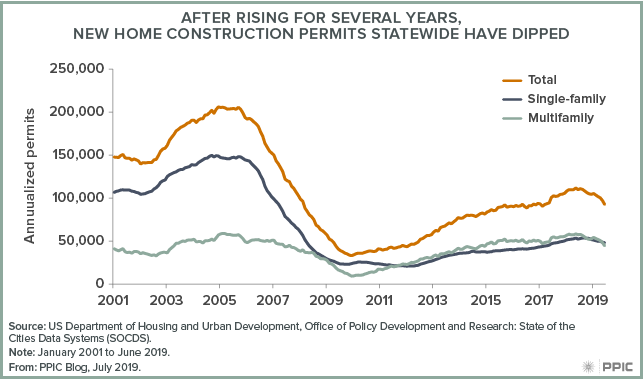
The first half of 2019 saw a substantial decline in the number of new housing units authorized by building permits. This has heightened concern about the state’s housing crisis and cast doubt on whether Governor Newsom’s goal of adding 3.5 million new housing units by 2025 can be met. More importantly, it underlines the need for a deeper understanding of housing markets and what if any action can be taken at state and local levels to move the needle.

New construction has been falling short of demand for many years. Estimates from Beacon Economics put the backlog at about 2.3 million housing units in 2017. In 2018, only 104,000 residential permits were issued—this was well below the pre-recession permitting peak and left the state far below the number of new homes needed.

According to state housing officials, California needs an average of 180,000 new homes every year to make up for current deficits and accommodate future population growth. This number is not unattainable: an average of 200,000 units were permitted each year from 2003 to 2005. However, today the statewide numbers are moving in the wrong direction. In June 2019, residential permits were down 38% compared to June 2018. On an annualized basis, permits were down 16%, totaling about 93,000. Permits for multi-family units decreased even more sharply, by 23%; only 44,400 were issued.

figure - After Rising for Several Years, New Home Construction Permits Statewide have Dipped

Housing markets and new construction vary widely across the state. In San Mateo, San Diego, Ventura, and Alameda Counties, the number of permits decreased by at least 30%. Meanwhile, in San Francisco and Sonoma Counties permits increased by 66% and 47%, respectively. Part of the increase in Sonoma County is related to the replacement of homes lost during the 2017 wildfire.

This year’s state budget includes $1.75 billion for the construction of new homes, reflecting the fact that Governor Newson has made housing a high priority. A large boost in production will likely also require local land-use and zoning policies change. For example, research has shown that more multi-family housing is needed to address the affordability crisis in the state—but, in many localities, zoning restrictions make it very difficult to increase this type of housing. State-level action in this area has been highly contentious, as it often comes into conflict with local control. For example, Senate Bill 50, which would eliminate some zoning restrictions near major transit lines and job centers, unleashed a great deal of controversy and is now on hold until next year.

Zoning reform is one step toward the goal of increasing housing production, but it is probably not sufficient. Tying financial incentives directly to housing production is a potentially effective state strategy. Moving forward, sustained cooperation among state and local governments and also private developers is critical to addressing California’s housing challenges.


Video: Californians and Their Government

Less than a year before California’s presidential primary, likely voters who are Democrats or who lean Democratic are divided on strategy: is it more important for the party to nominate the candidate who seems mostly likely to defeat President Trump or the candidate whose positions align most closely their views? But almost all Californians see voting in the 2020 elections as very important. At a lunchtime briefing in Sacramento last Thursday, PPIC researcher Dean Bonner outlined these and other key findings from the latest statewide survey.

Two in three California likely voters say they will definitely or probably choose a candidate other than Trump. There is a huge partisan divide on this question: 93% of Democrats and 66% of independents would definitely or probably vote for another candidate if the election were held today, while 82% of Republicans would definitely or probably vote for Trump.

Most Californians say that the investigation by special counsel Robert Mueller did not clear the president of wrongdoing, and Californians are more likely that the nation as a whole to say impeachment proceedings should begin. But here, too, there is a partisan divide: 66% of Democrats say Congress should begin the process, compared to only 39% of independents and 9% of Republicans.

Other survey highlights:

  • A majority of Californians say their housing costs cause a financial strain; six in ten favor the governor’s plan to allocate $1 billion to address homelessness, and similar shares favor proposed new rules intended to create more affordable housing.
  • Three-quarters of Californians see participation in the 2020 Census as very important—but most have concerns about confidentiality.
  • An overwhelming majority are concerned about rising electricity bills in the wake of the PG&E bankruptcy.
  • Californians are concerned that the recent outbreak of measles could spread; most believe that vaccines are very safe and an overwhelming majority say vaccination against measles and other diseases should be required.

Coping with High Housing Costs in College

California’s housing crisis affects college students around the state. Over the past eight years—even as tuition has been stable at California’s public colleges and universities—the cost of attending college has risen because housing costs have gone up. Most students at California’s community colleges and in the California State University system pay more for housing than they do for tuition. At the University of California, housing costs are on par with tuition (for those who pay full tuition).

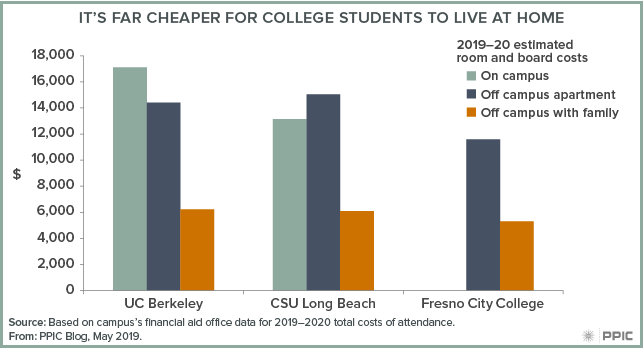
One way students limit their housing costs is by living with their parents or other family members. For most students, living at home is much cheaper than living in housing provided by the university or in an apartment off campus. Housing costs vary across systems, but in every case living with family is much less expensive than other housing options. And the savings are large—as much as $10,000 a year.

figure - It’s Far Cheaper for College Students to Live at Home

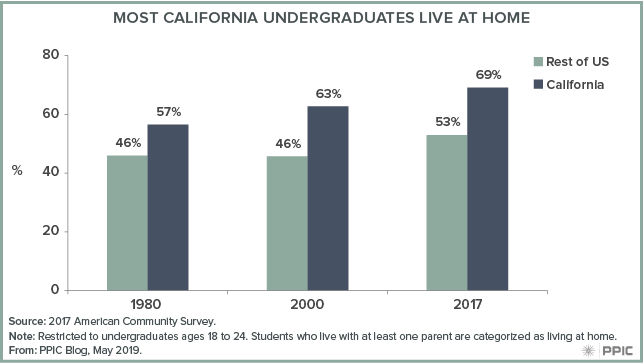
In fact, the large majority of California undergraduates do live at home (69% in 2017), and that share has been increasing over the past few decades, according to the American Community Survey. Moreover, California college students are substantially more likely to live at home than their counterparts in the rest of the nation.

figure - Most California Undergraduates Live at Home

Partly, this difference reflects the mix of colleges in California. Community college students are especially likely to live with parents—not surprising given the broad geographic coverage of this system. And CSU students are more likely to live at home than UC students. But the difference in living situations between California students and their peers nationwide almost certainly reflects California’s higher housing costs.

Living at home while attending college can be a great way to reduce costs. But it also has a downside. Research suggests that students who live at home are less connected to their college—and less likely to graduate.

California’s colleges and universities cannot solve the state’s housing crisis, but many of them are working to expand on-campus housing opportunities. They are also working with the state to develop ways to expand grants to cover housing costs as well as tuition. The governor’s proposed budget includes $40 million to provide emergency housing support for UC and CSU students (including those struggling with homelessness).

With no quick solution to the high cost of housing in California, thoughtful actions will be critical to providing support to college students across the state.

Interactive: Will Housing Costs Drive Californians Away?

[vc_row][vc_column][vc_column_text]Home values and rental markets in California are among the most expensive in the nation, and supply shortages continue to put upward pressure on housing prices. Over the last decade, the state averaged fewer than 80,000 new homes annually—far below the estimated need of 180,000 additional units each year, according to a recent report from the California Department of Housing and Community Development.

In our March survey, we found that a record-high share of Californians (68%) believe that housing affordability is a big problem in their region, and 47% are seriously considering moving away from the part of the state they live in now due to housing costs.

The interactive below allows you to take a closer look at how interest in moving due to housing costs varies across demographic groups. For example, Los Angeles County residents (39%) are the most likely to say housing costs have made them seriously consider moving out of the state, with another 13% saying they’re considering moving elsewhere in California. Overall, half of coastal residents say they’re seriously thinking about moving away from where they live now.

Young adults are also much more likely to have considered moving than older residents. More than half (56%) of young adults age 18–34 have seriously thought about moving due to housing costs—including four in ten who have considered leaving the state—compared to 38% of adults over 55.

We hope this interactive sheds light on Californians’ perceptions of housing costs. As the new governor and state legislature work on their policy agendas for the year, the PPIC survey team will continue to monitor the issue of housing closely.[/vc_column_text][/vc_column][/vc_row][vc_row][vc_column][vc_raw_html]JTNDZGl2JTIwY2xhc3MlM0QlMjd0YWJsZWF1UGxhY2Vob2xkZXIlMjclMjBpZCUzRCUyN3ZpejE1NTU3MDc3NzcyNTUlMjclMjBzdHlsZSUzRCUyN3Bvc2l0aW9uJTNBJTIwcmVsYXRpdmUlMjclM0UlM0Nub3NjcmlwdCUzRSUzQ2ElMjBocmVmJTNEJTI3aHR0cHMlM0ElMjYlMjM0NyUzQiUyNiUyMzQ3JTNCd3d3LnBwaWMub3JnJTI2JTIzNDclM0JibG9nJTI2JTIzNDclM0JpbnRlcmFjdGl2ZS13aWxsLWhvdXNpbmctY29zdHMtZHJpdmUtY2FsaWZvcm5pYW5zLWF3YXklMjclM0UlM0NpbWclMjBhbHQlM0QlMjclMjAlMjclMjBzcmMlM0QlMjdodHRwcyUzQSUyNiUyMzQ3JTNCJTI2JTIzNDclM0JwdWJsaWMudGFibGVhdS5jb20lMjYlMjM0NyUzQnN0YXRpYyUyNiUyMzQ3JTNCaW1hZ2VzJTI2JTIzNDclM0JNYSUyNiUyMzQ3JTNCTWFueUNhbGlmb3JuaWFuc0FyZVRoaW5raW5nb2ZNb3ZpbmdkdWV0b0hvdXNpbmdDb3N0cyUyNiUyMzQ3JTNCQ3Jvc3N0YWJzJTI2JTIzNDclM0IxX3Jzcy5wbmclMjclMjBzdHlsZSUzRCUyN2JvcmRlciUzQSUyMG5vbmUlMjclMjAlMkYlM0UlM0MlMkZhJTNFJTNDJTJGbm9zY3JpcHQlM0UlM0NvYmplY3QlMjBjbGFzcyUzRCUyN3RhYmxlYXVWaXolMjclMjAlMjBzdHlsZSUzRCUyN2Rpc3BsYXklM0Fub25lJTNCJTI3JTNFJTNDcGFyYW0lMjBuYW1lJTNEJTI3aG9zdF91cmwlMjclMjB2YWx1ZSUzRCUyN2h0dHBzJTI1M0ElMjUyRiUyNTJGcHVibGljLnRhYmxlYXUuY29tJTI1MkYlMjclMjAlMkYlM0UlMjAlM0NwYXJhbSUyMG5hbWUlM0QlMjdlbWJlZF9jb2RlX3ZlcnNpb24lMjclMjB2YWx1ZSUzRCUyNzMlMjclMjAlMkYlM0UlMjAlM0NwYXJhbSUyMG5hbWUlM0QlMjdzaXRlX3Jvb3QlMjclMjB2YWx1ZSUzRCUyNyUyNyUyMCUyRiUzRSUzQ3BhcmFtJTIwbmFtZSUzRCUyN25hbWUlMjclMjB2YWx1ZSUzRCUyN01hbnlDYWxpZm9ybmlhbnNBcmVUaGlua2luZ29mTW92aW5nZHVldG9Ib3VzaW5nQ29zdHMlMjYlMjM0NyUzQkNyb3NzdGFicyUyNyUyMCUyRiUzRSUzQ3BhcmFtJTIwbmFtZSUzRCUyN3RhYnMlMjclMjB2YWx1ZSUzRCUyN25vJTI3JTIwJTJGJTNFJTNDcGFyYW0lMjBuYW1lJTNEJTI3dG9vbGJhciUyNyUyMHZhbHVlJTNEJTI3bm8lMjclMjAlMkYlM0UlM0NwYXJhbSUyMG5hbWUlM0QlMjdzdGF0aWNfaW1hZ2UlMjclMjB2YWx1ZSUzRCUyN2h0dHBzJTNBJTI2JTIzNDclM0IlMjYlMjM0NyUzQnB1YmxpYy50YWJsZWF1LmNvbSUyNiUyMzQ3JTNCc3RhdGljJTI2JTIzNDclM0JpbWFnZXMlMjYlMjM0NyUzQk1hJTI2JTIzNDclM0JNYW55Q2FsaWZvcm5pYW5zQXJlVGhpbmtpbmdvZk1vdmluZ2R1ZXRvSG91c2luZ0Nvc3RzJTI2JTIzNDclM0JDcm9zc3RhYnMlMjYlMjM0NyUzQjEucG5nJTI3JTIwJTJGJTNFJTIwJTNDcGFyYW0lMjBuYW1lJTNEJTI3YW5pbWF0ZV90cmFuc2l0aW9uJTI3JTIwdmFsdWUlM0QlMjd5ZXMlMjclMjAlMkYlM0UlM0NwYXJhbSUyMG5hbWUlM0QlMjdkaXNwbGF5X3N0YXRpY19pbWFnZSUyNyUyMHZhbHVlJTNEJTI3eWVzJTI3JTIwJTJGJTNFJTNDcGFyYW0lMjBuYW1lJTNEJTI3ZGlzcGxheV9zcGlubmVyJTI3JTIwdmFsdWUlM0QlMjd5ZXMlMjclMjAlMkYlM0UlM0NwYXJhbSUyMG5hbWUlM0QlMjdkaXNwbGF5X292ZXJsYXklMjclMjB2YWx1ZSUzRCUyN3llcyUyNyUyMCUyRiUzRSUzQ3BhcmFtJTIwbmFtZSUzRCUyN2Rpc3BsYXlfY291bnQlMjclMjB2YWx1ZSUzRCUyN3llcyUyNyUyMCUyRiUzRSUzQ3BhcmFtJTIwbmFtZSUzRCUyN2ZpbHRlciUyNyUyMHZhbHVlJTNEJTI3cHVibGlzaCUzRHllcyUyNyUyMCUyRiUzRSUzQyUyRm9iamVjdCUzRSUzQyUyRmRpdiUzRSUyMCUyMCUyMCUyMCUyMCUyMCUyMCUyMCUyMCUyMCUyMCUyMCUyMCUyMCUyMCUyMCUzQ3NjcmlwdCUyMHR5cGUlM0QlMjd0ZXh0JTJGamF2YXNjcmlwdCUyNyUzRSUyMCUyMCUyMCUyMCUyMCUyMCUyMCUyMCUyMCUyMCUyMCUyMCUyMCUyMCUyMCUyMCUyMCUyMCUyMCUyMHZhciUyMGRpdkVsZW1lbnQlMjAlM0QlMjBkb2N1bWVudC5nZXRFbGVtZW50QnlJZCUyOCUyN3ZpejE1NTU3MDc3NzcyNTUlMjclMjklM0IlMjAlMjAlMjAlMjAlMjAlMjAlMjAlMjAlMjAlMjAlMjAlMjAlMjAlMjAlMjAlMjAlMjAlMjAlMjAlMjB2YXIlMjB2aXpFbGVtZW50JTIwJTNEJTIwZGl2RWxlbWVudC5nZXRFbGVtZW50c0J5VGFnTmFtZSUyOCUyN29iamVjdCUyNyUyOSU1QjAlNUQlM0IlMjAlMjAlMjAlMjAlMjAlMjAlMjAlMjAlMjAlMjAlMjAlMjAlMjAlMjAlMjAlMjAlMjAlMjAlMjAlMjBpZiUyMCUyOCUyMGRpdkVsZW1lbnQub2Zmc2V0V2lkdGglMjAlM0UlMjA4MDAlMjAlMjklMjAlN0IlMjB2aXpFbGVtZW50LnN0eWxlLndpZHRoJTNEJTI3MTAwJTI1JTI3JTNCdml6RWxlbWVudC5zdHlsZS5oZWlnaHQlM0QlMjhkaXZFbGVtZW50Lm9mZnNldFdpZHRoJTJBMC43NSUyOSUyQiUyN3B4JTI3JTNCJTdEJTIwZWxzZSUyMGlmJTIwJTI4JTIwZGl2RWxlbWVudC5vZmZzZXRXaWR0aCUyMCUzRSUyMDUwMCUyMCUyOSUyMCU3QiUyMHZpekVsZW1lbnQuc3R5bGUud2lkdGglM0QlMjcxMDAlMjUlMjclM0J2aXpFbGVtZW50LnN0eWxlLmhlaWdodCUzRCUyOGRpdkVsZW1lbnQub2Zmc2V0V2lkdGglMkExLjc3JTI5JTJCJTI3cHglMjclM0IlN0QlMjBlbHNlJTIwJTdCJTIwdml6RWxlbWVudC5zdHlsZS53aWR0aCUzRCUyNzEwMCUyNSUyNyUzQnZpekVsZW1lbnQuc3R5bGUubWluSGVpZ2h0JTNEJTI3NzgwcHglMjclM0J2aXpFbGVtZW50LnN0eWxlLm1heEhlaWdodCUzRCUyOGRpdkVsZW1lbnQub2Zmc2V0V2lkdGglMkExLjc3JTI5JTJCJTI3cHglMjclM0IlN0QlMjAlMjAlMjAlMjAlMjAlMjAlMjAlMjAlMjAlMjAlMjAlMjAlMjAlMjAlMjAlMjAlMjAlMjAlMjAlMjAlMjB2YXIlMjBzY3JpcHRFbGVtZW50JTIwJTNEJTIwZG9jdW1lbnQuY3JlYXRlRWxlbWVudCUyOCUyN3NjcmlwdCUyNyUyOSUzQiUyMCUyMCUyMCUyMCUyMCUyMCUyMCUyMCUyMCUyMCUyMCUyMCUyMCUyMCUyMCUyMCUyMCUyMCUyMCUyMHNjcmlwdEVsZW1lbnQuc3JjJTIwJTNEJTIwJTI3aHR0cHMlM0ElMkYlMkZwdWJsaWMudGFibGVhdS5jb20lMkZqYXZhc2NyaXB0cyUyRmFwaSUyRnZpel92MS5qcyUyNyUzQiUyMCUyMCUyMCUyMCUyMCUyMCUyMCUyMCUyMCUyMCUyMCUyMCUyMCUyMCUyMCUyMCUyMCUyMCUyMCUyMHZpekVsZW1lbnQucGFyZW50Tm9kZS5pbnNlcnRCZWZvcmUlMjhzY3JpcHRFbGVtZW50JTJDJTIwdml6RWxlbWVudCUyOSUzQiUyMCUyMCUyMCUyMCUyMCUyMCUyMCUyMCUyMCUyMCUyMCUyMCUyMCUyMCUyMCUyMCUzQyUyRnNjcmlwdCUzRQ==[/vc_raw_html][/vc_column][/vc_row]