The Challenges of Getting More Crop per Drop

The continuing drought is having a big ripple effect in California agriculture. We talked to David Zoldoske, the director of Fresno State’s Center for Irrigation Technology (CIT) and a member of the Water Policy Center’s research network, about trends in farm water management.

PPIC: How well is California agriculture doing in terms of water efficiency in recent years?

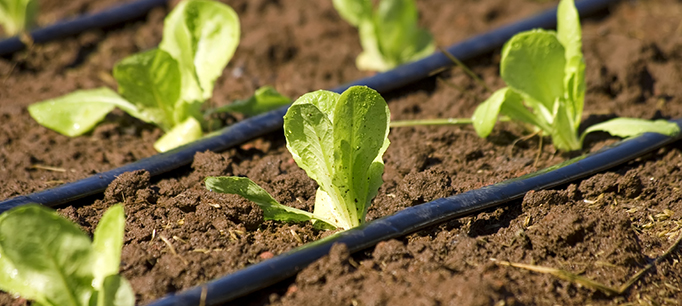
David Zoldoske: The big change is that the state’s growers are investing heavily in drip and micro-irrigation systems, and very soon there will be more acreage using these efficient systems than flood or furrow irrigation. Part of the increase comes from growers converting annual crops to trees and vines, and installing micro irrigation systems. So while we’ve gotten more efficient in irrigating these acres, we’ve also hardened demand for water—and in some cases increased overall water demand—because these perennial crops can’t be fallowed in times of drought. But there’s no doubt that this is a paradigm change, and it’s making California agriculture more efficient in its overall on-farm water use.

PPIC: What successful water-management technologies are California farmers already using that deserve wider adoption?

DZ: Tools such as water meters for measuring flow rates from pumps and soil moisture sensors are both important to improve water management. Scheduling for efficiency means knowing how much water you’re applying (the meters), and how deep it’s going (the sensors). Flow meters also help growers see real-time changes in how much water they’re using—if flow rates decrease, it could indicate a drop in groundwater levels, a worn pump, or perhaps a clogged filter. Without metering, it’s like driving a car without a speedometer or odometer. We’ve estimated that only about a third of groundwater pumps have flow meters installed, so there’s lots of room for wider adoption of this important technology. Water meters can provide important information both on-farm (how efficiently is the irrigation system performing and how much water was applied), as well as a measuring groundwater basin withdrawals.

PPIC: What’s the potential for high tech improvements to take farm-water efficiency to the next level?

DZ: Managing water on a large irrigated farm is both an art and a science, with multiple data points to consider. Many growers are operating with too little information, while others may be experiencing data overload from all the technology inputs. New cloud-based technologies can help farmers get more data, in real time, and allow them to better manage their crop water needs. But it’s important to remember that even with improved technologies on the farm, you can’t efficiently manage a poorly operating system. Often it’s the low tech approaches that provide the most benefits—like getting your pump tested, having your irrigation system audited for uniformity, and improving scheduling. Farmers need to get better at these basic technologies before the high tech improvements can really work. There is a tremendous opportunity for the state to help incentivize the adoption of key technologies like water meters to improve water efficiency across a broad spectrum of irrigated land. California should be strategic when it provides financial assistance for adopting new water technologies.

PPIC: Are there “unintended consequences” to agriculture becoming more efficient?

DZ: As we convert more acres from flood or surface irrigation to higher efficiency drip systems, we need to be aware that we may be losing potential recharge for our groundwater basins. Excess water applied to a field is an important source—and in some places the primary source—of recharge. Improving water efficiency on any one farm can directly affect the groundwater supply of a nearby farm or municipality. California must aggressively address the need for more groundwater recharge as an offset for more efficient farm water use.

PPIC: What long-term improvements to agricultural water management do you think will come out of this drought?

DZ: The biggest change will be the understanding that we need to manage groundwater basins for sustainability. It will likely cause some financial pain and suffering, but it will also help us avoid a “tragedy of the commons” situation, where everyone loses as groundwater basins are exhausted. Right now, we have too many big straws in the aquifer, and we have to start managing for the long view. I also believe we’ll be making more use of non-traditional sources of water, such as the large amounts of saline groundwater found in parts of the Central Valley. We are also evaluating the potential of diverting excess floodwaters to cropland with high infiltration rates, to help recharge groundwater basins during wet years. And most likely in future, we’ll be farming less ground in California, but getting “more crop per drop” by using water more efficiently.

Read more: Water for Farms from our California’s Water briefing kit

Photo: David Zoldoske in the field.

Emergency Room Use and the ACA

With millions of Californians gaining health insurance as a result of the Affordable Care Act (ACA), there is concern about whether the state’s healthcare delivery systems—particularly hospital emergency departments (EDs)—will be able to absorb the additional patients.

These concerns are understandable. EDs are a critical access point to health care for all Californians—and, because they are required to serve patients regardless of insurance status or ability to pay, EDs are particularly important for uninsured and publicly insured residents.

Before implementation of the ACA, the uninsured relied on EDs for care more than those with private insurance but less than Medi-Cal beneficiaries. This was largely because uninsured patients are often billed for the services they receive, while Medi-Cal beneficiaries have either nominal or no financial responsibility for ED visits. Medi-Cal has grown significantly under the ACA—in 2014, monthly enrollment increased by 40 percent to cover more than 12 million Californians.

Newly released state data provides a first glimpse of ED usage under the ACA. While ED usage may shift in the future, these first-year figures suggest there has not yet been a dramatic change statewide. Total ED visits and visits that did not result in a hospital admission did increase in 2014. However, this growth was in line with the upward trend over the past decade.

The proportion of ED visits involving moderate and low urgency continued its recent downward trend in 2014. And there was no discernable change in the proportion of ED visits that required patients to be admitted to the hospital.

The ACA’s impact on the use of health services and health care delivery systems will be the subject of considerable research and a focus for policymakers over the next several years. It will be important to continue to carefully monitor and assess health care use, particularly across different hospitals, regions, and patient groups to ensure that hospital systems throughout California are functioning well and residents have access to the services they need.

SOURCE: California Office of Statewide Hospital Planning and Development, Hospital Annual Utilization Data.

NOTE: The 2014 data is from the preliminary datafile. Figures include information from 292 hospitals that had data available in all years, which represent about 90 percent of all ED visits reported. The urgency or severity level of ED visits that did not result in a hospital admission is based on Current Procedural Terminology (CPT) codes. Low urgency is defined as visits categorized as minor and low/moderate (CPT codes 99281 and 99282). Moderate urgency is defined as visits categorized with CPT code 99283 and high urgency includes visits categorized as severe with and without threat (CPT codes 99284 and 99285).

California Streams Going to Pot from Marijuana Boom

California has seen a recent boom in marijuana farms, mostly on private lands but also illegal grows on public lands such as national forests. Hard data are hard to come by for this crop, which is mostly grown in the shadows. But California Department of Fish and Wildlife officials estimate that production on public lands has increased by 55 to 100 percent in ecologically fragile north coast watersheds over the past five years alone. This surge is having a decidedly unhealthy effect on some of California’s rivers and streams. The situation is heating up as many of the state’s waterways are at all-time lows and some at-risk fisheries nearing collapse.

A study of four northwestern streams by the California Department of Fish and Wildlife (CDFW) found that marijuana plants consumed 20-30% of streamflow during the dry summer low-flow season—a crucial period for salmon and other species – as well as marijuana cultivation. Illegal marijuana growing also can bring a host of other environmental problems, from polluted runoff to habitat damage from improper road construction.

Peter Moyle, a fisheries expert with UC Davis and a member of the PPIC Water Policy Center research network, says, “All of these operations are taking water directly from streams, sucking away water from endangered Coho salmon, steelhead, tailed frogs, and other stream-dwellers, while damaging the banks of the streams. These diversions require permits—both from CDFW for stream alteration and from the State Water Board for diverting water—but few such permits seem to have been issued.”

Last year, Governor Jerry Brown marked $3.3 million in his budget proposal for enforcing pot growing rules in an effort to protect both the water supply and endangered species affected by growers.

Various state and local efforts are underway. The multi-agency Cannabis Pilot Project will enforce environmental protections in cannabis cultivation. The state’s Fish and Wildlife Watershed Enforcement Team inspects farms and seeks to permit them and bring them into compliance, but the understaffed team has been able to visit only a tiny portion of the state’s farms. New permitting processes to address illegal water diversions are in the works at the State Water Resources Control Board, but funding for compliance will be an issue. A recent a senate hearing called for a crackdown on illegal water diversions by marijuana growers.

In addition to highlighting the need for better regulation on the ground, the water impacts of marijuana growing are an example of the need for targeted and reliable sources of funding to address California’s environmental challenges. Currently, none of the tax revenue from California’s nearly $1 billion-a-year medical marijuana market is allocated for environmental protection.

Next year, Californians will likely be asked to vote on a ballot initiative to legalize possession of marijuana for recreational uses, as has been done in four other states and the District of Columbia. The potential ballot initiative provides an important opportunity to address a number of policy trade-offs, including the issue of how to pay for the environmental impacts of marijuana legalization.

Read “Regulating Marijuana” from the PPIC blog and Californians’ Attitudes Toward Marijuana Legalization.

Regulating Marijuana

In all likelihood, California voters will be asked to decide the legal status of marijuana on the 2016 ballot. Advocates of legalization are hoping to build on the momentum in four states (Alaska, Colorado, Oregon, and Washington) and the District of Columbia that made the recreational use of marijuana legal. Two national advocacy organizations—the Drug Policy Alliance and the Marijuana Policy Project—have made California a major focus for the 2016 election year.

Will a legalization initiative pass in California? Our May PPIC survey suggests that support is relatively high among likely voters: 56 percent said that marijuana should be legal. When we first began asking about legalization in May 2010, California voters were sharply divided. While support for marijuana legalization has fluctuated, since March 2014 we have seen an incremental trend toward support for legalization among likely voters. Among likely voters today, majorities of Democrats, independents, younger voters, and parents favor legalization. However, among some key electoral groups—including Latinos, Republicans, and older voters—legalization fails to get majority support. The success of any initiative aimed at legalizing the recreational use of marijuana is likely to depend on whether supporters can make inroads among these groups.

Would marijuana legalization be good public policy? That is an even more difficult question. This week a Blue Ribbon Commission on Marijuana Policy—chaired by Lt. Governor Gavin Newsom—made a series of recommendations to consider in crafting an initiative. The list includes ways to limit children’s access, reduce illegal activity and regulate sales.

Should an initiative pass, a significant degree of implementing legislation and regulation are likely to follow. In short, the devil is in the details.

These details may not only determine whether legalization is good public policy—they may also affect the electoral fortunes of any marijuana legalization initiative on the 2016 ballot. In our March 2015 survey, Republican (51%) and Latino (56%) likely voters were among the most likely to say they would be bothered if a store selling marijuana opened up in their neighborhood. Similarly, in our May 2015 survey, Republican (58%) and Latino (55%) likely voters were among the most likely to say that they are very concerned about more underage people trying marijuana if it were made legal. The details of regulation and implementation are likely to play an important role in addressing some of these voters’ concerns.

In the coming months, PPIC plans to contribute to the discussion surrounding the legal status of marijuana in the state. As always, our aim will be to provide essential information and help frame the debate. By identifying some of the key issues the state will have to address, we hope to help policymakers—and, ultimately, the voters—improve California’s marijuana policies.

Focus on Medi-Cal Funding

The legislature is currently in a special session to address Medi-Cal financing issues. The governor called the session to deal with his proposal to restructure the tax on managed care organizations—which currently generates about $1 billion in federal funding for Medi-Cal—so that it meets federal guidelines. In addition to complying with federal requirements, the governor’s proposed changes to the managed care tax will also provide revenue to increase payment rates for providers of services to the developmentally disabled and undo cuts to the In-Home Supportive Services (IHSS) program. In the absence of these changes, the state could face a $1.3 billion shortfall in Medi-Cal financing.

Regardless of the outcome of this special session, the state faces the challenge of establishing a stable and sustainable state funding base for Medi-Cal, which now covers nearly one-third of the state population. Since Medi-Cal expanded under the Affordable Care Act (ACA) less than two years ago, enrollment has increased by nearly 40 percent, and about 12 million Californians are now covered. Nearly all new enrollees are in Medi-Cal managed care, which has also grown considerably over the past few years. The federal government is providing most of the financing for Medi-Cal expansion, but there is uncertainty about state costs in future years.

Enrollment growth has increased the total costs of the program, which are expected to be more than $90 billion in the 2015–16 budget year—an increase of nearly 50 percent from the 2013–14 fiscal year, which included the first six months of the ACA’s Medi-Cal expansion. More than two-thirds of this increase has been funded by the federal government, which pays 100 percent of the costs of those who became newly eligible for Medi-Cal during the first three years of the ACA.

But the state will assume responsibility for 5 percent of costs for the newly eligible in 2017, and this share will gradually increase to 10 percent in 2020 and thereafter. Based on cost estimates for the newly eligible from the current state budget, this amounts to an additional $700M in 2017 and $1.4B in 2020. And this estimate doesn’t account for any increases in health care costs.

While state General Fund spending for Medi-Cal has grown relatively modestly since the ACA expansion, there are additional sources of uncertainty about future state costs for Medi-Cal, including (but probably not limited to):

  • Pressure to increase Medi-Cal provider rates, which are among the lowest in the country.
  • The legal status of President Obama’s executive order allowing many undocumented immigrants to get health coverage and the number of immigrants who could become eligible for full Medi-Cal benefits—which would be financed entirely by the state.
  • The effect of changes to state financing for county indigent care (under AB 85), which is expected to offset some of the state costs of the Medi-Cal expansion.
  • Ongoing negotiations with the federal government over the renewal of California’s 1115 Medicaid waiver. These waivers are designed to give states more flexibility to expand and improve their Medicaid programs. Over the past five years, California’s waiver brought in about $10 billion in federal funding to support Medi-Cal and the state public hospital system.
  • Planned reductions in federal funding from the Disproportionate Share Hospital (DSH) program, which provides additional funds for California hospitals that serve large shares of uninsured and publicly insured Californians. The lion’s share of DSH funds in California go to public hospital systems—an important source of specialty and inpatient care for Medi-Cal beneficiaries.
  • Required expansions to behavioral health benefits, including mental health treatment and substance use disorder services.
  • The high cost of new drugs—most notably for the treatment of Hepatitis C. Nationally, prevalence rates of Hepatitis C are higher among low-income men, who are among those most affected by ACA changes in Medi-Cal eligibility.

Long a complex issue, Medi-Cal financing has been complicated even more in recent years by the ACA, which affects all aspects of California’s evolving health care delivery system. But it will be important for the state to meet the challenge of developing a sustainable funding plan for this program, which provides for comprehensive health services for nearly a third of state’s population.

Sources: Medi-Cal enrollment totals are from the Department of Health Care Services, Research and Analytic Studies Division, Medical Certified Eligibles, Summary Pivot Table, Most Recent 24 months, May 2015. Medi-Cal funding sources are from the Medi-Cal Local Assistance Estimates, May 2014 and May 2015.

The “Inexact Science” of Water Pricing

How can the price of water help us manage the drought? Like everything to do with water management in California, there is no easy answer. The State Water Resources Control Board recently held a workshop to examine the current pricing climate and explore the state’s role in helping urban water utilities adopt conservation-oriented water rates.

Currently, more than half of the state’s urban water utilities use some form of tiered water rates, which increase the per-gallon charge for higher levels of water use. While tiered pricing can encourage conservation, utilities also must meet other competing objectives, particularly covering the cost of providing services. When water sales fall, balancing the books can be a challenge, because fixed costs make up as much as 70 to 80 percent of total utility costs.

Ellen Hanak, director of PPIC’s Water Policy Center, presented findings from recent PPIC research on water system finance at the workshop. She noted that “urban water agencies have been successful so far at using revenue from water rates to remain fiscally stable.” But while utilities have generally been investing at a healthy pace, they are likely to be drawing down their financial reserves as water sales have fallen during this drought. Hanak also said that while pricing “is not an exact science,” water agencies could improve communication with customers about the major costs that must be covered even if water use declines.

One complicating factor lies with Proposition 218, a 1996 initiative that sought to ensure that the charges for many local services, including water, are closely linked to the costs of service to individual properties. Hanak and other panelists expressed concern that courts are interpreting the proposition’s cost-proportionality requirement too rigidly to allow tiered pricing to work effectively. For instance, a recent ruling in a case against San Juan Capistrano’s tiered pricing states that while this type of pricing is legal, the tiers must correspond to the actual cost of providing service at each level of usage – something easier said than done.

Ken Baerenklau, an associate professor at UC Riverside and a member of the Water Policy Center’s research network, studied a Southern California water district’s use of a specific type of tiered pricing, and found that household water demand was reduced by approximately 15% without significantly increasing the average price of water service. Baerenklau emphasized the need for better data collection on water rates and consumption in order to examine the effectiveness of various pricing mechanisms. He also noted that “there is a difference between the price and value of water,” and that we are currently not paying the true cost, especially with respect to the environment.

Lester Snow, executive director of the California Water Foundation and member of the PPIC Water Policy Center’s Advisory Council, recommended renewed investment in water infrastructure and management to adapt to our changing climate. Snow said that fundamental water policy changes should be made now while attention on water issues is high. He also advocated for reform of Proposition 218, saying that we are pushing people to conserve, but have systematically withheld some of the tools water agencies need.

Water Board members expressed interest in creating a clearinghouse of rate-setting tools for water agencies and case studies of agencies with successful conservation pricing. This will help agencies better understand what has worked and how to minimize the risk of adopting new pricing structures. Another important step mentioned by a number of panelists was the need for a statewide fee that could fund “fiscal orphans”—areas that are difficult to fund locally—such as lifeline rates for disadvantaged communities, stormwater capture, and investments to improve drought management.

Testimony: Measuring Poverty

The Assembly Human Services Committee held a hearing on Tuesday, July 14, to consider a joint resolution regarding official poverty measurement tools. PPIC research fellow Sarah Bohn provided background on official poverty statistics and explained how different measurement tools affect our understanding of poverty in California. Here are her prepared remarks.


My name is Sarah Bohn, I am a research fellow at the Public Policy Institute of California. PPIC is a nonpartisan, independent research institute and as such does not take positions on bills before the legislature. I am here today to inform the committee on facts related to Assembly Joint Resolution 22 (AJR 22). As some of you know, PPIC, in collaboration with the Stanford Center on Poverty and Inequality, has been deeply involved in research on alternative poverty measurement for the past three years. I will provide background on the shortcomings of official poverty statistics and offer an updated view of poverty measurement—and poverty in California.

According to official statistics, poverty is significantly higher (50% higher) than it was 50 years ago, when the War on Poverty began. As we shall see, this finding should be taken with a big grain of salt. Poverty status, as you know, is based on how family income compares to the “federal poverty line.” This was developed in the early 1960s as the first working definition of poverty in the U.S. It is based on family budgets of that time, when a typical family spent one-third of its income on food. So the threshold was (to simplify a bit) three times the cost of food a family would need to meet basic needs. While this was a novel use of the facts and information available then and was hugely important in creating a standard metric to inform policy, it’s hard to apply the same metric to modern families and derive a clear understanding of how families—and policy—are doing. There are two main reasons for this: (1) the cost of living and family budgets have shifted considerably, with families spending more on housing, work expenses (like commuting and child care), and medical care and less on food overall (2) several government programs have changed and expanded, but are not counted in family income data in the official poverty measure. For these reasons, official poverty statistics are hard to interpret; they essentially compare a part of family resources to an outdated benchmark.

Two current measures—the Census Bureau’s “Supplemental Poverty Measure” and the PPIC-Stanford “California Poverty Measure” (which uses a similar methodology)—update and realign the basic poverty concept that is now more than 50 years old. There is quite a lot of momentum and agreement around the benefits of these “supplemental” measures. In summary, the methodology aims to improve on official poverty measurement in the following ways. First, both measures use detailed data on what families actually spend to meet basic needs, rather than relying on a 1960s-era approximation. Second, these metrics allow for the cost of living to vary (conservatively), depending on where one lives. Third, they make use of a comprehensive estimate of resources families have on hand, which includes cash income, program benefits, taxes paid or credited, net of medical and work expenses.

The Supplemental and California Poverty Measures provide new insights to poverty. I’ll highlight a couple that are especially related to the impact of policy. First, I’ll return to the effects of the War on Poverty. Using supplemental measures, researchers find a clear downward trend in poverty—specifically, that government programs reduced poverty by 15 percentage points since the mid-1960s. These are facts that cannot be uncovered by official poverty data, which, you may recall, suggests that poverty rates rose 50 percent despite policy efforts. Second, poverty in California today would be much higher were it not for the safety net. Without major programs like CalWORKs, CalFresh, the federal Earned Income Tax Credit, and housing subsidies (among others) nearly 40 percent of children in California would be poor—or 30 percent of state residents overall.

It’s possible that the safety net in California could have an even longer reach than it already does. For one, increasing program participation among eligible families could reduce poverty. Also, because many poverty programs are not scaled to cost of living, their ability to materially affect families in poverty varies substantially across the state. In high-cost areas, safety net benefits reduce poverty by about 30 percent, but they reduce it by 50 percent in the Central Valley and far north. Poor families in coastal (and the most populous) parts of the state face costs $7,000 to $12,000 higher than the federal poverty line accounts for. Although we find that poor families in high cost areas are more likely to be working—and earning more—than their counterparts elsewhere, their earnings are not enough to boost them above the more realistic cost-adjusted supplemental poverty threshold. But their slightly higher earnings (which are still low by California standards) make them less likely to qualify for some safety net programs.

These examples scratch the surface of what is possible using the tools of improved measures like the Supplemental and California Poverty Measure. We also hope to use our research to assess how proposed changes to programs could move families out of poverty. But beyond these efforts, I would argue that simply tracking poverty in and across California and the U.S.—using truly comprehensive and accurate metrics—should be a regular contribution to the policymaking process. For those of us at PPIC and for other researchers involved in poverty research across the country, including those at the Census Bureau, alternative measures of poverty are still in their early phases, and, as such, rely on policymaker awareness and on funding to continue to produce. Thank you for your interest in the topic and your time today.


Don’t Count on El Niño to End the Drought

El Niño is back in the news, much as it was last year at this time. But this year, El Niño conditions in the tropical Pacific have intensified, and some climate scientists think the outcome this winter could be the return of much-needed rain. Hopeful media reports are describing the growing El Niño as a potential drought buster.

How solid are these predictions and should we count on a wet winter? Unfortunately, El Niño is an unreliable predictor of winter storminess. Although some of our wettest years have occurred during El Niño events, some very dry years have also occurred.

El Niño is the name given to a climatic pattern that originates in the Pacific tropics, and involves both the ocean and the atmosphere. It is defined by unusually warm upper-ocean waters in the central and eastern tropical Pacific, and is linked to slackened trade winds. El Niño conditions usually persist for several months and recur, irregularly, roughly every two to seven years. El Niño (and its opposite phase, a cool tropical Pacific condition known as La Niña) is Earth’s strongest and most important short-term climate variation because of its global reach: it disturbs climate and ecosystems in the tropics but also unleashes altered atmospheric patterns well beyond the tropics.

One of the regions it affects, usually during the winter, is California. Some El Niño events are strong enough to impact the North Pacific jet stream, which steers winter storms into California. Because the bulk of our seasonal precipitation occurs in a handful of strong winter storms the additional El Niño events make a big difference to the state’s water supply.

But El Niño often produces strong regional differences in precipitation. In many El Niño years, Southern California can be unusually wet, but the state’s important water supply areas in Northern California are often not—sometimes they are even unusually dry. When this happens, the water supply benefits of El Niño are limited. What’s more, in some El Niño years the entire state remains dry. The figure below shows how widely precipitation can range, with or without El Niño.

So why are climate scientists so energized about El Niño this summer?

El Niño conditions, once established, tend to last for several months. Beginning this spring and continuing through this summer, scientists have observed unusual heat build-up in the upper layers of the tropical Pacific. Climate models are pointing to a moderate to strong El Niño through the summer and into the fall. But summer and early fall are the dry season in California, and El Niño conditions at this time will not make much of a difference in the ongoing drought. These same models indicate that El Niño conditions are likely to persist into the coming winter, which is key to shifting the jet stream and increasing the number of winter storms. Historically, unusually strong El Niño events have been linked to record wet years in California. Two of the wettest water years on record in the state—1983 and 1998—occurred during very powerful El Niño conditions. So while the warmth this year is impressive, so far the 2015 El Niño is not in the same league as the extraordinary cases of 1983 and 1998, and the uncertainties over its intensity into next winter remain considerable.

As tempting as it is to hope this El Niño will take us off the hook for planning for a fifth year of drought, it would be unwise to bet on this, given the uncertainties. With reservoirs and groundwater at historic low levels after four consecutive dry, warm years, a single wet year is unlikely to erase the drought. Rather, it is prudent to plan now for continued impacts of our long dry spell. Major relief would be a pleasant surprise, but for now, continuing our efforts to conserve will pay off even if the hard rains come.

Chart note: This graph shows annual winter precipitation in the Sierra Nevada in relation to the Southern Oscillation Index, a measure of El Niño. Typically, the more negative the value, the stronger the El Niño, with greater global impacts on weather.

Chart source: California Department of Water Resources (precipitation); National Weather Service, Climate Prediction Center: Monthly Atmospheric Indices ( <ahref=”http: www.cpc.ncep.noaa.gov=”” data=”” indices=”” soi”=”” target=”_blank”>Southern Oscillation Index). Modified from a graphic provided by Western Regional Climate Center.

Tax Increases and Voter Distrust

The California budget passed on time and without much drama this June, as tax revenues once again exceeded expectations because of the improving economy. The new budget will increase education spending, restore some human services funding cuts, pay down the government’s debt, increase the rainy day fund for future recessions, and support drought emergency funding—all without any new taxes. Still, many lawmakers and advocacy groups argue that the state’s tax system must change in order to generate adequate revenues for current spending while making future investments. In this context, the governor has called for special legislative sessions to find new funding for rising health care costs and transportation projects. At the same time, several interests groups are preparing tax initiatives for the November 2016 ballot.

Many political experts believe that the upcoming general election will be the most opportune time in the next four years to ask California voters to raise their taxes. The presidential race is likely to produce a high voter turnout and, specifically, a more youthful and liberal electorate with pro-tax leanings. Voters are currently in a relatively good mood about state leaders and their own finances.

In our May poll, we tested support for five tax proposals that are being considered by the legislature and tax proponents. Support among likely voters for four of the five proposals was underwhelming (41% sales tax extension, 46% Proposition 30 tax extension, 47% oil and natural gas severance tax, 50% commercial property tax increase, 67% cigarette tax increase). What explains voters’ reluctance to increase state taxes?

For one thing, despite improved fiscal conditions the widely-held perception that “the people in state government waste a lot of the money we pay in taxes” has hardly budged in four years (58% May 2011, 57% May 2015). Today, across all political and demographic groups, large proportions of likely voters say that there is a lot of wasted tax money.

Meanwhile, the perception that the state’s budget situation is a “big problem” is down sharply from four years ago (82% May 2011, 52% May 2015). Still, a majority holds this negative fiscal view even during these exceptionally good times. And there is an important connection between these two fiscal perceptions: among the likely voters who say the state’s budget situation is a big problem, 78% say that the people in state government waste a lot of tax money.

Notably, support for all five of the tax proposals is significantly lower among those who say that the state government wastes a lot of money. Even for the cigarette tax increase, two-thirds favor falls to 58% in this group, indicating that support for this popular tax proposal could erode in an election campaign. In sum, voter distrust will be a big hurdle for gaining majority support for new taxes in 2016.

Tax proponents may take solace in the fact that a majority of likely voters say that the state and local tax system is in need of major changes. However, support for making major tax changes has declined as the state’s budget situation has improved (65% January 2011, 54% May 2015). And the desire for major tax changes is tied to distrust: 70% with this view say that the state government wastes a lot of money.

Majority support for the Proposition 30 tax increase in November 2012 offers a textbook example of how the stars can align in a presidential election. But the PPIC poll tells us that voter distrust is a major obstacle even in good budget times. Voters will want assurances that current funds are well managed but inadequate—and that new taxes are needed for essential purposes. The special sessions could be a unique opportunity to begin a public dialogue about the fiscal ingredients necessary for creating a better future for all Californians.

Proposed Reservoirs Are No Panacea for Drought

This commentary was published on Sunday, July 5, 2015, in the Sacramento Bee.

The acute water shortages now hitting California have prompted many in Congress and the state Legislature to call for new surface reservoirs to reduce the impacts of future droughts. Some have even blamed the lack of reservoir development as a primary cause of water scarcity during the current drought. The reality is that new surface storage would have added only modestly to the state’s water supply. We’d still be in the midst of a severe drought. Building drought resilience requires a much broader set of actions, including conservation, water trading, managing groundwater and expanding nontraditional supplies like recycled wastewater and stormwater.

(Continue reading on Sacbee.com.)