California’s Wild and Scenic Rivers Act Hampers Shasta Reservoir Project

This is part of a series on issues facing California’s rivers.

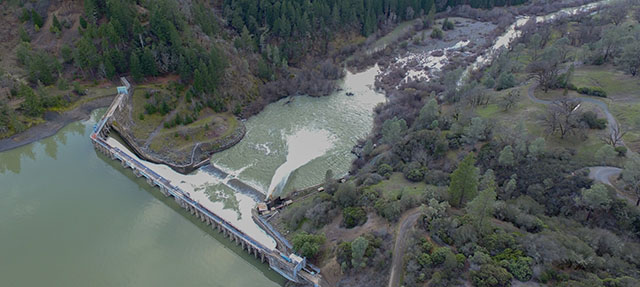
California’s Wild and Scenic rivers have been in the news of late. The US Bureau of Reclamation and its cost-sharing partner, Westlands Water District, proposed to raise Shasta Dam to increase storage capacity in the state’s largest reservoir. They believe that the project would increase water supply reliability and enhance cold water storage to support salmon downstream.

Opponents of the project—including the State of California, environmental organizations, fishing groups, and Native American tribes—argue that the project would flood prime fish habitat and inundate tribal religious sites on the McCloud River, which is protected under the California Wild and Scenic Rivers Act. Given current federal and state laws, it is unlikely that the bureau will be able to raise Shasta dam anytime soon.

Congress enacted the National Wild and Scenic Rivers Act in 1968 to preserve the free-flowing condition of rivers that have outstanding scenic, recreational, geologic, fish and wildlife, historic, and cultural values. It bars federal agencies from actions that would harm these values.

California passed its own Wild and Scenic Rivers Act in 1972. The statute prohibits activities that could damage soil, water, timber, and habitat close to the river. It also bars the State Water Board and other state agencies from assisting or licensing facilities that could harm the wild and scenic values of a protected river.

The state and federal wild and scenic river systems include 26 of California’s rivers. These protected river segments and tributaries encompass about 2,000 river miles, or less than one percent of California’s rivers and streams.

A persistent myth is that wild and scenic rivers are, in effect, wilderness areas and thus protected from any uses except recreation. In fact, although both statutes protect the “free-flowing” condition of segments designated wild and scenic, most of California’s protected rivers are affected by other water and land uses—including dams and water diversions.

Yet, the Wild and Scenic Rivers Acts have had profound influences on some of California’s rivers by restricting new water projects and land uses that may impair the values for which a river was included in the system.

In 2019, the California courts ordered Westlands not to study or participate in other efforts to raise Shasta Dam, because the California Wild and Scenic Rivers Act prohibits “agencies of the state” from cooperating on facilities that could impact the free-flowing condition of the McCloud.

Although the decision did not apply directly to the Bureau of Reclamation, for several reasons it, too, will have difficulty proceeding with the Shasta expansion project. For example:

  • Raising the dam would require a “dredge and fill” permit from the US Army Corps of Engineers. Before the bureau can receive such a permit, federal law requires that it obtain certification from the State Water Board to ensure that the project would comply with state water quality standards and other legal requirements. California law would preclude the board from doing this, however, because the project would inundate a state-designated wild and scenic river.
  • Federal law also requires the bureau to secure at least 50 percent of the funding for new federal facilities from non-federal partners. Currently it has no alternative to Westlands. Moreover, most other potential cost-sharing partners—irrigation districts and other water supply agencies—are also “agencies of the state” and would be bound by the restrictions of the state Wild and Scenic Rivers Act, as was Westlands.
  • Finally, the Central Valley Project Improvement Act requires the bureau to comply with all requirements of state law. This includes the wild and scenic protections for the McCloud River.

Future efforts to expand Shasta Dam by the Bureau of Reclamation or any “agencies of the state” will therefore run afoul of multiple state and federal laws. Of course, the California Legislature and Congress could change these laws or grant a special exemption for the Shasta expansion project. But neither is likely in this time of divided government in Washington, DC, and divergent notions of federalism and environmental protection between the Newsom and Trump administrations. Thus, as the laws now stand, an expanded Shasta Reservoir—at least one that encroaches on the free-flowing stretch of the McCloud River—remains a remote prospect.

The Russian River: Managing at the Watershed Level

This is part of a series on issues facing California’s rivers.

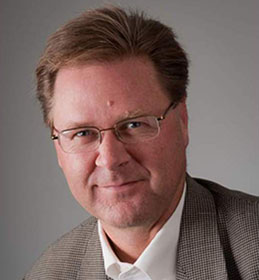
Water managers across the state face new and more extreme challenges as the climate warms—from balancing the sometimes conflicting needs of urban, agricultural, and environmental water users to reducing risks from fires, floods, and droughts. We talked to Grant Davis, general manager of the Sonoma County Water Agency, about how his agency is approaching these challenges comprehensively, at the scale of the entire watershed.

photo - Grant Davis

PPIC: In your experience, what does it mean to manage at the watershed level?

Grant Davis: At its core, managing the Russian River watershed requires careful consideration of different land uses, stakeholders, water demands, environmental regulations, and ecosystem needs. We have to balance the competing needs of our 600,000 customers, a number of endangered species, recreational users, and a thriving farm community. In practice, we’ve changed our management considerably over the years. For example, we now intentionally release water from our two major reservoirs to improve estuary and fisheries management, while still meeting water supply needs.

In 2008, we began implementing what is known as a “biological opinion” designed to protect three endangered species—coho, Chinook and steelhead. An important element is restoring habitat on Dry Creek, a major tributary below our major drinking water reservoir. The idea is to slow water released from the reservoir to provide refuge for the fish. In the short run, it will likely make water deliveries harder, but it’s key to operating our system sustainably long term. When complete, we’ll have 6 miles of restored habitat out of a 14-mile stretch. It’s a multi-million-dollar effort—and a major undertaking in cooperation. Our agency has worked very closely with the regulating agencies and private landowners, who granted easements that enabled this restoration to occur.

PPIC: How do you use data sources to help you manage this watershed?

GD: We’re establishing information networks that bring multiple benefits. For example, we’re collaborating with the US Geological Survey on an integrated rainfall and stream gage network, which can help us evaluate whether storms might cause flash floods after fires. The rainfall data also helps with ecosystem management. In a changing climate, rainfall data is the primary input for understanding our watershed.

Since the Tubbs fire, we’ve begun working with more parties to leverage our respective data needs. For example, working with emergency responders, we’ve established a network of fire cameras that inform a text alert system. And working with PG&E, we’re looking at installing equipment to forecast atmospheric rivers and fire weather at the same weather stations.

It’s also critical that we use science to better understand atmospheric rivers, which will in turn allow us to better manage reservoirs as the climate warms. These large storms contribute to most flooding in California, and up to 95% of floods in our watershed. And the lack of atmospheric rivers leads to drought. We’re now working with the US Army Corps of Engineers, NOAA (the National Oceanic and Atmospheric Administration), the Scripps Institute of Oceanography, the Department of Water Resources, and other colleagues to study this phenomenon. Together, we’re developing a joint project that uses improved forecasting of atmospheric rivers to better manage water releases from reservoirs. We’ve built a coalition with other water agencies—including those in Orange County, Turlock, and Yuba—that are interested in exploring these same issues in their rivers. Data from the project will help us improve how we manage water supply, floods, and the environment.

PPIC: Talk about how the interaction between surface water and groundwater has affected Russian River water management.

GD: Our watershed is ground zero for efforts to understand the links between groundwater and surface water, and to better manage both together. In 2014, Mark West Creek was selected as one of five priority creeks as part of the California Water Action Plan. The creek goes through a depleted groundwater basin, which has affected its flows. The Department of Fish and Wildlife is now developing recommended flow levels to protect and restore the creek’s critical habitat. The project will also quantify human needs within the watershed.

In places like Mark West Creek, groundwater recharge can play a critical role in addressing the “timing divide” for maintaining freshwater fisheries—because the question is not always whether water is available, but when it’s available. A pilot project in the town of Sonoma will use Russian River surface water in wet winters to recharge the aquifer. We can then pump it when it’s needed in dry summer months for critical uses.

Thanks to Jay Jasperse and Carlos Diaz, both of the Sonoma County Water Agency, for their contributions to this article.

Preparing California’s Rivers for a Changing Climate

This is part of a series on issues facing California’s rivers.

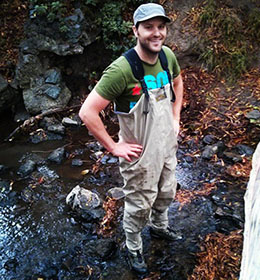
California’s rivers and streams have experienced enormous changes over the past 150 years, and a warming climate brings new challenges. We talked to Ted Grantham—a river scientist at UC Berkeley and a member of the PPIC Water Policy Center research network—about the state of the state’s rivers. Grantham was recently appointed as the first PPIC CalTrout Ecosystem Fellow. Thanks to the donors that helped us launch this program: Gary Arabian, the Morgan Family Foundation, Nick Graves, John Osterweis, and the Rosenberg Ach Foundation.

photo - Ted Grantham

PPIC: Talk about the changes affecting California’s rivers and streams.

Ted Grantham: California’s rivers and streams have experienced so much change since European settlement that they’re considered “novel ecosystems.” Gold mining and logging brought a massive amount of sediment into rivers. Riparian forests that lined Central Valley rivers and extensive wetlands on the valley floor have mostly been converted to farming. Non-native species have been introduced to most of California’s rivers, lakes, and estuaries, which prey upon or compete with native species. Urban rivers across the state have been channelized. And essentially every major river and stream in the state is impacted by a dam. Dams aren’t just barriers to migratory fish, they also alter downstream flows.

We’ve also prevented rivers from being able to move. Rivers are not static features; when given the opportunity, they will dynamically respond to changes in climate. This dynamism is inherent to how rivers work—it’s how habitat is created and maintained for many species. And it’s what makes these systems resilient over time.

Given all these fundamental changes, it’s remarkable that most of the state’s native fish species are still with us, although many are at risk of extinction.

PPIC: How are the state’s rivers expected to respond to climate change?

TG: The most direct change is increasing temperatures. Our rivers and streams will continue to heat up in a warming climate. Even if average precipitation stays the same, we’ll also experience more extremes, with both drought years and wet years more likely to occur. While increasing floods pose risks to some river ecosystems, it’s drought we’re most concerned about. Drought not only reduces the amount of water available for the environment, it also intensifies competition with other water users, making it harder to protect freshwater ecosystems.

Climate change is particularly problematic for cold-water fish such as salmon. In the short term, large dams have the potential to limit warming to some degree because they hold reserves of cold water. For example, Shasta Dam is managed to sustain salmon populations downstream through cold-water releases. But if water gets too warm over time, our ability to sustain cold-water reserves in the reservoir will decline. In the long term, redesigning dams to allow for fish passage or strategically removing dams will give salmon access to cold water in higher elevation streams.

PPIC: How can we prepare rivers for a changing climate?

TG: There are several promising management strategies that are gaining traction and could help build climate resilience in our rivers. Two important ones are securing environmental flows and restoring floodplains.

“Environmental flows” refers to the quantity, quality, and timing of water needed to maintain healthy rivers and ecosystem services that people rely on. In the past, little consideration was given to water needs of the environment. But that is changing and we’re seeing a growing effort to establish legally protected water allocations for environmental benefits. For example, I’m currently involved in the California Environmental Flows Framework, a program to support the development of environmental flow standards in rivers and streams throughout the state.

We’re also seeing more interest in multi-benefit approaches to floodplain management. Most of California’s rivers are disconnected from their floodplains, which have been converted to agriculture and urban uses. This has had huge impacts on fish populations and other species. As the likelihood of extreme floods increases with climate change, reconnecting floodplains is a cost-effective way to reduce flood risk. What’s exciting is that floodplain restoration can be compatible with agriculture and can also provide productive habitats. For example, the Yolo Bypass is primarily managed to protect Sacramento from flooding, but it also supports seasonal agriculture and habitat for birds and fish. Bringing water back to our floodplains can even help replenish groundwater, which is a critical water source in drought years.

Planning for a Drier Future in the Colorado River Basin

The Colorado River has experienced decades of over-allocation of its waters, making it harder to address the added challenges that climate change is bringing. The recently adopted Drought Contingency Plan (DCP) was an important step toward addressing the basin’s chronic water shortages, but more work is needed to prepare for a hotter, drier future. We talked to Doug Kenney—director of the Western Water Policy Program at the University of Colorado and a member of the PPIC Water Policy Center research network―about managing the basin for long-term water sustainability. Kenney organized a conference in June that covered these issues in depth.

Photo of Doug KenneyPPIC: Talk about the basin’s over-allocation problem.
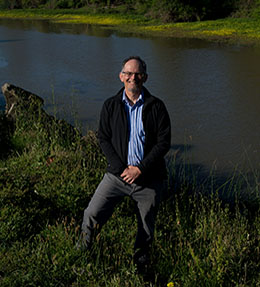
Doug Kenney: The current problem with the river’s water budget is in the lower basin. For much of this century, California, Arizona, Nevada, and Mexico have consistently pulled about 1.2 million acre-feet more water out of Lake Mead than enters it each year. That’s basically five years of water supply for Las Vegas. You can get away with that much overuse by drawing down reservoir storage—which is what we’ve been doing—but that’s not sustainable. So we need to accelerate efforts to scale back consumption. That’s what the DCP was designed to do—it’s mandated belt tightening.

In the upper basin states it’s a very different situation—water use in Colorado, New Mexico, Utah, and Wyoming is currently at a stable and reasonable level. But future use is expected to increase, while natural inflows are declining as the region continues to warm from climate change. The upper basin states can legally develop more water supplies, but the reality is that water isn’t likely to be reliably available. There’s a disconnect between how much water the upper basin states were promised and how much actually exists.

PPIC: What is needed to achieve sustainable management in the basin?

DK: The primary emphasis has to be on using less water. Given that most water in the basin is used for agriculture, that sector has the greatest potential to save water. Paying farmers to fallow some fields is probably the most appealing option. However, there are legal, financial, and cultural issues to deal with.

In most of the west, efforts to incentivize agricultural demand management have been pretty primitive—with the exception of Southern California, which has had major success trimming farm water use in the Imperial and Palo Verde water districts. Those programs aren’t perfect, but they are happening at a sufficiently large scale to make a significant contribution to addressing the regional water budget problem. In most other places in the basin, these types of programs are much smaller, and there’s a lot of skepticism about scaling these efforts up. The politics are very delicate, as these mechanisms would reallocate water from farms to cities. But you can’t ignore the math or the economics. Some sort of agricultural demand management will have to be a core element of any sustainable water use plan in the basin. The challenge is to do it in a way that is fair and protects the socioeconomic fabric of rural areas.

PPIC: What’s next for the basin’s water planning?

DK: The next steps are big ones. The operation of Powell and Mead is governed by interim guidelines that expire after 2026. Some key arrangements between Mexico and the US also expire then. The states are required to begin negotiating new rules to replace the expiring arrangements no later than 2020. This figures to be a really complex and very politically difficult negotiation, so there’s real interest in setting up the right process to get it done. That’s where many of us are focused right now—identifying the process that gives the negotiations the best chance for success.

PPIC: The DCP didn’t address ecological and health problems at California’s troubled Salton Sea. What’s next for the sea?

DK: At this point it’s about figuring out how to pay for what everyone knows has to be done. I’m convinced we’ve reached a turning point on the Salton Sea. There’s momentum within and outside of California to find a solution. It was disappointing that the DCP didn’t address the issues, but it wasn’t due to a lack of concern or effort—essentially, folks ran out of time. But I hear a consistent message from every sector and state: we need a solution for the sea. There’s an old maxim in this basin: anything is possible if all seven states can agree to it. I’m hopeful that this can apply to the Salton Sea crisis

The Yolo Bypass: It’s a Floodplain! It’s Farmland! It’s an Ecosystem!

This is part of a series on issues facing California’s rivers.

California’s biggest river—the Sacramento—needs a lot of room to spread in big water years. A floodplain project called the Yolo Bypass allows it to flood naturally, while also providing habitat for waterbirds, fish, and other aquatic species. We talked to Ted Sommer, lead scientist for the Department of Water Resources (DWR), about this versatile landscape.

photo - Ted Sommer

PPIC: What is the Yolo Bypass, and what does it do?

Ted Sommer: It’s California’s primary floodplain. The Sacramento River drains a massive portion of the state, and the bypass gives it a large area—about 60,000 acres—to spill in high flood events. Then it drains safely back into the river and the Delta. You can see the bypass from highway 80 heading into Sacramento—it often looks like an inland sea in winter. It stayed flooded this year for months on end. If not for that floodplain a lot of people’s back yards would have been flooded in Sacramento. It’s a unique and effective part of the state’s flood management system.

The bypass also provides other benefits. Although its primary purpose is for flood management, it’s used extensively for agriculture. And it’s also managed heavily for wildlife. Its seasonal wetlands provide great bird habitat. And when flooded it serves as a nursery area for young fish in the Delta and good habitat for salmon migrating downriver to the bay. It’s a great example of balancing ecosystem benefits with other needs.

PPIC: What are some of the challenges in managing this landscape?

TS: One reason we started working on the bypass was the finding that a lot of key species do really well in wet years. So we started looking at this habitat that usually only gets flooded in wet years. Over 20 years of research on the bypass, we learned a lot about its role as a fish nursery.

In wet years this floodplain provides better habitat and more food for fish. But because it was designed as a floodway, the water shuts off quickly at the end of the wet season, and fish can get stranded or forced out of this habitat before they can get all the benefits from it.

We also found that the bypass is also a superhighway for many migrating adult fish—sturgeon, adult salmon, and others. The problem is that it is a dead-end in dry years. Even in wet years, as it starts to dry up, fish can get stranded as they move upstream in receding floodwaters.

Based on these areas of research, we’ve identified three priorities. The first is to improve fish passage. We’ve created a fish collection area in the bypass so we can help them get where they need to go in drier conditions. We also built a sophisticated fish ladder for fish migrating upstream during wetter years.

The second priority is improving connectivity between the river and its floodplain. A proposed notch in the top of the bypass would help extend the duration of flooding, giving baby fish more time in the nursery habitat. We hope to move forward with this project in the next several years.

The last improvement is to enable the floodplain to act as a foodbank beyond wet times. In recent years we’ve been working with water users, particularly rice farmers, to get pulses of water in summer and fall to move plankton downstream. Much of this water has already been used to grow rice and is returning to the system. Local farmers and water users have been great partners in this project.

PPIC: Is this model replicable elsewhere?

TS: Yes! Locally, the success of Yolo Bypass has helped fuel interest in restoring floodplain habitat in both the Sacramento and San Joaquin valleys. And it’s inspired people around the state and beyond to consider creating floodplains as part of their flood and ecosystem management strategies. People come from all over the world to visit the bypass. As the climate changes, such places can help manage flooding from extreme events while also providing many other beneficial uses.

An Opportunity to Restore Fish Abundance on the Eel River

This is part of a series on issues facing California’s rivers.

The Eel River—once home to the state’s third-largest salmon and steelhead runs, all of which are now listed as threatened―may see the return of healthy fisheries in coming years. A unique opportunity to remove a dam that blocks fish from reaching spawning habitat has arisen. We talked to Curtis Knight, executive director of CalTrout, about the situation.

photo - Curtis Knight

PPIC:  Why is the Eel River important for California fisheries?

Curtis Knight: This a complex system that involves two of the biggest coastal watersheds in the state—the Russian River and the Eel River. The Eel presents the best opportunity to restore historic fish abundance in California. The river is blocked by two aging dams—Cape Horn Dam, which diverts water from the Eel to the Russian River for hydropower and other uses and has limited fish passage, and Scott Dam, which has no fish passage and blocks important upper watershed fish habitat. Scott Dam is owned by PG&E, which is attempting to divest itself of the project. This presents an opportunity to reestablish fish into the upper Eel basin.

On the Russian River side, irrigators and others benefit from the water diversions. This water is used to grow crops like wine grapes and keep the river flowing for endangered species and recreation.

On the Eel River side, it’s all about wild fish. Getting fish into the upper watershed above the dam is a top priority for local tribes, NGOs, and others. We did an assessment with Humboldt State University that found more than 150 miles of quality habitat for salmon and steelhead above Scott Dam. This stretch includes high elevation habitat that is rare in the coastal range. Getting salmon and steelhead into this cold-water region will be increasingly important for these fish in a warming climate.

Congressman Jared Huffman has formed a committee to develop recommendations as part of the Federal Energy Regulatory Commission’s (FERC) dam relicensing process for this project. The committee’s goals are to improve fish passage and habitat on the Eel to support naturally reproducing and harvestable native fish populations and to minimize impacts to water supply reliability, fisheries, water quality, and recreation in both basins.

The committee is looking at various fish passage alternatives, but Scott Dam is tall, which makes fish ladders—step-like pools to enable fish to cross the dam—really expensive and not very effective. Trucking fish around the dam, as is done in some watersheds, is also being explored, but in my opinion is not sustainable and won’t lead to fish abundance. Removing Scott Dam would clearly be the best way to restore fish abundance in the Eel River.

PPIC: Is there concern about losing both the water and the energy?

CK: The project doesn’t produce much power. The real value is the water. PG&E is walking away from the project in part because they lose roughly $5 million per year operating it.

On July 1, Humboldt County, Sonoma Water, the Mendocino Inland Water and Power Commission, and California Trout applied to take over the dam relicensing process from PG&E. The purpose is to work toward the two-basin solution and ensure the future of the project is determined locally.

Congressman Huffman’s committee will play a central role in determining what the project will ultimately look like. But one idea is to remove Scott Dam while still diverting water to the Russian River during the winter via Cape Horn Dam. Fish passage would have to be improved at Cape Horn and there are Russian River interests that would need to be met. The loss of water storage from Scott Dam can potentially be offset by storing Eel River water in Lake Mendocino. This would certainly be a good scenario for Eel River fish, but there are still some challenges to overcome.

So while there is still a long way to go, we are confident we will come up with a locally derived solution that meets the needs of fish and people in both the Russian and Eel Rivers.

Photo credit: Mike Wier, California Trout

The LA River and the Trade-Offs of Water Recycling

This is part of a series on issues facing California’s rivers.

After a very wet winter, California has been declared drought free. But planning for future water shortages has continued. In Los Angeles, Mayor Eric Garcetti recently announced a goal of 100% wastewater recycling by 2035 to help make city supplies drought proof.

While recycling wastewater helps cities adapt to a changing climate and prepare for droughts, it can have unintended consequences for local watersheds. In some cases, the growing use of recycled water could minimize or even eliminate flows from wastewater treatment plants into local rivers and streams and reduce ecological and recreational benefits. The Los Angeles River exemplifies this kind of trade-off: expanded water recycling will reduce the amount of treated wastewater flowing into this increasingly revitalized urban waterway.

The lower stretch of the river, which was converted into a concrete flood channel in the mid-1900s, is changing. Concrete has been removed from large stretches of the river and public parks and bike paths have been built along its banks, encouraging recreational use and increasing public interest in the river’s restoration. The river was declared a navigable water in 2010 and opened to kayaking the following year. It provides a vital refuge to a variety of riparian species that lost most of their habitat to channelization and urban development.

Last year, researchers from the Southern California Coastal Water Research Project (SCCWRP) launched a study to document the effects of reductions of treated wastewater on vulnerable species and habitats along the highly urbanized, 45-mile stretch of the lower river, as well as on recreational uses of the river. One of the project’s goals is to determine how these impacts could be offset by investments in river restoration and upstream mitigation projects.

The SCCWRP researchers plan to develop recommended seasonal flow targets for each section of the LA River. They will consider the balance between protecting the river’s ecological and recreational uses and local agencies’ desire to capture, divert, and recycle more water in the watershed. The study will also help inform a number of planning efforts, including One Water LA and the LA River Revitalization Master Plan.

Eric Stein, principal scientist with SCCWRP, emphasized that the project’s success is dependent on its collaborative nature. “We are bringing together agencies, municipalities, nonprofit organizations, and community groups to help explore alternative future scenarios and find innovative ways to balance potentially competing demands for water in the LA River,” he said.

The LA River watershed is only one example where a conflict between recycled water investments and downstream users is emerging. As the demand for recycled water grows and local agencies consider new projects, other watersheds could benefit from similar efforts to better understand the impacts of water recycling on the local ecology and downstream users.

Groundbreaking Dam Removal Moves Forward on the Klamath

This is part of a series on issues facing California’s rivers.

The Klamath River has seen its native fish populations plunge and its water quality decline, in part because of four hydropower dams built in its middle reach a century ago. In the coming years, these dams will be removed, creating the largest dam removal and river restoration project in the country. We talked to Lester Snow—board president of the Klamath River Renewal Corporation (KRCC) and a member of the PPIC Water Policy Center Advisory Council—about this effort.

photo - Lester Snow

PPIC: What is the status of the process to remove the dams?

Lester Snow: Right now we’re working through permitting. This process literally requires every environmental permit you can think of. More permits are required to tear these dams down than are needed to build the proposed Sites Reservoir, for example. This effort requires NEPA (National Environmental Protection Act) and CEQA (California Environmental Quality Act) compliance, permits under the Clean Water Act, endangered species protections, and approvals from the Federal Energy Regulatory Commission.

KRRC has hired a range of consultants and contractors to plan, design, and remove the dams and restore habitat. We’re still a couple of years away from major construction. Right now it looks like construction will start in 2021, and the dams will literally be empty in early 2022.

PPIC: How might dam removal improve the health of the ecosystem and native fisheries?

LS: Two basic improvements will come from this project. First, it opens up about 400 miles of historic salmon habitat that was cut off by the dams. The dams alter natural flows and block salmon spawning habitat. And second, it will improve water quality in the lower basin. The reservoirs get toxic algal blooms in the summer―you can’t swim in them or eat fish caught in them.

There will also be ecosystem and cultural benefits from the dam removal. Salmon runs all along the west coast have been under assault for 50 years, and many are in dire shape. So this ecosystem restoration is an important step for Pacific salmon populations. And salmon are a traditional and essential part of life for local tribes—including the Hoopa, Yurok, and Karuk. These tribes have had many of their cultural resources taken from them, and we have an obligation to make amends for the damage that’s been done to their communities.

PPIC: What are some tradeoffs in this effort, and how are they being dealt with?

LS: One issue that is personal for people in Siskiyou County is they’ve had the use of these reservoirs all their lives. Some families will lose lakefront property when the lake is gone. And that raises concerns about how dam removal could affect the local economy. Also, draining the lake might affect some groundwater wells.

We’ve put a lot of time into listening to local communities’ concerns and working out how to address these kinds of issues. We expect a healthier river will result in improved commercial and recreational fishing and increased regional tourism, which can offset potential impacts.

PPIC: What are some key lessons learned from this process that could inform future river restoration efforts?

LS: That’s a good question, and there isn’t an easy answer. The magnitude of this project makes it really complex and unique. No one’s ever taken down four dams at once. By removing all four at once, the sediment behind the dams can be flushed out in one go, to minimize impacts on the fishery. Scientifically, we’re going to learn a lot from this project, and it will be important to document what we learn as we go.

A key lesson is you have to listen to the people who will be directly impacted―even if they don’t trust you or are against the project, you have to engage with them. And you have to have some accommodation for their concerns.

This project is also an incredible illustration of the need for coordination between state and federal permitting authorities. The Klamath is an environmental project where everyone could save time and money if we could figure out how to streamline the permitting process. We still need to figure out how to coordinate permitting without rolling over someone’s authority or losing key protections.

Maybe the biggest lesson on this project is that failure is not an option. It’s been talked about and committed to for decades, and now is the time to get it done. We know there will be unexpected roadblocks along the way, but these dams are coming down—no question about it.

Salmon photo credit: Mid-Klamath Watershed Council


Connecting the Drops in Watershed Management

The interrelated nature of water issues has given rise to a management approach that integrates flood control, environmental water, and water supply. The Yuba Water Agency manages its watershed in this kind of coordinated manner. We talked to Curt Aikens, the agency’s general manager, about the lessons they’ve learned from this “integrated management” approach.

PPIC: Your agency manages the watershed for hydropower, water supply, flood control, and ecosystem health. What are some key elements to making it all work together?

Curt Aikens: I think the most critical elements to making this work for us are employing science and broad collaboration to sustainably manage all of the resources.

We try to make the most of every drop of water we touch—this infographic highlights how we do that. Our water provides recreation, carbon-free electricity, habitat for fish and wildlife, and a sustainable water supply for farmers and the 80% of our population that relies on groundwater for drinking water. In drought years, we transfer water to the state for use in the Central Valley and Southern California. We use the proceeds from those transfers and from hydropower sales to invest in reducing flood risk in Yuba County and other environmental, water supply, and public safety projects.

In managing this integrated system, we’re fortunate that our agency’s boundary fully contains our groundwater basins and most of the Yuba River watershed. The river flows right down the middle of the county.

We worked hard to get where we are today. In the 1990s we were involved in a contentious debate with conservation groups and state agencies over environmental flow requirements for the Lower Yuba River to support salmon and steelhead trout. To resolve the situation, we developed a collaborative, science-based settlement called the Yuba Accord. This agreement, which improved salmon and steelhead habitat, is a foundation for our success, because it helped us solve a number of problems collaboratively.

We try to ensure that everything we do has multiple benefits and comes from a strong collaborative effort. The Feather River Setback Levee is a great example of that. After Yuba County flooded in 1997, we commissioned a comprehensive flood study that presented half a dozen options to reduce future risk. Working with local conservation groups, we eventually settled on a program to set the levees back and strengthen them. This significantly lowered flood risk while producing ecological benefits for the river. The community gained a new, stronger levee, a significantly lower flood risk, and real ecological benefits.

PPIC: Is it harder to address multiple problems with one project?

CA: Today, it’s actually harder to implement a project with a single purpose. We live in a world with multiple interests, and we’ve found that multipurpose projects are a much better way to get things done. The Yuba River has more human impacts than most other rivers in the state. So we try to get ecosystem benefits out of most of our projects, whether it’s improving fishery habitat in our flood control work or strengthening water supply management through a project to build forest health.

Collaborative, science-based initiatives cost more and take more time upfront, but in the end you can get better results and more durable, sustainable solutions.

PPIC: Can this approach work well for water agencies that share a watershed with other entities or have other complicating factors in how they manage their system?

CA:  I think it absolutely can. There are many examples of multiple jurisdictions working together to resolve common water or natural-resource challenges. For example, the work being done on the voluntary settlement agreements in the Bay-Delta has brought together a really diverse group of conservation and water interests working toward an innovative solution. This approach is collaborative and science based. It also presents the opportunity for fish and wildlife habitat creation, new flows to support fish, and funding to help finance these activities.

Collaborative agreements, rather than a mandated regulatory approach, offer much greater promise for California’s environment and economic stability. This is exactly our experience with the Yuba Accord.  Continued leadership from Governor Newsom and his administration can help California create a sustainable solution for the entire Bay-Delta watershed.

Working with California Tribes on Upper Watershed Restoration

“Fish are very important to me, to my family, my culture.”

“It’s surprising how much you rely on traditional foods if you’re in a community like we are. You don’t necessarily realize it until you don’t have it . . . especially salmon.”

“If the water quality got better, rivers and creeks would be much better and it would bring back the fish.”

These are the voices of youth from the Karuk tribe in the Klamath River watershed, as heard in a new video that explores the connections between ecosystem health and tribal well-being. Healthy local waterways and the traditional foods they support are considered irreplaceable by indigenous peoples. A new program is seeking to tap into tribal understanding of natural resources to ensure their voices are being heard and to provide a more expansive approach to how state and tribal programs can align in the management of rivers, fisheries, and forests.

As part of this effort, the state is participating in a series of “forest gatherings,” which bring people working on natural resource issues to local watersheds in events hosted by a tribe from that place. “Place matters,” said Debbie Franco, community and rural affairs advisor in the Governor’s Office of Planning and Research. “Gathering in a watershed with tribal people who have been managing that place for thousands of years is a way to more deeply understand their perspective that forests, fish, water, and food are by nature integrated and connected.”

The gatherings are an opportunity for those in attendance to explore questions such as: How can the traditional land management practices of indigenous peoples inform how we can work better together in managing the land? What ecological ideal should we strive for? How do we connect the work of indigenous peoples with statewide policy discussions?

Each gathering is designed by a team with members from local NGOs, county and US Forest Service representatives, state representatives, and the host tribe. Invitees have included academics, policy experts, local governments, indigenous people, logging interests, and regional and state agencies.

“The idea is to find the people whose relationships are necessary to do good upper watershed management and to bring them together to build relationships and create a voluntary learning environment,” said Franco.

In addition to sharing ideas, participants may find themselves physically connecting with the watershed. An upper watershed gathering this August, for example, had participants rafting the Klamath River with a tribal person and stopping at a tributary along the way to help create better environmental conditions for spawning salmon.

Franco noted that indigenous knowledge can bring new solutions to problems facing watersheds today. “It goes well beyond what we know from our 150 years here. These forest gatherings are bringing more people to the understanding that the answers to our water challenges lie in the connections between us and our natural systems.”