An Opportunity to Restore Fish Abundance on the Eel River

This is part of a series on issues facing California’s rivers.

The Eel River—once home to the state’s third-largest salmon and steelhead runs, all of which are now listed as threatened―may see the return of healthy fisheries in coming years. A unique opportunity to remove a dam that blocks fish from reaching spawning habitat has arisen. We talked to Curtis Knight, executive director of CalTrout, about the situation.
photo - Curtis Knight

PPIC:  Why is the Eel River important for California fisheries?

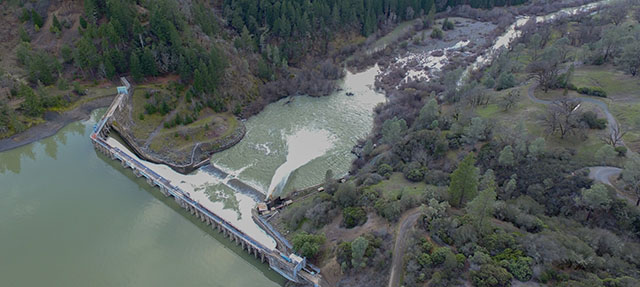
Curtis Knight: This a complex system that involves two of the biggest coastal watersheds in the state—the Russian River and the Eel River. The Eel presents the best opportunity to restore historic fish abundance in California. The river is blocked by two aging dams—Cape Horn Dam, which diverts water from the Eel to the Russian River for hydropower and other uses and has limited fish passage, and Scott Dam, which has no fish passage and blocks important upper watershed fish habitat. Scott Dam is owned by PG&E, which is attempting to divest itself of the project. This presents an opportunity to reestablish fish into the upper Eel basin.

On the Russian River side, irrigators and others benefit from the water diversions. This water is used to grow crops like wine grapes and keep the river flowing for endangered species and recreation.

On the Eel River side, it’s all about wild fish. Getting fish into the upper watershed above the dam is a top priority for local tribes, NGOs, and others. We did an assessment with Humboldt State University that found more than 150 miles of quality habitat for salmon and steelhead above Scott Dam. This stretch includes high elevation habitat that is rare in the coastal range. Getting salmon and steelhead into this cold-water region will be increasingly important for these fish in a warming climate.

Congressman Jared Huffman has formed a committee to develop recommendations as part of the Federal Energy Regulatory Commission’s (FERC) dam relicensing process for this project. The committee’s goals are to improve fish passage and habitat on the Eel to support naturally reproducing and harvestable native fish populations and to minimize impacts to water supply reliability, fisheries, water quality, and recreation in both basins.

The committee is looking at various fish passage alternatives, but Scott Dam is tall, which makes fish ladders—step-like pools to enable fish to cross the dam—really expensive and not very effective. Trucking fish around the dam, as is done in some watersheds, is also being explored, but in my opinion is not sustainable and won’t lead to fish abundance. Removing Scott Dam would clearly be the best way to restore fish abundance in the Eel River.

PPIC: Is there concern about losing both the water and the energy?

CK: The project doesn’t produce much power. The real value is the water. PG&E is walking away from the project in part because they lose roughly $5 million per year operating it.

On July 1, Humboldt County, Sonoma Water, the Mendocino Inland Water and Power Commission, and California Trout applied to take over the dam relicensing process from PG&E. The purpose is to work toward the two-basin solution and ensure the future of the project is determined locally.

Congressman Huffman’s committee will play a central role in determining what the project will ultimately look like. But one idea is to remove Scott Dam while still diverting water to the Russian River during the winter via Cape Horn Dam. Fish passage would have to be improved at Cape Horn and there are Russian River interests that would need to be met. The loss of water storage from Scott Dam can potentially be offset by storing Eel River water in Lake Mendocino. This would certainly be a good scenario for Eel River fish, but there are still some challenges to overcome.

So while there is still a long way to go, we are confident we will come up with a locally derived solution that meets the needs of fish and people in both the Russian and Eel Rivers.

Photo credit: Mike Wier, California Trout

Groundbreaking Dam Removal Moves Forward on the Klamath

This is part of a series on issues facing California’s rivers.

The Klamath River has seen its native fish populations plunge and its water quality decline, in part because of four hydropower dams built in its middle reach a century ago. In the coming years, these dams will be removed, creating the largest dam removal and river restoration project in the country. We talked to Lester Snow—board president of the Klamath River Renewal Corporation (KRCC) and a member of the PPIC Water Policy Center Advisory Council—about this effort.

photo - Lester Snow

PPIC: What is the status of the process to remove the dams?

Lester Snow: Right now we’re working through permitting. This process literally requires every environmental permit you can think of. More permits are required to tear these dams down than are needed to build the proposed Sites Reservoir, for example. This effort requires NEPA (National Environmental Protection Act) and CEQA (California Environmental Quality Act) compliance, permits under the Clean Water Act, endangered species protections, and approvals from the Federal Energy Regulatory Commission.

KRRC has hired a range of consultants and contractors to plan, design, and remove the dams and restore habitat. We’re still a couple of years away from major construction. Right now it looks like construction will start in 2021, and the dams will literally be empty in early 2022.

PPIC: How might dam removal improve the health of the ecosystem and native fisheries?

LS: Two basic improvements will come from this project. First, it opens up about 400 miles of historic salmon habitat that was cut off by the dams. The dams alter natural flows and block salmon spawning habitat. And second, it will improve water quality in the lower basin. The reservoirs get toxic algal blooms in the summer―you can’t swim in them or eat fish caught in them.

There will also be ecosystem and cultural benefits from the dam removal. Salmon runs all along the west coast have been under assault for 50 years, and many are in dire shape. So this ecosystem restoration is an important step for Pacific salmon populations. And salmon are a traditional and essential part of life for local tribes—including the Hoopa, Yurok, and Karuk. These tribes have had many of their cultural resources taken from them, and we have an obligation to make amends for the damage that’s been done to their communities.

PPIC: What are some tradeoffs in this effort, and how are they being dealt with?

LS: One issue that is personal for people in Siskiyou County is they’ve had the use of these reservoirs all their lives. Some families will lose lakefront property when the lake is gone. And that raises concerns about how dam removal could affect the local economy. Also, draining the lake might affect some groundwater wells.

We’ve put a lot of time into listening to local communities’ concerns and working out how to address these kinds of issues. We expect a healthier river will result in improved commercial and recreational fishing and increased regional tourism, which can offset potential impacts.

PPIC: What are some key lessons learned from this process that could inform future river restoration efforts?

LS: That’s a good question, and there isn’t an easy answer. The magnitude of this project makes it really complex and unique. No one’s ever taken down four dams at once. By removing all four at once, the sediment behind the dams can be flushed out in one go, to minimize impacts on the fishery. Scientifically, we’re going to learn a lot from this project, and it will be important to document what we learn as we go.

A key lesson is you have to listen to the people who will be directly impacted―even if they don’t trust you or are against the project, you have to engage with them. And you have to have some accommodation for their concerns.

This project is also an incredible illustration of the need for coordination between state and federal permitting authorities. The Klamath is an environmental project where everyone could save time and money if we could figure out how to streamline the permitting process. We still need to figure out how to coordinate permitting without rolling over someone’s authority or losing key protections.

Maybe the biggest lesson on this project is that failure is not an option. It’s been talked about and committed to for decades, and now is the time to get it done. We know there will be unexpected roadblocks along the way, but these dams are coming down—no question about it.

Salmon photo credit: Mid-Klamath Watershed Council