How Unhealthy Forests Affect Water Supply

California’s mountain forests have been badly stressed by years of drought and fire suppression practices that encourage overly dense stands of trees. We talked to Scott Stephens―a forestry and wildfire expert at UC Berkeley and a member of the PPIC Water Policy Center research network―about how unhealthy forests affect the watershed.

PPIC: What is the status of the state’s forests?

Scott Stephens: California now has more than 100 million dead trees, mostly in the central and southern Sierra. This has implications for water supply, wildfire management, local economies, and many other issues. The die-off is a symptom of unsustainable forest conditions. Drought is part of the California landscape, but why are we seeing such profound mortality? The drought caused more trees to compete for less water and increased infestations of bark beetles, which kill trees. Droughts are getting warmer, which stresses the trees more. But the underlying cause is unsustainably dense forests. Forest management in the past century increased forest density by removing the most common ecosystem process that once thinned the forest: fire. We need to reduce tree density in Sierra forests so they are more resilient to drought.

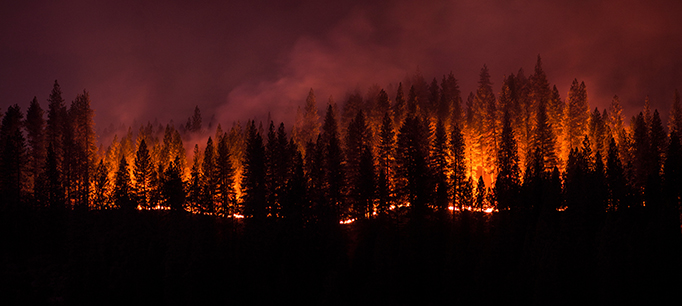
Fires start more easily in recently killed forests because embers have more dead foliage to land on. Fighting fires is much harder because there’s an increased risk that standing dead trees will fall and kill people. And since most of these dead trees will never be removed, in 10 to 15 years they’ll be on the ground. This will increase the fuel load substantially and make for hotter fires.

PPIC: What are the consequences to our water supply from dying or burning forests?

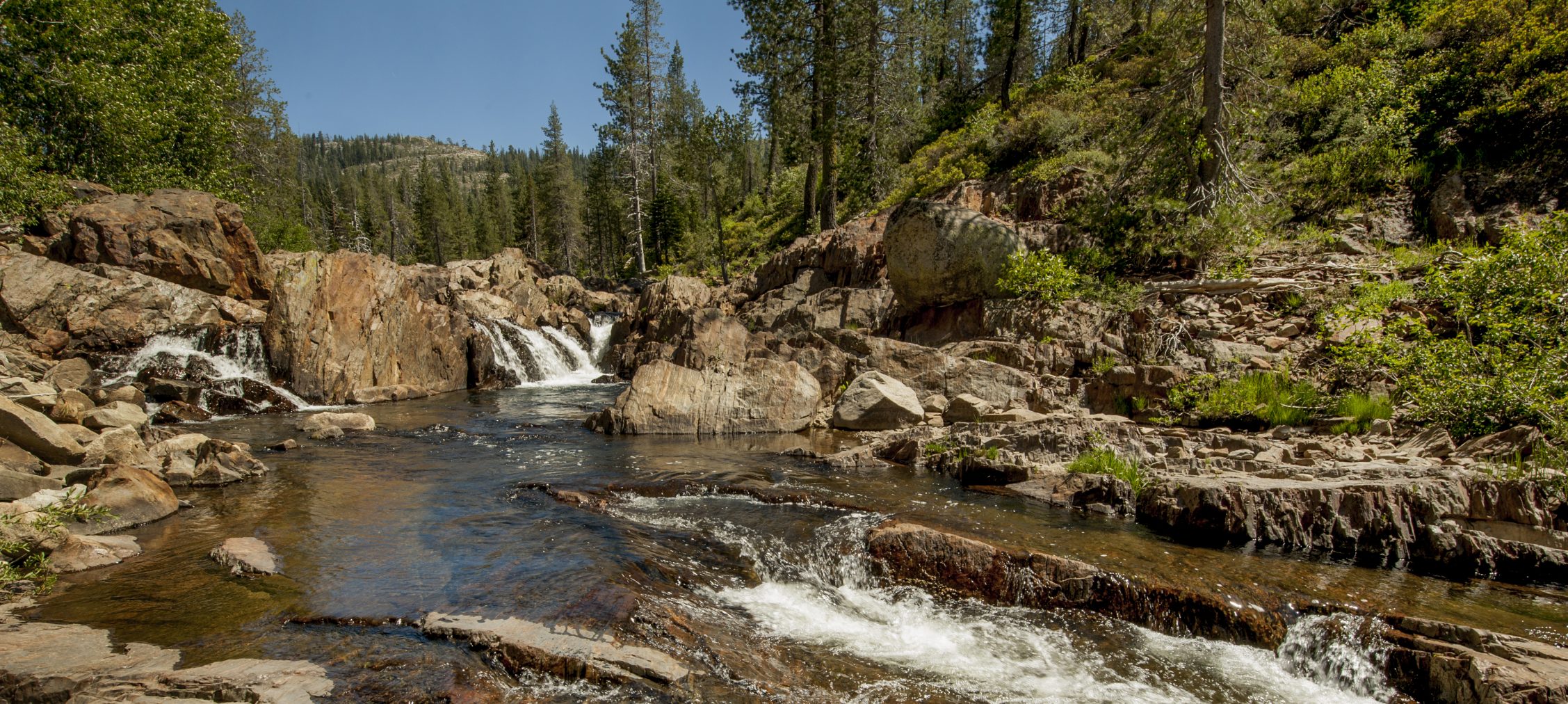
SS: It’s useful to compare the effects of a large uncontrolled wildfire—such as the 2013 Rim Fire in San Francisco’s Hetch Hetchy watershed—with what is going on in a part of Yosemite that has had regular fires over the past 40 years. In the Rim Fire zone, trees were killed over a vast area, and sediment and fire debris has moved into streams and reservoirs. By comparison, there’s an area in Yosemite called Illiloutte Creek basin, where small natural fires have been allowed to burn—unlike in most forests, where all fires are extinguished as quickly as possible. We’ve seen a jigsaw puzzle of fire-changed landscapes develop in Illiloutte basin over this time and a change in forest density. For example, an area that was once a solid pine forest is now a wetland after fire cleared about 10 acres of trees. Now we’re doing research to see if water in that basin is increasing. One thing is certain: fewer trees use less water. Also, in denser forests some snow stays in the canopy and is more likely to go back into the atmosphere rather than seep into the ground.

PPIC: Given the scope of the problem, what are our management options?

SS: There are three potential options that would improve on current practices. The first is to manage lightning fires in some areas—such as the remote upper watersheds―so we can naturally reduce forest density. This option can be scaled up relatively fast. We’d need to monitor these fires carefully and allow them to work―just as they’ve done in Yosemite for the past 40 years. Three national forests have proposed allowing managed lightning fires on about two-thirds of their land―Inyo, Sierra, and Sequoia. A second option is to do more prescribed burns. These will be smaller in scale than lightning fires. Lastly, we can use ecologically based mechanical thinning of forests, which can be combined with prescribed burns.

These fixes will be expensive in some areas. But fire suppression currently costs us about $2.5 billion a year just on federal lands—and these methods can help bring down that cost. Shifting the federal firefighting budget so more money goes for forest management could help.

Learn more

Read California’s Water: Protecting Headwaters (from California’s Water briefing kit, October 2016)
Watch our 3-minute video “Headwaters”
Read “Managing Wildfires Requires New Strategies” (PPIC Blog, September 23, 2015)
Visit the PPIC Water Policy Center’s drought resource page

Testimony: Who Votes, Who Doesn’t, and Why

Eric McGhee, PPIC research fellow, testified before the Little Hoover Commission in Sacramento today (May 25, 2017). Here are his prepared remarks.


Good morning Chairman Nava, Vice Chairman Varner, and distinguished committee members. My name is Eric McGhee, and I am a research fellow at the Public Policy Institute of California, where I study voter turnout and electoral and political reform more generally.

California’s voter turnout in 2014 hit record lows in both the primary and the general elections. Turnout recovered some in 2016, but languishing participation remains a concern moving forward. I was invited to your panel to help put California’s turnout in broader context and to give some thoughts on potential solutions. In doing so, I will address three questions:

  1. Who votes, and who doesn’t?
  2. What does California’s turnout look like over time and compared to the rest of the country?
  3. What should we expect from recent reforms, and what else should be tried to improve turnout?

Question #1: Who votes and who doesn’t?
California’s registered voters do not look like the population of all adults in the state. They are older, whiter, better educated, and a little wealthier; they are less mobile, more rooted in their communities, and more likely to own their own home; and they are more likely to identify with one of the two major parties and less likely to identify as independents.

Given California’s large immigrant population, citizenship is also an important factor for voting here. A substantial portion of the Latino and Asian-American populations are not citizens, and many are undocumented and so ineligible to ever become citizens. Historically that has meant significantly lower participation rates among these communities.

Yet the role of citizenship in California’s turnout is changing rapidly. Most of the growth in both the Latino and Asian-American communities now comes from children who are citizens because they are born in the United States. That means a growing share of these communities is eligible to vote, which in turn diversifies the state’s voting-eligible population.

These changes are happening faster here than in other states. Figure 1 shows the share of California’s Latino and Asian-American populations that are eligible to vote, compared with the same eligibility rates in other states. In the early 1990s, California Latinos were less likely to be eligible than were Latinos in other states. Since then, California Latino eligibility has steadily increased and now slightly exceeds Latino eligibility rates elsewhere. Roughly the same is true for Asian-Americans.

In addition to these demographic factors, PPIC research by Mark Baldassare has shown that voters differ from nonvoters in their opinions on policy issues (Baldassare 2016). Likely voters are about evenly split in their approval of a larger, more activist government that spends more money. Nonvoters, by contrast, are clearly in favor of government involvement across a number of issues. For example, 7 in 10 nonvoters want more government action on income inequality; just half of likely voters feel the same.

Question #2: What does California’s turnout look like over time and compared to the rest of the country?
California’s turnout has dropped about 20 points in the last 30 years. To understand the causes and implications of this trend, it is important to break the problem into two separate parts: 1) registration among those who are eligible; and 2) turnout among those who are registered.

Figure 2 shows that California has a registration problem compared with other states. The state’s flat registration rate—always holding steady between about 70 and 80 percent of total eligible residents—masks a relative decline that started in the late 1990s. California registered at higher rates than the rest of the country in the 1990s, but by 2016 had fallen about five percentage points behind.

In addition to the relative registration problem, turnout in California’s midterm elections—when the state votes for governor and other statewide offices—has been falling, while turnout in presidential elections has largely remained flat (Figure 3). This has created a widening divide between the two types of elections. In contrast to registration, this problem is not unique to California. Other states have experienced similar midterm turnout declines. But that does not excuse the problem so much as tell us that it is part of a larger national pattern.

A deeper analysis of these trends suggests different explanations for each one. The first trend—the decline in the relative registration rate—can mostly be explained by the growing Latino and Asian-American populations. No other combination of demographic characteristics, nor the state’s declining competition in statewide elections, comes close to explaining as much as this single change. Latinos and Asian Americans register at the same rates in California and other states. But in any given election, they register at lower rates than non-Hispanic whites or African Americans. Thus, as they become a larger share of the eligible voter population, their lower registration patterns pull down the overall registration rate more in California than in states that are not diversifying as quickly.

In contrast to the registration trend, the decline in midterm turnout is largely a function of the changing behavior of young people. Young people continue to vote in presidential elections, but they are increasingly likely to skip midterms. California’s expanding Latino and Asian-American populations play almost no role here: once registered, these groups have been voting at consistent rates over time. And unlike registration, it is the changing turnout rate of young people that has had the largest effect, not any change in their share of the registered population.

Question #3: What should we expect from recent reforms, and what else should be tried to improve turnout?
California has recently passed a wide range of reforms meant to increase voter turnout. Most of these are meant to ease the registration process, while at least one is meant to make it easier to vote.

The registration changes consist of four main reforms. First, California has allowed 16- and 17-year-olds to “pre-register” with a placeholder record that will only become official when they turn 18. Second, California has established an entirely electronic online registration system that makes it easy to find out how to register and to fill out an application, saving even the trouble of finding a stamp. Third, the state has adopted a “conditional” registration system that permits voters to register and vote in a single trip to the county registrar after the normal registration deadline has passed. And finally, the state has committed to an automated registration system that has the potential to register voters by default when they visit the Department of Motor Vehicles.

The evidence for the efficacy of these reforms varies. Pre-registration is meant to facilitate registration, but research suggests it also helps increase turnout among those who pre-register because it engages them at an impressionable time in their lives (and often in a group setting in their high school or community) (Holbein and Hillygus 2015). Online registration offers significant administrative benefits, but it has not necessarily increased registration or turnout by much (McGhee 2014). For its part, conditional registration is likely to pick up some number of people who miss the registration deadline but decide to vote at the last minute as they get swept up in the excitement of the election. But evidence of its effect on turnout is mixed: some studies have shown a substantial effect, while others have shown something smaller (McGhee 2014).

The final registration reform, automated voter registration, carries perhaps the largest potential to increase registration rates. If implemented properly, the law could increase registration rates by as much as 14 percent in the first year (McGhee and Romero 2016). This may go a long way toward undoing the underrepresentation of Latinos and Asian Americans in the registration rolls. It may also help alleviate some of the need for conditional registration, as more people will be registered throughout the year and do not need to sign up at the eleventh hour. But as I will discuss below, these new registrants need to be mobilized to vote or they may stay home anyway.

In addition to these registration reforms, California is moving toward broad vote-by-mail implementation by enacting a reform first adopted by Colorado in 2012. All voters will get vote-by-mail ballots by default. They can either mail in those ballots or drop them off at any of several drop boxes or “vote centers” that replace neighborhood precincts. If voters lose their vote-by-mail ballot they can have a new one printed at a vote center, and the vote centers will be open for early voting several weeks before Election Day. In short, the new law gives all voters the chance to vote by mail if they want to.

Studies of the effect of this system suggest it saves a great deal of money by limiting the staff and equipment required to operate lightly trafficked polling places (Gronke and Miller 2012; Hall et al. 2012; Folz 2014). The reform may also increase turnout somewhat, though the findings there are mixed (Stein and Vonnahme 2008; Hall et al. 2012; Folz 2014). That said, there is some suggestive evidence that vote-by-mail registrants are more likely to be repeat voters, returning to vote in future elections after showing up in the first one. This pattern is especially notable for young people, meaning it might help alleviate the midterm turnout decline discussed earlier.

Taken together, these reforms place California at the national vanguard for voting access. But we should be wary of complacency. There remain significant issues of implementation and follow-through if these reforms are to increase turnout to the maximum extent.

For example, the ultimate impact of California’s automated voter registration system is dependent on the number of DMV customers who agree to be registered. The new system will certainly be an improvement because it will register any eligible customer who does not actively decline. But it will also require customers to affirm their eligibility to vote before they can be defaulted into registration. While a sensible failsafe measure, this extra step also risks reverting the process back to something like the current system, where DMV customers who skip the section on registration remain unregistered. True default registration would require everyone to answer the eligibility question. In the absence of such a requirement, the success of the new system will hinge in part on how aggressively the eligibility question is pressed upon potential registrants (McGhee and Romero 2016).

There are also a number of implementation challenges for the new Colorado model of voting. One complicated issue concerns how many vote centers to make available for a given population. Since the goal is generally to open fewer vote centers than precincts, it is possible that too few will be opened and voters will have trouble finding a convenient one. Research on the effect of distance on voting has found turnout declines up to 5 percent for distances up to 10 miles from the precinct (Dyck and Gimpel 2005). But since vote centers are more flexible than precincts—they will accept all potential voters no matter where in the county they reside and will be open for weeks rather than just one day—voters may more often find themselves in close proximity to a voting location at a moment when they have some free time to cast a vote.

There are important reasons to be careful about a wholesale switch to the Colorado model of voting. Young people currently choose vote-by-mail less often than older voters because of confusion about what address to use and other issues. If they do choose to vote by mail, they are less likely to send in their ballots on time (Romero 2014). And many people of color are wary of the vote center model because they do not trust the reasons behind it (Romero 2016a, 2016b). That raises the potential for problems with some of the very communities the reform is trying to reach.

Caution is therefore in order. Fortunately, the law is structured to provide it. Under California’s version of the Colorado voting model, each county decides whether to switch to the new system, and even the counties allowed to make the change will be phased in over time. This offers numerous opportunities to assess the rollout and make any necessary adjustments. Given both the promise and potential risks of the Colorado model, it is important to manage the phase-in to ensure the reform is going as expected.

Even if the reforms work as intended, they must still be coupled with aggressive mobilization. While it always makes sense to mobilize as many people as possible in every election, Latinos, Asian Americans, and young people clearly need special attention. Simply placing eligible residents on the voter rolls, or making voting easier, will not solve the whole problem. Outreach will be an important ongoing part of any solution. Research suggests such outreach will be more successful if it is embedded in the communities it is trying to mobilize, with communication by members of the community in ways others in the community understand and relate to (García Bedolla and Michelson 2012). This is especially important because Latino and Asian-American immigrants and their children are least likely to register and may be more culturally and linguistically distinct.

In any case, such mobilization work is hard and must be sustained over many election cycles. Yet it is the effort in many ways best suited to the source of the problem. Many of the biggest legal obstacles to voting in California are now gone or are in the process of being removed. This offers a fresh opportunity to get Californians to engage with the process and make their voices heard.

REFERENCES
Baldassare, Mark. 2016. “California’s Exclusive Electorate: Who Votes and Why It Matters.” San Francisco: Public Policy Institute of California.
Dyck, Joshua J., and James G. Gimpel. 2005. “Distance, Turnout, and the Convenience of Voting.” Social Science Quarterly 86 (3):531-48.
Folz, David H. 2014. “Vote Centers as a Strategy to Control Election Administration Costs.” SAGE Open 4 (1):1-10.
García Bedolla, Lisa, and Melissa R. Michelson. 2012. Mobilizing Inclusion: Transforming the Electorate through Get-Out-the-Vote Campaigns. New Haven: Yale University Press.
Gronke, Paul, and Peter Miller. 2012. “Voting by Mail and Turnout in Oregon: Revisiting Southwell and Burchett.” American Politics Research 40 (6):976-97.
Hall, Steven R., Joseph Losco, and Raymond Scheele. 2012. “Convenient Turnout: A Case Study of the Indiana Vote Center Pilot Program.” International Journal of Business and Social Science 3 (8):304-12.
Holbein, John B., and D. Sunshine Hillygus. 2015. “Making Young Voters: The Impact of Preregistration on Youth Turnout.” American Journal of Political Science 60 (2):364-82.
McGhee, Eric. 2014. “Expanding California’s Electorate: Will Recent Reforms Increase Voter Turnout? Technical Appendix.” San Francisco: Public Policy Institute of California.
McGhee, Eric, and Mindy Romero. 2016. “What to Expect from California’s New Motor Voter Law.” San Francisco: Public Policy Institute of California. Romero, Mindy. 2014. “Disparities in California’s Uncounted Vote-by-Mail Ballots: Youth, Language Preference, and Military Status.” UC Davis: The California Civic Engagement Project.
———. 2016a. “The California Voter Experience: Vote-by-Mail vs. the Polls.” Davis: UC Davis California Civic Engagement Project.
———. 2016b. “The California Voter Experience: Why African-American Voters Choose to Vote at the Polls or Vote-by-Mail, and How They Perceive Proposed Changes to California’s Voting System.” Davis: UC Davis California Civic Engagement Project.
Stein, Robert M., and Greg Vonnahme. 2008. “Engaging the Unengaged Voter: Vote Centers and Voter Turnout.” The Journal of Politics 70 (02):487-97.
Educational Progress Stalls in California

California is known as an engine of economic growth and innovation in the United States and across the world. A highly educated workforce has long gone hand in hand with the state’s robust economy.

California’s historically strong commitment to higher education—providing low-cost access to public colleges and universities at a time of rapid population growth—led to a large increase in college enrollment and completion. Baby boomers who were of prime college age during the 1960s and 1970s benefited from that expansion. Today, those boomers are the best-educated adults of that generation in the developed world. Older working-age adults (age 55–64) in California are more likely to have a bachelor’s degree than in any of the 32 member countries of the Organization for Economic Cooperation and Development (OECD).

Is California’s younger generation keeping up with other countries?

Unfortunately, generational progress in college completion has nearly stalled in California. Although more California high schoolers are completing their diploma today than 30 years ago, the share that subsequently earns a bachelor’s degree has not changed much: 33% of those age 25–34 in California today have at least a bachelor’s degree, compared to 31% of those age 55–64. Other countries have made much stronger progress. Indeed, the share of college attainment among young adults in California ranks 22nd of the 32 OECD countries, and the state’s generational progress is dead last.

The lack of generational progress in California is a cause for concern. College attainment not only benefits individuals’ earnings and employment prospects but also contributes to California’s economy by attracting businesses and keeping the state competitive in an increasingly globalized marketplace. Increasing the share of high school graduates eligible for the state’s public universities could help improve educational attainment among California’s young adults.

blog figure

California Farmers Face Labor Drought

This year’s rains brought a welcome respite to California’s farmers, who had grappled with surface water supply shortages for the previous four years. But now farmers are increasingly worried about the availability of another crucial element to their farms’ productivity―farm labor. The connection between farm labor and immigration patterns was among the topics covered in a recent conference at UC Davis.

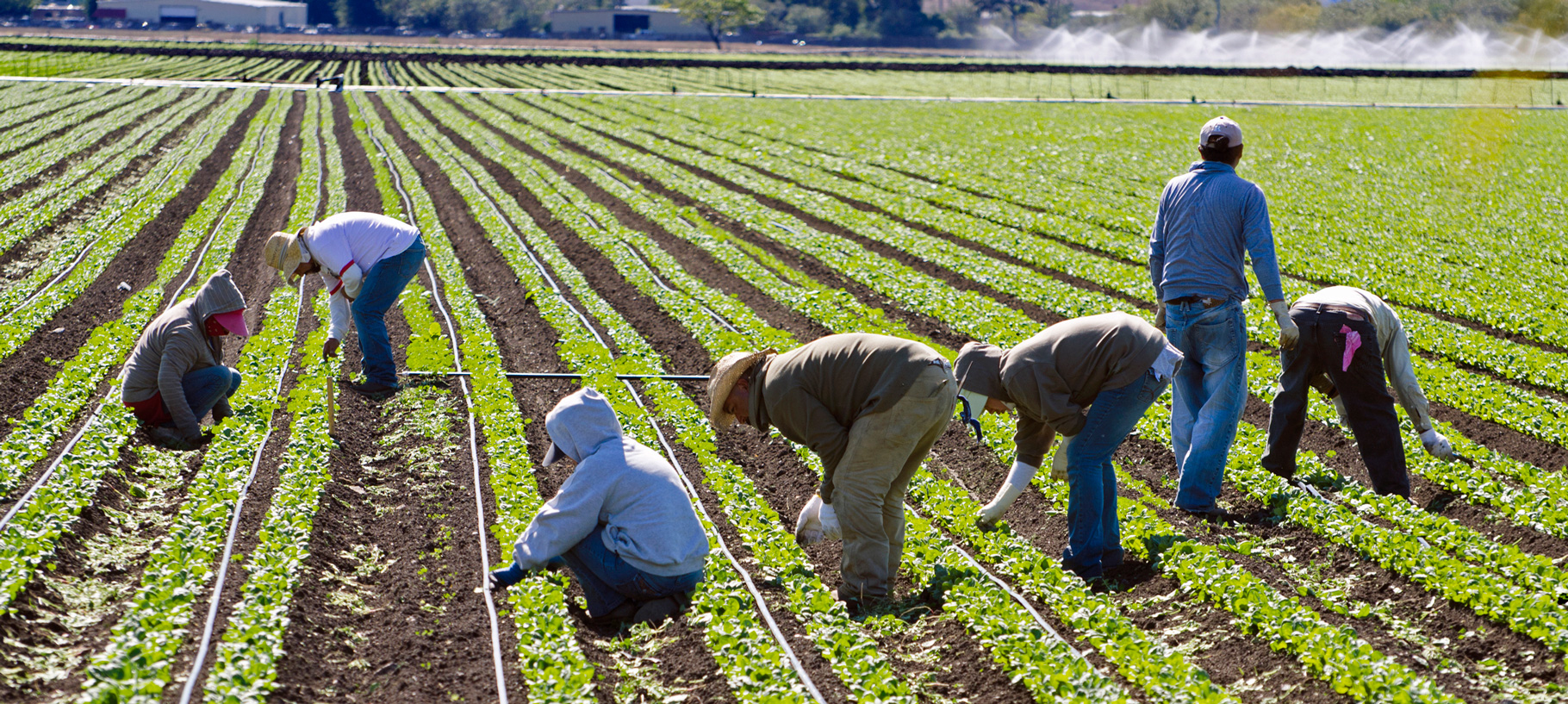
California is the nation’s largest farm state and a world market leader. This impressive productivity relies largely on an immigrant farm labor force. According to a federal survey, 9 of 10 crop farm workers in California are foreign born, largely from Mexico. More than half of crop farmworkers (56%) are undocumented immigrants.

Contrary to popular belief, immigration from Mexico to California has declined over time. In the early 2000s, close to a third of the crop farm workers were “newcomers”―foreign-born workers whose first arrival to the United States occurred within the year of the survey. The share of newcomers has fallen drastically in the last several years, and was down to 1% in 2013–14.

These immigration trends bring up short- and long-term concerns about the farm labor supply. In the long run, farm employers will have to figure out how to deal with declining immigration. The more immediate worries surround undocumented workers currently in California and the potential effects of the Trump administration’s stepped-up enforcement of immigration laws.

According to UC Davis’ Philip Martin, farmers have been employing a “4-S” strategy―satisfy, stretch, substitute, and supplement―to deal with fewer newcomers in the farm labor force. Satisfying current workers includes providing bonuses, low-cost health care, and training farm labor supervisors to improve working conditions. Stretching current workers includes providing mechanical aids to make farmworkers more productive, while substituting means replacing workers with machines where possible―or switching to less labor-intensive crops (almonds, for instance). Finally, some growers have been supplementing their workforce by using the temporary guest worker visa program. Which combination of these four strategies is likely to prevail will depend on the effects of another upcoming change―an increase in the statewide minimum wage, which will incrementally rise from $10.50 to $15 an hour by 2022.

Experts at the conference agreed it is likely that the new federal administration will build on the Obama era efforts, when a record two million foreigners were deported over eight years. A panelist at the conference argued that mass deportations are highly unlikely, mainly due to capacity constraints in the federal agencies responsible for deportations. However, the effects of increased enforcement mechanisms (such as requiring all employers to check the legal status of new hires through the online E-verify system) and other factors might shrink California’s farm labor force supply 6–9% in the short term. These effects will not be due to undocumented immigrants leaving the US (“self-deporting”) but due to their “hunkering-down”―perhaps working less hours than usual or moving from farm to farm for seasonal work less than before, in an effort to reduce their chances of deportation.

Senator Dianne Feinstein has introduced a bill that aims to shield undocumented farmworkers from deportation by putting them on a pathway to legalization. The Agricultural Worker Program Act would also provide a path to legal permanent residency to some undocumented farmworkers in the US. But immigration reform is not an easy lift, and the bill’s fate is uncertain. In the meantime, farmers will have to hope the 4-S plan can keep the crops moving from farm to table.

Learn morERead “Undocumented Immigrants in California” (PPIC fact sheet, March 2017)
Read the report Water Stress and a Changing San Joaquin Valley (March 2017)
Read California’s Water: Water for Farms (from the California’s Water briefing kit, October 2016)

The Growth of Cal Grants

The Cal Grant program is the primary program for providing tuition assistance and financial aid to California’s college students. It has allowed California to maintain access to college for low-income students during a time of rapid tuition increases. The program has grown significantly since its inception in 1955 and now serves more than 300,000 students at an annual cost of around $2 billion.

State law protects Cal Grant recipients from tuition increases at UC or CSU: when tuition rises, so do these students’ Cal Grants. Consequently, as tuition has increased and enrollment of low-income students has expanded, the program has grown rapidly. Next fall, tuition is scheduled to increase by $280 per year at UC and by $270 per year at CSU. In addition, UC, which has enrolled 7,400 new undergraduates in each of the last two years, plans to enroll an additional 2,500 in the fall of 2017‒18, the largest three-year increase in seventy years. CSU has added around 50,000 additional students over the past five years. The expansion of Cal Grants has drawn the attention of the governor. He noted in his May budget revision that “rising Cal Grant costs from tuition hikes will also limit the state’s ability to increase General Fund support in the future.”

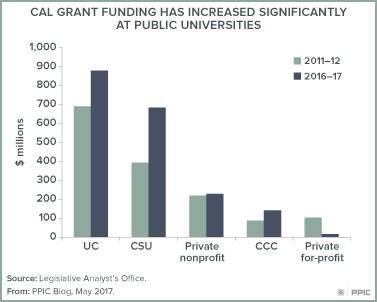
Figure: Cal grant funding has increased significantly at public univerisities

Nearly all of the Cal Grant funding increases have gone to students attending public institutions. CSU has seen a 75% increase in Cal Grant funds since 2011‒12, while the community colleges and UC have received a 61% and 27% increase respectively. Private nonprofit colleges, on the other hand, have seen their Cal Grant funding stagnate. The governor’s budget revision acknowledges this by reallocating $8 million that had been targeted to UC and CSU in his January budget proposal to non-profit private Cal Grant funding. These funds will prevent a planned cut to the maximum award for students attending a nonprofit private college.

By contrast, for-profit colleges have seen their Cal Grant funding decrease substantially over the past five years. The 2012‒13 budget introduced restrictions on access to state Cal Grants which affected many for-profit colleges. To some degree, for-profit colleges satisfy an unmet need for access to higher education for non-traditional students. But investigators have found that many of these colleges engage in predatory marketing and lending practices—targeting vulnerable students, making false statements regarding job placement, and overestimating the value of the degrees they provide. To address these issues the state established new institutional eligibility standards for Cal Grants. To be eligible, a higher education institution must now have a minimum graduation rate of 30% and a loan default rate of less than 15.5%. The 2012‒13 budget also cut the maximum award for a student attending a for-profit college from $9,708 to $4,000. These regulations have saved the state nearly $100 million since 2011‒12, reduced by more than half the number of for-profit colleges eligible for Cal Grants, and ensured that low-income and first generation students were not taken advantage of by higher education institutions that did not serve their economic interest.

Cal Grants are an essential tool for improving the economic mobility of the state’s neediest residents. They also allow the state to reduce the burden of federal loans on young Californians. Maintaining Cal Grants for high performing colleges— public and private—will improve access to college for all Californians.

Learn morEVisit the PPIC Higher Education Center

The Myth of Water Wasted to the Sea

A common lament is that water is wasted when it flows out to the sea rather than put to use irrigating crops or supplying water to cities. But when rivers flow to the sea the water brings benefits to people and ecosystems that are rarely acknowledged. We asked Jim Cloern―a scientist with the US Geological Survey and a member of the PPIC Water Policy Center research network—to explain.

photo of jim cloern

PPIC: What are some benefits that river’s provide when they make it to the sea?

Jim Cloern: Runoff from rivers brings many benefits to coastal communities, the Delta, and wetlands. For example, if you live in or around the Delta, river flows repel saltwater moving upstream. If the flow is too low, water in the Delta becomes too salty for growing crops or drinking.

Rivers also carry sediment, which is really important to the San Francisco Bay ecosystem, especially for sustaining tidal flats and marshes. We’ve invested hundreds of millions of dollars to convert salt ponds back to wetlands. Collectively, the restoration of wetlands in the Bay Delta is the largest such effort west of Rockies. We’ve breeched levees and seen these areas become colonized by wetland plants and transformed into habitats for birds and fish. The soils that form the base for these habitats have a natural inclination to sink and need continuous replenishment. Rivers also carry sand beyond the bay to the ocean, which is essential to keep California’s beaches intact. Without river sediment our beaches would disappear from natural erosion.

A third benefit is to the Bay-Delta. San Francisco Bay is an estuary that sustains plant and animal communities not found in other ecosystems. These communities are an important part of California’s remarkable biodiversity. We’ve learned from other estuaries around the world that these communities can disappear if river inflow falls below levels required to sustain them.

River flows also flush pollutants out of the bay. San Francisco Bay has been called an urbanized estuary. Sewage effluents, industries, and urban runoff carry nutrients, toxic pollutants, pharmaceuticals, and micro-plastics into the bay. Large river flows like we’ve seen this year dilute and carry those contaminants out of the bay.

PPIC: What might happen if more water is diverted from flowing to the sea?

JC: The essential question for managing the Delta is, what is an appropriate amount to divert? It’s question #1 for the State Water Board. If we divert more, particularly during dry periods, we run the risk of increasing salinity of the Delta and the bay. The bay could become saltier than the ocean—this happened in the 1976–77 drought. A hypersaline bay would affect what kinds of organisms could live in it, including microorganisms―the largest component of life in the bay. We don’t know a lot about them, but we do know that some microorganisms provide really valuable services to us. For example, bacteria in bay sediments convert nitrogen from agricultural runoff and sewage into nitrogen gas, removing an important pollutant out of the water. This process is used in some sewage treatment plants. We don’t know how increased salinity would affect these “pollutant scrubbers.”

We also have to think in terms of how higher temperatures in a warming world would interact with lower flows. This combination, coupled with nutrient pollution, could be a perfect storm for generating harmful algal blooms. We also need to consider the potential loss of new wetlands we have invested so much to restore―they might not be sustainable if river sediment flows are reduced at a time when seas are rising. And how might the function of the bay as nursery habitat for species such as Dungeness crab and English sole change? What would be the effect on the livelihoods of those who fish these species? These are big issues to consider. They also remind us that there are many downstream benefits of fresh water flowing from the Delta into San Francisco Bay.

Video: Tom Steyer on the Issues

Tom Steyer—business leader, philanthropist, and possible Democratic candidate for governor—has invested his money and time in activism since leaving the private sector. Moving beyond his initial environmental advocacy, Steyer supported candidates and causes across the state and nation in both the 2014 and 2016 elections.

He sat down to talk to Mark Baldassare, PPIC president and CEO, about his views on policies that will affect the future of California. Steyer would not say whether or not he’s running for governor. But he had a lot to say about the current political climate.

Asked to name three issues that will affect California’s future, Steyer listed priorities that he said are inextricably linked and cut across traditional policy areas:

  • Addressing income inequality: The state has rebounded economically since 2008, Steyer noted, but it is the top 1% of residents who have benefited. While income inequality is a critical issue across the nation, its impact is heightened in California, Steyer said, affecting housing, transportation, education, and incarceration.
  • Investing in our state to rebuild the way we live together: California needs to create a more sustainable way of living that preserves the beauty of the state. “We’ve build the state around the internal combustion engine,” Steyer said. “We have to rebuild the way we live.”
  • Protecting and strengthening our democracy: “California citizens are basically losing a silent fight with special interests,” he said, noting his support for ballot measures that were “direct contests” with special interests, including oil and tobacco companies. “I think the threat to democracy that we’re seeing coming out of Washington, DC, is as profound as I’ve seen in my lifetime.”

Guided Pathways in Community College

In California and across the country, community colleges are working hard on reforms aimed at increasing college completion, particularly among students historically underrepresented in higher education. Yet many promising innovations have not moved the needle. One reason is that many of these reforms, while innovative, focus on only a small proportion of the student body, or improve only one part of the students’ college experience. As a result, colleges have begun to adopt a more comprehensive institutional reform known as “guided pathways.”

Guided pathways are based on a set of scalable design principles, outlined in the 2015 book Redesigning America’s Community Colleges: A Clearer Path to Student Success. These principles include

  • Helping students choose and enter a program pathway
  • Mapping pathways to students’ end goals
  • Keeping students on path
  • Ensuring that students are learning

Implementation may occur in a variety of ways, but colleges have found it essential to focus on the following areas:

  • Guided exploration for undecided students. This includes clustering hundreds of programs into a handful of broad focus areas. In addition, some colleges offer foundational courses to help students select a major. In some cases, all students enroll in a foundational course within their broad field of interest. Mentored by faculty, students may research different careers, interview or shadow individuals in a particular field, and get a taste of the different competencies within each major while honing their research skills.
  • Clearly delineated program requirements. Cross disciplinary teams of instructional and counseling faculty, staff, and administrators create “program maps” to show the path necessary for labor market success and further education. Students may take elective courses that are not on the program map, but they will also know which courses each program requires.
  • Proactive and integrated academic and non-academic support. When support services are optional, students may fail to identify the services they need or lack the confidence to ask for help. Services can take many forms, from embedding academic support in the classroom to providing specialized counselors. At Guttman Community College in New York City, an entering group of students is split into “houses,” and a team of instructional faculty, counseling faculty, and peer mentors is responsible for each house. Faculty and peer mentors meet regularly to discuss individual student progress, coordinating their actions and communications with each other and the students.
  • Developmental education transformation. Developmental education—also known as remedial education or basic skills—has traditionally focused on courses such as college algebra and English composition. Reforms would create accelerated pathways aligned with a small set of broad programs (e.g., liberal arts, STEM, business, and health). Our recent research has found that the reform efforts happening across the state—for example, as part of the California Acceleration Project—are well positioned to create developmental education pathways that are better aligned to programs of study. PPIC’s ongoing research aims to shed light on the most promising developmental education reforms.

Opportunities for California Community Colleges
The last six months have seen tremendous momentum and support for guided pathways in California. This support has emerged at all levels, including the governor, legislature, the Chancellor’s Office, national foundations, and college faculty and administrators. Last month, with the support of the College Futures Foundation, the Bill and Melinda Gates Foundation, the James Irvine Foundation, and the Teagle Foundation, the Chancellor’s Office awarded grants to twenty colleges as part of The California Guided Pathways Project. Last year, three community colleges in California were awarded the American Association of Community Colleges Pathways grant to assist them with planning and implementing a pathways framework. In addition, the Governor’s Budget proposal for 2017‒18 includes $150 million one-time Proposition 98 funds to support new guided pathways programs in community colleges. Finally, Senate Bill 539, introduced during the 2017 legislative cycle, proposes to use an incentive grant to help establish guided pathways that would boost completion and transfer. Given this wide-ranging support, much can be learned from the experiences in other states and systems. It will also be critical for colleges to conduct deep examinations of how existing college initiatives, such as those involved with the Basic Skills Student Outcomes and Transformation program, can be integrated into guided pathways. In an upcoming blog post, we will explore how developmental education reform intersects with the guided pathways framework..

Water Law Aided Ecosystems in Drought

California’s latest drought may be over, but its effects live on. The 2012–16 drought included the driest four-year period since record-keeping began in 1895 and the two warmest years in state history. This combination triggered numerous unhappy milestones in California, especially for the state’s natural environment.

Although urban and agricultural water users incurred significant surface water shortages, in many respects they responded to the drought with great resiliency. The urban economy remained robust, even as residents and businesses responded to calls to save water. Farmers adapted by improving water efficiency, shifting to higher value crops and increasing their use of groundwater.

The environment was not as resilient, and the drought presented a potential calamity for aquatic ecosystems and the fish and wildlife that inhabit them. These ecosystems were strained well before the drought began. In 2010, 82 percent of California’s native fish were either extinct (5%), listed as endangered (24%), or classified by biologists as vulnerable (53%). The recent closure of the commercial salmon fishery off the Northern California coast illustrates the ongoing effects of the drought on fish, despite recent record-setting precipitation.

As ecological stresses increase during drought, aquatic species depend almost entirely on the array of laws and regulations that protect water quality and stream flows. Yet these legal protections can spark considerable controversy when they restrict water for cities and farms.

We worked with a team of students in the Stanford Law School to learn how the laws that are designed to protect California’s aquatic environment functioned during this drought. The project was part of an ongoing study of drought and the environment conducted by the PPIC Water Policy Center.

The team produced four case studies that evaluated several watersheds—the Russian River; the Stanislaus River; the Yuba River; and Deer, Mill, and Antelope Creeks (in one case study). These watersheds presented a mix of challenges involving water rights, regulations, and water management. The students reviewed how various parties—including state and federal regulators, water managers, and communities—fared in providing water to meet vital environmental needs. The goal was to learn how California can improve its environmental water management for future droughts.

These case studies provide remarkable lessons. In each watershed, the parties faced the reality that there was simply not enough water to go around. Yet in some cases, they were able to both provide water for the environment and meet water supply objectives.

Their successes and failures illustrate a number of crucial lessons:

  • Planning for drought makes a significant difference in protecting water quality, stream flows, temperature, and aquatic habitat. All of the case studies illustrate this to some extent, but perhaps the best example is the planning on the Yuba River, where an agreement negotiated over many years among competing interests in the basin―farmers, fishers, agencies, tribes, and others―played a critical role in facilitating cooperation during the drought.
  • Clear “minimum flow” targets for rivers can foster collaborative deal making. On the Yuba River, for example, the State Water Board mandated minimum flows to protect endangered salmon. Farmers and others concerned about possible restrictions on their water use came up with a collaborative settlement that protected fish but also eased some elements of the mandate.
  • Good data on river flows and water usage is vitally important. In particular, lack of specific and reliable data on water use in the Russian River watershed triggered a rush to collect information and hampered decision making.
  • Water transfers have considerable potential to enhance stream flows and reduce the economic impact of water shortages during drought. On both the Stanislaus and Yuba Rivers, water transfers to downstream users helped supplement supplies, provide revenue to upstream water users, and augment stream flows.

The case studies illustrate these lessons and numerous others in specific contexts, but their lessons are of broad applicability. We hope each of them will inform planning and decision making that can better prepare the state’s ecosystems for the next drought.

Students Choose College with Future Jobs in Mind

Throughout California and the nation, hundreds of thousands of high school seniors are currently making decisions about where to attend college. An increasingly important part of that decision is based on career opportunities. PPIC’s statewide survey on higher education finds that the vast majority of Californians (77%) believe the state’s higher education system is very important to the economic vitality of the state.

Students’ career goals play an important role in the decision to go to college at all. According to an annual nationwide survey of freshmen conducted by UCLA’s Higher Education Research Institute, the vast majority of students agree that a very important reason to go to college is “to be able to get a better job” (85%) and “to get training for a specific career” (76%). A record-high 60% of students say that a very important consideration in choosing a college is the ability of its graduates to obtain good jobs.

Students are right in thinking that college can give them economic advantages. Using data from the 2014 and 2015 American Community Survey, we examine some basic labor market outcomes for recent college graduates (ages 22 to 29) in California. The advantages in terms of employment and wages are clear. Young adults with a college degree are much less likely to be unemployed and, on average, earn far higher wages.

Of course, not all majors are equal when it comes to career opportunities. Among young adults with a bachelor’s degree, wages vary widely by major. Among the ten most popular majors for young adults in California, the most remunerative major is computer and information sciences; young workers with those degrees earn more than twice as much as young workers who majored in psychology. But even among those paid least, wages are still substantially higher than those of less educated workers.

Students attend college for many important reasons beyond economics. But because career opportunities are an important consideration for most, state policymakers and higher education institutions should seek ways to provide students with accurate and meaningful information about labor market outcomes by college and by major. The American Community Survey does not provide information for specific colleges nor for community college certificates, but public colleges in California can link student records with wage records from the Employment Development Department. For example, California’s community colleges have created a “Salary Surfer,” which offers useful information on wages for students contemplating different career paths and provides a good model for other colleges to follow.