Reducing Tuition Volatility at California’s Universities

After sharp increases in tuition during the recent recession, the California State University (CSU) and University of California (UC) systems made an agreement with the state to freeze tuition in exchange for increases in state funding starting in 2012. However, state support has not returned to pre-recession levels and the agreement runs out after this school year. It’s clear that the universities will raise tuition, but it’s not clear when or by how much.

The history of tuition increases at UC and CSU shows that periods of low or no tuition growth are often followed by large spikes in growth, most recently in response to declines in state support. California’s universities are not guaranteed a part of the budget (as K–12 and the community colleges are), so declines in state revenue (such as during a recession) often result in declines in state allocations for higher education. Universities raise tuition to make up the lost revenue, leading to volatility in tuition increases from year to year.

Instead of instating abrupt tuition increases, universities could rely on gradual, scripted changes, which would benefit students who are planning their finances around spending the next four (or more) years at a university. What kind of gradual change have we seen historically? Since 1979, tuition and fees have risen considerably at both UC and CSU—on average, about 8.6% annually at UC and about 11.3% at CSU. Some have suggested tying tuition increases to inflation, which over the same period, rose only about 3.1% yearly. In 2014, UC considered a plan to increase tuition at 5% each year for five years in an effort to make tuition increases transparent and steady—rather than unpredictably sudden and large. This plan was highly controversial at the time, but it would have resulted in yearly tuition increases that were lower than the average yearly increase across the last 35 years.

It is impossible to predict when the next recession will hit or what it will do to state revenues and higher education support. Steady increases could provide a cushion for universities if a drop in state funding occurs, and may allow them to keep to their planned tuition increases—but that depends on how the legislature responds to increases in tuition and the next recession.

When tuition does rise, the state and university systems should work together to make sure college is affordable for low-income students, especially considering PPIC projections that show a need for more college educated workers by 2030. The state’s generous financial aid programs mostly kept up with the sharp tuition increases from 2007 to 2011, but some low-income families had to pay more than they did before those increases.

The state could take steps of its own to make funding for the university systems less volatile. For example, some have suggested a dedicated funding stream, such as Proposition 98’s provision for community colleges and K-12, could limit cuts in state support for the university systems during recessions and improve their ability to plan for the future.

Chart source (TOP): University of California, California State University, Bureau of Labor Statistics. Chart source (BOTTOM): University of California, California State University.

Learn more

Read Higher Education in California: Making College Affordable
Visit the PPIC Higher Education Center
Reconnecting the Klamath

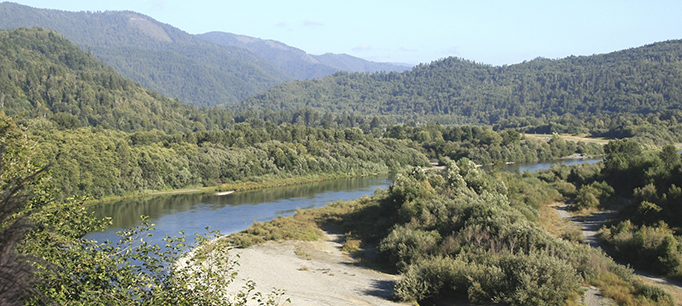
State and federal officials recently signed two agreements to reshape the Klamath River. If these agreements are fully implemented (and there are still some important hurdles ahead), they would lead to removal of the four aging hydropower dams that separate the Upper and Lower Klamath Basin, perhaps as early as 2020. This restoration effort would be the largest of its kind in the US, if not the world.

We were members of the 2001 National Research Council committee that first reviewed the environmental management challenges in the Klamath Basin. Our report, which focused on conflicts over habitat and water for threatened and endangered fishes, made many recommendations, including dam removal. We are gratified to see progress toward this objective.

There are many good reasons for removing these dams. They harm water quality, block access to spawning grounds in the upper watershed for declining stocks of wild salmon and steelhead, and are a financial liability to the company that owns and operates them. Their removal is both inevitable and appropriate.

While the agreements represent a major milestone, we had another conclusion: dam removal will not solve the Klamath Basin’s problems, although it is a necessary first step.

There is an understandable perception that reconnecting the Upper and Lower Klamath will lead to dramatic improvement of conditions for salmon and steelhead. After all, the largest dam removal in US history to date—the Elwha Dam in Washington—resulted in rapid improvements for these fishes and the ecosystems that support them. Other dam removals have had similar responses.

The Klamath, however, is very different. The removal of the Elwha Dam opened up 70 miles of pristine habitat, all protected within a national park. In contrast, the vast expanse of marshes in the Upper Klamath Basin through which the upstream rivers flow have been drained and farmed for more than a century. And the remaining lakes, including Upper Klamath Lake and Keno Reservoir, have significant water quality issues. If these and other problems in the Upper Basin are not addressed, the environmental benefits of taking down the dams will not be fully realized.

Dam removal will not solve the Klamath Basin’s problems, although it is a necessary first step.

For these reasons, dam removal on the Klamath is a commitment, rather than a conclusion. Sustained, well-funded efforts to restore and monitor habitat in the tributaries (where most salmon and steelhead spawn and rear), and to improve water quality in the Upper Basin must continue for decades after the dams come down. The agreements recognize this, but it is easy to lose focus once the primary objective—dam removal—is achieved.

The story of the Klamath dam removal effort is an object lesson for the deeply entrenched combatants in the Sacramento–San Joaquin Delta. The Klamath agreements are a triumph of negotiation over confrontation and litigation. These agreements represent more than a decade of hard work on the part of the federal and state governments, farmers, environmental groups, and Native American tribes, who are especially critical to its success. Long-time adversaries climbed out of their trenches and negotiated a comprehensive fix. Agreements like this are, by virtue of their many compromises, naturally imperfect and difficult to come by. But in today’s complex, politically charged environment, they are the only way to make meaningful progress on resolving contentious water issues.

Learn more

Read a summary of policy recommendations from Improving the Federal Response to Western Drought (February 2016)
Visit the PPIC Water Policy Center

English Learners and the New State Tests

California’s K–12 students struggled on the new statewide Smarter Balanced assessments (SBAC) last year. The results highlight the challenges facing students and teachers as the state shifts to computer-based tests on new curricula with higher standards for achievement. Disadvantaged groups like low-income students and English Learners (ELs) saw much lower achievement levels than their peers, and many of the state’s 1.4 million ELs could have a harder time getting reclassified as fluent in English due to tougher testing.

Reclassified ELs are among the best performing students in the state. They consistently outperform continuing ELs and often have higher achievement levels than English-only students. Policymakers are interested in helping ELs with sufficient English skills transition more quickly out of English Learner programs, increasing their access to academic instruction in other subject areas. In the past year, 11% of English Learners—about 155,000 students—were reclassified. Altogether, almost 2.7 million students—about 43% of the state’s total enrollment—are current or former English Learners.

The State Board of Education’s guidelines for EL reclassification incorporate student performance on the state standards tests and English proficiency tests, as well as parent consultations and teacher evaluations. However, districts’ testing requirements often exceed the state’s suggestions. PPIC research found that the state’s prior assessment (the California Standards Test, or CST) was a significant hurdle for English Learners to clear in order to be reclassified. The SBAC may make this hurdle even higher.

To estimate the percentage of students who might meet their district’s reclassification criteria following the shift to SBAC, we analyzed the results of a PPIC survey on reclassification policies. This survey collected data from 300 districts, which together serve more than half of the state’s students. When moving from the CST to the SBAC, the share of students who would have met their district’s reclassification criteria falls considerably. Overall, between 45% and 64% of ELs would have met their district’s criteria on the CST, but only 16% to 26% would have met the standard on the SBAC.

This chart illustrates the share of ELs meeting reclassification standards by the rigor of their district’s CST reclassification requirement. Districts that required a CST level of Basic for reclassification would see a substantial drop in ELs meeting this standard, with 65% of students meeting the reclassification standard under CST, compared to 21% under the analogous SBAC standard. Districts with more rigorous criteria would see the share of students meeting their reclassification standard drop even lower when moving from the CST to the SBAC—from 40% to 17%.

With the new Local Control Funding Formula and the adoption of the Common Core State Standards, much of California’s K–12 education system is in flux. There are several changes looming for EL reclassification policy as well. For example, federal law now requires that the state establish uniform standards for every district, and the Smarter Balanced tests could make it much more difficult for ELs to meet the basic skills criteria for reclassification. Additionally, recent research suggests that relying solely on the English language proficiency test may suffice to determine whether a student can succeed without additional EL supports. Given the changing landscape and emerging research, the timing is right for state and district educators to reassess EL reclassification policy, ensuring that criteria are set to maximize academic success for both English Learners and reclassified students.

Source: Authors’ calculations based on California Standards Tests 2012–13 results and California Assessment of Student Performance and Progress 2014–15 results.

Note: The CST and SBAC use different achievement levels. We consider CST’s Basic and Proficient as analogous to SBAC’s Standard Nearly Met and Standard Met, respectively. About 45% of districts require that ELs score at or above Mid-Basic to be reclassified. However, due to insufficient data, the share of students who would meet that standard on the SBAC is not shown here.

Video: Californians’ Views of K–12 Education

Despite increases in state spending on K–12 education, most Californians say state funding for their local public schools is inadequate. And most support an extension of the Proposition 30 tax increase on higher incomes, as well as state and local school bonds. These are among the key findings in PPIC’s 12th annual survey on Californians and education that were presented in Sacramento last week by Lunna Lopes, survey research associate.

Lopes said that concerns about the quality of education are at a record-low 40 percent, and less than a third of Californians say that teacher quality is a big problem. Concern about a teacher shortage is higher, with a majority calling it a big problem.

Among the other findings discussed:

  • There are partisan divisions on Common Core, but public school parents are confident that it will help students be college ready and develop critical thinking skills.
  • Few Californians have heard about Local Control Funding Formula, but when presented with a short description of the policy, most are supportive.
  • Californians see preschool as important for K–12 success and most prefer to spend some of the state budget surplus on early childhood education programs.

5 Things to Know About Desalination

A longer version of this piece was recently published by “Water Deeply.”

Could desalination provide a reliable supply of water for California? A number of policy makers have been raising this question in response to water-supply challenges brought on by the drought. Around the globe, some similarly dry places are getting a significant share of their water through desalination.

Officials in some cities (especially in Southern California) certainly think so, and are taking steps to develop seawater desalination plants. The state’s water bond allocates $725 million to help local water agencies build water recycling and desalination plants. Recent proposals that prioritize desalination include Senator Dianne Feinstein’s proposed water bill, which would provide $100 million in funds for desalination projects; Assembly Bill 1925 by assemblywoman Ling Ling Chang, which would establish annual goals for producing potable water through desalination; and the Obama’s administration proposed budget for 2017, which would launch an Energy-Water Desalination Hub, and provide funding for other desalination initiatives.

California has more than 60 years’ experience with desalination, and yet the process remains a minimal part of the state’s water system, for a number of reasons. Here are some key facts to know about desalination in California today.

  1. It’s not just about the ocean: Although desalination often uses seawater, in California and other western states it has mostly been used to remove salts from brackish water (which is saltier than freshwater but less salty than seawater). The state’s existing plants can produce almost 140,000 acre-feet from brackish sources, but only 57,000 acre-feet from seawater. Brackish desalination is generally much cheaper, because there’s less salt to remove.
  2. Seawater desalination will remain an expensive source of water: According to a recent report by the White House, current seawater desalination technologies will need to undergo a fourfold reduction in cost, a threefold decrease in electricity usage, and a twofold cut in carbon-dioxide emissions to compete with traditional water sources.
  3. California’s water supply varies from year to year, while desalination is a fixed long-term investment: Customers in water districts using desalination will pay higher costs for desalted water even in wet years when cheaper sources are available.
  4. California has relatively abundant supplies from other sources. Even during droughts, the state has a variety of water sources that can carry it through long dry periods, nearly all of which are significantly cheaper than seawater desalination.
  5. Environmental impacts are a concern. The most significant effects are ocean water intake, and brine disposal (in ocean and brackish plants). Desalination’s high energy use compared with other water sources also raises concerns about greenhouse gas emissions.

A drought is a bad time to rush into investments in desalination to address water supply problems that can be solved more effectively in other ways. Many desalination plants prompted by droughts—including in Australia, Spain, and here at home in Santa Barbara—either never were used or closed within a few years of operation because their high-cost water could not be justified once rains returned. Desalination is clearly not a silver bullet for California, but it is one tool to consider for communities facing long-term water insecurity.

Learn more

Read our policy brief “California’s Water: Storing Water” (from California’s Water briefing kit, April 2015)
Read our policy brief “California’s Water: Paying for Water” (from California’s Water briefing kit, April 2015)
Visit the PPIC Water Policy Center water supply page

Water Use and Californians’ Views on the Drought

The State Water Resources Control Board recently reported results of the nine-month statewide water conservation effort that Governor Brown announced last April. With an overall reduction of 23.9 percent compared to the same nine months in 2013 and 2014, the state came up just short of its 25 percent target. Monthly water savings have been below 25 percent in each month since October. Notably, in February—the final month of reporting under the governor’s water savings mandate—the statewide reduction was just 12 percent. This suggests a decreased sense of urgency about the drought. The PPIC Statewide Survey has found additional evidence that Californians’ sense of urgency has declined.

In our March 2015 survey—before the conservation effort was announced—two-thirds of Californians said people in their area were not doing enough to respond to the drought. In surveys since the mandatory water reduction was implemented in June 2015, only half have expressed this view. In each region of the state today, fewer say not enough is being done than said so last March—including the Central Valley, where we’ve seen a 21 point decline in the share saying “not enough.”

Following the wet winter months and a slowdown of statewide water savings, fewer Californians are saying that the supply of water in their part of California is a big problem. In our March survey, 57 percent expressed this concern—but that’s down from 70 percent last September and 66 percent in March 2015.

We have also seen fewer Californians name water and drought as the most important issue facing the state. Last month, 20 percent of Californians said water and drought were most important. That is down from a peak of 39 percent in May 2015 and similar to the responses we heard in March 2015 (23%).

As spring begins and policymakers consider the next steps for water use reduction, Californians’ views on the drought will continue to be an important factor in statewide water conservation efforts.

Learn more
Visit the PPIC Statewide Survey
Visit the PPIC Water Policy Center

Californians’ Views on the Value of College

An overwhelming majority of Californians view our higher education system as very important to the state’s quality of life and economic vitality over the next 20 years. More than two-thirds of Democrats and Republicans, as well as large majorities across the state’s regions and demographic groups, share this perception. In fact, there has been a general consensus on this issue among Californians since we began asking this question in 2007.

However, Californians report differing opinions about the necessity of a college education for individual success.

A majority of Californians (59%) in our most recent survey say that a college education is necessary to succeed in today’s work world, and more than two-thirds of Asians, Latinos, and blacks concur. But fewer than half of whites hold this view. Notably, the share of whites who say college is necessary has dropped 11 points since 2007, despite staying generally constant among other racial/ethnic groups.

Californians at the lower end of the income scale tend to believe that college is necessary, while higher-income residents are less inclined to this view. Two-thirds of Californians with household incomes below $40,000 think a college education is necessary, compared to about half of those with higher incomes. Among Californians with college degrees and those with no college education, solid majorities say college is a necessity. In contrast, only half of those with some college hold this view.

Democrats and Republicans are divided when it comes to the necessity of a college education in today’s work world: two-thirds of Democrats, compared to fewer than half of Republicans and independents, think of college education as a necessity. Since 2007, the share of Democrats holding this view has remained consistent, while the shares of Republicans and independents holding this view have declined 15 and 19 points, respectively.

Foreign-born adults are far more likely than those born in the United States (80% to 47%) to say college is necessary. Parents of children age 18 or younger are also far more likely than others (68% to 54%) to place high importance on a college education.

While most Californians view our higher education system as very important to the state’s future, differences in opinion emerge regarding the necessity of a college education. In particular, many Asians, blacks, and Latinos, as well as Californians with lower incomes, view a college education as necessary to succeed. These findings are especially salient as the issue of access to California’s higher education institutions gains prominence.

Learn more

Read the March PPIC Statewide Survey: Californians and Their Government
Visit the PPIC Higher Education Center

Farms That Grow Groundwater

Farmers use the lion’s share of California’s groundwater, but they also do the most to rebuild depleted reserves of this critically important water source. We talked to Graham Fogg—a groundwater expert at UC Davis and a member of the PPIC Water Policy Center research network—about farmland groundwater recharge.

PPIC: How do farms recharge groundwater?

Graham Fogg: Crops don’t use all the water they get through irrigation—a lot seeps into underlying groundwater. Farms also move water from place to place through leaky ditches. The type of irrigation can affect the amount of recharge. For example, with flood irrigation a large fraction can end up back in the aquifer—commonly as much as a third or more. With micro-irrigation, a larger fraction of applied water is taken up by plants, and less ends up recharging groundwater.

Many farmers have adopted micro-irrigation technology. Farmers prefer groundwater when using drip systems because it’s free of sediment that can clog emitters, and groundwater is available whenever the farmer needs to run the system, sometimes multiple times a week. The result is that drip-irrigated farms may pump more groundwater—and they’re not recharging the aquifer as much. It’s an unintended consequence of more efficient irrigation.

PPIC: Are farmers being encouraged to recharge groundwater?

GF: The drought has helped many farmers realize the importance of better groundwater management, and some are figuring out how they can do more recharging on their land. The Sustainable Groundwater Management Act will require better management and balanced water budgets in each basin. This can be achieved with decreased groundwater pumping or increased recharge. In essence, we need to start managing groundwater systems in ways that are similar to surface storage reservoirs and use recharge as a hedge against future drought.

If we continue to rely on irrigation for most of our recharge, it raises questions about groundwater quality. Water that goes through farmland is more likely than non-farm recharge to be tainted with salts, nitrates, and some pesticides.

PPIC: What practices can improve California’s groundwater supplies?

GF: We need to do a variety of things to bank groundwater or face the prospect of having to reduce pumping in dry years and in depleted basins. One solution with high potential is “spreading basins.” These are flat places with the right soils and geological conditions for ponding water so it can infiltrate the aquifer. We need to map these surface and subsurface features and take steps to protect them for recharge purposes.

The Central Valley is not only home to some of our most over-tapped groundwater basins, but also to lands with good potential for fast infiltration. One promising approach is routing excess winter runoff onto farmlands, where irrigation infrastructure can be used to spread the water and recharge groundwater. This practice is gaining much interest from farmers.

We also can manage rivers to encourage recharge, bringing benefits to entire basins. Rivers can recharge groundwater with seepage through their beds. And when rivers overflow their banks, water spreads across the floodplain. Two approaches with high potential to improve groundwater conditions are moving levees back to reconnect rivers with their floodplains, and managing groundwater and surface water as an integrated system. When groundwater systems fill to the point of spilling over, rivers and wetlands stay wet, and there’s a natural exits for groundwater contaminants. Without such exits, these basins will become increasingly polluted over time.

Learn more

Read “The Coming Groundwater Revolution” (PPIC Blog, January 6, 2016)
Read our policy brief “California’s Water: Storing Water” (from California’s Water briefing kit, April 2015)
Visit the PPIC Water Policy Center

California’s New Tax Credit

Starting this year, California tax filers with very low incomes from wages are now able to claim a tax credit that builds on the federal Earned Income Tax Credit (EITC). Californians without dependent children can claim the credit if their wages are less than about $7,000, and those with children can claim it if their wages are less than about $14,000.

California joins 25 other states that have their own EITCs. Since California’s credit is brand new, we do not yet know who will claim it. However, our research enables us to characterize the population of those likely eligible for the credit. These estimates are based on family characteristics and incomes reported for 2013.

About 3 million tax filers in California are eligible to claim the federal credit on behalf of themselves and their families. We project that roughly 600,000 filers will be eligible for the California EITC—or about a fifth of those eligible for the federal EITC. If we broaden the scope to include both filers and their family members who will also benefit from the credit, the number of Californians affected by the federal EITC increases to nearly 10 million and by the state credit to 2 million.

Single filers with dependents can generally claim the largest credit. Among those in this group who are eligible for the state EITC, we calculate that the state EITC amount is $932 on average and the federal EITC amount is $2,579, for a combined total of $3,511. This amounts to a 58% boost in earnings on average—20% from the state credit and 38% due to the federal credit. While these filers are working a substantial number of hours (29 hours per week on average), only 37% report working year round (48 weeks or more).

In contrast, single filers with dependents who are eligible only for the federal EITC because their earnings are too high to claim the state EITC see about a 16% increase in income. Compared to those who can claim the state EITC, those eligible only for the federal EITC typically work full time (40 hours a week on average) and year round (83% worked 48 weeks or more).

We know from the research literature that the federal EITC boosts family incomes both directly and indirectly by encouraging work. While it is still too early to assess the full impact of the new California EITC, this early glimpse suggests that the direct effects of the state EITC will be large, at least among a key group of filers eligible to claim the credit.

Video: Challenges and Opportunities for Higher Education

This is a critical time for higher education in California. Higher education matters to Californians, who are applying to the University of California (UC) and California State University (CSU) in record numbers. It also matters to the state, whose future prosperity depends on an educated workforce. And California can—indeed, must—do more to increase the number of college graduates. That was the message at the launch of the PPIC Higher Education Center presented by Hans Johnson, center director and PPIC senior fellow.

There is much to be done in the three areas the PPIC Higher Education Center will focus on, Johnson said, providing examples in each one:

  • Access: California ranks 47th in the nation in the proportion of high school graduates who go directly to a four-year college.
  • Outcomes: Fewer than half of community college students ever earn certificates or degrees—or transfer to a four-year institution. Fewer than 60% of CSU students earn bachelor’s degrees.
  • Finance: Tuition at CSU and UC is at an all-time high. California faces the ongoing challenge of figuring out how to fund the higher education system.

But Johnson said he is optimistic. The public systems are adopting innovative strategies, and there is increased interest—on the part of the public and the legislature—in higher education.

Following Johnson’s presentation, Kevin de León, the state senate’s president pro tem, and Janet Napolitano, University of California president, discussed a range of issues in a conversation with Mark Baldassare, PPIC president and CEO. The speakers sounded similar themes.

Both de León and Napolitano emphasized the need to better fund public higher education and expand access at a time when a diverse group of Californians is coming of age. The leaders were asked about their reactions to a highly critical state audit of UC, which concluded that the university hurt California high school graduates by admitting too many out-of-state applicants.

De León said the findings were not surprising, given funding cuts by the state: “When you make deep cuts and when you shortchange California students, in particular, these are the consequences.”

Napolitano said that after the state made deep cuts in UC’s budget, the university had no good options: it could have reduced enrollment slots for California students, raised tuition even more than it did, or brought in more out-of-state and international students. UC chose the latter. She urged Californians—particularly in the legislature and the executive branch—to take a step back.

“Those decisions were made, they had to be made,” she said. “You have to make the best of a bad situation. Now, what do we do together moving forward and what is our collective vision?”