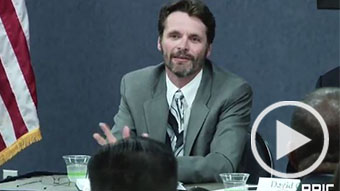
Is College the Answer to Income Inequality?

In both California and the nation, income inequality is at or near record levels. Educational attainment is by far the single most important determinant of an individual’s income. A key question, then, is whether improvements in educational outcomes can reduce inequality. In a recent commentary for EdSource, we conclude that increases in college completion will increase wages, but will not significantly narrow the income gap. Here’s why:

College graduates earn a lot more than workers with less education. For example, workers with a bachelor’s degree earn 57 percent more on average than similar workers with only a high school diploma. But the range in wages for college graduates is much greater than the range for less educated workers. For example, among workers with a graduate degree, the top wage earners (those in the 75th percentile) earn $33 more per hour than those at the bottom of the wage distribution (25th percentile). Wage gaps are much lower among less educated workers – only $11 among workers with a high school diploma. Moreover, during the past three decades wage gaps have increased dramatically among college graduates. The large and growing variation in wages among college graduates leads to higher inequality.

This does not mean we should abandon policies to increase college enrollment and completion. Inequality at relatively high wages is better than low wages for everyone, and improvements in educational attainment will lead to higher incomes on average. But don’t expect to substantially reduce income inequality simply by increasing the rate of college graduation.

Survey Focuses on Historic Changes in California Schools

PPIC’s 10th annual survey on K–12 education focused on two historic changes in California schools: the transition to the Common Core math and English standards and the Local Control Funding Formula.

Sonja Petek, project manager for the survey, talked about the key findings last week at a lunchtime briefing at the Cathedral of the Blessed Sacrament in Sacramento.

As our recent report, Implementing the Common Core State Standards in California shows, Common Core is off to a challenging start so far in the state. However, the PPIC survey found that most Californians and public school parents support the standards—which have sparked controversy in other states. But most are also concerned that teachers are unprepared to implement the new standards.

While most Californians had heard at least a little about the Common Core standards, awareness of the new funding formula was much lower. After they were read a description, most Californians said they supported the Local Control Funding Formula, which gives school districts increased flexibility over spending and provides extra money for disadvantaged students.

The survey also asked whether the state should fund voluntary preschool for all 4-year-olds (73% said yes) and whether likely voters would support a local bond measure to benefit school construction bonds (55% would) or a local school parcel tax for schools (48% would).

Drought Watch: Essential Elements for a Water Bond

This is part of a continuing series on the impact of the drought.

In both houses of the California Legislature, multiple versions of a new water bond are being amended and debated to make the June deadline for replacing the $11.1 billion bond now slated for the November election. Originally intended for the November 2010 ballot, the bond has been twice delayed due to concerns it would not pass. The March 2014 PPIC Statewide Survey showed a bump in public approval since last year, with 50 percent of likely voters now saying they would approve it, up from 42 percent in March 2013. Survey responses to other questions about water suggest that this rise in support likely reflects concerns over the drought. For example, a record share of residents (15%) named water as the most important issue facing the state (up from 2% a year earlier).

As the legislature considers the final size and shape of this new bond, it is worth reviewing how bond funds have been used in the past and the areas that most need bond support in the future.

The 2000s were a big decade for water bonds, with approved funds totaling almost three times as much as the three previous decades combined. Even so, bond funds currently only contribute about $1 billion a year to the water sector, a small portion of the $30 billion that is spent annually on the state’s water system.

Moving forward, new bond funds are likely to be more limited (as shown by the current bond’s bumpy road to approval), so it makes sense to focus them on areas that lack sustainable and reliable funding sources. As we show in our report Paying for Water in California, these areas include small water systems in rural, low-income communities, flood protection, stormwater pollution management, aquatic ecosystem recovery, and integrated water management. The bond funds approved in the 2000s have been spent overwhelmingly in these areas, yet the need is still great.

For activities that more readily raise funds from local ratepayers—such as water supply and wastewater management—future bond support should be limited to projects that generate broad public benefits. This might include water supply projects that promote better integration of our water system (e.g., by capturing stormwater, which can improve both water supply and prevent pollution) or ecosystem recovery (e.g., by improving the quality or quantity of water to support fish and wildlife).

Even if a new water bond passes this fall, California will need to find other ways to pay for small system drinking water quality, critical improvements to flood protection, stormwater management, aquatic ecosystems, and integrated water management. As part of its deliberations, the legislature will need to think beyond bonds, and consider new statewide fees or special taxes—such as a small surcharge on water use or a small increment on the sales tax—to help fill these gaps with a reliable revenue stream.

Chart Source: Paying for Water in California.

State Leaders: More Data Needed on Rehabilitation Efforts

As Senate President Pro Tem Darrell Steinberg (D-Sacramento) put it, the odyssey of California’s corrections system during the past decade would be a wonderful topic for a Ph.D. thesis: it would cover the separation of powers, the prohibition against cruel and unusual punishment, and the evolution of one of the nation’s largest prison systems. Steinberg’s comments were made Monday during a PPIC Speaker Series on California’s Future event at the Sheraton Grand in Sacramento, which drew an audience of several hundred in person and online.

Steinberg was joined by Assemblymember Melissa Melendez (R-Lake Elsinore), the vice chairwoman of the Assembly Public Safety Committee, and Matthew Cate, the director of the California State Association of Counties. The discussion was moderated by PPIC President Mark Baldassare.

This event occurred at a time when California is working to comply with a court order to reduce the prison population by February 2016. The state has recently directed more than $1 billion toward new jail beds at the local level. But state policymakers are also focusing on alternatives to incarceration that will reduce recidivism, deter criminal behavior, and save money.

“I maintain very strongly that unless we begin significantly redirecting resources from leasing prison and jail space to substance abuse and mental health care and treatment that we may reach that magic number at one point in time, but we will not maintain it,” Steinberg said.

The bipartisan panel found considerable agreement on the need to increase rehabilitation efforts, particularly those aimed at youthful offenders or at-risk youth. Steinberg said he would like to see the $81 million in Governor Brown’s proposed budget doubled, and Melendez agreed that the amount in the proposed budget was insufficient. The state is also considering another $500 million for new jail beds in this year’s budget, and Steinberg suggested that counties should have discretion about whether those funds might be better spent on mental health beds or other intervention services.

The panel also gave a strong endorsement of better data collection on realignment-related programs—currently, not enough is known about how intervention programs are performing or which ones work best.

“We have a lot of programs out there, and no one seems to be able to tell me if they work,” Melendez said.

The panel also addressed identifying metrics for success—defining key measures, such as recidivism, can be a challenge. Cate said there are multiple measures of recidivism —arrest, conviction, prison—but each one can tell a different story.

Testimony: A Data-Driven Approach to Corrections

The Senate Public Safety Committee considered a bill Tuesday by Senator Jim Nielsen (R-Gerber) that would require counties to collect specific data elements relating to public safety realignment, a policy that shifted responsibility for lower-level felony offenders from the state to counties. The senator said the bill was inspired in part by a data project underway at PPIC. PPIC research fellow Mia Bird testified about the project. Here are her prepared remarks.


Thank you for the opportunity to speak today. My name is Mia Bird, and I am a research fellow at the Public Policy Institute of California. For those who are not familiar with PPIC, we are a non-partisan independent research institute focused on major policy issues in California. PPIC does not take positions on bills and we do not have a position on SB 1097. However, we do have core staff focused on corrections in California and we hope to inform the decisions ahead in this area. At PPIC we are interested in the effects of realignment on recidivism and public safety outcomes, as well as on county jail and corrections systems. Today I plan to discuss our ongoing effort to collect data that would permit the state, counties, and researchers to identify effective county corrections practices.

Public safety realignment (AB 109) fundamentally changed the corrections system in California, shifting responsibility for tens of thousands of lower-level felons from the state to the counties. A central principle of AB 109 is that counties should have a strong hand in designing their own approaches to managing offenders now under their supervision. In authorizing counties to implement their own realignment plans, California has effectively created 58 county policy laboratories and with them, the opportunity to use variation in county approaches to identify best practices that can be shared throughout the state and nationwide. However, if the state is to take advantage of this opportunity, counties will need to collect the minimum data required to evaluate their efforts.

AB 109 states that “fiscal policy and correctional practices should align to promote a justice reinvestment strategy that fits each county.” It defines “justice reinvestment” as a “data-driven approach to reduce corrections spending and reinvest savings” using “evidence-based strategies designed to increase public safety.” It is laudable that the state endorsed the use of a data-driven approach and evidence-based strategies, but many counties will need additional support to meet this goal. While realignment legislation clearly advocated for the use of evidence-based practices, it did not come with resources earmarked for data collection or guidance on the kind of data that would make identifying best practices possible.

PPIC is coordinating with eleven counties and the Board of State and Community Corrections to begin to address this need. Taken together, the eleven counties cover a majority of the state’s realignment population and represent the demographic and geographic diversity of the state. We are working with participating counties to develop the capacity to collect individual-level data on offender characteristics and criminal histories, as well as the corrections interventions these offenders experience at the county level. These interventions may include a wide range of strategies, such as reentry services, graduated sanctioning, and alternatives to incarceration.

Once collected, these county-level data will be merged with state level recidivism data. This data system will allow the state, counties, and researchers to evaluate the effectiveness of the corrections interventions used under realignment. Identifying effective strategies is critical to targeting limited resources to their best use, with the aim of achieving the greatest possible recidivism reduction for the public safety dollar.

PPIC is currently providing technical assistance to set up this data system, and we will work with BSCC to establish procedures for timely access when complete. Resulting datasets will be held and maintained by the BSCC and made available to the state, counties, and qualified researchers for evaluative work and research.

Although the project is in its early stages, we have gained important insights from our work to date. On April 17, PPIC released a report entitled Corrections Realignment and Data Collection in California that offers a vision of what it would mean to fully embrace the data-driven approach to corrections articulated in AB 109. We describe data collection goals that would allow for the identification of evidence-based practices, including the need to collect individual-level data elements, to agree on definitions for those key data elements, and to share limited data across corrections departments and service provider organizations.

In the report, we also examine the barriers counties currently face to achieving these data collection goals. We find a key challenge shared across many counties is the need for upgraded and integrated data systems that can facilitate offender management within agencies, share relevant data across agencies, and collect the data necessary for evaluation. As counties develop plans to improve their data systems, the state has the opportunity to play a role in guiding these efforts. For example, the state might provide guidance on the key system features, coordinate the collection of a minimum set of common elements, and ensure the use of common definitions across counties.

Recently, the state has made investments in new jail construction to increase the physical capacity for community corrections, and we suggest an analogous investment to upgrade the technological capacity for community corrections. How much would such efforts cost? Right now, we do not know the full scope of the funds that would be needed, but our sense from the eleven counties we have worked with is that needs will vary across the state. Because the legislature has charged the Board of State and Community Corrections with providing leadership, coordination, and technical assistance to promote effective and evidence-based corrections practices, the responsibility for overseeing the recommended improvements may fit within the board’s current scope of work.

More than two years into realignment, some data collection efforts have been established and others are emerging, but the work of creating integrated data systems that can be used to demonstrate the most effective corrections strategies remains largely undone. We see this work as the crucial next step in making progress toward reducing recidivism and improving public safety in California.

The Working Poor in California

Today saw the release of the jobs report for March. California’s March unemployment rate was 8.1 percent, unchanged from February. Employers in California added 325,100 jobs over the past year–the largest increase in the nation. This is encouraging news for state residents who live near the bottom of the income ladder because, for a variety of reasons, workers in this category tend to be most affected by economic downturns.

Federal and state safety net programs target low-income families, and our work has shown that these programs play a major role in mitigating poverty. But a closer look shows that earnings from employment—not support from the social safety net—are the predominant source of income for working-age Californians living in poverty. Among poor adults with children, after-tax earnings made up 74 percent of family resources in 2011 (when the California unemployment rate was much higher than it is today, averaging 11.8 percent). In dollar terms, this translates into annual family earnings of about $22,200. For poor working-age adults with no children, earnings made up 69 percent of resources on average, or $10,400 (the much lower amount in part reflects the typically smaller family size of this group of adults).

Regionally, across California’s three most populous counties—Los Angeles, Orange, and San Diego—earnings made up between 75 and 82 percent of resources for poor adults with children. For those without children, earnings were 70 to 74 percent of resources. In California’s Central Valley, an economically struggling region of the state, earnings still made up the majority of family resources for poor working age adults: 59 percent for adults with children and 62 percent for adults with no children.

Although similarly detailed statistics for 2014 are not yet available, we can expect that earnings play at least as large a role in the resources of California’s poor today, now that the economy is on the upswing.

Education Experts Focus on Common Core

The Common Core Standards are fundamentally altering the way students learn and have generated broad debate nationally. Their implementation in California was the focus of a panel discussion in Sacramento yesterday. PPIC sponsored the event in conjunction with the release of two reports, Implementing the Common Core State Standards in California and California’s Transition to the Common Core State Standards: The State’s Role in Local Capacity Building.

The reports show that California’s shift to the Common Core—which emphasizes conceptual understanding and problem solving—is off to a slow start. They also note that California has treated the transition as a district-level issue, with the state Department of Education reviewing instructional materials and providing a professional library of resources that can be downloaded by teachers. Speakers at yesterday’s event saw both points as positive.

Patricia Rucker, a member of the state Department of Education, said taking a thoughtful approach was more important than being out in front. California can learn from states like New York and, ultimately, lead by incorporating the lessons from others, she said. She also noted that California’s careful approach has helped avoid the backlash over the new standards that other states are experiencing.

David Gordon, superintendent of the Sacramento Office of Education, said the state’s decentralized approach to implementation offers opportunities. “A lot of our districts have great talent,” he said. “A lot of the counties have great talent. A lot of the private vendor providers have great talent. I think we need to use all of that to advantage.”

Patrick Murphy, PPIC’s research director and a co-author of the reports, said California has an opportunity to be “strategic late adopters.” Echoing a theme of the reports, he said the state is uniquely situated to take a different role in education. It could, for example, set up a site—similar to Yelp—to encourage educators on the ground to exchange information about teaching the Common Core.

The speakers noted two important lessons learned so far:

  • The experience of other states shows that California’s future test scores will drop—a development that educators and parents need to be prepared for.
  • The requirement to administer tests electronically has highlighted the need for updated technology in the state’s public schools and has sparked action to do so.

Videos Highlight Water Finance Event

The drought has focused attention on water supply and highlights the crucial role of funding in supporting our water system, said Ellen Hanak, PPIC senior fellow, at a half-day conference PPIC hosted last week at the Sacramento Convention Center. The conference focused on the issues highlighted in the PPIC report Paying for Water, which pinpoints funding gaps in five key areas of water management. Hanak opened the conference with a presentation of her report, starting with an overview of how California pays for water. She noted that state general obligation bonds make up just a small part of the $30 billion spent annually on the water system.Most funding, about 85 percent, comes from local sources—rates, fees, and taxes. However, legal obstacles make it difficult for local agencies to raise money. Hanak then summarized the areas in which the state is failing to deliver the level of services California residents expect. She closed with a roadmap of recommendations for funding reform.

In the first panel discussion, experts from local water agencies and the governor’s office took up the issue of “fiscal orphans” for which there is no clear revenue stream—areas such as flood control, stormwater, and safe drinking water for small, disadvantaged communities. panelists talked about their challenges and successes in building better integrated systems in these orphan areas.

The second panel tackled a series of tough questions: How can the state partner with local and regional agencies to improve water management? What has the state done well and what can it do differently? Panelists with both state and local perspectives joined this lively discussion.

The third panel considered some of the legal challenges posed by Propositions 218 and 26. Panelists said these constitutional amendments have pushed water authorities to be more transparent in their use of taxpayer funds. But the measures and the courts’ interpretations of them have also made it more difficult to fund water solutions.

Moving English Learners to English Fluency

English learners (ELs) who have been reclassified as fluent English speakers perform very well, sometimes even surpassing the achievements of native English speakers. Moving ELs to English fluency is a high priority for educators and policymakers. As we describe in a commentary for EdSource, school districts across the state have different standards for reclassifying these students. This means that students with the same skills may be reclassified as fluent in one district, but not in another.

PPIC surveyed school districts about their reclassification policies and found that almost all districts use at least one reclassification criterion that is more rigorous than the State Board of Education’s guidelines. We also found that districts using more rigorous reclassification policies generally had lower reclassification rates. In many cases, setting the bar higher is linked to improved student outcomes for reclassified English learners, such as higher test scores. But these outcomes are not improved by much, and in some cases, outcomes are worse.

We concluded that the benefits to reclassified students of being held to higher standards are minimal—especially in light of the high performance of reclassified students in districts using the state guidelines.

Further, standardizing district reclassification policies into one uniform policy—for now, using the State Board of Education guidelines—would ease another concern: that districts have a fiscal incentive to set standards that maintain the supplemental funding they get for each EL student. Most important, standardizing reclassification policies would speed the transition of highly able English learners.

Changes to California’s school finance, testing, and accountability systems all have the potential to change outcomes for ELs over the coming months and years. New research on setting the state’s reclassification standards should wait until the new assessments aligned to the Common Core State Standards are fully implemented.

The Uninsured and the Safety Net

Open enrollment in California has ended, and preliminary tallies indicate that more than 3 million Californians will be enrolled in health plans through Covered California or will become new members of the Medi-Cal program. While it is still too soon to tell how many uninsured people have gained coverage, projections suggest about 4 million Californians will still lack health insurance. About 30 percent of these uninsured residents are estimated to be eligible for Medi-Cal and can enroll at any time during the year.

Uninsured residents who are not eligible for ACA coverage because they are undocumented immigrants—and those who did not purchase coverage through Covered California during the open enrollment period—will continue to rely on county programs and safety net providers, such as health clinics and emergency departments (EDs).

Access to these resources varies considerably across the state. Eligibility for indigent programs differs across counties, as there are no state standards for services provided or populations served. For example, most county indigent programs do not cover undocumented immigrants; these residents rely on clinics and EDs, particularly in counties that do not operate public hospital systems. Also, many counties set relatively low income thresholds for their indigent programs, limiting the number of uninsured residents who qualify for services.

Because the Medi-Cal expansion will cover many of the people currently served by county indigent care programs, the state is shifting funds previously allocated to county health programs. This fiscal year, state funding for county health programs was reduced by $300 million (under AB 85); there will be deeper cuts in subsequent years, as more Californians gain insurance coverage. The state will determine future funding reductions in consultation with the counties. In most cases, counties have selected a formula-based approach that accounts for the actual costs and revenues associated with indigent care programs to determine how much funding will be shifted back to the state.

Over the next several years, it will be important to monitor how these and other changes affect both safety net providers—including counties and public hospital systems—and the communities that continue to rely on them for health care.