What’s Next for Legalized Marijuana?

The morning after Election Day, California appeared to be on a very different path than much of the nation. But in voting to legalize recreational marijuana, Californians were very much in step with the rest of the country. In addition to California’s Proposition 64—which passed relatively easily, with 56% of the vote—measures were passed in Nevada and Massachusetts that legalized recreational marijuana. Measures that legalized or expanded medical marijuana passed in Florida, Arkansas, North Dakota, and Montana. So far, Arizona is the only state to have rejected a recreational marijuana measure. Maine also passed a measure legalizing recreational use, though the vote was close and is subject to a recount.

While marijuana remains illegal under federal law and continues to be classified as a Schedule I drug (meaning it has a high risk for abuse and has no accepted medical value), 63% of Americans now reside in states that have medical or full legalized use, including 21% with legalized recreational use.

Now comes the difficult part. Proposition 64 sets in motion a number of steps and procedures designed to create a regulated market for recreational marijuana. Many of these can be modeled on last year’s legislation regulating California’s medical marijuana market. And the states that have legalized marijuana so far have created a competitive but regulated market structure. But regulatory experience—in California and other states—is in short supply. As one state regulator opined at a recent PPIC event, “Right now, science is lagging policy.”

Marijuana regulation cuts across many areas. Earlier this year, we outlined several key regulatory areas, including cultivation, production, and processing; sales, consumption, and possession; taxes and finance; and public health and safety. The challenge facing California and other states is to implement regulations that can achieve multiple, sometimes conflicting policy goals: limiting the impact of the illegal market, preventing youth drug use, reducing harm to public health and safety, preventing diversion of legal marijuana into illegal markets, and raising revenue. This requires a comprehensive regulatory approach that would document and control the cultivation, production, processing, and sale of legal marijuana.

Our report recommended that California err on the side of caution and adopt a relatively restrictive regulatory model for both the recreational and medical markets. We still maintain that a tight, single market will make marijuana laws easier to enforce and reduce diversion to under-age Californians and to other states. To be sure, a highly regulated legal market will be accompanied by a robust illegal market. But it will be easier to loosen a tight market than to tighten a loose one.

Given the apparent national interest in legalizing marijuana—and the lack of knowledge about this new industry—California is positioned to be a leader in answering difficult questions about how best to regulate it. To play a leadership role, California regulators should collect data on marijuana sales, prices, revenue, and use. Basic market information would play a significant role in closing this knowledge gap and inform better future policy for both our state, and the rest of the country.

Finally, we should note that there is some uncertainty about the future of marijuana regulation across the country. As noted above, federal law still classifies marijuana as an illegal substance. The relatively benign approach that the federal government has taken to enforcing federal law regarding marijuana has been based on three memos written by second-tier cabinet members and some language in an annual appropriation bill. Though President-elect Trump has not explicitly stated his policy on marijuana, it would be relatively simple for the new administration to alter the current federal approach.

Learn more

Read the report Regulating Marijuana in California
California’s Changing Headwaters

Much of the state’s water supply originates in forested headwaters high in the mountains. Yufang Jin is a UC Davis professor specializing in ecosystem change and remote sensing (gathering aerial images of the earth). She is also a member of the PPIC Water Policy Center’s research network. She talked to us about how a warming climate and extreme wildfires are changing these crucial ecosystems.

PPIC: How are large wildfires changing our watersheds?

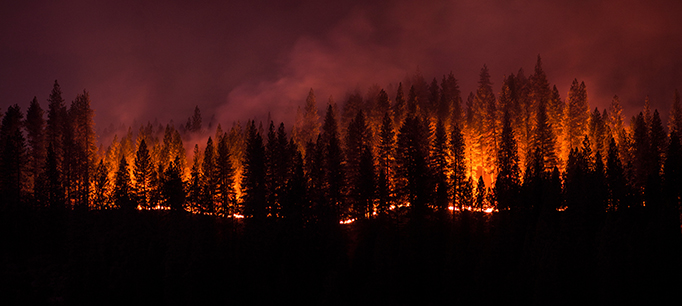
Yufang Jin: We’re seeing intensifying wildfires in California, especially in the headwater regions where our rivers originate. More intense fires have significantly changed the composition and structure of forest ecosystems, affecting both water quality and quantity—though not always for the worse. For example, large fires can significantly reduce the amount of vegetation covering the land, which reduces the amount of water consumed by plants. Burned areas also have much less water circulating in the soil. Both of these post-fire processes have a positive impact on streamflow, as more water works its way into the water table and streams. But the loss of groundcover plants from intense fires also increases surface erosion, which can cause landslides in the rainy season. Ashes and sediments flowing into streams harm water quality.

PPIC: What are catastrophic fires teaching us about managing forests, wildfires, and water in California?

YJ: They’re pushing us to use management strategies that recognize the relationships between forests, fires, and water supply. In the past most forest management focused on wildfire suppression. There’s now recognition that solely focusing on suppression led to unnaturally dense forests, which in turn led to larger and catastrophic fires. So now there’s a growing effort to use forest thinning and prescribed fires to reduce fire hazards. Some pilot projects indicate that allowing natural fire to thin forests can lead to increases in water quantity in the watershed as well. A lot of federal and state agencies are now emphasizing watershed restoration strategies that bring multiple benefits. They are paying more attention to approaches that reduce fire hazards and may also increase water yields.

PPIC: How will climate change affect the severity of wildfires in California?

YJ: All climate models predict that the warming trend will continue in coming decades, and will often be accompanied by drier conditions. There is consensus that with these conditions, we can expect more severe wildfires across California and in the West more generally. One of our recent studies showed that the average area burned in Southern California could increase 70 percent by mid-century. Another effect of climate change is that forests in the western US will become more vulnerable to drought stress, making them more prone to diseases and beetles, leading to greater tree mortality and more fires.

PPIC: What kinds of technological advances can help us improve watershed management in the state?

YJ: There are two technologies that can provide more informed water management. One is obtaining images from satellites with remote sensors to learn about ecological and hydrological conditions on the ground. The other is using big data analytics and cloud computing, which can help us interpret the huge amount of data you get from remote sensors and translate it into information that farmers and water managers can use and act upon.

Basically, remote sensors can be used to monitor factors like water temperatures, the range of particular plant types, or the amount of water being released from plants. You can observe relatively large areas over time in a cost-effective way. For example, remote sensors can help detect algal blooms and invasive aquatic species throughout the watershed. Water managers can use remote sensing to estimate how much water is being used by crops or by natural vegetation, and how that water use changes from season to season or year to year. It can also help figure out how ecosystems will respond to a changing climate or how changing land use can affect water use. For fire management, remote sensing can track when and where fires occur, how effective fuel treatment projects are in reducing fire severity, and how vegetation recovers after fires.

While there are no simple technological solutions for managing the effect of a changing climate, having tools like these will make it much easier to get the quantitative information that we need to develop adaptive forest and watershed management strategies.

Learn more

Read California’s Water: Protecting Headwaters (from California’s Water briefing kit, October 2016)
Read “Managing Wildfires Requires New Strategies” (PPIC Blog, September 23, 2015)
Visit the PPIC Water Policy Center’s drought resource page

Improving Math Placement Decisions

A new state law is intended to help ensure that all students—particularly those underrepresented in higher education—have access to rigorous math courses in high school. This is a key step to improving college readiness and closing achievement gaps. The centerpiece of the California Mathematics Placement Act is the requirement that districts create and implement a fair, objective, and transparent math placement policy. The law leaves many aspects of implementation up to the districts.

PPIC surveyed the state’s school districts during the 2015–16 school year to examine their placement policies and identify district needs right before the law took effect in 2016–17. In a new report, Math Placement in California’s Public Schools, research fellow Niu Gao and research associate Sara Adan found that districts face a number of challenges in implementing the law. Gao presented the report at a recent Sacramento briefing.

One issue is particularly complex: teacher recommendations. The new law calls for limiting their use due to concerns that they may be systematically biased against economically disadvantaged or Latino and African American students.

The PPIC report shows that teacher recommendations are among the most widely used measures in determining placement—and the way they are used now is complicated. Recommendations typically address both academic and “soft” skills, such as student maturity, persistence, and motivation, which are predictors of student success. The PPIC authors found cases in which teacher recommendations are biased against high-achieving minority students, but they also found cases in which teacher recommendations are advancing minority students who do not perform well on standardized tests. In other words, eliminating recommendations altogether may help some students but at the expense of others.

Gao said the critical issue is not whether teacher recommendations should be used but how they can be designed to complement objective measures, such as tests.

CSU and UC Are a Better Value Than Universities Nationwide

With college application season underway, the US Department of Education’s yearly scorecard helps prospective students and their parents by providing information on the costs, graduation rates, and student debt associated with individual colleges. Since last year, the scorecard has also included wages for former students based on federal tax data. We reported on how to interpret the earnings measure in an earlier blog post.

The scorecard also highlights 26 affordable universities with good outcomes in the form of relatively high earnings. California’s public universities do quite well: eight California State University (CSU) and University of California (UC) campuses make the list. This list uses a school’s average net price (its tuition, fees, room, board, and other expenses minus the average amount of grants and scholarships) and the typical student’s earnings 10 years after enrolling to estimate how much “bang for their buck” students get in terms of future income.

In fact, almost all CSU and UC campuses provide higher-than-average incomes given their net price when compared to four-year colleges nationwide. California’s private four-year colleges show mixed results, as they generally have higher net costs; about half have below-average earnings for their price.

These results speak to the relative success of CSU and UC compared to other universities in the nation. However, it is important to note that this isn’t the whole story: the net price and income data are only collected for students who received some form of federal aid. While this represents a majority of students in public universities, it can represent a smaller fraction of students from private universities in the state.

California’s public universities have a couple built-in advantages. The state’s generous financial aid program provides grants that cover tuition for qualifying low-income students and, in some cases, help pay for living expenses and books—substantially reducing the net price for those students. Also, workers in California earn more than those in other parts of the country, and the concentration of higher-paying jobs in California (such as in the tech industry) may contribute to the relative success of the state’s students. However, many private colleges in the state are associated with low median salaries, suggesting it’s not just location that matters.

California also likely benefits from high-quality institutions. Most UCs are highly ranked nationally, and as PPIC has shown in other research, CSUs have relatively good six-year graduation rates when compared to similar institutions. This is important, as the scorecard reports the incomes of students who attended a university, regardless of whether they graduated. College graduates tend to make more than non-graduates, so institutions with better graduation rates are more likely to produce workers with higher incomes.

While the scorecard can help students decide which college is right for them, it also shows students that the economic returns to a college degree can be had for a reasonable price in California.

For those interested in diving deeper into this finding, this chart illustrates the relationship between net price and the yearly income of students after 10 years. Each dot is a university. The CSUs (orange), UCs (dark teal), and in-state private universities (light teal) are marked alongside other universities in the nation (light grey). Nationwide, higher net prices are associated with higher earnings. This isn’t shocking, as we generally associate higher prices with higher-quality universities, which may net students a higher future income. The diagonal line shows typical earnings for a given net price. Universities above the diagonal line have higher-than-average earnings given their net price, and universities below the line have lower-than-average earnings.

Learn more

Read “What the New College Scorecard Can—and Can’t Tell You”
Visit the PPIC Higher Education Center

Solutions for the Delta

California asks a lot of the Sacramento-San Joaquin Delta. This vast, watery landscape is expected to be the ultimate multitasker—a major source of water for cities and farms, a critical aquatic ecosystem, and a center for recreation and tourism. No wonder it’s showing serious signs of stress.

At the Bay Delta Science Conference last week, experts gathered to present and discuss the science of the Delta’s many difficult challenges.

Speakers focused on ways to make this science more useful for policymakers, linking data and decisions to come up with science-based solutions, and using them as the foundation for stakeholders to find common ground over contentious issues.

Felicia Marcus, the chair of the State Water Board, said more could be done to ensure that decision makers are engaged by the science they’re presented with. For example, she said the policy process would be improved if scientists made their work more accessible and intelligible, and were less reluctant to make recommendations.

Striking a similar note, Phil Isenberg, former chair of the Delta Stewardship Council and a member of PPIC’s board of directors, called for making research actionable by focusing on solutions instead of just defining the problems. Multiple speakers noted that experts who work in teams that include both natural and social scientists are more successful at providing a path forward for policymakers because of their ability to address tradeoffs and find “win-win” scenarios.

Peter Moyle, one of the state’s top scientists on fisheries and the Delta (and a member of the PPIC Water Policy Center research network), said California needs to emphasize solutions that provide flexibility in management. An ecosystem-based plan of action brings such flexibility, which is one reason he recommends focusing restoration efforts on a specific “arc of habitat” in the north Delta.

The event also honored Jeffrey Mount, senior fellow at the PPIC Water Policy Center, who received the Brown-Nichols Award for his scientific contributions to improving the management of the Delta watershed. His decades of contributions go beyond his work here at PPIC. In addition to longstanding engagement in key policy discussions on Delta challenges and California water more generally, he is former chair of the Delta Science Board and a founder of the Center for Watershed Sciences at UC Davis. While at UC Davis, he was also a coauthor on a number of Delta-focused PPIC reports, including Comparing Futures for the Sacramento San Joaquin Delta (2008), and Stress Relief: Prescriptions for a Healthier Delta Ecosystem (2013), which looks at ways to address multiple ecosystem stressors in the Delta while stressing the importance of considering the science, the institutions, the economics, and the law.

Ellen Hanak, director of the PPIC Water Policy Center, said, “This award serves as an example of Jeff’s ability to use science to improve decisions. The community of researchers, analysts, policymakers, and engaged citizens interested in the future of California water and the Sacramento-San Joaquin Delta is fortunate that he has chosen to devote himself to these issues.”

Learn more

Read California’s Water: The Sacramento-San Joaquin Delta (from the California’s Water briefing kit, October 2016)
Watch our short video on the Delta
Visit the PPIC Water Policy Center’s Delta resource page

Three Bills Signal State of Education Policy

In this year’s busy legislative session, Governor Brown signed 316 of the nearly 800 education-related bills sent to his desk. The bills made relatively small changes on a range of issues from local parcel taxes to school disciplinary policy.

In recent years, a series of reforms—including passage of the Local Control Funding Formula (LCFF), adoption of the Common Core State Standards, and the shift to the new computer-based Smarter Balanced tests—have constituted a significant transition for the state’s 6.2 million public school students. These changes were designed to target K–12 funding for students with the greatest needs and focus teaching on the development of critical-thinking skills. Rather than signing off on legislative changes to these reforms, the governor has opted to continue their implementation while shifting some attention to challenges on the horizon.

A review of the fates of three bills, the state budget, and recent administrative actions helps illustrate the current state of education policy in California:

  • Aligning state and federal accountability rules. Earlier this year, the State Board of Education adopted a new accountability system for evaluating the progress of schools and districts in the eight priority areas—including parental involvement, school climate, and student achievement—laid out in the LCFF. The governor vetoed Assembly Bill (AB) 2548, which would have compelled the state board to align the accountability system with new federal regulations requiring the state to intervene in the lowest-performing 5% of schools. By using multiple measures, the state’s system takes a more holistic view of student achievement. But this approach makes it difficult to assign a number to each school in order to identify those that need the most help—putting it at odds with the federal government. The governor resisted changing course with his veto, but the state may need a waiver to meet the federal requirement.
  • Addressing the teacher shortage. The budget included several teacher workforce initiatives to address the state’s looming shortage, including financial assistance for classified employees interested in teaching and grants to universities encouraging four-year teacher credential programs. The governor signed AB 2248, allowing those with out-of-state credentials to teach English Learners in California. This relatively small change—which addresses one of the subject areas with an acute teacher shortage—stood out in contrast to related legislative efforts that failed, like a bill that would have provided student loan forgiveness for teachers who serve in schools with the most needs.
  • Preparing California’s students for the future. The governor also signed AB 2329, creating a 23-member advisory panel tasked with developing a strategic implementation plan to expand access to courses in computer science—a critical field for the 21st century economy. The plan would lay out the standards for a computer science curriculum and increase the number of computer science teachers, with the goal of ensuring access for all students.

These examples show that as the implementation of major education reforms continues, the governor has focused on making small tweaks to the state’s system and laying the groundwork for the coming years. As California’s leaders look toward the future, it is vital that they build a robust educational system that will be able to address both near- and long-term challenges.

Water Trivia Quiz Answers

Yesterday we published a water trivia quiz to ring in the new water year. Today we bring you answers. For each right answer, have a drink of water—you deserve it! (Answer to bonus question: the water year runs from Oct. 1 to Sept. 30, which is the period when precipitation totals are measured.)

  1. What could bring the biggest reduction in water use for a family in a single-family home? B: Removing a lawn would bring the highest water savings. Outdoor landscaping accounts for roughly half of all urban water use, and lawn is the thirstiest piece of that equation, especially in the hotter, dryer parts of the state. Replacing lawn with native plants can reduce water use by up to 60%. But this can be a costly change for households to make.

    Second best would be replacing an old toilet. Toilet flushing accounts for nearly a quarter of water use in the average home. Switching to a high-efficiency 1.28 gallon model can save more than 6,789 gallons per year if you started with a 5 gallon model, and about 4,000 if you had a 3.5 gallon one. Replacing a leaking toilet will bring even greater savings.

    The showerhead is next. Bathing accounts for about 17 percent of household water use, and the US EPA Water Sense program estimates that switching from a standard 2.5 gallon-per-minute showerhead to a 2 gallon-per-minute one can save 2,900 gallons per year (and a significant amount of energy from lower water heating as well).

  2. What was California’s per-capita water use in 2015? B: 130 gallons per day in 2015 (the fourth year of the latest drought). That’s down from 232 gallons per day in 1995. On average, inland residents used more. The reasons: outdoor watering and a hotter climate (their average was 168 gallons per person per day), while coastal residents used just 119 gallons per day.
  3. What causes toxic algal blooms? D: The growing problem of toxic algal blooms is an “all of the above” problem. A combination of nutrient-rich runoff from farms, discharges of treated sewage and urban runoff, and the drought’s warmer water temperatures and reduced river flows, caused numerous algal blooms in our waterways this year.
  4. How much surface water did Central Valley farms receive in 2015 compared to a year with normal rainfall? C: In 2015, surface water deliveries to Central Valley farmers were about half those of a normal year. About half a million acres were fallowed in both 2014 and 2015, costing the farm economy nearly $2 billion, and as many as 10,000 full- and part-time farm jobs. Groundwater pumping replaced about 70 percent of the lost surface water, which worsened the problem of overdrafted groundwater basins in some places.
  5. How was California’s energy supply affected by the drought? D: All of the above. A drop in urban water use brought significant energy savings statewide. Some Central Valley power plants that rely on surface water for cooling faced water shortages. The industry is being encouraged to switch to more reliable recycled water supplies, which is already the cooling source for a third of the state’s power production. California also produced about half as much hydropower during the latest drought compared to normal years; fossil fuels made up most of the drop. The growing problem of California’s “snow droughts” reduces the state’s ability to store water and produce hydropower in summer, when demand is highest. A warming climate will worsen this problem.
  6. Which new water supply would be the least costly to develop? D: While it’s a bit hard to generalize—the answer depends on the local cost of water, geography, and project particulars—the cheapest is likely a conservation program to replace old toilets, showerheads, washing machines and the like, according to a 2016 study by the California Public Utilities Commission. Some efficiency measures can even generate more benefits than costs over their lifetime, according to a recent report by the Pacific Institute. For urban areas located near an aquifer, groundwater recharge is second in terms of cost. For areas with poor access to groundwater basins, the best bet for a new water source may be recycling wastewater and piping it directly into the existing water system (called “direct potable reuse”); the state is currently developing policies that would make this possible. Seawater desalination is likely to remain the most expensive new source for most California communities.
  7. How many of California’s native fish are now at risk of extinction? B: At least 18 of California’s native 122 fish species are now at near-term risk of extinction. The drought’s low flows and high water temperatures add to the effects of dams, water diversions, habitat degradation, and the introduction of non-native species. A total of 90 native fishes are in trouble in one way or the other, with 31 already listed under the Endangered Species Act. The way we manage water leaves our freshwater ecosystems in perpetual drought.

Drought Savvy? Take Our Water Trivia Quiz

The start of the new “water year” has brought mixed messages to drought-stressed Californians—from above-normal rains in the northern part of the state to lingering drought in the southern half. But whether you live in the wet or dry part of the state, everyone can use a refresher course on what the drought means for our water supply. The answers are here. (Bonus question: What is a water year?)

1. Californians have experienced both mandated and voluntary calls for water conservation during this drought. For a family living in an older single-family-home, which of the following could bring the biggest reduction in water use?

A. Replace old showerheads with low-flow ones

B. Remove the lawn

C. Replace an old toilet with a water-efficient one

2. Water use in cities and suburbs has been declining for many years. What was California’s per-capita water use in 2015 (the fourth year of the latest drought)?

A. 175 gallons per day

B. 130 gallons per day

C. 55 gallons per day

3. Toxic algal blooms have become more common in California waterways in recent years, causing lake and beach closures, poisoning pets and sea life, and posing human health risks. What causes them?

A. Warmer water temperatures

B. Nutrients in the water from farms, treated sewage, and urban runoff

C. Lower flows into lakes, wetlands and estuaries

D. All of the above

4. How much surface water did Central Valley farms receive in 2015 compared to a year with normal rainfall?

A. Most farmers received the same amount.

B. They got 25% less—the statewide conservation mandate

C. They got about half of normal allocations

5. How was California’s energy supply affected by the drought?

A. Since it takes energy to supply, treat, and heat water, California households saved significant amounts of energy by using less water.

B. Some inland power plants faced water shortages that threatened their cooling-water supply

C. Hydropower production was cut in half due to reduced snowpack and runoff into reservoirs

D. All of the above

6. To help us address future shortages in urban areas, which of the following new water supplies would be the least costly to develop?

A. Building seawater desalination plants

B. Recharging groundwater with urban stormwater or treated wastewater

C. Making wastewater clean enough to drink

D. Enacting water efficiency programs, such as those to replace wasteful indoor water fixtures and appliances, and thirsty lawns

7. The ongoing drought has pushed many already troubled freshwater species to the brink. How many of California’s 122 species of native fish are now at near-term risk of extinction?

A. 12

B. 18

C. 27

California Is Different

Mark Baldassare, PPIC president and CEO and director of the PPIC Statewide Survey, spoke to the Sacramento Press Club today (November 16, 2016). Here are his prepared remarks before a post-election discussion with Mark DiCamillo, senior vice president of Field Research Corporation and director of the Field Poll.

With the stunning victory of Donald Trump in the presidential election, it is easy to overlook the significance of the California vote. The political experience here was starkly different from the US in ways that went beyond our normal “blue state” election performance. I’m going to focus on election and polling trends that caught my attention—including citizen engagement, presidential preference, the state ballot measures, the role of government, and voter turnout. My colleague Eric McGhee has an excellent analysis of the top-two legislative races in another PPIC blog post. I’ll close with a look toward next year and the 2018 California election in light of the changing political landscape in California and the US.

Citizen engagement. The California voter rolls grew by 2.15 million in 2016 to reach a historic high of 19.4 million before the November 8 election. According to the California Secretary of State, the voter registration surge was largely a Democratic Party phenomenon, resulting in a 19-point gap between the Democrats and Republicans (45% to 26%)—the largest since 1976. Clearly, online registration and social media brought in new voters. But Hillary Clinton, Bernie Sanders, and Donald Trump shaped those voters’ party choices. One of the Republican candidate’s main messages—on immigration—simply did not resonate here. The 2016 PPIC Statewide Surveys consistently found that most Californians viewed immigrants as a benefit, favored a path to citizenship for undocumented immigrants, and opposed building a wall on the US–Mexico border.

Presidential preference. Democrat Hillary Clinton is currently defeating Republican Donald Trump by a 29-point margin in California. Clinton’s margin is higher than President Barack Obama’s in 2008 (+24) and 2012 (+23), while Trump’s support (33%) is lower than every Republican presidential candidate since 1992. Clinton is running up big margins in Los Angeles and the San Francisco Bay Area, while Trump is running behind even in Republican-leaning Orange County and “purple” areas of the state such as Fresno, Riverside, San Bernardino, and San Diego Counties. This was occurring in California even as blue areas turned red in the nation’s swing states. The margin for the presidential race in the October PPIC survey was 26 points, indicating that polls were accurate in accounting for Trump and Clinton supporters here.

State ballot measures. California also distinguished itself from the rest of the nation by asking voters to be the deciders on 17 state propositions. The September PPIC survey found satisfaction with the initiative process but unhappiness with the scale and complexity of state measures, and the oversized role of special interests in the process. Would voters just say no to all measures or skip this portion of the ballot? They did neither. They are currently approving 12 of the 17 state propositions and, in saying yes to at least 9 of the 14 citizens’ initiatives, exceeding the historical pass rate. Apparently, and in line with PPIC reports, California voters are up to the challenge of making policy at the ballot box.

Role of government. The big surprise in the 2016 California election is a sea change in voter preferences for the role of government. Californians reversed course in terms of their own previous decisions and stood apart from a number of national trends.

  • Californians passed both a cigarette tax increase (64%, Proposition 56) and marijuana legalization (56%, Proposition 64), both of which failed at the ballot earlier.
  • Years after they instituted a tough-on-crime three strikes law and mandated that schools teach only in English, the state’s voters passed criminal sentencing reform (64%, Proposition 57) and bilingual education (73%, Proposition 58).
  • While second-amendment rights were a litmus test for presidential candidates in other states, Californians expanded firearms restrictions (63%, Proposition 63).
  • Voters may be known for their distrust in state government, but they endorsed the plastic bag ban that was passed earlier by the legislature, at the same time reinforcing their “green” credentials (53%, Proposition 67).
  • Californians showed a generous streak by passing state school bonds (54%, Proposition 51), Medi-Cal funding (70%, Proposition 52), and a tax extension (62%, Proposition 55).

Notably, voter support for tax and spending propositions that we tracked in the September and October surveys were both stable and close to the election results, indicating that opinions were unmoved by the “no” campaigns. “Calexit” has become shorthand for the idea of California leaving the US. Instead, it may end up referring to Californians leaving behind the tax revolt that started here.

Voter turnout. The California Secretary of State is reporting a record-setting 15.18 million counted and unprocessed ballots in the November election. This vote count also reflects gains in the turnout among registered voters and eligible adults compared to the 2012 presidential election. Turnout rates were somewhat higher in the 2008 election. The October PPIC survey showed a high level of interest in the presidential election, and California seems to have bucked the national trend of depressed turnout. Still, only about half of the approximately 30 million California adults voted in this election. As noted in a recent PPIC report, nonvoters are mostly Latino, immigrants, lower-income, and young adults. In other words, those who don’t vote are among the most affected by changes in the role of government.

The voters have spoken and the awkward result is a conflicting policy agenda for the state government and the federal government. How will Governor Brown and the state legislature respond when the Republican president and US Congress shift gears on immigration, the Affordable Care Act, climate change, and abortion rights policies favored by California residents?

As the priorities, plans, and programs of the new president and Congress take shape, the mission of the PPIC Statewide Survey—­­to provide a voice for both adults and likely voters—takes on even greater importance.

And as we look further ahead, the next California governor will play a challenging role in managing the federal and state relationship. PPIC will invite the 2018 gubernatorial candidates to public forums next year to learn what we can about their leadership style and their vision for the state’s future in the changing political landscape in California and the US.

Preparing Community College Students for Success

Each year hundreds of thousands of students entering California’s community colleges are identified as unprepared for college work and placed in remedial courses, also known as developmental education courses. Colleges vary widely in the way they assess and place students—for example, even colleges that use the same test base their placement decisions on different cut-off scores.

The impact of remedial placement is profound. Most students who enroll in a developmental education class never go on to earn a certificate or degree or transfer to a four-year college. Latino, African American, and low-income students are overrepresented in these courses, raising equity issues at the colleges—the entry point to higher education for most students in the state.

Two PPIC reports document the state of developmental education in California and examine the reforms that have been adopted to change it. Olga Rodriguez, PPIC fellow and coauthor of both reports, presented the findings at a briefing in Sacramento last week, followed by a panel discussion of higher education experts moderated by coauthor Hans Johnson, PPIC senior fellow and director of the PPIC Higher Education Center.

Panelists included Mónica Henestroza, higher education advisor for Assembly Speaker Anthony Rendon; Myra Snell, math instructor at Los Medanos Community College and cofounder of the California Acceleration Project; and Theresa Tena, vice chancellor of institutional effectiveness in the California Community Colleges Chancellor’s Office.

The three panelists emphasized the widespread recognition that reform is needed and under way.

Henestroza said the PPIC reports underscored what she hears directly from students—that they are being sidetracked from pursuing their career goals by developmental education. She also said that the savviest students know that it’s easier to pass placement tests at some colleges than others.

Snell said that when looking at the wide variation in college placement policies and the large numbers of students placed in developmental education, many mistakenly blame high schools for not preparing students. “Really, what we’re beginning to understand is that our definitions of preparedness are problematic.”

She said that student scores on Accuplacer, a commonly used placement test, are not a reliable predictor of college success. Colleges making robust use of multiple measures—including, for example, previous high school work—in placement decisions are seeing higher student success rates, she added.

Snell also pointed to promising reforms elsewhere. Tennessee, for example, enrolls students directly into college-level courses and providing remedial support where it’s needed. In other words, she suggested, reform efforts should focus on bypassing developmental education altogether.

Tena noted that colleges are implementing redesigned courses in developmental education that are intended to improve student outcomes. PPIC is currently conducting research to evaluate these new reforms.

Learn more

Preparing Students for Success in California’s Community Colleges
Determining College Readiness in California’s Community Colleges: A Survey of Assessment and Placement Policies
Visit the PPIC Higher Education Center