Challenging Times for California

This is a time of global crisis. We are all living through a fast-moving, large-scale disaster that is having extraordinary public health and economic consequences. Here in California, public leaders and private industries took early action to mitigate the effects of COVID-19, putting policies in place to flatten the curve sooner than any other state. And while the full extent of the pandemic has yet to be realized, Californians should feel proud of our state’s ability to assess and respond rapidly to counteract this generational challenge.

The pandemic is touching every aspect of life today. Students, agricultural workers, health care practitioners—all Californians are struggling to adjust to enormous changes in their responsibilities and daily routines. At PPIC, we are thinking about the effects on our state’s most vulnerable populations: seniors living in areas with sparse medical care, children receiving free or reduced price lunches, essential workers struggling to stay above the poverty line.

We are also deeply concerned with what lies ahead. How will our economy—just recently in the longest growth cycle ever recorded—respond in the long term? How can the state improve opportunities for those hardest hit by this crisis? What can we observe, measure, and propose that will help California to rebuild itself efficiently, effectively, and equitably?

PPIC will be delving into these questions as this crisis plays out. For now, in these fluid and rapidly changing times, we are focused on bringing critical facts and information to the table—assessing the state’s economy, people, communities, and environment. Our blog series on COVID-19 provides wide-ranging analyses across key policy areas, from education to health care, from criminal justice to water policy. And the PPIC Statewide Survey will be offering perspectives on the pandemic and the economy from Californians across the state.

For 25 years, PPIC has worked hard to inform and improve public policy in California. 2020 may be one of our most challenging years yet, but we are ready and able to meet that challenge.

For PPIC’s full series on the coronavirus and California, visit our COVID-19 page.

Two California Leaders Join PPIC Board of Directors

[vc_row][vc_column][vc_column_text]PPIC welcomed two dynamic California leaders to its board yesterday. Each has made exceptional contributions to our state. Together, they bring a wealth of leadership experience, a strong record of public service, and a deep understanding of our unique state. They will be invaluable assets to PPIC as we work to shape a better future for California.

Photo of Karen Skelton

Karen Skelton is founder and president of Skelton Strategies, a boutique political and strategic consulting firm. For more than 30 years, she has worked within the private and public sectors to design campaigns that require political, legal, and communications skills to shape policy. She has experience in a range of subject matters, including a passion for policies focused on climate change, economic equality, and transportation.

Karen has managed some of the most complex and entrepreneurial projects in the nation for presidents, vice presidents, governors, CEOs, and foundations. For almost a decade, she was CEO of The Shriver Reports, a nonprofit media initiative examining seismic societal shifts currently affecting American women and families. She spent about a decade in Washington, DC, working in the Clinton/Gore administration at the White House and the US Departments of Justice and Transportation, and another decade managing a national public affairs firm, building it from scratch with a DC-based partner into a multimillion-dollar business. She holds a BA in English from UCLA, a master’s degree from Harvard’s Kennedy School of Government, and a JD from the UC Berkeley Law School.

Photo of Helen Iris Torres

Helen Iris Torres is CEO of Hispanas Organized for Political Equality (HOPE), where she leads one of the state and nation’s most influential Latina organizations. She has been instrumental in the development and implementation of the HOPE Leadership Institute (HLI), a program that prepares Latinas for their next level of civic participation.

Helen currently serves on the California Latino Economic Institute, a group of business leaders formed to advise the California Latino Caucus. She also serves on the community advisory board for Wells Fargo. Previously, she participated in various commissions under Governor Gray Davis, Governor Arnold Schwarzenegger, and Governor Jerry Brown. She is also a sought-after speaker on women’s issues and an advisor to projects such as The Shriver Report: A Woman’s Nation Changes Everything. She is featured in Life Moments for Women, a book supporting the Women’s Foundation of California. She has been recognized by the Los Angeles Dodgers as a “community hero” and by Hispanics in Philanthropy for advocacy work on behalf of Latinas. Her story was part of a California State University oral and public history exhibit titled “Voces de Liberacion: Latinas in Politics in Southern California.”

PPIC also extends heartfelt thanks to two distinguished long-time board members, Ruben Barrales and Donna Lucas, who are stepping down today. Both provided 12 years of outstanding service, offering exceptional oversight, guidance, and support to the institute. Donna served as board chair for three years of her term, while Ruben contributed to key committees. Both continue to serve on the PPIC Statewide Survey Advisory Committee. We will be forever grateful for their extraordinary efforts on behalf of PPIC.

The current chair of the PPIC board is Steven Merksamer, senior partner in the Northern California law firm of Nielsen Merksamer Parrinello Gross & Leoni LLP. The other board members are myself; María Blanco, executive director of the University of California Immigrant Legal Services Center; Louise Henry Bryson, chair emerita of the Board of Trustees of the J. Paul Getty Trust; A. Marisa Chun, partner at Crowell & Morning LLP; Chet Hewitt, president & CEO of the Sierra Health Foundation; Phil Isenberg, former chair of the Delta Stewardship Council; Mas Masumoto, author and farmer; Leon E. Panetta, chairman of the Panetta Institute for Public Policy; Gerald L. Parsky, chairman of the Aurora Capital Group; Kim Polese, chairman of ClearStreet, Inc.; and Gaddi H. Vasquez, retired senior vice president of government affairs for Edison International and Southern California Edison.[/vc_column_text][/vc_column][/vc_row]

PPIC Turns 25

Times were tumultuous in the California of the 1990s: recession, strife over police-community relations, a voter revolt that ushered in term limits, contentious immigration debates.

There was an urgent need to address these and other issues that affected every Californian. But government had few resources to research the facts and perform the analysis necessary to help leaders to make informed decisions. PPIC was born of this need. Twenty-five years later, the necessity of nonpartisan, fact-based research has never been greater.

PPIC was founded by three exceptional leaders: Roger W. Heyns, former chancellor of University of California, Berkeley; Arjay Miller, former president of Ford Motor Company and former dean of Stanford Business School; and William R. Hewlett, co-founder of Hewlett-Packard Company. These visionaries wanted to help California’s leaders better understand policy issues through objective, evidence-based research. An endowment by Hewlett made their vision of a nonpartisan, nonprofit think tank a reality.

In 1994, the year PPIC was founded, a major earthquake shook Northridge; Orange County became the largest municipality in US history to file for bankruptcy; and California voters passed Proposition 187, which would have banned undocumented immigrants from using public services. The proposition was later declared unconstitutional, but the issues it raised and the backlash it created have powerfully influenced politics and policy ever since.

The issues that surfaced in the ’90s were complex, challenging—and are still with us, even though the state’s demographics, economy, and political climate have changed. PPIC has grown and evolved because it was built to be relevant and resilient. As the state has dealt with a gubernatorial recall, a major recession, and a lengthy drought, our work has evolved to meet its changing needs.

During the recent drought, we created the PPIC Water Policy Center to help spur innovative water management solutions. After our research demonstrated that California is not producing enough college graduates to meet the needs of our future economy, we founded the PPIC Higher Education Center. Our work there is focused on finding practical solutions that enhance educational opportunities for all Californians.

We do not do this work alone. PPIC has developed an extensive network of advisors and other engaged Californians to ensure our relevance, expand our reach, and deepen our impact. Our colleagues in local, state, and federal government often put our research into practice. Our board of directors and statewide leadership council provide us with valuable insights, and members of the business and nonprofit communities serve as our ambassadors.

In this year of transition, PPIC will be an essential resource for new leaders—the governor, legislators, members of Congress, and others who care deeply about public policy. We will offer analysis and advice on a number of key topics. Through the PPIC Statewide Survey, our leaders will regularly have the opportunity to find out what the public thinks of new policies and proposals.

In our Speaker Series on California’s Future, we plan to draw on the vast experience of past leaders by inviting all living former governors to share the stage. They will talk about lessons they have learned and offer their thoughts about the state’s future.

PPIC’s first 25 years have been exciting, rewarding, and challenging. We expect no less of the next 25—and we invite you to join us by keeping up to date with our activities and offering your support.

Steven Merksamer Named Chair of PPIC Board

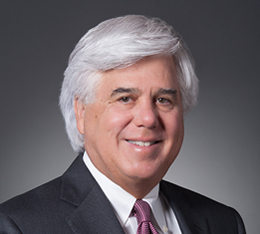
I am very pleased to share the news that PPIC’s board of directors elected attorney Steven Merksamer, a leading expert in government and administrative law and the initiative and referendum process, chair at our annual meeting yesterday. Steve’s distinguished record of public service and deep knowledge of the forces shaping our state make him an ideal leader for PPIC at this important time. He will take over from acclaimed author and farmer Mas Masumoto, who will remain on the board. On behalf of the board and staff, I want to thank Mas for his extraordinary leadership.

Photo of Steven MerksamerSteve joined PPIC’s board of directors in 2009. He is the senior partner in the Northern California law firm of Nielsen, Merksamer, Parrinello, Gross & Leoni, LLP. He served as the chief of staff to Governor George Deukmejian, a position he held from 1982 to 1987. Before that, he was the special assistant attorney general of the State of California, serving as the attorney general’s senior counselor and policy advisor. He has also served as a California deputy attorney general, assistant to the lieutenant governor of California, and assistant to the Speaker of the California State Assembly.

Notably, Steve chaired and directed the transition between the Brown and Deukmejian administrations. He will be an important advisor to me and my colleagues as we seek to provide essential facts and analysis to California’s decision makers during a significant gubernatorial transition.

Steve is currently a member of the board of directors of the California Chamber of Commerce and a trustee of the Stevenson School.  He is an honors graduate of Claremont McKenna College, and received his law degree from the University of the Pacific, McGeorge School of Law.

The other members of the board are myself; Ruben Barrales, president and CEO of GROW Elect; María Blanco, executive director of the Immigrant Legal Services Center at the University of California; Louise Henry Bryson, chair emerita of the Board of Trustees of the J. Paul Getty Trust; A. Marisa Chun, partner at McDermott Will & Emery LLP; Chet Hewitt, president & CEO of the Sierra Health Foundation; Phil Isenberg, former chair of the Delta Stewardship Council; Donna Lucas, chief executive officer of Lucas Public Affairs; Mas Masumoto, author and farmer; Leon E. Panetta, chairman of the Panetta Institute for Public Policy; Gerald L. Parsky, chairman of the Aurora Capital Group; Kim Polese, chair of ClearStreet, Inc.; and Gaddi H. Vasquez, senior vice president of government affairs for Edison International and Southern California Edison.

PPIC Celebrates Two New Endowed Chairs

PPIC has established the John and Louise Bryson Chair in Policy Research. Made possible by a gift from PPIC board member emeritus John Bryson and current board member Louise Bryson, the chair confers much-deserved recognition of—and support for—the leader of the research group at PPIC. The first Bryson chair is Sarah Bohn, who becomes director of research today.

PPIC has also established the Thomas and Marilyn Sutton Chair in Higher Education Policy with a gift from the Pacific Life Foundation. Tom Sutton is a former PPIC board member, and the Sutton Family Fund is a core supporter of the PPIC Higher Education Center, which launched in 2016. This new chair—held by Hans Johnson, the center’s director—recognizes and supports leadership in higher education research.

The generosity of these visionary leaders is motivated by a shared concern—and hope—for California’s future. Their support is vital to our ability to provide high-quality research and analysis, encourage productive dialogue, and inform the search for sustainable policy solutions in Sacramento and around the state.

PPIC Dedicates the Arjay Miller Room

PPIC dedicated the Arjay Miller Room yesterday at its Bechtel Conference Center—a meeting and learning space at the institute’s San Francisco headquarters. Three generations of the Miller family and many longtime friends and colleagues celebrated Arjay Miller’s life and the opportunity to carry on his legacy. Among the tributes were videos from those unable to attend in person.

As Mas Masumoto—farmer, author, and chair of PPIC’s board of directors—put it, “Within these walls will be lively conversations that I believe will be in the spirit of Arjay and what he wanted so much. This room will encourage constructive dialog about opportunities and challenges facing the state.”

Miller was a giant in the business world who built a legacy through his service to others. He was one of the ten “whiz kids” who left the Pentagon after World War II to resuscitate the Ford Motor Company. He had become president of Ford by the time he was appointed dean of the Stanford Graduate School of Business. There, he brought the first women onto the faculty and expanded the curriculum to include public policy, social issues, and ethics. He also established the Public Management Program, which has trained thousands of public sector managers.

One of Miller’s deepest beliefs was in the power of information to create positive change. It was this conviction—along with an awareness of California’s leadership on important national issues—that led him to cofound the Public Policy Institute of California in 1994. Mark Baldassare, PPIC’s president and CEO, said, “He loved California. He loved public policy. He loved data analysis, and he loved solving problems. So he loved PPIC.”

Miller served as the chair of PPIC’s board of directors from 1995 to 1998 and remained a member of the board until 2006. He was a trusted advisor and generous supporter to the end of his life. By serving as a gathering place for conversation and problem-solving, the Arjay Miller Room honors his contributions to PPIC as well as his commitment to serious analysis and nonpartisan collaboration.

In Memoriam: Arjay Miller

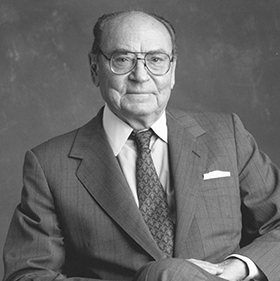
Photo of Arjay Miller

With the passing of Arjay Miller last week at 101, our nation lost a giant. Arjay defined the Greatest Generation and built a life and legacy through his service to others. Organizations across the United States—PPIC among them—owe an enormous debt of gratitude to this visionary and determined leader. It is our obligation now to fulfill that vision of leadership—private and public—for the common good.

Along with William Hewlett and Roger Heyns, Arjay co-founded PPIC in 1994. He served as the chair of PPIC’s board of directors from 1995 to 1998 and remained a member of the board until 2006. In 2000, he and his wife gave a generous gift to PPIC to create the Arjay and Frances Fearing Miller Chair in Public Policy. He was responsible for helping to secure a solid financial foundation for PPIC and for establishing many of the principles and policies that guide us to this day. Why focus on California, rather than the nation? “The rest of the country follows us,” he said at the time, citing issues ranging from clean air to affirmative action. His prescience was a gift to the people of California.

Arjay’s resume is the stuff of legend. He was one of the ten “whiz kids” who left the Pentagon after World War II and played a major role in reversing the fortunes of the Ford Motor Company. He was president of Ford from 1963 to 1968 and vice chair until 1969, when he was appointed dean of the Stanford Graduate School of Business. There, he established the Public Management Program that has trained thousands of public sector managers and has also educated private sector leaders about public needs. Explaining his desire to instill public service values in the MBA worldview, he said, “Making money is the easy part. Making the world a better place in which to live is the hard part.” He served as dean for ten years. Under his guidance, the business school appointed its first women and ethnic minority faculty members and greatly magnified its prestige.

Arjay’s civic achievements are enduring. He was also the founding chairman of the board, and a life trustee, of the Urban Institute. He was an honorary trustee of the Brookings Institution; a board member of the Mellon Foundation, the William and Flora Hewlett Foundation, and SRI International; and a chairman of the Bay Area Council. Over the years, he also served on the boards of numerous corporations, including Ford, the Washington Post Company, Wells Fargo Bank, Levi Strauss & Company, and Burlington Northern.

Our thoughts and deepest sympathies go out to Arjay’s children, Ken and Ann, and the entire family. On a personal note, I feel deeply fortunate to hold the Arjay and Frances Fearing Miller Chair in Public Policy at PPIC and to have spent time with Arjay and his family over the years. I have been the lucky beneficiary of his storytelling—life lessons delivered with trademark modesty and wicked humor. He has been a friend, mentor, and trusted advisor to me.

During Arjay’s last visit to PPIC in April of this year, he celebrated the success of the institute he helped build and asked us to do more. We intend to honor his request.

Leon Panetta Joins PPIC Board

I am pleased to welcome Leon Panetta, a distinguished leader with decades of experience at the highest levels of government, to the PPIC Board of Directors. His leadership talent and exceptional knowledge of public policy will be an invaluable asset to PPIC as we work to shape a better future for California.

Panetta, who is chairman of the Panetta Institute for Public Policy, has had a 50-year career in public service at the national and state levels of government. He most recently served as US secretary of defense, from 2011–13. Before that, he was director of the CIA, where he successfully led the operation that brought Osama bin Laden to justice.

A Monterey native and graduate of the Santa Clara University School of Law, Panetta began his public service career in 1964 as a first lieutenant in the US Army and received the Army Commendation Medal. He then served as a legislative assistant to US Senator Tom Kuchel. In 1969, he was appointed director of the Office for Civil Rights at the Department of Health, Education, and Welfare, responsible for enforcing equal education laws. Elected to Congress in 1976, he represented the California central coast for sixteen years. In 1993, he was sworn in as director of the US Office of Management and Budget, where he was instrumental in developing the policies that led to achieving a balanced federal budget. A year later, President Clinton appointed him White House chief of staff.

After leaving the Clinton administration in 1997, he and Sylvia Panetta established the Panetta Institute for Public Policy, a nonpartisan, not-for-profit study center to inspire men and women to lives of public service. He chronicles his life in public service in his best-selling memoir Worthy Fights.

As a new board member, Panetta has been elected to a three-year term and is eligible for a maximum of three three-year terms. The PPIC board is chaired by author and farmer Mas Masumoto. It is made up of myself; Ruben Barrales, president and CEO of GROW Elect; María Blanco, executive director of the University of California Immigrant Legal Services Center; Louise Henry Bryson, chair emerita of the Board of Trustees of the J. Paul Getty Trust; A. Marisa Chun, partner at McDermott Will & Emery LLP; Chet Hewett, president and CEO of the Sierra Health Foundation; Phil Isenberg, former chair of the Delta Stewardship Council; Donna Lucas, chief executive officer of Lucas Public Affairs; Steven A. Merksamer, senior partner of Nielsen, Merksamer, Parrinello, Gross & Leoni, LLP; Gerald L. Parsky, chairman of the Aurora Capital Group; Kim Polese, chairman of ClearStreet, Inc.; and Gaddi H. Vasquez, senior vice president of government affairs for Edison International and Southern California Edison.

Chet Hewitt Joins PPIC Board, Mas Masumoto Named Chair

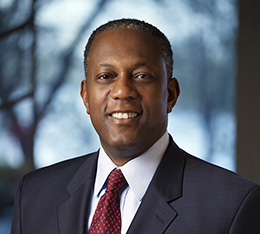
PPIC welcomed two accomplished Californians to key leadership roles today. Chet Hewitt, president and CEO of Sierra Health Foundation, joined our board of directors, and Mas Masumoto, noted author and third-generation farmer, was elected board chair. Each brings a strong record of public service and a deep knowledge of the forces shaping our state. Both share PPIC’s commitment to shaping a better future for all Californians. ·

Chet Hewitt has expanded the impact of the Sierra Health Foundation, a private philanthropy focused on improving health and quality of life in Northern California. Since he joined the foundation in 2007, he has focused on investments in four areas: health disparities, social determinants of health, health care access, and the well-being of vulnerable youth populations. He is also president and CEO of the foundation’s independent operating unit, the Center for Health Program Management, which works to eradicate health inequities across the state, with a special focus on the San Joaquin Valley.

Previously, Chet worked for five years as the director of Alameda County’s Social Services Agency, where he was credited with using technology to improve the delivery of services and transforming the agency’s child welfare system into a national model. He has also served as associate director for the Rockefeller Foundation in New York and program director for the Center on Juvenile and Criminal Justice in San Francisco. He was named administrator of the year by the Black Administrators in Child Welfare and has received several national honors, including the Annie E. Casey Foundation Child and Family Leaders Fellowship and Child Welfare Administrator of the Year. Recently, he helped found—and now serves as a co-chair—of the California Executives’ Alliance, a consortium of foundations focused on improving the life chances of boys and young men of color in California.

While he is new to the board, Chet is not new to PPIC. As a member of the PPIC Statewide Leadership Council, he has provided our management team with insights and advice about the state’s policy environment and our own programs and activities.

Mas Masumoto grows organic peaches, nectarines, and raisins on an 80-acre farm south of Fresno. Mas is the author of many books, including Epitaph for a Peach, Heirlooms, Letters to the Valley, Four Seasons in Five Senses, Harvest Son, Country Voices, and Silent Strength. In 2013, his family farm cookbook, The Perfect Peach—written with his wife, Marcy, and his daughter, Nikiko—was named one of best summer cookbooks by USA Today. The National Resources Defense Council selected another of his books, Wisdom of the Last Farmer, for its list of the Best Environmental Journalism of 2009. He is also a columnist for the Fresno Bee and the Sacramento Bee.

Mas was a Kellogg Foundation Food and Society Policy Fellow from 2006 to 2008. His writing awards include Commonwealth Club Silver Medal and Julia Child Cookbook Award. He was also a finalist for a James Beard Foundation Award. UC Davis honored him with an Award of Distinction in 2003, and he received the California Central Valley Excellence in Business Award in 2007.

Mas serves on the board of the Central Valley Community Foundation. He was on the James Irvine Foundation board from 2002 to 2014 and is the former chair of the California Council for the Humanities board. In 2013, President Obama appointed him to the National Council on the Arts, the board for the National Endowment for the Arts.

Changing Season, a documentary about succession on the Masumoto family farm, has been featured in film festivals and was nationally broadcast by PBS in May 2016.

Chet was elected to a three-year term and is eligible to serve three terms. Mas was first elected to the PPIC board in 2009. He takes over as chair from Donna Lucas, chief executive officer of Lucas Public Affairs. She remains on the board.

The other members of the board are myself; Ruben Barrales, president and CEO of GROW Elect; María Blanco, executive director of the Undocumented Student Legal Services Center in the University of California Office of the President; Louise Henry Bryson, chair emerita of the Board of Trustees of the J. Paul Getty Trust; A. Marisa Chun, partner at McDermott Will & Emery LLP; Phil Isenberg, former chair of the Delta Stewardship Council; Steven A. Merksamer, senior partner of Nielsen, Merksamer, Parrinello, Gross & Leoni, LLP; Gerald L. Parsky, chairman of the Aurora Capital Group; Kim Polese, chair of ClearStreet, Inc.; and Gaddi H. Vasquez, senior vice president of government affairs for Edison International and Southern California Edison.


Three California Leaders Join PPIC Board

PPIC welcomes three distinguished Californians to our board of directors today. Each has made a unique contribution to public life. Together they bring a wealth of leadership experience, rich knowledge of the forces shaping our state, and a strong record of public service. They will be invaluable assets to PPIC as we work to shape a better future for California.

A. Marisa Chun, former prosecutor at the US Department of Justice, is a partner at McDermott Will & Emery LLP. Based in the firm’s San Francisco Bay Area office, she focuses on complex business litigation, intellectual property litigation, and white-collar criminal defense matters in the state and federal courts. She represents clients in commercial cases and investigations across a broad range of industries, including technology, energy, life sciences and pharmaceutical, health care, manufacturing, and construction and engineering.

Chun served as deputy associate attorney general at the Department of Justice from 2009 to 2013. She focused on antitrust, intellectual property, fraud, telecommunications, privacy, and environmental matters. From 2011 to 2013, she was a special assistant US attorney, prosecuting criminal cases and appeals. Previously, she was a litigation partner at the San Francisco firm of Coblentz, Patch, Duffy & Bass LLP and was outside counsel to PPIC. She has served as chair of the Bar Association of San Francisco’s litigation section and a mediator for the US District Court for the Northern District of California. She has a BA from Yale University and a law degree from Harvard Law School.

Gerald Parsky, who has an extensive record of public service in California and Washington, is chairman of Aurora Capital Group LP, a Los Angeles-based investment firm specializing in the acquisition of US companies. Previously, he was a senior partner at the law firm of Gibson, Dunn & Crutcher LLP.

Parsky was assistant secretary of the US Treasury from 1974 until 1977 and was responsible for capital markets policy and for all of the department’s international affairs. He received a number of presidential appointments, serving on President Reagan’s Council on Productivity, President George H. W. Bush’s Export Council, and President George W. Bush’s Commission to Strengthen Social Security. In California, Parsky was a member and chairman of the University of California Board of Regents, chairman of the Commission on the 21st Century Economy, and chairman of the Public Employee Post-Employment Benefits Commission. He currently serves on the boards of the RAND Corporation, the Center for the Study of the Presidency & Congress, and the Irvine Company. He is a trustee of The Ronald Reagan Presidential Foundation and a member of the Council on Foreign Relations. Parsky is a graduate of Princeton University and the University of Virginia Law School.

Gaddi Vasquez has served in leadership posts in local, state, and federal government in a long career of public service. Today, he is senior vice president of government affairs for Edison International and Southern California Edison, one of the nation’s largest investor-owned utilities. Before joining SCE in 2009, he served as US ambassador to the United Nations agencies based in Rome, including the World Food Program and the UN Food and Agriculture Organization. He was director of the United States Peace Corps from 2002 to 2006. Early in his career, Vasquez served as an Orange County supervisor, as chief deputy appointments secretary to California Governor George Deukmejian, and as a police officer for the City of Orange.

Vasquez has served on the President’s Commission on White House Fellowships, the California Criminal Justice Council, and the California Film Commission. He serves on the boards of the Segerstrom Center for the Performing Arts, the National Advisory Board of the Salvation Army, and the National Association of Latino Elected and Appointed Officials Educational Fund. He received a bachelor’s degree in public service management from the University of Redlands.

The chair of the PPIC board is Donna Lucas, founder and chief executive officer of Lucas Public Affairs. The other board members are myself; Ruben Barrales, president and CEO of GROW Elect; María Blanco, executive director of the Undocumented Student Legal Services Center in the University of California Office of the President; Louise Henry Bryson, chair emerita of the Board of Trustees of the J. Paul Getty Trust; Phil Isenberg, vice chair of the Delta Stewardship Council; Mas Masumoto, author and farmer; Steven A. Merksamer, senior partner of Nielsen, Merksamer, Parrinello, Gross & Leoni, LLP; and Kim Polese, chairman of ClearStreet, Inc.

You can find more information about the PPIC Board of Directors on PPIC.org.