Who Lives in California’s Nursing Homes?

Seniors aged 65 and over are the age group most at risk of dying from the COVID-19 virus. As of May 6, according to the California Department of Public Health, seniors accounted for 79% of all COVID-19 deaths (1,894 out of 2,412) in the state. Seniors who live in nursing homes—skilled nursing facilities—are especially vulnerable. But state programs that allow seniors to remain living at home rather than entering nursing homes may help protect California’s most vulnerable population.

Residents of nursing homes make up less than 1% of the state’s population, but account for 39% (929 out of 2,412) of all COVID-19 deaths in the state and 10% (5,604 out of 56,212) of all confirmed COVID-19 cases. And at 78%, the vast majority of nursing home residents are seniors. Health care workers in the state’s nursing homes are also at risk. Seventeen have died and over 3,000 have contracted the disease.

Even as the senior population has grown with the aging of the baby boom cohort, the number of seniors in nursing homes has remained steady. According to the American Community Survey, about 88,300 seniors, or 1.7% of all seniors in California, live in nursing homes in 2018; that’s about the same number as in 2010 (87,500).

Figure - Little Change in Number of Seniors at California Nursing Homes

Women make up the majority of the seniors in California nursing homes (65%). Residents also tend to be very old—43% are age 85 or older—and not married. Similar to the overall senior population, the majority are white (58%). Even so, many residents (32%) speak a language other than English. Los Angeles County, the locus of the pandemic in California, has 35% of the state’s nursing home residents, but 26% of the state’s population.

Almost all nursing home residents have self-care limitations. That is, these seniors have a physical or mental health condition that has lasted at least six months and makes it difficult for them to attend to their own personal needs such as bathing, dressing, or getting around. And at least half (51%) are on Medi-Cal.

However, state and county programs have allowed more seniors to live at home. One such program, In-Home Supportive Services (IHSS), is intended to keep low-income seniors in their own homes rather than in nursing homes. IHSS offers services such as housecleaning, meal preparation, laundry, grocery shopping, personal care services—such as bathing, grooming, and paramedical services—and accompaniment to medical appointments.

Because of this arrangement, even seniors with self-care limitations are increasingly likely to stay in their own homes rather than move to a nursing home. Hundreds of thousands of California seniors receive care through IHSS.

The share of seniors in nursing homes across the rest of the country is about one-third higher than in California. A likely outcome of state efforts to keep seniors in their own homes has been to protect many seniors in this state from exposure to the pandemic.

COVID-19 Alters College Admissions

[vc_row][vc_column][vc_column_text]Admissions may look different for students entering college in fall 2021. Social distancing to protect communities during the COVID-19 outbreak will impact where students attend classes and where they will live—and recent policy updates around standardized testing and GPA requirements will impact how colleges determine eligibility and placement in courses. But even as admissions become more flexible, some students still struggle to get on the path to college.

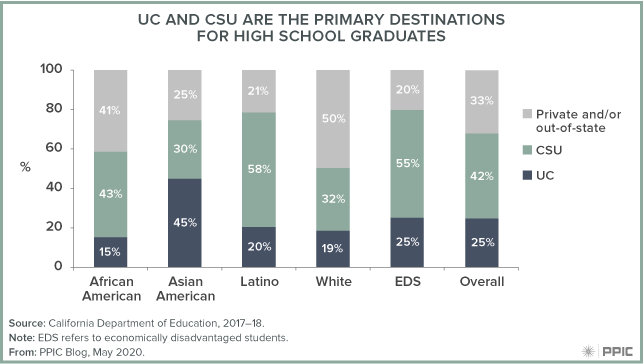
California’s public universities are the primary destination of the state’s high school graduates and community college transfers headed to a four-year college. In 2017–18, nearly 200,000 California high school graduates applied to the University of California (UC) or California State University (CSU), and 84,000 were enrolled.

figure - UC and CSU Are the Primary Destinations for High School Graduates

For students applying for admission to colleges in fall 2021, eligibility requirements and application processes are changing. Most standardized tests used for admission—such as SAT and ACT—and for placement purposes, such as the Smarter Balanced Assessment, are either postponed or cancelled.

In light of these cancellations, UC and CSU temporarily suspended testing requirements for fall 2021 applicants, meaning students do not need to include a test score on their application. In addition, UC and CSU systems are temporarily accepting pass/fail in lieu of a letter grade for courses completed in winter, spring, and summer 2020, as more K–12 districts and community colleges choose not to assign letter grades while students adjust to distance learning during the pandemic.

These adjustments are meant to ease anxiety over college admissions in a time of crisis, and there is some evidence that eliminating high stakes standardized tests could lead to more underrepresented students being placed in college-level courses and being eligible for college.

However, when high schools and community colleges lack sufficient resources, even with flexible grading in place, remote education may fail disadvantaged students. More than half of K–12 students from low-income households do not have broadband access at home. Notably, PPIC research found that online courses at community colleges exacerbated achievement gaps.

During their junior and senior years, high school students are more likely to fall off the college pathway, and disadvantaged students are even more likely to do so. And until recently, disadvantaged students were also more vulnerable to being diverted away from community college courses necessary for transfer admissions.

All students must cope with the changing college application process. But first-generation college applicants come from families who are new to the process; those with less internet/technology access may also be less familiar with how to apply. These students may see less support in the college application process than they would if they were still in school.

Now, more than ever, targeted outreach efforts and collaborations between K–12 and higher education will be critical to ensuring equitable access to a college education and economic mobility.[/vc_column_text][/vc_column][/vc_row]

How Will COVID-19 Affect Arrests in California?

The arrest rate in California is at its lowest level in decades, and as the COVID-19 crisis sends regions into economic and social disruption, further changes may emerge. Local law enforcement agencies are already adopting new arrest strategies to ensure public safety, to protect officers as well as to minimize jail crowding.

With some police departments starting to issue warnings or citations rather than make arrests, the number of misdemeanor arrests may fall. Departments are also delaying planned arrests unless doing so increases any risk to public safety, issuing summonses in the field rather than bringing detainees into a station for booking, and directing officers to take police reports online or over the phone instead of in person.

Measured as the incidence of arrests made per 100,000 in the population, the arrest rate in California had reached a peak of over 8,000 in 1989, and has since fallen fairly steadily, to under 3,500 in 2016. That 58% decline applies to rates of arrests made for felonies as well as for misdemeanors. This number reflects, in part, a parallel drop in crime rates, which are also at historic lows.

But it also reflects changes in legislation–in particular, the 2014 implementation of Proposition 47, which reclassified many lower-level property and drug offenses from felonies to misdemeanors, and the corresponding changes in law enforcement agencies’ priorities regarding the mix of offenses likely to be prosecuted.

Recommendations around arrests during the COVID-19 pandemic apply only to nonviolent misdemeanors and other lesser infractions. For instance, departments are advising officers to issue a ticket or citation for such crimes as vandalism, or low-level theft, rather than apprehend the perpetrator. Therefore, large-scale adoption of these recommendations would lead, all things being equal, to a larger share of arrests made for felonies, even if felony arrests themselves remained unchanged.

The share of arrests for felony offenses had been increasing gradually for decades, but fell dramatically after Proposition 47 was implemented. Felony offenses typically involve situations requiring immediate response, and officers have less discretion in deciding whether to make an arrest or take some other action. For example, an officer stopping a person for drug possession could issue a citation rather than make an arrest, but an officer responding to an aggravated assault is often obligated to take a suspect in for booking.

In these unprecedented times, however, all things are not likely to remain equal, and as the COVID-19 crisis evolves, changing social and economic circumstances will affect individual behavior, community responses, and law enforcement reactions.

Preliminary reports from four major California cities suggest that incidences of crime—property as well as violent—have dropped considerably since shelter-in-place orders went into effect. However, there is early evidence of an uptick in domestic violence. Monitoring the new approaches law enforcement is taking, and the outcomes of these interactions, will be key to determining which approaches are best suited to maintaining public health and safety.

Coping with COVID-19 in California’s Cities

California’s cities have been at the forefront of bold actions to manage the coronavirus pandemic. We talked to Carolyn Coleman, executive director of the League of California Cities, about the big challenges that the pandemic is bringing to cities across the state.

PPIC: How are cities coping with this unprecedented crisis?

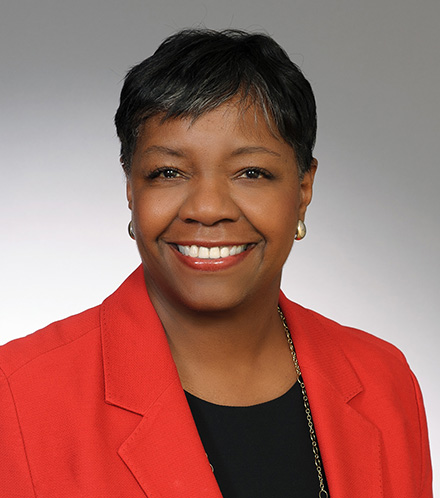
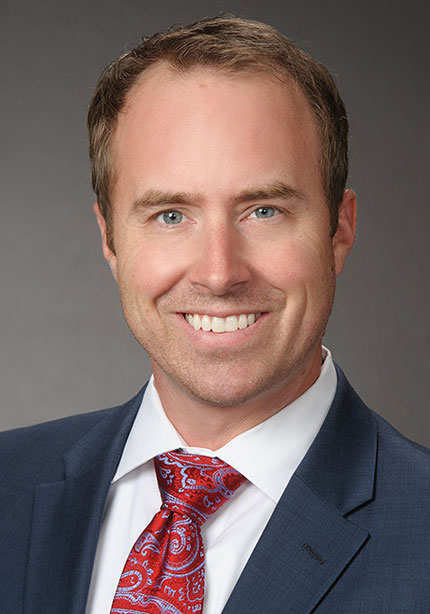
Photo of Carolyn ColemanCAROLYN COLEMAN: Local government leaders are some of the most pragmatic people I know. This comes from being on the front lines and hearing from your constituents everywhere you go—grocery stores, parks, and churches. Local officials are problem solvers, and they signed on to help their residents have a better quality of life. They have approached this crisis with the same dedication and commitment to serve that they brought to dealing with past crises, like the recent wildfires.


Across California, city leaders have stepped up with tools like eviction moratoriums and measures to prevent utility shutoffs or price gouging to protect their residents. Several are creating funds that will provide short-term financial assistance to help keep their small businesses afloat.

City officials are also working with public health entities, hospitals, schools and faith-based organizations to make sure medicines and meals are delivered to vulnerable populations.

Cities have also been very nimble in adapting government business to a virtual model. Council meetings, town halls, and public hearings have moved online with virtual tools that ensure public engagement. They are also using websites, social media, and new technology platforms to engage with their residents and make sure they have needed information.

Early orders by California cities to stay at home or restrict gatherings are being credited with flattening the curve. There was some pushback when these orders were announced, but they’re saving lives here in California, and that started with local government leaders who were out in front of the crisis.

The economic disruption this crisis is having on families, businesses and governments is devastating. While saving lives, stay-at-home orders have led to business closures, furloughs, and layoffs, as well as decreases in tax revenues that local governments use to fund essential services like police, fire, and code enforcement. At the same time, cities are experiencing increased expenses because of COVID-19. We’ll be working closely with federal and state partners to fill revenue gaps so we can continue to provide the services our communities need right now.

PPIC: Are there particular needs in rural communities?

CC: For years, we’ve known that access to high-quality broadband is not as widely available as it should be in our rural communities. With schools closed and some health services moving online, this crisis is a wake-up call to get more broadband deployed across the state.

Rural communities also tend to have smaller budgets with fewer resources to respond to economic disruption caused by this crisis. As they navigate the shortfall in revenues and increase in expenses, their need for fiscal assistance from the state and federal governments could be proportionately as large as our biggest cities.

The federal Coronavirus Aid, Relief, and Economic Security (CARES) Act targets cities with more than 500,000 residents. Most of California’s 482 cities are smaller than that, and yet they may end up with needs that are proportionally as large as those of big cities. That’s why the League will continue to advocate for fiscal assistance for all of our cities, to ensure that none are left behind—during either the pandemic or the financial recovery from it.

PPIC: Talk about the ongoing housing shortages and homelessness in the context of this emergency.

CC: I applaud the governor and local leaders who in recent weeks have partnered closely to safely house more Californians. Every day we hear about cities opening new emergency shelters, putting out more handwashing stations, passing out hand sanitizer in homeless encampments, and taking other steps to protect public health. The governor is sending more trailers to cities for emergency housing, and housing construction is continuing—it’s an essential service. Pandemic or not, we all know we have to increase housing production so more of our families have places to live.

We’re also seeing some new ways to streamline the housing production process, which could become mainstream once the health crisis is over.

PPIC: What gives you hope during these challenging times?

CC: I’m heartened by the public leadership we’re seeing. Local leaders, and leaders at all levels of government, are stepping up to save lives. And the selflessness that surfaces in times like these is a reminder that we’re all connected. People rise.

Wastewater Treatment Kills Most Pathogens, Including COVID-19 Virus

[vc_row][vc_column][vc_column_text]Californians reuse treated wastewater as a water supply, to irrigate crops, and to support freshwater ecosystems. To get answers to questions about managing the new coronavirus in the “sewershed,” we talked to two experts: Kara Nelson, an expert in waterborne pathogens at UC Berkeley; and Adam Link, executive director of the California Association of Sanitation Agencies.

PPIC: What risks does COVID-19 virus pose in wastewater?

Photo - Kara Nelson
Kara Nelson

KARA NELSON: We now have evidence that infectious coronavirus is excreted in the feces of infected individuals. The good news is that in the US, we already assume wastewater is full of high concentrations of infectious organisms like viruses, and we have practices in place to deal with them—including ways to protect workers from exposure. Coronaviruses have a different structure from the viruses we usually worry about in wastewater, such as hepatitis A and norovirus—and that structure likely makes it easier to kill. This gives us a high degree of confidence that we have effective treatment to manage the COVID-19 virus. So yes, there are risks, but all the information we have suggests that our existing practices reduce the risk to very, very low levels.

PPIC: Is the virus a risk in the reuse of treated wastewater?

KN: Producing safe, reusable water from wastewater already requires removing pathogens from it. While existing treatments—which are based on science and a regulatory approach developed over many decades—are likely sufficient to deal with coronavirus, we would like to see research that confirms this. Studies have already been launched in California and elsewhere to ensure measures we have in place are sufficient.

The heightened public interest in the virus provides professionals in the water industry an opportunity to share information about why reusing treated wastewater is safe and why we have a very high degree of confidence on how these risks are being managed.

PPIC: What’s the story with “flushable” wipes?

Photo of Adam Link, California Association of Sanitation Agencies
Adam Link

ADAM LINK: This was already a significant issue for us, and the pandemic has brought a huge new influx of wipes and cleaning-product debris into the system. Some wipes are marketed as flushable but don’t actually break down the way toilet paper does. They can sometimes form sizeable sewage blockages that damage pumping infrastructure, cause overflows, and increase our capital costs. CASA and many of our members are engaged in public information campaigns on the problem. Our agencies are working around the clock to keep systems functioning properly and prevent major breakdowns.

PPIC: Do you foresee any long-term impacts from the pandemic for the wastewater sector?

AL: In some ways we are similar to a business, and we have to think about the potential financial impacts of a recession on our systems. There are new orders to not terminate service if payments don’t come in, and we’re likely to see more people who struggle to pay their bills as a result of the financial downturn. So we need to put thought into planning for a new financial future. Our agencies are very good at long-term planning for capital projects, but it remains to be seen how dramatically this will change things from our current expectations. Much depends on the level of stimulus and how quickly things get back to normal.

PPIC: What gives you hope right now?

KN: The agencies and their workers—they’re putting their responsibility to deliver essential services first, before themselves, just like health care workers.

I’m also impressed with how quickly the research community has responded with new research on coronavirus and water. Therapies, tests, and vaccines are obviously the immediate priorities, but water researchers around the world have kicked into high gear to find long-term strategies to fight this and other emerging viruses. One exciting development is a global effort to monitor wastewater for the virus to quickly assess its prevalence in the sewershed; this could potentially help determine if infections are reemerging so we can respond quickly to contain them.

AL: I’m very encouraged by how well our agencies have come together to solve the new problems the pandemic raises and prepare for the worst together. There haven’t been any significant disruptions—and that’s thanks to the lengths these people go to keep the public safe.[/vc_column_text][/vc_column][/vc_row]

Remote Learning for English Learners and Special Needs Students during COVID-19

[vc_row][vc_column][vc_column_text]For California’s most vulnerable students, including 1.2 million English Learners (EL) and over 700,000 students with special educational needs, remote learning in the wake of COVID-19 presents particular challenges. As districts across the state roll out distance learning plans to minimize disruption to K–12 students, educators must find alternate ways to meet all student needs.

English Learners and special education students typically require more in-person support, such as occupational and speech therapy, in their daily learning than students in general. Educators are struggling to devise and implement plans to address these requirements remotely. Access to internet and devices is one area of concern, but so is providing intensive learning experiences that can stand in for in-person services.

Most EL and special education students live in large urban areas with access to broadband, and school districts in these counties, such as in the Bay Area and coastal counties in Southern California, may be able to partner with philanthropy and technology providers to supplement households currently without broadband access. Rural areas, however, may not have the same supports.

In counties where broadband access is low—that is, over 18% of households with school-age children lack it—and where the share of EL or students with disabilities is high (over 26%), online learning is a hurdle. This includes Colusa, Yolo, Napa, San Joaquin, Stanislaus, Merced, Madera, Monterey, Kern, and Imperial, which together account for over 220,000 students who have special education needs or are English Learners.[/vc_column_text][/vc_column][/vc_row][vc_row max_width=”80″ visibility=”visible-desktop”][vc_column][vc_column_text][infogram id=”1p1qw10yewvk2dfmxmvky16prlb6pw1mvrm?live”][/vc_column_text][/vc_column][/vc_row][vc_row max_width=”80″ visibility=”visible-tablet-landscape”][vc_column][vc_column_text]

[infogram id=”1p1qw10yewvk2dfmxmvky16prlb6pw1mvrm?live”]

[/vc_column_text][/vc_column][/vc_row][vc_row visibility=”visible-tablet-portrait”][vc_column][vc_column_text]

[infogram id=”1p1qw10yewvk2dfmxmvky16prlb6pw1mvrm?live”]

[/vc_column_text][/vc_column][/vc_row][vc_row visibility=”visible-phone”][vc_column][vc_column_text]

[infogram id=”1p1qw10yewvk2dfmxmvky16prlb6pw1mvrm?live”]

[/vc_column_text][/vc_column][/vc_row][vc_row][vc_column][vc_column_text]There are an additional 50,000 such students in counties where we cannot estimate the share of families without broadband, but where concentrations of EL or students with special needs are disproportionately high. In these rural counties—which include San Benito, Mono, Tulare, Modoc, and Yuba—educators must determine how to compensate for lack of internet while offering intensive, though not in-person, instruction.

And it isn’t just students tested by the move to online instruction. In a typical school year, only 67% of teachers received professional development in using computers for instruction. Most received less than eight hours of training.

To fill the gap, more districts are providing training on how to teach students remotely. Courses cover online tools such as Zoom, Google Classroom, Canvas, and Seesaw; how to monitor and assess student learning; and how to manage and cater to student needs in an online environment. The California Department of Education also provided resources and idea banks to help districts accommodate students with varying learning needs, with guidance on options for delivering individualized education.

California continues to provide funding to districts to implement distance learning, through the governor’s executive orders and recent legislation. While distance learning cannot replace in-person instruction and services, educators are exploring alternatives, from reading assignments over the telephone to moving speech and occupational therapy online. Districts are also discussing extending the school year as they work to provide effective and equitable learning to the state’s most vulnerable students.[/vc_column_text][/vc_column][/vc_row]

Displaced by COVID-19: Moving Out of College Housing

With college students already taking courses online in response to the COVID-19 pandemic, many are also faced with moving out of campus housing. It’s a necessary disruption to help keep the virus from spreading, but one that can place students far from academic support and other services precisely when they need support and services most.

While the disruption is temporary, the benefits of being on or near campus go beyond proximity to classes. Campus housing gives students better access to tutoring, counseling, health, and academic services. For these and other reasons, students who live in university housing have higher persistence and graduation rates.

Nearly all colleges are urging students to move out, and the vast majority of university-housed students will likely leave—or have left—campus. Some colleges have allowed students to stay in housing if they choose, while others require students to leave unless they qualify for an exemption, such as for international students, for health and safety concerns, or if they do not have a home to return to.

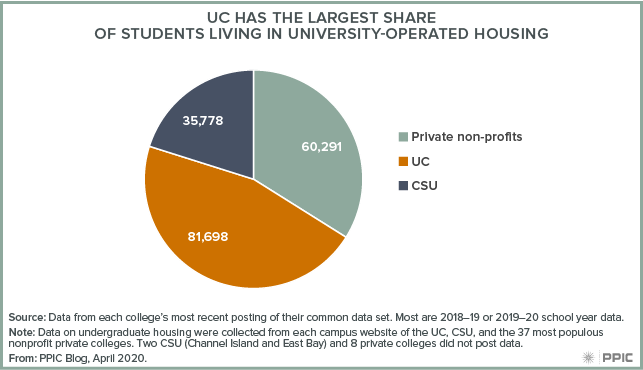
Prior to the pandemic, about 24% of all undergraduate students, at least 177,000, lived in university owned or operated housing at California public and private nonprofit colleges, most commonly in dormitories. Most students living in college housing are at the University of California (UC) and private nonprofit universities, even though the California State University (CSU) system enrolls far more undergraduates. CSU students are much more likely to commute from home or an off-campus apartment. Community colleges, which educate the largest number of college students in the state, rarely own and operate their own housing.

figure - UC Has the Largest Share of Students Living in University-Operated Housing

Freshmen are especially likely to live in university housing, making up a slight majority (51%) of the total. About 90% of freshmen at UC and private nonprofits live in college-operated housing. If the pandemic continues to displace students into the fall semester, those colleges will have to grapple with how to help new students adapt to college without living on campus.

The consequences of this large-scale early departure from campus are uncertain. As students move off campus, schools are working to find ways to provide essential student supports and potentially offer new ones, such as laptops and internet access, to limit the disruption in learning.

One effort by the California College Student Emergency Support Fund offered $500 hardship grants for low-income students to help pay for housing, technology, and other expenses. Within 90 minutes of the launch of the application, 1,000 students had applied. Within 24 hours, demand had far surpassed resources, and 65,000 students were placed on a waiting list, suggesting that a significant unmet need remains.

Unemployment Benefits in the COVID-19 Pandemic

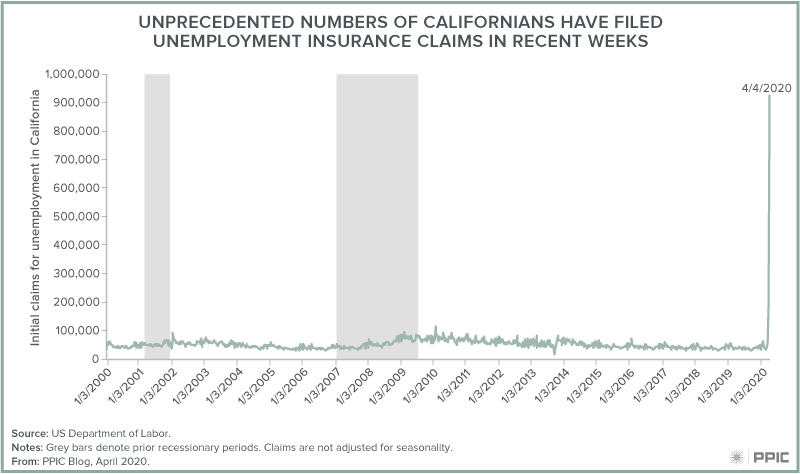
Today, the US Department of Labor revealed that 925,450 Californians filed initial unemployment insurance claims during the week ending April 4. This makes for a record-breaking three-week period during which nearly two million claims were filed in California, representing roughly 10% of the labor force. What kind of benefits can these millions of newly unemployed workers receive?

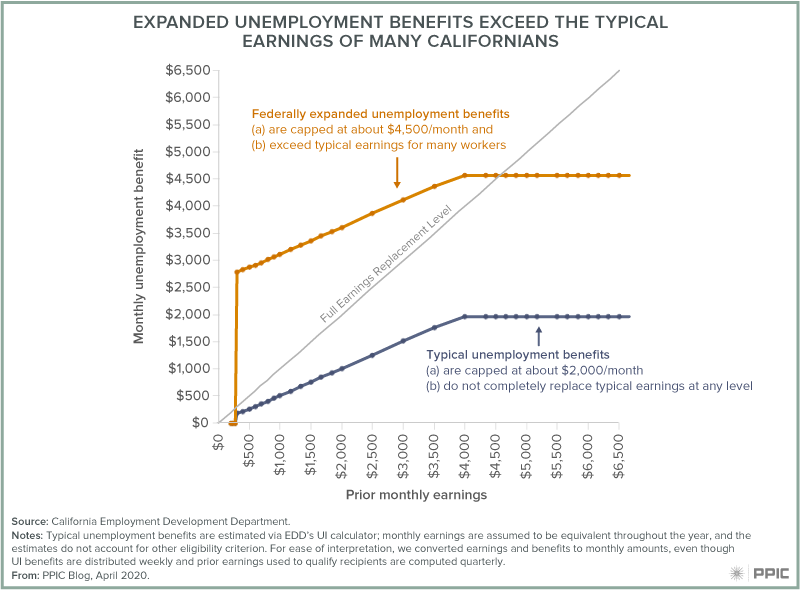
Typically, Californians who qualify for unemployment receive a maximum of $450 per week as long as they are actively looking for work, and that assistance can last for up to 26 weeks. (Notably, benefits in California are less generous than those in most other states: in 2019, its average weekly benefit of $345 ranked 29th.) However, federal policymakers are responding to unprecedented circumstances; so far, they have expanded both eligibility and benefits.

Federal legislation temporarily expands eligibility. The Coronavirus Aid, Relief, and Economic Security (CARES) Act makes self-employed Californians—including gig workers and other independent contractors—who are unable to work or have had hours reduced by COVID-19 eligible to receive benefits. Also, laid-off workers who expect to return to their current jobs are not required to be searching for work.

The new law also supplements and extends benefits. The CARES Act provides $600 per week on top of typical benefits for up to four months. This represents a dramatic boost for most unemployed Californians. The legislation also covers the cost of a 13-week extension of benefits, so that laid-off workers can now receive unemployment for up to 39 weeks.

Unemployed Californians who earn less than $4,000/month would normally qualify for a benefit that replaces roughly half of their earnings, and the benefit covers a smaller and smaller share of earnings above $3,894/month. The $600 federal supplement is higher than California’s maximum benefit and more than covers prior earnings for many unemployed Californians.

It is likely that workers in the state’s hardest-hit sectors make up a large share of early applicants for unemployment benefits. In the accommodation and food service industry—one of the hardest-hit sectors—the average monthly wage is roughly $2,000; an unemployed worker could receive up to $3,700 per month. The average worker in transportation and warehousing, another impacted industry, earns more than twice as much ($5,000/month), but unemployment benefits for this worker would be only slightly higher: up to $4,550 per month.

These expanded benefits will help millions of newly unemployed Californians, but the state and its workers face important limitations and challenges. Given the massive surge in applications, workers may have to wait several weeks—or months—to receive benefits. Moreover, laid-off immigrants who are unauthorized to work in the US will have to rely on other support.

More generally, California’s unemployment insurance fund reserves are inadequate to weather even a mild recession, although the federal government steps in to loan the funds when needed. In the longer term, policymakers should seriously consider reforms to the unemployment system, so that it can respond quickly and comprehensively in the next economic crisis.

Online Medical Care during COVID-19

California policymakers have recently taken bold steps to ease the strain on the health care infrastructure during the COVID-19 global pandemic. California was the first to enact a statewide shelter-in-place order to reduce community transmission. It has also implemented measures to lower the rate of transmission in health care settings—including policies that encourage the use of telehealth, especially online doctor visits. To make online healthcare truly accessible, however, the state will need to address its digital divide.

The California Department of Managed Health Care has required that all health plans allow people to obtain health care via telehealth and reimburse telehealth consultations at the same rate as in-person visits, without increasing patient costs. This mandate covers Medi-Cal managed-care plans, which serve about 85% of the low-income Californians enrolled in the program. The California Department of Health Care Services had already given providers more flexibility in billing Medi-Cal for telehealth services in 2019; in late March, it further expanded the range of telehealth services that safety net providers can provide.

A recent survey found that a small percentage of Californians use telehealth services, and national estimates (based on Medicare and private health claims data) suggest that telehealth accounts for less than 0.25% of medical services provided. Policy barriers, such as restrictive requirements and privacy concerns, contribute to low usage. Recent state and local efforts to lower these barriers could help boost usage, but not all Californians will be able to access medical care through telehealth due to the state’s digital divide.

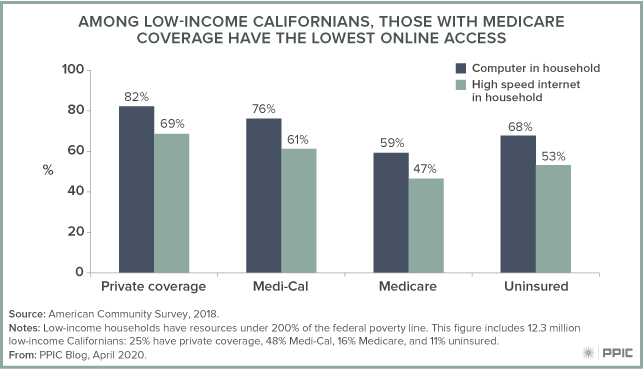
Among low-income Californians, those with private health insurance are most likely to have computers in their household (82%), while those covered by Medicare (mostly seniors over 65) least likely to have computers (59%)—indeed, these low-income Californians are less connected than those who are uninsured. About 75% of Californians covered by Medi-Cal have access to a computer at home and about 60% report that they have high-speed internet connectivity.

figure - Among Low-Income Californians, Those With Medicare Coverage Have the Lowest Online Access

Some of the policy responses to the COVID-19 crisis could narrow the state’s digital divide. For example, the governor recently announced a plan to distribute computers and provide high-speed internet access to support distance learning for California’s K–12 students while schools are closed. This could help many low-income families gain access to telehealth and other online resources. However, one-third of low-income households do not include school-aged children.

As the public health crisis continues to unfold, it will be important to assess trends in telehealth use and to understand and address disparities. Currently, the state has limited resources for this type of analysis, but the comprehensive health payment database that is currently being developed could help policymakers examine these and other issues.

COVID-19 Will Make California Elections Challenging but Doable

California’s November 3 general election could come in the midst of a new viral surge. This poses tremendous risks to voters and poll workers at in-person voting sites. Even if we wanted to have the same number of polling places, it might be difficult to find volunteers willing to staff them.

The good news is that the transition to a safer approach, while challenging, is more manageable in California than in most states.

One option is off the table: postponing the fall election. Many states have postponed their primaries, but postponing a general election would require congressional approval and would run up against deadlines hardwired into the U.S. Constitution.

Instead, we must get as many voters to cast ballots by mail as possible. In most states, such a switch would be complicated, but California has long been friendly to vote by mail (VBM). California’s VBM rate is very high and growing. Almost two-thirds of ballots in the 2018 general election were either mailed in or dropped off at a polling place.

Fourteen counties have rapidly increased their VBM capacity already by sending every registered voter a VBM ballot by default. They have also replaced polling places with a smaller number of “vote centers” that are open to any voter in the county and for early voting before Election Day. Almost a quarter of registered voters are now covered by this system, up from 7% in the fall of 2018.

Five of these 14 counties switched to this new model in 2018 and saw the share of ballots cast by mail increase an average of 20% from the 2016 general election. Preliminary evidence also suggests the reform slightly increased turnout without negatively impacting underrepresented groups like Latinos, Asian Americans, and young people.

COVID-19 will move elections across the state closer to this model. Governor Newsom has mandated something like this for the special elections coming in April and May. Though this is a realistic path forward, it is not without obstacles. Preparation time is short. And the risk of infection will alter the siting and staffing of in-person options, even in experienced counties.

Furthermore, initial positive experiences in vote center counties may not translate to the rest of the state. A chaotic transition could create unforeseen problems that prompt some to throw up their hands and not vote at all. Young people and voters of color are more likely to use in-person voting, so great care must be taken to ensure they receive news of the change, trust that the change is being done fairly, and have options besides VBM if they want them.

Fortunately, California is well positioned here, too. Organizations like the Future of California Elections have helped make the state a national model for robust communication between election administrators and stakeholders.

The task is daunting, but we have little choice. Our best hope for a safe and fair election is to expand vote from home options as much as possible. The question is not whether to do it, but to recognize the challenges and work to mitigate them as much as possible.