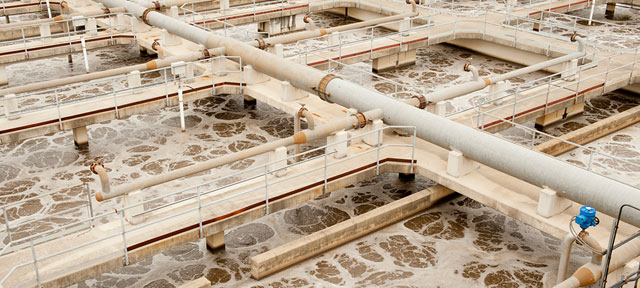
Wastewater Treatment Kills Most Pathogens, Including COVID-19 Virus

[vc_row][vc_column][vc_column_text]Californians reuse treated wastewater as a water supply, to irrigate crops, and to support freshwater ecosystems. To get answers to questions about managing the new coronavirus in the “sewershed,” we talked to two experts: Kara Nelson, an expert in waterborne pathogens at UC Berkeley; and Adam Link, executive director of the California Association of Sanitation Agencies.

PPIC: What risks does COVID-19 virus pose in wastewater?

Photo - Kara Nelson
Kara Nelson

KARA NELSON: We now have evidence that infectious coronavirus is excreted in the feces of infected individuals. The good news is that in the US, we already assume wastewater is full of high concentrations of infectious organisms like viruses, and we have practices in place to deal with them—including ways to protect workers from exposure. Coronaviruses have a different structure from the viruses we usually worry about in wastewater, such as hepatitis A and norovirus—and that structure likely makes it easier to kill. This gives us a high degree of confidence that we have effective treatment to manage the COVID-19 virus. So yes, there are risks, but all the information we have suggests that our existing practices reduce the risk to very, very low levels.

PPIC: Is the virus a risk in the reuse of treated wastewater?

KN: Producing safe, reusable water from wastewater already requires removing pathogens from it. While existing treatments—which are based on science and a regulatory approach developed over many decades—are likely sufficient to deal with coronavirus, we would like to see research that confirms this. Studies have already been launched in California and elsewhere to ensure measures we have in place are sufficient.

The heightened public interest in the virus provides professionals in the water industry an opportunity to share information about why reusing treated wastewater is safe and why we have a very high degree of confidence on how these risks are being managed.

PPIC: What’s the story with “flushable” wipes?
Photo of Adam Link, California Association of Sanitation Agencies
Adam Link

ADAM LINK: This was already a significant issue for us, and the pandemic has brought a huge new influx of wipes and cleaning-product debris into the system. Some wipes are marketed as flushable but don’t actually break down the way toilet paper does. They can sometimes form sizeable sewage blockages that damage pumping infrastructure, cause overflows, and increase our capital costs. CASA and many of our members are engaged in public information campaigns on the problem. Our agencies are working around the clock to keep systems functioning properly and prevent major breakdowns.

PPIC: Do you foresee any long-term impacts from the pandemic for the wastewater sector?

AL: In some ways we are similar to a business, and we have to think about the potential financial impacts of a recession on our systems. There are new orders to not terminate service if payments don’t come in, and we’re likely to see more people who struggle to pay their bills as a result of the financial downturn. So we need to put thought into planning for a new financial future. Our agencies are very good at long-term planning for capital projects, but it remains to be seen how dramatically this will change things from our current expectations. Much depends on the level of stimulus and how quickly things get back to normal.

PPIC: What gives you hope right now?

KN: The agencies and their workers—they’re putting their responsibility to deliver essential services first, before themselves, just like health care workers.

I’m also impressed with how quickly the research community has responded with new research on coronavirus and water. Therapies, tests, and vaccines are obviously the immediate priorities, but water researchers around the world have kicked into high gear to find long-term strategies to fight this and other emerging viruses. One exciting development is a global effort to monitor wastewater for the virus to quickly assess its prevalence in the sewershed; this could potentially help determine if infections are reemerging so we can respond quickly to contain them.

AL: I’m very encouraged by how well our agencies have come together to solve the new problems the pandemic raises and prepare for the worst together. There haven’t been any significant disruptions—and that’s thanks to the lengths these people go to keep the public safe.[/vc_column_text][/vc_column][/vc_row]

Commentary: How Better Wastewater Management Can Help California Adapt to Climate Change

This commentary was published on CALmatters on May 9, 2019.

Our public health relies on wastewater management to treat sewage and remove pollutants coming from our homes and businesses.

This system is fundamental to protecting our health. In California, treated wastewater also is a critical source of water for the environment, and, increasingly, a source for recycled water. Climate change is worsening water scarcity and flood risks. Advancements in engineering and technology can help prepare wastewater agencies for a changing climate. But significant shifts in policy and planning are needed to address these challenges.

Wastewater agencies must reliably remove pollutants even as the quantity and quality of the water they treat declines during droughts, and when large storms push their equipment to the breaking point.

In February, an atmospheric river storm—the type that is expected to become more common as the climate warms―inundated Healdsburg’s wastewater treatment facility and pushed more than five times the normal flow of wastewater and runoff into Santa Rosa’s treatment plant.

In a drought, reduced flows to wastewater plants can hamper agencies’ ability to comply with treatment standards, damage equipment, increase costs, and shrink revenue. Lower inflows also reduce the volumes available for recycled water, often considered a “drought-proof” supply.

The drought of 2012–16 brought all of these problems to the fore. Many wastewater agencies are now changing their operations, infrastructure, or finances in response to the challenges they experienced. Our new study recommends sector-wide changes in three areas to help build the sector’s climate resilience:

  • Maintain water quality in the face of reduced indoor water use. Short-term water conservation during droughts and longer term reductions in water use from indoor efficiency measures challenge wastewater management. All wastewater agencies should assess their vulnerability to major climate pressures, and plan for future droughts. Better coordination and information sharing with suppliers about indoor water conservation and efficiency efforts are also key.
  • Make smart recycled water investments. Coordination among wastewater and water supply agencies is needed to address the demand for recycled water. Regional planning for recycled water projects can result in investments that are more responsive to changing water use and an increasingly volatile climate, bringing financial and environmental benefits.
  • Balance conflicting objectives within watersheds. Many wastewater treatment plants discharge treated water into inland watersheds.

Meeting increased demand for recycled water may fuel conflict over the use of treated discharge to support ecosystems and downstream users. Rivers and streams are expected to experience lower flows and higher temperatures, which will heighten threats to aquatic ecosystems. Resources are needed to identify areas most at risk of conflict over the use of treated wastewater, and to develop tools to evaluate the impacts of water recycling projects on the environment and downstream water users.

The state can help wastewater managers make these adaptations, which are critical to building a more integrated and resilient water system. The State Water Board should align its policies on water use, wastewater, recycled water, and environmental protection to better manage for these multiple objectives.

Forging new partnerships to tackle the full range of climate-related risks will help wastewater agencies determine the best adaptations and improvements needed to prepare wastewater management—and California’s water system as a whole—for a more volatile future.


Video: Managing Wastewater in a Changing Climate

California’s wastewater sector plays a key role in protecting public health and the environment. It is also the source of recycled water—a growing part of the water supply. But as climate change increases the risks of water scarcity and creates other new challenges, the sector is at a turning point. A recent event brought together PPIC researchers and a panel of experts to explore how wastewater management can adapt to a more volatile future.

Caitrin Chappelle, associate director of the PPIC Water Policy Center, outlined findings from a new report on climate risks to the sector and strategies needed to manage them. She noted that drought—as well as ongoing efforts to conserve water—can have unintended consequences for the sector. Less water flowing into treatment plants affects treatment processes and can harm infrastructure. Less treated water flowing out of these plants reduces supplies for downstream users, ecosystems, and recycled water uses.

Chappelle noted that cooperation is a key strategy for building resilience: “Local wastewater agencies will need to work closely with one another, with water supply agencies, and with the state to build a more resilient future.”

Identifying tradeoffs and understanding the unintended consequences of water conservation and the use of treated wastewater are key to developing good policy, noted the panel’s moderator, Kurt Schwabe, a professor at the University of California, Riverside, and an adjunct fellow at the PPIC Water Policy Center.

The three panelists—Jelena Hartman of the California State Water Board, Adam Link of the California Association of Sanitation Agencies, and Nina Hawk of the Santa Clara Valley Water District—discussed the interactions between water use and wastewater, lessons learned from the latest drought, and ways to improve coordination and information sharing with water suppliers going forward.

Hartman noted that with the 2012‒16 drought emergency behind us, “it’s a good opportunity to talk about what worked, what didn’t work” for managing future low-flow situations. “We need to plan, adapt, and be prepared, because the next drought will come,” she added.

Hawk said her agency is fully behind efficient water use but also recognizes that conservation can have impacts on wastewater management and recycled water supplies. “We really have to step back and take a planning look at it,” she said. Collaboration between water suppliers and treatment agencies is key to managing wastewater for multiple uses, she noted.

Link highlighted the difficulty in planning for future capital improvements for both sanitation and recycled water in a changing climate. “If you’re not sure how low your flows will go, how do you plan for a plant that will be useful 30 years from now?” This may require more creative planning for capital investments to ensure that new infrastructure is flexible enough for changing conditions—for example, connecting recycled water plants to groundwater and surface storage to help them weather drought.

We invite you to watch the video from the event.