Testimony: Water Supply and Quality Challenges in the San Joaquin Valley

Ellen Hanak, director of the PPIC Water Policy Center, testified today (April 30, 2019) before the Assembly Subcommittee on Water, Parks and Wildlife, at a hearing on balancing water needs into the future in the San Joaquin Valley. Here are her prepared remarks. View her presentation.

The San Joaquin Valley produces more than half of California’s agricultural output. Irrigated farming is the region’s main economic driver and predomi­nant water user. The region is also ground zero for many of the state’s most difficult water management problems―including long-term depletion of groundwater reserves, lack of safe drinking water in many rural communities, and accumulation of a variety of groundwater contaminants.

Over the past three years, the PPIC Water Policy Center has worked with an interdisciplinary team of researchers from Fresno State, Point Blue Conservation Science, UC Davis, and UC Merced to examine these challenges and identify promising solutions. Today, I’ll provide you with some highlights from our latest report, Water and the Future of the San Joaquin Valley, including areas where the California Legislature can be most helpful in facilitating progress. Two of my coauthors on this study—Sarge Green from Fresno State and Thomas Harter from UC Davis—are also here to answer your questions.

I’ll touch on four priority areas for action: balancing water supplies and demands; ensuring safe and reliable drinking water supplies; managing groundwater quality for the long-term; and fostering beneficial water and land use transitions.

Balancing water supplies and demands

Chronic groundwater overdraft—pumping in excess of the amount that is replenished—averages nearly 2 million acre-feet per year in the San Joaquin Valley, or roughly 11 percent of the region’s net water use. The consequences include dry wells, sinking lands, damaged infrastructure, and reduced reserves to cope with future droughts.

In light of these problems, the valley is on a fast track to implement the Sustainable Groundwater Management Act (SGMA), which requires groundwater users to bring water supplies and demands into balance by the 2040s. The first local sustainability plans must be finalized and launched in early 2020.  Although attaining balance will benefit the valley’s economy over the long-term, it will entail some near-term costs.

To end overdraft, local groundwater sustainability agencies (GSAs) will have to augment supplies, reduce demands, or use some combination of these approaches. We estimate that about a quarter of the historical deficit can be filled with new supplies at prices farmers can afford.  The balance will likely need to be met by managing farm water demand—with the idling of at least 500,000 acres of irrigated cropland (about 10% of current acreage).

On the supply side, the most promising options are to capture and store more local runoff in groundwater basins, and to increase water imports by managing the system differently. On the demand side, increasing water trading—both within and across groundwater basins—can significantly mitigate the economic impacts of reducing water use, by allowing farmers to maintain the crops that generate the most revenue, GDP, and jobs. Reducing overdraft gradually between now and 2040—the “glide path” approach to implementing SGMA—can also lessen the costs of adjustment by giving farmers more time to adapt.

Priority actions to facilitate the adoption of an optimal supply and demand portfolio approach include:

  • Assessing which new infrastructure investments—including conveyance—are warranted to support more recharge and water trading.
  • Incentivizing recharge on farmland—one of the most cost-effective ways to store water.
  • Developing transparent and equitable local water trading rules, including for groundwater.
  • Clarifying how much additional high winter and spring runoff is available for recharge.
  • Facilitating state and federal approvals for water trading and groundwater banking projects.
  • Coordinating both within and across groundwater basins to maximize benefits.

Although local and regional water users and agencies will need to take the lead on many of these actions, both the state and federal governments can play vital roles. The state can be especially helpful in clarifying how much water is available for recharge, facilitating approvals for water trading and groundwater banking projects, and working with local partners to assess infrastructure needs.

Ensuring safe and reliable drinking water

The valley’s most urgent water issue is addressing chronic problems of unsafe and unreliable drinking water in rural communities, most of which rely on groundwater. The region is a hot spot for unsafe drinking water. With just 10 percent of the state’s population, it is home to more than half of all community water systems that have persistently contaminated tap water. Contamination is also a problem for very small water systems that are regulated by counties and for homes served by domestic wells. Some groundwater contaminants—such as arsenic and uranium—occur naturally. Others are caused by human activity. For instance, agriculture is the primary source of nitrate, a serious contaminant that is widely present in shallow wells.

The region is also a hot spot for unreliable drinking water supplies in communities that depend on shallow wells. During the latest drought, roughly half of the 150 small water systems that sought emergency assistance from the state were in the valley, as were nearly 80 percent of all residents who reported dry domestic wells. Without concerted action, this vulnerability will persist. Several thousand additional drinking water wells are vulnerable if groundwater levels fall another 30 feet—something that could easily happen during the next drought, or if local groundwater sustainability plans allow continued overdraft under a glide path approach and fail to mitigate the problem.

In recent years, various legal and administrative changes have helped address the drinking water crisis. But there is still an urgent need to build a robust, comprehensive framework for tackling it. Affected communities will require technical, financial, and managerial assistance. Here are some top priorities:

  • Consolidating or aggregating systems to provide economies of scale to small water systems.
  • Providing technical support.
  • Planning for shortages and developing rapid response procedures to mitigate dry wells.
  • Ensuring funding support for both capital investments and ongoing operations and maintenance.

A variety of local parties—including counties, urban water suppliers, irrigation districts, groundwater sustainability agencies, pollution dischargers, and NGOs—will need to play a major role in helping to address this problem. But the state must take leadership in developing funding solutions and ensuring there’s a comprehensive plan for addressing both quality and supply vulnerabilities in a timely manner.

Managing groundwater quality for the long-term

Valley farmers and other dischargers of contaminants must also meet new requirements for protecting groundwater and soils from the long-term buildup of nitrate and salts. California has been a national leader in seeking to address these problems, with a suite of new regulations adopted over the past decade. The Salt and Nitrate Control Program (SNCP)—adopted by the Central Valley Regional Water Quality Control Board in 2018 and pending approval by the State Water Board—provides an umbrella framework for addressing these challenges. SGMA also requires GSAs to protect water quality while balancing groundwater supplies and demands.

Nitrate in drinking water wells, which originates primarily from inorganic nitrogen fertilizer and manure used in farming, poses significant public health risks. Dairies face special challenges in managing manure efficiently, and solutions have remained elusive.

Salinity is a growing threat to local agricultural productivity. Roughly 250,000 acres of cropland have already been retired due to salinity in soils, and another 1.5 million acres are considered impaired.

But managing for these contaminants is costly. The SCNP seeks to find a balance between protecting water and land resources for the long run and maintaining the viability of agricultural production in the present, while also ensuring safe drinking water solutions.

Here are some top priorities for action:

  • Coordinating water quality and quantity management. This will be especially important for managing groundwater recharge, which under some circumstances can accelerate the migration of chemicals in the soil (especially nitrate) into the aquifer and impair drinking water quality, at least for a time.
  • Implementing new technologies to manage pollutants. This will be especially important for dairies, which need to remove excess manure and transform it for other uses.
  • Providing regulatory flexibility. This includes flexibility to allow some continued loading of nitrogen and salt as long as impacts on drinking water supplies are mitigated, as proposed under the SNCP.

While local water managers, farmers, and the agricultural industry will need to take the lead in addressing these issues on the ground, the state can play a major role in providing effective and responsible regulatory flexibility, and in supporting research and development (R&D).

Fostering beneficial water and land use transitions

Finally, the valley will need to plan for and manage the changing landscape as some cropland is idled—both to avoid negative consequences from dust, pests, and weeds, and to get the most value from these lands in other uses. Pursuing approaches that seek multiple benefits on this land can support the regional economy, public health, and the environment. There are numerous stewardship options: healthy soils, habitat, wildlife-friendly solar, recharge, flood protection, and recreation.

There are already some models of how this can work. For instance, the Kern Water Bank provides thousands of acres of upland habitat for San Joaquin desert species and abundant intermittent wetlands, while also serving as a major groundwater storage site. But to date, there is no serious planning effort to see how lands coming out of production might be used most productively, and how to provide the right incentives to realize this potential.

Here are some top priorities for action:

  • Initiating broad-based, inclusive planning. For many issues—ranging from determining the best areas for habitat investments to coordinating recharge and managing salinity—taking a valley-wide perspective will be key.
  • Implementing flexible regulatory approaches to make it easier to implement multi-benefit restoration projects.
  • Providing incentives and funding to support activities on the ground.
  • Boosting technical support and R&D.

Again, local and regional parties will need to take the lead on many aspects of this work. But state and federal agencies can facilitate good outcomes by providing regulatory flexibility, financial incentives, and support for technical assistance and R&D.

How can the Legislature be most helpful now?

The valley is at a pivotal moment, and there are many ways in which the state can assist the region’s residents implement efficient, equitable, and sustainable solutions to their water-related challenges. Here are some final thoughts on how the Legislature can be most helpful in the near-term:

First, ensure a robust, comprehensive framework for safe and reliable drinking water solutions. This is an urgent public health issue and needs urgent attention. The framework should include reliable funding, as well as a sound, timely approach to providing technical and managerial solutions on the ground.

Second, support the building blocks for the region’s transition to groundwater sustainability. Planning for sustainable groundwater management is well underway, but this transition won’t happen overnight. Early actions to promote forward momentum will be especially valuable in the next few years.

To create the preconditions for success, the state should accelerate its own efforts to provide regulatory clarity, consistency, and flexibility. Key areas include how much water is available for recharge, how to recharge in ways that are acceptable from a water quality perspective, and how to implement broad-based, multi-benefit restoration projects that put land coming out of production to best use.

Support for local and regional initiatives can also make a difference. Key areas include assistance with the assessment of smart infrastructure investments, pilot efforts to implement innovative approaches on the ground, technical support and R&D for water quality and land stewardship solutions, and broad-based planning to develop regional approaches for multi-benefit management of water and land.

California has long been a model for others in the management of natural resources. Many are now looking to see how we tackle the tough challenges of providing safe drinking water to all residents and managing our groundwater resources sustainably for the long term. The San Joaquin Valley is on the front line for addressing both of these challenges. The region’s farmers and residents have a history of creatively adapting to difficult and changing conditions, and constructive solutions are in reach. The state can provide vital support to help ensure success.

Video: Californians and Education

Last week in Sacramento, Alyssa Dykman outlined the key findings from PPIC’s 15th annual survey on Californians and K–12 education, which tracks opinions on educational quality and school funding. This month’s survey was the first ever to be conducted with a fully online methodology.

A strong majority of Californians want Governor Newsom to prioritize K–12 public education, and majorities support many of the governor’s education-related budget proposals—including the expansion of special education and full-day preschool and kindergarten. Solid majorities also support teacher strikes for higher pay.

But Californians have mixed views on charter schools: most say they are an important option for parents in low-income areas, but many express concern about charters diverting funding from traditional public schools.

Other survey highlights:

  • Most Californians think the level of state funding for local public schools is not adequate.
  • More than half of residents across regions say teacher salaries in their community are too low.
  • Majorities of adults and likely voters would vote for a ballot measure that would amend Proposition 13 to create a “split roll” property tax system and direct some of the revenue to K–12 education.
  • Many parents think the goal of K–12 public education should be to prepare students for college—but many worry about the affordability of a college education.

How California’s Digital Divide Affects Students

As the internet becomes increasingly essential for student learning and testing, California’s digital divide threatens to exacerbate preexisting inequities in education.

The good news is that K‒12 schools have largely made the digital transition. In 2018, 90% of California schools met the Federal Communications Commission’s (FCC) minimum threshold for digital learning and had the internet resources necessary to administer the state’s online assessment.

But at home not all students have reliable internet access or a traditional computer, such as a desktop or laptop. Overall, 16% of school-aged children in California do not have any internet access at home, and 27% do not have a high-speed connection, meaning they rely on slower connections like dialup or satellite. In addition, nearly 10% access the internet with a cellular data plan, which usually means slower speeds and suggests they are relying solely on a smartphone or tablet.

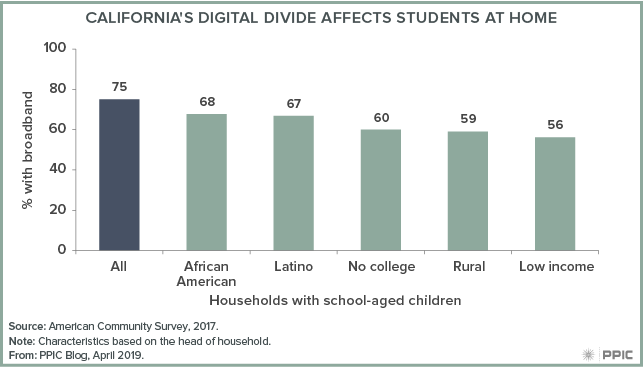
Gaps exist for several demographic groups. For example, 56% of low-income households with school-aged children have broadband subscriptions, compared to 75% of all households with school-aged children.

figure -California’s Digital Divide Affects Students at Home

This digital divide in broadband access at home—known as the “homework gap”—may affect student learning. An analysis by the Pew Research Center found 17% of teens say they are often or sometimes unable to complete their homework due to a lack of reliable internet or computer access, with about a quarter of low-income and African American teens saying this. Another study shows that eighth graders who do not have internet access at home score lower on national exams in reading and math than their peers. Similarly, students without computers at home score lower in their ability to use computers and other digital devices. These factors may worsen the disadvantages faced by lower-income students, who have lower high school graduation rates and lower standardized test scores than their wealthier peers.

While there are discounts available to lower-income families struggling to afford internet access, three in four California households without broadband are unaware of these discounts, according to a Berkeley Institute of Government Studies poll—suggesting that federal and state policymakers can do a better job promoting these programs.

Some districts have developed innovative approaches to address the digital divide. For example, a few years ago Coachella Valley Unified outfitted school buses with Wi-Fi and parked them throughout the district’s rural neighborhoods to serve as mobile hotspots. As more schools embrace digital learning, developing new ways to broaden internet access is key to closing equity gaps and ensuring that learning continues outside the classroom.

Video: Managing Wastewater in a Changing Climate

California’s wastewater sector plays a key role in protecting public health and the environment. It is also the source of recycled water—a growing part of the water supply. But as climate change increases the risks of water scarcity and creates other new challenges, the sector is at a turning point. A recent event brought together PPIC researchers and a panel of experts to explore how wastewater management can adapt to a more volatile future.

Caitrin Chappelle, associate director of the PPIC Water Policy Center, outlined findings from a new report on climate risks to the sector and strategies needed to manage them. She noted that drought—as well as ongoing efforts to conserve water—can have unintended consequences for the sector. Less water flowing into treatment plants affects treatment processes and can harm infrastructure. Less treated water flowing out of these plants reduces supplies for downstream users, ecosystems, and recycled water uses.

Chappelle noted that cooperation is a key strategy for building resilience: “Local wastewater agencies will need to work closely with one another, with water supply agencies, and with the state to build a more resilient future.”

Identifying tradeoffs and understanding the unintended consequences of water conservation and the use of treated wastewater are key to developing good policy, noted the panel’s moderator, Kurt Schwabe, a professor at the University of California, Riverside, and an adjunct fellow at the PPIC Water Policy Center.

The three panelists—Jelena Hartman of the California State Water Board, Adam Link of the California Association of Sanitation Agencies, and Nina Hawk of the Santa Clara Valley Water District—discussed the interactions between water use and wastewater, lessons learned from the latest drought, and ways to improve coordination and information sharing with water suppliers going forward.

Hartman noted that with the 2012‒16 drought emergency behind us, “it’s a good opportunity to talk about what worked, what didn’t work” for managing future low-flow situations. “We need to plan, adapt, and be prepared, because the next drought will come,” she added.

Hawk said her agency is fully behind efficient water use but also recognizes that conservation can have impacts on wastewater management and recycled water supplies. “We really have to step back and take a planning look at it,” she said. Collaboration between water suppliers and treatment agencies is key to managing wastewater for multiple uses, she noted.

Link highlighted the difficulty in planning for future capital improvements for both sanitation and recycled water in a changing climate. “If you’re not sure how low your flows will go, how do you plan for a plant that will be useful 30 years from now?” This may require more creative planning for capital investments to ensure that new infrastructure is flexible enough for changing conditions—for example, connecting recycled water plants to groundwater and surface storage to help them weather drought.

We invite you to watch the video from the event.


Interactive: Will Housing Costs Drive Californians Away?

[vc_row][vc_column][vc_column_text]Home values and rental markets in California are among the most expensive in the nation, and supply shortages continue to put upward pressure on housing prices. Over the last decade, the state averaged fewer than 80,000 new homes annually—far below the estimated need of 180,000 additional units each year, according to a recent report from the California Department of Housing and Community Development.

In our March survey, we found that a record-high share of Californians (68%) believe that housing affordability is a big problem in their region, and 47% are seriously considering moving away from the part of the state they live in now due to housing costs.

The interactive below allows you to take a closer look at how interest in moving due to housing costs varies across demographic groups. For example, Los Angeles County residents (39%) are the most likely to say housing costs have made them seriously consider moving out of the state, with another 13% saying they’re considering moving elsewhere in California. Overall, half of coastal residents say they’re seriously thinking about moving away from where they live now.

Young adults are also much more likely to have considered moving than older residents. More than half (56%) of young adults age 18–34 have seriously thought about moving due to housing costs—including four in ten who have considered leaving the state—compared to 38% of adults over 55.

We hope this interactive sheds light on Californians’ perceptions of housing costs. As the new governor and state legislature work on their policy agendas for the year, the PPIC survey team will continue to monitor the issue of housing closely.[/vc_column_text][/vc_column][/vc_row][vc_row][vc_column][vc_raw_html]JTNDZGl2JTIwY2xhc3MlM0QlMjd0YWJsZWF1UGxhY2Vob2xkZXIlMjclMjBpZCUzRCUyN3ZpejE1NTU3MDc3NzcyNTUlMjclMjBzdHlsZSUzRCUyN3Bvc2l0aW9uJTNBJTIwcmVsYXRpdmUlMjclM0UlM0Nub3NjcmlwdCUzRSUzQ2ElMjBocmVmJTNEJTI3aHR0cHMlM0ElMjYlMjM0NyUzQiUyNiUyMzQ3JTNCd3d3LnBwaWMub3JnJTI2JTIzNDclM0JibG9nJTI2JTIzNDclM0JpbnRlcmFjdGl2ZS13aWxsLWhvdXNpbmctY29zdHMtZHJpdmUtY2FsaWZvcm5pYW5zLWF3YXklMjclM0UlM0NpbWclMjBhbHQlM0QlMjclMjAlMjclMjBzcmMlM0QlMjdodHRwcyUzQSUyNiUyMzQ3JTNCJTI2JTIzNDclM0JwdWJsaWMudGFibGVhdS5jb20lMjYlMjM0NyUzQnN0YXRpYyUyNiUyMzQ3JTNCaW1hZ2VzJTI2JTIzNDclM0JNYSUyNiUyMzQ3JTNCTWFueUNhbGlmb3JuaWFuc0FyZVRoaW5raW5nb2ZNb3ZpbmdkdWV0b0hvdXNpbmdDb3N0cyUyNiUyMzQ3JTNCQ3Jvc3N0YWJzJTI2JTIzNDclM0IxX3Jzcy5wbmclMjclMjBzdHlsZSUzRCUyN2JvcmRlciUzQSUyMG5vbmUlMjclMjAlMkYlM0UlM0MlMkZhJTNFJTNDJTJGbm9zY3JpcHQlM0UlM0NvYmplY3QlMjBjbGFzcyUzRCUyN3RhYmxlYXVWaXolMjclMjAlMjBzdHlsZSUzRCUyN2Rpc3BsYXklM0Fub25lJTNCJTI3JTNFJTNDcGFyYW0lMjBuYW1lJTNEJTI3aG9zdF91cmwlMjclMjB2YWx1ZSUzRCUyN2h0dHBzJTI1M0ElMjUyRiUyNTJGcHVibGljLnRhYmxlYXUuY29tJTI1MkYlMjclMjAlMkYlM0UlMjAlM0NwYXJhbSUyMG5hbWUlM0QlMjdlbWJlZF9jb2RlX3ZlcnNpb24lMjclMjB2YWx1ZSUzRCUyNzMlMjclMjAlMkYlM0UlMjAlM0NwYXJhbSUyMG5hbWUlM0QlMjdzaXRlX3Jvb3QlMjclMjB2YWx1ZSUzRCUyNyUyNyUyMCUyRiUzRSUzQ3BhcmFtJTIwbmFtZSUzRCUyN25hbWUlMjclMjB2YWx1ZSUzRCUyN01hbnlDYWxpZm9ybmlhbnNBcmVUaGlua2luZ29mTW92aW5nZHVldG9Ib3VzaW5nQ29zdHMlMjYlMjM0NyUzQkNyb3NzdGFicyUyNyUyMCUyRiUzRSUzQ3BhcmFtJTIwbmFtZSUzRCUyN3RhYnMlMjclMjB2YWx1ZSUzRCUyN25vJTI3JTIwJTJGJTNFJTNDcGFyYW0lMjBuYW1lJTNEJTI3dG9vbGJhciUyNyUyMHZhbHVlJTNEJTI3bm8lMjclMjAlMkYlM0UlM0NwYXJhbSUyMG5hbWUlM0QlMjdzdGF0aWNfaW1hZ2UlMjclMjB2YWx1ZSUzRCUyN2h0dHBzJTNBJTI2JTIzNDclM0IlMjYlMjM0NyUzQnB1YmxpYy50YWJsZWF1LmNvbSUyNiUyMzQ3JTNCc3RhdGljJTI2JTIzNDclM0JpbWFnZXMlMjYlMjM0NyUzQk1hJTI2JTIzNDclM0JNYW55Q2FsaWZvcm5pYW5zQXJlVGhpbmtpbmdvZk1vdmluZ2R1ZXRvSG91c2luZ0Nvc3RzJTI2JTIzNDclM0JDcm9zc3RhYnMlMjYlMjM0NyUzQjEucG5nJTI3JTIwJTJGJTNFJTIwJTNDcGFyYW0lMjBuYW1lJTNEJTI3YW5pbWF0ZV90cmFuc2l0aW9uJTI3JTIwdmFsdWUlM0QlMjd5ZXMlMjclMjAlMkYlM0UlM0NwYXJhbSUyMG5hbWUlM0QlMjdkaXNwbGF5X3N0YXRpY19pbWFnZSUyNyUyMHZhbHVlJTNEJTI3eWVzJTI3JTIwJTJGJTNFJTNDcGFyYW0lMjBuYW1lJTNEJTI3ZGlzcGxheV9zcGlubmVyJTI3JTIwdmFsdWUlM0QlMjd5ZXMlMjclMjAlMkYlM0UlM0NwYXJhbSUyMG5hbWUlM0QlMjdkaXNwbGF5X292ZXJsYXklMjclMjB2YWx1ZSUzRCUyN3llcyUyNyUyMCUyRiUzRSUzQ3BhcmFtJTIwbmFtZSUzRCUyN2Rpc3BsYXlfY291bnQlMjclMjB2YWx1ZSUzRCUyN3llcyUyNyUyMCUyRiUzRSUzQ3BhcmFtJTIwbmFtZSUzRCUyN2ZpbHRlciUyNyUyMHZhbHVlJTNEJTI3cHVibGlzaCUzRHllcyUyNyUyMCUyRiUzRSUzQyUyRm9iamVjdCUzRSUzQyUyRmRpdiUzRSUyMCUyMCUyMCUyMCUyMCUyMCUyMCUyMCUyMCUyMCUyMCUyMCUyMCUyMCUyMCUyMCUzQ3NjcmlwdCUyMHR5cGUlM0QlMjd0ZXh0JTJGamF2YXNjcmlwdCUyNyUzRSUyMCUyMCUyMCUyMCUyMCUyMCUyMCUyMCUyMCUyMCUyMCUyMCUyMCUyMCUyMCUyMCUyMCUyMCUyMCUyMHZhciUyMGRpdkVsZW1lbnQlMjAlM0QlMjBkb2N1bWVudC5nZXRFbGVtZW50QnlJZCUyOCUyN3ZpejE1NTU3MDc3NzcyNTUlMjclMjklM0IlMjAlMjAlMjAlMjAlMjAlMjAlMjAlMjAlMjAlMjAlMjAlMjAlMjAlMjAlMjAlMjAlMjAlMjAlMjAlMjB2YXIlMjB2aXpFbGVtZW50JTIwJTNEJTIwZGl2RWxlbWVudC5nZXRFbGVtZW50c0J5VGFnTmFtZSUyOCUyN29iamVjdCUyNyUyOSU1QjAlNUQlM0IlMjAlMjAlMjAlMjAlMjAlMjAlMjAlMjAlMjAlMjAlMjAlMjAlMjAlMjAlMjAlMjAlMjAlMjAlMjAlMjBpZiUyMCUyOCUyMGRpdkVsZW1lbnQub2Zmc2V0V2lkdGglMjAlM0UlMjA4MDAlMjAlMjklMjAlN0IlMjB2aXpFbGVtZW50LnN0eWxlLndpZHRoJTNEJTI3MTAwJTI1JTI3JTNCdml6RWxlbWVudC5zdHlsZS5oZWlnaHQlM0QlMjhkaXZFbGVtZW50Lm9mZnNldFdpZHRoJTJBMC43NSUyOSUyQiUyN3B4JTI3JTNCJTdEJTIwZWxzZSUyMGlmJTIwJTI4JTIwZGl2RWxlbWVudC5vZmZzZXRXaWR0aCUyMCUzRSUyMDUwMCUyMCUyOSUyMCU3QiUyMHZpekVsZW1lbnQuc3R5bGUud2lkdGglM0QlMjcxMDAlMjUlMjclM0J2aXpFbGVtZW50LnN0eWxlLmhlaWdodCUzRCUyOGRpdkVsZW1lbnQub2Zmc2V0V2lkdGglMkExLjc3JTI5JTJCJTI3cHglMjclM0IlN0QlMjBlbHNlJTIwJTdCJTIwdml6RWxlbWVudC5zdHlsZS53aWR0aCUzRCUyNzEwMCUyNSUyNyUzQnZpekVsZW1lbnQuc3R5bGUubWluSGVpZ2h0JTNEJTI3NzgwcHglMjclM0J2aXpFbGVtZW50LnN0eWxlLm1heEhlaWdodCUzRCUyOGRpdkVsZW1lbnQub2Zmc2V0V2lkdGglMkExLjc3JTI5JTJCJTI3cHglMjclM0IlN0QlMjAlMjAlMjAlMjAlMjAlMjAlMjAlMjAlMjAlMjAlMjAlMjAlMjAlMjAlMjAlMjAlMjAlMjAlMjAlMjAlMjB2YXIlMjBzY3JpcHRFbGVtZW50JTIwJTNEJTIwZG9jdW1lbnQuY3JlYXRlRWxlbWVudCUyOCUyN3NjcmlwdCUyNyUyOSUzQiUyMCUyMCUyMCUyMCUyMCUyMCUyMCUyMCUyMCUyMCUyMCUyMCUyMCUyMCUyMCUyMCUyMCUyMCUyMCUyMHNjcmlwdEVsZW1lbnQuc3JjJTIwJTNEJTIwJTI3aHR0cHMlM0ElMkYlMkZwdWJsaWMudGFibGVhdS5jb20lMkZqYXZhc2NyaXB0cyUyRmFwaSUyRnZpel92MS5qcyUyNyUzQiUyMCUyMCUyMCUyMCUyMCUyMCUyMCUyMCUyMCUyMCUyMCUyMCUyMCUyMCUyMCUyMCUyMCUyMCUyMCUyMHZpekVsZW1lbnQucGFyZW50Tm9kZS5pbnNlcnRCZWZvcmUlMjhzY3JpcHRFbGVtZW50JTJDJTIwdml6RWxlbWVudCUyOSUzQiUyMCUyMCUyMCUyMCUyMCUyMCUyMCUyMCUyMCUyMCUyMCUyMCUyMCUyMCUyMCUyMCUzQyUyRnNjcmlwdCUzRQ==[/vc_raw_html][/vc_column][/vc_row]

Video: Emergency Department Use in California

Hospital emergency departments (EDs) are an important part of California’s health care system. They are sometimes called the safety net of the safety net because they provide care to all comers. Policymakers, health plans, and health providers have long focused on ED use, partly because it serves as a proxy for lack of access to other, less costly forms of health care. So how has the expansion of insurance coverage under the Affordable Care Act (ACA) affected ED use in California? At an event last week in Sacramento, PPIC researcher Shannon McConville outlined a new PPIC report that addresses this question, and a panel of experts offered their perspectives on recent ED trends.

While many predicted that coverage expansion would reduce ED use by providing access to other kinds of medical care, such as primary care physicians, some worried that because insurance coverage typically reduces patients’ out-of-pocket costs, the ACA would increase ED use. The good news is that the PPIC report estimates that ED use rates would be higher in the absence of the ACA. But ED use statewide has been increasing for the past decade. To get a sense of how recent trends in ED use are being experienced and addressed around the state, PPIC convened a panel of experts.

All of the panelists highlighted the importance of finding out why people are using EDs. Some frequent ED users may not know about other ways to get medical care, while others may have behavioral or mental health issues that could be addressed more effectively by other kinds of care—from housing assistance to substance abuse programs. As Sara Kate Levin, medical director for Contra Costa Health Services, put it, “What are the unmet social needs that are driving a lot of this high utilization?”

But filling information gaps and addressing behavioral and mental health issues does not solve all ED use problems. In many areas, there is a scarcity of primary care doctors and urgent care clinics, and many patients cannot take time off to go to medical appointments during the workday. Moreover, primary care doctors sometimes refer their privately insured patients to EDs, in part so they won’t have to wait for tests.

This range of issues points to what Renee Hsia, an ED physician at Zuckerberg San Francisco General Hospital and a professor of emergency medicine and health policy, called “the elephant in the room”: because the United States has “a very market-based approach to health care,” there are two very different stories about ED use. On the one hand, EDs in affluent areas broadcast their availability and convenience. On the other hand, there are long waits for treatment at EDs serving low-income areas. “In some areas, your ER is a revenue center . . . and in some places, where you don’t have paying patients, your ER is a cost center.”

Jennifer Rasmussen, vice president of health care services at Molina Healthcare of California, highlighted the geographical differences across the state that make it difficult to find “one size fits all” solutions. She pointed out that Molina serves Imperial and San Bernardino Counties, “a vast geography” with fewer social services than a dense urban area has to offer. In other words, “a solution for Imperial County is not going to be the same as a solution for San Francisco.”

New Approaches for the PPIC Statewide Survey

As the polling world knows, times—and survey methods—are changing. The rise of cell phones and decline in landline use has had an enormous effect on telephone polling methods. So have internet surveys. The PPIC Statewide Survey has kept abreast of these changes, evaluating and incorporating best practices throughout our 20-plus years in the business. The most recent update involves using online polling techniques for our next survey.

Online polling was initially viewed with great skepticism by experts in the field. However, significant progress has been made in this area. Today, a rigorous online survey using a random probability sample is widely accepted as an alternative to a rigorous live telephone survey using a random probability sample. Our research into this methodology—including extensive conversations with colleagues at peer organizations who are also using online and live telephone surveys, such as the Kaiser Family Foundation, Langer Research Associates, and the Pew Research Center—has provided us with strong assurances of quality.

Last fall, we conducted a simultaneous online and telephone poll to compare our results. We found that the online method we chose yielded results with the same high quality as our telephone polling (which includes both landline and cellphone participants).

This spring, we are conducting our first fully online-only survey, on the topic of Californians and education. This method will allow us to delve into more issues and in greater depth than we do in a live telephone survey. We are excited about this approach and looking forward to the results.

At the same time, the PPIC Statewide Survey will continue to rely on landline and cellphone polling techniques for the bulk of our work for the forseeable future, given the current limits in random probability samples for large online surveys in California and the reliability and proven track record of live telephone surveys.

As we move toward new frontiers, our survey methods will always place quality first and be completely transparent, with clear methodological explanations and detailed results available on our website. Most important, we will continue to provide a voice for all Californians—voters and nonvoters alike—raising awareness, encouraging discussion, and informing policymakers on critical issues of the day.

Leveling the Playing Field in College Admissions

Recent news of wealthy parents allegedly paying bribes to get their children into elite colleges has raised a lot of questions about the college admissions process. While fewer than 100 students were involved—out of more than 1 million new college freshmen every year—the scandal brings up larger issues of equitable college access and high income inequality in California.

More than half of Californians (53%) say qualified students from low-income families have less opportunity than other students to get a college education, according to a 2018 PPIC survey. Even without resorting to bribery, there are many advantages that students from high-income families have in college admissions, including living in safer neighborhoods, attending better high schools, and having more help preparing for the application process (e.g., paying for SAT or ACT prep courses). Admission practices at most private colleges also favor students who can pay the full price of attending.

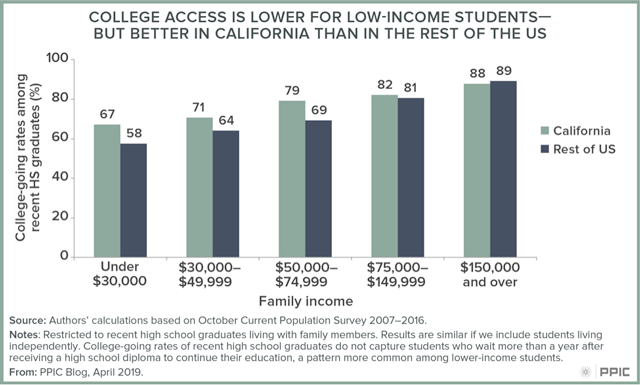
Our recent report on economic mobility and higher education highlights the challenges facing low-income students in California—but also offers some hope. Although recent high school graduates from low-income families are less likely to enroll in college than students from higher-income families, a greater percentage of low-income students go to college in California (67%) compared to other states (58%). Enrollment gaps between low- and high-income students in California (21 percentage points) are also substantially lower than in the rest of the country (31 percentage points).

Figure 1: College Access is Lower For Low-Income Students--But Better in California Than In the Rest of the US

California’s large public higher education system is key to ensuring broad access. The University of California (UC) enrolls more low-income students than any other public research university system in the country. Indeed, applicants from disadvantaged backgrounds are given extra consideration in UC’s “holistic review” process. Thirty-eight percent of UC undergraduates in 2016–17 received Pell grants (federal grants to low-income students), compared to 26% of undergraduates at public research universities in the rest of the country.

California State University (CSU), the largest public university system in the country, provides even more access than UC. Almost half (49% in 2016–17) of CSU students receive Pell grants. California’s private nonprofit colleges also play an important role, with 29% of their undergraduates receiving Pell grants.

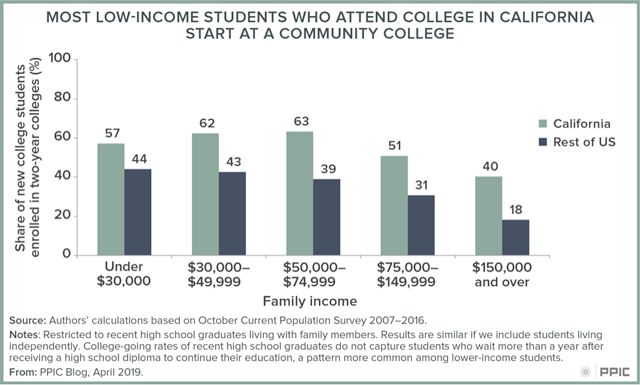
But perhaps most important are California’s community colleges. More than half of low-income students who attend college in California start at a community college.

Figure 2: Most Low-Income Students Who Attend College in California Start at a Community College

Although college access for low-income students in California is relatively good compared to the rest of the nation, more can be done. For example, improving financial aid would make college more accessible to more low-income students and would likely lead to higher graduation rates. And because so many low-income students start at community colleges, increasing transfer rates is critical to ensuring that higher education continues to serve as a ladder of economic mobility. New reforms at the community colleges—including changes in remediation and the Associate Degree for Transfer program—should lead to substantial increases in transfer and help more students achieve their academic and economic goals.

A New Reality for Federal Flood Insurance

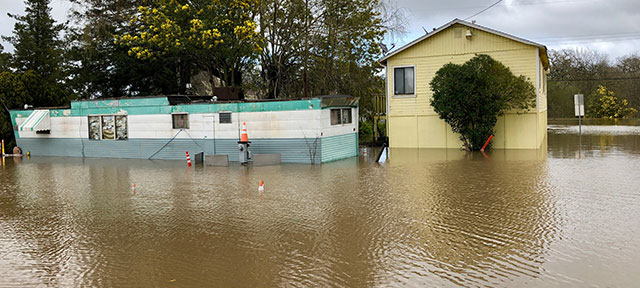
Flood damages have been rising around the country―most recently in the Midwest. The National Flood Insurance Program provides coverage to more than 5 million households and small businesses across the United States, including more than 229,000 in California. The program has been hard hit by payouts from major flood disasters in recent years and is heavily in debt. The Federal Emergency Management Agency (FEMA), which houses the program, has recently announced significant changes. We talked to Carolyn Kousky, a flood insurance expert at the Wharton Risk Center at the University of Pennsylvania and a member of the PPIC Water Policy Center’s research network, about the program.

PPIC: How is the national flood insurance program changing?

CAROLYN KOUSKY: FEMA is modernizing how it prices flood insurance policies, drawing on best practices in risk modeling. The changes are scheduled to roll out in October 2020. One big change is that new rates will be property-specific and based on factors like how close a property is to a river or its elevation. Higher-risk properties will have higher rates. Previously, everyone in a high-risk zone paid the same rates, regardless of the level of actual risk. This change should be easier to understand for residents, which is an important improvement. Economists have been calling for such an approach for a long time.

These changes will also mean that rates vary more smoothly across a community. FEMA flood maps designate so-called “100-year” floodplains. In the old system, if your house was just outside that line your rates dropped dramatically—it was like a cliff between rates. Neighbors might have differences of $1,000 or more, but of course the risk between neighboring houses was almost never that big. This new system should eliminate that cliff.

The new pricing won’t help low-income families afford insurance, so there will still be a need for an affordability program. But the new pricing will eliminate another inequity. The previous rates didn’t always take into account the value of the structure being insured. That meant that higher-value structures were paying less than they should, and lower-value ones were paying too much. So to the extent that the value of a house reflects income, poorer households were being penalized. This problem is now being fixed.

PPIC: The federal government has acknowledged that most of its flood maps don’t reflect rising risk, and now some communities have created stricter standards to help them prepare for floods in a changing climate. Will this new approach help the program prepare for climate change?

CK: In some ways, yes. One important thing the new pricing does is add flood risk from rainfall. Previously the program’s pricing largely only reflected risks from coastal storm surge and rivers overflowing their banks. Rainfall risk is increasing with climate change, so this is a very positive change in the program. We saw the damage that rainfall flooding can produce in an extreme way with Hurricane Harvey.

These annual insurance policies only price for next year’s risk―and this is how it should be. It wouldn’t make sense for property owners to have to pay today for risks 50 years down the road. So the rating changes are not about managing climate changes. But we do need to think about increasing climate risk when planning new development and infrastructure and making other longer-term investments.

PPIC: Do you think these changes will make the program fiscally sustainable for the long term?

CK: As I understand it, these changes are about making sure the prices better reflect current risks. Based on what FEMA has released so far, there’s no way to know how it will affect the program’s revenue.

This new pricing is definitely fairer and more reflective of risk. If Congress coupled that with forgiving the program’s existing debt—which is still in the tens of billions―the program could use this as a re-set on its fiscal sustainability. There is a bill in the House right now that would do this. But thinking about the long-term fiscal soundness of the program in the face of new urban development and a changing climate would likely require more than just rating changes.

That said, there are so many benefits to making these changes in the insurance program. It’s a great first step to modernizing the system.

Californians and Their Tax Burden

It’s April 15—the perfect day to explore how Californians feel about the state and local tax system and how much they pay in taxes. According to the most recent PPIC Statewide Survey, seven in ten Californians believe that California currently ranks near the top (48%) or above average (22%) in state and local tax burden per capita. The public’s perception is somewhat in line with fiscal facts: California’s state and local tax collections per capita in 2015 were 10th-highest in the nation (Tax Policy Center, September 2018).

Notably, Republicans (65%) are much more likely than Democrats (47%) and independents (48%) to say California’s state and local tax burden is near the top. The share of Californians expressing this view increases with rising income (39% under $40,000, 52% $40,000 to $80,000, 61% $80,000 or more) and this view is more common among whites (57%) than among other racial/ethnic groups (47% Asian Americans, 44% African Americans, 38% Latinos).

Half of Californians (52%)—a record-high share—say that the state and local tax system is either not too fair (25%) or not at all fair (27%). This marks a 10-point increase since March 2017 and a 21-point increase since the first time we asked this question in June 2003. There are notable differences along partisan lines. More than two in three Republicans (69%) see the state and local tax system as not too or not at all fair, as do nearly six in ten independents (58%), compared to about four in ten Democrats (43%).

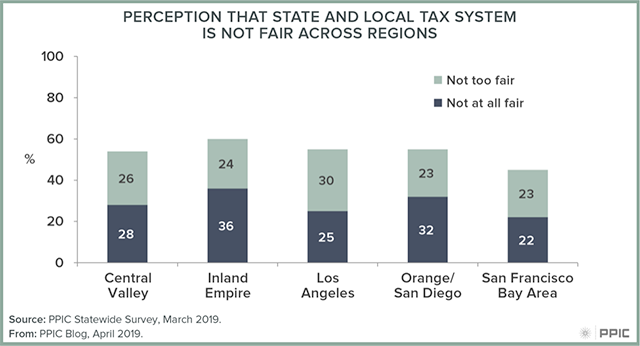
The belief that the system is not fair is widely held across regions, ranging from a high of 60% in the Inland Empire to 45% in the San Francisco Bay Area. Lower-income adults (46%) are somewhat less likely than more-affluent adults (60% $40,000 to $80,000, 54% $80,000 or more) to say that the current state and local tax system is not fair.

Figure 1: Perception That State and Local Tax System is Not Fair Across Regions

A record-tying 60% of Californians say they pay much more (39%) or somewhat more (21%) than they should in state and local taxes. The share saying they pay much more than they should is a record high and has increased 13 points since we first asked this question in February 2003. This view is widely held across regions and demographic groups. Notably, Republicans (61%) are more than twice as likely as Democrats (25%) and much more likely than independents (42%) to say they pay much more than they should.

Figure 2 - Shares Saying They Pay Much More in State and Local Taxes Than They Should

That said, California voters have passed tax increases in recent years, including extending the Proposition 30 income tax increases in 2016 and rebuffing an effort to repeal the recently passed increase to the state gas tax in 2018. Further, voters across the state have been more than willing to pass local tax measures. With a new governor and a supermajority of Democrats in the state legislature, are new taxes on the horizon? Stay tuned as the PPIC Statewide Survey gauges public support for any new proposals.