Will Groundwater Sustainability Plans End the Problem of Dry Drinking Water Wells?

In the midst of the COVID-19 crisis, work continues on managing groundwater for long-term sustainability, as required by California’s landmark Sustainable Groundwater Management Act (SGMA). In January, water users in 21 critically overdrafted basins delivered their groundwater sustainability plans to the state Department of Water Resources. In this series, we examine the 36 plans submitted for 11 critically overdrafted basins in the San Joaquin Valley—California’s largest farming region, where excess pumping is a major challenge.

Why are drinking water wells going dry in the valley?

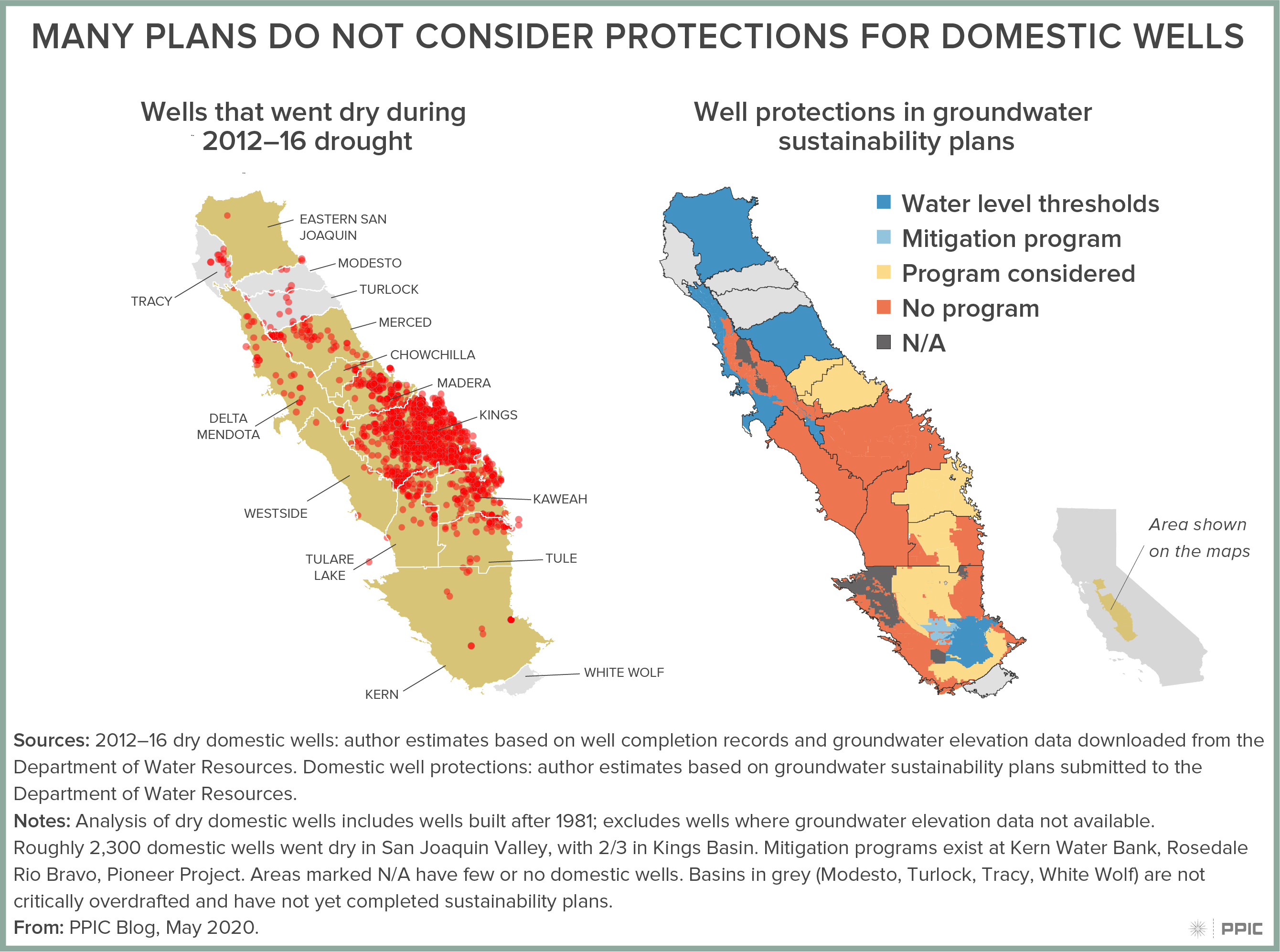
In the San Joaquin Valley, groundwater is the primary source of drinking water. While groundwater levels in the valley have generally been declining for decades, the problem of overdraft—which can cause shallow wells to run dry—is particularly acute during droughts as surface water supplies for irrigating crops are limited. This especially affects domestic wells and small community wells, which tend to be shallower than those used for irrigation or large urban water systems. During the 2012–16 drought, 2,600 well-dependent households reported water shortages across the state; almost 80% of these were in the San Joaquin Valley. We estimate that the valley’s total number of dry domestic wells was likely higher (see map below, on left). Many small community wells also faced shortages.

Does SGMA protect wells from running dry in the future?

SGMA was enacted to address the negative consequences of groundwater overdraft. Declining water levels is one of the six undesirable results that plans must avoid. Local agencies are tasked with setting minimum water level thresholds to avoid effects that are “significant and unreasonable”—something that can vary with local conditions.

Allowing some flexibility is important, because very restrictive thresholds would require immediate and costly cuts in groundwater pumping. Yet in many places, additional water level declines can render shallow drinking water wells useless. If agencies choose to allow continued pumping to avoid major disruptions in the regional economy, they are required to mitigate any significant and unreasonable effects. Options include covering the costs of drilling deeper wells or providing an alternative water supply.

How do groundwater plans address risks to domestic wells?

The plans reflect a range of approaches—as shown in the map below, on the right. In several basins, plans set water level thresholds to protect domestic wells from going dry. Some other plans acknowledge that their thresholds might cause some wells to go dry, and these already have a mitigation program in place or propose considering mitigation in the future. Plans in the remaining basins either do not discuss the potential impacts their thresholds have on domestic wells or do not consider these impacts to merit action. This includes the Kings Basin—home to a dense network of well-dependent communities—where three plans acknowledge that roughly 600 domestic wells may go dry, but do not consider this a significant and unreasonable impact of continued overdraft.

figure - Many Plans Do Not Consider Protections for Domestic Wells

Is mitigation a good alternative?

Chowchilla and Madera basins also have some domestic wells at risk and have conducted economic analyses to compare the costs of two alternatives: rapidly reducing agricultural pumping to maintain higher water levels, or replacing domestic wells that would be affected. At a cost of $25,000 per well, the full costs of replacing affected domestic wells in Chowchilla ($130,000) and Madera ($770,000) are orders of magnitude lower than the costs of reducing agricultural pumping sooner ($581 million in Chowchilla and $968 million in Madera). This shows that it can be more cost effective for a basin to provide assistance to domestic well owners than to set restrictive water level thresholds that would result in large and abrupt losses in the local economy.

What’s next?

Although SGMA doesn’t protect every well from going dry, it does require plans to consider this problem and mitigate significant and unreasonable effects. At a minimum, the state should require that each plan quantify the impacts of its water level thresholds on drinking water supplies.

Increasing community participation in groundwater planning efforts is another priority. And as groundwater sustainability agencies grapple with how to bring their basins into balance over the coming decades, better information will also be key to improving decision making and reducing conflicts. The Department of Water Resources began releasing well records several years ago. The next priority should be improving understanding of which wells are used for drinking water, which wells are abandoned, and other critical information.

Many shallow wells serve economically disadvantaged communities, making the stakes especially high. Because the San Joaquin Valley has a high share of water systems with water quality problems, it’s also important to consider solutions that address both water quality and water quantity whenever possible. In many cases, providing alternative sources of supply may be the best option for affected communities.

Providing Safe Drinking Water in the Face of Disasters: Lessons from Lake County

Climate change is already affecting water management across the state. Small rural communities with ongoing drinking water challenges are especially vulnerable to greater extremes brought on by a warming climate. We talked to Jan Coppinger, a special district administrator from Lake County, about how the county’s small water systems have dealt with an especially devastating string of natural disasters.

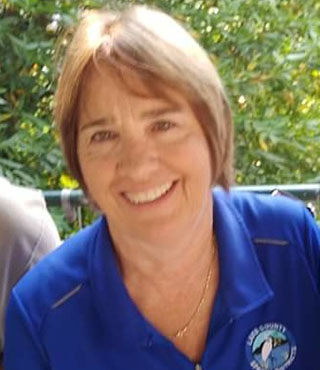
photo - Jan Coppinger

PPIC: Describe Lake County’s recent water challenges.

JAN COPPINGER: The county is predominantly rural, geographically diverse, and home to a number of small, disadvantaged communities and tribes. As towns in the county were developing, they built small, isolated water systems. We now have almost 100 public water systems, and some are barely getting by. The county tried to encourage consolidation of smaller systems into bigger ones in the late 1980s. Two major consolidations took place at that time: one that merged 41 small suppliers to create the North Lakeport water system—which today is one of our strongest, best water systems—and one that combined 15 systems. The county did feasibility studies on other potential consolidations, but these were met with opposition from local communities, so the issue was dropped altogether until recently.

Over the past several years, a string of natural disasters has kept Lake County in a constant state of emergency. It started with a drought, followed by two massive wildfires, which burned more than 60% of our county. The burn scars made the floods of 2017 and 2019 especially devastating. The 2015 Valley Fire destroyed thousands of homes and eight water systems. One small water supplier—Starview Water System—had 151 customers before the fire and only 14 afterward. Following these disasters, consolidation became a way to get some of the devastated water systems back up and running. We have had success with consolidating and rebuilding nine water systems in the Cobb Mountain area in the last couple of years.

PPIC: Consolidation is a big undertaking. What is the most important lesson from Lake County’s efforts?

JC: It’s a very complicated process, and in most cases, outside technical assistance is needed. We have two other areas now looking at consolidation, and we’re having a hard time identifying which of the small water agencies can take the lead in the process. The agencies are willing but they don’t have the managerial or technical capacity.  We have gotten support from the State Water Board and non-profit partners like the Rural Community Assistance Corporation (RCAC) to walk them through it. Financial assistance is another barrier, because consolidation can be expensive. The costs really vary. For the Cobb Mountain project, the feasibility study alone cost $250,000. We’re probably talking around $21 million for the entire consolidation. In that case, we had to bring some of the small systems up to code, and repair significant damage from the fire.

PPIC: How can small systems best prepare for natural disasters and climate change?

JC: Building physical connections to other systems and sharing resources is critical. Small systems need a backup supply to handle disasters—and because sometimes even the backup burns, they may need a backup to the backup. For instance, in the aftermath of the Valley Fire, the county invested $1.7 million to rebuild the Starview Water System, and connect it to other small systems in the Cobb Mountain area. The floods in early 2019 took out the roads, the culverts, and the brand new water system we built.

I never dreamed that entire water systems would burn to the ground. When I describe what has happened to small water systems in our area from these disasters, it really opens people’s eyes. Educating the people running these small systems has helped change minds about consolidation, in Lake County and across the state.

Watch a video of Jan Coppinger and other panelists talk about providing safe drinking water in California

Video: Preparing California’s Water System for Climate Extremes

Climate change is stressing water management across California. This week the PPIC Water Policy Center hosted its annual half-day workshop in Sacramento to discuss how state and local leaders can help prepare California’s water system and ecosystems for greater climate volatility.

“California has the most variable year-to-year climate of any state in the lower 48,” said Ellen Hanak, director of the PPIC Water Policy Center. “This is expected to increase, with drier dries and wetter wets.” Water management of the future will “need to start managing our droughts for floods and our floods for droughts,” she added, because greater volatility will make it harder to manage multipurpose reservoirs for both floods and droughts at the same time. Flexible, multi-benefit approaches—and solutions that are aligned across agencies—are going to be increasingly important in tackling these complex challenges.

The first panel focused on managing fast- and slow-moving disasters—floods, fires, and droughts. Panelists discussed the impacts of the recent fires on communities and local water systems, and the types of tools and partnerships that can help minimize risks. Tim Ramirez of the Central Valley Flood Protection Board described the significant and increasing flood risk in the San Joaquin Valley and called for a flood bypass to protect the growing Stockton region. And Michael Thompson of Sonoma Water called for funding from the state to support the “collaborative infrastructure” that will enable agencies to work together more effectively.

A panel on safe drinking water summarized the current status of the problem and discussed how to best use the new Safe and Affordable Drinking Water Fund to ensure that the water delivery system works for everyone. “I think that in five years we want to see every child in California has safe drinking water in their home,” said Jonathan Nelson of the Community Water Center. “The way we do that will be through multiple strategies, but that’s the vision we want to work toward, and ideally, as quickly as we can.”

Darrin Polhemus of the State Water Board said small water systems pay more for their systems and supplies, have a lack of management and technical capacity, and are particularly hard hit by water contamination and shortages. He noted that “we have to change this whole paradigm” to help improve how small water systems operate.

The final panel brought key state officials to the stage to discuss the governor’s water resilience portfolio, now being developed to address the challenges of a more volatile climate. Wade Crowfoot, secretary of the California Natural Resources Agency, said a top priority is to make it easier to help the environment and get multiple benefits out of water projects. “Permitting wetlands restoration is the exact same process as permitting a strip mall,” he said. “So while we’re threatened by climate change and our ecosystem is under unprecedented threat, state government makes it really expensive and slow to get [such projects] done.” He said his agency is committed to cutting “green tape” that slows ecosystem restoration projects.

Sounding a particularly hopeful note, Karen Ross, secretary of the California Department of Food and Agriculture, said we have “an opportunity of a lifetime for farmers to step up and identify how they can be part of the solution to climate change.” She noted that farm practices can sequester carbon while also building resiliency to help farms weather droughts and floods.

We invite you to watch the videos from this event:

Taking on Tough Challenges at the State Water Board

The State Water Board is central to addressing many of California’s major water challenges, including protecting water quality for drinking and for the environment, addressing drought and water conservation, and managing the allocation of surface water. We talked to Sean Maguire, a civil engineer who was appointed to the board by former governor Brown in December 2018, about priority issues.

Photo of Sean MaguirePPIC: What are the big challenges the board is grappling with right now?

Sean Maguire: At the top of our list is the Bay Delta water quality control plan. The plan, which covers the Sacramento–San Joaquin watershed and Delta, must ensure a reliable water supply and protect the basin’s fisheries and ecosystems. We’re working through a process that is very complex and has a lot of moving pieces—and right now it’s unclear if we’re on track to meet all of these goals. But it’s exciting to think there is a stakeholder-devised solution at hand—the voluntary agreement process—which would set out a plan to manage multiple rivers in a coordinated way, coupled with large-scale habitat restoration and science programs. There is still a long ways to go, but I have hope that voluntary agreements will prove to be the best path forward.

At the same time, we’re preparing for climate change. It’s clear that going forward we have to be incredibly efficient in our water management. The last drought resulted in legislation to establish indoor and outdoor water use efficiency targets and to require urban suppliers to develop stronger drought contingency plans. Many small water systems rely on a single source—most often groundwater—and we’re helping them find opportunities to connect to larger communities and identify new supplies. This is where water portfolios can help build resilience to drought and get us ready for a changing climate.

And finally, the most exciting news is the establishment of the Safe and Affordable Drinking Water Fund earlier this year. California has 7,000 water systems and hundreds of thousands of residents using domestic wells—a situation that presents a lot of challenges because many struggle to meet drinking water standards. The fund is a high priority for us, and we’re committed to coming up with a plan and policies to implement it, while also working on projects that can get started right away.

PPIC: Talk about contamination challenges.

SG: Water contamination is a huge challenge for the whole state. There are so many different sources, and many contaminants of emerging concern. The board is at the beginning of tackling PFAS contamination. This is a class of “forever chemicals” used in a wide range of products—for example, nonstick coatings, water repellants, take-out containers, and fire retardants. We’re moving quickly to better understand the risk by requiring testing wells in close to possible source sites (such as defense facilities, landfills, and airports), and also requiring those facilities to test local groundwater. We are also working to understand the human health effects, which will take some time.

PPIC: What gives you hope?

SG: In the past year, there’s been incredible collaboration surrounding really controversial water issues that have lingered for decades. I’m very hopeful about the stakeholder-informed solutions that are arising out of these processes. In addition to the Bay Delta process, we now have a strong wetlands policy—a collaborative solution that was a decade in the making. We have another stakeholder plan to address legacy pollution from farming and other discharges in the Central Valley. I hope we can repeat this type of collaboration with other issues and in other watersheds across the state. I have a lot of hope for the groundwater sustainability plans that are being developed now in the state’s overdrafted basins. And I believe the governor’s upcoming water resilience portfolio will give us a roadmap to help California prepare for the climate changes to come.

The state has a lot of complex water problems, and we can’t untangle them all with one brilliant policy change. But we’re making progress on many difficult issues, and I’m committed to keeping up the momentum.

New Laws Address Safe Drinking Water, Groundwater Recharge, River Health

It’s been an eventful year for California water policy. A milestone law to address the state’s drinking water challenges, which was signed by Governor Newsom earlier this year, established a $1.3 billion Safe and Affordable Drinking Water Fund. In line with its broader policy focus on climate resilience, the administration is also creating a Water Resilience Portfolio Initiative, a collaborative effort by various state agencies to ensure water resilience in the face of a changing climate. A number of bills recently signed into law build on the progress made in this area. Here are some highlights:

  • Safe drinking water: Continuing the forward momentum of the drinking water fund, two new laws tackle water quality and supply, especially in rural, disadvantaged communities. Assembly Bill (AB) 508 authorizes the State Water Board to order water system consolidations in communities with domestic wells that consistently fail to provide safe drinking water. The bill also requires the board to ensure the consolidation is financially and technically possible, and to compensate for financial losses experienced by the water system that takes over the small system. And Senate Bill (SB) 513 authorizes the State Water Board to provide immediate relief for households whose wells have gone dry due to droughts or other disasters.
  • Groundwater recharge: A new law will also make it easier for water users to bring their groundwater basins into balance—another key to long-term water resilience. AB 658 seeks to enable more recharge of depleted basins, one of the most promising approaches for addressing groundwater overdraft. The bill streamlines the permitting process for groundwater sustainability agencies (GSAs) and other local agencies to divert surface water for groundwater recharge. This tool is timely for the GSAs; those in the most overdrafted basins are now finalizing plans to manage their basins under the Sustainable Groundwater Management Act.
  • Health of rivers, lakes, and streams: Challenges with freshwater quantity and quality for ecosystems were addressed by two new laws. SB 19 addresses a key data gap that makes it harder to manage water for ecosystems, especially during droughts. California currently lacks stream gages—which help monitor water levels—on half of the rivers and streams that support critical habitats. The bill requires the Department of Water Resources and the State Water Board to develop a plan to modernize and expand the state’s stream gage network. And to address a growing water quality threat, AB 834 establishes a program to mitigate harmful algal blooms in California’s rivers, lakes, and estuaries, which pose a health threat to people and animals. The program will assess and monitor algal blooms, and publish the incidents and the resulting action online.

There is no one-size-fits-all solution for California’s complex water challenges. This legislative cycle brought a range of solutions, from those with a broad scope, like data collection, to more targeted tools to address groundwater recharge and dry wells. Both types of approaches are needed to strengthen existing policies and take our water management forward.

Testimony: Water Supply and Quality Challenges in the San Joaquin Valley

Ellen Hanak, director of the PPIC Water Policy Center, testified today (April 30, 2019) before the Assembly Subcommittee on Water, Parks and Wildlife, at a hearing on balancing water needs into the future in the San Joaquin Valley. Here are her prepared remarks. View her presentation.

The San Joaquin Valley produces more than half of California’s agricultural output. Irrigated farming is the region’s main economic driver and predomi­nant water user. The region is also ground zero for many of the state’s most difficult water management problems―including long-term depletion of groundwater reserves, lack of safe drinking water in many rural communities, and accumulation of a variety of groundwater contaminants.

Over the past three years, the PPIC Water Policy Center has worked with an interdisciplinary team of researchers from Fresno State, Point Blue Conservation Science, UC Davis, and UC Merced to examine these challenges and identify promising solutions. Today, I’ll provide you with some highlights from our latest report, Water and the Future of the San Joaquin Valley, including areas where the California Legislature can be most helpful in facilitating progress. Two of my coauthors on this study—Sarge Green from Fresno State and Thomas Harter from UC Davis—are also here to answer your questions.

I’ll touch on four priority areas for action: balancing water supplies and demands; ensuring safe and reliable drinking water supplies; managing groundwater quality for the long-term; and fostering beneficial water and land use transitions.

Balancing water supplies and demands

Chronic groundwater overdraft—pumping in excess of the amount that is replenished—averages nearly 2 million acre-feet per year in the San Joaquin Valley, or roughly 11 percent of the region’s net water use. The consequences include dry wells, sinking lands, damaged infrastructure, and reduced reserves to cope with future droughts.

In light of these problems, the valley is on a fast track to implement the Sustainable Groundwater Management Act (SGMA), which requires groundwater users to bring water supplies and demands into balance by the 2040s. The first local sustainability plans must be finalized and launched in early 2020.  Although attaining balance will benefit the valley’s economy over the long-term, it will entail some near-term costs.

To end overdraft, local groundwater sustainability agencies (GSAs) will have to augment supplies, reduce demands, or use some combination of these approaches. We estimate that about a quarter of the historical deficit can be filled with new supplies at prices farmers can afford.  The balance will likely need to be met by managing farm water demand—with the idling of at least 500,000 acres of irrigated cropland (about 10% of current acreage).

On the supply side, the most promising options are to capture and store more local runoff in groundwater basins, and to increase water imports by managing the system differently. On the demand side, increasing water trading—both within and across groundwater basins—can significantly mitigate the economic impacts of reducing water use, by allowing farmers to maintain the crops that generate the most revenue, GDP, and jobs. Reducing overdraft gradually between now and 2040—the “glide path” approach to implementing SGMA—can also lessen the costs of adjustment by giving farmers more time to adapt.

Priority actions to facilitate the adoption of an optimal supply and demand portfolio approach include:

  • Assessing which new infrastructure investments—including conveyance—are warranted to support more recharge and water trading.
  • Incentivizing recharge on farmland—one of the most cost-effective ways to store water.
  • Developing transparent and equitable local water trading rules, including for groundwater.
  • Clarifying how much additional high winter and spring runoff is available for recharge.
  • Facilitating state and federal approvals for water trading and groundwater banking projects.
  • Coordinating both within and across groundwater basins to maximize benefits.

Although local and regional water users and agencies will need to take the lead on many of these actions, both the state and federal governments can play vital roles. The state can be especially helpful in clarifying how much water is available for recharge, facilitating approvals for water trading and groundwater banking projects, and working with local partners to assess infrastructure needs.

Ensuring safe and reliable drinking water

The valley’s most urgent water issue is addressing chronic problems of unsafe and unreliable drinking water in rural communities, most of which rely on groundwater. The region is a hot spot for unsafe drinking water. With just 10 percent of the state’s population, it is home to more than half of all community water systems that have persistently contaminated tap water. Contamination is also a problem for very small water systems that are regulated by counties and for homes served by domestic wells. Some groundwater contaminants—such as arsenic and uranium—occur naturally. Others are caused by human activity. For instance, agriculture is the primary source of nitrate, a serious contaminant that is widely present in shallow wells.

The region is also a hot spot for unreliable drinking water supplies in communities that depend on shallow wells. During the latest drought, roughly half of the 150 small water systems that sought emergency assistance from the state were in the valley, as were nearly 80 percent of all residents who reported dry domestic wells. Without concerted action, this vulnerability will persist. Several thousand additional drinking water wells are vulnerable if groundwater levels fall another 30 feet—something that could easily happen during the next drought, or if local groundwater sustainability plans allow continued overdraft under a glide path approach and fail to mitigate the problem.

In recent years, various legal and administrative changes have helped address the drinking water crisis. But there is still an urgent need to build a robust, comprehensive framework for tackling it. Affected communities will require technical, financial, and managerial assistance. Here are some top priorities:

  • Consolidating or aggregating systems to provide economies of scale to small water systems.
  • Providing technical support.
  • Planning for shortages and developing rapid response procedures to mitigate dry wells.
  • Ensuring funding support for both capital investments and ongoing operations and maintenance.

A variety of local parties—including counties, urban water suppliers, irrigation districts, groundwater sustainability agencies, pollution dischargers, and NGOs—will need to play a major role in helping to address this problem. But the state must take leadership in developing funding solutions and ensuring there’s a comprehensive plan for addressing both quality and supply vulnerabilities in a timely manner.

Managing groundwater quality for the long-term

Valley farmers and other dischargers of contaminants must also meet new requirements for protecting groundwater and soils from the long-term buildup of nitrate and salts. California has been a national leader in seeking to address these problems, with a suite of new regulations adopted over the past decade. The Salt and Nitrate Control Program (SNCP)—adopted by the Central Valley Regional Water Quality Control Board in 2018 and pending approval by the State Water Board—provides an umbrella framework for addressing these challenges. SGMA also requires GSAs to protect water quality while balancing groundwater supplies and demands.

Nitrate in drinking water wells, which originates primarily from inorganic nitrogen fertilizer and manure used in farming, poses significant public health risks. Dairies face special challenges in managing manure efficiently, and solutions have remained elusive.

Salinity is a growing threat to local agricultural productivity. Roughly 250,000 acres of cropland have already been retired due to salinity in soils, and another 1.5 million acres are considered impaired.

But managing for these contaminants is costly. The SCNP seeks to find a balance between protecting water and land resources for the long run and maintaining the viability of agricultural production in the present, while also ensuring safe drinking water solutions.

Here are some top priorities for action:

  • Coordinating water quality and quantity management. This will be especially important for managing groundwater recharge, which under some circumstances can accelerate the migration of chemicals in the soil (especially nitrate) into the aquifer and impair drinking water quality, at least for a time.
  • Implementing new technologies to manage pollutants. This will be especially important for dairies, which need to remove excess manure and transform it for other uses.
  • Providing regulatory flexibility. This includes flexibility to allow some continued loading of nitrogen and salt as long as impacts on drinking water supplies are mitigated, as proposed under the SNCP.

While local water managers, farmers, and the agricultural industry will need to take the lead in addressing these issues on the ground, the state can play a major role in providing effective and responsible regulatory flexibility, and in supporting research and development (R&D).

Fostering beneficial water and land use transitions

Finally, the valley will need to plan for and manage the changing landscape as some cropland is idled—both to avoid negative consequences from dust, pests, and weeds, and to get the most value from these lands in other uses. Pursuing approaches that seek multiple benefits on this land can support the regional economy, public health, and the environment. There are numerous stewardship options: healthy soils, habitat, wildlife-friendly solar, recharge, flood protection, and recreation.

There are already some models of how this can work. For instance, the Kern Water Bank provides thousands of acres of upland habitat for San Joaquin desert species and abundant intermittent wetlands, while also serving as a major groundwater storage site. But to date, there is no serious planning effort to see how lands coming out of production might be used most productively, and how to provide the right incentives to realize this potential.

Here are some top priorities for action:

  • Initiating broad-based, inclusive planning. For many issues—ranging from determining the best areas for habitat investments to coordinating recharge and managing salinity—taking a valley-wide perspective will be key.
  • Implementing flexible regulatory approaches to make it easier to implement multi-benefit restoration projects.
  • Providing incentives and funding to support activities on the ground.
  • Boosting technical support and R&D.

Again, local and regional parties will need to take the lead on many aspects of this work. But state and federal agencies can facilitate good outcomes by providing regulatory flexibility, financial incentives, and support for technical assistance and R&D.

How can the Legislature be most helpful now?

The valley is at a pivotal moment, and there are many ways in which the state can assist the region’s residents implement efficient, equitable, and sustainable solutions to their water-related challenges. Here are some final thoughts on how the Legislature can be most helpful in the near-term:

First, ensure a robust, comprehensive framework for safe and reliable drinking water solutions. This is an urgent public health issue and needs urgent attention. The framework should include reliable funding, as well as a sound, timely approach to providing technical and managerial solutions on the ground.

Second, support the building blocks for the region’s transition to groundwater sustainability. Planning for sustainable groundwater management is well underway, but this transition won’t happen overnight. Early actions to promote forward momentum will be especially valuable in the next few years.

To create the preconditions for success, the state should accelerate its own efforts to provide regulatory clarity, consistency, and flexibility. Key areas include how much water is available for recharge, how to recharge in ways that are acceptable from a water quality perspective, and how to implement broad-based, multi-benefit restoration projects that put land coming out of production to best use.

Support for local and regional initiatives can also make a difference. Key areas include assistance with the assessment of smart infrastructure investments, pilot efforts to implement innovative approaches on the ground, technical support and R&D for water quality and land stewardship solutions, and broad-based planning to develop regional approaches for multi-benefit management of water and land.

California has long been a model for others in the management of natural resources. Many are now looking to see how we tackle the tough challenges of providing safe drinking water to all residents and managing our groundwater resources sustainably for the long term. The San Joaquin Valley is on the front line for addressing both of these challenges. The region’s farmers and residents have a history of creatively adapting to difficult and changing conditions, and constructive solutions are in reach. The state can provide vital support to help ensure success.

Video: State and Federal Experts Discuss San Joaquin Valley’s Water Future

How can state and federal agencies help California’s largest agricultural region address its difficult water management problems? This was the theme of an event last week that brought together PPIC experts with top officials working on issues related to water, agriculture, and natural resources.

Ellen Hanak, director of the PPIC Water Policy Center, launched the event by summarizing findings from a new report on the valley’s water- and land-management challenges and outlining some strategies for addressing them.

Groundwater overdraft is the valley’s key water challenge. A state mandate to bring groundwater use to sustainable levels will have broad effects on valley agriculture and the regional economy—most likely including some permanent idling of farmland to balance water budgets. Hanak noted that only about a quarter of the valley’s groundwater deficit can be filled with new supplies at prices farmers can afford.

According to Hanak, the most promising solutions fall into three buckets: “Ways to increase flexibility in how we manage water and related land resources; ways to provide incentives so that growers, who are some of the key decision makers on the ground, can do this so it makes business sense to them; and ways to stack benefits so you get more than one thing out of it—maybe you get groundwater recharge and wetland habitat, for example.”

The three panelists—Wade Crowfoot of the California Natural Resources Agency, Karen Ross of the California Department of Food and Agriculture, and Thomas Hedt of the Natural Resources Conservation Service’s California office―discussed key issues and ways their agencies can partner with local stakeholders to ease the process of replenishing groundwater in coming years.

Crowfoot highlighted the importance of working with local communities, governments, and water agencies to address water challenges. “State government doesn’t actually have the solutions. We have the resources and the power of making new laws, but the solutions that are going to help limit disruption as it relates to water are going to be found on the ground,” he said. “The question is what can we do at the state level to empower the locals to find those solutions.”

Ross said multi-benefit approaches will be critically important, particularly for reaping environmental benefits when land is fallowed. “New partnerships and unusual allies” are key to achieving such benefits and finding durable solutions, she noted.

For example, she added, “the environmental justice community and agriculture community continue to partner to find drinking water solutions”—a process that “also bodes well for what we can do on the land.”

Hedt described new federal pilot projects to improve wildlife habitat and promote groundwater recharge. He noted that a key federal farm program has been made more flexible to allow broader partnerships that can enable habitat conservation on farmlands and address other challenges more efficiently.

We invite you watch the video from the event.

This was the second public event about this research; the first was held in Fresno in February.

Widening the Conversation about Safe Drinking Water in the San Joaquin Valley

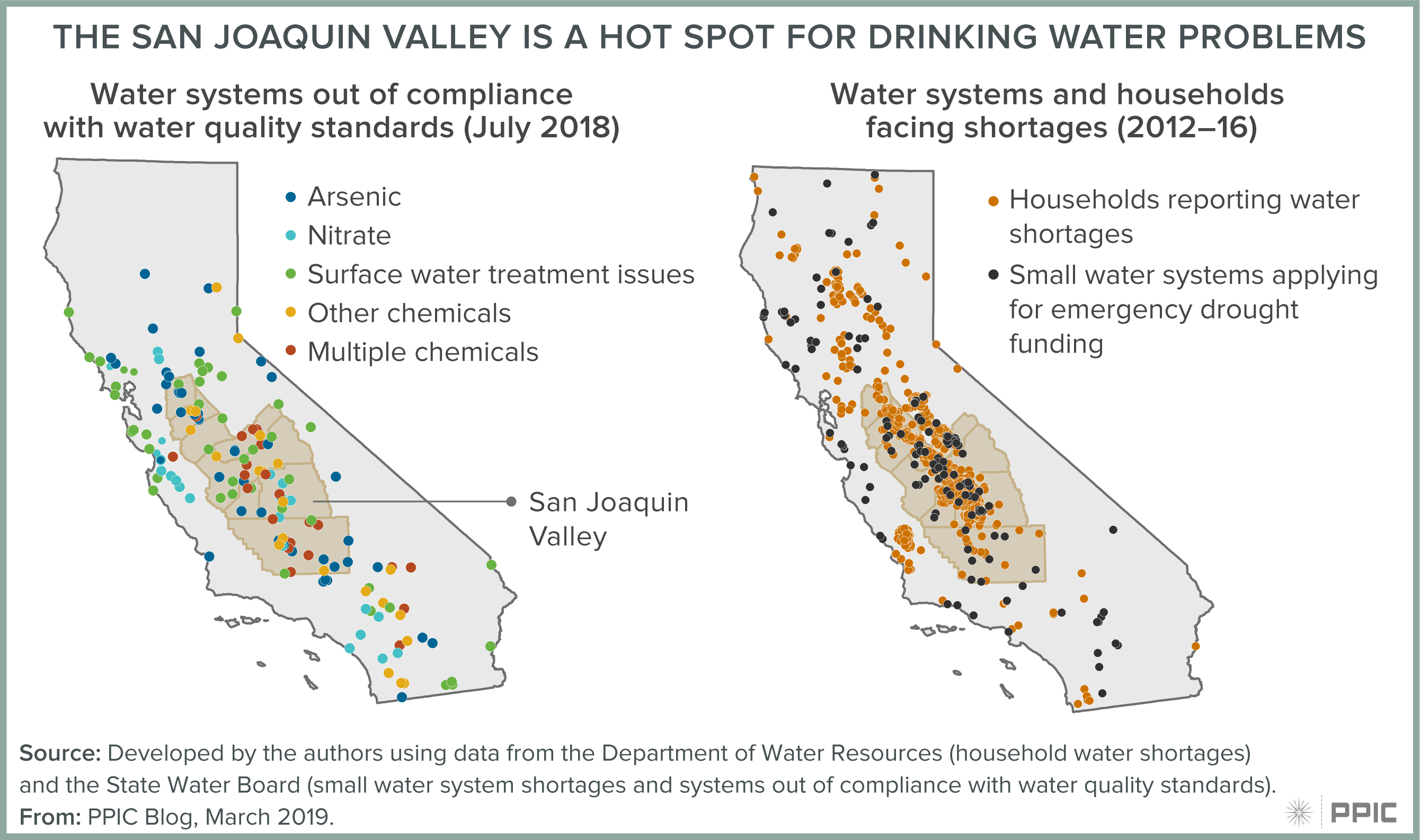
The theme of this Friday’s World Water Day is the lack of safe drinking water that affects many millions of people worldwide. Here in California, the San Joaquin Valley is a hot spot for unsafe drinking water. The region has more than half of all public water systems that are out of water-quality compliance in California, but just 10% of the state’s population. In addition, chronic decline in groundwater levels has caused drinking water wells go dry in a number of the region’s communities. We talked to Veronica Garibay—co-founder and co-director of the Leadership Counsel for Justice and Accountability—about ways to ensure community involvement in water management decision-making processes.

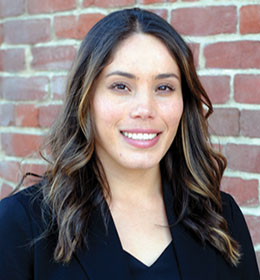
photo - Veronica Garibay

PPIC: What is key to understanding the valley’s safe drinking water crisis?

VERONICA GARIBAY: Water management is a particularly opaque and complex process, and past decision-making processes related to land use and water management failed to meaningfully include disadvantaged community voices and address their needs.

Climate change brings major risks to our water resources. The communities that are already the most vulnerable to the impacts of climate change—including water shortages during droughts, worsening water quality, flooding, and other problems—will see their vulnerability exacerbated. We have to change the way we manage water resources to adapt to these changes.

We have to bring our most vulnerable communities into these conversations, prioritize their needs, and make sure they, too, have decision-making authority over policy, programs, and projects.

Disadvantaged communities have been at the forefront of the progress we’ve already made on providing safe drinking water. They led the charge that gave the State Water Board the authority to consolidate small systems into larger ones, brought emergency funds to communities whose wells went dry during the drought, and led to the board’s establishment of the Office of Sustainable Drinking Water Solutions. Now their leadership is building momentum around the proposed safe and affordable drinking water fund, which would provide much-needed resources to pay for ongoing operations and maintenance costs and capital projects to ensure safe drinking water.

figure - The San Joaquin Valley Is a Hot Spot for Drinking Water Problems

PPIC: The Sustainable Groundwater Management Act requires local agencies to protect water quality while balancing groundwater supplies and demands. Why is it important for disadvantaged communities to participate in this process?

VG: Water is a critical resource to all of us, and the most vulnerable people should have a say in its management. Communities have a lot to contribute and need to be part of the solution. As a region we need to democratize the process and make sure that all interests are considered.

We’re working to ensure that planning for groundwater sustainability is more inclusive by encouraging groundwater sustainability agencies to establish authentic and meaningful space for direct community input and engaging communities most vulnerable to water quantity and quality issues in the region. We want to see sustainability plans that incentivize programs, policies, and projects that support safe drinking water and benefit households in disadvantaged communities.

PPIC: Are there good models for participation in the process?

VG: The North Fork Kings groundwater sustainability agency (GSA) has established a rural community advisory committee. It helps bring disadvantaged rural communities into the process to develop a sustainability plan. That’s a good step in making sure communities are providing direct input.

And the Madera GSA is encouraging all stakeholders to learn from each other and talk to each other. They’re making sure a variety of stakeholders get in the same room to learn how decision making on water affects different groups, and how we can shape solutions together.

We’d like to see more GSAs give some authority to disadvantaged communities and meaningfully build space into their processes for communities to participate.

Equal access to information is also key—what’s being presented at meetings should be accessible and in different languages if needed. And we need to ensure there is space to give feedback and that this feedback is reflected in the final sustainability plans.

These efforts will take work. Organizations like ours, and Self Help Enterprises and the Community Water Center, have all offered to collaborate with GSAs and help them engage community participation. The state has provided some funds for community engagement as part of its support of the SGMA planning process. But GSAs will also need to budget for equity—plan for and allocate resources to make sure they’re intentionally engaging communities.

Watch a video of Veronica Garibay and other panelists discussing water supply and water quality management in the San Joaquin Valley

Video: Water and the Future of the San Joaquin Valley

The San Joaquin Valley is at a critical juncture in determining its water future. California’s largest agricultural region is ground zero for many of the state’s most difficult water management problems, including groundwater overdraft, drinking water contamination, and declines in habitat and native species.

A state mandate to bring groundwater use to sustainable levels will have a broad impact on valley agriculture and the regional economy in coming years, likely including some permanent idling of farmland.

The PPIC Water Policy Center assembled a group of regional experts last week for a half-day public event at Fresno State to discuss three overarching challenges: balancing the valley’s water supplies and demands, addressing water quality problems, and planning for beneficial water and land use transitions.

Ellen Hanak, director of the PPIC Water Policy Center, launched the day’s discussions with a summary of the valley’s water-related challenges and approaches that could help address them. “The valley faces unprecedented challenges and a lot of change,” she said. Drawing from a new PPIC report on the valley’s water future, she noted that an all-hands-on-deck approach will be needed as the scope of the problems can’t be addressed farm by farm. “The most promising approaches are those that increase flexibility, provide incentives to encourage folks to make decisions that are beneficial, and can be done cooperatively.”

The first panel focused on ways to balance supply and demand in the face of an annual groundwater deficit of nearly 2 million acre-feet a year. Some of the approaches discussed included assessing opportunities to use infrastructure and farmland to augment groundwater recharge, crediting landowners for helping to recharge aquifers, and providing flexibility to farmers—for instance with water trading—so they can avoid fallowing the most profitable crops.

“The goal is to put as many tools into the hands of the landowners to give them the opportunity to manage [groundwater sustainability] to the best of their ability,” said Eric Averett of the Rosedale-Rio Bravo Water Storage District.

The second panel tackled the complex and pressing groundwater quality issues the valley faces—from resolving safe drinking water problems in poor rural communities to addressing ongoing nitrate and salt contamination of groundwater and soils. Key challenges include finding ways to pay for safe drinking water for affected communities; identifying cost-effective approaches to reduce nitrate contamination, especially on farmlands managed by dairies; and ensuring that flooding farmland to recharge basins doesn’t harm groundwater quality.

The final panel explored ways to manage fallowed land to get multiple benefits for people and nature. “We can think about ways to manage recharge basins to create wildlife habitat,” said Nat Seavy of Point Blue Conservation Science, one of the authors of the PPIC report. “There are opportunities to restore retired land and create habitat for San Joaquin desert species, and we can restore floodplains in a way that provides flood benefits for people.”

A common theme to the day’s discussions was finding ways that local stakeholders can work together on these difficult problems. As Hanak noted, “The leadership on this has to come from the valley. State and federal support can help, but folks in the valley will need to drive the change.”

We invite you to watch the videos from this event and hope you find the discussions helpful:

Governor’s Budget Targets Safe Drinking Water, Wildfires, Healthy Soils

Governor Newsom’s first proposed state budget, released earlier this month, addresses several critical water and natural resource management challenges. Here are highlights from his plans to mitigate problems with safe drinking water, improve forest health and reduce the risk of wildfires, and encourage healthy soils to reduce greenhouse gas emissions and increase drought resilience.

Safe and affordable drinking water: The governor’s budget proposal revives last year’s failed legislative proposal to tap urban water customers, agricultural fertilizer users, and dairies to pay for safe drinking water projects in small, disadvantaged communities with water quality challenges.

The proposed budget also includes a one-time capital investment of $168.5 million (compared to $93 million enacted in the previous budget) to fund safe drinking water and wastewater infrastructure projects in disadvantaged communities. The funds will come from Proposition 68—a $4 billion bond approved by voters in June 2018 for investments in water, parks, the environment, and flood protection. The proposed spending represents the remaining two-thirds of the $250 million in Proposition 68 funds for safe drinking water projects.

In addition, the governor proposes allocating $10 million from the General Fund for a State Water Board program that provides technical, operational, and managerial assistance to water systems serving disadvantaged communities. This funding will be used to implement the Board’s relatively new authority to hire third-party administrators to help water systems comply with safe drinking water standards—including tasks such as project planning and grant procurement. This authority was granted by SB 552 in 2016.

The budget also allocates $10 million from the General Fund for water supply emergencies in disadvantaged communities. During the latest drought, more than 2,500 domestic wells ran dry and nearly 150 small water systems requested emergency support. Many rural, disadvantaged communities still do not have reliable supplies, and these funds could provide emergency drinking water, extend water service lines, and repair groundwater wells.

Forests and wildfires: The budget calls for $415 million for programs to improve the health of forests and fight wildfires. Of this sum, $200 million will be sourced from the Greenhouse Gas Reduction Fund (GGRF). This is consistent with a legislative requirement from last year to spend $1 billion from the GGRF over five years for forest health, fire prevention, and fuel reduction activities. These funds will largely be allocated to Cal Fire’s grant programs for forest management projects on private and federal forest lands. The remaining half of the $415 million in proposed spending will go toward upgrading firefighting equipment and increasing firefighting capacity.

Healthy soils: The budget allocates $18 million to the California Department of Food and Agriculture to expand the Healthy Soils Initiative—a $3 million increase from its 2018 budget. Funded by the state’s cap-and-trade revenues, the program incentivizes farmers to adopt sustainable practices and increase their soils’ capacity to sequester more carbon. Activities might include installing riparian forest buffer, composting, and planting cover crops and wind barriers. Such practices can also improve crop yields, drought and flood tolerance, and air and water quality. The funding is projected to enable the sequestration of 5.3 million tons of CO2 on 500,000 acres by 2030, which is equivalent to nearly 2% of California’s annual emissions in 2016.

The proposed budget will be revised by May—and ultimately finalized and passed by the legislature in June.