Governor’s Budget Targets Safe Drinking Water, Wildfires, Healthy Soils

Governor Newsom’s first proposed state budget, released earlier this month, addresses several critical water and natural resource management challenges. Here are highlights from his plans to mitigate problems with safe drinking water, improve forest health and reduce the risk of wildfires, and encourage healthy soils to reduce greenhouse gas emissions and increase drought resilience.

Safe and affordable drinking water: The governor’s budget proposal revives last year’s failed legislative proposal to tap urban water customers, agricultural fertilizer users, and dairies to pay for safe drinking water projects in small, disadvantaged communities with water quality challenges.

The proposed budget also includes a one-time capital investment of $168.5 million (compared to $93 million enacted in the previous budget) to fund safe drinking water and wastewater infrastructure projects in disadvantaged communities. The funds will come from Proposition 68—a $4 billion bond approved by voters in June 2018 for investments in water, parks, the environment, and flood protection. The proposed spending represents the remaining two-thirds of the $250 million in Proposition 68 funds for safe drinking water projects.

In addition, the governor proposes allocating $10 million from the General Fund for a State Water Board program that provides technical, operational, and managerial assistance to water systems serving disadvantaged communities. This funding will be used to implement the Board’s relatively new authority to hire third-party administrators to help water systems comply with safe drinking water standards—including tasks such as project planning and grant procurement. This authority was granted by SB 552 in 2016.

The budget also allocates $10 million from the General Fund for water supply emergencies in disadvantaged communities. During the latest drought, more than 2,500 domestic wells ran dry and nearly 150 small water systems requested emergency support. Many rural, disadvantaged communities still do not have reliable supplies, and these funds could provide emergency drinking water, extend water service lines, and repair groundwater wells.

Forests and wildfires: The budget calls for $415 million for programs to improve the health of forests and fight wildfires. Of this sum, $200 million will be sourced from the Greenhouse Gas Reduction Fund (GGRF). This is consistent with a legislative requirement from last year to spend $1 billion from the GGRF over five years for forest health, fire prevention, and fuel reduction activities. These funds will largely be allocated to Cal Fire’s grant programs for forest management projects on private and federal forest lands. The remaining half of the $415 million in proposed spending will go toward upgrading firefighting equipment and increasing firefighting capacity.

Healthy soils: The budget allocates $18 million to the California Department of Food and Agriculture to expand the Healthy Soils Initiative—a $3 million increase from its 2018 budget. Funded by the state’s cap-and-trade revenues, the program incentivizes farmers to adopt sustainable practices and increase their soils’ capacity to sequester more carbon. Activities might include installing riparian forest buffer, composting, and planting cover crops and wind barriers. Such practices can also improve crop yields, drought and flood tolerance, and air and water quality. The funding is projected to enable the sequestration of 5.3 million tons of CO2 on 500,000 acres by 2030, which is equivalent to nearly 2% of California’s annual emissions in 2016.

The proposed budget will be revised by May—and ultimately finalized and passed by the legislature in June.
A Path to Progress for the Salton Sea

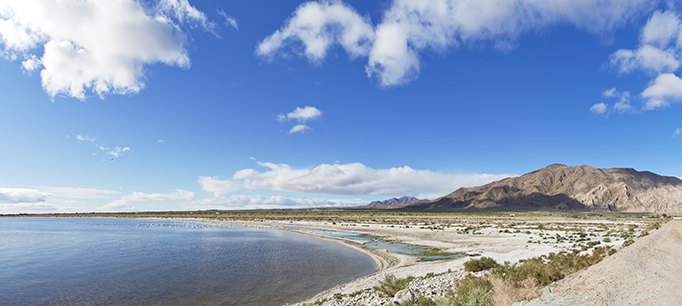
The Salton Sea—created by a break in a Colorado River irrigation canal more than a century ago and for decades dependent on irrigation runoff for sustenance—has a water problem. The already-shrinking desert lake used to receive a temporary water supply as part of a Colorado River water trading agreement that sent some irrigation water to Southern California cities. But this temporary supply was cut off at the end of 2017, which has worsened environmental and health problems caused by the sea’s declining water levels.

We talked to Kurt Schwabe—a professor at UC Riverside and an adjunct fellow of the PPIC Water Policy Center—about possible solutions. Schwabe helped organize a recent symposium on the sea that explored impacts on local communities, new research, and policy solutions.

PPIC: Why does the Salton Sea need more water right now?

Kurt Schwabe: In 2003 the State Water Board allocated water to temporarily manage the dust and ecosystem problems associated with the shrinking sea. The board set a deadline of 15 years for the state and the parties in the water trading agreement to develop a plan to address these impacts. Although the state is behind in implementing solutions, the water allocation cutoff wasn’t postponed, and now the sea is shrinking at a faster pace. The increase in dust has a direct impact on respiratory illnesses and life expectancy in the region, which raises equity issues.

Another problem is that water salinity is increasing as the sea shrinks. Time is running out for the wildlife the sea supports. As explained by researchers at the symposium, fish populations have crashed and won’t recover, thereby resulting in the loss of birds that depend on the fish. We may see new populations of birds that eat brine flies, yet without an effective management plan those birds will last only about a decade until the sea becomes too salty even for brine flies. In a nutshell, the ecosystem doesn’t have 10 years for us to find a solution. More water and less saline water―similar to the water allocation provided from 2003 to 2017―would slow the decline and buy the state time to further develop or implement solutions.

So it’s time to come up with quick and cost-effective ways to mitigate the problems. Recent passage of Proposition 68 will provide around $200 million to support construction costs in the state’s 10-year plan, but this plan is a short-term and imperfect fix. There’s growing interest in finding ways to import water from elsewhere―but that could take a decade or so to implement, is extremely costly, and does not address the worsening public health and environmental impacts happening now. An obvious near-term solution would be to extend the allocation of water to the sea until the actual rollout of the management plan. It’s a reasonable and quick fix: the conveyance to move water is already in place, it’s a tried and true solution, and it’s very cost-effective.

PPIC: What role could a water market play in managing the sea’s problems?

KS: Water markets could be a longer-term fix to replace the temporary water allocation, and would allow growers to make choices about how to best get needed water to the sea. A market would let farmers choose how best to free up that water—either by installing more efficient irrigation, shifting to less water-needy crops, fallowing land, or some combination of these. From a technical standpoint, a water market could be implemented almost immediately.

PPIC: What are the key stumbling blocks to getting more water to the sea quickly?

KS: The stumbling blocks are mostly political. Water transfer schemes have been used in the region for more than 20 years and typically involve Southern California municipal water agencies leasing water from irrigation districts in Imperial County. This isn’t to say that getting such a fix approved is an easy task, since the politics surrounding California water are notoriously challenging. Yet I would argue that the dire and worsening human health consequences being borne every day by local communities near the sea justify urgent action.

Governor’s Budget Banks on Voters Passing Water Bond

Governor Brown’s proposed budget―the last of his tenure―highlights his priorities for the state. For water, the proposal includes new funding to address some pressing public safety and environmental health issues, including improving drinking water quality in low-income communities, flood protection, groundwater management, and air and water quality at the Salton Sea.

Carrying out this proposal will depend not only on passing the budget, but also on getting additional approvals from California voters and the legislature for some of the needed funds.

To pay for most of the new initiatives, the governor is banking on California voters approving a $4 billion parks and water bond (SB 5) that will be on the ballot in June. More than $400 million in proposed spending on water for 2018–19 is contingent on SB 5, including safe drinking water projects ($63 million), flood management ($99 million), groundwater sustainability ($146 million), and restoration of the Salton Sea ($30 million).

To improve water quality in impoverished communities, the budget proposes using $4.7 million of general fund dollars to administer a new program to cover the ongoing costs of providing safe water. But the governor is counting on the legislature to approve a funding stream for the program itself—on the order of $100 million annually. One current measure (SB 623) would do this by assessing fees on agricultural chemicals and water bills. Or the governor may propose a similar measure as a trailer bill to the budget. Like any new tax, this kind of fiscal measure requires approval by at least two-thirds of both houses, which can be a significant hurdle. To date, water agencies have opposed this measure.

The budget proposal’s heavy reliance on bonds to pay for water projects continues a tradition that voters have supported over the past two decades. Since 2000, seven state general obligation bonds—voter-approved debt reimbursed with general fund taxes—have provided roughly $22 billion for water projects. State agencies are still awarding funds from Proposition 1—a $7.5 billion bond approved in November 2014. Bond funds have generally gone to “fiscal orphans”—areas of public and environmental health that do not have adequate alternative sources of funding. But bonds have not created a reliable way to fund ongoing needs.

The current proposal to create a steady stream of funding for the costs of safe drinking water programs is one way to break from this tradition. But it can also be a more difficult path. Setting up long-term funding streams, such as new taxes and fees, will require going beyond bonds. Leadership at the state and local levels are needed to pave the way.

Majority Opposition to Drilling Includes Coastal Republicans

In yet another sign that the shifting federal policy landscape is at odds with California public opinion, the Trump administration is proposing new offshore oil and gas drilling across all of the nation’s coastal waters. The five-year leasing plan includes areas previously off limits to oil and gas exploration since the 1980s. It proposes to open up 90% of the nation’s offshore reserves through new federal leases. California’s governor, lieutenant governor, attorney general, and US senators—quick to voice their opposition to this proposal—are aligned with most Californians’ views on offshore oil drilling.

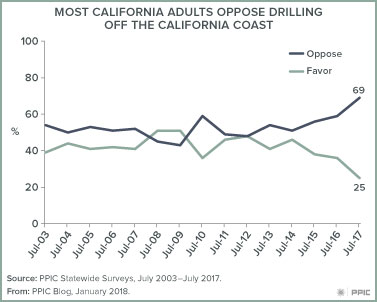
The PPIC Statewide Survey has asked the question, “Do you favor or oppose allowing more oil drilling off the California coast?” every July since 2003. In the 2017 PPIC survey, a record low 25% of California adults favored more oil drilling off the California coast while a record high 69% opposed it. What’s most remarkable is the agreement over time on the topic of offshore oil drilling. Since the early 2000s, a slim majority has been in favor of drilling only twice (51% in 2008 and 2009); in most years a majority has opposed it. Moreover, public consensus on this topic has grown. Since July 2012, support for more oil drilling has dropped by 23 points (48% to 25%) while opposition has grown by 21 points (48% to 69%).
In the 2017 PPIC Survey, a surprising level of agreement on the topic occurred across all major demographic categories of California residents. Majorities were opposed across age, education, gender, income, and racial/ethnic groups. Strong majorities across the state’s major regions opposed more drilling. That includes coastal Californians (23% favor, 72% oppose) and inland Californians (29% favor, 64% oppose) alike.

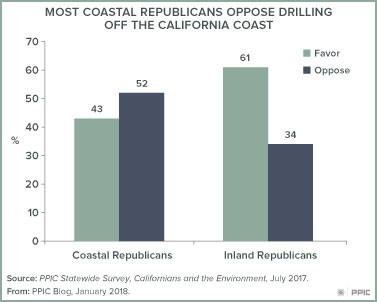
It is often said that the Trump administration is “playing to its base” in a polarized environment by proposing policies that are clearly at odds with Californians’ views. However, we found in the 2017 survey that majorities of conservatives, moderates, and liberals alike (55%, 71%, 83%, respectively) opposed more oil drilling off the coast. Democrats (14% favor, 81% opposed) and independents (30% favor, 68% opposed) were strongly opposed, while Republicans were divided (50% favor, 45% oppose). However, majorities of coastal Republicans joined with other regional and political groups in opposing more offshore oil drilling.
What’s behind the solid public opposition to more offshore oil drilling in California? In the 2017 PPIC Survey, 73% of California adults said that the condition of the ocean and beaches was very important to the economy and quality of life for California’s future. We found that those who held these views—and they were widely held across political, demographic, and regional groups—were overwhelmingly opposed to more offshore oil drilling.

Stay tuned as the PPIC Statewide Survey monitors this topic and other issues—such as the Affordable Care Act, climate change and energy, federal tax reform, marijuana legalization, and immigration—as changing federal policies may have big effects on California. We are planning for an interesting and important year for PPIC polling in 2018!

Video: Californians and Climate Change

When it comes to climate change policy, California and the federal government are on distinctly different paths. PPIC’s annual Californians and the Environment survey finds that there is a broad consensus in favor of the direction chosen by the state.

David Kordus of the PPIC survey team presented the survey to a Sacramento audience last week. Among the key findings he described:

  • Impact of global warming: A majority of Californians (66%) think global warming is already having an effect, and most think warming is a very serious threat to California’s future economy and quality of life.
  • Goals of state climate policies: A strong majority (72%) favor the law that requires the state to reduce greenhouse gas emissions to 40 percent below 1990 levels by the year 2030. A similar majority favor proposed legislation that would require 100% of electricity to come from renewable sources by 2045.
  • Economic effects: Just 22% of Californians think the state’s actions to address global warming will result in fewer jobs. But many do expect to pay a price: 54% expect to pay more for gas.
  • Leadership: Most state residents say it’s very important that California act as a world leader in the fight against climate change, and 71% oppose President Trump’s withdrawal from the Paris climate accord. Californians give the president and Congress low ratings for their handling of environmental issues—22% and 26%, respectively. Approval ratings are much higher for Governor Brown and the state legislature—51% for each. State leaders’ ratings on environmental issues have risen sharply since the governor took office in 2011.
Learn more

Read the full survey, PPIC Statewide Survey: Californians and the Environment
Find out more about the PPIC Statewide Survey

Remaking the Salton Sea

The Salton Sea—California’s largest lake—faces an environmental crisis. The already-shrinking desert lake will receive less water starting next year, which will accelerate the exposure of toxic dust along its shore, increase its already high salinity, and reduce a food source and habitat for hundreds of bird species that rely on the lake.

The sea, which was created by a break in a Colorado River irrigation canal in the 1900s, for decades relied on irrigation runoff from local farms for sustenance. In recent years, the sea received a temporary water source arranged as part of a Colorado River water trading agreement that is sending some irrigation water to cities on the Southern California coast. But these temporary flows are slated to end in January 2018, after which inflows to the lake will decline.

Various proposals to restore the sea over the years were deemed too costly (both in dollars and water). Now, a recently released 10-year plan by the state proposes to address both dust and habitat problems for a price tag of $383 million—down from earlier, longer term restoration plans that were projected to cost as much as $9 billion. The plan will include farm runoff to the sea through a new canal and new bird habitat areas.

We talked to two experts who have a long involvement in trying to resolve this complex water challenge: Fran Spivy-Weber, who as former vice chair of the State Water Resources Control Board was involved in multiple programs to address the sea’s problems, and Lester Snow, who has worked on the sea for more than a decade in his various capacities in the state’s water agencies and most recently on behalf of the Water Foundation. Both are members of the PPIC Water Policy Center’s advisory council.

“For so long, nothing was done. Now there’s a realistic plan that can help guide expenditures,” Spivy-Weber said. “It’s not a gold-plated plan. The state is trying to create something that does the job as cost effectively as possible.”

Dust has been “a sleeping giant of a problem that brings serious public health risks,” Snow said. The region has some of the highest asthma-hospitalization rates in the state, and dust from the sea has worsened already bad air quality. “I believe the lake’s dust problem is now getting the attention it needs, with a number of legislators now focusing on it.”

The plan is to build thousands of acres of shallow ponds to cover the dust-prone exposed shore; these will double as wildlife habitat. In other areas, hillocks will be built to stop blowing dust—an approach that has worked at Owens Lake, which dried up from overuse after its source was diverted to Los Angeles.

Because California has lost nearly all of its riparian and wetland habitat over the past century, the Salton Sea is now a critically important stop for birds migrating on the Pacific Flyway. “Many species of birds adopted the sea as a critical part of their migration path, so maintaining its habitat functions is important,” Snow said. More than 400 species rely on the lake, some of them endangered.

The state plan has a 10-year scope, which Spivy-Weber noted will make it more adaptable to changing conditions. “If you tried to do a long-range plan you’d probably have to change it at 10 years anyway,” she said. “Let’s get started and show some real progress, and start to think about how to address things like how quickly the sea is receding, how the cost of water is changing, and what we want to do about developing the large geothermal resources in the region.”

Spivy-Weber said the plan’s success depends on sustained interest from Sacramento. “We’ll need the next administration to be as interested and as flexible as this one has been in implementing plans and appropriating money. It’s also incredibly important that the legislature makes the Salton Sea as a priority and ensures that some funds go into projects for the sea every year.”

The multi-state commitment to improve management of the Colorado River brings momentum to the effort. Arresting the sea’s decline is tied to an agreement on sharing the river’s over-allocated waters. “We need to bring rational water management to the Colorado River, and live within our means,” Snow said. “The Salton Sea is a linchpin to our sustainable management of this important resource.”

Learn more

Read recommendations from the state’s Salton Sea Task Force
Read California’s Water: The Colorado River (from the California’s Water briefing kit, October 2016)

Uncertain Future for Cap-and-Trade

To date, California’s actions to combat climate change have been funded mostly through its cap-and-trade program, which allows the state to collect funds from greenhouse gas emitting sources. California was the first state to institute a cap-and-trade program. To date it has collected more than $4 billion in auctions of permits to companies and significantly reduced greenhouse gas emissions through the program. But the state program has been challenged in the courts, and its statutory authority is set to expire in 2020. At least in part due to the program’s uncertain future, there has been a drastically reduced collection of revenues this year.

The program is an interesting blend of regulation and free-market practices. The Air Resources Board—the agency in charge of the program—sets a cap on state’s greenhouse gas emissions and allocates emission permits for each company that releases them. Usually the permitted amount of emissions is lower than the company’s current level of emissions. To make up the difference, companies have the option to buy more permits from the state or from other companies that can reduce their emissions at lower cost. These permits, both private and public, are auctioned quarterly in a public online market. This market-based mechanism enables the state to promote technological innovation and brings flexibility to the effort to reduce emissions.

The funds collected also serve to pay for mitigation and adaptation programs. Under the current law, 60 percent of cap-and-trade proceeds are continuously appropriated to public transit, affordable housing, sustainable communities, and high-speed rail. The remaining funds are appropriated on a one-time basis each year to programs for disadvantaged communities, clean transportation and the environment. As of this September nearly $2.3 billion had been appropriated, including more than $700 million for high speed rail, almost $500 million for affordable housing and sustainable communities programs, $325 million for low carbon transportation, more than $200 million for transit programs, and the remaining for a variety of other programs including energy efficiency, agriculture, forests, and other environmental programs.

This year’s one-time investment will go to support programs that reduce greenhouse gases while benefiting disadvantaged communities, support clean transportation, and help protect ecosystems. The legislature and governor were unable to come to an agreement to spend all of the discretionary funding, and reserved an additional $462 million for future appropriations. This decision may have been motivated by uncertainties surrounding the future of the cap-and-trade program.

Virtually all allowances that were offered for sale in cap-and-trade auctions in 2015 by the Air Resources Board were sold. However, that has not been the case in 2016. The February 2016 auction saw a small amount of allowances go unsold. In the May and August 2016 auctions, the Air Resources Board sold less than 2 percent of the allowances offered. As a result, the May 2016 auction brought in only $10 million, and the August auction brought in $8 million—compared to $517 million from the February auction.

If the state does not address these uncertainties, revenues may continue to be small, forcing the state to cut spending on programs funded by cap-and-trade or look for other ways to meet its ambitious actions to address climate change.

Video: John Chiang Looks to the Future

What are the top three issues that will make a difference to California’s future? That is the first question John Chiang—state treasurer and candidate for governor—was asked by PPIC’s president and CEO, Mark Baldassare.

Chiang’s response: education, economic security and opportunity, and the environment. He elaborated on these themes in the conversation before a San Francisco audience last week.

As treasurer, Chiang is the state’s banker, whose responsibilities include selling California’s bonds, investing its money, and managing its cash. He served two terms as state controller and was also on the Board of Equalization.

Baldassare said that he would sum up Governor Brown’s philosophy about taxes and spending as “fiscal restraint” and asked Chiang to sum up his own fiscal philosophy.

“Smart financial investment,” Chiang said.

“If you have the money, you invest it in education, you invest it in safety, you invest in infrastructure, make sure that you do the core issues correctly,” he elaborated.

PPIC invited Chiang as part of PPIC’s Speaker Series on the Future, which brings thought leaders from across the political and geographic spectrum to California audiences for conversations about the state’s pressing challenges. PPIC does not endorse, support, or oppose candidates for public office.

Regulating Marijuana as a Crop

In the 20 years since marijuana was legalized for medical use in California, it has become an increasingly legitimate crop in the state’s agricultural landscape. Yet despite relatively steady progress in moving marijuana cultivation out of the shadows, important questions remain about the crop’s impact on water and the environment, and whether the state can regulate these issues successfully.

Last year the state legislature passed laws designed to regulate medical marijuana production. Should Californians vote to legalize recreational marijuana use this fall, the state will need to take an even more active role in regulating production, as argued in a recent PPIC report.

Marijuana growing has yet to move to large-scale production, but that could change with shifts in state or federal laws. Both the total amount of marijuana produced and number of cultivation sites are difficult to estimate. An often cited but uncertain estimate is that California has about 50,000 cultivation sites. A recent effort to map grows in Humboldt County suggests that most have less than 100 plants and typically cultivate less than one acre. These small grows are usually located far from improved roads and often scattered on steep slopes. Currently, only 7 percent of grows in Humboldt County are on what could be considered prime agricultural land.

The biggest environmental concerns regarding marijuana cultivation—or any agricultural commodity, for that matter—are water use, deforestation, and water pollution. Given the small size of most grows, marijuana production currently does not appear be a major driver of deforestation in California, although building access roads may cause erosion and fragment wildlife habitat.

And although it has been reported to be a thirsty plant, recent estimates of marijuana’s water use in Humboldt County—one of the state’s biggest growing areas—suggest that under 2,000 acre feet a year is used for that county’s entire crop. This is enough to irrigate about 400 acres of almonds (for scale, California currently has more than a million irrigated acres of almonds). Some water used for marijuana irrigation comes from headwater streams that are home to sensitive species, and water use tends to increase in the fall when these watersheds are most stressed. If the crop were to be widely grown in drier areas, water impact might increase. Recent proposals for large marijuana greenhouse operations in Southern California desert communities also raise questions about water supply.

State regulations have recently given regional water quality boards and county governments better tools to manage marijuana growing. The North Coast Regional Water Board has adopted regulations requiring all marijuana operations over 2,000 square feet to enroll in a program requiring monitoring and potential cleanup for water discharge and diversions at existing marijuana operations. Humboldt County has introduced one of the state’s first land use ordinances for marijuana production, which limits cultivation size based on zoning type and square footage of the parcel.

The legal market for marijuana in California is likely to expand, especially if voters approve recreational use this fall. This presents both opportunities and challenges. The state can establish rules that make access to the market contingent upon following environmentally responsible and water-smart growing practices. The challenge is that for the regulations to be meaningful, they must be enforced. State and county officials will need to monitor the location of grows and practices, and collect information that can guide future policies to effectively reduce the crop’s impact on land and water resources. Accomplishing that will require adequate time and staff.

Learn more

Read “California Streams Going to Pot from Marijuana Boom” (PPIC blog, July 23, 2015)
Visit the PPIC Water Policy Center

Photo credit: North Cascades National Park Service

Making Federal Farm Support Drought-Smart

A new initiative launched by President Obama in March seeks to better coordinate federal drought-management efforts at the basin scale, and ensure that key federal farm programs are in alignment with watershed conservation objectives developed by state and local partners. Making federal farm-program dollars work better and go farther will be key to this effort’s success.

The critical role of US Department of Agriculture (USDA) programs in managing water scarcity is often overlooked. But as we document in our recent report on the federal role in western water, USDA’s programs represent the lion’s share of federal water- and drought-related funding in the region. Given farming’s large water footprint in the West, even small changes in farm practices can have broad effects on water supplies and ecosystem health.

The agricultural water and land stewardship programs run by the Natural Resources Conservation Service (NRCS) and the Farm Service Agency are singularly important, due to their size and reach. These programs provide farmers with technical and financial support to improve water use efficiency and conserve soils, water, and wildlife habitat through on-farm investments. In addition, easement programs pay farmers to convert environmentally sensitive lands to wetland or cover crops—or to keep their lands in production rather than allow it to be developed.

Practical reforms in easement programs could yield drought-management results. The wetland recovery program pays farmers to permanently restore fields to wetlands, and the conservation reserve program pays them to convert fields to cover crops for 10–15 years. But such long-term commitments to fallow lands are unappealing to many farmers.

These programs could be more effective by allowing shorter easements and working with groups of farmers rather than individuals. For instance, paying farmers to create temporary wetlands during droughts can stretch scarce water and dollars while supporting waterbirds. Similarly, paying a group of farmers to do rotational fallowing—which means they take turns temporarily fallowing fields—can reduce overall water use while keeping farms in production. Meanwhile, other incentives could focus on farmers who commit to maintaining land in field crops rather than permanent crops—a change that could boost drought resilience in places like California, which has seen a big expansion of tree crops that are harder to fallow.

USDA programs represent the lion’s share of federal water- and drought-related funding in the West.

Another important change involves the popular NRCS subsidies to support efficiency investments on farms. The problem is that reducing the amount of water needed to grow specific crops does not usually translate into more water in the system, since newly available water is often used to increase production. And this water can be vital to downstream users and the recharge of groundwater.

To make sure these subsidies don’t conflict with basin management goals, USDA efficiency programs should seek to maintain or enhance water to meet environmental needs, and prevent harm to groundwater basins. Solutions could include expanding and improving temporary, strategic flows to meet habitat needs, and dedicating water created through efficiency programs to environmental uses or groundwater recharge.

Many of these changes could occur under existing statutory authority, and some program updates could be included in the 2019 Farm Bill. To be more effective in managing western drought, future farm bills should also put relatively more emphasis on easements and less on efficiency-oriented subsidies.

These changes would make federal support programs a better fit for many farmers, while supporting basin-level drought management goals of improving conditions for fish and wildlife, recharging groundwater, and reducing overall water use in areas grappling with water scarcity.

Learn more

Read a summary of policy recommendations from Improving the Federal Response to Western Drought (February 2016)
Read the federal action plan on improving long-term drought resilience
Watch a video on “Reforming Federal Drought Management”
Visit the PPIC Water Policy Center