Commentary: Set Water Priorities to Prepare for Drought

This commentary was published today by the San Francisco Chronicle.

There are still two months left in the rainy season, but all indications are that California’s drought is extending into a fourth year — even with the soaking Northern California is expecting this weekend.

Already, state officials are making tough choices about priorities for water use. Nowhere is this more difficult than managing water for the environment . . .

(Continue reading on sfchronicle.com.)

Drought Watch: Managing—and Learning from—Scarcity

This is part of a continuing series on the impact of the drought.

California is entering a fourth year of drought. The welcome, wet conditions that appeared earlier this winter gave way to dryness during the latter half of December. Although forecasts suggest that wet weather may return later this month, the long-term moisture deficit is unlikely to be erased, leaving the state to continue grappling with water scarcity.

As unpleasant as droughts are, they offer an opportunity to assess how well prepared California is for managing its water resources. The usual approach to learning from droughts is to conduct assessments after the drought ends. Unfortunately, once the rains come—as they certainly will—the pressure to prepare for the next drought is greatly reduced.

Recognizing the need to learn from drought while it is ongoing, PPIC will hold a half-day conference on January 12 in Sacramento. The event, supported by the California Water Foundation, will include two keynote addresses—one on current drought conditions by the state climatologist and another from a member of the Australian National Water Commission on how that country managed an unprecedented, 13-year-long drought. In addition, there will be a conversation with four members of the California State Legislature on legislative priorities for addressing droughts. Finally, panels of state and local leaders will focus on institutional responses to the current drought and proposals for policy reforms in three areas:

Managing urban and agricultural water scarcity. To date, the consequences of the latest drought have varied greatly across California’s geographical regions and economic sectors. Impacts in large urban areas have been modest, while many smaller community water systems have faced significant shortages. Agriculture has been hit particularly hard, but the intensity of the crisis has varied depending on geography and availability of groundwater. The panel will explore wide-ranging proposals to reduce the effects of future droughts on urban and agricultural sectors.

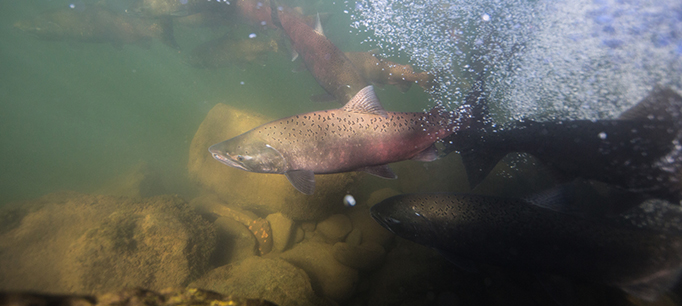
Conserving ecosystems during drought. Acute water scarcity has posed a major challenge for the state and federal agencies charged with managing ecosystems that support fish and waterfowl. Difficult decisions, including temporary reductions in environmental standards and trade-offs between species, were made “on the fly” with limited scientific information. The panel will review lessons learned during this drought and consider new approaches.

Water allocation during drought. The state’s century-old law that governs water rights played a central role in managing the drought during 2014. For the first time since 1977, the State Water Resources Control Board had to restrict surface water use by some water rights holders. In addition, the board had to make tough choices about how to manage water for the environment and how to allocate water to protect public health. The panel will examine the strengths and weaknesses of the current approach to water rights, along with alternative approaches that might reduce conflict during drought.

The conference is now fully booked, with more than 400 participants registered to attend. But you can follow the proceedings via live webcast. PPIC will also post videos of the sessions after the event.
Drought Watch: Video Seminars

This is part of a continuing series on the impact of the drought.

A series of videos available online is a great resource for water wonks and newcomers alike. Researchers and cooperative extension specialists from the University of California’s Division of Agriculture and Natural Resources, with support from the California Department of Water Resources, have put together these video seminars on drought-related water management issues. You can bone up on topics ranging from drought impacts on wildlife and groundwater basins, to the latest research on California’s climate in centuries past (and the mega-drought we experienced in medieval times), to tips for managing crops and rangeland when water is in short supply.

I contributed to the series with an overview of how water marketing and groundwater banking can help mitigate the worst economic impacts of droughts, drawing on PPIC’s ongoing research on this issue. The series is being updated regularly with new videos.

Drought Watch: Water for the Environment

This is part of a continuing series on the impact of the drought.

The ongoing drought has heightened tension over how water is allocated in California. In our recent publication on overall water use in California, we show that the environment uses the largest share—50%—of the state’s water. In contrast, agriculture uses 40% and urban users account for only 10%.

The amount going to the environment may look surprisingly high, but this number is not as straightforward as it may seem. Most of what we call “environmental” water is simply too remote for people to use—or is actually reused for irrigation, drinking water, or other human benefits. In other words, most of the water that goes to the environment does not significantly detract from the overall amount of water available for other purposes.

Here, we look more closely at how the California Department of Water Resources breaks down environmental water use (also see related figure below):

  • Managed wetlands make up state and federal wildlife refuges and account for only 4% of total environmental water use. These wetlands provide critical habitat for migratory and resident birds, along with fish, plants, and other wildlife. Some provide other important ecosystem services like flood protection.
  • Delta outflow accounts for 16% of total environmental water use. The state sets standards for how much water should flow into the Delta from the Sacramento and San Joaquin Rivers, and how much should flow out of it, into San Francisco Bay. These standards seek to meet two primary objectives: protection of native fishes listed under state and federal Endangered Species Acts, and maintenance of water quality standards within the Delta—most notably for salinity—to allow irrigation of farms in the Delta and exports of water to cities and farms elsewhere.
  • Instream flows constitute 18% of statewide environmental use. These are minimum river levels set by state regulatory agencies to meet habitat needs for fish and wildlife in waterways.
  • Rivers designated as “Wild and Scenic” use the bulk of water assigned to the environment—63%. Under federal and state laws, these rivers are protected from the construction of water resources projects—such as dams or diversions—that would adversely impact them. However, most of these rivers are in the state’s remote north coast, where there is little agricultural or urban demand for water and no economically viable way to use it elsewhere. Outside of the north coast, most water in Wild and Scenic Rivers (such as those on the west slope of the Sierra Nevada) is captured in downstream reservoirs and used again for hydropower generation, irrigation, and drinking water.

As this discussion shows, the allocation of limited water supplies is not a matter of simple tradeoffs between the environment and humans. Sometimes, water counted toward environmental use gets used again for something else. Other times, there is no practical alternative use (such as in the north coast). Understanding these basic facts is essential to resolving differences over how to manage water in California.

Drought Watch: Putting Some Myths to Rest

This commentary was first published by the Sacramento Bee on July 6, 2014. Drought Watch is a continuing series on the PPIC Blog.

As the effects of the drought worsen, two persistent water myths are complicating the search for solutions. One is that environmental regulation is causing California’s water scarcity. The other is that conservation alone can bring us into balance. Each myth has different advocates. But both hinder the development of effective policies to manage one of the state’s most important natural resources.

Let’s consider the first myth, that water shortages for farms are the result of too much water being left in streams for fish and wildlife.

Continue reading on Sacbee.com.