Californians’ Views on Taxes

As Tax Day approaches, how are Californians feeling about their state and local tax system? In our March PPIC Statewide Survey, most Californians see the system as fair. But when asked about their personal state and local tax burden, a majority of residents (56%) said they pay more than they should. A little over one-third of Californians (37%) said they pay the right amount in state and local taxes, while only 4% said they pay less than they should.

Opinions about taxes differ across political and demographic groups. Republicans are more likely than independents, and far more likely than Democrats, to feel they pay more than they should in taxes. Across racial/ethnic groups, blacks are the most likely to feel they pay more than they should in state and local taxes.

This year’s filing deadline reminds residents of their tax burden in the midst of an election year which will likely see Californians vote on state and local tax measures. In our survey, we found that Californians who feel they pay more than they should in taxes have different preferences for the size of government and the extension of Proposition 30 income tax on earnings over $250,000. Indeed, an overwhelming majority of Californians who feel they pay the right amount in taxes say they favor extending the Proposition 30 income tax increase to fund health care and education (80%). But less than half of those who feel they pay more than they should in taxes say the same (49%).

Perceived personal tax burden also appears to affect support for smaller government. Half of Californians who feel they pay more than they should say they prefer a smaller government with fewer services, compared to only a quarter of those who feel they pay the right amount in taxes (51% vs. 25%). Finally, when we asked if most Americans demand more from the government than they are willing to pay for, most Californians—whether they feel they pay too much in taxes or the right amount—said yes.

Though Tax Day reminds us of our personal tax burden every year, this annual reminder may take on added significance when Californians head to the polls this year to have their say on specific tax and spending measures.

Commentary: State Universities Are in a Budgetary Bind

This commentary was published in the New York Times on Monday, April 11, as a response to the question, “Are Public Universities Neglecting In-State Students?

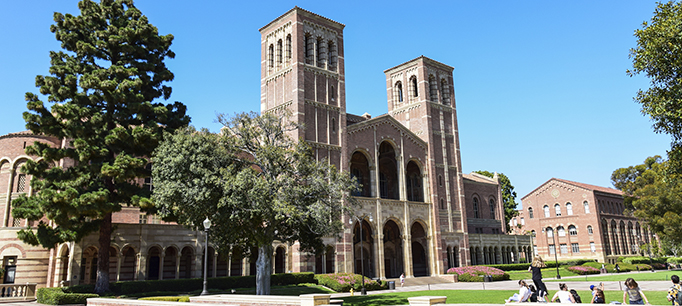
Many people don’t realize that the statesnot the federal governmentare the primary funders of public higher education in the United States. Faced with periodic budget crises, competing priorities and difficulty in raising additional revenue, almost all the states have reduced their funding for higher education over the past couple decades.

Continue reading this commentary and the full discussion on nytimes.com.

Introducing the PPIC Higher Education Center

California’s higher education system is not keeping up with the state’s changing economy. Population and education trends suggest that California will face a shortfall of 1.1 million college graduates by 2030. To close this gap and meet future workforce demand, the state needs to act now.

The good news is that higher education policy has gained new prominence in Sacramento. Concerns about affordability and efficiency have opened the way for wide-ranging change in higher education. Identifying policies and resources that improve both student success and institutional effectiveness are essential.

And that is where PPIC comes in.

Today, we are pleased to announce the establishment of the PPIC Higher Education Center. It is dedicated to advancing practical, evidence-based solutions that enhance educational opportunities for all of California’s students—improving lives and expanding economic growth across the state. The center expands on the model of independent, nonpartisan research and constructive engagement that defines all of PPIC’s work.

PPIC laid the groundwork for the center over the past decade with high-quality research on major higher education issues and productive conversations about solutions. The PPIC Higher Education Center represents a significant ramping up of investment in this critical area, and we thank the Sutton Family Fund for its core support of this effort.

The center will focus on three critical issues:

  • Expanding access. Identifying policies that increase and strengthen pathways to higher education, ensuring that all Californians have the opportunity to earn a college degree.
  • Managing finances. Helping to determine the most effective funding approaches, to keep college affordable and broaden the impact of the state’s higher education investments.
  • Improving outcomes. Promoting strategies that produce more college graduates and prepare Californians—and the state’s economy—to be successful in a changing world.

In conjunction with the launch of center, PPIC is releasing Higher Education in California, a set of seven policy briefs on the state’s most critical challenges in higher education. This briefing kit is designed to inform state leaders and to raise awareness more broadly about the important higher education issues facing California.

We invite you to read Higher Education in California and visit our new PPIC Higher Education Center online. We also invite you to stay up to date with PPIC Higher Education Center activities: ·

Photo courtesy of Public Affairs/Sacramento State.

A California Drought Report Card

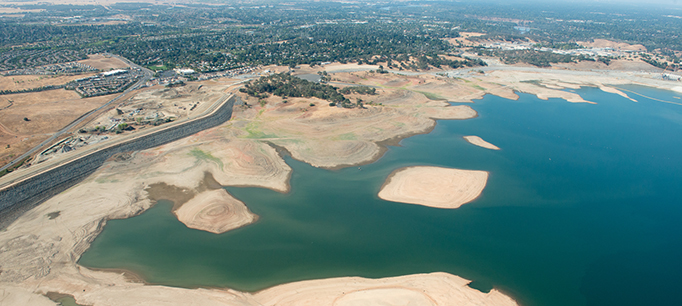
A year ago, Governor Jerry Brown issued California’s first-ever statewide water conservation mandate. Today, conditions are better: Northern California reservoirs have been filling, and the snow survey found a much-improved snowpack compared to last year. But one near-average year is not enough to recover from the driest, warmest four-year stretch on record. El Niño was not a drought-buster. In the southern half of the state, reservoirs remain low and groundwater basins even lower.

The end of the rainy season is a good time to evaluate our drought response. So, how did we do last year, and what changes could help us better manage one or more additional dry years? We graded California’s drought response for urban areas, the farming sector, rural water supply, and the environment, and found great disparities in the results.

This drought gave us a glimpse into a challenging future. Our commentary also outlines policy changes that will help us weather a few more years of drought—and more importantly, improve our ability to adapt to a hotter, drier future.

Read our commentary detailing this drought report card in the San Francisco Chronicle.

Video: Lessons on Marijuana Regulation

California may have much to learn from the first two states to legalize recreational marijuana—Washington and Colorado—if voters statewide approve legalization in November.

Patrick Murphy, coauthor of a PPIC report analyzing the experience of these states, presented its findings yesterday in Sacramento. The main takeaway: California should create a tightly regulated market—for medical and recreational uses—to control legal marijuana from “seed to sale.” The market should be flexible so that regulation can be adjusted as the state learns from experience—as both Washington and Colorado did.

Following Murphy’s presentation, regulators from Washington and Colorado and report coauthor John Carnevale, a drug policy consultant who has worked with four federal “drug czars,” talked about experiences of the two states. The panelists emphasized the need to start planning now to determine the information that would be needed for regulation because little is known about marijuana markets—the illegal one and the legal one for medical marijuana.

Taxation? Carnevale said, “It’s complicated.” Marijuana legalization involves balancing competing state goals—reducing demand among underage users and raising revenue for the state, for example. The price of legalized marijuana can have a range of effects on the illegal market: if the price of legal marijuana is low, the illegal market might disappear; a high price might help boost illegal sales; or the illegal market could continue as it is. Beyond that, taxes can be imposed at different points in production, licensing, and sales process.

“You can make this as complicated as you want in terms of the tax policy,” he said. “But, on the other hand, you have to somehow enforce that tax policy.”

In Colorado, the revenue from recreational marijuana sales is aimed at dealing with the effects of the law—for example, public health and addiction, said Lewis Koski, deputy senior director of the Colorado Department of Revenue.

Koski said that in 2014–15, the first year of legalization, the state collected $88 million in taxes for both medical and recreational marijuana. Halfway through this year, Colorado has collected almost as much.

Revenue generation was a big part of the argument in favor of legalizing marijuana in Washington, said Rick Garza, director of the Washington State Liquor and Cannabis Board. The state has no income tax and relies on “sin taxes”—tobacco, alcohol, and now cannabis—to generate revenue. Before the vote on legalization, the governor’s budget office estimated that the amount of revenue that would be collected over five years was between zero and $2 billion.

“You catch the zero part?” Garza asked. “No one else did. Everyone thought we were going to collect $2 billion.”

Washington state currently expects bring in be $1.25 billion over five years.

Flood Insurance: Why Don’t People Buy It?

The author is a member of the PPIC Water Policy Center research network.

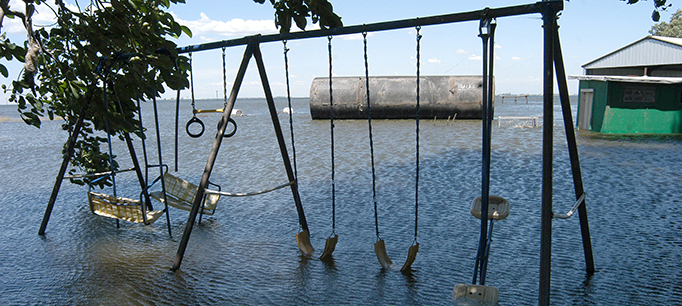
Flood damage has been increasing in the US, largely due to where we build. Climate scientists are concerned that as the climate warms, there will be more intense downpours, stronger hurricanes, and rising seas, all of which could increase flood risk. Despite this, people have been dropping flood insurance nationwide. The number of policies from the National Flood Insurance Program (NFIP)—the main provider of flood coverage in the US—has been falling since 2011, perhaps due to changes in pricing. But Californians have recently bucked the trend. The Federal Emergency Management Agency (FEMA) reports that flood insurance sales in the state are up 12 percent this winter (compared to 3 percent last fall) as residents prepared for possible El Niño flooding.

This increase in California is all the more notable since, generally speaking, most people don’t voluntarily buy disaster insurance. Low demand for flood insurance led Congress, early in the history of the NFIP, to make purchase mandatory for homes located in a FEMA-mapped 100-year floodplain that had a mortgage from a federally backed or regulated lender. Yet just half of these homes are insured, with more in coastal areas. Outside the 100-year floodplain, even where there is flood risk, few homes are insured.

This can have ripple effects in flood-prone communities. Insurance protects families against the financial impacts of substantial flood damage. Insured properties were 37 percent more likely to have been rebuilt after Hurricane Katrina. And when people rebuild, economies can come back to life. Len Shabman and I found that post-disaster aid to households is usually quite limited, making insurance the main tool for households unable to cover rebuilding expenses.

So why don’t more people buy disaster insurance? People may think floods won’t happen to them. Insurance may be too expensive, or they may believe it isn’t worth it. They may be uninformed about flood risks. People seem to insure when recent events raise awareness about the risks. My recent research shows that a federal requirement for disaster-aid recipients to purchase flood coverage explains much of this increase.

For people living in a floodplain or behind a levee, flood coverage is important well beyond El Niño. Yet past experience suggests many newly insured Californians will not keep their policies after El Niño passes. Many NFIP policies are dropped in a few years; only a third of policies are held for six years or longer. Although some of this can be explained by people moving, fading concern about floods is likely also a factor. In 1998—a year after California’s last widespread flooding—flood insurance sales were at an all-time high of nearly half a million policies. Ten years later, that number had fallen by half.

Several policy changes could encourage more at-risk households to insure. Informing residents of the likelihood of flooding, potential damage, and the limitations of disaster aid can help them make better decisions. FEMA outreach at times of increased risk, such as El Niño events or after major wildfires, can help alert homeowners to times when coverage may be warranted. Finally, a recent report from the National Research Council addressed ways to help lower premiums when insurance is too costly for low- or middle-income families in risky locations.

Learn more

Read “California’s Water: Preparing for Floods” (from California’s Water briefing kit, April 2015)
Read “A Look at 35 Years of Flood Insurance Claims” (from Resources magazine, winter 2016)
Visit the PPIC Water Policy Center

Video: Broadening California’s Exclusive Electorate

Californians who vote tend to be older, white, college educated, affluent, and homeowners. When asked to choose, these “likely voters” identify themselves as “haves” rather than “have nots.” Nonvoters tend to be younger, Latino, less likely to be college educated and less affluent than likely voters, and renters; they generally identify with the have nots.

This divide has particular significance in California, where voters make important policy decisions through the initiative process—and at a time when economic inequality is a major theme, according to Mark Baldassare, author of a new report, California’s Exclusive Electorate: Who Votes and Why It Matters. Baldassare is PPIC president, CEO, and director of the PPIC Statewide Survey. He presented an overview of his report before a Sacramento audience this week.

The report concludes that, in addition to electoral process reforms that will make voting easier, broader changes are needed to expand the electorate. Among them: citizenship drives to engage foreign-born residents, increased economic mobility, and changes in federal immigration policies.

An expert panel took up these issues in a discussion moderated by John Myers, Sacramento bureau chief of the Los Angeles Times. Myers asked if there a ’secret sauce’ to motivate people to vote.”

Mindy Romero, founder and director of the California Civic Engagement Project at UC Davis, said that there’s no single solution. But civics education is important, she said, and so is targeted outreach that recognizes the unique experiences and needs of underrepresented groups.

Matthew Harper, state assembly member, used his involvement in Junior State to illustrate the importance of nonprofit organizations in showing young people how they can affect government.

Ben Allen, state senator, noted the shrinking number of reporters in Sacramento and said that more engaged media coverage would help bring issues home to voters.

Myers pointed out the vicious cycle at work in many elections. Campaigns spend their resources targeting the relatively small pool of likely voters, who will reliably turn out to support them. A much broader group of potential voters is not engaged and—as expected—this group fails to vote.

But, Allen said, in this presidential election we could be seeing the flip side of the low-turnout election that draws only the most involved voters. “Donald Trump and Bernie Sanders are driving new people to the polls that folks have not traditionally reached out to and engaged with,” he said. This presents “a scary but exciting set of possibilities” for reaching out to new sections of the electorate.