Why the Big Drop in California’s Colorado River Water Use?

In 2019, California’s use of the Colorado River—a major water source for Southern California’s cities and farms—dropped to the lowest level in decades. We asked John Fleck—director of the University of New Mexico’s Water Resources Program and a member of the PPIC Water Policy Center research network—about the ongoing changes in California’s use of this water, and what it means going forward. He is the author, with Eric Kuhn, of the new book Science Be Dammed: How Ignoring Inconvenient Science Drained the Colorado River Basin.
photo of John Fleck

PPIC: What are the main reasons Californians are using less Colorado River water?

JOHN FLECK: The biggest reason for the recent drop is that Metropolitan Water District (MWD)—the state’s biggest urban user of the river—didn’t need to take as much water in 2019. But this decline also reflects a longer term trend. Prior to the early 2000s, MWD generally took the maximum it could from the Colorado River, usually more than a million acre-feet per year. In recent decades, it has substantially reduced its dependence on the Colorado, only taking a full supply in years of State Water Project shortage. Water conservation has been an enormous success in Southern California. There was a lot of progress in conservation during the latest drought, and even after it ended. We’re seeing a lot more effective use of water in the basin, with a growing emphasis on groundwater recharge, stormwater capture, and reuse efforts. The excellent snowpack in the Sierra in 2019 meant the agency got a good water allocation from the State Water Project, meaning it needed less from the Colorado.

The other part of this story is the conservation success in the Imperial Irrigation District (IID)—the largest user of Colorado River water in the entire basin. On-farm water conservation was part of transfer agreements with Southern California’s urban water suppliers. IID is now using 600 thousand fewer acre-feet per year than before those transfers took place. The agricultural community took cuts and was compensated for them. Farmers have adapted well: revenue has held up even as they’re irrigating less land. What we’ve seen is an increase in acreage in high-dollar crops like winter lettuce and vegetables, and a reduction in alfalfa and forage crops, which bring in less revenue per unit of water and area of land.

figure - Use of Colorado River Water Is Dropping, Especially in California

PPIC: Do you expect similar drops in coming years in California or the six other basin states?

JF: We’re going to have ups and downs—especially because MWD use of Colorado River water tends to go up when its supplies from the Sierra are low. But California has really demonstrated that it needs less Colorado River water. It’s taken awhile, but it’s been a really successful adaptation. Scarcity is the norm now in the basin, so the fact that California can succeed in using less imported water is incredibly important. It shows how we can find opportunities for more flexible problem-solving going forward.

We’re seeing similar things going on across the basin. California isn’t giving up water so others can use more. Nevada is using substantially less than they used to—their use peaked in the early 2000s and has dropped since then. Arizona’s use is down, too. And we’re seeing really flat to declining use in all the other basin states. So the notion that economic and population growth means an increase in water use just isn’t the case in the basin.

PPIC:  What does this change mean for efforts to bring the basin into balance?

JF: Because we made mistakes over a century ago in allocating more water than the river can provide, these successes are important, but not enough. We’ll need to see more reductions, especially in the lower basin states.

The next steps require renegotiating the rules that govern the basin’s water allocation to solve the basin’s problems. The Bureau of Reclamation is spending 2020 reviewing how the current rules are working, with the expectation that negotiations on new rules will begin soon after that review is complete. There will be a lot of give and take in how that will play out, and we have to let that happen. Once farmers and communities have a clear idea on how much water they will get, they’re pretty good at figuring out what steps are needed to work within those limits. Various options that might come into play include compensating farmers to use less water, additional conservation, and more expensive options like increasing the use of recycled water and building desalination plants. The negotiations will be hard, but the successes we’ve seen in California and elsewhere around the Colorado River Basin suggest that we have the tools needed to respond to the challenges to come.

Planning for a Drier Future in the Colorado River Basin

The Colorado River has experienced decades of over-allocation of its waters, making it harder to address the added challenges that climate change is bringing. The recently adopted Drought Contingency Plan (DCP) was an important step toward addressing the basin’s chronic water shortages, but more work is needed to prepare for a hotter, drier future. We talked to Doug Kenney—director of the Western Water Policy Program at the University of Colorado and a member of the PPIC Water Policy Center research network―about managing the basin for long-term water sustainability. Kenney organized a conference in June that covered these issues in depth.

Photo of Doug KenneyPPIC: Talk about the basin’s over-allocation problem.
Doug Kenney: The current problem with the river’s water budget is in the lower basin. For much of this century, California, Arizona, Nevada, and Mexico have consistently pulled about 1.2 million acre-feet more water out of Lake Mead than enters it each year. That’s basically five years of water supply for Las Vegas. You can get away with that much overuse by drawing down reservoir storage—which is what we’ve been doing—but that’s not sustainable. So we need to accelerate efforts to scale back consumption. That’s what the DCP was designed to do—it’s mandated belt tightening.

In the upper basin states it’s a very different situation—water use in Colorado, New Mexico, Utah, and Wyoming is currently at a stable and reasonable level. But future use is expected to increase, while natural inflows are declining as the region continues to warm from climate change. The upper basin states can legally develop more water supplies, but the reality is that water isn’t likely to be reliably available. There’s a disconnect between how much water the upper basin states were promised and how much actually exists.

PPIC: What is needed to achieve sustainable management in the basin?

DK: The primary emphasis has to be on using less water. Given that most water in the basin is used for agriculture, that sector has the greatest potential to save water. Paying farmers to fallow some fields is probably the most appealing option. However, there are legal, financial, and cultural issues to deal with.

In most of the west, efforts to incentivize agricultural demand management have been pretty primitive—with the exception of Southern California, which has had major success trimming farm water use in the Imperial and Palo Verde water districts. Those programs aren’t perfect, but they are happening at a sufficiently large scale to make a significant contribution to addressing the regional water budget problem. In most other places in the basin, these types of programs are much smaller, and there’s a lot of skepticism about scaling these efforts up. The politics are very delicate, as these mechanisms would reallocate water from farms to cities. But you can’t ignore the math or the economics. Some sort of agricultural demand management will have to be a core element of any sustainable water use plan in the basin. The challenge is to do it in a way that is fair and protects the socioeconomic fabric of rural areas.

PPIC: What’s next for the basin’s water planning?

DK: The next steps are big ones. The operation of Powell and Mead is governed by interim guidelines that expire after 2026. Some key arrangements between Mexico and the US also expire then. The states are required to begin negotiating new rules to replace the expiring arrangements no later than 2020. This figures to be a really complex and very politically difficult negotiation, so there’s real interest in setting up the right process to get it done. That’s where many of us are focused right now—identifying the process that gives the negotiations the best chance for success.

PPIC: The DCP didn’t address ecological and health problems at California’s troubled Salton Sea. What’s next for the sea?

DK: At this point it’s about figuring out how to pay for what everyone knows has to be done. I’m convinced we’ve reached a turning point on the Salton Sea. There’s momentum within and outside of California to find a solution. It was disappointing that the DCP didn’t address the issues, but it wasn’t due to a lack of concern or effort—essentially, folks ran out of time. But I hear a consistent message from every sector and state: we need a solution for the sea. There’s an old maxim in this basin: anything is possible if all seven states can agree to it. I’m hopeful that this can apply to the Salton Sea crisis

What Does the Colorado River Drought Plan Mean for California?

A much-anticipated plan to address chronic water shortages in the Colorado River Basin was recently signed into law by President Trump. This drought contingency plan (DCP) aims to slow the long-term decline in Lake Mead’s water levels caused by over-allocation of Colorado River water and 19 years of drought, as well as address future water shortages in the basin.

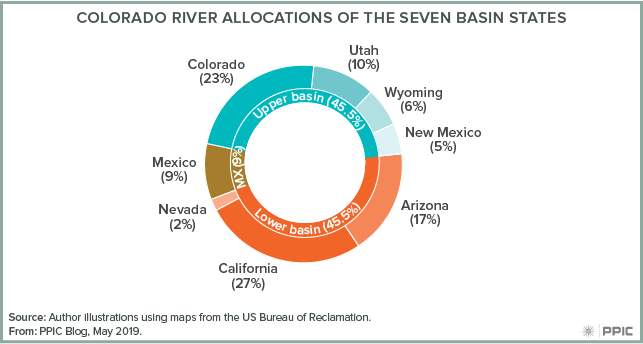
The DCP is the fruit of a decade of negotiations among the seven basin states to resolve the over-allocation problem through cuts and water storage. (Mexico receives water from the river but is not part of this plan.) California has the largest share of the Colorado, with senior rights to more than a quarter of the river’s average annual flow.

figure - Colorado River Allocations of the Seven Basin States

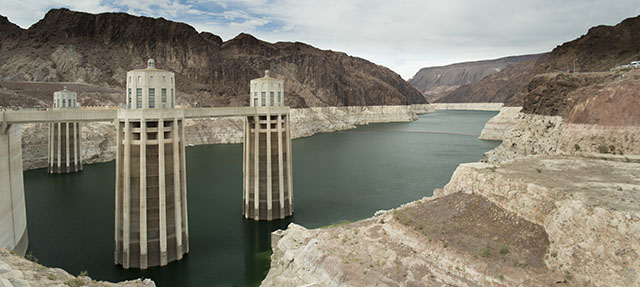
Lake Mead is a water source for 600,000 acres of farmland and 19 million people in Southern California. California agencies can also store up to 250,000 acre-feet of water in Lake Mead.

Without the DCP, Lake Mead’s water level could drop too low to allow releases from Hoover Dam. As the lake nears this threshold, senior water right-holders in California might be tempted to withdraw their water before it becomes inaccessible. While such a move would be permissible, it would accelerate the drop in the lake level and affect future deliveries for junior water right-holders in the other lower-basin states.

The DCP eliminates this concern and delivers an orderly and mutually agreed upon method to manage shortages until 2026. It provides assurance against curtailments for water stored behind the dam. This is especially important for the Southern California water agencies, whose ability to store water in Lake Mead is crucial for managing seasonal demands.

Some significant challenges must still be addressed, however. The Imperial Irrigation District, the largest Colorado River water user, opted out of the plan due to a dispute over funding to restore the shrinking Salton Sea. The district also filed a lawsuit that calls for the DCP to be suspended until an environmental review of the plan is completed.

The lawsuit alleges that the Metropolitan Water District (MWD), which would contribute most of the water required to fulfill California’s obligations under the DCP in times of system-wide shortage, unlawfully approved the DCP. IID claims that MWD did not consider the “sources of water that would be necessary for [it] to fulfill its commitment and the environmental effects associated with obtaining water for those sources.” The outcome of this lawsuit is uncertain.

Currently, the Colorado supplies about a third of all water used in Southern California’s urban areas. The region’s water agencies are taking steps to develop more local supplies and increase water efficiency to help them meet water demand if DCP cuts are triggered during a future water shortage.

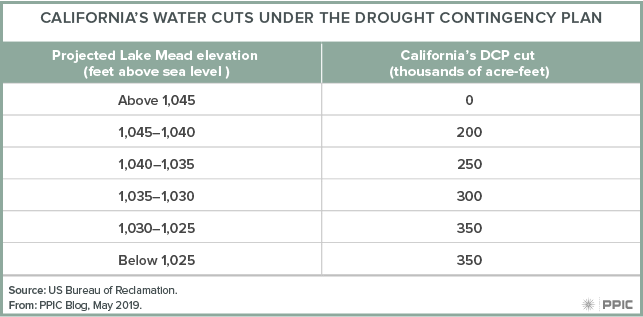
The plan won’t cause immediate water cuts. This year’s wet winter means that Lake Mead’s elevation, currently 1,090 feet above sea level, may remain above the 1,045-foot threshold at which the mandate is triggered for California. But the basin states now have a plan in place to address the next dry spell.

table - California’s Water Cuts Under the Drought Contingency Plan

Colorado Drought Deal Close, But Not Done

Last week Arizona and California missed a deadline to submit final plans for how they will manage water shortages in the Colorado River Basin over the coming decades to prevent Lake Mead levels from dropping so low that water cannot be released from the dam. The other five states that share the river’s waters have already submitted their drought contingency plans. We talked to John Fleck—director of the University of New Mexico’s Water Resources Program and a member of the PPIC Water Policy Center research network—about the situation.

photo of John Fleck

PPIC: What is the drought contingency plan intended to do?

John Fleck: The key problem on the Colorado is that the basin’s water is over-allocated. It was really wet in 1920 when the allocation rules for the river were developed. So the rules allocated extremely large water shares to the “lower basin states”—California, Arizona, and Nevada—that hydrologic reality can’t support. We’ve been struggling ever since to come to terms with that reality.

The drought contingency plan is a voluntary program involving the lower basin states to decrease their use of the river’s water in an attempt to reduce the over-allocation problem. There’s an overall agreement describing the conditions that would require each state to use less water. Then each state has to have its own separate internal set of agreements on how to share those cuts.

There are a couple of different ways you can approach this over-allocation problem. The federal government can just reduce everyone’s allocation. Or you can have the water users themselves acknowledge the problem and agree to a voluntary, collaborative approach. The latter approach is far more likely to succeed, so I definitely think this was the better way to go.

Even though the lower basin states are close to having final plans, federal officials have said that “close isn’t done.” The states now have until March 4 to submit their final plans. No one wants to have an imposed federal solution—and I don’t think we’ll end up there—but it’d be better than doing nothing. The threat alone might push people to finish up.

PPIC: What are some important steps the states have agreed to?

JF: The agreements reduce water use in the lower basin by 1.5 million acre-feet per year; it’s a very big deal. Arizona has now agreed to a plan that could eventually reduce the Central Arizona Project’s flow of Colorado River water into the valleys of Tucson and Phoenix by nearly half of current levels. They did this voluntarily, without any litigation. That’s real progress. And Imperial Irrigation District (IID)—the biggest agricultural user of California’s allocation of Colorado River water—has already given up 500,000 acre-feet a year, which is a huge amount of water.

One of the complications of reductions in Colorado River water is the drying of the Salton Sea, which relies principally on runoff from farms in IID. California promised to mitigate the public health and environmental problems associated with the shrinking of the sea, particularly the air quality impact on poor communities. Solving this problem is a work in progress made more challenging by reductions in Colorado River water.

PPIC: Do you think the states’ plans go far enough, given the warming climate?

JF: We can’t be sure, because we don’t know how much impact climate change will have, on what time scales. Since we don’t really know where the bottom is for the Colorado River, hydrologically speaking, we don’t how far we’re going to have to go with water cutbacks in the long run. Drought planning is a really important step to prepare for a climate-challenged future—it creates a framework for deeper cuts.

It’s important to see the drought contingency planning as the latest development in the evolution of long-term management of the river’s waters. There are a bunch of unresolved problems—both hydrologic and institutional―and a lot of work remains to be done, but we can’t solve all these problems at once. Though drought planning is an incredibly important step, it’s certainly not the last one.

Fleck is a co-author (with Eric Kuhn) of the upcoming book Science Be Dammed: How Ignoring Inconvenient Science Drained the Colorado River, to be published this fall by the University of Arizona Press.

New Water Official’s Views on Salton Sea, Other Priorities

California’s State Water Board has a broad mandate to oversee our complex water system and balance all beneficial uses of water. Joaquin Esquivel―the newest member of the board and a member of the PPIC Water Policy Center’s advisory council―brings broad experience working on state and federal water issues, and personal and professional experience with the challenges of the Salton Sea. We talked with him about his priorities for California’s water issues.

PPIC: You’ll be engaged with the board’s effort to reduce environmental and public health problems at the Salton Sea. Why is this issue important?

JOAQUIN ESQUIVEL: The health and viability of the sea is important in many ways. It’s important to the health of our families and communities throughout the Imperial and Coachella Valleys. Many people who live there already struggle with poor environmental quality. It’s critical to the Pacific Flyway and the more than 400 bird species that use the sea. It’s key to the economies of surrounding communities, which could take an estimated $29–70 billion hit over the next few decades if the sea declines unchecked. And it’s important to California’s water future.

People sometimes forget how much water California gets from the Colorado River, which was significant to Southern California’s resiliency during the recent drought. There is a deep and abiding connection between the sea’s success and our success at better managing the Colorado River, which itself has been stressed by drought.

The issues facing the sea are not unlike other big challenges we face in many other watersheds in California: overlapping public health, economic, and ecosystem needs; limited resources; legacy challenges; and insufficient funding for the scope of work that needs to be undertaken.

Resolving the Salton Sea’s issues requires a tremendous amount of cooperation. The good news is that we’re at the right moment for decisive action. The California Natural Resources Agency has developed a common vision and plan with stakeholders on projects we need to undertake immediately and over the next 10 years.

PPIC: What are you most optimistic about regarding California’s water issues? And what are you most concerned about?

JE: I’m excited by the fact that the drought really focused Californians on water and brought forward communities, voices, and leaders with a passion to break through the old fights and work together to tackle the state’s most difficult water challenges. The drought has created incredible opportunities for collaboration. For example, we’re seeing collaborative efforts in the Central Valley to find solutions to the lack of safe drinking water in some of our poorest and most disadvantaged communities. There’s growing understanding of the importance of expanding and maintaining watershed health, along with growing partnerships between farmers—our greatest assets as stewards of our land—academia, and NGOs to rebuild and strengthen the resilience of our ecosystems. I’m excited that there’s a new generation of engagement on water policy, and it couldn’t come at a better time.

What keeps me up at night is the huge amount of work that needs to be done to resolve our greatest challenges and always feeling that we don’t have the dollars we need to undertake it all. Inadequate funding is always going to be a challenge, so we need to figure out how to better align local, state, and federal dollars, policies, and priorities. It’s really important that we solve the problem of underfunding our water systems and the ecosystems that underpin them.

PPIC: Talk about the governor’s new joint project with the governor of Maryland to develop a “water policy learning network” for other governors.

JE: The National Governors Association staff had been hearing from its members that states were interested in learning about managing water resources, and they approached Governor Brown and Governor Larry Hogan about co-chairing an initiative. I was fortunate to have been tapped as the advisory group co-chair, along with Maryland’s secretary of the environment. The first of two Water Policy Institutes was held earlier this week in Maryland. The second will be held next year in California. The initiative is an opportunity for states to share and discuss best practices in the management of water resources. While it will be useful to share the ways in which California has been a leader on conservation, recycling, and integrated water management, this is also an opportunity for us to learn from other states. We’re right to feel proud of the leadership California has shown on water, but we still have a long way to go in many respects. This initiative is the ideal opportunity to learn from the wealth of experience in other states.

Learn more

Read “Remaking the Salton Sea” (PPIC Blog, April 6, 2017)
Read California’s Water: The Colorado River (from the California’s Water briefing kit, October 2016)
Visit the PPIC Water Policy Center