Video: How Californians View National Issues

With the nation focused on a range of contentious issues, the September PPIC Statewide Survey provides a California perspective. Dean Bonner, associate survey director, shared the key findings at a Sacramento briefing last week.

Among them:

  • A record-high share of Californians have a favorable opinion of the Affordable Care Act, and most want Republicans to work with Democrats to improve the law. While most Californians say it is the federal government’s responsibility to make sure that all Americans have health coverage, just a third favor a single-payer, government-run national health insurance system.
  • Three-fourths of Californians—also a PPIC record high—view immigrants as a benefit rather than a burden. There is broad and bipartisan support for protections provided by DACA, which shields from deportation some undocumented immigrants brought to the US as children and allows them to get a work permit if they pass a background check.
  • Half of Californians say they are very concerned about the possibility of North Korea having a nuclear missile that could reach the state.
  • Two-thirds of Californians view possible Russian interference in the 2016 as a serious issue.
  • Half of Californians say race relations have gotten worse in the United States over the last year. They are less pessimistic when it comes to race relations in the state.

Video: Pessimism about Nation’s Direction

Californians have grown more pessimistic about the direction of the nation and the US economy since the beginning of the year, the May PPIC Statewide Survey shows. Underscoring that sentiment: just 27 percent of residents approve of the way President Trump is doing his job. Only 26 percent approve of Congress—a 10 point decline from March.

Researcher David Kordus presented these and other key findings at a survey briefing in Sacramento last week. On other federal issues, the survey found that most Californians disapprove of the House health care bill, and half expect negative effects from increased immigration enforcement.

Californians are feeling better about the state of their state by some measures: a solid majority favor Governor Brown’s budget plan, and fewer adults than in past years see the state budget situation as a big problem. But the state faces important challenges. Housing is one of them, with 59 percent of all adults saying affordability is a big problem in their part of the state. And solid majorities of Californians say the gap between rich and poor is getting larger. Majorities support state action to address these issues.

Learn more

Read the PPIC Statewide Survey: Californians and Their Government
Find out more about the PPIC Statewide Survey

Video: Tom Steyer on the Issues

Tom Steyer—business leader, philanthropist, and possible Democratic candidate for governor—has invested his money and time in activism since leaving the private sector. Moving beyond his initial environmental advocacy, Steyer supported candidates and causes across the state and nation in both the 2014 and 2016 elections.

He sat down to talk to Mark Baldassare, PPIC president and CEO, about his views on policies that will affect the future of California. Steyer would not say whether or not he’s running for governor. But he had a lot to say about the current political climate.

Asked to name three issues that will affect California’s future, Steyer listed priorities that he said are inextricably linked and cut across traditional policy areas:

  • Addressing income inequality: The state has rebounded economically since 2008, Steyer noted, but it is the top 1% of residents who have benefited. While income inequality is a critical issue across the nation, its impact is heightened in California, Steyer said, affecting housing, transportation, education, and incarceration.
  • Investing in our state to rebuild the way we live together: California needs to create a more sustainable way of living that preserves the beauty of the state. “We’ve build the state around the internal combustion engine,” Steyer said. “We have to rebuild the way we live.”
  • Protecting and strengthening our democracy: “California citizens are basically losing a silent fight with special interests,” he said, noting his support for ballot measures that were “direct contests” with special interests, including oil and tobacco companies. “I think the threat to democracy that we’re seeing coming out of Washington, DC, is as profound as I’ve seen in my lifetime.”

Child Poverty and California’s High Cost of Living

A quarter of young children in California live in poverty, yet the local variation in poverty rates is dramatic. Our recent report shows, for example, that the areas with the lowest and highest rates of child poverty in the state are less than 20 miles apart: child poverty is 4% in Redondo Beach, Manhattan Beach, and Hermosa Beach in Los Angeles County and 68% near southeastern LA City. (Data is for 2011–2014 combined, the most recent available).

Families adapt to California’s high cost of living in ways that vary across the state. The interactive map that accompanies our report allows stakeholders to investigate how their local area (defined to have a population of roughly 100,000) stacks up relative to other areas, their region, and the state as a whole.

For example, Selma, Kerman, and Coalinga make up a local area just west and south of Fresno. The area has a relatively high poverty rate of 30% among young children. Most of these children’s parents have limited education: 55% lack a high school degree compared with a statewide average of 37%. But for the most part they are working full-time (62% vs. 50% statewide). They also report the lowest annual housing costs ($5,888) of any area in the state. (We standardized this cost to represent a family of four.) This means they have a relatively low housing burden. Specifically, 18% of families living in poverty in this area use over half of their family resources to pay for housing, compared to the statewide average of 32%.

At the same time, 52% of poor children in this area live in overcrowded housing—about the same as in the state as a whole (55%) and higher than the regional average in the Central Valley (46%). Also, the share of working parents in these poor families who commute 60 minutes or more each way is relatively high at 14%, compared with 10% in the state as a whole.

In sum, the picture that emerges shows families of young children in poverty in this local area tend to have low housing costs relative to other parts of the state. Nevertheless, the cost of housing in inland California is still high compared to the rest of the country, and the data suggest poor families with young children in Selma, Kerman, and Coalinga are indeed making adaptations to cope with these costs—such as living in more crowded conditions and, in some cases, commuting long distances.

Child poverty is a difficult problem, both because it is so high in California and because the family circumstances that poor children experience can differ so much. Investigating varying patterns of housing and commuting across the state can help suggest how policies aimed at reducing the incidence—or severity—of poverty can be tailored to meet local and regional needs.

Video: Ending the Housing Crisis

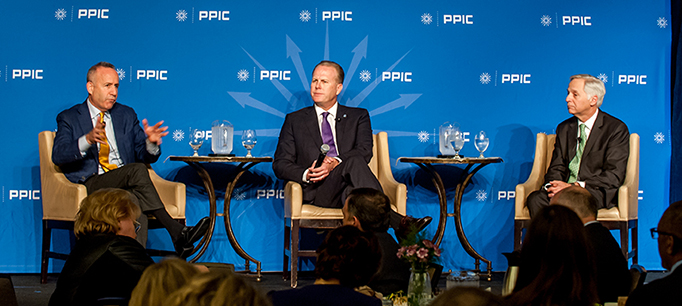
Sacramento’s mayor and San Diego’s mayor have different political perspectives, clearly evident in PPIC’s “Building California’s Future” event last week. Their views diverged on issues from high-speed rail to the voting requirements for passage of local transportation tax measures. But the mayors reached some consensus on one issue: the need for more housing and the difficulty of building the political will to end the state’s housing crisis.

“I don’t see the political coalition around housing that I see around transportation,” said Darrell Steinberg, Sacramento’s Democratic mayor.

“I could not agree more,” said Kevin Faulconer, San Diego’s Republican mayor. “It has not gotten the attention it should.”

Asked the single biggest action the state can take this year to help with our housing crisis, both mentioned regulatory reform. Steinberg said robust reform needs to be combined with a source of funding for affordable housing. He said he hoped the state can “combine these two prongs to make it easier to site housing and at the same time provide real funding to be able to subsidize and build affordable housing.”

Faulconer said reform of the 40-year-old California Environmental Quality Act (CEQA) is essential. Those who share his views contend that CEQA lawsuits have been used to slow or stop housing developments, even those deemed environmentally friendly. Faulconer said the business and housing climate are important in attracting businesses to California communities.

“We have to have really clear rules of the road, we have to follow those rules of the road,” he said. “We have to get people through the process in a defined amount of time because time is money.”

Housing was also an important part of the discussion in the panel that followed the mayors’ conversation at the PPIC event. Participants included two county supervisors, Kristin Olsen of Stanislaus County and Joe Simitian of Santa Clara County, as well as Lucy Dunn, president and CEO, Orange County Business Council. John Diaz, editorial page editor of the San Francisco Chronicle moderated.

Video: Legislative Leaders Look Ahead

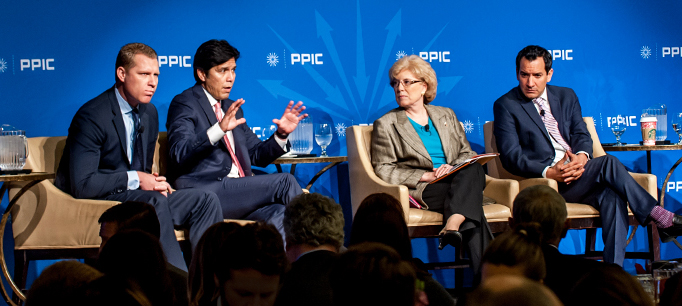
Despite their political differences, California’s legislative leaders have similar views of the state’s most pressing challenges. In a conversation facilitated by PPIC this week in Sacramento, the two top legislators from both major parties provided a preview of the issues they expect to tackle this session. With the impact of federal policy changes still unclear, the legislative leaders focused on longstanding challenges.

Asked to list the top issues the legislature and governor need to work on this session, Anthony Rendon, the Democratic speaker of the state assembly, named housing and transportation—topics he heard about repeatedly as he campaigned around the state. He said he saw the impact of a housing and transportation crisis first hand when walking precincts in the Inland Empire. “If you knock on someone’s door at 7:00, 7:30 p.m., they’re not home yet. They’re still on the freeway.”

Jean Fuller, the Republican leader of the state senate, sees the top issues as affordability in California generally and jobs. “We are concerned about housing, but we are also very concerned about jobs.” She noted that in her district, which stretches from Visalia to Twenty-Nine Palms, there is double-digit unemployment.

Kevin de León, the Democratic state senate president pro tem, said the past legislative session had been particularly productive; he highlighted minimum wage, gun safety, and climate change legislation. In this session, he said, “we have to deliver on the issues of housing and transportation and the issue of economic growth.”

For Chad Mayes, Republican leader of the assembly, poverty is the number one issue in the state, which has the highest poverty rate in the nation. “If you use that as a performance measure for how well our board of directors—the state legislature—is doing, I think you’d have to say we have been failing.” He added: “We’re failing, in large part because of housing costs.”

The speakers acknowledged major policy differences. But they pointed to past successes in bridging them as a sign that they can do so again.

“Things are not broken here, in comparison to DC,” said de León.

Video: John Chiang Looks to the Future

What are the top three issues that will make a difference to California’s future? That is the first question John Chiang—state treasurer and candidate for governor—was asked by PPIC’s president and CEO, Mark Baldassare.

Chiang’s response: education, economic security and opportunity, and the environment. He elaborated on these themes in the conversation before a San Francisco audience last week.

As treasurer, Chiang is the state’s banker, whose responsibilities include selling California’s bonds, investing its money, and managing its cash. He served two terms as state controller and was also on the Board of Equalization.

Baldassare said that he would sum up Governor Brown’s philosophy about taxes and spending as “fiscal restraint” and asked Chiang to sum up his own fiscal philosophy.

“Smart financial investment,” Chiang said.

“If you have the money, you invest it in education, you invest it in safety, you invest in infrastructure, make sure that you do the core issues correctly,” he elaborated.

PPIC invited Chiang as part of PPIC’s Speaker Series on the Future, which brings thought leaders from across the political and geographic spectrum to California audiences for conversations about the state’s pressing challenges. PPIC does not endorse, support, or oppose candidates for public office.

The Decline of the Homeowner

Homeownership is on the wane in California. Between 2006 and 2012, the number of owner-occupied housing units in California declined by more than 320,000, while the number of renter-occupied housing units increased by more than 720,000. Never before has the state seen such dramatic declines in the number of owner-occupied houses. As a result, homeownership rates in California are at their lowest levels in more than 50 years.

The decline in owning and the rise in renting are largely a result of the housing bust between 2007 and 2011. Single-family housing units, long the primary domain of the homeowner in California, were the most likely to be lost to foreclosure. Thousands of owner-occupied homes were sold or foreclosed upon, and many became rentals.

However, even during the bust, housing prices remained relatively high in the state’s heavily populated coastal areas, which meant that ownership continued to be unaffordable for many renters who might prefer to buy. It may come as no surprise that states with low housing prices tend to have the highest homeownership rates. For example, median home values in West Virginia and Michigan are among the lowest in the nation—less than $120,000 in 2012—and rates of homeownership in those states are above 70 percent—among the highest in the nation. In contrast, in New York, California, and Hawaii, housing values are high and homeownership rates are among the lowest in the nation.

Housing construction in California reflects the increase in demand for rentals. In recent years, most new construction has consisted of large multi-unit buildings, most of which are rentals. This focus on multi-unit construction also reflects a shift among planners and local officials toward encouraging high-density in-fill development. This shift is especially apparent in expensive coastal housing markets where there is not a lot of room for new housing. In Los Angeles County, multi-unit buildings accounted for 86 percent of the increase in occupied housing units between 2010 and 2014. In the Bay Area, 60 percent of net new occupied housing units were in multi-unit buildings. By contrast, in inland areas such as Sacramento County and the Inland Empire, three of every four newly occupied housing units were single-family dwellings.

These newly constructed multi-family units make up just a fraction of the recent growth in renter households. Conversions of owner-occupied single-family homes to rentals have captured a large portion of growth in renter-occupied units. Between 2006 and 2012, 60 percent of the increase in rented occupied units occurred in single-family units (about 436,000 units). In 2006, before the bust, only 21 percent of occupied single-family houses were rented; by 2012, the share of houses occupied by renters had increased to 26.0 percent.

Will the trend toward renting reverse as the state’s economy continues to recover? A key consideration is whether the rise in renting represents a long-term shift in preferences. High home prices and past volatility in the housing market may have led many to conclude that owning a home is simply not worth the risk. On the other hand, rapidly rising rents have made homeownership relatively more attractive. And all this is happening as large numbers of young adults are reaching prime ages for starting a household and buying a first home. If historic trends are any indication, these demographic forces—along with low interest rates and improved labor markets—should lead to increases in homeownership rates.

Chart sources: (top and bottom) Authors’ calculations based on American Community Survey data; (middle) SOCDS Building Permits Database.

Bay Area Tops in Population Growth Rates

For many decades, inland areas of California have experienced faster population growth rates than coastal areas. Indeed, from 1950 to 2010 the Inland Empire (Riverside and San Bernardino Counties) experienced the most rapid rate of population growth in California. But now, for the first time since the 1860s, the Bay Area—long the slowest-growing urban region—is experiencing faster growth rates than any other region of the state.

Clearly, the Bay Area’s strong economy has led to this growth. With robust job gains and relatively high wages, demand to live in the Bay Area is very high. To some extent, local authorities and builders have responded to this demand with new housing construction, much of it multi-unit housing in densely populated areas. Population growth has been especially strong in Santa Clara and Alameda Counties, but San Francisco and San Mateo Counties are also outpacing the more suburban parts of the Bay Area, such as Sonoma and Solano Counties.
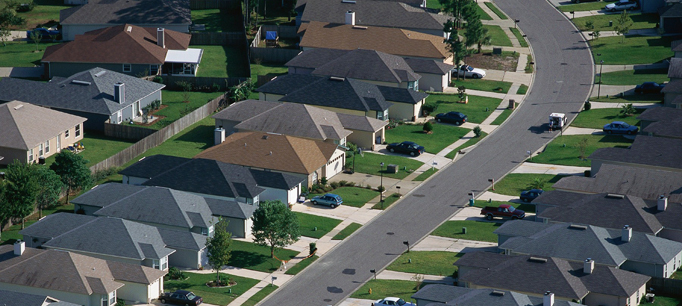
In contrast, inland areas are still recovering from the recession and housing bust that hit them hard at the end of the last decade. Declines in employment and very high rates of foreclosure were centered on these inland regions, including the Inland Empire, the San Joaquin Valley, and Sacramento.

Some might say this is not an important shift in regional growth patterns. After all, at 1.0 percent annual growth, Bay Area populations are not exactly exploding. But growth rates in the Bay Area are twice as high this decade as they were in the previous one, and no one expected the Bay Area to be the fastest-growing region of the state—according to long-term projections, inland areas will have faster growth rates than coastal areas. If recent patterns persist, this conventional wisdom will be turned on its head, and the implications for California’s future—from transportation infrastructure to water demand—could be enormous. As the economic recovery spreads throughout the state, it is reasonable to expect that inland growth will pick up, but to what extent and for how long is highly uncertain.

Chart Source: Author’s calculations based on California Department of Finance data.

The Flip Side of High Housing Prices

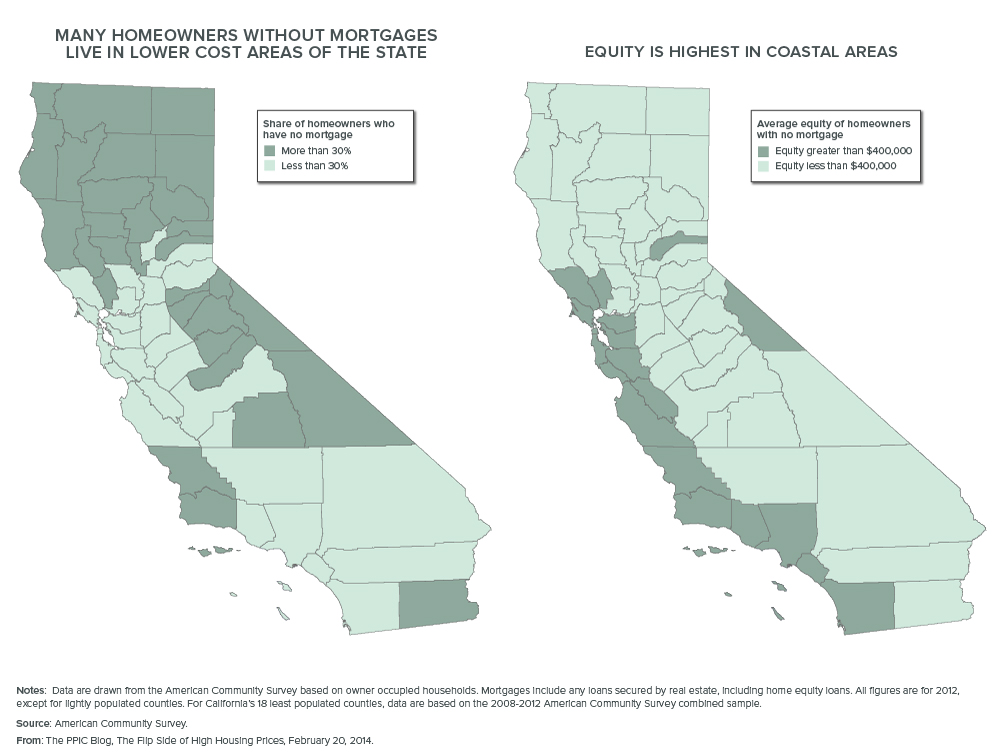
California is notorious for having some of the highest housing prices in the country. Californians pay a greater share of their incomes on housing costs than residents of any other state, meaning that many Californians are “house poor.” But it is less well known that a sizable share of Californians own their own homes free and clear, with no mortgage. When home prices go up, these Californians experience gains in wealth. Because of the high price of housing, these Californians are “house rich.”

According to American Community Survey data, 1.8 million California households owned their homes free and clear in 2012. These households make up 26 percent of owner-occupied housing units and 14 percent of all occupied housing units in the state (compared to 35% and 20% respectively in the rest of the country). Californians who own their homes outright tend to be older—80 percent are over age 55. Those with the most equity live in coastal counties. Some of them are house rich yet cash poor, with 6 percent having incomes below $10,000 per year. But a sizable share—22 percent—are both house rich and cash rich, with household incomes exceeding $100,000 per year. Many have lived in their houses for decades. Because Proposition 13 limits property tax increases for homeowners who don’t move, house rich Californians pay less in property taxes (on average $2,590 per household in 2012) than owners with a mortgage ($4,061 per household), even though their homes are worth about the same amount.

How house rich are they? Total equity for this group of Californians amounted to almost $800 billion in 2012. Average equity was $444,600, far higher than the average of $199,900 in the rest of the country for those who own their homes free and clear. And more than 100,000 house-rich households in California had equity in excess of $1 million, making them millionaires on the basis of housing wealth alone. Clearly, the flip side of California’s high cost of housing is the tremendous wealth generated by housing for those who pay off their homes. Of course, converting that wealth to cash is not always easy or wise, but it is a resource that, used judiciously, can improve the lives of many Californians.