Drought Watch: Treating Stormwater as a Resource

This is part of a continuing series on the impact of the drought.

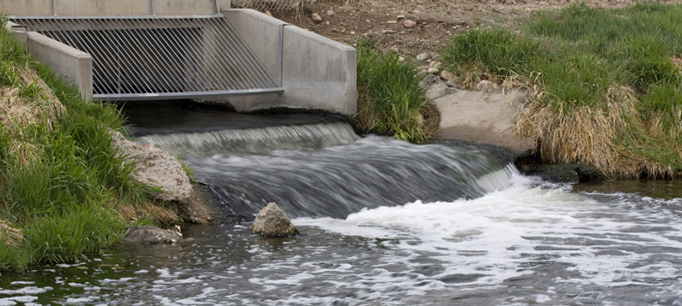
This weekend, the Southland got some much needed rain. This storm helped fill local reservoirs and moisten parched soils—bolstering the region for a fourth year of drought. Unfortunately, too much of this stormwater simply ran straight into local rivers and the ocean, picking up numerous pollutants along the way. Local and state officials want to change this by developing programs that capture and store more stormwater—simultaneously reducing pollution and improving water supplies.

In California, it’s hard to pay for such programs, given our complicated laws on local water finance. To gather ideas about how the state might help, two Senate committees held a joint informational hearing last week. I provided some context on funding issues and opportunities, drawing on PPIC’s recent work on water system finance.

Stormwater is one of California water’s “fiscal orphans.” It faces a critical funding gap—on the order of $500 to $800 million annually—in large part because of constraints introduced by Proposition 218, a constitutional amendment approved by voters in 1996. Around this time, stormwater management changed. What was once the routine job of getting storm drainage out of streets as fast as possible became the much more difficult job of preventing the contents of this drainage—an often toxic mix of fuels, fertilizers, pesticides, animal waste, and trash—from harming our waterways and beaches. Proposition 218 introduced strict requirements on how to calculate the costs of these programs, and it also required that local voters—rather than their elected representatives—approve any fee increases. Local governments have been in a bind ever since. They are required by law to manage this pollution, but they face voter resistance to paying for cleanups that mainly affect people living in communities downstream.

The new interest in treating stormwater as a resource—not just a nuisance—is part of a welcome shift toward thinking about California’s water in a more holistic way. For too long, we have been managing different aspects of our water in isolation—with separate programs for water delivery, wastewater treatment, and management of floods and stormwater. If it is done right, capturing stormwater in rain gardens and wetlands can filter out the pollution while storing the water for later use. Recent court rulings and Assembly Bill 2403 (enacted in 2014) helped clarify that the costs of capturing stormwater for water supply can be included in the bills for water delivery. This makes better management easier: increases in water rates require customer oversight but not direct voter approval.

However, more action is needed because some of the costs of stormwater programs relate strictly to managing pollution. The legislature should consider other ways to help local agencies raise the needed funds. One promising direction involves expanding the scope of a 2001 law. This law (AB 810) authorized two Southern California water agencies to apply revenues from the extra charges on water bills for overwatering landscapes—a source of polluted runoff during the dry summer months—to stormwater programs. It’s worked well, and it would be easy to extend this authority to agencies around the state.

Another simple fix would be to let local agencies use their state transportation dollars—funded mainly by the tax on fuels—as matching funds for state grants that support stormwater projects. Under current rules, the state considers these transportation funds to be “state” monies, even though they are generated by local drivers and earmarked for local use. If those rules were changed, local governments that are revamping their streets to make them more bike- and pedestrian-friendly could also create rain gardens that capture, treat, and store stormwater—for a small added cost.

Steps like these are examples of low-hanging fruit that can help California get on a more sustainable path of managing its scarce water resources.

Drought Watch: What’s in Proposition 1?

This is part of a continuing series on the impact of the drought.

California voters are deciding the fate of Proposition 1—a $7.5 billion water bond. If Prop 1 passes, the water sector will get a big boost in funding. Prop 1 contains $7.12 billion in new debt (the remaining $400 million dollars is money that would be re-authorized from previously passed bonds).

So what kind of water projects will be funded if Prop. 1 passes? The bond focuses mainly on water supply ($3.6 billion) with the majority ($2.7 billion) designated as matching funds for storage projects. These matching funds are intended to support up to half the costs of projects that store water either in surface reservoirs or underground aquifers, and they can only be used to fund “public benefits.” Public benefits include, among other things, better flood protection and recreation opportunities, as well as improved environmental conditions. For instance, expanding surface reservoirs makes it possible to store more cold water, which can be released during warm months to support salmon habitat. Likewise, expanding ponds to recharge groundwater basins can create bird habitat.

The California Water Commission will determine which storage projects receive these funds through a competitive process. The rest of the water supply dollars are mainly for matching funds for water recycling and desalination projects ($725 million), with $100 million each for water conservation and groundwater sustainability planning.

Proposition 1 also has funds for the five areas PPIC has identified as critically underfunded “fiscal orphans” in our recent study of water system finance: ecosystems, drinking water quality, flood protection, stormwater pollution management, and integrated water resources management. Of the funds designated for water quality improvements, $520 million is intended for disadvantaged communities and $800 million is for cleaning up groundwater basins that have been contaminated with industrial and agricultural chemicals. Just over half a billion dollars is designed to encourage agencies to collaborate on water management priorities, with funds going to different regions for priority projects in Integrated Regional Water Management plans. These projects would overlap with the previously mentioned categories, and they would need to improve regional self-reliance and help adapt to the effects of climate change.

Since 2000, California voters have approved six water bonds, totaling nearly $20 billion dollars. These bonds looked a little different than Prop 1. Ecosystem improvement and flood protection were the main priorities, with smaller amounts for drinking water quality, integrated management, stormwater, and water supply projects (these bonds also had large amounts for parks and public access). While these bonds provided welcome support to these areas, they also came with fiscal tradeoffs: bonds are repaid with general fund tax dollars that also support other state programs.

The current drought is likely helping the bond’s chances of passage: according to the most recent PPIC Statewide Survey a record-high 68% of all adults say that the supply of water is a big problem in their part of the state. In this context, it is important to keep in mind that while continued investments in our water system will help us be better prepared for future droughts, this bond is not designed to provide immediate relief from the current one. Most water projects take time to design and build. And, whether or not Proposition 1 passes, the state’s water system will face significant challenges that require funding sources more reliable than a bond can provide.

Drought Watch: Support for the Water Bond

This is part of a continuing series on the impact of the drought.

With the effects of the drought intensifying, the water bond is at the top of the legislature’s to-do list. Unless an agreement is reached on a new version, the $11.1 billion bond built in 2009 will go before voters this November. This year we have seen a range of proposals for a smaller water bond—including one by Governor Brown and one by Senate Republicans that designates more funding for storage than the governor’s. The debate continues.

Getting approval by two-thirds of both houses of the legislature is just the first step. The next hurdle is voter approval. According to the July PPIC statewide survey, 51 percent of likely voters said they would vote yes on the current $11.1 billion bond, with support increasing to 59 percent if the bond amount were smaller. This is higher than in March 2013, when only 42 percent of likely voters said they would vote yes on the $11.1 billion bond, and 55 percent supporting a smaller bond.
While the size of this bond may be important for voter approval, the central policy debate is about how the money should be allocated. Most funding for California’s water system comes from local water bills and taxes, but a new state water bond could help close critical funding gaps facing some parts of the water sector. The PPIC report Paying for Water in California highlighted the lack of sustainable and reliable funding for drinking water quality in small systems, flood protection, stormwater management, aquatic ecosystem management, and integrated water management.

Even if the legislature and the voting public do come together to approve a new bond, there is still work to be done to ensure sustainable funding for our water system. A bond can be expected to provide about $1 billion per year in new funds, leaving a $1 to $2 billion annual funding gap for critical water services. To close this gap, Californians will need to go beyond bonds and approve a broader mix of revenues, such as water use surcharges or state sales tax increases.

Local Water Funding in the June Primaries

Much of the current water talk in Sacramento surrounds a new state water bond for the November ballot. Yet as we show in our study Paying for Water in California, most water spending—84 percent—is actually raised locally. While passage rates on local water measures have been fairly high since 1995 (72 percent passing), few make it on the ballot (on average only six per year). This is largely because funding for many critical water services—including stormwater management, flood protection, and ecosystem and watershed improvements—often requires two-thirds of voters to approve, and local officials are reluctant to put such measures on the ballot unless they think they can win. In the June 3 primary election, only two local water measures were proposed. The results illustrate the challenges of funding water services that require direct voter approval.

In Contra Costa County, Orinda’s Road and Storm Drain Repair Bond passed with 75 percent approval. It authorizes the city to issue $20 million in general obligation bonds to fund the restoration and repair of roads and storm drains, plus a property tax increase to pay for the bonds. Broader funding measures like this—which include a water service along with something else—have generally been more successful than exclusively water-focused measures. Local governments seem to have recognized this reality and have increased these kinds of measures in recent years. Unfortunately, measures that fund multiple activities may generate less funding than is needed to fill water service gaps.

The second local water measure, the Lake County Healthy Lake Tax, failed with 64 percent approval (repeating an earlier failed attempt in 2012 that had 63 percent approval). It would have increased the local sales tax by one-half cent for 10 years to pay for the eradication of weeds, algae, and invasive mussels from Clear Lake, the restoration of wetlands, and the improvement of water quality.

As the Lake County example suggests, the two-thirds voter threshold for local special taxes and bonds is a significant obstacle. Orinda twice failed to pass measures in the mid-2000s, despite 64 percent approval. Since 1995, 65 percent of the measures requiring two-thirds approval passed, but 84 percent would have passed at the 50 percent threshold that is required for local general taxes and statewide fiscal measures. We can’t know how many more measures would have been put on the ballot had the voter threshold been lower.

Funding these essential water services through local tax and bond measures is a marked contrast to funding for water supply and sewer services, which are paid for with revenues from monthly customer bills. These services are generally in good fiscal shape because when new funds are needed, providers are required only to give customers the opportunity to protest rate increases.

To help address water funding gaps, California should consider treating flood and stormwater services like water and wastewater. It would also be helpful to treat local special taxes like local general taxes and statewide fiscal ballot measures—requiring a simple majority vote. Of course, this would require constitutional reforms. But without these changes, the state will need to provide much more support to local governments to pay for services that are essential to all Californians.

Drought Watch: Lessons from Kansas

This is part of a continuing series on the impact of the drought.

As summer approaches, signs of the drought are intensifying, with early season wildfires, new reductions in supplies from California’s depleted rivers, and many farmers scrambling for appointments with well drillers to access more groundwater. In Sacramento, there is also a heightened sense of urgency regarding money for the water system, as the June 26th deadline looms for legislative action on a new bond for the November 2014 ballot. The drought has drawn policymaker attention to water system investments, and it has raised hopes that the public will be willing to support new borrowing. While this is good news for California’s water system, the focus on bonds is a missed opportunity to go bigger.

As we showed in our March 2014 study, Paying for Water in California, a new bond can at best provide about $1 billion per year in new funds for water. So even if a bond passes in November, California will still be facing an annual funding gap of $1– $2 billion to meet critical needs. Bonds alone can’t do the job, and now’s the time—during, not after the drought—to consider a broader package of solutions.

One important place to look for additional funds is new state fees and taxes dedicated to underfunded areas like safe drinking water, flood protection, and healthy watersheds. And here’s where Kansas comes in: Since 1989, Kansas has had a small surcharge on urban water use (6 cents/1,000 gallons) to help fund projects of statewide importance. A small surcharge on agricultural chemicals also goes into this fund, as do fines charged to water polluters. And Kansas is not alone. Missouri and New Jersey both have surcharges on urban water use (1 cent/1,000 gallons) to support safe drinking water programs. Maryland, whose environmental problems in the Chesapeake Bay rival those of California’s Delta, has small parcel taxes to fund stormwater control. Minnesota uses a small increment on the state sales tax (0.12 cents/dollar) to support healthy watersheds.

For perspective, the typical price of tap water in California is $2.67/1,000 gallons, so a 6 cent surcharge (as in Kansas) would raise this to $2.73/1,000 gallons, an increase of just 2.2 percent. And the typical California sales tax is 8.5 cents/dollar, so a 0.12 cents/dollar surcharge (as in Minnesota) would raise this to 8.62 cents/dollar, an increase of just 1.4 percent. And these small surcharges would bring in some badly needed cash: About $175 million/year for a Kansas-style urban water fee, and about $575 million/year for a Minnesota-style sales tax increment.

These surcharges could be passed by California’s legislature (by a simple majority or two-thirds vote of both houses, depending on whether they qualify as regulatory fees or taxes) and then signed into law by the governor. Or they could be put before voters alongside a new bond. Of course, the politics of new fees and taxes are trickier than those of new state bonds, for which the bill comes later, when most current officeholders will be termed out. But for the sake of a healthy and secure economy, society, and environment, the time for bold action is now. California will have plenty of company.