The Challenges of Getting More Crop per Drop

The continuing drought is having a big ripple effect in California agriculture. We talked to David Zoldoske, the director of Fresno State’s Center for Irrigation Technology (CIT) and a member of the Water Policy Center’s research network, about trends in farm water management.

PPIC: How well is California agriculture doing in terms of water efficiency in recent years?

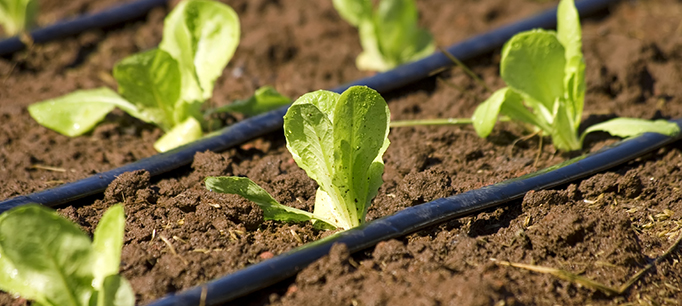
David Zoldoske: The big change is that the state’s growers are investing heavily in drip and micro-irrigation systems, and very soon there will be more acreage using these efficient systems than flood or furrow irrigation. Part of the increase comes from growers converting annual crops to trees and vines, and installing micro irrigation systems. So while we’ve gotten more efficient in irrigating these acres, we’ve also hardened demand for water—and in some cases increased overall water demand—because these perennial crops can’t be fallowed in times of drought. But there’s no doubt that this is a paradigm change, and it’s making California agriculture more efficient in its overall on-farm water use.

PPIC: What successful water-management technologies are California farmers already using that deserve wider adoption?

DZ: Tools such as water meters for measuring flow rates from pumps and soil moisture sensors are both important to improve water management. Scheduling for efficiency means knowing how much water you’re applying (the meters), and how deep it’s going (the sensors). Flow meters also help growers see real-time changes in how much water they’re using—if flow rates decrease, it could indicate a drop in groundwater levels, a worn pump, or perhaps a clogged filter. Without metering, it’s like driving a car without a speedometer or odometer. We’ve estimated that only about a third of groundwater pumps have flow meters installed, so there’s lots of room for wider adoption of this important technology. Water meters can provide important information both on-farm (how efficiently is the irrigation system performing and how much water was applied), as well as a measuring groundwater basin withdrawals.

PPIC: What’s the potential for high tech improvements to take farm-water efficiency to the next level?

DZ: Managing water on a large irrigated farm is both an art and a science, with multiple data points to consider. Many growers are operating with too little information, while others may be experiencing data overload from all the technology inputs. New cloud-based technologies can help farmers get more data, in real time, and allow them to better manage their crop water needs. But it’s important to remember that even with improved technologies on the farm, you can’t efficiently manage a poorly operating system. Often it’s the low tech approaches that provide the most benefits—like getting your pump tested, having your irrigation system audited for uniformity, and improving scheduling. Farmers need to get better at these basic technologies before the high tech improvements can really work. There is a tremendous opportunity for the state to help incentivize the adoption of key technologies like water meters to improve water efficiency across a broad spectrum of irrigated land. California should be strategic when it provides financial assistance for adopting new water technologies.

PPIC: Are there “unintended consequences” to agriculture becoming more efficient?

DZ: As we convert more acres from flood or surface irrigation to higher efficiency drip systems, we need to be aware that we may be losing potential recharge for our groundwater basins. Excess water applied to a field is an important source—and in some places the primary source—of recharge. Improving water efficiency on any one farm can directly affect the groundwater supply of a nearby farm or municipality. California must aggressively address the need for more groundwater recharge as an offset for more efficient farm water use.

PPIC: What long-term improvements to agricultural water management do you think will come out of this drought?

DZ: The biggest change will be the understanding that we need to manage groundwater basins for sustainability. It will likely cause some financial pain and suffering, but it will also help us avoid a “tragedy of the commons” situation, where everyone loses as groundwater basins are exhausted. Right now, we have too many big straws in the aquifer, and we have to start managing for the long view. I also believe we’ll be making more use of non-traditional sources of water, such as the large amounts of saline groundwater found in parts of the Central Valley. We are also evaluating the potential of diverting excess floodwaters to cropland with high infiltration rates, to help recharge groundwater basins during wet years. And most likely in future, we’ll be farming less ground in California, but getting “more crop per drop” by using water more efficiently.

Read more: Water for Farms from our California’s Water briefing kit

Photo: David Zoldoske in the field.

California Streams Going to Pot from Marijuana Boom

California has seen a recent boom in marijuana farms, mostly on private lands but also illegal grows on public lands such as national forests. Hard data are hard to come by for this crop, which is mostly grown in the shadows. But California Department of Fish and Wildlife officials estimate that production on public lands has increased by 55 to 100 percent in ecologically fragile north coast watersheds over the past five years alone. This surge is having a decidedly unhealthy effect on some of California’s rivers and streams. The situation is heating up as many of the state’s waterways are at all-time lows and some at-risk fisheries nearing collapse.

A study of four northwestern streams by the California Department of Fish and Wildlife (CDFW) found that marijuana plants consumed 20-30% of streamflow during the dry summer low-flow season—a crucial period for salmon and other species – as well as marijuana cultivation. Illegal marijuana growing also can bring a host of other environmental problems, from polluted runoff to habitat damage from improper road construction.

Peter Moyle, a fisheries expert with UC Davis and a member of the PPIC Water Policy Center research network, says, “All of these operations are taking water directly from streams, sucking away water from endangered Coho salmon, steelhead, tailed frogs, and other stream-dwellers, while damaging the banks of the streams. These diversions require permits—both from CDFW for stream alteration and from the State Water Board for diverting water—but few such permits seem to have been issued.”

Last year, Governor Jerry Brown marked $3.3 million in his budget proposal for enforcing pot growing rules in an effort to protect both the water supply and endangered species affected by growers.

Various state and local efforts are underway. The multi-agency Cannabis Pilot Project will enforce environmental protections in cannabis cultivation. The state’s Fish and Wildlife Watershed Enforcement Team inspects farms and seeks to permit them and bring them into compliance, but the understaffed team has been able to visit only a tiny portion of the state’s farms. New permitting processes to address illegal water diversions are in the works at the State Water Resources Control Board, but funding for compliance will be an issue. A recent a senate hearing called for a crackdown on illegal water diversions by marijuana growers.

In addition to highlighting the need for better regulation on the ground, the water impacts of marijuana growing are an example of the need for targeted and reliable sources of funding to address California’s environmental challenges. Currently, none of the tax revenue from California’s nearly $1 billion-a-year medical marijuana market is allocated for environmental protection.

Next year, Californians will likely be asked to vote on a ballot initiative to legalize possession of marijuana for recreational uses, as has been done in four other states and the District of Columbia. The potential ballot initiative provides an important opportunity to address a number of policy trade-offs, including the issue of how to pay for the environmental impacts of marijuana legalization.

Read “Regulating Marijuana” from the PPIC blog and Californians’ Attitudes Toward Marijuana Legalization.

The “Inexact Science” of Water Pricing

How can the price of water help us manage the drought? Like everything to do with water management in California, there is no easy answer. The State Water Resources Control Board recently held a workshop to examine the current pricing climate and explore the state’s role in helping urban water utilities adopt conservation-oriented water rates.

Currently, more than half of the state’s urban water utilities use some form of tiered water rates, which increase the per-gallon charge for higher levels of water use. While tiered pricing can encourage conservation, utilities also must meet other competing objectives, particularly covering the cost of providing services. When water sales fall, balancing the books can be a challenge, because fixed costs make up as much as 70 to 80 percent of total utility costs.

Ellen Hanak, director of PPIC’s Water Policy Center, presented findings from recent PPIC research on water system finance at the workshop. She noted that “urban water agencies have been successful so far at using revenue from water rates to remain fiscally stable.” But while utilities have generally been investing at a healthy pace, they are likely to be drawing down their financial reserves as water sales have fallen during this drought. Hanak also said that while pricing “is not an exact science,” water agencies could improve communication with customers about the major costs that must be covered even if water use declines.

One complicating factor lies with Proposition 218, a 1996 initiative that sought to ensure that the charges for many local services, including water, are closely linked to the costs of service to individual properties. Hanak and other panelists expressed concern that courts are interpreting the proposition’s cost-proportionality requirement too rigidly to allow tiered pricing to work effectively. For instance, a recent ruling in a case against San Juan Capistrano’s tiered pricing states that while this type of pricing is legal, the tiers must correspond to the actual cost of providing service at each level of usage – something easier said than done.

Ken Baerenklau, an associate professor at UC Riverside and a member of the Water Policy Center’s research network, studied a Southern California water district’s use of a specific type of tiered pricing, and found that household water demand was reduced by approximately 15% without significantly increasing the average price of water service. Baerenklau emphasized the need for better data collection on water rates and consumption in order to examine the effectiveness of various pricing mechanisms. He also noted that “there is a difference between the price and value of water,” and that we are currently not paying the true cost, especially with respect to the environment.

Lester Snow, executive director of the California Water Foundation and member of the PPIC Water Policy Center’s Advisory Council, recommended renewed investment in water infrastructure and management to adapt to our changing climate. Snow said that fundamental water policy changes should be made now while attention on water issues is high. He also advocated for reform of Proposition 218, saying that we are pushing people to conserve, but have systematically withheld some of the tools water agencies need.

Water Board members expressed interest in creating a clearinghouse of rate-setting tools for water agencies and case studies of agencies with successful conservation pricing. This will help agencies better understand what has worked and how to minimize the risk of adopting new pricing structures. Another important step mentioned by a number of panelists was the need for a statewide fee that could fund “fiscal orphans”—areas that are difficult to fund locally—such as lifeline rates for disadvantaged communities, stormwater capture, and investments to improve drought management.

Don’t Count on El Niño to End the Drought

El Niño is back in the news, much as it was last year at this time. But this year, El Niño conditions in the tropical Pacific have intensified, and some climate scientists think the outcome this winter could be the return of much-needed rain. Hopeful media reports are describing the growing El Niño as a potential drought buster.

How solid are these predictions and should we count on a wet winter? Unfortunately, El Niño is an unreliable predictor of winter storminess. Although some of our wettest years have occurred during El Niño events, some very dry years have also occurred.

El Niño is the name given to a climatic pattern that originates in the Pacific tropics, and involves both the ocean and the atmosphere. It is defined by unusually warm upper-ocean waters in the central and eastern tropical Pacific, and is linked to slackened trade winds. El Niño conditions usually persist for several months and recur, irregularly, roughly every two to seven years. El Niño (and its opposite phase, a cool tropical Pacific condition known as La Niña) is Earth’s strongest and most important short-term climate variation because of its global reach: it disturbs climate and ecosystems in the tropics but also unleashes altered atmospheric patterns well beyond the tropics.

One of the regions it affects, usually during the winter, is California. Some El Niño events are strong enough to impact the North Pacific jet stream, which steers winter storms into California. Because the bulk of our seasonal precipitation occurs in a handful of strong winter storms the additional El Niño events make a big difference to the state’s water supply.

But El Niño often produces strong regional differences in precipitation. In many El Niño years, Southern California can be unusually wet, but the state’s important water supply areas in Northern California are often not—sometimes they are even unusually dry. When this happens, the water supply benefits of El Niño are limited. What’s more, in some El Niño years the entire state remains dry. The figure below shows how widely precipitation can range, with or without El Niño.

So why are climate scientists so energized about El Niño this summer?

El Niño conditions, once established, tend to last for several months. Beginning this spring and continuing through this summer, scientists have observed unusual heat build-up in the upper layers of the tropical Pacific. Climate models are pointing to a moderate to strong El Niño through the summer and into the fall. But summer and early fall are the dry season in California, and El Niño conditions at this time will not make much of a difference in the ongoing drought. These same models indicate that El Niño conditions are likely to persist into the coming winter, which is key to shifting the jet stream and increasing the number of winter storms. Historically, unusually strong El Niño events have been linked to record wet years in California. Two of the wettest water years on record in the state—1983 and 1998—occurred during very powerful El Niño conditions. So while the warmth this year is impressive, so far the 2015 El Niño is not in the same league as the extraordinary cases of 1983 and 1998, and the uncertainties over its intensity into next winter remain considerable.

As tempting as it is to hope this El Niño will take us off the hook for planning for a fifth year of drought, it would be unwise to bet on this, given the uncertainties. With reservoirs and groundwater at historic low levels after four consecutive dry, warm years, a single wet year is unlikely to erase the drought. Rather, it is prudent to plan now for continued impacts of our long dry spell. Major relief would be a pleasant surprise, but for now, continuing our efforts to conserve will pay off even if the hard rains come.

Chart note: This graph shows annual winter precipitation in the Sierra Nevada in relation to the Southern Oscillation Index, a measure of El Niño. Typically, the more negative the value, the stronger the El Niño, with greater global impacts on weather.

Chart source: California Department of Water Resources (precipitation); National Weather Service, Climate Prediction Center: Monthly Atmospheric Indices ( <ahref=”http: www.cpc.ncep.noaa.gov=”” data=”” indices=”” soi”=”” target=”_blank”>Southern Oscillation Index). Modified from a graphic provided by Western Regional Climate Center.

Proposed Reservoirs Are No Panacea for Drought

This commentary was published on Sunday, July 5, 2015, in the Sacramento Bee.

The acute water shortages now hitting California have prompted many in Congress and the state Legislature to call for new surface reservoirs to reduce the impacts of future droughts. Some have even blamed the lack of reservoir development as a primary cause of water scarcity during the current drought. The reality is that new surface storage would have added only modestly to the state’s water supply. We’d still be in the midst of a severe drought. Building drought resilience requires a much broader set of actions, including conservation, water trading, managing groundwater and expanding nontraditional supplies like recycled wastewater and stormwater.

(Continue reading on Sacbee.com.)

Drought Bills: Small Changes, High Impact

As Californians continue to cope with the impacts of the ongoing drought, actions to improve the way we manage water are being taken at all levels of government. Last week Governor Brown signed into law Drought Trailer bill (SB 88) and Resources Budget Trailer bill (SB 83). These bills will improve the way we respond to the current drought and better prepare us for future droughts. Here are three ways they will do this:

  • Consolidation of some small water systems with bigger ones to increase drinking water accessibility for at-risk communities. Many small, disadvantaged rural communities in California lack reliable and safe drinking water. These communities often lack economies of scale because the cost of improving and maintaining these systems is high and their customer base is small. Even when these small water systems are eligible for state funding for capital improvements like water treatment systems, they often lack the technical and operational capacity necessary to sustain them over time. In some cases, consolidation—the physical or administrative merging of drinking water systems—can be a cost-effective solution. The bill allows the State Water Resources Control Board to pursue consolidation when other solutions are not appropriate, and it provides protection against liability issues that may make larger agencies unwilling to consolidate. In our report Paying for Water in California we recommended consolidation as one of a suite of actions that could help address chronic safe-drinking water challenges.
  • Better monitoring and reporting requirements for water diverters and some water rights holders. Earlier this year we recommended improving the state’s water information system to effectively manage water resources during droughts. This bill takes California one step closer to this goal. For example, individuals who divert water under the most senior water rights were previously required to report their diversions to the Water Board every three years; now they’ll be required to report annually. Surface-water diverters who use more than 10 acre-feet a year will also be required to install measuring devices. Well-drilling logs will also become public. The new reporting requirements reflect progress in modernizing California’s water accounting capabilities. The next step is to integrate improved water information and resource planning tools to better manage water scarcity.
  • Temporary environmental oversight exemptions for groundwater recharge projects, recycled water system standards, and local decisions to prohibit drilling of new groundwater wells. The California Environmental Quality Act (CEQA) can play an important role in evaluating the environmental impacts of projects or regulations, but the length and cost of the review process can discourage responsive policymaking. This bill streamlines review for projects and policy decisions that are low-risk and well-tested, but could immediately increase drought resiliency. California’s regulatory framework is such that these projects will likely be reviewed in other forums, so this bill doesn’t eliminate all oversight. As we heard from San Jose Mayor Sam Liccardo at our April “Water in Silicon Valley” event, this kind of streamlining would have real-world impacts. San Jose is seeking an expedited process from CEQA to begin building a groundwater recharge system that would expand use of San Jose’s existing recycled water system.

As the legislative year continues we can expect more statewide policy changes that address our stressed water system. We’ll provide regular updates on key water legislation in this blog.

Better Reservoir Management Would Take the Heat off Salmon

Over the past few weeks, the state’s largest reservoir—Shasta—has been in the spotlight as managers struggle to meet multiple demands with dwindling reserves. Surface reservoirs are central to managing California’s water supplies for a variety of purposes. However, during extended droughts, when the amount of water in reservoirs gets low, water allocation decisions can involve difficult trade-offs. This year the trade-offs at Shasta are particularly challenging, since the survival of a run of endangered salmon may be on the line.

Most of Shasta’s water goes to agricultural water contractors in the Sacramento and San Joaquin Valleys. The reservoir generates abundant hydropower and supports a large recreation economy. Shasta, along with Folsom and Oroville Reservoirs, is also the principal source of water for controlling freshwater outflows from the Sacramento-San Joaquin Delta. These outflows are necessary to maintain water quality for both human uses as well as fish habitat.

Balancing all of these demands for Shasta water is made more complex by the needs of winter-run Chinook salmon—an endangered species that is edging close to extinction.

The Sacramento River was blocked by Shasta Dam in 1944. This shut off access to spawning grounds for millions of winter-run salmon that historically migrated to the river’s headwaters in late winter. Their eggs—deposited in the gravels—survived the hot California summers because of the abundant cold spring flows in these headwaters.

Today, the dense, cold water that collects at the bottom of the reservoir in winter and early spring is the only available source of cold water for these fish. Spawning is now restricted to a relatively short stretch of the Sacramento River immediately below the reservoir where temperatures are kept low enough by cold water releases.

In late summer of 2014, the water released from Shasta was too warm, resulting in the death of almost all the winter-run Chinook salmon eggs. According to a report by the U.S. Bureau of Reclamation, temperature models used to forecast dam operations failed to fully account for reservoir water temperatures and the performance of gates used to selectively draw water from various depths. By the time the errors were discovered, early season water releases for irrigation had used up available cold water.

This year the weather circumstances are roughly the same: low winter and spring inflows and unusually warm temperatures. In a report to the State Water Resources Control Board in early spring, the U.S. Bureau of Reclamation provided assurances that temperature needs for winter-run Chinook could be met while allowing water releases for irrigators and meeting water quality requirements in the Delta.

But in late May, reservoir managers revealed that winter-run salmon eggs were at risk due to high temperature releases for a second consecutive year. This year’s miscalculations were different than last year’s. Operations staff failed to incorporate water temperature data that showed that the lake had warmed rapidly in the spring. As before, these errors led to overly optimistic projections for available water.

State and federal officials have committed to trying to stave off another complete loss of winter-run Chinook, acknowledging that failing to do so may lead to extinction. They say themselves that this is going to be no easy task given the warmth of water in the reservoir.

These difficulties in managing Shasta Reservoir highlight a significant policy challenge that needs to be addressed during this drought, and that also has implications for managing future droughts.

Uncertainty—whether from data collection or failures of technical models to adequately represent extreme conditions—needs to be more explicitly integrated into decision-making. When water supplies are very limited, there is great pressure to meet all competing demands to the maximum extent possible, leaving little room for adjustment to unanticipated conditions or events. This is especially true for cold water in reservoirs because early season releases for irrigation or other uses limits options to adjust later in the season.

To incorporate uncertainty into drought planning, priorities need to be clearly defined, and a margin of safety established for top priorities, such as preventing extinction of endangered species.

A greater margin of safety would likely have prevented the loss of winter-run Chinook salmon in 2014 and helped avert the challenges this year. To be sure, this would have meant increased water scarcity for some downstream irrigators. But this scarcity would not be permanent, since the rains will eventually return. And policies such as crop insurance and emergency drought support can lessen the financial costs of water shortages to farmers. For the salmon, there will be no second chance: extinction is permanent, regardless of whether it rains again.

Californians and Water Conservation

In our May statewide survey, we found that 60 percent of Californians think people in their part of the state aren’t doing enough to respond to the current drought. The prevalence of this belief varies somewhat across regions. It turns out that Californians’ assessments of their neighbors’ efforts generally align with their area’s water conservation levels.

Earlier this month, the State Water Resources Control Board released conservation statistics for April 2015, showing how much each of the state’s ten hydrologic regions reduced its monthly water use compared to April 2013. This data shows that statewide water use declined by 13.5 percent in April, and that reductions ranged widely across the state. The South Coast region, which includes Los Angeles and neighboring counties, had a reduction of 8.75 percent, while the northeastern North Lahontan region (on the Nevada border) had a reduction of 37.5 percent.
For our survey, we interviewed at least 80 residents in 5 of the state’s hydrologic regions (the Sacramento River, San Francisco Bay, San Joaquin River, Tulare, and South Coast). When we compared survey responses about water conservation efforts with the water use reductions in these regions, we found that perceptions and reductions are aligned in almost all areas.

In the Sacramento River region, which had the biggest cut in water use among the five regions considered, residents were most likely to say that people in their area are doing the right amount to respond to the drought. These residents were also least likely to say people in their area aren’t doing enough. Responses in the region were split about evenly between “the right amount” (41%) and “not enough” (40%).

In contrast, residents of the South Coast—the region with the smallest cut in water use—were most likely to say that people in their area aren’t doing enough to respond to the drought and the least likely to say people are doing the right amount. In this hydrologic region, residents were more than twice as likely to say people aren’t doing enough (63%) than they were to say that people are doing the right amount (25%).

This pattern holds across the state, with one exception. The San Francisco Bay hydrologic region’s conservation rate is second best, yet its residents are the second most likely to be critical of conservation efforts in the area. This contrast between satisfaction with conservation efforts and conservation results might be attributable in part to ideology. Statewide, liberals (67%) were more likely than moderates (60%) or conservatives (52%) to say people in their area aren’t doing enough, and the San Francisco Bay region has a relatively high concentration of residents who identify themselves as liberals (41%). Also, water use in the Bay Area is historically lower than in other parts of the state, so conservation may be a deeply ingrained positive value.

What this comparison of survey responses with water use statistics tells us is that many Californians seem to have a good sense of how well their communities are doing in addressing the drought. Whether this sense comes from observations of neighbors, knowledge of their own behavior, or signals from local government and agencies, it suggests that Californians know what is needed to combat the drought.

Chart note: Survey responses are sorted by county into hydrologic regions. Counties that fall into more than one hydrologic region are assigned to the region where most of the population lives.

The High Cost of Drought for Low-Income Californians

Californians across the state are feeling the impacts of the severe drought, now in its fourth year. Among those hit hardest are the state’s low-income residents and communities.

The worst impacts are occurring in poor rural communities. Rural residents generally rely on groundwater, from either their own wells or wells managed by small community systems. Even before the drought hit, contamination by nitrate and other pollutants was a big problem. With the drought, many wells are now going dry. These problems are now firmly on policymakers’ radar, but the solutions aren’t simple. Affordability is a major challenge, not only because of low incomes, but also because small systems don’t benefit from economies of scale. That makes infrastructure upgrades costly on a per-household basis. Costs of properly running the systems can also be quite high.

The state has recently made several changes to help these rural communities, including dedicating more funds and establishing a new Office of Sustainable Water Solutions within the State Water Resources Control Board to provide technical and financial support. The governor’s office has also proposed legislation that would authorize the board to mandate utility consolidations. As we argued in our 2014 study Paying for Water in California, physical consolidation with larger nearby systems is a good option for many small systems. In places where the distance is too great to hook these communities up, administrative consolidation can still help provide economies of scale in management and technical oversight, ensuring better long-term outcomes.

Less on the radar but also worth monitoring are the effects of the drought on the urban poor. Large metropolitan areas have generally been in much better shape during this drought, and they also are less prone to the kinds of problems witnessed in small rural systems. Urban systems benefit from economies of scale for new investments and have some ability to provide lifeline rates for lower-income households, by using revenues from the rest of their customer base.

But there are warning signs on the horizon. Urban water bills have been rising faster than inflation, making affordability a challenge for poor households in some areas. And since the 1996 enactment of Proposition 218, a voter-approved constitutional amendment, public water utilities are generally not able to increase budgets for lifeline rates without a two-thirds approval by local voters. (Privately owned utilities—like those providing electricity and telecommunications services—are exempt from this provision.) The drought raises new affordability challenges, because the extra conservation now required will lower revenues below costs for many utilities. To cover these costs, some utilities are increasing the fixed service fees on monthly bills, rather than increasing the rates charged per gallon used. Such service fees disproportionately impact lower-income households, who tend to use less water.

Now more than ever, utilities should consider the equity implications of their rate structures. And as we argued in the Paying for Water study, Californians may need to consider reforming Proposition 218. One important reason is to enable the use of lifeline rates, a tool for ensuring that poor households have access to an essential service. Finally, to durably support safe drinking water needs in rural communities, where the local funding base is inadequate, Californians should consider instituting a statewide lifeline rate system funded by a small surcharge on monthly water bills.

View slides from the presentation Water, Drought and Social Justice in Urban and Rural California.

Getting to Groundwater Sustainability

David Orth’s involvement in California water issues spans nearly three decades, and in that time he’s seen at least four droughts, serious declines in Central Valley groundwater tables, major floods in the Central Valley, and a host of other water challenges. But to hear him tell it, nothing was quite so daunting as working on the recent state groundwater law. Orth is general manager for the Kings River Conservation District, a California Water Commissioner, and a key participant in the negotiations leading up to the enactment of the 2014 Sustainable Groundwater Management Act.We spoke at a recent event in Fresno about the challenges facing the new groundwater law.

PPIC: What keeps you up at night regarding the new groundwater law?

Orth: The new law has really elevated the standard significantly, from voluntary management to a much higher bar of sustainability. It will be critical to get people who use the water involved in solutions to groundwater problems, and avoid protracted litigation. The tools we have include a few that I expect will be more easily embraced, but when we start talking fees and pumping limits, I’m afraid the reaction we might get will be for people to retreat to their corners and lawyer up. It’s also hard for stakeholders to fully understand the scope of the problem, since you can’t see it. Helping to educate stakeholders and then working collaboratively with them to get buy-in on solutions will be key.

Another huge challenge is land use. There’s a pretty big conflict between the economic objectives of growth and development of the land-use agencies and our ability to cap our water use. How we find that balance will be critical. The land-use agencies are concerned that new development, urban and agricultural, could be restricted by limited water supply, resulting in significant negative economic impacts. But I think sustainability requirements will create certainty, and in the long run, more solid and consistent economic conditions.

PPIC: What is the most important thing that local agencies should be doing now to prepare for the changes that the groundwater law will bring?

Orth: There are three things, really. First is to organize the various local agencies—both the water and land use agencies—to create the governance structure and leadership systems for regulating groundwater. In the Kings Basin, for example, we have about 40 to 50 local agencies that need knitting together. Second is the outreach component I mentioned. In the Kings Basin, we’re been heavily engaged in outreach and education, and I think it’s the most important thing we need to do. And third, there’s the need to gather data. Again, the Kings Basin has a bit of a head start—10 years ago we started an integrated planning process to eliminate over-drafting of our groundwater, and we’ve developed models and monitoring programs to support that objective. A good data set will inform outreach and also good solutions, so we need to do these things concurrently.

PPIC: Do you think this drought has changed people’s perceptions of the need for better groundwater management?

Orth: There is definitely heightened awareness of the drop in groundwater, and the need to do things differently. There’s greater awareness both politically, in Sacramento and at the local level. Less than five years ago, we couldn’t have done this law—groundwater was a no-touch area. The grower community is still kind of split, but there’s a lot of recognition that things have to change.

PPIC: What gives you hope for the future?

Orth: Six months ago, people were saying this law would be a disaster. Now that’s changing, and there’s broad acknowledgment that it’s needed, and probably not as bad as they thought it would be. Mindsets have changed in a very positive way. The other thing that gives me great hope is bringing the different agencies together to talk about solutions in an integrated way. The kind of integrated planning we’ve been doing for 10 years in the Kings Basin is now being re-created across the state. There’s more collaboration among cities, different types of agencies and counties. This collaboration gives me a lot of hope.

Read “Why Farming Needs the New Groundwater Law”

Learn more about Kings Basin groundwater management planning