The 2020 census will be a defining moment for California. Much is at stake—including billions in federal funds and the state’s political representation in the US Congress. The lasting impact of an undercount can’t be overstated. Governments, K–12 and higher education institutions, businesses, and nonprofits depend on the census to understand the needs of their communities, target services, and plan for the future.
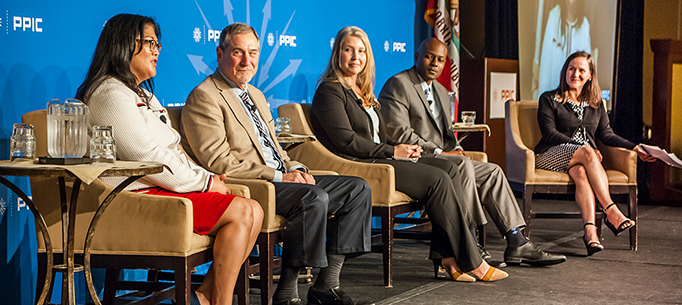
A panel of experts discussed the critical role of the decennial census at a PPIC event in Sacramento on April 24. They examined the challenges of reaching “hard-to-count” communities, the state’s part in ensuring an accurate tally, the impact of the recently-added citizenship question, and more.
The event opened with a wide-ranging conversation between Marc Berman, state assembly member, and Mark Baldassare, PPIC president. One of Berman’s biggest concerns is that California could lose its political clout in DC. The state has “40 million unique stories,” he said, and the census is about “making sure that every voice” gets counted. But the new citizenship question is counterproductive, in his view. We know that adding it “will discourage a lot of people from participating,” he said. “People are so fearful” that it could make a successful census count that much more difficult, he added.
For the first time, the US Census Bureau will try to collect most responses (55%) online, with the rest obtained by mail or in person. John Thompson, former director of the bureau, identified the government’s main rationale for the change—namely, cost. He also detailed best practices for adding a new census question: In the past, he said, the bureau would spend years testing it, partly to craft appropriate messaging and to ensure that residents were comfortable answering it. The new citizenship question did not have that review, a concern Thompson raised with Commerce Secretary Wilbur Ross to no avail.
John Dobard, associate director of political voice with Advancement Project California, discussed ways to involve the state’s hard-to-reach communities. One way to overcome residents’ fear of participation, he said, is to involve trusted leaders in outreach. Otherwise, entire multi-generational immigrant families could be left out.
An undercount could mean a direct hit to essential state services—such as the Children’s Health Insurance Program. In that scenario, young children in poverty would be hurt most of all, said Sarah Bohn, a panelist and PPIC research fellow.
Ditas Katague, the state’s 2020 census director, said her office is steeped in planning for the statewide rollout. Importantly, she said, California needs an “agile, flexible ground team,” and called on citizen volunteers to join state and local agencies, nonprofits, and philanthropic groups to help make that happen.
