Video: Building Urban Drought Resilience

The recent drought was long, hot, and difficult, and it brought a host of challenges to the state’s water suppliers. Yet California’s urban areas came through the ordeal fairly well, thanks to preparations since the last major drought. Last week a panel of urban water experts explored the various tools California’s cities, suburbs, and the state used to manage water over the past five years. The lessons learned can help us prepare for future droughts.

The panelists at the Sacramento event were David Mitchell of M.Cubed and a co-author of the new PPIC report Building Drought Resilience in California’s Cities and Suburbs; Wade Crowfoot, CEO of the Water Foundation; Thomas Esqueda, public utilities director for the City of Fresno, and Rosemary Menard, water director for the City of Santa Cruz. The panel was moderated by Ellen Hanak, the PPIC Water Policy Center director.

“Water suppliers build resiliency through their water supply investments, which reduce the chance of shortages developing during a drought, as well as through drought contingency plans,” said Mitchell in his presentation on the new report’s key findings. “Both are key to understanding a region’s resiliency to drought.” Around $20 billion has been invested since 1992 in urban drought resiliency, he noted.

Some key takeaways from the event:

  • The state’s conservation mandate resulted in strong water savings. But it threw a wrench into local drought planning and created uncertainty about state and local roles in managing drought going forward.
  • While the urban economy performed well over the course of the drought, most water suppliers were not prepared for the fiscal impacts.
  • Regular communication with water users is essential to get support for conservation, new investments, and changes to rates.
  • Regional cooperation is much more common among the state’s water utilities than it was in past droughts, which has helped make urban areas more resilient.
  • Smaller, rural communities are still struggling to recover from the drought’s effects. It will take a concerted effort to improve their ability to withstand drought and address water quality problems.

Learn more

Read the report Building Drought Resilience in California’s Cities and Suburbs (June 2017)
Read California’s Water: Water for Cities (from the California’s Water briefing kit, October 2016)
Visit the PPIC Water Policy Center’s drought resource page

Why Drought Makes Water Rates Rise

For those in the business of selling water, drought often brings financial strains. New research by the PPIC Water Policy Center found that more than 70% of California’s urban water suppliers experienced reduced revenues during the latest drought. We talked to David Mitchell—an economist specializing in water and a co-author of a new PPIC report on urban drought resilience—about the cost of water and drought.

PPIC: Why do customers’ water rates sometimes rise during drought—even after big jumps in water conservation?

David Mitchell: For urban water suppliers, most of their costs are fixed. They have to pay these costs whether they sell a gallon or a million gallons. Their infrastructure costs for treatment plants, reservoirs, canals, and other investments needed to get water to us don’t change with their water sales, at least in the short run. Some costs do drop with reduced water use—for example, energy used for pumping or treatment. But most facility costs don’t, and neither do most staffing costs. The bills for these fixed parts of the system still have to be paid.

There are instances in every drought where communities push back on price hikes. But customer backlash isn’t inevitable. Creating and empowering citizen advisory groups can help build understanding and consensus around water supply issues, for example. This is what the city of Santa Cruz did when it faced a backlash over its plans to invest in desalination for drought security. City leaders turned it into a win by listening carefully to the community. The advisory group met with city staff and outside consultants for more than a year. City staff were deliberative and respectful. Santa Cruz went from having little community support to significant support both in terms of a long-term plan for addressing drought and near-term changes to its rate structure.

PPIC: How does drought affect suppliers financially?

DM: It affects them in lots of ways. With rationing, the supplier will have an immediate revenue problem unless it adjusts rates or has significant financial reserves. They may have to defer capital investments. Droughts also drive up costs in various ways. Drought often degrades water quality, so treatment costs go up. A supplier may need to acquire supplemental water that is more expensive than usual supplies. Suppliers spend more repairing leaks to cut waste.

Drought also brings higher customer costs, through educational programs, rebates, and staffing to address concerns. For example, Metropolitan Water District of Southern California spent half a billion dollars on rebates to replace lawns, toilets, and other fixtures in 2015.

PPIC: What are other reasons that water suppliers need to raise rates?

DM: First of all, urban water rates have been outpacing inflation in most of California for a long time―the drought just put an exclamation point on it. It’s a trifecta of aging infrastructure, increasing regulation, and worsening scarcity. In some parts of California the cost for upgrading old infrastructure is particularly significant. For example, San Francisco is spending billions to renovate its Hetch Hetchy system.

PPIC: How can suppliers reduce the financial risks of drought?

DM: Rates have to adjust. That’s just simple math―if you sell less water but your costs are basically the same, you’re going to have to adjust your rates. Communicating to customers the reason for adjusting rates is key, though. Also, making these adjustments early is better than deferring them to the end of the drought, though this is something that many utilities still fail to do. Our new report recommends that utilities get pre-approvals for special surcharges that they can introduce during droughts—something very few utilities currently do. Cash reserves are also important since they help mitigate the need for large rate increases. Following a drought, utilities are sometimes tempted to change rates so that a larger portion of the bill is a fixed service charge, rather than a per gallon fee. Although this keeps revenues from falling as much when water sales decrease, it also weakens the price signal to encourage efficient water use—an important goal both during droughts and over the longer term.

 
Learn more

Read the report Building Drought Resilience in California’s Cities and Suburbs (June 2017)
Read California’s Water: Water for Cities (from the California’s Water briefing kit, October 2016)
Visit the PPIC Water Policy Center’s drought resource page

Commentary: Strategy for California’s Next Drought

This commentary was published in the Sacramento Bee on June 8, 2017.

The recent drought brought record high temperatures and record low precipitation, pushed numerous native fish species to the brink of extinction and led to unusually large drops in groundwater levels. But the biggest milestone for urban areas was the state’s unprecedented order to cut water use by an average of 25 percent. This mandate was a blunt instrument. It didn’t reflect how well prepared most urban suppliers were, or their willingness to further reduce water use when needed.

Read the full commentary on sacbee.com.

How Unhealthy Forests Affect Water Supply

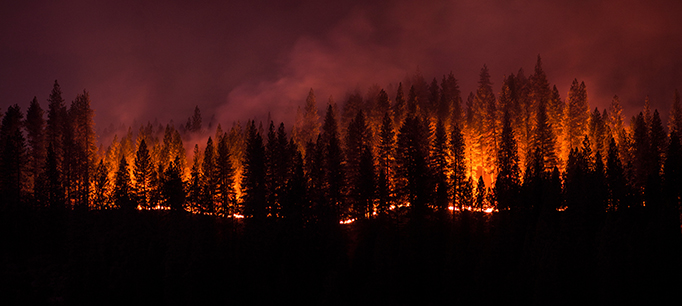
California’s mountain forests have been badly stressed by years of drought and fire suppression practices that encourage overly dense stands of trees. We talked to Scott Stephens―a forestry and wildfire expert at UC Berkeley and a member of the PPIC Water Policy Center research network―about how unhealthy forests affect the watershed.

PPIC: What is the status of the state’s forests?

Scott Stephens: California now has more than 100 million dead trees, mostly in the central and southern Sierra. This has implications for water supply, wildfire management, local economies, and many other issues. The die-off is a symptom of unsustainable forest conditions. Drought is part of the California landscape, but why are we seeing such profound mortality? The drought caused more trees to compete for less water and increased infestations of bark beetles, which kill trees. Droughts are getting warmer, which stresses the trees more. But the underlying cause is unsustainably dense forests. Forest management in the past century increased forest density by removing the most common ecosystem process that once thinned the forest: fire. We need to reduce tree density in Sierra forests so they are more resilient to drought.

Fires start more easily in recently killed forests because embers have more dead foliage to land on. Fighting fires is much harder because there’s an increased risk that standing dead trees will fall and kill people. And since most of these dead trees will never be removed, in 10 to 15 years they’ll be on the ground. This will increase the fuel load substantially and make for hotter fires.

PPIC: What are the consequences to our water supply from dying or burning forests?

SS: It’s useful to compare the effects of a large uncontrolled wildfire—such as the 2013 Rim Fire in San Francisco’s Hetch Hetchy watershed—with what is going on in a part of Yosemite that has had regular fires over the past 40 years. In the Rim Fire zone, trees were killed over a vast area, and sediment and fire debris has moved into streams and reservoirs. By comparison, there’s an area in Yosemite called Illiloutte Creek basin, where small natural fires have been allowed to burn—unlike in most forests, where all fires are extinguished as quickly as possible. We’ve seen a jigsaw puzzle of fire-changed landscapes develop in Illiloutte basin over this time and a change in forest density. For example, an area that was once a solid pine forest is now a wetland after fire cleared about 10 acres of trees. Now we’re doing research to see if water in that basin is increasing. One thing is certain: fewer trees use less water. Also, in denser forests some snow stays in the canopy and is more likely to go back into the atmosphere rather than seep into the ground.

PPIC: Given the scope of the problem, what are our management options?

SS: There are three potential options that would improve on current practices. The first is to manage lightning fires in some areas—such as the remote upper watersheds―so we can naturally reduce forest density. This option can be scaled up relatively fast. We’d need to monitor these fires carefully and allow them to work―just as they’ve done in Yosemite for the past 40 years. Three national forests have proposed allowing managed lightning fires on about two-thirds of their land―Inyo, Sierra, and Sequoia. A second option is to do more prescribed burns. These will be smaller in scale than lightning fires. Lastly, we can use ecologically based mechanical thinning of forests, which can be combined with prescribed burns.

These fixes will be expensive in some areas. But fire suppression currently costs us about $2.5 billion a year just on federal lands—and these methods can help bring down that cost. Shifting the federal firefighting budget so more money goes for forest management could help.

Learn more

Read California’s Water: Protecting Headwaters (from California’s Water briefing kit, October 2016)
Watch our 3-minute video “Headwaters”
Read “Managing Wildfires Requires New Strategies” (PPIC Blog, September 23, 2015)
Visit the PPIC Water Policy Center’s drought resource page
Water Law Aided Ecosystems in Drought

California’s latest drought may be over, but its effects live on. The 2012–16 drought included the driest four-year period since record-keeping began in 1895 and the two warmest years in state history. This combination triggered numerous unhappy milestones in California, especially for the state’s natural environment.

Although urban and agricultural water users incurred significant surface water shortages, in many respects they responded to the drought with great resiliency. The urban economy remained robust, even as residents and businesses responded to calls to save water. Farmers adapted by improving water efficiency, shifting to higher value crops and increasing their use of groundwater.

The environment was not as resilient, and the drought presented a potential calamity for aquatic ecosystems and the fish and wildlife that inhabit them. These ecosystems were strained well before the drought began. In 2010, 82 percent of California’s native fish were either extinct (5%), listed as endangered (24%), or classified by biologists as vulnerable (53%). The recent closure of the commercial salmon fishery off the Northern California coast illustrates the ongoing effects of the drought on fish, despite recent record-setting precipitation.

As ecological stresses increase during drought, aquatic species depend almost entirely on the array of laws and regulations that protect water quality and stream flows. Yet these legal protections can spark considerable controversy when they restrict water for cities and farms.

We worked with a team of students in the Stanford Law School to learn how the laws that are designed to protect California’s aquatic environment functioned during this drought. The project was part of an ongoing study of drought and the environment conducted by the PPIC Water Policy Center.

The team produced four case studies that evaluated several watersheds—the Russian River; the Stanislaus River; the Yuba River; and Deer, Mill, and Antelope Creeks (in one case study). These watersheds presented a mix of challenges involving water rights, regulations, and water management. The students reviewed how various parties—including state and federal regulators, water managers, and communities—fared in providing water to meet vital environmental needs. The goal was to learn how California can improve its environmental water management for future droughts.

These case studies provide remarkable lessons. In each watershed, the parties faced the reality that there was simply not enough water to go around. Yet in some cases, they were able to both provide water for the environment and meet water supply objectives.

Their successes and failures illustrate a number of crucial lessons:

  • Planning for drought makes a significant difference in protecting water quality, stream flows, temperature, and aquatic habitat. All of the case studies illustrate this to some extent, but perhaps the best example is the planning on the Yuba River, where an agreement negotiated over many years among competing interests in the basin―farmers, fishers, agencies, tribes, and others―played a critical role in facilitating cooperation during the drought.
  • Clear “minimum flow” targets for rivers can foster collaborative deal making. On the Yuba River, for example, the State Water Board mandated minimum flows to protect endangered salmon. Farmers and others concerned about possible restrictions on their water use came up with a collaborative settlement that protected fish but also eased some elements of the mandate.
  • Good data on river flows and water usage is vitally important. In particular, lack of specific and reliable data on water use in the Russian River watershed triggered a rush to collect information and hampered decision making.
  • Water transfers have considerable potential to enhance stream flows and reduce the economic impact of water shortages during drought. On both the Stanislaus and Yuba Rivers, water transfers to downstream users helped supplement supplies, provide revenue to upstream water users, and augment stream flows.

The case studies illustrate these lessons and numerous others in specific contexts, but their lessons are of broad applicability. We hope each of them will inform planning and decision making that can better prepare the state’s ecosystems for the next drought.

Better Information Can Help the Environment

We know that California’s aquatic species are at risk from a host of stressors and that drought pushes them closer to the brink. Yet there are significant gaps in our understanding of key factors affecting ecosystem health that make it difficult to effectively manage water for the natural environment. Good practices from other dry places offer lessons for protecting our struggling species and improving conditions in troubled ecosystems.

Water accounting―tracking how much is there, who has claims to it, and what is actually being “spent”―can provide a clearer picture of how and when to allocate water for the environment. Other states have improved their water information systems and reduced environmental problems.

For example, the Colorado Water Conservation Board has a network of high-tech stream gages to monitor freshwater ecosystems. These gages send text or email alerts to state environmental water managers within minutes of approaching low-flow conditions. Staff can respond quickly by requesting an evaluation of priority water needs among local water users and, where possible, shifting water to meet environmental needs.

By comparison, California lacks stream gages on half of the rivers and streams that support critical habitats. This makes active management of environmental water during droughts very difficult, if not impossible, in many parts of the state.

Better accounting can also help us prepare for drought, rather than just respond to it. Making better use of water during average and wet years can stabilize or enhance at-risk ecosystems. This increases their resilience to drought.

For example, drought-prone Victoria, Australia, uses sophisticated water accounting tools to coordinate environmental flows for all types of water years. Victoria also collects and organizes information on a number of critical ecological indicators for thousands of miles of streams and wetlands. This inventory informs Victoria’s short- and long-term decision making about where and when water will be most beneficial to ecosystems and thus helps build drought resilience.

California has a significant body of research on freshwater ecological indicators, but the information isn’t organized in ways that make it readily useful to environmental water managers.

Managing water for the environment is more than a technical challenge. It’s a social process that relies on complex decisions made by water users, regulators, and other stakeholders. Examples from other arid regions suggest that this social process is improved by having access to accurate and timely information. Strengthening water accounting in California is key to improving our ability to manage water for the environment and building the social license necessary to act. Before the next drought pushes more freshwater species to the brink, we would be wise to follow the lead of other semi-arid regions and invest in accounting systems that improve our understanding and management of our rivers and streams.

Learn more

Read the report Accounting for California’s Water (July 2016)
Read “Three Lessons on Water Accounting for California” (PPIC Blog, August 8, 2016)
Visit the PPIC Water Policy Center

Commentary: What Did We Learn from the Drought?


This commentary was published in the Sacramento Bee on April 13, 2017.

Governor Jerry Brown has declared the drought over. What did we learn over five years of drought that that could help us better manage the next one? The drought brought some hard lessons and gave us a glimpse into a challenging future. Record warm temperatures—comparable to those predicted by many climate scientists for later this century—made drought management harder. Improving drought resilience in this increasingly challenging climate will require a number of policy improvements. These six policy changes could help.

Read the full commentary on sacbee.com.

Video: Water Stress in San Joaquin Valley

The San Joaquin Valley―California’s largest agricultural region―faces growing water stress that will bring significant changes to the region’s farms, communities, and economy. Increased cooperation and coordination from the region’s complex mix of agencies and water users is needed to address water shortages and water-related environmental and public health challenges. These are key takeaways from an event in Clovis last week, co-sponsored by the PPIC Water Policy Center and the California Water Institute at Fresno State.

Ellen Hanak, director of the PPIC Water Policy Center, introduced the discussion by summarizing the findings of a new PPIC report on the drivers of water stress in the San Joaquin Valley—the state’s most water-dependent economy—and some tools and strategies that can help. “The valley is an agricultural powerhouse,” Hanak said. “A lot is at stake for the region’s economy, communities, and the environment.”

The first panel looked at balancing water supply and demand, and included experts from water and irrigation districts and farming interests. Panelist Eric Averett, general manager of the Rosedale-Rio Bravo Water Storage District—an area he called “ground zero” for groundwater overdraft—said that the variety of interests in that basin makes it challenging to finding common ground for getting groundwater use to sustainable levels. “However, it also represents a unique opportunity. [We] will pass or fail … collectively as a basin. That brings us all to the common table of addressing and solving these challenges.”

The second panel covered improving the quality of the valley’s water, air, and habitat. Maria Herrera of Self-Help Enterprises noted that disadvantaged rural communities continue to struggle with water contamination and dry wells. “We need to make sure the communities understand what’s at stake for them” and include them directly in negotiations.

Michelle Selmon of the California Department of Water Resources noted that when lands move out of production, it opens an opportunity to create permanent or temporary habitat. “Instead of growing alfalfa or cotton they’re growing habitat. But farmers will need incentives,” she said.

Dairyman Chuck Ahlem of Hilmar Cheese Company said there is a need for sustainable funding for solving the valley’s various challenges, and he said he hopes that increased collaboration can help “find the dollars to address some of these issues.” And, he notes, to be effective partners in resolving these issues, farmers and dairies “need regulatory certainty that we’ll be allowed to operate 10 years from now.”

The last panel of the day looked at collaborative solutions. Former Fresno mayor Ashley Swearengin said that even though urban water use is relatively small, the region’s cities depend on a “healthy, thriving ag community” and must provide leadership on sustainable groundwater management—including with better urban land-use planning.

Dave Orth of the California Water Commission likened the valley’s water management challenges to a “ball of string”—pull on one string and you find that everything’s connected. Some of the “strings” the panel touched on included managing the Delta for both improved water reliability and environmental protection, making use of flood waters to restore groundwater, and accounting for groundwater recharge. “We need to think beyond just looking at new surface storage facilities. We need integrated solutions that bring multiple benefits,” Orth said.

While implementing these solutions won’t be simple, Fresno State’s David Zoldoske noted a key takeaway of the event is that “there’s a lot of expertise here in the valley. I’m very encouraged we will find a path forward.” 

We invite you to watch the videos from this event, and hope you find the discussions illuminating and useful:

Learn more

Read the report Water Stress and a Changing San Joaquin Valley (March 2017)
Read “Reforming California’s Groundwater Management,” (PPIC fact sheet, June 2015)
Visit the PPIC Water Policy Center

Governor’s Funding Plan for Climate, Drought

Governor Brown has released a proposed budget that reaffirms the state’s commitment to boosting drought resiliency and battling climate change. While specifics are likely to change before the budget is finalized in June, here is a summary of key proposals.

  • Cap and trade. California’s recent efforts to combat climate change have been funded from its cap-and-trade program. The program faces an uncertain future because its statutory authority is set to expire in 2020. Partly due to this uncertainty, 2016 cap-and-trade auctions raised a fraction of the money raised in previous years. At the governor’s budget press conference, he announced legislation that would extend the program beyond 2020. Appropriation of cap-and-trade funds in the new budget is dependent on the passage of this bill—which will require a two-thirds vote in both the senate and the assembly. Should it pass, the governor proposes appropriating $2.2 billion for cap and trade, a decrease from last year’s $3.1 billion. As in past years, 60 percent of the proceeds would be for ongoing funding of public transit, affordable housing, sustainable communities, and high-speed rail. The rest is split among one-time investments. This year, the largest sum in the one-time investment pot ($863 million) is for public transit improvements aimed at increasing ridership and decreasing greenhouse gas emissions. Smaller sums include $142 million to fund local climate actions in the state’s most disadvantaged communities and $128 million for projects in forests and urban and agricultural landscapes that remove carbon dioxide from the atmosphere and store it in vegetation or soils.
  • Emergency drought spending. While recent rains have drenched California, the governor’s emergency drought declaration is still in effect, and the new budget appropriates an additional $188 million in one-time resources for drought relief. Roughly half ($91 million) is allocated to CAL FIRE—the agency dedicated to fire protection and stewardship of the state’s forests—to enhance its firefighting capacities and support the removal of dead trees. The drought has contributed to widespread tree mortality, which has raised concerns that the dead trees might fuel future destructive wildfires.
  • Water bond updates. Nearly 80 percent of Proposition 1 water bond funding has already been appropriated (though far less has been awarded for spending). This year, the governor proposes appropriating $248 million from the bond for an Integrated Regional Water Management grant program. These funds are meant to incentivize regional cooperation with the goal of resolving complex water management challenges at a broad scale while balancing social, environmental, and economic objectives. For instance, these funds could foster a regional approach to helping water systems adapt to climate change. An additional $3.8 million would enable the State Water Resources Control Board to enforce the implementation of California’s groundwater law.

Although state money represent only a fraction of California’s total water sector spending (13%—the rest is mostly locally funded), it is an important piece of the funding pie. While the governor’s proposed budget would bring welcome funding to a number of critically important areas, key water challenges continue to experience long-term funding gaps—especially safe water for small rural communities, flood control systems, stormwater management, and ecosystem management.

Learn more

Read California’s Water: Paying for Water (from California’s Water briefing kit, October 2016)
Visit the PPIC Water Policy Center

From Drought to Deluge

The recent change in the weather is prompting many Californians to shift their worry over drought to fretting about floods. That’s an understandable response to California’s volatile climate, which is the most variable in North America. Most notable this year is the return of atmospheric rivers—river-like bands of moisture that periodically stream into California, often from the tropics. These storms are responsible for most of our large, devastating floods. They are also critical for our water supply, providing roughly half of our precipitation in normal and wet years. When atmospheric rivers don’t occur, we usually have a drought.

Here are a few key takeaways from this welcome stretch of wet weather:

  • This is likely to be the end of the surface-storage drought for most of the state. In other words, by next week almost all the major reservoirs will be at or above their seasonal averages (there’s a good summary here)—conditions we have not seen in six years. This is great news since reservoirs are the primary source of water for cities and farms.
  • Many multipurpose reservoirs—those that supply water, hydropower, and flood storage—are well above historic averages. To maintain their flood management capacity for future winter storms, these reservoirs are required by federal rules to release large amounts of water, which is why so many rivers below dams are running high.
  • It is reasonable to be optimistic that our reservoirs will fill this spring. We rely on melting snowpack to top up reservoirs in the spring and to provide roughly a third of the state’s water supply in an average year. The warmth of the weekend storms washed away some of this snowpack, particularly in the middle elevations of the Sierra Nevada (5,000–7,000 feet). Still, higher elevations accumulated a great deal of new snow with these storms, and more than two months remain in the winter snow season.
  • One wet year is not a drought buster. During the height of the drought, the state’s farmers and others turned to groundwater pumping to make up for surface water shortages. The water deficit in our aquifers is now immense. For example, in 2014 and 2015, surface water supplies to farmers in the Central Valley were cut nearly in half, causing them to make up most of this reduction through additional groundwater pumping or land fallowing. It would take many successive wet years—and more intentional groundwater capture and storage—to restore aquifers to the condition they were in before the onset of drought.

The wet beginning to 2017 is a welcome relief from the past five dry years. Full surface reservoirs take pressure off water users and water regulators. But the rains did not wash away California’s major water challenges. There are big decisions ahead—many to be made this year—about how to sustainably manage groundwater, improve storage, resolve the problems of the Delta, and arrest the decline of our native fish and wildlife. Maintaining momentum on these issues is as critical now as when the reservoirs were low.

Learn more

Read California’s Water (PPIC briefing kit, October 2016)
Visit the Policy Priorities for California’s Water YouTube page
Visit the PPIC Water Policy Center flood resources page

Photo by Carson Jeffres