Reforming Water Management for the Environment

A longer version of this piece was recently published by Water Deeply.

It’s time for California to rethink how it manages water for the environment. Despite decades of effort, many of the state’s aquatic native species are in decline. Controversy over water for the environment remains high. The latest drought left lasting effects on already-stressed species and their ecosystems and highlighted the need for a change of course.

Our new research identifies shortcomings in current practices and lays out three reforms that could reduce conflict while improving freshwater ecosystems.

Better accounting. During the latest drought, state and federal agencies found their decision making hampered by information gaps on water availability and use and ecosystem conditions. For example, weaknesses in accounting and monitoring systems—and poor operational choices at Shasta Reservoir—pushed endangered winter-run Chinook salmon to the brink of extinction.

These management challenges were made more contentious by public perceptions about the uses of environmental water. The state lumps many things into the “environmental water” category, including flows required by regulations to maintain water quality for urban and agricultural uses. For example, during the drought, environmental water that flowed from the Delta into San Francisco Bay was widely criticized as “wasted to the sea.” Yet most of this water was needed to prevent high salinity in Delta water supplies.

We must do a better job of measuring and tracking water and ecosystem conditions—and make this information timely and transparent. The state also needs to clearly define what purposes “environmental water” serves, and separate water that benefits both water users and the environment from that used solely to support ecosystems. Better accounting will improve efficiency and provide a common understanding of water use for policy debates.

Better planning. The drought revealed major weaknesses in how California plans for and responds to water scarcity in ecosystems. While urban water managers routinely plan for drought, no such planning exists for ecosystems. With a few exceptions, fish and wildlife agencies react to—rather than plan for—severe drought.

California needs to shift from reacting to drought to anticipating and mitigating its effects on ecosystems. This can be achieved through the development of watershed ecosystem plans that set management goals and priorities for actions.

In addition, California needs annual contingency plans to prepare for uncertainty over how wet the winter and spring will be. A good model is that of Victoria, Australia, where water managers vet their plans and priorities with stakeholders. This allows water users to know what to expect, and tensions are reduced.

Ecosystem water budgets. California also needs a new way to allocate water to protect ecosystems. The over-reliance on minimum flow and water quality standards—often set for individual endangered species—limits the capacity of water managers to adapt to changing conditions.

A more nimble approach would also provide assurances to all interests about allocation of ecosystem water. This can be accomplished by granting the environment a water budget that can be flexibly managed, much as urban and agricultural water-right holders do. These ecosystem water budgets could be stored in reservoirs or groundwater basins, and even traded. The budget would be administered by a trustee guided by the watershed plan and good accounting systems. The trustee could manage the water budget to maximize benefit for ecosystem functions and, where possible, reduce impacts on other water users.

Management of California’s freshwater ecosystems—particularly during drought—is not working well for anyone. These reforms would improve conditions and reduce tensions over allocation of water–and enable freshwater ecosystems to adapt to a warmer and more variable climate.

The State of Groundwater Recharge in the San Joaquin Valley

When strong winter rains finally ended the recent five-year drought, many water districts seized the opportunity to recharge depleted aquifers. How did they do, and what barriers did they face? A public forum brought more than 30 experts together to discuss the benefits, opportunities, and barriers to groundwater recharge. The event was hosted by the California State Board of Food and Agriculture and the state Department of Water Resources.

My presentation focused on recharge in the San Joaquin Valley—a region that is home to more than four million people, half the state’s agricultural output, and most of its critically overdrafted groundwater basins, where pumping exceeds replenishment. Consequences include dry wells, sinking lands, and reduced supplies to weather future droughts.

As part of our ongoing work to explore practical and effective solutions to the region’s water challenges, the PPIC Water Policy Center recently surveyed local water districts about their groundwater recharge efforts. Although such efforts have been underway for decades in some parts of the valley, the state’s 2014 groundwater law has increased interest in using recharge to bring basins into long-term balance.

About 75% of respondents to our survey said they were actively recharging this year. Large water districts with formal recharge programs are doing the lion’s share of recharge, but there’s lots of interest from smaller agencies in getting in on the act.

Agricultural districts are already employing a broad mix of recharge tools, and many see potential for expansion. In contrast, urban districts—most of which rely heavily on groundwater—are much less active. The most widespread methods—used by two-thirds of agricultural districts surveyed—include allowing water to seep through unlined canals and irrigating crops with surface water instead of groundwater, which enables basins to recharge naturally (a method known as “in-lieu” recharge). Other popular options—used by half of agricultural districts—include directing water to dedicated “recharge basins” and applying extra water on irrigated cropland. Some districts also spread water on fallowed land and open space. Of these tools, recharge basins are being used most intensively, storing more than half of total recharge reported (roughly four maf). One caveat to this last finding is that many districts have been using some popular methods (cropland irrigation, in-lieu recharge, and unlined canals) without formally accounting for how much recharge occurs.

Kern County is “recharge central,” accounting for more than half of total recharge volumes reported. It is also the hub of recharge partnership programs that enable water users to store water off-site, by districts that have especially good recharge conditions.

Survey respondents also noted the biggest barriers for their districts. Perhaps reflecting the very large volumes of surface water available this year, respondents were much more likely to flag problems related to infrastructure (72% of respondents) than to regulatory issues (30%). Infrastructure challenges included capacity constraints in several areas: recharge basins, “system” conveyance to get water to the district (e.g., through the Friant-Kern Canal or the California Aqueduct), and conveyance within the district to deliver water to good recharge lands. Many respondents also noted problems with the timing of water availability—a big issue in this very wet year, when storms brought large amounts of water all at once. Other constraints include challenges of expanding recharge on croplands because of farm-related issues (42%)—including unsuitable irrigation systems and uncertainties about the impacts on crop health—and difficulties raising funds for recharge projects (23%).

Survey findings also highlight the opportunities to expand recharge to help close the valley’s water deficit. In particular, the new groundwater sustainability agencies will need to develop better water accounting—which can help improve incentives and funding opportunities for recharge. And as water districts and water users work together to develop basin-wide sustainability plans, there’s potential to develop joint programs between surface water “haves” and “have nots.” Importantly, this includes opportunities to involve more cities and towns in groundwater banking projects and to encourage partnerships to expand off-site recharge.

For more details on these preliminary findings, see the slides linked below. And stay tuned for a report with complete survey findings in early 2018.

Videos: Priorities for California’s Water

This past year brought drought-busting rain and snow and severe wildfires—extremes that tested California’s systems for managing water supply and the natural environment and foreshadow conditions of a changing climate. In light of these challenges, a PPIC Water Policy Center event in Sacramento last week brought together experts to discuss ways forward in three areas: legislative priorities for cities, farms, and rural communities; partnerships that improve the health of ecosystems; and decisions for the Colorado River and Sacramento–San Joaquin Delta.

Ellen Hanak, director of the PPIC Water Policy Center, began the program by summarizing priorities for California water outlined in a new PPIC report. These include California’s ability to recharge aquifers, maintain dams and levees, manage headwater forests and aquatic ecosystems, and provide safe drinking water to rural communities.

The first panel examined a host of proposed, passed, and pending water bills, covering topics as diverse as funding water infrastructure, improving water-use reporting, and addressing safe drinking water problems.

The lack of safe drinking water in disadvantaged communities prompted a lively conversation on how to pay for a lasting solution to the problem. Laurel Firestone, codirector of the Community Water Center, noted that while California has passed a resolution declaring a human right to water, the state’s drinking water crisis—which she said dwarfs that of Flint, Michigan—will take a more concerted effort to resolve.

One possible funding solution the panel discussed is a tax on fertilizers to pay for cleaning up groundwater contaminated by nitrate, which can cause health problems. “This is a legacy problem that stems from the over-application of nitrogen fertilizer for many, many decades,” said Dave Puglia, executive vice president of Western Growers.

The second panel tackled a problem even longer in the making: the crisis in California’s aquatic ecosystems. “We spent 150 years fundamentally changing the ecosystem… We’ve spent about 40 years actively failing to do something about it,” noted Lewis Bair, a water resource engineer with Reclamation District No. 108. “Our system is so modified, and there’s so much work to do, it will probably take a generation to make significant change.” The panelists discussed innovative projects and partnerships that are providing multiple benefits while also improving habitat for aquatic species—and how to scale them up to get broader effects at the ecosystem level.

The final panel looked at two watersheds that have outsized importance to California’s water supply: the Sacramento–San Joaquin Delta and the Colorado River. While the multi-state effort to improve management of the Colorado River has become a model of cooperation, efforts to make progress in the Delta have been more contentious.

Much of the conversation focused on WaterFix, the state’s proposal to modernize the Delta’s water export infrastructure with a pair of tunnels. Grant Davis, the new director of the California Department of Water Resources, called the Delta “the heart of the state’s water supply delivery,” and said that “the status quo will take us into unreliability and ultimately a crisis—and no one wants to manage water in a crisis.” The conversation turned to the long and difficult history of trying to resolve water conflict in the Delta, the need for reliable water supplies for agriculture, and the costs of the tunnels project.

We invite you to watch the videos from this event and hope you find the discussions illuminating and useful:


Learn more

Visit the Policy Priorities for California’s Water YouTube playlist
Visit the PPIC Water Policy Center

Commentary: California’s Forests are Dying—They Need Better Care

This commentary was published in the San Francisco Chronicle on October 14, 2017

California’s forests are on fire, with tragic consequences for communities around the state. While the firestorm in the Wine Country has made international headlines, many small mountain communities also were aflame or on high alert.

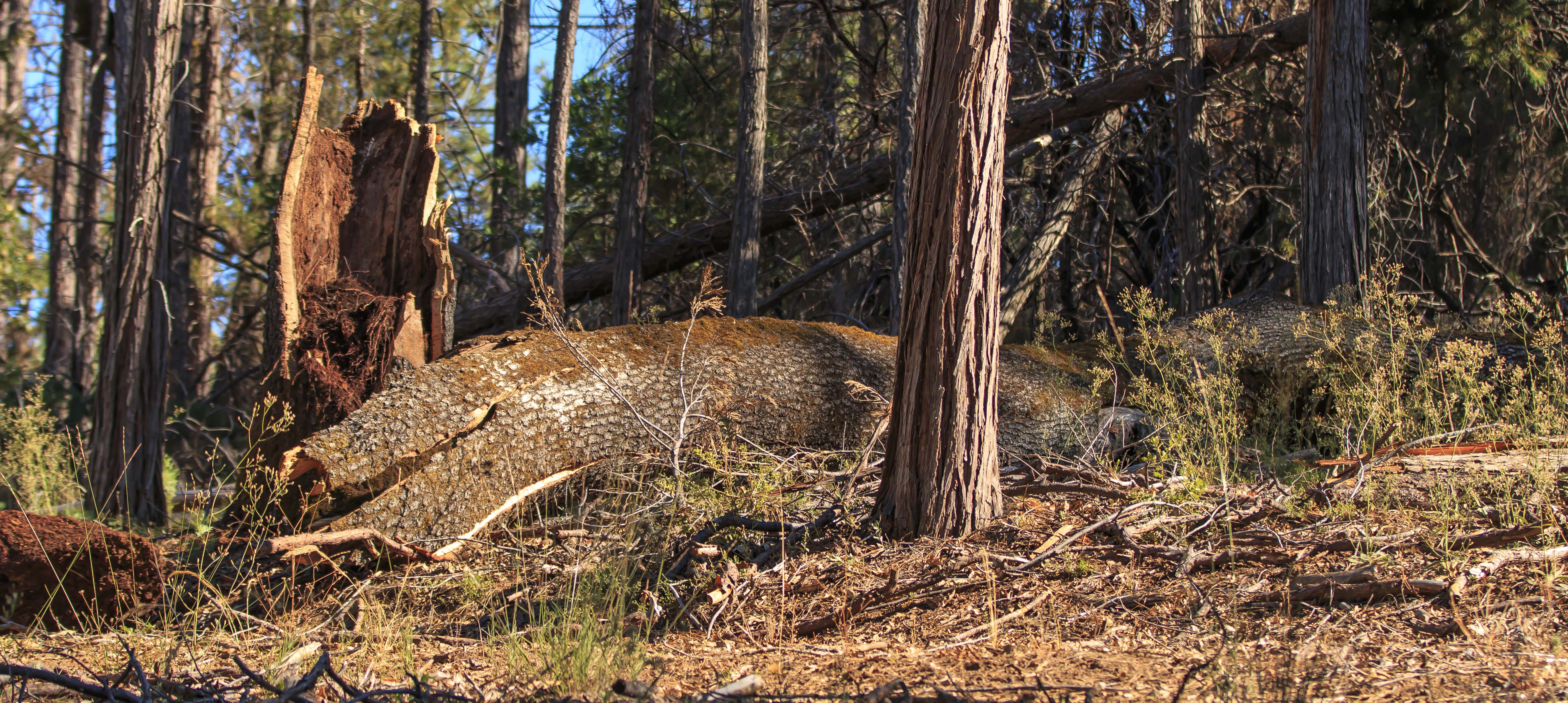
The focus now is on saving lives and protecting property, but when the fires are out, the state will have to face up to a major problem: Our forests are too dense and dry, and, in some areas, dying. We need a new way to manage this vital natural resource.

Read the full commentary on sfchronicle.com.

Video: Improving the Health of California’s Headwater Forests

Forests in the Sierra Nevada benefit all Californians―they provide timber, wildlife habitat, recreational landscapes, two-thirds of the state’s surface water, and other benefits. But their health is in decline from drought, insect infestation, changes in management practices, and overcrowding. These changes have raised the risk of catastrophic wildfire and tree die-off. Improving forest health will require thinning trees, which will make forests more resilient.

These were some of the observations from experts gathered in Sacramento to discuss a new PPIC report on improving forest management.

Van Butsic―an assistant cooperative extension specialist from the University of California, Berkeley, and a coauthor of the  report—gave an overview of the crisis in forest health and solutions to it. A panel discussion followed, moderated by the PPIC Water Policy Center’s Jeffrey Mount. The panelists were David Edelson, Sierra Nevada project director at the Nature Conservancy; Barnie Gyant, deputy regional forester for resources for the Pacific Southwest Region of the US Forest Service; and Susie Kocher, natural resources advisor for the Central Sierra Region at the University of California Cooperative Extension.

“We looked at prescribed fire, managed wildfire, and mechanical thinning, and we realized these three treatments were actually effective,” said Butsic. “But they’re hard to use in California because of a complex management environment.”

Some essential takeaways from the event included:

  • About two-thirds of the land in California’s headwaters is federally owned, making the federal government a key player in solving this crisis.
  • Policy and budgets prioritize fire suppression over forest management. More than half of the US Forest Service budget is for fire suppression.
  • Revenue-generating logging on forest management projects can make these projects financially viable.
  • Treatments to thin forests can negatively affect species and habitat—but catastrophic wildfire is even more harmful.
  • Climate change makes solving the crisis in our forests challenging but not impossible.

Jeff Mount wrapped up the event by noting that the forest health crisis presents an “exceptional opportunity” to stakeholders and decision makers. “We’re seeing an awakening and awareness at a level we’ve never experienced,” he said. “It’s an extraordinary moment that is not to be wasted.”

Learn more
Read Improving the Health of California’s Headwater Forests (PPIC, September 2017)
Read California’s Water: Protecting Headwaters (from the California’s Water briefing kit, October 2016)
Visit the PPIC Water Policy Center’s drought resource page

Storing Water for Dry Days

Where would California be without the ability to store water? We talked to Jay Lund―an adjunct fellow at the PPIC Water Policy Center and director of the Center for Watershed Sciences at UC Davis—about the often contentious and always complex topic of water storage.

Jay LundPPIC: What should every Californian know about storing water?

Jay Lund: Thanks to our Mediterranean climate, California has a very long dry season, which is when we use most of our water, and a fairly short wet season, when we try to gather and store water. To put water storage in perspective, California every year has a worse drought–in the form of a long dry season—than most of the country has ever seen. California has always relied on water storage, and in droughts today we rely on it even more. Almost all the water people use in summer has been stored someplace—either in a reservoir or groundwater. The state’s natural storage system of groundwater and snowpack is now augmented with reservoirs, pipelines, and groundwater pumping. This storage and conveyance system has been critical to California’s prosperity, particularly to its agricultural economy.

You often hear calls for more storage, and of course we do have some limitations in water storage capacity. But no matter how large a reservoir you build, you’ll never be able to reliably get more water out than that stream’s average flow into it. In much of the state the problem is that there’s not enough water available to store or that we can’t get water to the places where it’s needed most. The bottlenecks are often inadequate conveyance rather than storage.

PPIC: What did we learn about water storage from the recent drought and subsequent record-breaking wet winter?

JL: The drought highlighted the importance of groundwater storage. Surface storage in reservoirs is very important in the first couple years of a drought, but with longer droughts we rely more and more on groundwater storage. Groundwater will always be our primary storage for long droughts. California has 400–500 million acre-feet in groundwater storage, compared to about 42 million acre-feet in total surface reservoir capacity. Water quality is a bigger challenge with groundwater than with surface water, since pollutants can be washed into aquifers and accumulate there.

California’s geography is fortunate—we have huge aquifers under the Central Valley. Farmers made up for about 70% of reduced water supply during the drought by pumping groundwater. The longer the drought, the more important groundwater becomes. If we don’t manage to recharge enough water during wet years, there won’t be enough in drought years.

The wet year brought us the Oroville Dam spillway crisis. All of the dam’s outlet structures were compromised or broken for much of the winter. It was a good reminder that we have to maintain these structures and systems, and find funding for maintenance and independent inspections. Good inspectors will always find some concerns and problems, but few problems rise to the level of crisis. With California’s extensive water infrastructure system, if you’re not finding any problems you’re not looking hard enough.

PPIC: What will it take to made good use of groundwater recharge and storage?

JL: You need three things to recharge groundwater: porous land above an aquifer, enough water available above that land, and enough empty space under that land to store it. While local conditions are important, the big limitation for the areas of California experiencing groundwater problems is lack of surface water available for recharge. During this wet winter, people were trying to recharge as much as possible and being very creative about it. But this was a record wet year. We often lack enough water to get good recharge.

To improve recharge locally, we need a better accounting system to improve incentives. We also need more legal protections for local agencies that want to do recharge, and faster authorizations to recharge in wetter years.

Learn moreRead Dams in California (PPIC fact sheet, September 2017).
Read California’s Water: Storing Water (from the California’s Water briefing kit, October 2016).
Read “Expanding Water Storage Capacity in California” (California Water Blog, February 22, 2012).
Visit the PPIC Water Policy Center.

Testimony: Managing California’s Headwater Forests

Van Butsic, a forestry expert with UC Berkeley’s cooperative extension and a member of the PPIC Water Policy Center’s research network, testified before the Little Hoover Commission in Sacramento today (August 24, 2017).


The hearing focused on California forest management and was held in response to the sharp increase in the number of trees dying in headwater forests. Butsic drew his prepared remarks from the PPIC policy brief California’s Water: Protecting Headwaters. Here is a summary.

The committee asked Butsic to explain the risks to the state’s forested upper watersheds and ways to improve forest health. He described a number of risks, including:

  • Policies aimed at extinguishing fires as quickly as possible—combined with reduced timber harvesting—have resulted in exceptionally dense vegetation in many California forests, increasing the risk of extreme wildfires;
  • The expansion of rural communities into wildland areas has complicated efforts to manage fire risk, and;
  • Stress from drought and a changing climate.

Butsic said California stands to lose timber production, wildlife habitat, recreational opportunities, and water supply if this natural infrastructure continues to decline. He noted that the bulk of forestry funding is spent on putting out fires rather than managing forests for long-term resilience.

Butsic explained that to improve health of headwater forests, California must increase the pace and scale of management tools such as fire and forest thinning. This will require management, regulatory, and legal reforms. He described ongoing research being undertaken by PPIC into ways to improve forest management. And he noted that due to a diverse mix of land ownership in the headwaters area, collaborative approaches will be critical.

Learn more
PPIC is preparing a report on California’s headwater forests. Register to attend the related event, Improving the Health of California’s Headwater Forests.

New Water Official’s Views on Salton Sea, Other Priorities

California’s State Water Board has a broad mandate to oversee our complex water system and balance all beneficial uses of water. Joaquin Esquivel―the newest member of the board and a member of the PPIC Water Policy Center’s advisory council―brings broad experience working on state and federal water issues, and personal and professional experience with the challenges of the Salton Sea. We talked with him about his priorities for California’s water issues.

PPIC: You’ll be engaged with the board’s effort to reduce environmental and public health problems at the Salton Sea. Why is this issue important?

JOAQUIN ESQUIVEL: The health and viability of the sea is important in many ways. It’s important to the health of our families and communities throughout the Imperial and Coachella Valleys. Many people who live there already struggle with poor environmental quality. It’s critical to the Pacific Flyway and the more than 400 bird species that use the sea. It’s key to the economies of surrounding communities, which could take an estimated $29–70 billion hit over the next few decades if the sea declines unchecked. And it’s important to California’s water future.

People sometimes forget how much water California gets from the Colorado River, which was significant to Southern California’s resiliency during the recent drought. There is a deep and abiding connection between the sea’s success and our success at better managing the Colorado River, which itself has been stressed by drought.

The issues facing the sea are not unlike other big challenges we face in many other watersheds in California: overlapping public health, economic, and ecosystem needs; limited resources; legacy challenges; and insufficient funding for the scope of work that needs to be undertaken.

Resolving the Salton Sea’s issues requires a tremendous amount of cooperation. The good news is that we’re at the right moment for decisive action. The California Natural Resources Agency has developed a common vision and plan with stakeholders on projects we need to undertake immediately and over the next 10 years.

PPIC: What are you most optimistic about regarding California’s water issues? And what are you most concerned about?

JE: I’m excited by the fact that the drought really focused Californians on water and brought forward communities, voices, and leaders with a passion to break through the old fights and work together to tackle the state’s most difficult water challenges. The drought has created incredible opportunities for collaboration. For example, we’re seeing collaborative efforts in the Central Valley to find solutions to the lack of safe drinking water in some of our poorest and most disadvantaged communities. There’s growing understanding of the importance of expanding and maintaining watershed health, along with growing partnerships between farmers—our greatest assets as stewards of our land—academia, and NGOs to rebuild and strengthen the resilience of our ecosystems. I’m excited that there’s a new generation of engagement on water policy, and it couldn’t come at a better time.

What keeps me up at night is the huge amount of work that needs to be done to resolve our greatest challenges and always feeling that we don’t have the dollars we need to undertake it all. Inadequate funding is always going to be a challenge, so we need to figure out how to better align local, state, and federal dollars, policies, and priorities. It’s really important that we solve the problem of underfunding our water systems and the ecosystems that underpin them.

PPIC: Talk about the governor’s new joint project with the governor of Maryland to develop a “water policy learning network” for other governors.

JE: The National Governors Association staff had been hearing from its members that states were interested in learning about managing water resources, and they approached Governor Brown and Governor Larry Hogan about co-chairing an initiative. I was fortunate to have been tapped as the advisory group co-chair, along with Maryland’s secretary of the environment. The first of two Water Policy Institutes was held earlier this week in Maryland. The second will be held next year in California. The initiative is an opportunity for states to share and discuss best practices in the management of water resources. While it will be useful to share the ways in which California has been a leader on conservation, recycling, and integrated water management, this is also an opportunity for us to learn from other states. We’re right to feel proud of the leadership California has shown on water, but we still have a long way to go in many respects. This initiative is the ideal opportunity to learn from the wealth of experience in other states.

Learn more

Read “Remaking the Salton Sea” (PPIC Blog, April 6, 2017)
Read California’s Water: The Colorado River (from the California’s Water briefing kit, October 2016)
Visit the PPIC Water Policy Center

Video: Building Bay Area Drought Resilience

As water supplies dwindled statewide during the recent drought, Bay Area cities struggled with the consequences—including dying trees and landscaping and reduced revenues to run water systems. But overall, Bay Area water districts weathered the drought remarkably well, according to local water experts—in part, thanks to planning, cooperative efforts among neighboring water suppliers, and enthusiastic conservation on the part of their customers.

These were some of the observations from experts gathered at a recent event at PPIC’s San Francisco headquarters. Speakers included John Marchand, the mayor of Livermore, in conversation with Ellen Hanak, director of the PPIC Water Policy Center. A panel discussion moderated by KQED public radio’s Lauren Sommer followed. Panelists were Alexander Coate of the East Bay Municipal Utility District, Peter Drekmeier of the Tuolumne River Trust, Ken Jenkins of California Water Service, and Steven Ritchie of the San Francisco Public Utilities Commission.

“There are two components to drought resilience,” said Hanak in her introductory presentation. “One is having supply investments that reduce the risk of extreme shortages, and the other is the ability to manage demand in the short term.”

Speakers discussed a range of supply and demand tactics they used to build resilience in their cities and additional ways to prepare for droughts. Topics ranged from the use of treated wastewater for recharging groundwater basins and potable uses; the use of different financial mechanisms to maintain revenue as water sales dipped; and unintended consequences that arose, such as the potentially permanent loss of street trees and other landscaping as water conservation took hold.

Some essential takeaways included:

  • Regional diversification of water supply is key to getting through dry times.
  • Mandated conservation from the state was a blunt instrument; targets based on utilities’ local water conservation plans are more appropriate for such decisions.
  • Planning for “conservation rates” is essential for water districts’ fiscal resilience and maintenance of reserves to pay for fixed costs.
  • Aquatic ecosystems took a hit during the drought. Even though Bay Area cities embraced water conservation throughout the drought, flows to the Tuolumne River and Delta were inadequate. Addressing this before the next drought hits is key to maintain ecosystem health and at-risk species.

Learn more

Read the report Building Drought Resilience in California’s Cities and Suburbs (June 2017)
Read California’s Water: Water for Cities (from the California’s Water briefing kit, October 2016)
Visit the PPIC Water Policy Center’s drought resource page

The Search for Sustainability in the Colorado River Basin

The Colorado River is a crucial water source for seven states (Wyoming, Colorado, Utah, New Mexico, Arizona, Nevada, and California) and Mexico, and like many shared rivers has its share of challenges. We talked to Doug Kenney—director of the Western Water Policy Program at the University of Colorado and a member of the PPIC Water Policy Center research network―about balancing priorities in managing the river.

PPIC: What’s the basin’s biggest challenge currently?

DOUG KENNEY: That depends on what part of the basin you’re in and what sector you work in. There’s no shortage of things to worry about. Right now, most would probably say it’s the effort to maintain the levels of water stored in the big reservoirs, Lake Mead and Lake Powell. Those reservoirs provide a lot of benefits—drought protection, recreation, and hydropower—but only if they have enough water in them. They’re about half full right now, which is about as low as they can go before mandatory cuts in water deliveries—or curtailments—kick in. It’s a math problem, essentially—managing water coming in versus what’s going out. So far in this century, people have pulled more water out than consistently flows in. Obviously, that has to change.

The more chronic issue is that the Colorado has been treated more like a plumbing system than a river, so there’s been a lot of environmental damage to the river. The big environmental concerns in the basin are a result of reduced flows and some water quality issues, such as high salinity, loss of valuable sediments, and increased water temperatures. The real challenge is to remind people we’re talking about a river—the most important ecological resource of the southwest United States.

PPIC: What efforts are underway to address the problems?

DK: The big effort at the moment in the Lower Basin is called drought contingency planning, which would help stabilize (and ultimately increase) the amount of water stored in Lake Mead. The negotiations among California, Arizona, and Nevada have gone remarkably well in this regard, although each state still has internal challenges to work through. For example, Arizona is concerned about looming curtailments of their water supply, while in California the big sticking point is the Salton Sea. The sea has become a critical issue as successful efforts to use water more efficiently in Southern California agriculture have reduced inflows, resulting in a host of environmental and public health issues. In both of the situations, the underlying desire is to protect water supplies for urban users in a way that doesn’t impose undue burdens on agricultural regions.

Another issue worth watching is the 2012 agreement between the US and Mexico that laid out cooperative efforts to manage the river. The agreement expires at the end of this year, and a new one is needed to maintain positive momentum and cooperation. Key issues between the US and Mexico include restoring the river’s delta ecosystem, enabling Mexico to store water in Lake Mead, and sharing water shortages during drought. While cooperation on the Colorado between the US and Mexico has gotten dramatically better in the past decade, people are worried that the tensions arising from the current political environment at the national level could spill over to the negotiations. But so far, the two sides are still talking, and people still seem pretty optimistic about reaching an agreement.

PPIC: How do upstream states view California’s efforts to manage its Colorado River supplies?

DK: Everyone in the basin pays attention to what’s going on in California. California has the largest and arguably the most legally secure allocation of Colorado River water rights. California’s dependence on the river is shaped by many factors, including other water issues within the state. For example, the project to build tunnels under the Sacramento-San Joaquin Delta—if it progresses—would go a long way to create some room for compromise and creativity on how Southern California uses its Colorado River supplies. With every passing year it becomes more difficult to talk about the Delta and the Colorado as separate challenges. Everything is connected to everything else.

PPIC: How is climate change affecting the river basin?

DK: We’re already experiencing big climate-related changes in the basin. It’s already nearly 2 degrees Fahrenheit hotter this century compared to last, and by 2050 it will be closer to 5 degrees hotter. That results in higher evaporation rates, increased water demands, and reduced stream flows. Climate change is water change, and more heat works against all our water management goals. During this drought, precipitation has dropped only slightly but stream flows are way down, partly because it’s hotter. And that will continue―this is the part of climate projections we’re most certain of. Continued warming and the related reduction of stream flows is a huge problem.

Water management is traditionally based on the premise that the future will look like the past, but that’s not a safe assumption anymore. Our physical infrastructure isn’t ideally suited to the projected future hydrology. There’s a similar problem with our institutional infrastructure. We have a pretty sophisticated management regime that is increasingly out of step with evolving conditions. The good news is that key players in the basin now understand that the climate is affecting everything they do, and that they have to cooperate to find solutions to tough problems. People in the basin are committed to putting in the work, but there’s still a lot more to be done.

Learn more

Read California’s Water: The Colorado River (from the California’s Water briefing kit, October 2016)
Watch our 4-minute video “Colorado River”
Visit the PPIC Water Policy Center