Expanding Groundwater Recharge in San Joaquin Valley Cities

The San Joaquin Valley is ground zero for groundwater management challenges. While agriculture is the region’s predominant water user, its cities are more likely to rely on groundwater as their primary source of water. For this reason, the urban sector will need to play a bigger role in the regional effort to balance groundwater use and replenishment.

Our recent research indicates that cities in the valley lag behind agricultural districts in the intentional recharge of groundwater. That’s primarily because most have limited access to two things necessary for storing more water underground: extra surface water and unpaved land on which to spread it so it can percolate into the ground. But some cities have had success with recharge activities. Here are three methods that can serve as models.

  • Partner with nearby agricultural districts. The city of Tulare relies entirely on groundwater for its potable water supply. It has an agreement with the Tulare Irrigation District (TID) for purchasing surface water, which is delivered to a recharge basin that the city co-owns with TID. The basin’s location allows for the recharged water to flow into the city’s pumping zone, even though the basin itself is not within city boundaries. The cities of Clovis and Fresno have similar recharge partnerships with the Fresno Irrigation District.
  • Partner with off-site groundwater banks. The city of Tracy relies on both surface and groundwater. In years when it doesn’t use its entire surface water allocation, it stores the unused portion in one of Kern County’s formal groundwater banks. Even though Tracy and the water bank are on opposite ends of the valley, a conveyance system allows for easy exchanges of water.
  • Recharge within city boundaries. The city of Bakersfield has rights to Kern River water. The city uses a direct recharge basin located within city boundaries to store some of its Kern River allotment.

Some cities engage in multiple recharging strategies. For example, both Tulare and Fresno operate flood control basins to maximize recharge, and Tracy pumps surplus water directly into a nearby aquifer through an “injection well.”

While these are all innovative models, most are still small-scale in terms of volumes recharged. Given the state’s mandate to balance groundwater use with replenishment by 2040, urban efforts will need to be scaled up as much as possible. Expansion will require better water accounting and basin planning. Cities can raise funds to partner with agricultural districts and undertake recharge projects, but they will need incentives and assurances that they will have access to the stored water.

Another critical step is to map and protect undeveloped urban land that is particularly appropriate for recharge. Cities should take steps to prevent the paving over of suitable soils, and encourage recharge on open space lands not only within city boundaries but also in areas into which they are likely to grow in the future—called their “spheres of influence.” As the figure below shows, suitable soils in these areas are extensive, especially in Kern and the eastern part of the valley.

It’s also important to remember that cities won’t be able to go it alone. In addition to partnerships with agricultural districts, broader local and regional cooperation will be critical for managing groundwater resources in the long run.

Commentary: Replenishing Groundwater in the San Joaquin Valley

This commentary was published in the Sacramento Bee on April 18, 2018.

California’s biggest agricultural region also has the state’s biggest groundwater deficit, which has long-term consequences for the region’s economy and farming.

The San Joaquin Valley—where decades of unchecked pumping has depleted reserves, resulting in a long-term deficit of nearly 2 million acre-feet per year—has about a generation to bring its groundwater use into balance to comply with the state’s Sustainable Groundwater Management Act. Storing more water underground through “groundwater recharge” can help, reducing the deficit by about a quarter.

Read the full commentary on sacbee.com 

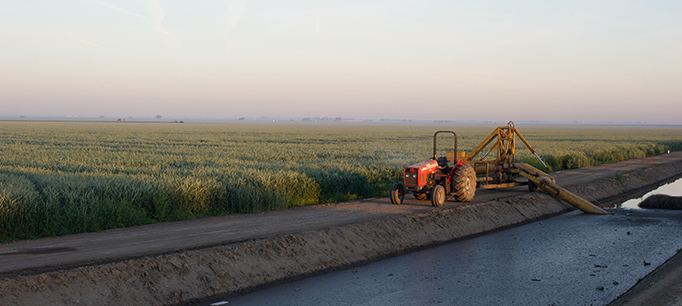
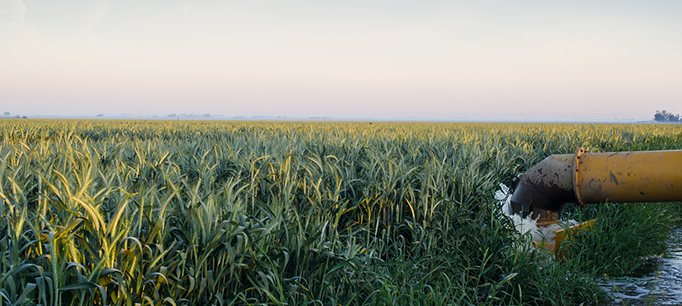
Image above courtesy of Jonathan Parker, Kern Water Bank Authority

A Bottom-Up Approach to Groundwater Sustainability

California’s Sustainable Groundwater Management Act (SGMA) requires communities with ongoing groundwater deficits to bring their aquifers into balance in the coming years. This will be a difficult and complex process, but it’s also an opportunity to devise workable solutions at the community level. We talked to Eric Averett of the Rosedale–Rio Bravo Water Storage District about groundwater management innovations being tried in his Kern County district and lessons learned that might have wider application.

PPIC: What are the priority areas for addressing groundwater sustainability in your district?

Eric Averett: The most challenging area is managing and mitigating impacts associated with demand reduction. Rather than mandating that individual landowners reduce demand, our district has pursued a path that we think gives individuals greater flexibility. The idea is that every acre will be assigned a water budget based on what the district can provide or considers sustainable. If a landowner uses more than that amount, it triggers a water charge. The district will use those funds to develop water supply programs or purchase land from willing sellers to retire it from production. Either way, this system doesn’t take anything away from landowners’ ability to manage their own water, it just gives them more options.

Another important area we’re looking at is water trading within our district’s boundaries. We’ve implemented a pilot study that empowers landowners to act as buyers or sellers in managing their water resources. We think water trading will be an essential tool to getting aquifers into balance and maximizing the value of the resource. For example, during a drought, a small grower with row crops may find greater value in fallowing a field and selling the water. At the same time, a grower who may be short of water and facing the loss of a permanent crop may enter the market as a buyer. If we don’t find a way to create these buy/sell opportunities, we strand the asset.

A third area we’re working on is creating individual groundwater bank accounts for landowners. We have a number of landowners who’ve committed to make their land available for recharge in exchange for a portion of the recharged water being credited to their account. Alternatively, some landowners have acquired a source of water and asked the district to use it for recharge on their behalf. Both types of programs were tested successfully in 2017, and we look forward to expanding the concept.   Ultimately, we’re looking at ways the district can assist landowners in becoming sustainable and mitigating SGMA impacts.

PPIC: How are you handling the issue of dry wells?

EA:  During the most recent drought, we experienced a number of wells that went dry. Kern County’s groundwater levels can be very dynamic, in part because of the groundwater banking projects within the region. These projects pump out large volumes of water during droughts, causing the water table to drop a lot and fairly quickly. We’ve developed a unique mitigation program in partnership with the banking projects. We utilize a groundwater model to evaluate the well in question. If it’s determined that the well’s failure was due to water level impacts from the banking projects, we mitigate the impacts. Within 24 hours of the well going dry they’re connected into a temporary water supply. To date, we’ve spent more than $1 million replacing and repairing wells, or connecting people with dry wells to local service providers. The proof of success is that not one landowner has pursued legal remedies, and all have been satisfied with the results. We think it’s a good template for others to try and may be a model going into the groundwater sustainability planning process.

PPIC: What’s the big lesson from your district’s efforts?

EA In all of these areas, our goal is to have the district be a resource for sustainability, not a regulator. Each landowner is unique: some have thousands of acres, and the impacts on them may not be as great as for someone with a small parcel. A lot of smaller landowners may be unable to manage the fixed costs that will arise from implementing SGMA. We wanted to address the diversity in our district and not disadvantage any one user.

We’re emphasizing approaches that let growers decide what’s best for them—whether it’s helping them put unused water into a market or compensating them for using their land for recharge. Everyone in the district will have to live with the water budget we come up with, but we want to provide as many tools and options to get to sustainability as we can.

The State of Groundwater Recharge in the San Joaquin Valley

When strong winter rains finally ended the recent five-year drought, many water districts seized the opportunity to recharge depleted aquifers. How did they do, and what barriers did they face? A public forum brought more than 30 experts together to discuss the benefits, opportunities, and barriers to groundwater recharge. The event was hosted by the California State Board of Food and Agriculture and the state Department of Water Resources.

My presentation focused on recharge in the San Joaquin Valley—a region that is home to more than four million people, half the state’s agricultural output, and most of its critically overdrafted groundwater basins, where pumping exceeds replenishment. Consequences include dry wells, sinking lands, and reduced supplies to weather future droughts.

As part of our ongoing work to explore practical and effective solutions to the region’s water challenges, the PPIC Water Policy Center recently surveyed local water districts about their groundwater recharge efforts. Although such efforts have been underway for decades in some parts of the valley, the state’s 2014 groundwater law has increased interest in using recharge to bring basins into long-term balance.

About 75% of respondents to our survey said they were actively recharging this year. Large water districts with formal recharge programs are doing the lion’s share of recharge, but there’s lots of interest from smaller agencies in getting in on the act.

Agricultural districts are already employing a broad mix of recharge tools, and many see potential for expansion. In contrast, urban districts—most of which rely heavily on groundwater—are much less active. The most widespread methods—used by two-thirds of agricultural districts surveyed—include allowing water to seep through unlined canals and irrigating crops with surface water instead of groundwater, which enables basins to recharge naturally (a method known as “in-lieu” recharge). Other popular options—used by half of agricultural districts—include directing water to dedicated “recharge basins” and applying extra water on irrigated cropland. Some districts also spread water on fallowed land and open space. Of these tools, recharge basins are being used most intensively, storing more than half of total recharge reported (roughly four maf). One caveat to this last finding is that many districts have been using some popular methods (cropland irrigation, in-lieu recharge, and unlined canals) without formally accounting for how much recharge occurs.

Kern County is “recharge central,” accounting for more than half of total recharge volumes reported. It is also the hub of recharge partnership programs that enable water users to store water off-site, by districts that have especially good recharge conditions.

Survey respondents also noted the biggest barriers for their districts. Perhaps reflecting the very large volumes of surface water available this year, respondents were much more likely to flag problems related to infrastructure (72% of respondents) than to regulatory issues (30%). Infrastructure challenges included capacity constraints in several areas: recharge basins, “system” conveyance to get water to the district (e.g., through the Friant-Kern Canal or the California Aqueduct), and conveyance within the district to deliver water to good recharge lands. Many respondents also noted problems with the timing of water availability—a big issue in this very wet year, when storms brought large amounts of water all at once. Other constraints include challenges of expanding recharge on croplands because of farm-related issues (42%)—including unsuitable irrigation systems and uncertainties about the impacts on crop health—and difficulties raising funds for recharge projects (23%).

Survey findings also highlight the opportunities to expand recharge to help close the valley’s water deficit. In particular, the new groundwater sustainability agencies will need to develop better water accounting—which can help improve incentives and funding opportunities for recharge. And as water districts and water users work together to develop basin-wide sustainability plans, there’s potential to develop joint programs between surface water “haves” and “have nots.” Importantly, this includes opportunities to involve more cities and towns in groundwater banking projects and to encourage partnerships to expand off-site recharge.

For more details on these preliminary findings, see the slides linked below. And stay tuned for a report with complete survey findings in early 2018.

Fellow to Explore Central Valley Groundwater Problems

Josué Medellín-Azuara headshotI am pleased to announce the appointment of Josué Medellín-Azuara, a member of the PPIC Water Policy Center’s research network, as the 2017 Steyer-Taylor Fellow. This is the second year of a three-year fellowship―supported with funding from the TomKat Foundation, established by Tom Steyer and Kat Taylor―to explore solutions to some of California’s toughest groundwater policy challenges.

Medellín-Azuara is associate professor at the UC Merced School of Engineering. He focuses on water resources economics with expertise in water management for agricultural, environmental and urban uses, and farm adaptation to drought and climate change, among other topics.

This fellowship not only advances the water center’s work, it also adds to the state’s body of knowledge on how to address many of the challenges of sustainable groundwater management.

Medellín-Azuara will explore how California agriculture can adapt to future challenges of managing groundwater—especially in the stressed groundwater basins of the San Joaquin Valley, which is the state’s most important agricultural region and largest water user.

“We’ll be looking at future scenarios involving a changing climate, urbanization, technological advancement, and water scarcity, which will shape California’s agricultural mosaic,” said Medellín-Azuara.

The state’s groundwater law requires the valley’s water users to develop sustainable groundwater management plans by 2020.  Medellín-Azuara is part of a team of PPIC Water Policy Center researchers working on a comprehensive analysis of possible sustainable water management solutions for the region.

Learn more
Read the report Water Stress and a Changing San Joaquin Valley (March 2017)
Read “Groundwater in California” (PPIC fact sheet, May 2017)
Visit the PPIC Water Policy Center

Bringing Big, Small Farms Together to Manage Water

Agriculture is by far the biggest water user in the San Joaquin Valley, accounting for 89 percent of the region’s annual net water use. As such, the farm sector will have to play a crucial role in tackling the valley’s various water challenges―from sustainably managing groundwater resources to addressing a number of water-related environmental and public health concerns. Valley farms vary greatly in size, and broad regional solutions to the valley’s resource management challenges must take this into account.

Water Stress and a Changing San Joaquin Valley looked at the number of irrigated farms in the valley and their corresponding acreage over time. The valley is home to nearly 20,000 such farms, including some of California’s largest, but also numerous small and mid-size ones.
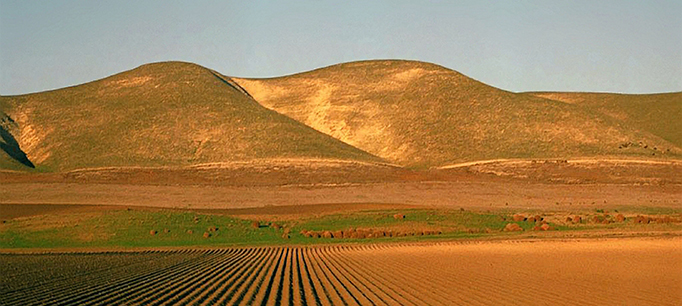
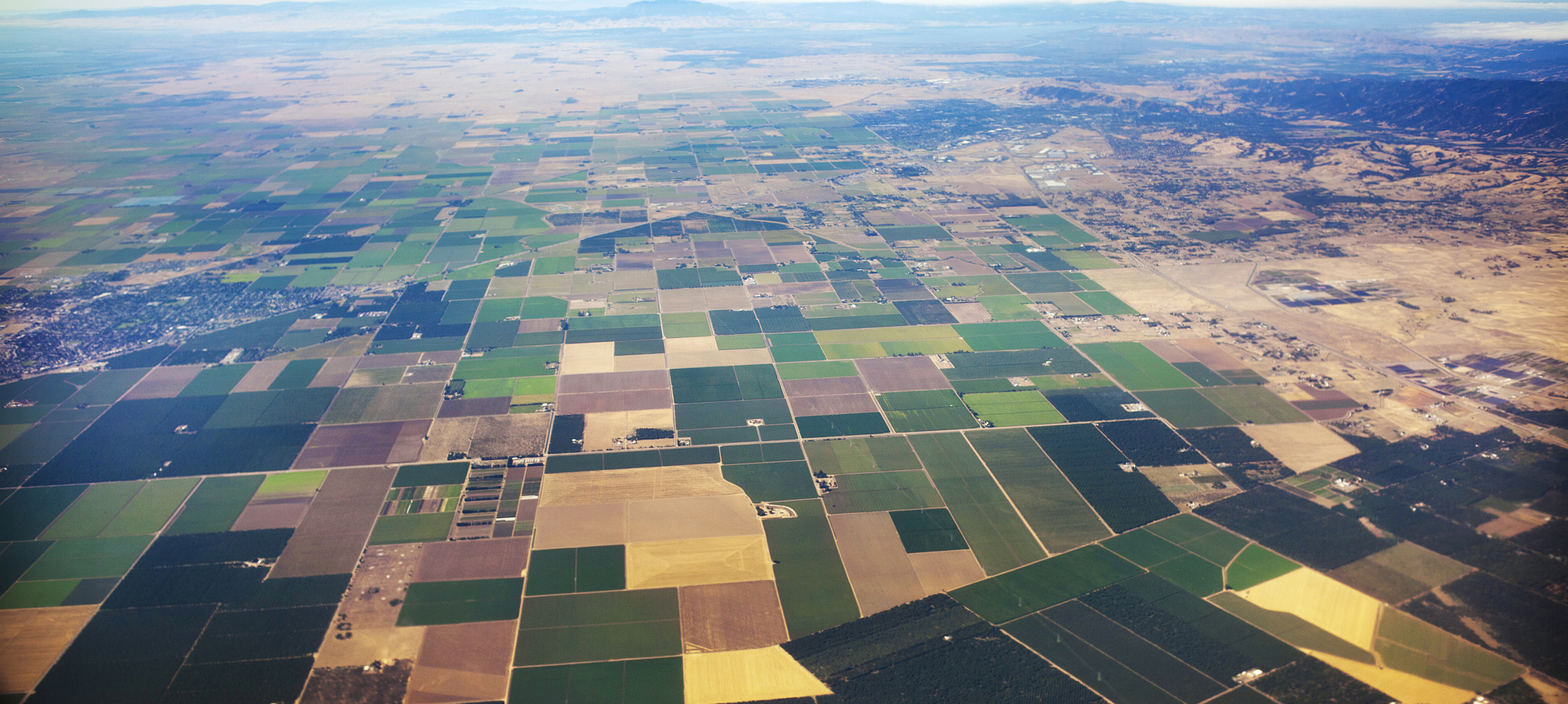
Today, the largest farms―those bigger than 1,000 acres―account for 60 percent of the valley’s total irrigated acreage. However, farms with less than 500 acres of irrigated cropland account for a quarter of total irrigated acreage. There is a geographical pattern to farm-size diversity as well. Relatively small farms and ranches still predominate in the eastern part of the valley, while large operations managing thousands of acres occupy much of the southern and western farmland.

Many of these large farms are already experimenting with water management practices that might help their operations adjust to water stress. Such efforts require significant investments of time and money—a challenge for most small farmers. And contrary to popular belief, the valley is still home to many small farms.

For instance, the smallest farms―those irrigating less than 10 acres―doubled in number from 1969 to 2012. This increase is partly due to the way the Census of Agriculture identifies farms as “any place from which $1,000 or more of agricultural products were produced and sold, or normally would have been sold” during the census year. USDA interprets “normally would have been sold” broadly – which allows some large residential properties to be counted as farms.

But the census trends also reflect an influx of small immigrant farmers to the region. The first big increase in the number of small farms occurred between 1969 and 1982. This timing is consistent with the arrival of Southeast Asian refugee farmers (mainly Hmong and Mien) who escaped their war-torn countries and started farming in the valley. Many of these farms grow more than 100 varieties of Asian specialty produce on farms that are just 2–15 acres in size, and serve urban markets across state, from Stockton, to the Bay Area and Los Angeles. The revenue from farming is an important source of income for these immigrant communities. Although the smallest farms account for just 0.3 percent of the valley’s acreage, the contribution of Hmong and Mien farmers to California’s crop diversity is oversized.

The diversity of the San Joaquin Valley agricultural sector has policy implications. In addition to time and cost constraints, many small immigrant farmers have had difficulties navigating the complex regulatory landscape in California, sometimes due to language or cultural barriers. Creating lasting, equitable solutions to growing water stress and other problems will require coordination and cooperation between various actors in the valley—and broad participation from water users. An important step to getting there is recognizing and loosening the barriers that could hinder broad participation.

Learn morERead the report Water Stress and a Changing San Joaquin Valley (March 2017)
Visit the PPIC Water Policy Center

Video: Water Stress in San Joaquin Valley

The San Joaquin Valley―California’s largest agricultural region―faces growing water stress that will bring significant changes to the region’s farms, communities, and economy. Increased cooperation and coordination from the region’s complex mix of agencies and water users is needed to address water shortages and water-related environmental and public health challenges. These are key takeaways from an event in Clovis last week, co-sponsored by the PPIC Water Policy Center and the California Water Institute at Fresno State.

Ellen Hanak, director of the PPIC Water Policy Center, introduced the discussion by summarizing the findings of a new PPIC report on the drivers of water stress in the San Joaquin Valley—the state’s most water-dependent economy—and some tools and strategies that can help. “The valley is an agricultural powerhouse,” Hanak said. “A lot is at stake for the region’s economy, communities, and the environment.”

The first panel looked at balancing water supply and demand, and included experts from water and irrigation districts and farming interests. Panelist Eric Averett, general manager of the Rosedale-Rio Bravo Water Storage District—an area he called “ground zero” for groundwater overdraft—said that the variety of interests in that basin makes it challenging to finding common ground for getting groundwater use to sustainable levels. “However, it also represents a unique opportunity. [We] will pass or fail … collectively as a basin. That brings us all to the common table of addressing and solving these challenges.”

The second panel covered improving the quality of the valley’s water, air, and habitat. Maria Herrera of Self-Help Enterprises noted that disadvantaged rural communities continue to struggle with water contamination and dry wells. “We need to make sure the communities understand what’s at stake for them” and include them directly in negotiations.

Michelle Selmon of the California Department of Water Resources noted that when lands move out of production, it opens an opportunity to create permanent or temporary habitat. “Instead of growing alfalfa or cotton they’re growing habitat. But farmers will need incentives,” she said.

Dairyman Chuck Ahlem of Hilmar Cheese Company said there is a need for sustainable funding for solving the valley’s various challenges, and he said he hopes that increased collaboration can help “find the dollars to address some of these issues.” And, he notes, to be effective partners in resolving these issues, farmers and dairies “need regulatory certainty that we’ll be allowed to operate 10 years from now.”

The last panel of the day looked at collaborative solutions. Former Fresno mayor Ashley Swearengin said that even though urban water use is relatively small, the region’s cities depend on a “healthy, thriving ag community” and must provide leadership on sustainable groundwater management—including with better urban land-use planning.

Dave Orth of the California Water Commission likened the valley’s water management challenges to a “ball of string”—pull on one string and you find that everything’s connected. Some of the “strings” the panel touched on included managing the Delta for both improved water reliability and environmental protection, making use of flood waters to restore groundwater, and accounting for groundwater recharge. “We need to think beyond just looking at new surface storage facilities. We need integrated solutions that bring multiple benefits,” Orth said.

While implementing these solutions won’t be simple, Fresno State’s David Zoldoske noted a key takeaway of the event is that “there’s a lot of expertise here in the valley. I’m very encouraged we will find a path forward.” 

We invite you to watch the videos from this event, and hope you find the discussions illuminating and useful:

Learn more

Read the report Water Stress and a Changing San Joaquin Valley (March 2017)
Read “Reforming California’s Groundwater Management,” (PPIC fact sheet, June 2015)
Visit the PPIC Water Policy Center

Commentary: Cooperation Needed on San Joaquin Valley Water


This commentary was published in the Sacramento Bee on Thursday, March 2, 2017.

Recent rains have not washed away the growing threat of water scarcity in the San Joaquin Valley, California’s largest agricultural region. Over time it could bring disruptive changes not only to the region’s farmers but also to rural communities, the local economy, and the state as a whole. Resolving this problem will take creativity and cooperation.

Read the full commentary on sacbee.com.

Coming Together Over Groundwater

California’s groundwater management took a forward-looking turn with last year’s passage of the Sustainable Groundwater Management Act (SGMA), which requires local planning efforts to protect the long-term viability of this critical resource. Sarge Green—a water management specialist at California State University, Fresno, and a member of the PPIC Water Policy Center’s research network—is working to put the groundwater law into practice at the local level. We talked to him about creative approaches being tried in the San Joaquin Valley.

PPIC: Talk about the regional groundwater management effort you’re involved in.

Sarge Green: I’ve been participating in a joint effort of eight counties in the San Joaquin Valley, which is looking at key issues—education, air quality, water, transportation. Water is now the top priority for this planning effort, not surprisingly.

The San Joaquin has the largest overdrafted groundwater area in the state. Our task is to find common tools or projects to improve our groundwater situation, and try to get support for them with state or federal grants. We’re designing a local groundwater ordinance with elements that address unsustainable groundwater extraction impacts and permits for new wells.

This valley is a study in contrasts. At one end is the Delta, and at the other end is a major importer of Delta water. Getting all the counties together was groundbreaking. Our organizing principal is: we agree on a majority of things having to do with water, but historically we’ve spent most of our time on the things we disagree on. We’re focusing on what we agree on and getting things done.

PPIC: What is a logical scale for managing groundwater?

SG: Groundwater knows no political boundaries. Basically there’s one big basin. The logical planning scale is the watershed—the areas around the rivers and the mountains that contribute to our valley groundwater. But one constraint in this part of the state is that a lot of people don’t want bigger government. So what’s happened is we’re working at smaller levels within the watershed, and breaking into governing units called groundwater sustainability agencies. Hopefully over time we’ll migrate to something more logical. Ultimately, we’ll need to tie groundwater management to the larger watershed.

PPIC: What’s currently keeping you up at night regarding the state’s groundwater reserves?

SG: It’s the loss of shallow water in rural communities, which is causing drinking water problems. In many cases, rural residents can’t afford to drill much deeper. In others they’re drilling to bedrock and still not getting water. Our basins will refill, but that won’t happen overnight. Financing is also an issue. Some counties are offering low-interest loans to help folks drill deeper. Some people will get covered by hooking into larger systems, which is being promoted by the state’s new push for consolidation. I’ve worked for a long time in rural communities, so I know many rural residents want to remain independent. Some don’t even complain when their wells run dry—they just wait on a drillers’ list and get the job done.

Learn More

Read Reforming California’s Groundwater Management (PPIC fact sheet)
Read “Getting to Groundwater Sustainability” (PPIC blog, June 16, 2015)
Visit the PPIC Water Policy Center’s water supply resource page

Why Farming Needs the New Groundwater Law

A groundwater deficit is growing in key agricultural areas of California. The double-whammy of the extended drought and longer-term reductions in surface water deliveries for environmental needs has pushed many farmers into using ever-more groundwater, at rates that can’t be sustained. In average years, about a third of water used by California’s farms is groundwater—and much more during droughts like this one. In some basins (especially those in major farming regions in the southern San Joaquin Valley and the Central Coast), groundwater withdrawals have long exceeded the pace of replenishment, thus shrinking our most reliable supply for times of drought.

The groundwater law enacted last fall gives local agencies the tools and authority they need to develop and implement sustainable groundwater management plans. Once agencies put these plans in place, they will have 20 years to achieve sustainability—until 2040 for the most stressed groundwater basins. The state can step in if these agencies fail to act.

Despite the seemingly generous timeline for compliance, the law’s goals will be challenging to meet. By June 2017, groundwater users in each basin need to designate a local groundwater sustainability agency that will be responsible for local oversight. And by January 2020, these agencies need to start implementing their sustainability plans. In most places, getting this preparatory work done will require significant additional technical analysis to understand how the basins’ supply and demand work. It will also require coming to agreement on how to collectively manage what has largely been considered an individual resource, with each user able to pump as much as he or she can put to beneficial use.

The drought has made it clear that the status quo is unsustainable. Declines in groundwater levels are resulting in higher energy costs to pump water from deeper depths, sinking lands, and wells going dry in some places.

The groundwater law was not widely embraced by the farm community; indeed, not a single legislator from the San Joaquin Valley voted in favor of it. Yet California farming needs to strengthen groundwater management to support the growing investments in highly valuable fruit and nut orchards and vineyards, which must be watered each year. It’s essential to manage groundwater so that it’s available during droughts, and the new law provides a pathway to do this.

Bringing basins into balance will require creative approaches to basin replenishment. Many irrigation districts are already taking critical steps in this direction. For example, agencies on the east side of the San Joaquin Valley manage surface and groundwater resources jointly to encourage groundwater basin replenishment in wet years. Some districts in the San Joaquin Valley and in the Central Coast have begun recharging basins with recycled wastewater from neighboring urban areas. Another promising approach is allowing floodwaters to spread on fields normally watered by drip irrigation.

A number of technical challenges will need to be addressed. For example, not every aquifer can be recharged, and in many areas, recharge is slow. Much of California’s water conveyance infrastructure was designed for use with surface reservoirs as the main water source, not groundwater. And over time, widespread conversions from flood to drip irrigation methods have allowed farmers to stretch limited surface water supplies, but this is also reducing opportunities for groundwater recharge. New institutional and financial arrangements will be needed to optimize groundwater storage.

Like nearly everything to do with the state’s water management, the solutions to groundwater recharge will require a deft blend of management, infrastructure and policy changes. The new law appropriately puts locals in the driver’s seat for managing a local resource. But the state must play a central role in supporting this transition, with financial and technical support. Allocating funds from Proposition 1, the water bond approved by California voters last November, will be a good start.

Learn more:
Read our policy brief about the challenges of water storage
Read our policy brief on water for farms