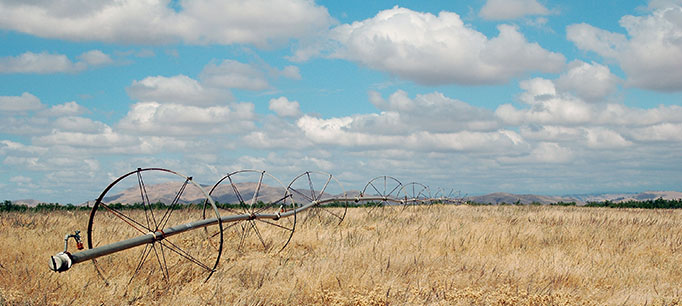
The Challenges of Changing Land Use in the San Joaquin Valley

Implementing the state’s Sustainable Groundwater Management Act—which requires overdrafted groundwater basins to achieve balance between supply and demand by the 2040s—could require taking at least 500,000 acres of irrigated cropland out of production in the San Joaquin Valley. While some lands will be converted to uses such as solar energy, groundwater recharge, and restored habitat, there are no current plans for most of this acreage. We talked to Soapy Mulholland, president and CEO of Sequoia Riverlands Trust, about this impending challenge.
photo of Soapy MulhollandPPIC: What key challenges does this land use transition pose?

Soapy Mulholland: The challenges of managing this amount of land if it’s fallowed piecemeal―5 acres here, 30 there—are huge. A hodgepodge of retired lands would be very difficult to manage and restore.

When farmland is left bare it can cause dust and weed problems, so it will need cover crops. Finding the right cover crops that don’t use a lot of water is likely to be expensive. Grazing can help keep weeds down, but that requires fencing and most of the valley’s farms aren’t fenced.

PPIC: What are some top priorities for ensuring these lands are well managed?

SM: What we need is a vision for how to retire large blocks of land. That will require a “banking” system that pays farmers for retiring land and allows other farmers to purchase credits for a portion of the retired lands’ water, which they can then use on their own lands.

Let’s say you are a highly productive walnut farmer. You don’t want to fallow any of your 100 acres, so you would prefer to purchase a block of unproductive land to get water credits and keep your farm going. It’s a form of water trading. We need to figure out systems for how best to do that.

The idea is to buy farmland with low productivity, retire it, and link it to existing natural habitats. This could extend wildlife corridors from other parts of the region and allow for landscape-scale conservation on the valley floor. For example, there is a lot of potential to do this with less-productive lands at the edge of Tulare Lake Basin—we could conceivably get blocks of land 30,000 to 40,000 acres in size there.

We’ll need an organization or agency that can buy up retired lands—and systems in place to help manage them. We’ll also need a broad coalition of expertise, for example, appraisers and bankers to keep track of credits, and land managers with expertise in open space. We’ll need sophisticated systems that address all the different rules and regulations in California, and that connect all the various stakeholders and agencies that will be involved. And we’ll need funding—both for planning and for the systems themselves.

PPIC: Are there good examples of ways to use the idled lands?

SM: The establishment of solar plants in the Carrizo Plain area in eastern San Luis Obispo County is a good example. The solar companies had to figure out how to mitigate for impacts to habitat and agricultural land. They ultimately purchased more than 30,000 acres of rangeland and dry farmland, and entrusted future management to state agencies or land trusts (including our organization). Using grazing and other management techniques, these lands are now being restored, and even the areas under solar arrays are being managed to benefit at-risk species like the San Joaquin kit fox. Connecting these lands with the nearby Carrizo Plain National Monument offers even greater opportunities to multiply the benefits that each protected area provides on its own. It’s a good example of how to manage large parcels for multiple uses: habitat, agriculture, and renewable energy.

We need more pilot projects to set examples and figure out how best to do this. In the San Joaquin Valley, projects could focus on converting large parcels of retired farmland to semi-irrigated pasture or native grassland, with management in the hands of experienced land trusts. This approach could have benefits ranging from carbon sequestration and natural groundwater recharge to improved air quality and habitat for threatened and endangered species. As in Carrizo, landscape-scale conservation could produce much better outcomes than disconnected projects.

Bringing our region’s groundwater use in line with sustainable supplies will require significant changes in land use, agriculture, and water markets. Figuring out the right answers is likely to push all of us―farmers and ranchers, urban dwellers and conservationists alike―out of our comfort zones. But a coordinated approach to farmland retirement offers opportunities for landscape-scale conservation that can benefit people and nature.
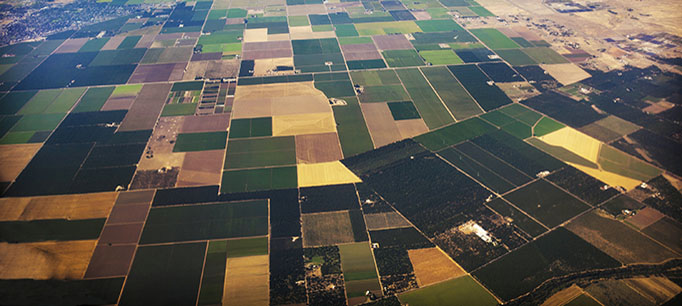
Watch a video with Soapy Mulholland and other panelists discussing planning for water and land use transitions in the San Joaquin Valley

A Winning Approach for Managing Groundwater in the San Joaquin Valley

The San Joaquin Valley is in a time of great change. Decades of groundwater overuse have caused drinking water and irrigation wells to go dry, increased the amount of energy required to pump water, harmed ecosystems, and reduced the reserves available to cope with future droughts. Groundwater overdraft has also caused land to sink, damaging major regional infrastructure, including canals that deliver water across the state.

These problems spurred the enactment of the Sustainable Groundwater Management Act (SGMA), which requires local water users across California to bring groundwater use to sustainable levels by the early 2040s. With California’s largest groundwater deficit, the San Joaquin Valley is ground zero for implementing SGMA.

Although the region will reap many long-term benefits from ending overdraft, the transition to groundwater sustainability will be challenging and costly. The good news is that some approaches can greatly reduce the costs of bringing basins into balance.

The valley faces a groundwater deficit of nearly 2 million acre-feet per year (11% of net annual water use). To close the deficit, local agencies will have to augment their supplies, reduce their demands, or use some combination of these two approaches.

Our new report shows how a portfolio approach—with supply investments that farmers can afford and tools that increase flexibility for managing demand—offers a winning combination. The most promising supply options are to capture and store more local runoff, especially in groundwater basins, and to increase water imports by managing the system differently. On the demand side, increasing water trading—both within and across groundwater basins—can significantly mitigate the impacts of reducing water use, by allowing farmers to maintain the crops that generate the most revenue and jobs.

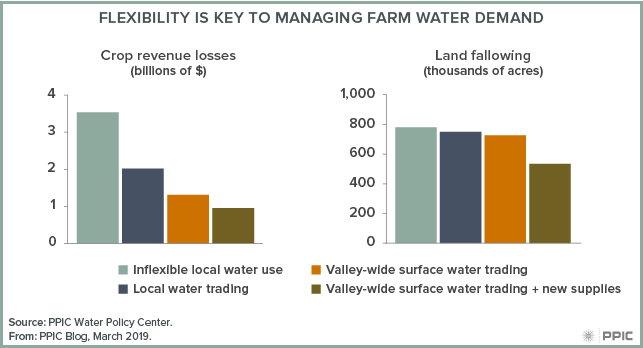
As the figure below shows, if farmers have no flexibility to trade water or adapt crop choices, ending overdraft without new supplies would require fallowing 780,000 acres—about 15% of the valley’s 5.2 million acres of irrigated cropland. It would also cause crop revenue losses of about $3.5 billion per year—roughly 17% of current crop revenues in the region.

figure - Flexibility Is Key to Managing Farm Water Demand

But if farmers can make flexible crop choices and trade ­water within local groundwater basins, fallowing would decline slightly, and crop revenue losses would fall by nearly half (to $2 billion per year). And with broader, surface water trading across the San Joaquin Valley, farmers in the south would buy some water from the north, where it is more abundant. This also would not change the amount of fallowed acreage by much, but it would further reduce the need to fallow the most profitable fruit, nut, and vegetable crops—lowering revenue losses by nearly two-thirds (to $1.3 billion per year).

Finally, a portfolio approach combining water trading and cost-effective supplies would reduce crop revenue losses by three-quarters (to $0.9 billion per year). The new supplies would also make a large dent in the need for land fallowing, which would fall by nearly one-third (to 535,000 acres).

Using a portfolio approach to achieve groundwater sustainability and avoid economic disruptions in the valley will require coordinated efforts among local, state, and federal agencies. The most pressing priorities are those related to expanding groundwater recharge and water trading, including:

  • Assessing infrastructure needs and modernizing water operations
  • Incentivizing recharge on farmlands
  • Clarifying how much water is available for recharge
  • Developing a healthy local trading culture
  • Facilitating state and federal approvals for trading and banking

Finally, to reap the most benefits from recharge, trading, and other tools, local entities will need to collaborate both within and across basins. Since the valley has more than 120 groundwater sustainability agencies for its 15 groundwater basins, overcoming institutional fragmentation will be key to success.

Video: Water and the Future of the San Joaquin Valley

The San Joaquin Valley is at a critical juncture in determining its water future. California’s largest agricultural region is ground zero for many of the state’s most difficult water management problems, including groundwater overdraft, drinking water contamination, and declines in habitat and native species.

A state mandate to bring groundwater use to sustainable levels will have a broad impact on valley agriculture and the regional economy in coming years, likely including some permanent idling of farmland.

The PPIC Water Policy Center assembled a group of regional experts last week for a half-day public event at Fresno State to discuss three overarching challenges: balancing the valley’s water supplies and demands, addressing water quality problems, and planning for beneficial water and land use transitions.

Ellen Hanak, director of the PPIC Water Policy Center, launched the day’s discussions with a summary of the valley’s water-related challenges and approaches that could help address them. “The valley faces unprecedented challenges and a lot of change,” she said. Drawing from a new PPIC report on the valley’s water future, she noted that an all-hands-on-deck approach will be needed as the scope of the problems can’t be addressed farm by farm. “The most promising approaches are those that increase flexibility, provide incentives to encourage folks to make decisions that are beneficial, and can be done cooperatively.”

The first panel focused on ways to balance supply and demand in the face of an annual groundwater deficit of nearly 2 million acre-feet a year. Some of the approaches discussed included assessing opportunities to use infrastructure and farmland to augment groundwater recharge, crediting landowners for helping to recharge aquifers, and providing flexibility to farmers—for instance with water trading—so they can avoid fallowing the most profitable crops.

“The goal is to put as many tools into the hands of the landowners to give them the opportunity to manage [groundwater sustainability] to the best of their ability,” said Eric Averett of the Rosedale-Rio Bravo Water Storage District.

The second panel tackled the complex and pressing groundwater quality issues the valley faces—from resolving safe drinking water problems in poor rural communities to addressing ongoing nitrate and salt contamination of groundwater and soils. Key challenges include finding ways to pay for safe drinking water for affected communities; identifying cost-effective approaches to reduce nitrate contamination, especially on farmlands managed by dairies; and ensuring that flooding farmland to recharge basins doesn’t harm groundwater quality.

The final panel explored ways to manage fallowed land to get multiple benefits for people and nature. “We can think about ways to manage recharge basins to create wildlife habitat,” said Nat Seavy of Point Blue Conservation Science, one of the authors of the PPIC report. “There are opportunities to restore retired land and create habitat for San Joaquin desert species, and we can restore floodplains in a way that provides flood benefits for people.”

A common theme to the day’s discussions was finding ways that local stakeholders can work together on these difficult problems. As Hanak noted, “The leadership on this has to come from the valley. State and federal support can help, but folks in the valley will need to drive the change.”

We invite you to watch the videos from this event and hope you find the discussions helpful:

Commentary: A Balancing Act for the Water-Stressed San Joaquin Valley

This commentary was published in the Fresno Bee on February 21, 2019.

The San Joaquin Valley is on the brink of a major transition as it seeks to balance its groundwater accounts. California’s largest farming region has the state’s biggest groundwater deficit—almost 2 million acre-feet per year by our estimates. To put it in context, that’s about one Don Pedro Reservoir’s worth of water a year.

Read the full commentary on fresnobee.com.

A Momentous Water Year

California was bookended by extreme events last year―from the Southern California mudslides in January to the disastrous wildfires north and south in November, and in between, a bout of record-breaking heat in Los Angeles. These events are all connected to policy challenges that California water managers and decision makers are grappling with—issues that are front and center in our work at the PPIC Water Policy Center.

  • Climate change is bringing multiple climate pressures that affect the state’s water supplies and complicate water management. We assembled a team of 30 experts in climate science, hydrology, ecology, engineering, economics, and law to review the weak points in the state’s water system and recommend actions to build its climate resilience. Our new report―published as Governor Brown’s Global Action Climate Summit kicked off in September―provided an accessible analysis of how climate change will affect droughts and summarized reforms needed to better manage future droughts and adapt the state water system to a more volatile climate. Next up is a research project on how to manage wastewater as the climate changes.
  • Two years of tragic, extreme fires stirred debate on how best to address this growing risk, and productive change is already underway. Our ongoing work has guided the development of significant reforms to improve forest health and reduce wildfire risk. Governor Brown directed state agencies to increase forest management in accordance with some of our recommendations. And a new law reflects a number of our suggested reforms to help headwater landowners better manage their forests. New federal and local policy changes will also help. We’ve begun a deeper dive into the benefits—and beneficiaries—of improved forest management as a next step to identifying durable funding solutions.
  • The San Joaquin Valley―California’s largest agricultural region—faces major challenges in managing its groundwater, a critical drought reserve. Our research on recharging groundwater basins laid out key problems that must be addressed to capture more water for underground storage and described what can be done to advance recharge efforts. Next month we’ll release a comprehensive review of solutions to the San Joaquin Valley’s many water and land management challenges that will help the valley continue on a prosperous path for the next century.
  • We hosted a large public event in November to identify water priorities for the new governor. A group of 16 experts discussed how the Newsom administration can promote water policies and practices that benefit the state’s people, economy, and environment. We also updated and expanded our policy briefing kit, California’s Water, to inform newly elected leaders on key water issues—including a new brief on providing safe drinking water. We look forward to working with the new administration to develop meaningful, lasting, forward-looking water policies.

As we move into our fifth year, the PPIC Water Policy Center looks forward to being part of the effort to find creative and collaborative solutions to California’s most difficult and pressing water challenges. And as always, we thank our supporters who enable this important work.

With best wishes for 2019,

Ellen Hanak

P.S. You can sign up for our weekly blog post. And you can learn more about how to support the center’s work.

Reducing Drought Risks in Rural Communities

Disadvantaged rural communities are disproportionately exposed to drinking water risks in California. Too many experience insecure supplies and contamination of their water sources. While there are growing efforts by policymakers to address water contamination, many communities will need further help to prepare for future droughts. Improved planning efforts could help avert water shortages.

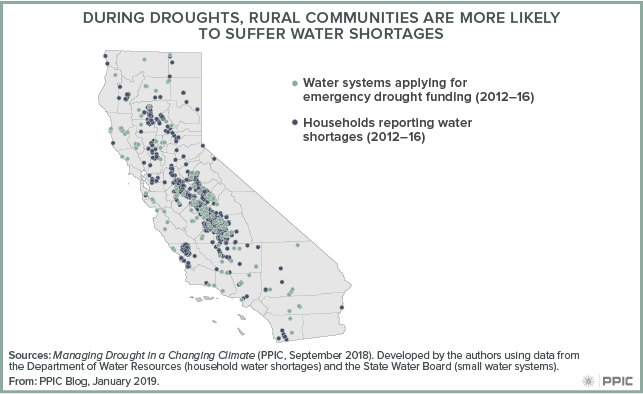
Rural residents are more vulnerable to running out of water during droughts because they are more likely to rely solely on groundwater from small community wells or domestic wells. These wells tend to be relatively shallow, so they are susceptible to running dry when pumping lowers groundwater levels. During the 2012‒16 drought, farmers and cities pumped extra groundwater to make up for surface water shortages. Thousands of wells went dry―mostly domestic drinking water wells in rural communities, especially in the San Joaquin Valley. And roughly 150 small community water systems sought emergency assistance to keep the taps flowing.

Although the state’s Sustainable Groundwater Management Act (SGMA) is expected to lead to balanced groundwater use and reduce over-pumping in the long term, California’s highly variable climate means that groundwater levels will still drop during droughts. This could result in more drinking water wells going dry. In a recent submission to the California Water Data Challenge, several colleagues from UC Davis and I found that a drought similar to the latest one could cause more than 4,000 domestic wells to go dry in the Central Valley.

A recent PPIC report on managing drought in a changing climate offers two ideas for reducing these risks:

  • Develop drinking water plans for rural communities and identify durable funding sources. Small rural systems do not have the financial capacity for drought planning and mitigation. State and local partners should use their experience from the recent drought to identify communities at highest risk, connect them to larger systems where feasible, and devise drought response programs for the others with reliable funding sources. The newly formed groundwater sustainability agencies, working with local partners such as counties and agricultural and urban dischargers, could help coordinate actions and streamline funding mechanisms.
  • Ensure groundwater sustainability plans include mitigation actions for dry drinking wells. Sustainability plans should describe preparation for groundwater drawdowns during severe drought similar to the one in 2012‒16. For instance, as groundwater sustainability agencies develop their plans, mapping drinking water wells that might be at risk for different drought scenarios and proposing mitigation actions that proactively decrease the risks are both imperative.

Studies of institutional responses to the latest drought largely find that planning for drought response and recovery paid off. Making an action plan to avoid further water-supply risks in disadvantaged rural communities―as well as identifying reliable funding mechanisms to implement it―should be top priorities for California policymakers.

Tackling Safe Drinking Water in the San Joaquin Valley

Unsafe drinking water is a significant problem in parts of California, especially in small, disadvantaged rural communities. We talked to Maria Herrera—a California water commissioner and community development manager at Self-Help Enterprises—about how to tackle this ongoing problem.

Maria HerreraPPIC: What’s behind California’s safe drinking water problem?
Maria Herrera: Too many California residents still lack access to safe drinking water. In the San Joaquin Valley, drinking water delivered by small water systems and private domestic wells is contaminated by many natural and manmade contaminates. Typical water quality issues for valley communities are contamination from nitrate, arsenic, uranium and a chemical called 1,2,3-TCP. Small community systems and private well owners often don’t have the resources to address these issues. They face a lot of challenges—for starters, they have little to no staff and lack the resources to maintain or upgrade aging infrastructure. Some rely on just one or two wells. Historically, these communities haven’t been prioritized for state funding or in planning processes.

PPIC: How should we be tackling this problem?

MH: I grew up in communities experiencing these problems and have worked on these issues for more than 10 years, and I’ve seen a big shift in visibility over safe drinking water in recent years. California has taken a number of steps to address the problem, especially with the passage of the human-right-to-water law (AB 685), which makes it state policy that every Californian should have safe and affordable drinking water. That was the biggest signal that this issue is now being prioritized. Also, Proposition 1 prioritized safe drinking water in disadvantaged communities by increasing technical assistance funding and giving communities an opportunity to hire consultants to develop shovel-ready projects and fund safe drinking water projects.

We need to continue on that path in order to make these communities less vulnerable to drought. We need to not only fund mitigation of contaminated wells and treatment plants, but also help communities develop redundant water sources, promote consolidation of small systems to larger ones, and help them with drought contingency planning. Communities need guidance and technical assistance in order to develop solutions and participate in water planning.

This year California came close to establishing a safe drinking water fund, which would have created an ongoing fund for disadvantaged communities to improve their water infrastructure and clean up contamination. A safe drinking water fund is still a priority for drinking water advocates going forward.

PPIC: How might the Sustainable Groundwater Management Act (SGMA) affect the safe drinking water effort?

MH: SGMA creates a good opportunity for people to come together and identify ways to protect and improve drinking water supplies. But achieving sustainability will bring some tough decisions and will have some impact on agriculture. We want farmers to thrive—and rural communities to have adequate water supplies. SGMA provides groundwater sustainability agencies (GSAs) an opportunity to play a very meaningful role in improving groundwater supplies. We’d like to work with GSAs and communities to develop joint solutions, improve coordination between GSAs and the agencies that work on water quality, and ensure that good information is available regarding groundwater supplies used by these communities. We’d like to encourage GSAs to look more closely at domestic wells. We’re trying to encourage them to develop more protections for vulnerable communities. Our ultimate objective is to ensure that rural communities have the information and resources they need to play a meaningful role in developing and implementing their groundwater sustainability plans.

PPIC: What gives you hope?

MH: I’m inspired by the interest of rural residents in building capacity and leadership skills to engage on water issues. There’s a new generation of young adults that know the issues, have lived in impacted communities, and are now ready to a make change in their communities by participating in water management and planning. I’m also energized by the partnerships we’ve helped establish between the communities, irrigation districts, cities, and agencies. It gives me hope that they are interested in finding common ground. And, I’m  encouraged by the attention the issue is getting at the state level—the legislature, governor, the voters have all shown interest in funding propositions and programs that will help bring safe water to these communities.

Watch a video with Maria Herrera and other panelists discussing managing drought in a changing climate.

2020 Census: Counting the San Joaquin Valley

The decennial census plays an essential role in American democracy. The stakes are huge for California, and 2020 is fast approaching. This series of blog posts takes a detailed look at California communities that may be at risk of being undercounted.

PPIC’s new interactive census maps are an important tool for Californians working to ensure an accurate census count. Using estimates from the Census Bureau and the Federal Communications Commission, they highlight hard-to-count communities across the state and pinpoint reasons why certain areas may be hard to reach.

Home to 4.3 million people, the San Joaquin Valley may be one of California’s hardest-to-count regions in 2020. Encompassing about 11% of the state’s population, the valley runs south from San Joaquin County through Stanislaus, Merced, Madera, Fresno, Tulare, Kings, and Kern Counties. Most of the communities at risk of being undercounted in the region live south of Stanislaus County through Kern County. For example, 33% of census tracts in Fresno County are likely to be very hard to count, according to Census Bureau estimates that draw on demographic characteristics and historical trends. But only 7% of tracts in Stanislaus are very hard to count. Households in these very hard-to-count areas are less likely to respond initially to census forms and are therefore at risk of being undercounted.

Some highlights:

  • An undercount could reshape the legislative landscape of the San Joaquin Valley. Since legislative district lines will be redrawn based on the census, disproportionately undercounting parts of the San Joaquin Valley could reshape the region’s political representation. And while hard-to-count communities are distributed across several counties in the region, they are concentrated in fewer legislative districts. In Congressional Districts 16 (Costa) and 21 (Valadao), for example, about 42% of census tracts are likely to be very hard to count. Undercounting could also affect the northern San Joaquin Valley, which has hard-to-reach areas despite having fewer historically undercounted populations.
  • Undercounting people of color and noncitizens could disproportionately affect legislative districts in the central and southern San Joaquin Valley. This area has particularly high shares of groups that tend to be undercounted in the census—African Americans, Latinos, and Native Americans, as well as noncitizens, who may be even less likely to respond in 2020 due to the planned addition of a citizenship question. A total of six legislative districts have populations that are at least 65% African American, Latino, or Native American and at least 15% noncitizen: Congressional Districts 16 and 21; State Senate Districts 12 (Cannella) and 14 (Vidak); and State Assembly Districts 31 (Arambula) and 32 (Salas).
  • Another factor driving the San Joaquin Valley’s overall risk of being undercounted is the high share of young children. Young children are historically underrepresented in the census. There are particularly high concentrations of families with young children in the central and southern San Joaquin Valley: children under 5 years old make up 8% or more of the population in Fresno, Kern, Kings, Merced, and Tulare Counties—among the highest concentration in the state.
  • Housing conditions may make an accurate count especially challenging in the western San Joaquin Valley. In this area, relatively large shares of housing units are rentals, overcrowded rentals, and/or mobile homes—all of which can make residents harder to find and count accurately. For example, more than 20% of households live in mobile homes in some northwestern parts of San Joaquin County and some southwestern parts of Tulare County.
  • Limited internet access may be an issue in certain areas throughout the region. The Census Bureau plans to collect the majority of responses online in 2020—a change from previous practice. Each county in the San Joaquin Valley has some census tracts with minimal residential high-speed connectivity, with the lowest access outside cities. While people in these areas may have internet access through smartphones or public libraries, in general they may have more trouble accessing the census online.

We hope these maps serve as a starting point to help local, regional, and state leaders think about which activities, resources, and partnerships—including language assistance, awareness raising, and community outreach—might be most effective for accurately counting different parts of California. Stay tuned for future posts that examine hard-to-count communities in other regions of the state.

How Much Water Is Available for Groundwater Recharge?

The wet winter of 2017 brought an opportunity to test groundwater recharge—the intentional spreading of water on fields to percolate into the aquifer—as a tool for restoring groundwater levels and helping basins comply with the Sustainable Groundwater Management Act (SGMA). This is especially important in the San Joaquin Valley, which has the biggest imbalance between groundwater pumping and replenishment in the state.

A key question for many valley water managers is how much water will be available for recharge in the long term. By law, only river flows in excess of what is required for environmental purposes and to supply existing water-right holders are available for recharge. A recent report by the PPIC Water Policy Center estimated how much water would be available in the San Joaquin Valley over the long term. Two earlier studies—one by two scientists at UC Davis and the other by the Department of Water Resources—estimated a maximum of about half a million acre-feet on average, which is about a quarter of the valley’s estimated deficit. The PPIC study updated these estimates in the context of current conditions and concluded that an average of more than a million acre-feet of San Joaquin River flows may be available.

There are two big challenges to getting more water into underground storage in the valley:

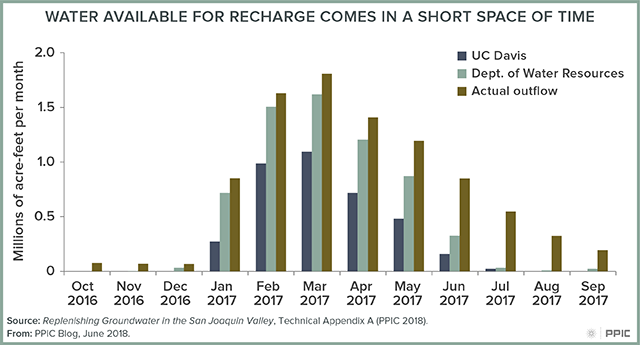
  • Most water for recharge becomes available during short periods. These periods usually coincide with floods, when recharge infrastructure—such as canals, pipelines, and recharge basins—is already working at full capacity. In 2017, for example, more than half of the available water would need to be diverted in February and March, with diversions above 30,000 acre-feet on most days (see figure). To put that into perspective, the California Aqueduct—the state’s largest conveyance system—has a maximum capacity of 26,000 acre-feet per day. While such daily volumes are lower than the overall volume of water moved in the valley during the summer irrigation season, seasonal floods are concentrated in relatively few areas where conveyance limits are likely to be a challenge.
  • Most of the available flows are in the northern half of the valley, while most of the overdrafted basins are in the drier south. This highlights the need to evaluate the capacity of large system-level water conveyance systems, such as the Friant-Kern Canal and the California Aqueduct, to move more water from north to south for recharge purposes.

The State Water Board—which oversees surface water rights—has the last word on this issue. Given the nature of California’s “flashy” river systems—in which very high flows develop rapidly during the winter and spring—the board will need to develop a simple, quick way to determine when river flows exceed water required for the environment and water-right holders.

We can’t count on groundwater recharge to singlehandedly end overdraft in the valley, but efforts to expand recharge in wet years will be helpful. The most pressing issues are to determine how much water is legally available and how best to put this water into the ground. Assessing the infrastructure needed for capturing flows during floods is an essential piece of this puzzle.

Blog figure: Water Available for Recharge Comes in a Short Space of Time


Image above courtesy of Jonathan Parker, Kern Water Bank Authority

Three Water Challenges for Almonds

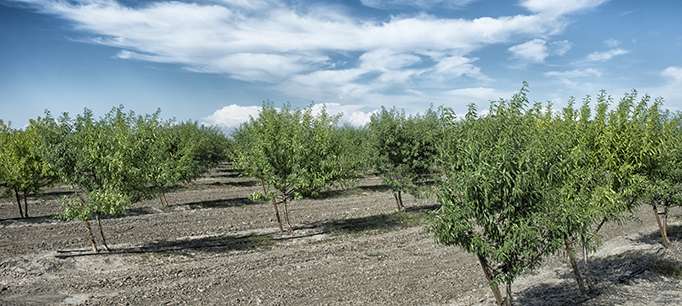
California is a force of nature when it comes to almonds. The state’s farmers produce virtually the entire US almond crop and dominate the international market. As the market has grown, almonds have become California’s largest single crop—now accounting for about 12% of irrigated acreage, with more than 1.2 million acres harvested in 2016. Availability of water is clearly a major issue for the industry, since the trees must be irrigated throughout the long spring and summer dry season. At a May event on water issues organized by the Almond Board of California, I was asked for some thoughts on the water realities almond growers must grapple with in coming years. Here are three key takeaways.

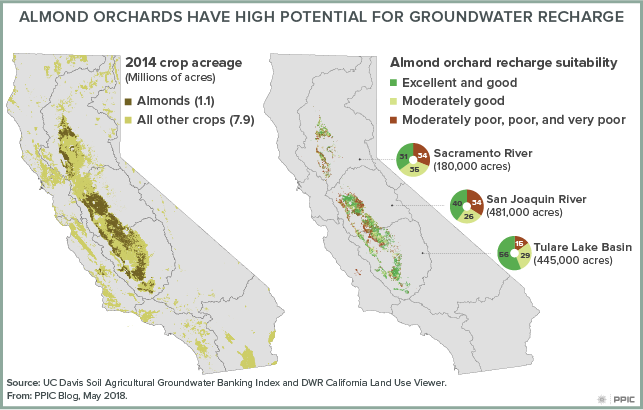
  • Growers in the San Joaquin Valley must address a long-term groundwater deficit. More than 80% of almond acreage is in the San Joaquin Valley (see map). Decades of unchecked pumping in the valley have resulted in a chronic groundwater deficit averaging nearly 2 million acre-feet per year—equivalent to about two Folsom reservoirs. Groundwater sustainability agencies must now devise plans to comply with the state’s 2014 groundwater law by bringing their water supply and use into balance over the next two decades. This means both augmenting supplies and reducing water use. Almond growers—along with others—need to be engaged in this process.
  • Augmenting local supplies can fill some of the gap––and almond growers can help. Up to a quarter of the San Joaquin Valley’s groundwater deficit could be eliminated by replenishing aquifers during high-flow events and wet winters like 2017. Spreading water on farmland is a cost-effective way to capture this water. Almond orchards are good candidates for such a process, given the suitability of much of the land for recharge (see map). Moreover, almond trees are dormant in winter and early spring, when extra water is most often available. Pilot projects and groundwater-recharge research are helping establish best practices and addressing ongoing questions among growers about the impact of winter flooding on almond crops. Almond growers also need to support other types of groundwater banking projects—such as recharge basins—that can help maximize available water supplies.
  • Managing demand will also be essential for reaching sustainability. Water use will need to fall to reduce the groundwater deficit. While this will pose some challenges, the good news is that farmers have been managing water demand for decades in this water-scarce region. Since the early 1980s, irrigated crop acreage in the San Joaquin Valley has hovered around 5 million acres, while the value of valley agriculture has roughly doubled (in today’s dollars). Farmers have responded to water scarcity by investing in crops and practices that generate more dollars per drop. The expansion of crops like almonds—and the corresponding decline in cotton and other field crops that bring in less revenue—reflects this shift. During the recent drought, farmers also used tools such as water trading and selective fallowing of less-productive lands. These same tools can help smooth the transition to balanced groundwater use, given the willingness of  water users who benefit most from using scarce supplies—for instance, those who need to keep orchards thriving during droughts—to compensate others who can use less.

Almonds are expected to remain a top crop in the state, and a leading source of farm revenues, for decades to come. But water stress will be an increasingly important factor for California’s almond growers and for the San Joaquin Valley more generally. The farm sector’s water challenges can’t be addressed farm by farm, or crop by crop. Cooperative approaches—including trading and groundwater recharge—will be essential to a smooth landing for the valley’s almond industry and the regional economy overall.