Commentary: California Must Stop Relying on the Endangered Species Act to Manage the Environment

This commentary was published on CalMatters on November 5, 2019.

In California, state and federal Endangered Species Acts play an important and often outsized role in regulating water and land management. These powerful laws are also often at the center of conflicts between environmental and economic uses of water.

The state and federal acts have helped prevent the extinction of species and encourage better stewardship of water and the environment. But endangered species protection is often used as a proxy for protecting the environment, something the act are not intended to do. Here’s why we need a better tool.

Under the endangered species acts, state and federal agencies narrowly target regulations to protect listed species from direct harm and loss of critical habitat.

To illustrate, the recent dust-up between the Newsom and Trump administrations over proposed increases in water diversions from the Sacramento-San Joaquin Delta is mostly about actions affecting two endangered fish: Delta smelt and winter-run Chinook salmon.

This narrow focus ignores the fact that it is the ecosystems of the Delta watershed, and the diverse array of social, economic, and environmental benefits, that provide value to all Californians.

But given the narrow mandates of the acts, the arguments and lawsuits tend to focus on just one aspect of these ecosystems: the trade-offs between endangered species and water extraction.

To be clear, society places great value on native biodiversity and rightfully seeks to prevent extinctions. For many, protection of threatened or endangered species is a way to leverage improvements in the overall health of ecosystems.

Unfortunately, that is beyond the scope of the state and federal acts.

To promote healthy ecosystems and protect native biodiversity, California needs a different approach.

A new report by the Public Policy Institute of California’s Water Policy Center recommends that California adopt ecosystem-based management. This doesn’t require major reforms to state or federal endangered species acts. Rather, we recommend a shift in the way these acts are implemented.

Widely used in other countries and in marine fisheries and forest management in the United States, ecosystem-based management emphasizes improving ecosystem condition. The goal is to simultaneously protect native biodiversity while improving other uses of freshwater ecosystems.

It integrates human needs such as water supply and quality, flood risk reduction, hydropower, recreation, and spiritual uses into management objectives and promotes actions that create multiple benefits.

Importantly, this approach is consistent with the acts and other state and federal laws that govern water management. A growing body of research suggests that managing at the ecosystem level, rather than emphasizing the protection of a narrow range of habitat deemed critical, improves the likelihood of recovery of listed species. It also helps head off future endangered species act listings by improving conditions for all native species.

Shifting away from single-species to ecosystem-based management will not be easy. It requires three things:

  • The state needs to rethink planning and governance processes to include all beneficiaries of freshwater ecosystems, not just advocates for water supply and endangered fish. This includes finding new ways to align agency priorities and permitting rules—now a major obstacle to ecosystem improvement projects.
  • The state needs to use new tools that go beyond traditional regulatory approaches for environmental water, such as setting minimum flow and water quality standards. One promising approach is to create ecosystem water budgets, which can be stored and traded like a priority water right. This water can be flexibly allocated to improve ecosystem condition, and managed along with habitat changes to maximize benefits.
  • The state needs to incentivize and institutionalize ecosystem-based management. Given its broad water quality and water right authorities, and its mandate to balance all uses of water, the State Water Board should take the lead.

The board would set the criteria for ecosystem-based management plans and incorporate them into water quality control plans. Where possible, these plans would be supported by negotiated agreements between regulatory agencies, water users, and stakeholder communities.

We don’t need to start from scratch. Elements of ecosystem-based management are being employed throughout the state. For example, the Delta Stewardship Council and the Central Valley Flood Protection Board have plans to simultaneously improve ecosystem condition and human well-being.

A novel ecosystem-based approach to water and species management is being implemented in the Upper Santa Ana Watershed in Southern California. And the Newsom administration’s efforts to develop voluntary agreements for environmental water allocation in the Central Valley take a broad approach to improve ecosystem health.

These nascent efforts are not enough. Changing course will require commitment to new ways of planning and managing. Most importantly, it will require risk-taking and leadership from the water users, state and federal officials and legislators.

This won’t be easy. But the alternative is to keep doing what we’ve been doing, which isn’t working for anyone.

Reducing Flood Risk in the Central Valley

The Central Valley has some of the highest risk of flooding in the state, and that risk is growing as the climate changes. We talked to Tim Ramirez, a member of the Central Valley Flood Protection Board, about how this risk is being managed for current and future conditions.

photo - Tim Ramirez

PPIC: Talk about managing flood risk in the valley.

TIM RAMIREZ: The valley has always flooded, especially in spring when snow melts in the high Sierra. Before it was developed, the landscape was often an inland sea in the spring. Now that many more people live there, it’s harder to minimize risk. The flood management system in the valley was envisioned 150 years ago, and in a lot of ways it continues to work. But the climate is changing with more rain and less snow, requiring an update.

That’s where the Central Valley Flood Protection Plan comes in. The plan is meant to not only protect people but also to help restore river ecosystems. We need to give rivers more room to flood, which better protects people and creates floodplains for native fishes, including Chinook salmon. For example, the Sacramento Valley Chinook salmon fall run is the single most important commercial fishery off northern California and southern Oregon, and there’s been a lot of work to ensure the health of those populations. There’s been a big push to restore salmon populations on the San Joaquin River, too. Reconnecting rivers to their floodplains is key to restoring salmon and illustrates the multiple benefits we can get from one project.

Rivers in the San Joaquin Valley in particular need more room. The San Joaquin River and its main tributaries—the Merced, Tuolumne, and Stanislaus—flow through Fresno, Merced, Modesto, Oakdale, and other communities. Each has less than 10,000 cubic feet per second (CFS) peak flow capacity in their floodways. By comparison, the American River has expanded its floodway and can now safely release more than 100,000 CFS. The San Joaquin system is plumbed to store and meter out snowmelt. But almost all climate forecasts show more rain and less snow. The reservoirs and levees on the San Joaquin aren’t designed or operated for large rainfall events or the “pineapple express” floods (like the January 1997 floods) that come from rainfall on large snowpack.

PPIC: Talk about the flood plan.

TR: What’s unique about the valley is that the state—through our board—is responsible for operating and maintaining levees. The plan outlines what needs to be done to minimize flood risk and restore river ecosystems. The first plan was completed in 2012. We’re scoping now for the third update, due for adoption in 2022. The most important thing about this update is the acknowledgment that we need to modify the system for changing climate conditions.

When the next big flood happens we’ll have a lot more people living in harm’s way. The most immediate thing we can do is make better use of new forecasting tools and prepare to execute evacuation plans, so we can get people to high ground.

One of highest long-term priorities is to make investments where the San Joaquin River flows into the Delta near Stockton. A lot of improvements are happening on the Sacramento side of the system—for example, setting back levees to make more room for floods—but not as many on the San Joaquin side. The state needs to support local efforts on the ground and also flesh out the plan so we can start building multi-benefit projects on the San Joaquin side.

PPIC: What is one thing you hope to see accomplished in five years?

TR: That’s easy—create expanded flood capacity, including new floodplain habitat, on the San Joaquin side of the system. I also want the state to set new standards for how much bigger our floodways need to be to protect Central Valley communities, taking into account our changing climate.

Near term, we also need to fund the necessary operations and maintenance for the system we have now. It’s a universal problem that affects flood management and management of other water systems, forests, and the electric grid.

Watch Tim Ramirez and other panelists discuss protecting Californians from fire, floods, and drought at our November 2019 water conference.

Video: Preparing California’s Water System for Climate Extremes

Climate change is stressing water management across California. This week the PPIC Water Policy Center hosted its annual half-day workshop in Sacramento to discuss how state and local leaders can help prepare California’s water system and ecosystems for greater climate volatility.

“California has the most variable year-to-year climate of any state in the lower 48,” said Ellen Hanak, director of the PPIC Water Policy Center. “This is expected to increase, with drier dries and wetter wets.” Water management of the future will “need to start managing our droughts for floods and our floods for droughts,” she added, because greater volatility will make it harder to manage multipurpose reservoirs for both floods and droughts at the same time. Flexible, multi-benefit approaches—and solutions that are aligned across agencies—are going to be increasingly important in tackling these complex challenges.

The first panel focused on managing fast- and slow-moving disasters—floods, fires, and droughts. Panelists discussed the impacts of the recent fires on communities and local water systems, and the types of tools and partnerships that can help minimize risks. Tim Ramirez of the Central Valley Flood Protection Board described the significant and increasing flood risk in the San Joaquin Valley and called for a flood bypass to protect the growing Stockton region. And Michael Thompson of Sonoma Water called for funding from the state to support the “collaborative infrastructure” that will enable agencies to work together more effectively.

A panel on safe drinking water summarized the current status of the problem and discussed how to best use the new Safe and Affordable Drinking Water Fund to ensure that the water delivery system works for everyone. “I think that in five years we want to see every child in California has safe drinking water in their home,” said Jonathan Nelson of the Community Water Center. “The way we do that will be through multiple strategies, but that’s the vision we want to work toward, and ideally, as quickly as we can.”

Darrin Polhemus of the State Water Board said small water systems pay more for their systems and supplies, have a lack of management and technical capacity, and are particularly hard hit by water contamination and shortages. He noted that “we have to change this whole paradigm” to help improve how small water systems operate.

The final panel brought key state officials to the stage to discuss the governor’s water resilience portfolio, now being developed to address the challenges of a more volatile climate. Wade Crowfoot, secretary of the California Natural Resources Agency, said a top priority is to make it easier to help the environment and get multiple benefits out of water projects. “Permitting wetlands restoration is the exact same process as permitting a strip mall,” he said. “So while we’re threatened by climate change and our ecosystem is under unprecedented threat, state government makes it really expensive and slow to get [such projects] done.” He said his agency is committed to cutting “green tape” that slows ecosystem restoration projects.

Sounding a particularly hopeful note, Karen Ross, secretary of the California Department of Food and Agriculture, said we have “an opportunity of a lifetime for farmers to step up and identify how they can be part of the solution to climate change.” She noted that farm practices can sequester carbon while also building resiliency to help farms weather droughts and floods.

We invite you to watch the videos from this event:

How the USDA Helps California Farmers Steward Water and Land

The US Department of Agriculture (USDA) is the largest federal agency in charge of food and farm policy in the US. But the agency also has a lesser known role: it runs a large portfolio of programs to promote conservation of soils, water, and wildlife habitat on farms.

California gets on average $150 million a year from the USDA’s suite of resource stewardship programs. The programs are operated by two of the nineteen agencies within the USDA: the Farm Service Agency (FSA) and the Natural Resource Conservation Service (NRCS).

USDA’s conservation programs can be broadly grouped into three categories: (1) temporary land retirement programs, (2) longer-term or permanent “easement” programs to protect farmland, and (3) working land programs that focus on resource stewardship of lands in agricultural production. NRCS also provides technical assistance to support these efforts.

The temporary land retirement programs are underutilized in California. These programs pay landowners to take land out of production to implement conservation practices, such as planting cover crops to improve soil quality. These programs accounted for 3% of the USDA resource stewardship funding in California from 2012–17, versus 32% nationally. Low enrollment in these programs in California reflects a variety of factors, including low payments and high land values for irrigated cropland in the state.

Landowners who enroll in longer-term or permanent easement programs retain legal title but commit the land to a specific use—for instance, converting croplands to wetlands—or commit to prevent commercial development on farmland. These programs also account for a small share of the USDA stewardship portfolio. Nonetheless, USDA easements support important conservation efforts across the state. For instance, NRCS was a major partner in the restoration of Dos Rios Ranch, a project adjacent to the San Joaquin National Wildlife Refuge that converted agricultural lands to habitat and helped an endangered species, the riparian brush rabbit, make a comeback.

Working land programs are especially popular in California, accounting for almost 70% of USDA agricultural conservation funding in recent years. The majority of these funds have been used to install more efficient irrigation systems and replace old diesel engines on farms to protect air quality. Programs also support a variety of other activities, including managing manure on dairies to protect water quality or installing hedgerows to create habitat for pollinators on farms.

Generally speaking, the USDA conservation programs support conservation practices on a farm-by-farm basis. But to realize broader benefits, investments often need to be on a larger scale. The Regional Conservation Partnership Program (RCPP)—introduced in 2014—encourages landowners to join forces on resource concerns. To date, RCPP has funded 21 projects in California, including helping rice producers extend their watering season to support migratory birds and supporting development of a traditional land management plan by the Yurok Tribe.

There is considerable potential to use USDA’s stewardship programs in new ways to help address changes on the horizon for California’s agriculture. Across the state, farms face growing requirements to address water scarcity and quality problems. Ending the long-term overuse of groundwater is a huge challenge. In the San Joaquin Valley, closing the gap will likely involve idling some cropland. It will also require finding cost-effective ways to recharge groundwater basins.

To assist in these efforts, working lands programs could support on-farm recharge as well as management practices to prevent dust, pests, and weeds on fallowed lands. Temporary land retirement programs could fund multiple-benefit management of lands that are transitioning out of irrigation, supporting efforts to conserve water, recharge groundwater, improve soil health, and restore habitat.

The 2018 Farm Bill increased the USDA’s capacity to provide this help. Funding for the largest working lands program in the valley has been increased, and it is now available to support projects by local water management agencies as well as individual farmers. Funding has tripled for the innovative RCPP program, which leverages public and private dollars to tackle regional conservation challenges. And throughout the farm bill, conservation programs now cover soil health and carbon sequestration as targeted outcomes.

By working together with the USDA, the state’s farmers and their local and state partners could make better use of these programs and address new challenges at hand.

figure - USDA’s Working Lands Programs Are Popular in California, but Temporary Land Retirement Programs Are Underused

Got Surface Water? Groundwater-Only Lands in the San Joaquin Valley

The San Joaquin Valley—California’s largest agricultural region—has the largest groundwater deficit in the state. However, water scarcity is not experienced equally across the valley. Some areas receive abundant surface water to support cropland irrigation and drinking water supplies. Most others supplement their use with groundwater. Still others have no surface water access and depend entirely on groundwater. Water users in these groundwater-only areas are particularly vulnerable to pumping restrictions under the Sustainable Groundwater Management Act (SGMA)—the state-mandated effort to balance groundwater basins.

The map below gives a broad view of where the groundwater-only agricultural lands are located in the San Joaquin Valley. These areas are present in each basin; they include irrigated cropland (shown in red on the map) as well as rangeland and other open space (shown in gold).

figure - Nearly 20% of Irrigated Cropland in the San Joaquin Valley Relies Entirely on Groundwater

We estimate that nearly 20%—or 840,000 acres—of irrigated cropland in the valley has no access to surface water. Crops are similar in groundwater-only lands and lands that have at least some access to surface water: more than half are planted with permanent fruit and nut crops. These crops provide higher revenues and employment than most annual crops. With groundwater cuts looming and no other water supply to fall back on, groundwater-only areas are on the front line of the effort to bring basins into balance. Inflexible approaches to managing this transition could result in unnecessarily large, undesirable reductions in high-value crop acreage, regional employment, and GDP.

Cooperative approaches to water management can give flexibility to groundwater-only areas and lessen the regional economic burden of reducing groundwater use. Facilitating local surface and groundwater trading would allow farmers who need more water for their orchards and other high-revenue crops to compensate other farmers for reducing their water use. Expanding surface water trading more broadly across the valley could bring down costs further and offer even more flexibility. And smart regional investments in new water supplies—particularly to capture more runoff from big storms and increase groundwater recharge—could offset some of the water use cutbacks expected in groundwater-only areas.

Cooperation will also be important to ensure adequate water supplies are available for the valley’s growing cities and small towns—most of which also rely heavily, if not entirely, on groundwater. Recharge partnerships that benefit communities are one promising way to do this.

Water conditions in San Joaquin Valley basins vary, from the size of a basin’s groundwater overdraft to the availability of surface water in the local supply mix. These variable conditions call for cooperation between those with access to surface water and those without. This will make it possible to lessen the costs of implementing sustainable groundwater management, a transition that will benefit the valley over the long run.

Fostering Sustainability in the San Joaquin Valley

California’s largest farming region faces two linked challenges: balancing groundwater supply and demand in overdrafted basins, and addressing water quality in the region’s aquifers. We talked to Ashley Boren, executive director of Sustainable Conservation, about tackling these issues in the San Joaquin Valley.

photo - Ashley Boren

PPIC: Talk about your organization’s efforts in groundwater recharge.

Ashley Boren: We’re focused on trying to get stakeholders in the San Joaquin Valley to think about doing more recharge―and expanding recharge approaches―to make a dent in the overdraft problem. Climate forecasts show that California will have fewer but more intense big storms in the future, with a lot of water coming at once. When that water comes out of the Sierra, we need to let it spread out across the land—including on suitable farmland that can handle large volumes of water and has good soils for recharging groundwater. There’s a lot of opportunity to do more recharge.

We’ve definitely seen an uptick in interest among farmers in recharging on their land—the state’s Sustainable Groundwater Management Act has been a huge driver for that. We’re trying to provide tools to help farmers and irrigation districts recharge as much as possible. For example, we’ve got some demonstration sites where we help growers who accept water onto their land to measure the results and impacts. We use our findings for education and outreach with other farmers. And with our partner the Earth Genome, we’ve created a tool that runs scenarios on how landowners and water agencies can optimize recharge using a combination of dedicated recharge basins, fallowed land, and active cropland. It combines publicly available information on things like soil types with water agencies’ proprietary information on canal capacity and location. It’s cloud-based and easy to use.

We’ve also joined the Department of Water Resources’ Flood-Managed Aquifer Recharge effort, which explores ways to marry flood management with groundwater recharge and habitat creation to achieve multiple benefits. There are more than 200 stakeholders involved so far.

PPIC: What needs to happen to scale up recharge?

AB: Several things need to happen. Improving conveyance infrastructure is the big one, so we can move water to where it’s needed most and where conditions for recharge are suitable. We need more landowners willing to accept water on their land, and also more recharge basins. And we need to figure out how much water is available for recharge by watershed, so water agencies know what they’re working with and how much they can capture.

We’re collaborating with the State Water Board to enhance current regulations that would greatly boost recharge efforts, and exploring ways to expedite permitting while ensuring existing water rights are honored and environmental water needs are covered.

PPIC: You’re also working with dairies to help them address water quality issues. What are key lessons from this work?

AB: We’ve been working with San Joaquin Valley dairies on how to manage manure to protect water quality for nearly 20 years. We’re helping dairies apply nutrients more precisely to their feed crops in order to reduce nitrate leaching into groundwater. But reducing the use of manure on croplands means dairy farmers have a lot of leftover manure. Manure is a valuable resource, so the industry is trying to figure out how to create products with excess manure that can be exported off farms to avoid nitrate leaching. Studies indicate we will have to export up to 40% of the valley’s manure to comply with water quality laws. The good news is the industry is actively working to figure out the market for manure products.

We’re also really excited about a partnership with the irrigation company Netafim, supported by the USDA, which allows dairies to apply their nutrient-rich wastewater very precisely to their feed crops to limit leaching of the excess nitrogen into groundwater. So far we’ve seen up to 40% less water and up to 75% less nitrogen applied to fields at our demonstration projects. An added bonus is this system also reduces nitrous oxide emissions into the air by 90%. If dairies could get credit for reducing this very harmful greenhouse gas, it could help pay for installation of the systems.

Watch a video with Ashley Boren and other panelists discussing how to prepare California’s water management system for the impacts of climate change.


California’s Dairy Industry Faces Water Quality Challenges

Contaminated groundwater is an ongoing problem in some of the state’s poorest rural communities, particularly in the San Joaquin Valley. One big threat is nitrate, caused mainly by many decades of crop fertilization with chemical fertilizers and dairy manure. For dairy farms, solutions are especially difficult and expensive. We talked to Anja Raudabaugh of Western United Dairymen about what can be done to address these challenges.

photo - Anja Raudabaugh

PPIC: What is the relationship between the San Joaquin Valley dairy industry and water quality?

Anja Raudabaugh: The entire valley faces significant water quality problems. Arsenic, which occurs naturally, is the number one contaminate. The second most widespread problem is nitrate. We’ve had these issues for many decades. Animal agriculture, aging wells, certain soil types, and heavy reliance on groundwater all add to the problem.

We recognize that the dairy industry is part of the problem—and we also want to be part of the solution. The public perception is that our manure lagoons are particularly problematic, but most lagoons in the valley are heavily lined and can’t affect groundwater. It’s also important to note that the industry’s manure management requires a state permit—we’re regulated as to how much nitrogen we can apply and how we store it. California’s standards for operating a dairy are the strongest in the nation.

With the help of studies by UC Davis, monitoring from the Regional Water Board, and industry-designated monitoring wells, we’ve found that 94% of the nitrate pollution surrounding dairies is coming from applying manure to land. Manure is collected in lagoons, diluted with water, and then applied to row crops that feed our cows.

PPIC: What are some promising approaches to help address these water quality problems?

AR: This is a big, statewide challenge, and all parties need to be at the table to work on comprehensive solutions. The dairy industry has been working on solutions to nitrate for about a decade. For the short term we need to use less manure on lands where nitrate leaching is a problem. And we must ensure communities have access to clean drinking water.

New technologies can help. For example, a new filtration system that can remove a lot of nitrate out of lagoons has been installed on 100 valley dairies so far. We’re also working with Sustainable Conservation on some promising biological solutions―including a pilot project to use high quantities of earthworms to decompose nitrate coming from manure. The worms digest up to half the nitrogen and leave a very pure fertilizer. But it’s an expensive solution―a million earthworms is costly. It’s been installed on four dairies, but they haven’t yet been able to scale it. We’re also trying to build markets and incentives to move organic manure off dairies to other farms where it can be used.

Agriculture alone can’t afford to bear the full costs of permanent long-term water quality solutions to the range of contaminants in the state’s water. There remains an overarching need for public funding to address these problems, such as covering costs for operation and maintenance of small water systems in disadvantaged communities. A 2012 report discussed two ways to remediate nitrate in groundwater: pump and treat the water, then reinject it into the ground; or treat it in place. Both approaches are very costly.

We believe the proposed “safe and affordable drinking water fund” is the most elegant and fairest solution proposed so far. This fund spreads the costs out across the whole state. Agriculture would pay a significant portion but not all of it. This type of fund is the blueprint for how we get there—and would ensure the dairy industry is able to participate and still remain a viable financing partner into the future.

PPIC: What gives you hope for the dairy industry?

AR: The state’s dairies are producing some of the most sought-after agricultural products in an environmentally sustainable fashion.

Our dairy families want to produce healthy products, and want to work and live in healthy communities. This is our drinking water, too―99% of the valley’s dairies are family owned, and these folks are raising their families in these communities. Clean drinking water is a moral issue for this organization. I’m really proud of the dairy men and women who’ve stepped up to work on this problem. I’m optimistic because our industry is proactively helping to deliver solutions to these problems.

Watch a video of Anja Raudabaugh and other panelists discussing water quality management in the San Joaquin Valley.

Testimony: Water Supply and Quality Challenges in the San Joaquin Valley

Ellen Hanak, director of the PPIC Water Policy Center, testified today (April 30, 2019) before the Assembly Subcommittee on Water, Parks and Wildlife, at a hearing on balancing water needs into the future in the San Joaquin Valley. Here are her prepared remarks. View her presentation.

The San Joaquin Valley produces more than half of California’s agricultural output. Irrigated farming is the region’s main economic driver and predomi­nant water user. The region is also ground zero for many of the state’s most difficult water management problems―including long-term depletion of groundwater reserves, lack of safe drinking water in many rural communities, and accumulation of a variety of groundwater contaminants.

Over the past three years, the PPIC Water Policy Center has worked with an interdisciplinary team of researchers from Fresno State, Point Blue Conservation Science, UC Davis, and UC Merced to examine these challenges and identify promising solutions. Today, I’ll provide you with some highlights from our latest report, Water and the Future of the San Joaquin Valley, including areas where the California Legislature can be most helpful in facilitating progress. Two of my coauthors on this study—Sarge Green from Fresno State and Thomas Harter from UC Davis—are also here to answer your questions.

I’ll touch on four priority areas for action: balancing water supplies and demands; ensuring safe and reliable drinking water supplies; managing groundwater quality for the long-term; and fostering beneficial water and land use transitions.

Balancing water supplies and demands

Chronic groundwater overdraft—pumping in excess of the amount that is replenished—averages nearly 2 million acre-feet per year in the San Joaquin Valley, or roughly 11 percent of the region’s net water use. The consequences include dry wells, sinking lands, damaged infrastructure, and reduced reserves to cope with future droughts.

In light of these problems, the valley is on a fast track to implement the Sustainable Groundwater Management Act (SGMA), which requires groundwater users to bring water supplies and demands into balance by the 2040s. The first local sustainability plans must be finalized and launched in early 2020.  Although attaining balance will benefit the valley’s economy over the long-term, it will entail some near-term costs.

To end overdraft, local groundwater sustainability agencies (GSAs) will have to augment supplies, reduce demands, or use some combination of these approaches. We estimate that about a quarter of the historical deficit can be filled with new supplies at prices farmers can afford.  The balance will likely need to be met by managing farm water demand—with the idling of at least 500,000 acres of irrigated cropland (about 10% of current acreage).

On the supply side, the most promising options are to capture and store more local runoff in groundwater basins, and to increase water imports by managing the system differently. On the demand side, increasing water trading—both within and across groundwater basins—can significantly mitigate the economic impacts of reducing water use, by allowing farmers to maintain the crops that generate the most revenue, GDP, and jobs. Reducing overdraft gradually between now and 2040—the “glide path” approach to implementing SGMA—can also lessen the costs of adjustment by giving farmers more time to adapt.

Priority actions to facilitate the adoption of an optimal supply and demand portfolio approach include:

  • Assessing which new infrastructure investments—including conveyance—are warranted to support more recharge and water trading.
  • Incentivizing recharge on farmland—one of the most cost-effective ways to store water.
  • Developing transparent and equitable local water trading rules, including for groundwater.
  • Clarifying how much additional high winter and spring runoff is available for recharge.
  • Facilitating state and federal approvals for water trading and groundwater banking projects.
  • Coordinating both within and across groundwater basins to maximize benefits.

Although local and regional water users and agencies will need to take the lead on many of these actions, both the state and federal governments can play vital roles. The state can be especially helpful in clarifying how much water is available for recharge, facilitating approvals for water trading and groundwater banking projects, and working with local partners to assess infrastructure needs.

Ensuring safe and reliable drinking water

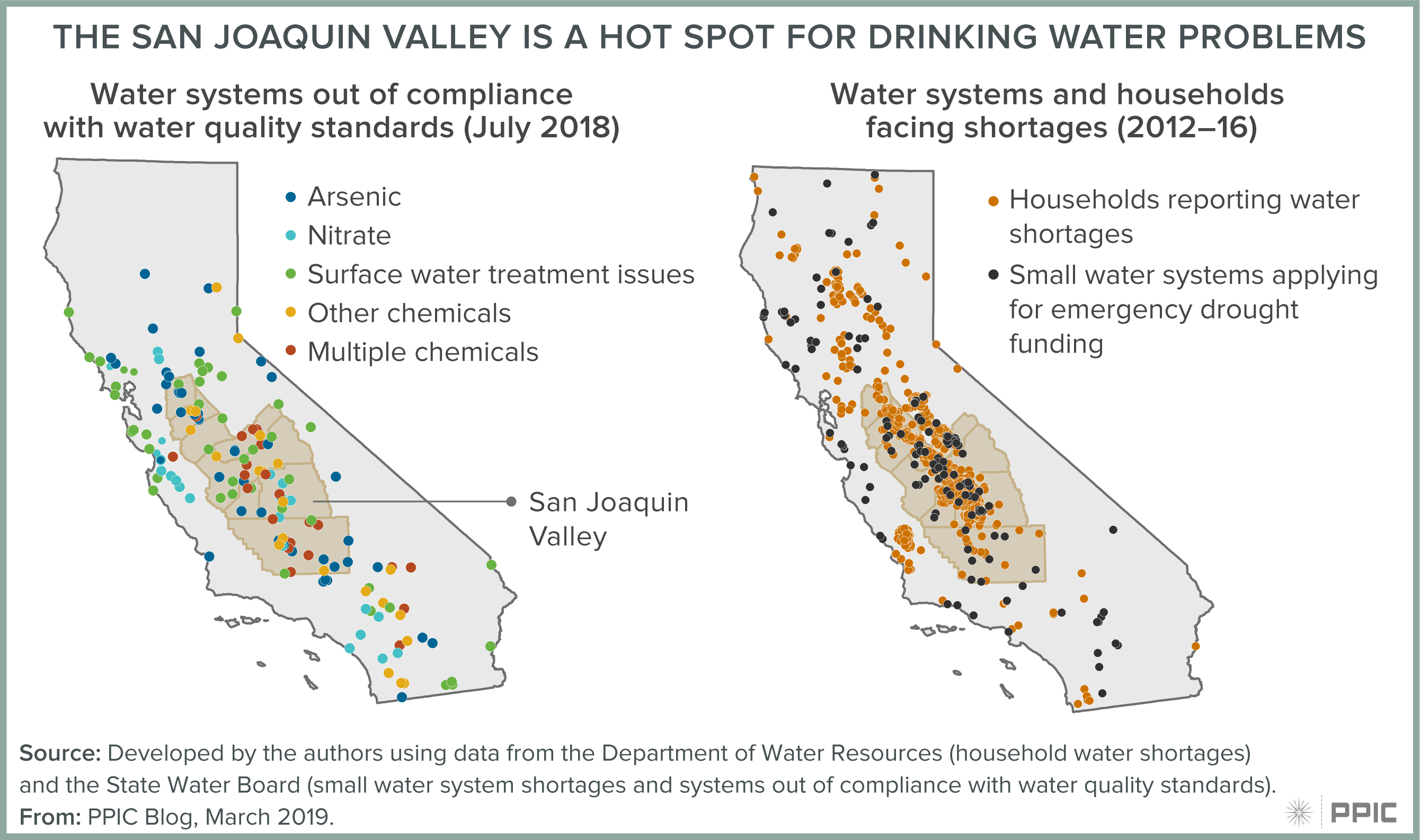
The valley’s most urgent water issue is addressing chronic problems of unsafe and unreliable drinking water in rural communities, most of which rely on groundwater. The region is a hot spot for unsafe drinking water. With just 10 percent of the state’s population, it is home to more than half of all community water systems that have persistently contaminated tap water. Contamination is also a problem for very small water systems that are regulated by counties and for homes served by domestic wells. Some groundwater contaminants—such as arsenic and uranium—occur naturally. Others are caused by human activity. For instance, agriculture is the primary source of nitrate, a serious contaminant that is widely present in shallow wells.

The region is also a hot spot for unreliable drinking water supplies in communities that depend on shallow wells. During the latest drought, roughly half of the 150 small water systems that sought emergency assistance from the state were in the valley, as were nearly 80 percent of all residents who reported dry domestic wells. Without concerted action, this vulnerability will persist. Several thousand additional drinking water wells are vulnerable if groundwater levels fall another 30 feet—something that could easily happen during the next drought, or if local groundwater sustainability plans allow continued overdraft under a glide path approach and fail to mitigate the problem.

In recent years, various legal and administrative changes have helped address the drinking water crisis. But there is still an urgent need to build a robust, comprehensive framework for tackling it. Affected communities will require technical, financial, and managerial assistance. Here are some top priorities:

  • Consolidating or aggregating systems to provide economies of scale to small water systems.
  • Providing technical support.
  • Planning for shortages and developing rapid response procedures to mitigate dry wells.
  • Ensuring funding support for both capital investments and ongoing operations and maintenance.

A variety of local parties—including counties, urban water suppliers, irrigation districts, groundwater sustainability agencies, pollution dischargers, and NGOs—will need to play a major role in helping to address this problem. But the state must take leadership in developing funding solutions and ensuring there’s a comprehensive plan for addressing both quality and supply vulnerabilities in a timely manner.

Managing groundwater quality for the long-term

Valley farmers and other dischargers of contaminants must also meet new requirements for protecting groundwater and soils from the long-term buildup of nitrate and salts. California has been a national leader in seeking to address these problems, with a suite of new regulations adopted over the past decade. The Salt and Nitrate Control Program (SNCP)—adopted by the Central Valley Regional Water Quality Control Board in 2018 and pending approval by the State Water Board—provides an umbrella framework for addressing these challenges. SGMA also requires GSAs to protect water quality while balancing groundwater supplies and demands.

Nitrate in drinking water wells, which originates primarily from inorganic nitrogen fertilizer and manure used in farming, poses significant public health risks. Dairies face special challenges in managing manure efficiently, and solutions have remained elusive.

Salinity is a growing threat to local agricultural productivity. Roughly 250,000 acres of cropland have already been retired due to salinity in soils, and another 1.5 million acres are considered impaired.

But managing for these contaminants is costly. The SCNP seeks to find a balance between protecting water and land resources for the long run and maintaining the viability of agricultural production in the present, while also ensuring safe drinking water solutions.

Here are some top priorities for action:

  • Coordinating water quality and quantity management. This will be especially important for managing groundwater recharge, which under some circumstances can accelerate the migration of chemicals in the soil (especially nitrate) into the aquifer and impair drinking water quality, at least for a time.
  • Implementing new technologies to manage pollutants. This will be especially important for dairies, which need to remove excess manure and transform it for other uses.
  • Providing regulatory flexibility. This includes flexibility to allow some continued loading of nitrogen and salt as long as impacts on drinking water supplies are mitigated, as proposed under the SNCP.

While local water managers, farmers, and the agricultural industry will need to take the lead in addressing these issues on the ground, the state can play a major role in providing effective and responsible regulatory flexibility, and in supporting research and development (R&D).

Fostering beneficial water and land use transitions

Finally, the valley will need to plan for and manage the changing landscape as some cropland is idled—both to avoid negative consequences from dust, pests, and weeds, and to get the most value from these lands in other uses. Pursuing approaches that seek multiple benefits on this land can support the regional economy, public health, and the environment. There are numerous stewardship options: healthy soils, habitat, wildlife-friendly solar, recharge, flood protection, and recreation.

There are already some models of how this can work. For instance, the Kern Water Bank provides thousands of acres of upland habitat for San Joaquin desert species and abundant intermittent wetlands, while also serving as a major groundwater storage site. But to date, there is no serious planning effort to see how lands coming out of production might be used most productively, and how to provide the right incentives to realize this potential.

Here are some top priorities for action:

  • Initiating broad-based, inclusive planning. For many issues—ranging from determining the best areas for habitat investments to coordinating recharge and managing salinity—taking a valley-wide perspective will be key.
  • Implementing flexible regulatory approaches to make it easier to implement multi-benefit restoration projects.
  • Providing incentives and funding to support activities on the ground.
  • Boosting technical support and R&D.

Again, local and regional parties will need to take the lead on many aspects of this work. But state and federal agencies can facilitate good outcomes by providing regulatory flexibility, financial incentives, and support for technical assistance and R&D.

How can the Legislature be most helpful now?

The valley is at a pivotal moment, and there are many ways in which the state can assist the region’s residents implement efficient, equitable, and sustainable solutions to their water-related challenges. Here are some final thoughts on how the Legislature can be most helpful in the near-term:

First, ensure a robust, comprehensive framework for safe and reliable drinking water solutions. This is an urgent public health issue and needs urgent attention. The framework should include reliable funding, as well as a sound, timely approach to providing technical and managerial solutions on the ground.

Second, support the building blocks for the region’s transition to groundwater sustainability. Planning for sustainable groundwater management is well underway, but this transition won’t happen overnight. Early actions to promote forward momentum will be especially valuable in the next few years.

To create the preconditions for success, the state should accelerate its own efforts to provide regulatory clarity, consistency, and flexibility. Key areas include how much water is available for recharge, how to recharge in ways that are acceptable from a water quality perspective, and how to implement broad-based, multi-benefit restoration projects that put land coming out of production to best use.

Support for local and regional initiatives can also make a difference. Key areas include assistance with the assessment of smart infrastructure investments, pilot efforts to implement innovative approaches on the ground, technical support and R&D for water quality and land stewardship solutions, and broad-based planning to develop regional approaches for multi-benefit management of water and land.

California has long been a model for others in the management of natural resources. Many are now looking to see how we tackle the tough challenges of providing safe drinking water to all residents and managing our groundwater resources sustainably for the long term. The San Joaquin Valley is on the front line for addressing both of these challenges. The region’s farmers and residents have a history of creatively adapting to difficult and changing conditions, and constructive solutions are in reach. The state can provide vital support to help ensure success.

Video: State and Federal Experts Discuss San Joaquin Valley’s Water Future

How can state and federal agencies help California’s largest agricultural region address its difficult water management problems? This was the theme of an event last week that brought together PPIC experts with top officials working on issues related to water, agriculture, and natural resources.

Ellen Hanak, director of the PPIC Water Policy Center, launched the event by summarizing findings from a new report on the valley’s water- and land-management challenges and outlining some strategies for addressing them.

Groundwater overdraft is the valley’s key water challenge. A state mandate to bring groundwater use to sustainable levels will have broad effects on valley agriculture and the regional economy—most likely including some permanent idling of farmland to balance water budgets. Hanak noted that only about a quarter of the valley’s groundwater deficit can be filled with new supplies at prices farmers can afford.

According to Hanak, the most promising solutions fall into three buckets: “Ways to increase flexibility in how we manage water and related land resources; ways to provide incentives so that growers, who are some of the key decision makers on the ground, can do this so it makes business sense to them; and ways to stack benefits so you get more than one thing out of it—maybe you get groundwater recharge and wetland habitat, for example.”

The three panelists—Wade Crowfoot of the California Natural Resources Agency, Karen Ross of the California Department of Food and Agriculture, and Thomas Hedt of the Natural Resources Conservation Service’s California office―discussed key issues and ways their agencies can partner with local stakeholders to ease the process of replenishing groundwater in coming years.

Crowfoot highlighted the importance of working with local communities, governments, and water agencies to address water challenges. “State government doesn’t actually have the solutions. We have the resources and the power of making new laws, but the solutions that are going to help limit disruption as it relates to water are going to be found on the ground,” he said. “The question is what can we do at the state level to empower the locals to find those solutions.”

Ross said multi-benefit approaches will be critically important, particularly for reaping environmental benefits when land is fallowed. “New partnerships and unusual allies” are key to achieving such benefits and finding durable solutions, she noted.

For example, she added, “the environmental justice community and agriculture community continue to partner to find drinking water solutions”—a process that “also bodes well for what we can do on the land.”

Hedt described new federal pilot projects to improve wildlife habitat and promote groundwater recharge. He noted that a key federal farm program has been made more flexible to allow broader partnerships that can enable habitat conservation on farmlands and address other challenges more efficiently.

We invite you watch the video from the event.

This was the second public event about this research; the first was held in Fresno in February.

Widening the Conversation about Safe Drinking Water in the San Joaquin Valley

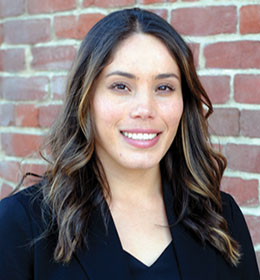
The theme of this Friday’s World Water Day is the lack of safe drinking water that affects many millions of people worldwide. Here in California, the San Joaquin Valley is a hot spot for unsafe drinking water. The region has more than half of all public water systems that are out of water-quality compliance in California, but just 10% of the state’s population. In addition, chronic decline in groundwater levels has caused drinking water wells go dry in a number of the region’s communities. We talked to Veronica Garibay—co-founder and co-director of the Leadership Counsel for Justice and Accountability—about ways to ensure community involvement in water management decision-making processes.

photo - Veronica Garibay

PPIC: What is key to understanding the valley’s safe drinking water crisis?

VERONICA GARIBAY: Water management is a particularly opaque and complex process, and past decision-making processes related to land use and water management failed to meaningfully include disadvantaged community voices and address their needs.

Climate change brings major risks to our water resources. The communities that are already the most vulnerable to the impacts of climate change—including water shortages during droughts, worsening water quality, flooding, and other problems—will see their vulnerability exacerbated. We have to change the way we manage water resources to adapt to these changes.

We have to bring our most vulnerable communities into these conversations, prioritize their needs, and make sure they, too, have decision-making authority over policy, programs, and projects.

Disadvantaged communities have been at the forefront of the progress we’ve already made on providing safe drinking water. They led the charge that gave the State Water Board the authority to consolidate small systems into larger ones, brought emergency funds to communities whose wells went dry during the drought, and led to the board’s establishment of the Office of Sustainable Drinking Water Solutions. Now their leadership is building momentum around the proposed safe and affordable drinking water fund, which would provide much-needed resources to pay for ongoing operations and maintenance costs and capital projects to ensure safe drinking water.

figure - The San Joaquin Valley Is a Hot Spot for Drinking Water Problems

PPIC: The Sustainable Groundwater Management Act requires local agencies to protect water quality while balancing groundwater supplies and demands. Why is it important for disadvantaged communities to participate in this process?

VG: Water is a critical resource to all of us, and the most vulnerable people should have a say in its management. Communities have a lot to contribute and need to be part of the solution. As a region we need to democratize the process and make sure that all interests are considered.

We’re working to ensure that planning for groundwater sustainability is more inclusive by encouraging groundwater sustainability agencies to establish authentic and meaningful space for direct community input and engaging communities most vulnerable to water quantity and quality issues in the region. We want to see sustainability plans that incentivize programs, policies, and projects that support safe drinking water and benefit households in disadvantaged communities.

PPIC: Are there good models for participation in the process?

VG: The North Fork Kings groundwater sustainability agency (GSA) has established a rural community advisory committee. It helps bring disadvantaged rural communities into the process to develop a sustainability plan. That’s a good step in making sure communities are providing direct input.

And the Madera GSA is encouraging all stakeholders to learn from each other and talk to each other. They’re making sure a variety of stakeholders get in the same room to learn how decision making on water affects different groups, and how we can shape solutions together.

We’d like to see more GSAs give some authority to disadvantaged communities and meaningfully build space into their processes for communities to participate.

Equal access to information is also key—what’s being presented at meetings should be accessible and in different languages if needed. And we need to ensure there is space to give feedback and that this feedback is reflected in the final sustainability plans.

These efforts will take work. Organizations like ours, and Self Help Enterprises and the Community Water Center, have all offered to collaborate with GSAs and help them engage community participation. The state has provided some funds for community engagement as part of its support of the SGMA planning process. But GSAs will also need to budget for equity—plan for and allocate resources to make sure they’re intentionally engaging communities.

Watch a video of Veronica Garibay and other panelists discussing water supply and water quality management in the San Joaquin Valley