A Changing State of Water Conservation

The California State Water Board is charged with balancing all water needs across the state—an especially difficult task when there’s less water to go around. We talked to Fran Spivy-Weber, the board’s vice chair (and chair of the PPIC Water Policy Center’s advisory council), about water conservation and lessons from the drought.

PPIC: What expectations do you have for statewide water use in light of recent changes to the state’s approach to urban water conservation, which replaced the 25% mandate with locally set standards?

Fran Spivy-Weber: I think there will be a bit of an uptick in water use in the short term, but I’m not expecting water use to go up to where it was. My experience after previous droughts shows that after all the work to educate people and change plumbing fixtures and appliances, water use stays pretty flat. Meanwhile, the board is working with the Department of Water Resources to develop long-term water use targets—for indoor and outdoor urban uses—as well as targets for reductions in leakage from pipes. We plan to work on these targets into early fall, and will be getting public input during that time. By the end of the year these targets should be pretty final, and the governor can put them into legislation and agency practice next year. These targets will give everyone something to aim for.

PPIC: What is the most important lesson for California from the latest drought?

FSW: I think it’s to share data about water use with the press and public. We’ve seen strong leadership on water conservation by individuals around the state—most changes were done not because people were told to do so but because they could see there was a limited amount of water available and they wanted to do their part. We also learned that water rates do matter. Water agencies that have drought surcharges did OK, those that did not are suffering. It can be politically difficult to change rates, but when people buy less water during droughts, water agencies with flat rates suffer. People mostly care about having enough water when they turn on the tap; they care very little about how much water their appliances use. The energy sector in California has completely separated the costs of delivery from the service of providing their commodity. The water sector needs to do this too.

PPIC: What is the state doing to encourage innovations in water supply?

FSW: The board’s biggest action was to approve loans for recycled water, and it clearly helped. We’re now identifying how much recycled water is actually being served—we’ll know by the end of summer. The state’s goal is 1 million acre-feet by 2020, 2 million by 2030. On technological innovations in water, the governor’s office is taking the lead. A number of the state’s universities are also pursuing these kind of innovations. Over the next 10 years the way in which water is delivered will likely change dramatically. Water will be reused a lot more, and storm water will be captured in more places. Water agencies tend to be the most conservative agencies—their engineers have to know that when they undertake something new it will provide safe, clean water and meet customers’ needs—so they’re often not eager to take on new technologies. But with the drought and climate change, and an increasing cost of water, they’re starting to think about it more.

PPIC: How much more room do we have to improve urban water efficiency?

FSW: There is much more room for improvement. While a number of communities are achieving 55 gallons of indoor water use per capita per day or even less—particularly in new houses—most people in the state live in older housing, with old, water-wasting fixtures. This will change in the next few years. Outdoor landscaping is changing, and we haven’t seen the end of it—many people pulled out lawns to save water, but now many more are beginning to realize they don’t want lawns that take a lot of maintenance and water.

Learn more

Read “Water Management’s High-Tech Future” (PPIC Blog, September 3, 2015)
Visit the State Water Board’s drought information page
Visit the PPIC Water Policy Center’s water supply resource page
California’s Big-Ticket Water Challenges

California’s hundreds of local public water agencies are responsible for about 90 percent of the water delivered across the state. We asked Tim Quinn, executive director of the Association of California Water Agencies (ACWA) and vice-chair of the PPIC Water Policy Center’s advisory council, to weigh in on three big-ticket water management issues ACWA’s members are facing.

PPIC: Last week, the State Water Board voted to give control over water conservation standards to local agencies. Why is this change important?

Tim Quinn: Essentially, the board decentralized decisions about drought management so that local water agencies can tailor their plans to local conditions. ACWA strongly believes that this was a move in the right direction. The initial drought emergency conservation regulations did not account for local factors like climate and, more importantly, the extent to which local agencies have invested in drought-resilient local supplies. By allowing local public agencies to account for these factors, we will have more effective and lower-cost drought protection while maximizing incentives for further investments in drought resiliency. The new approach in no way means less conservation. In fact, ACWA strongly believes in raising the bar on water-use efficiency and conservation in our long-term water management plans. The board’s action appropriately recognizes that, at least for the time being, emergency conditions no longer exist. Now we need to pivot to the adoption of long-term conservation plans in which, as the California Water Action Plan puts it, “conservation is a way of life.”

PPIC: What do you think about the governor’s “twin tunnels” approach to addressing the issues facing the Delta?

TQ: I’ll be blunt: we have an outdated and ineffective system for conveying water through the Delta. The system’s intakes are in the wrong part of the Delta, which maximizes conflicts between species protection and water supply and does not work for either purpose. Unless we’re prepared to abandon this system, we need to fix it. I think abandoning it would not be good for California.

My organization believes that we need a comprehensive statewide program that includes a physical fix in the Delta to make our water supply less vulnerable. Fixing the system would help improve the Delta’s ability to cope with climate change and sea-level rise, minimize conflict between water supply and fisheries, improve water quality for 25 million Californians, and make the system better able to withstand earthquakes and floods.

I spent a couple of decades of my career up to my eyeballs in the Delta, trying to figure out how to get the water we need with the intakes in the wrong place. It seems California simply has a very difficult time having an adult conversation about the Delta. Despite the obvious difficulties, if the Brown administration can move forward with its Delta strategy, we should all be ready to provide support for it as part of a common-sense statewide water action plan.

PPIC: What are the most urgent water needs the state should invest in?

TQ: There are six critical areas we need to fund: water conservation and local resource development, storage—both above and below ground, Delta conveyance, implementation of the Sustainable Groundwater Management Act, provision of safe drinking water to disadvantaged communities, and investment in habitat and watersheds. These are the essential bricks in the wall of a sustainable water system for California, and they’re all important. They also lend themselves to different funding strategies; some are adequately funded and some not. The biggest shortfalls in funding probably arise for the last two categories. Some have suggested a public goods charge on water to fund these activities, which the water industry would oppose. Others point to the general fund as the logical source of funding for public benefits. It seems to me that the important thing is to come to some agreement on funding so that a comprehensive water plan can move forward.

Learn more

Read California’s Water briefing kit for more information on key water management challenges
(April 2015)
Read “Stressful Times for a Drought-Stricken Delta” (PPIC blog, October 5, 2016)
Visit the PPIC Water Policy Center’s water supply resource page

Troubled Waters for California Farmers

California farmers have been coping with major water challenges during the latest drought. We talked with Dave Puglia, executive vice president of Western Growers and a member of the PPIC Water Policy Center advisory council, about these challenges.

PPIC: What water uncertainties do California farmers face?

DAVE PUGLIA: It varies by region. In some areas, water reliability for the future is paramount. In other places, water quality requirements are more challenging. The San Joaquin Valley is facing long-term restrictions in surface water. Imperial County growers are wondering if their supply from the Colorado River will last.

In areas where water quality is key, the increasing capability to detect contaminants has led to increasing regulations to reduce pesticides, herbicides, and fertilizers. The state’s drive for perfection doesn’t recognize the realities of farming. California is treating nitrogen and nitrates as the equivalent of industrial solvents. Nitrogen is necessary to produce food, and we’re using fertilizers much more sparingly now. Many growers worry that there could one day be a virtual prohibition on the use of nitrogen, which has been used from dawn of agriculture.

Businesses hate uncertainty, and state policies on water quality and supply paint a very uncertain picture. These are multigenerational businesses with most of their assets tied up in land. They’re looking over a 20-year horizon and asking, should we continue to invest in this business in this state? They’ve experienced an immense growth in regulatory burdens in the past two decades—not just in water—and don’t see the trajectory changing. From a balance sheet perspective, it looks very dark.

I think we’ve lost regulatory balance in California. If we looked at how all these regulations work together, we could learn a lot about how these mandates add to the burden of this industry. That would force a conversation on whether we want to maintain the nation’s largest agricultural industry.

PPIC: What uncertainties does the state’s groundwater law pose for farmers?

DP: I think the biggest threat to its successful implementation rests in the fact that many growers fear they’ll lose access to adequate groundwater supplies, which won’t be replaced with surface water. In the past 20 years, the San Joaquin Valley has easily lost 2 million acre-feet a year in surface water. The biggest threat is the lack of surface water being delivered to the valley to recharge groundwater basins.

PPIC: What will it take to bridge the “fish vs. farms” divide?

DP: There is a major lack of confidence in the science used by fish agencies to make decisions on water deliveries from the Delta. The state and federal water projects are now functionally controlled by state and federal fish agencies based on the abundance of species, but their modelling seems arbitrary and questionable to many. The fish aren’t recovering, and there’s inadequate attention to other stressors that impact both salmon and smelt. Theoretically, the governor’s tunnels project has potential to break us out of this dynamic and provide adequate water reliability south of the Delta. But there’s uncertainty about it among agencies that would be required to pay for it and opposition from the environmental community. Without some big changes, I don’t see the divide getting better.

Learn more
Video: Farming’s Water Future (PPIC blog, March 2, 2016)
Visit the PPIC Water Policy Center’s water supply resource page

Regulating Marijuana as a Crop

In the 20 years since marijuana was legalized for medical use in California, it has become an increasingly legitimate crop in the state’s agricultural landscape. Yet despite relatively steady progress in moving marijuana cultivation out of the shadows, important questions remain about the crop’s impact on water and the environment, and whether the state can regulate these issues successfully.

Last year the state legislature passed laws designed to regulate medical marijuana production. Should Californians vote to legalize recreational marijuana use this fall, the state will need to take an even more active role in regulating production, as argued in a recent PPIC report.

Marijuana growing has yet to move to large-scale production, but that could change with shifts in state or federal laws. Both the total amount of marijuana produced and number of cultivation sites are difficult to estimate. An often cited but uncertain estimate is that California has about 50,000 cultivation sites. A recent effort to map grows in Humboldt County suggests that most have less than 100 plants and typically cultivate less than one acre. These small grows are usually located far from improved roads and often scattered on steep slopes. Currently, only 7 percent of grows in Humboldt County are on what could be considered prime agricultural land.
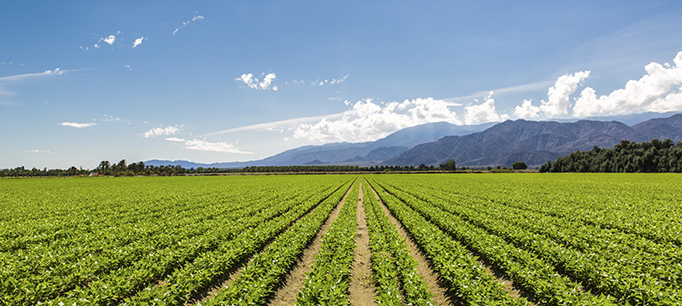
The biggest environmental concerns regarding marijuana cultivation—or any agricultural commodity, for that matter—are water use, deforestation, and water pollution. Given the small size of most grows, marijuana production currently does not appear be a major driver of deforestation in California, although building access roads may cause erosion and fragment wildlife habitat.

And although it has been reported to be a thirsty plant, recent estimates of marijuana’s water use in Humboldt County—one of the state’s biggest growing areas—suggest that under 2,000 acre feet a year is used for that county’s entire crop. This is enough to irrigate about 400 acres of almonds (for scale, California currently has more than a million irrigated acres of almonds). Some water used for marijuana irrigation comes from headwater streams that are home to sensitive species, and water use tends to increase in the fall when these watersheds are most stressed. If the crop were to be widely grown in drier areas, water impact might increase. Recent proposals for large marijuana greenhouse operations in Southern California desert communities also raise questions about water supply.

State regulations have recently given regional water quality boards and county governments better tools to manage marijuana growing. The North Coast Regional Water Board has adopted regulations requiring all marijuana operations over 2,000 square feet to enroll in a program requiring monitoring and potential cleanup for water discharge and diversions at existing marijuana operations. Humboldt County has introduced one of the state’s first land use ordinances for marijuana production, which limits cultivation size based on zoning type and square footage of the parcel.

The legal market for marijuana in California is likely to expand, especially if voters approve recreational use this fall. This presents both opportunities and challenges. The state can establish rules that make access to the market contingent upon following environmentally responsible and water-smart growing practices. The challenge is that for the regulations to be meaningful, they must be enforced. State and county officials will need to monitor the location of grows and practices, and collect information that can guide future policies to effectively reduce the crop’s impact on land and water resources. Accomplishing that will require adequate time and staff.

Learn more

Read “California Streams Going to Pot from Marijuana Boom” (PPIC blog, July 23, 2015)
Visit the PPIC Water Policy Center

Photo credit: North Cascades National Park Service

Paying for Groundwater Recharge

The author is a member of the PPIC Water Policy Center research network.

Water levels in many of California’s groundwater basins have dropped too far, too fast in recent years, prompting a wave of experimental projects to augment the natural recharge of aquifers. But funding is a missing element in many of these efforts. A new local program to provide incentives for groundwater recharge could be replicated in other parts of the state.

Most Californians who use groundwater do not pay to use it. Instead, in many basins, property owners with an “overlying right” to water underground are free to extract as much as they need for “reasonable and beneficial use,” as loosely defined by state law, paying only for the costs of pumping.

The state’s Sustainable Groundwater Management Act, enacted in 2014, empowers local Groundwater Sustainability Agencies (GSAs) to impose fees in support of long-term water resource management and develop funding mechanisms for projects that conserve water and augment available supplies.

The Pajaro Valley Water Management Agency, adjacent to Monterey Bay, manages groundwater in one of California’s most productive and economically important agricultural areas. For decades, this area has experienced persistent groundwater overdraft. The water agency meters most wells and levies an “augmentation charge” to pumpers in the basin. In March, the agency’s Board of Directors approved a five-year pilot program of “recharge net metering.” The program seeks to enhance groundwater recharge by some 1,000 acre-feet per year using stormwater runoff from nearby slopes as the primary water supply.

Representatives from UC Santa Cruz and the Santa Cruz County Resource Conservation District will act as third-party certifiers and help identify and screen project sites. The water agency will credit pumpers who run successful projects, partly offsetting their augmentation charges. This rebate helps to compensate pumpers for losses of land use or access and periodic maintenance needed for the recharge systems. It’s intended to function like the electricity net-metering program run by PG&E for customers who contribute power to the grid with home solar panels.

Could a program like this work in other parts of the state? Much depends on how GSAs set up water management programs and metering and fee structures. Developing a rebate program in parallel with a structure to charge for groundwater pumping might make fees more palatable to land owners who are not used to paying for groundwater. Giving a rebate for recharge makes sense if the GSA can subsequently levy a fee for use of the additional water.

Other factors that will influence project success include the availability of suitable recharge sites and the ability to collect runoff from a large enough drainage area to justify the effort. The effect on water quality also has to be considered. Besides rebates, other costs to consider include those to identify promising sites and verify field conditions, conduct community outreach, secure permits to satisfy environmental and other requirements, design and install the systems, and measure the benefits—the basis for the rebate. Yet even with these costs, this approach can be economically viable when compared to other supply alternatives.

This is just one approach to solving a difficult problem. Given California’s history of paradigm-shifting innovation, we are likely to see more ways to incentivize sustainable groundwater resources as GSAs figure out how to manage their basins for the long term.

Learn more

Read “Reforming California’s Groundwater Management” (PPIC fact sheet)
Read “Farms that Grow Groundwater” (PPIC blog, April 18, 2016)
Visit the PPIC Water Policy Center’s water supply resource page

5 Things to Know About Desalination

A longer version of this piece was recently published by “Water Deeply.”

Could desalination provide a reliable supply of water for California? A number of policy makers have been raising this question in response to water-supply challenges brought on by the drought. Around the globe, some similarly dry places are getting a significant share of their water through desalination.

Officials in some cities (especially in Southern California) certainly think so, and are taking steps to develop seawater desalination plants. The state’s water bond allocates $725 million to help local water agencies build water recycling and desalination plants. Recent proposals that prioritize desalination include Senator Dianne Feinstein’s proposed water bill, which would provide $100 million in funds for desalination projects; Assembly Bill 1925 by assemblywoman Ling Ling Chang, which would establish annual goals for producing potable water through desalination; and the Obama’s administration proposed budget for 2017, which would launch an Energy-Water Desalination Hub, and provide funding for other desalination initiatives.

California has more than 60 years’ experience with desalination, and yet the process remains a minimal part of the state’s water system, for a number of reasons. Here are some key facts to know about desalination in California today.

  1. It’s not just about the ocean: Although desalination often uses seawater, in California and other western states it has mostly been used to remove salts from brackish water (which is saltier than freshwater but less salty than seawater). The state’s existing plants can produce almost 140,000 acre-feet from brackish sources, but only 57,000 acre-feet from seawater. Brackish desalination is generally much cheaper, because there’s less salt to remove.
  2. Seawater desalination will remain an expensive source of water: According to a recent report by the White House, current seawater desalination technologies will need to undergo a fourfold reduction in cost, a threefold decrease in electricity usage, and a twofold cut in carbon-dioxide emissions to compete with traditional water sources.
  3. California’s water supply varies from year to year, while desalination is a fixed long-term investment: Customers in water districts using desalination will pay higher costs for desalted water even in wet years when cheaper sources are available.
  4. California has relatively abundant supplies from other sources. Even during droughts, the state has a variety of water sources that can carry it through long dry periods, nearly all of which are significantly cheaper than seawater desalination.
  5. Environmental impacts are a concern. The most significant effects are ocean water intake, and brine disposal (in ocean and brackish plants). Desalination’s high energy use compared with other water sources also raises concerns about greenhouse gas emissions.

A drought is a bad time to rush into investments in desalination to address water supply problems that can be solved more effectively in other ways. Many desalination plants prompted by droughts—including in Australia, Spain, and here at home in Santa Barbara—either never were used or closed within a few years of operation because their high-cost water could not be justified once rains returned. Desalination is clearly not a silver bullet for California, but it is one tool to consider for communities facing long-term water insecurity.

Learn more

Read our policy brief “California’s Water: Storing Water” (from California’s Water briefing kit, April 2015)
Read our policy brief “California’s Water: Paying for Water” (from California’s Water briefing kit, April 2015)
Visit the PPIC Water Policy Center water supply page

Water Use and Californians’ Views on the Drought

The State Water Resources Control Board recently reported results of the nine-month statewide water conservation effort that Governor Brown announced last April. With an overall reduction of 23.9 percent compared to the same nine months in 2013 and 2014, the state came up just short of its 25 percent target. Monthly water savings have been below 25 percent in each month since October. Notably, in February—the final month of reporting under the governor’s water savings mandate—the statewide reduction was just 12 percent. This suggests a decreased sense of urgency about the drought. The PPIC Statewide Survey has found additional evidence that Californians’ sense of urgency has declined.

In our March 2015 survey—before the conservation effort was announced—two-thirds of Californians said people in their area were not doing enough to respond to the drought. In surveys since the mandatory water reduction was implemented in June 2015, only half have expressed this view. In each region of the state today, fewer say not enough is being done than said so last March—including the Central Valley, where we’ve seen a 21 point decline in the share saying “not enough.”

Following the wet winter months and a slowdown of statewide water savings, fewer Californians are saying that the supply of water in their part of California is a big problem. In our March survey, 57 percent expressed this concern—but that’s down from 70 percent last September and 66 percent in March 2015.

We have also seen fewer Californians name water and drought as the most important issue facing the state. Last month, 20 percent of Californians said water and drought were most important. That is down from a peak of 39 percent in May 2015 and similar to the responses we heard in March 2015 (23%).

As spring begins and policymakers consider the next steps for water use reduction, Californians’ views on the drought will continue to be an important factor in statewide water conservation efforts.

Learn more
Visit the PPIC Statewide Survey
Visit the PPIC Water Policy Center

Farms That Grow Groundwater

Farmers use the lion’s share of California’s groundwater, but they also do the most to rebuild depleted reserves of this critically important water source. We talked to Graham Fogg—a groundwater expert at UC Davis and a member of the PPIC Water Policy Center research network—about farmland groundwater recharge.

PPIC: How do farms recharge groundwater?

Graham Fogg: Crops don’t use all the water they get through irrigation—a lot seeps into underlying groundwater. Farms also move water from place to place through leaky ditches. The type of irrigation can affect the amount of recharge. For example, with flood irrigation a large fraction can end up back in the aquifer—commonly as much as a third or more. With micro-irrigation, a larger fraction of applied water is taken up by plants, and less ends up recharging groundwater.

Many farmers have adopted micro-irrigation technology. Farmers prefer groundwater when using drip systems because it’s free of sediment that can clog emitters, and groundwater is available whenever the farmer needs to run the system, sometimes multiple times a week. The result is that drip-irrigated farms may pump more groundwater—and they’re not recharging the aquifer as much. It’s an unintended consequence of more efficient irrigation.

PPIC: Are farmers being encouraged to recharge groundwater?

GF: The drought has helped many farmers realize the importance of better groundwater management, and some are figuring out how they can do more recharging on their land. The Sustainable Groundwater Management Act will require better management and balanced water budgets in each basin. This can be achieved with decreased groundwater pumping or increased recharge. In essence, we need to start managing groundwater systems in ways that are similar to surface storage reservoirs and use recharge as a hedge against future drought.

If we continue to rely on irrigation for most of our recharge, it raises questions about groundwater quality. Water that goes through farmland is more likely than non-farm recharge to be tainted with salts, nitrates, and some pesticides.

PPIC: What practices can improve California’s groundwater supplies?

GF: We need to do a variety of things to bank groundwater or face the prospect of having to reduce pumping in dry years and in depleted basins. One solution with high potential is “spreading basins.” These are flat places with the right soils and geological conditions for ponding water so it can infiltrate the aquifer. We need to map these surface and subsurface features and take steps to protect them for recharge purposes.

The Central Valley is not only home to some of our most over-tapped groundwater basins, but also to lands with good potential for fast infiltration. One promising approach is routing excess winter runoff onto farmlands, where irrigation infrastructure can be used to spread the water and recharge groundwater. This practice is gaining much interest from farmers.

We also can manage rivers to encourage recharge, bringing benefits to entire basins. Rivers can recharge groundwater with seepage through their beds. And when rivers overflow their banks, water spreads across the floodplain. Two approaches with high potential to improve groundwater conditions are moving levees back to reconnect rivers with their floodplains, and managing groundwater and surface water as an integrated system. When groundwater systems fill to the point of spilling over, rivers and wetlands stay wet, and there’s a natural exits for groundwater contaminants. Without such exits, these basins will become increasingly polluted over time.

Learn more

Read “The Coming Groundwater Revolution” (PPIC Blog, January 6, 2016)
Read our policy brief “California’s Water: Storing Water” (from California’s Water briefing kit, April 2015)
Visit the PPIC Water Policy Center

Making Federal Farm Support Drought-Smart

A new initiative launched by President Obama in March seeks to better coordinate federal drought-management efforts at the basin scale, and ensure that key federal farm programs are in alignment with watershed conservation objectives developed by state and local partners. Making federal farm-program dollars work better and go farther will be key to this effort’s success.

The critical role of US Department of Agriculture (USDA) programs in managing water scarcity is often overlooked. But as we document in our recent report on the federal role in western water, USDA’s programs represent the lion’s share of federal water- and drought-related funding in the region. Given farming’s large water footprint in the West, even small changes in farm practices can have broad effects on water supplies and ecosystem health.

The agricultural water and land stewardship programs run by the Natural Resources Conservation Service (NRCS) and the Farm Service Agency are singularly important, due to their size and reach. These programs provide farmers with technical and financial support to improve water use efficiency and conserve soils, water, and wildlife habitat through on-farm investments. In addition, easement programs pay farmers to convert environmentally sensitive lands to wetland or cover crops—or to keep their lands in production rather than allow it to be developed.

Practical reforms in easement programs could yield drought-management results. The wetland recovery program pays farmers to permanently restore fields to wetlands, and the conservation reserve program pays them to convert fields to cover crops for 10–15 years. But such long-term commitments to fallow lands are unappealing to many farmers.

These programs could be more effective by allowing shorter easements and working with groups of farmers rather than individuals. For instance, paying farmers to create temporary wetlands during droughts can stretch scarce water and dollars while supporting waterbirds. Similarly, paying a group of farmers to do rotational fallowing—which means they take turns temporarily fallowing fields—can reduce overall water use while keeping farms in production. Meanwhile, other incentives could focus on farmers who commit to maintaining land in field crops rather than permanent crops—a change that could boost drought resilience in places like California, which has seen a big expansion of tree crops that are harder to fallow.

USDA programs represent the lion’s share of federal water- and drought-related funding in the West.

Another important change involves the popular NRCS subsidies to support efficiency investments on farms. The problem is that reducing the amount of water needed to grow specific crops does not usually translate into more water in the system, since newly available water is often used to increase production. And this water can be vital to downstream users and the recharge of groundwater.

To make sure these subsidies don’t conflict with basin management goals, USDA efficiency programs should seek to maintain or enhance water to meet environmental needs, and prevent harm to groundwater basins. Solutions could include expanding and improving temporary, strategic flows to meet habitat needs, and dedicating water created through efficiency programs to environmental uses or groundwater recharge.

Many of these changes could occur under existing statutory authority, and some program updates could be included in the 2019 Farm Bill. To be more effective in managing western drought, future farm bills should also put relatively more emphasis on easements and less on efficiency-oriented subsidies.

These changes would make federal support programs a better fit for many farmers, while supporting basin-level drought management goals of improving conditions for fish and wildlife, recharging groundwater, and reducing overall water use in areas grappling with water scarcity.

Learn more

Read a summary of policy recommendations from Improving the Federal Response to Western Drought (February 2016)
Read the federal action plan on improving long-term drought resilience
Watch a video on “Reforming Federal Drought Management”
Visit the PPIC Water Policy Center

Safeguarding Groundwater for a Drier Future

California is not alone in facing serious groundwater challenges—overuse is causing water tables to fall in many parts of the globe. Sharing ideas on how to protect and restore this important resource is the theme of a special opinion forum on the global groundwater crisis in The Desert Sun. Ten experts from the US West, Ethiopia, South Africa, India, and Peru weighed in.

My commentary focused on groundwater’s role as an “unsung hero” in California’s latest drought, and the need to manage it more carefully to ensure its critical role in getting agriculture through future droughts. This doesn’t mean restricting pumping in the midst of the drought—as tempting as that might be—because that could worsen the economic impacts of water shortages. Instead, it means rolling up our sleeves to develop and implement long-term management plans—a path made easier by the passage of the Sustainable Groundwater Management Act in 2014.

Here’s my contribution to the opinion forum:

Most Californians have first-hand experience with our record-breaking drought. Far fewer understand the role that groundwater has played in easing the drought’s impact on our cities and farms. Groundwater typically provides about a third of total water supplies, with the balance coming from rivers and lakes. Last year, its share was closer to two-thirds. Extra groundwater pumping bolstered the state’s urban economy and kept thousands of acres of valuable orchards, vines, and vegetables in production.

Many of California’s urban areas planned ahead to build their underground drought reserves. Since the last major drought (1987–92) they made large investments in groundwater storage as part of a strategy to diversify their water sources. In Southern California and Silicon Valley, locals also adopted management systems that facilitate water banking—which requires putting more water into the ground and pumping less in wet and normal years so that it’s available during droughts.

Most of California’s farming areas have less-robust groundwater oversight, and one consequence is long-term declines in water tables. The extra pumping during the drought is compounding this problem, causing some wells to go dry and some lands to sink. The good news is that many farmers now recognize the importance of managing groundwater as a drought reserve. And the state’s 2014 Sustainable Groundwater Management Act gives them the tools to make this happen.

It’s tempting during a drought to call for pumping restrictions, but this can worsen economic impacts, especially on the farm sector. Now is a good time to take actions that ensure groundwater is available for future droughts.

Learn more

Read “Reforming California’s Groundwater Management” (PPIC fact sheet)
Read “The Coming Groundwater Revolution” (PPIC blog, January 6, 2016)
Read “Getting to Groundwater Sustainability” (PPIC blog, June 16, 2015)
Visit the PPIC Water Policy Center’s water supply resource page