Farms That Grow Groundwater

Farmers use the lion’s share of California’s groundwater, but they also do the most to rebuild depleted reserves of this critically important water source. We talked to Graham Fogg—a groundwater expert at UC Davis and a member of the PPIC Water Policy Center research network—about farmland groundwater recharge.

PPIC: How do farms recharge groundwater?

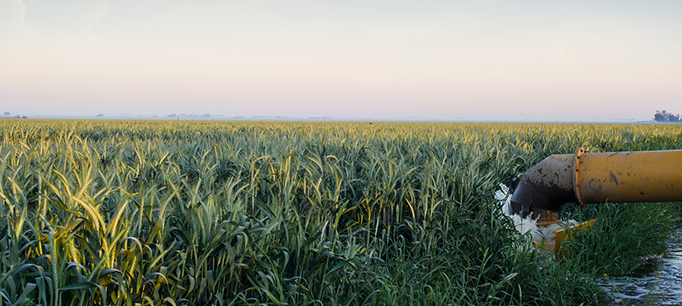
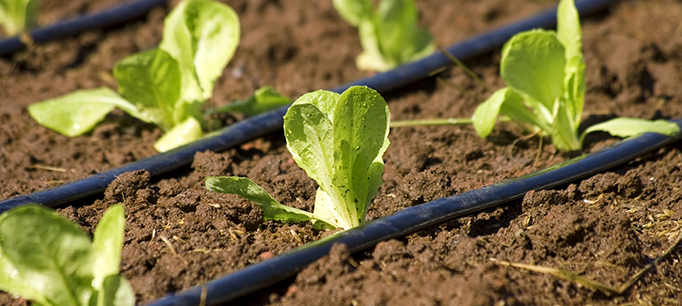
Graham Fogg: Crops don’t use all the water they get through irrigation—a lot seeps into underlying groundwater. Farms also move water from place to place through leaky ditches. The type of irrigation can affect the amount of recharge. For example, with flood irrigation a large fraction can end up back in the aquifer—commonly as much as a third or more. With micro-irrigation, a larger fraction of applied water is taken up by plants, and less ends up recharging groundwater.

Many farmers have adopted micro-irrigation technology. Farmers prefer groundwater when using drip systems because it’s free of sediment that can clog emitters, and groundwater is available whenever the farmer needs to run the system, sometimes multiple times a week. The result is that drip-irrigated farms may pump more groundwater—and they’re not recharging the aquifer as much. It’s an unintended consequence of more efficient irrigation.

PPIC: Are farmers being encouraged to recharge groundwater?

GF: The drought has helped many farmers realize the importance of better groundwater management, and some are figuring out how they can do more recharging on their land. The Sustainable Groundwater Management Act will require better management and balanced water budgets in each basin. This can be achieved with decreased groundwater pumping or increased recharge. In essence, we need to start managing groundwater systems in ways that are similar to surface storage reservoirs and use recharge as a hedge against future drought.

If we continue to rely on irrigation for most of our recharge, it raises questions about groundwater quality. Water that goes through farmland is more likely than non-farm recharge to be tainted with salts, nitrates, and some pesticides.

PPIC: What practices can improve California’s groundwater supplies?

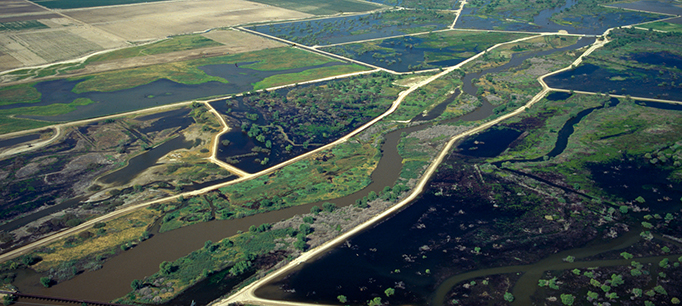
GF: We need to do a variety of things to bank groundwater or face the prospect of having to reduce pumping in dry years and in depleted basins. One solution with high potential is “spreading basins.” These are flat places with the right soils and geological conditions for ponding water so it can infiltrate the aquifer. We need to map these surface and subsurface features and take steps to protect them for recharge purposes.

The Central Valley is not only home to some of our most over-tapped groundwater basins, but also to lands with good potential for fast infiltration. One promising approach is routing excess winter runoff onto farmlands, where irrigation infrastructure can be used to spread the water and recharge groundwater. This practice is gaining much interest from farmers.

We also can manage rivers to encourage recharge, bringing benefits to entire basins. Rivers can recharge groundwater with seepage through their beds. And when rivers overflow their banks, water spreads across the floodplain. Two approaches with high potential to improve groundwater conditions are moving levees back to reconnect rivers with their floodplains, and managing groundwater and surface water as an integrated system. When groundwater systems fill to the point of spilling over, rivers and wetlands stay wet, and there’s a natural exits for groundwater contaminants. Without such exits, these basins will become increasingly polluted over time.

Learn more

Read “The Coming Groundwater Revolution” (PPIC Blog, January 6, 2016)
Read our policy brief “California’s Water: Storing Water” (from California’s Water briefing kit, April 2015)
Visit the PPIC Water Policy Center

Safeguarding Groundwater for a Drier Future

California is not alone in facing serious groundwater challenges—overuse is causing water tables to fall in many parts of the globe. Sharing ideas on how to protect and restore this important resource is the theme of a special opinion forum on the global groundwater crisis in The Desert Sun. Ten experts from the US West, Ethiopia, South Africa, India, and Peru weighed in.

My commentary focused on groundwater’s role as an “unsung hero” in California’s latest drought, and the need to manage it more carefully to ensure its critical role in getting agriculture through future droughts. This doesn’t mean restricting pumping in the midst of the drought—as tempting as that might be—because that could worsen the economic impacts of water shortages. Instead, it means rolling up our sleeves to develop and implement long-term management plans—a path made easier by the passage of the Sustainable Groundwater Management Act in 2014.

Here’s my contribution to the opinion forum:

Most Californians have first-hand experience with our record-breaking drought. Far fewer understand the role that groundwater has played in easing the drought’s impact on our cities and farms. Groundwater typically provides about a third of total water supplies, with the balance coming from rivers and lakes. Last year, its share was closer to two-thirds. Extra groundwater pumping bolstered the state’s urban economy and kept thousands of acres of valuable orchards, vines, and vegetables in production.

Many of California’s urban areas planned ahead to build their underground drought reserves. Since the last major drought (1987–92) they made large investments in groundwater storage as part of a strategy to diversify their water sources. In Southern California and Silicon Valley, locals also adopted management systems that facilitate water banking—which requires putting more water into the ground and pumping less in wet and normal years so that it’s available during droughts.

Most of California’s farming areas have less-robust groundwater oversight, and one consequence is long-term declines in water tables. The extra pumping during the drought is compounding this problem, causing some wells to go dry and some lands to sink. The good news is that many farmers now recognize the importance of managing groundwater as a drought reserve. And the state’s 2014 Sustainable Groundwater Management Act gives them the tools to make this happen.

It’s tempting during a drought to call for pumping restrictions, but this can worsen economic impacts, especially on the farm sector. Now is a good time to take actions that ensure groundwater is available for future droughts.

Learn more

Read “Reforming California’s Groundwater Management” (PPIC fact sheet)
Read “The Coming Groundwater Revolution” (PPIC blog, January 6, 2016)
Read “Getting to Groundwater Sustainability” (PPIC blog, June 16, 2015)
Visit the PPIC Water Policy Center’s water supply resource page

Steyer Fellowship to Focus on Groundwater

A new fellowship will enable the PPIC Water Policy Center to explore solutions to some of California’s toughest groundwater policy challenges. This three-year program is supported with funding from the TomKat Foundation, established with funding from Tom Steyer and Kat Taylor. PPIC has appointed Richard Howitt, an adjunct fellow at the center, as the 2016 Steyer Fellow.

Howitt is one of the state’s leading thinkers on how drought, land-use changes, and economic factors are affecting California’s agricultural sector. As an emeritus professor of agricultural and resource economics at the University of California, Davis, he’s devoted years to researching the agricultural economy and water markets. He’s played an important role in a number of major research projects looking into drought’s impacts on the farm economy and water management solutions for the long term.

“We are grateful for this support because it advances the water center’s programs and priorities,” said Ellen Hanak, center director.

Howitt will explore solutions to excess groundwater pumping the San Joaquin Valley—the state’s most important agricultural region and largest water user.

“Farmers significantly increased pumping to weather the latest drought. At the same time, they’ve been increasing acreage devoted to perennial crops—which can’t be fallowed as easily when water supplies are short,” Howitt notes.

The state’s new groundwater law requires the valley’s water users to develop sustainable groundwater management plans by 2020. Howitt and a team of PPIC Water Policy Center researchers will undertake a comprehensive analysis of possible sustainable water management solutions for the region.

The Coming Groundwater Revolution

Pumping extra groundwater has gotten many California farmers through this drought, and if managed well, it can help the state weather future dry periods. Groundwater is our most important drought reserve, but overuse is a serious problem in some regions. We talked to Thomas Harter—a groundwater expert at UC Davis and a member of the PPIC Water Policy Center’s research network—about managing groundwater for the long term.

PPIC: What are some of the biggest challenges for California’s groundwater management?

Thomas Harter: Farmers are facing a lot of change. They have to address new laws on groundwater use and water quality. The agricultural community uses by far the most groundwater but has never been asked to actively manage and protect it. It’s a fundamentally new world, and it will take time for the industry to adjust.

The first step for farmers is to understand their groundwater resources. They’ll need to learn what drives their basin’s “water budget.” The state’s new groundwater law requires locals to form groundwater sustainability agencies and develop sustainability plans, and it will be important for farmers and rural communities to actively engage in that process. Locals have a lot of information and ideas that regulators in Sacramento may never come up with, so working on this issue together is key.

In areas with significant overuse, the first challenge will be to increase local recharge of groundwater. To the degree that regions can’t balance their groundwater budgets through recharge or by using more surface water, the toughest challenge will be to reduce groundwater use while minimizing the economic effects.

In Northern California, the most challenging piece is understanding how pumping affects groundwater flowing to rivers and streams. That’s a challenge for state and local agencies, consultants and scientists alike.

PPIC: What is the link between improving groundwater quality and quantity?

TH: Farmlands make up the largest landscape overlying our groundwater basins. Finding creative ways to use that landscape to put clean water underground—while also reducing groundwater pollution—are what we should focus on.

Farmers hold the key to maintaining water quality through their management practices. Excess fertilizers and pesticides can leach into groundwater. Pollution can be reduced through practices such as being very water efficient with crops that require lots of chemicals or, alternatively, by replacing fertilizer-hungry crops with crops that fix their own nitrogen or use little.

PPIC: What are some approaches to help us get to groundwater sustainability?

TH: Setting back levees allows some of the floodplain to act as a recharge area. Levee setbacks on the Cosumnes River raised the water table in just one storm last winter. Another option is to recharge groundwater during times when there is excess runoff. In parts of the Central Valley we’re looking at what crops can take flooding to increase recharge. Vineyards and alfalfa are promising candidates because they use very little fertilizer and pesticides. We’re also considering setting aside dedicated recharge basins. For example, farmers might be paid to fallow land short-term to allow groundwater recharge. We’re just beginning to find out how some of these solutions will work, what changes to infrastructure we’ll need to implement them, which are economically and agronomically feasible, and under what conditions they can be done.

Learn More

Read Harter’s article “Groundwater: The Crucial Challenge” (Capitol Weekly, November 20, 2015)
Read Reforming California’s Groundwater Management (PPIC fact sheet)
Read “Getting to Groundwater Sustainability” (PPIC blog, June 16, 2015)
Read Harter’s analysis “California’s Agricultural Regions Gear Up to Actively Manage Groundwater Use and Protection” (California Agriculture, September 2015).

Coming Together Over Groundwater

California’s groundwater management took a forward-looking turn with last year’s passage of the Sustainable Groundwater Management Act (SGMA), which requires local planning efforts to protect the long-term viability of this critical resource. Sarge Green—a water management specialist at California State University, Fresno, and a member of the PPIC Water Policy Center’s research network—is working to put the groundwater law into practice at the local level. We talked to him about creative approaches being tried in the San Joaquin Valley.

PPIC: Talk about the regional groundwater management effort you’re involved in.

Sarge Green: I’ve been participating in a joint effort of eight counties in the San Joaquin Valley, which is looking at key issues—education, air quality, water, transportation. Water is now the top priority for this planning effort, not surprisingly.

The San Joaquin has the largest overdrafted groundwater area in the state. Our task is to find common tools or projects to improve our groundwater situation, and try to get support for them with state or federal grants. We’re designing a local groundwater ordinance with elements that address unsustainable groundwater extraction impacts and permits for new wells.

This valley is a study in contrasts. At one end is the Delta, and at the other end is a major importer of Delta water. Getting all the counties together was groundbreaking. Our organizing principal is: we agree on a majority of things having to do with water, but historically we’ve spent most of our time on the things we disagree on. We’re focusing on what we agree on and getting things done.

PPIC: What is a logical scale for managing groundwater?

SG: Groundwater knows no political boundaries. Basically there’s one big basin. The logical planning scale is the watershed—the areas around the rivers and the mountains that contribute to our valley groundwater. But one constraint in this part of the state is that a lot of people don’t want bigger government. So what’s happened is we’re working at smaller levels within the watershed, and breaking into governing units called groundwater sustainability agencies. Hopefully over time we’ll migrate to something more logical. Ultimately, we’ll need to tie groundwater management to the larger watershed.

PPIC: What’s currently keeping you up at night regarding the state’s groundwater reserves?

SG: It’s the loss of shallow water in rural communities, which is causing drinking water problems. In many cases, rural residents can’t afford to drill much deeper. In others they’re drilling to bedrock and still not getting water. Our basins will refill, but that won’t happen overnight. Financing is also an issue. Some counties are offering low-interest loans to help folks drill deeper. Some people will get covered by hooking into larger systems, which is being promoted by the state’s new push for consolidation. I’ve worked for a long time in rural communities, so I know many rural residents want to remain independent. Some don’t even complain when their wells run dry—they just wait on a drillers’ list and get the job done.

Learn More

Read Reforming California’s Groundwater Management (PPIC fact sheet)
Read “Getting to Groundwater Sustainability” (PPIC blog, June 16, 2015)
Visit the PPIC Water Policy Center’s water supply resource page

New Water Laws Address Groundwater, Marijuana

As the California legislative session came to a close, Governor Brown signed more than 20 bills that address different aspects of water policy, ranging from water conservation and measurement to water quality. Two bill packages took important steps toward improving groundwater management and reducing the negative environmental impacts of marijuana farming.

New tools for groundwater management

Our recent report What if California’s Drought Continues? noted that improved management of our groundwater resources is critical to weathering droughts now and in the future. The 2014 Sustainable Groundwater Management Act (SGMA) seeks to ensure long-term viability and reduce over-pumping by setting deadlines for local agencies to develop and implement plans for basin sustainability. Before SGMA, groundwater users in some Southern California basins recognized the need to balance their groundwater use and went through a legal process called adjudication, in which courts determine individual rights to groundwater and appoint an entity to oversee its use. By clarifying pumping rights, adjudication makes it much easier to manage basins. But the time and cost of some adjudications have discouraged the use of this tool in other regions. Two new bills will make adjudication more suitable for managing the state’s groundwater resources:

  • AB 1390 streamlines adjudication by expediting the identification of groundwater use in a basin, giving courts new power to quickly resolve disputes among pumpers, and other procedural improvements. The goal of the bill is to create a more affordable, easier, and faster adjudication process that is applicable to any groundwater basin in the state.
  • SB 226 is designed to ensure that streamlined adjudication doesn’t conflict with SGMA by requiring severely over-drafted basins to comply with its provisions and deadlines regardless of ongoing adjudication actions. The bill also is intended to provide guidance for courts to align adjudications with SGMA requirements such as groundwater sustainability plans and groundwater sustainability agencies.

Marijuana regulation

Another challenge highlighted by the current drought is the impact of marijuana cultivation on our water resources and environment. The State Water Resources Control Board and the Department of Fish and Wildlife (DFW) are running a joint pilot project to address these issues in the North Coast region. The Cannabis Pilot Project evaluates potential policy solutions for reducing the environmental impact of cultivation practices and managing illegal use of stream water for irrigation. The medical marijuana bill package —AB 243, AB 266, and SB 643—creates a foundation for making this pilot permanent and building a statewide program to regulate the impact of marijuana on water and the environment.

For example, AB 243 and SB 643 direct the Water Board and DFW to take statewide regulatory actions that protect instream fish spawning, migration, and rearing from the damaging impacts of marijuana cultivation.

Questions remain about how to fund this new effort, however. The Cannabis Pilot Project is funded for just three years, and covers just a small portion of the state. Additional funding will be required to expand regulations to cover California’s estimated 50,000 marijuana growers. AB 243 proposes a $10 million loan from the state’s general fund to jumpstart the new Bureau of Medical Marijuana Regulation in the Department of Consumer Affairs, but these funds will not support the environmental programs run by the Water Board and DFW. A fee on all marijuana cultivators is the best way to fund these programs over the long term, and the Water Board has authority to establish such fees.

Learn More:

Visit the PPIC Water Policy Center drought resource page

The Challenges of Getting More Crop per Drop

The continuing drought is having a big ripple effect in California agriculture. We talked to David Zoldoske, the director of Fresno State’s Center for Irrigation Technology (CIT) and a member of the Water Policy Center’s research network, about trends in farm water management.

PPIC: How well is California agriculture doing in terms of water efficiency in recent years?

David Zoldoske: The big change is that the state’s growers are investing heavily in drip and micro-irrigation systems, and very soon there will be more acreage using these efficient systems than flood or furrow irrigation. Part of the increase comes from growers converting annual crops to trees and vines, and installing micro irrigation systems. So while we’ve gotten more efficient in irrigating these acres, we’ve also hardened demand for water—and in some cases increased overall water demand—because these perennial crops can’t be fallowed in times of drought. But there’s no doubt that this is a paradigm change, and it’s making California agriculture more efficient in its overall on-farm water use.

PPIC: What successful water-management technologies are California farmers already using that deserve wider adoption?

DZ: Tools such as water meters for measuring flow rates from pumps and soil moisture sensors are both important to improve water management. Scheduling for efficiency means knowing how much water you’re applying (the meters), and how deep it’s going (the sensors). Flow meters also help growers see real-time changes in how much water they’re using—if flow rates decrease, it could indicate a drop in groundwater levels, a worn pump, or perhaps a clogged filter. Without metering, it’s like driving a car without a speedometer or odometer. We’ve estimated that only about a third of groundwater pumps have flow meters installed, so there’s lots of room for wider adoption of this important technology. Water meters can provide important information both on-farm (how efficiently is the irrigation system performing and how much water was applied), as well as a measuring groundwater basin withdrawals.

PPIC: What’s the potential for high tech improvements to take farm-water efficiency to the next level?

DZ: Managing water on a large irrigated farm is both an art and a science, with multiple data points to consider. Many growers are operating with too little information, while others may be experiencing data overload from all the technology inputs. New cloud-based technologies can help farmers get more data, in real time, and allow them to better manage their crop water needs. But it’s important to remember that even with improved technologies on the farm, you can’t efficiently manage a poorly operating system. Often it’s the low tech approaches that provide the most benefits—like getting your pump tested, having your irrigation system audited for uniformity, and improving scheduling. Farmers need to get better at these basic technologies before the high tech improvements can really work. There is a tremendous opportunity for the state to help incentivize the adoption of key technologies like water meters to improve water efficiency across a broad spectrum of irrigated land. California should be strategic when it provides financial assistance for adopting new water technologies.

PPIC: Are there “unintended consequences” to agriculture becoming more efficient?

DZ: As we convert more acres from flood or surface irrigation to higher efficiency drip systems, we need to be aware that we may be losing potential recharge for our groundwater basins. Excess water applied to a field is an important source—and in some places the primary source—of recharge. Improving water efficiency on any one farm can directly affect the groundwater supply of a nearby farm or municipality. California must aggressively address the need for more groundwater recharge as an offset for more efficient farm water use.

PPIC: What long-term improvements to agricultural water management do you think will come out of this drought?

DZ: The biggest change will be the understanding that we need to manage groundwater basins for sustainability. It will likely cause some financial pain and suffering, but it will also help us avoid a “tragedy of the commons” situation, where everyone loses as groundwater basins are exhausted. Right now, we have too many big straws in the aquifer, and we have to start managing for the long view. I also believe we’ll be making more use of non-traditional sources of water, such as the large amounts of saline groundwater found in parts of the Central Valley. We are also evaluating the potential of diverting excess floodwaters to cropland with high infiltration rates, to help recharge groundwater basins during wet years. And most likely in future, we’ll be farming less ground in California, but getting “more crop per drop” by using water more efficiently.

Read more: Water for Farms from our California’s Water briefing kit

Photo: David Zoldoske in the field.

Getting to Groundwater Sustainability

David Orth’s involvement in California water issues spans nearly three decades, and in that time he’s seen at least four droughts, serious declines in Central Valley groundwater tables, major floods in the Central Valley, and a host of other water challenges. But to hear him tell it, nothing was quite so daunting as working on the recent state groundwater law. Orth is general manager for the Kings River Conservation District, a California Water Commissioner, and a key participant in the negotiations leading up to the enactment of the 2014 Sustainable Groundwater Management Act.We spoke at a recent event in Fresno about the challenges facing the new groundwater law.

PPIC: What keeps you up at night regarding the new groundwater law?

Orth: The new law has really elevated the standard significantly, from voluntary management to a much higher bar of sustainability. It will be critical to get people who use the water involved in solutions to groundwater problems, and avoid protracted litigation. The tools we have include a few that I expect will be more easily embraced, but when we start talking fees and pumping limits, I’m afraid the reaction we might get will be for people to retreat to their corners and lawyer up. It’s also hard for stakeholders to fully understand the scope of the problem, since you can’t see it. Helping to educate stakeholders and then working collaboratively with them to get buy-in on solutions will be key.

Another huge challenge is land use. There’s a pretty big conflict between the economic objectives of growth and development of the land-use agencies and our ability to cap our water use. How we find that balance will be critical. The land-use agencies are concerned that new development, urban and agricultural, could be restricted by limited water supply, resulting in significant negative economic impacts. But I think sustainability requirements will create certainty, and in the long run, more solid and consistent economic conditions.

PPIC: What is the most important thing that local agencies should be doing now to prepare for the changes that the groundwater law will bring?

Orth: There are three things, really. First is to organize the various local agencies—both the water and land use agencies—to create the governance structure and leadership systems for regulating groundwater. In the Kings Basin, for example, we have about 40 to 50 local agencies that need knitting together. Second is the outreach component I mentioned. In the Kings Basin, we’re been heavily engaged in outreach and education, and I think it’s the most important thing we need to do. And third, there’s the need to gather data. Again, the Kings Basin has a bit of a head start—10 years ago we started an integrated planning process to eliminate over-drafting of our groundwater, and we’ve developed models and monitoring programs to support that objective. A good data set will inform outreach and also good solutions, so we need to do these things concurrently.

PPIC: Do you think this drought has changed people’s perceptions of the need for better groundwater management?

Orth: There is definitely heightened awareness of the drop in groundwater, and the need to do things differently. There’s greater awareness both politically, in Sacramento and at the local level. Less than five years ago, we couldn’t have done this law—groundwater was a no-touch area. The grower community is still kind of split, but there’s a lot of recognition that things have to change.

PPIC: What gives you hope for the future?

Orth: Six months ago, people were saying this law would be a disaster. Now that’s changing, and there’s broad acknowledgment that it’s needed, and probably not as bad as they thought it would be. Mindsets have changed in a very positive way. The other thing that gives me great hope is bringing the different agencies together to talk about solutions in an integrated way. The kind of integrated planning we’ve been doing for 10 years in the Kings Basin is now being re-created across the state. There’s more collaboration among cities, different types of agencies and counties. This collaboration gives me a lot of hope.

Read “Why Farming Needs the New Groundwater Law”

Learn more about Kings Basin groundwater management planning

Video: Let’s Pull Together to Solve the Groundwater Crisis

Groundwater overuse is an invisible problem that has surged with the drought. Shrinking aquifers can bring great risks for the state’s economy and well-being of groundwater-dependent communities, which is why the state stepped in to regulate its use last year. Last week, PPIC’s Water Policy Center and the California Water Institute at Fresno State co-hosted an event that brought together local experts representing agricultural, urban, and rural community perspectives. The discussion addressed the challenges of managing groundwater sustainably and implementing the new groundwater law in the San Joaquin Valley.

The event’s take-away message was clear: it’s time to stop finger-pointing and focus on cooperation. Business as usual is no longer an option when it comes to this shared resource. Local agencies and groundwater users need to come together to determine how to best manage their local resource for long-term sustainability, or risk having the state step in and do it for them. David Orth, a state water commissioner and manager of the Kings River Conservation District, said, “We have the opportunity to come up with good sustainability plans, and if we do it right, the state stays out of it. The burden is on us to succeed.”

Ellen Hanak, director of the PPIC Water Policy Center, noted that the Central Valley “is in many ways ground zero for drought impacts” on groundwater. The fact that more Californians than ever before now say the drought is the biggest issue facing the state provides opportunities for change. (View her presentation slides.)

Moderator Mark Grossi, veteran environment reporter for the Fresno Bee, has seen a shift in thinking about water in the Central Valley as well. “Forgive me for smiling, but I’ve been covering water since Governor Brown’s first term. I grew up in Bakersfield, and covered water in Kern County … Every time the subject of groundwater came up in the valley, people laughed me out of the room. Now we have the kind of drought that people have been talking about for a long, long time”— the kind of drought that has helped launch the workings of a law to manage groundwater more sustainably.

Some cities have begun tackling these issues head on. Luke Serpa, the director of public utilities for the city of Clovis, described a series of investments intended to soften the impacts of the drought, including water recycling, re-use of stormwater to recharge underground basins and other approaches to increase local supply.

Sue Ruiz, who works with local well-dependent communities, brought home the difficult realities of shrinking groundwater tables for people in the region, and the challenges of solving these problems in ways that don’t excessively burden low-income households. She described people whose wells have run dry facing 6-12 month waits for well-drillers to sink deeper wells, a sometimes slow response from the state, and too few dollars to fund long-term solutions. Poverty compounds the problem, as homeowners can’t get a loan to drill a new well if their current one is dry; without a loan, many can’t afford to pay the tens of thousands of dollars it can cost to drill.

“We’re drowning in drought,” she said.

One serious subject got a big laugh. Luke Serpa noted that his city’s mandated 36% water cut is a big hurdle, especially because it needs to happen over a short timeframe. His city’s new unofficial slogan? “If your lawn’s not dyin’, you’re not tryin’.”

View videos from past regional events:

From Droughts to Floods: Water in Silicon Valley
Water and California’s Future (Los Angeles)

Why Farming Needs the New Groundwater Law

A groundwater deficit is growing in key agricultural areas of California. The double-whammy of the extended drought and longer-term reductions in surface water deliveries for environmental needs has pushed many farmers into using ever-more groundwater, at rates that can’t be sustained. In average years, about a third of water used by California’s farms is groundwater—and much more during droughts like this one. In some basins (especially those in major farming regions in the southern San Joaquin Valley and the Central Coast), groundwater withdrawals have long exceeded the pace of replenishment, thus shrinking our most reliable supply for times of drought.

The groundwater law enacted last fall gives local agencies the tools and authority they need to develop and implement sustainable groundwater management plans. Once agencies put these plans in place, they will have 20 years to achieve sustainability—until 2040 for the most stressed groundwater basins. The state can step in if these agencies fail to act.

Despite the seemingly generous timeline for compliance, the law’s goals will be challenging to meet. By June 2017, groundwater users in each basin need to designate a local groundwater sustainability agency that will be responsible for local oversight. And by January 2020, these agencies need to start implementing their sustainability plans. In most places, getting this preparatory work done will require significant additional technical analysis to understand how the basins’ supply and demand work. It will also require coming to agreement on how to collectively manage what has largely been considered an individual resource, with each user able to pump as much as he or she can put to beneficial use.

The drought has made it clear that the status quo is unsustainable. Declines in groundwater levels are resulting in higher energy costs to pump water from deeper depths, sinking lands, and wells going dry in some places.

The groundwater law was not widely embraced by the farm community; indeed, not a single legislator from the San Joaquin Valley voted in favor of it. Yet California farming needs to strengthen groundwater management to support the growing investments in highly valuable fruit and nut orchards and vineyards, which must be watered each year. It’s essential to manage groundwater so that it’s available during droughts, and the new law provides a pathway to do this.

Bringing basins into balance will require creative approaches to basin replenishment. Many irrigation districts are already taking critical steps in this direction. For example, agencies on the east side of the San Joaquin Valley manage surface and groundwater resources jointly to encourage groundwater basin replenishment in wet years. Some districts in the San Joaquin Valley and in the Central Coast have begun recharging basins with recycled wastewater from neighboring urban areas. Another promising approach is allowing floodwaters to spread on fields normally watered by drip irrigation.

A number of technical challenges will need to be addressed. For example, not every aquifer can be recharged, and in many areas, recharge is slow. Much of California’s water conveyance infrastructure was designed for use with surface reservoirs as the main water source, not groundwater. And over time, widespread conversions from flood to drip irrigation methods have allowed farmers to stretch limited surface water supplies, but this is also reducing opportunities for groundwater recharge. New institutional and financial arrangements will be needed to optimize groundwater storage.

Like nearly everything to do with the state’s water management, the solutions to groundwater recharge will require a deft blend of management, infrastructure and policy changes. The new law appropriately puts locals in the driver’s seat for managing a local resource. But the state must play a central role in supporting this transition, with financial and technical support. Allocating funds from Proposition 1, the water bond approved by California voters last November, will be a good start.

Learn more:
Read our policy brief about the challenges of water storage
Read our policy brief on water for farms