Helping English Learners Succeed

Sacramento is paying considerable attention to California’s English Learners, who make up nearly 25 percent of the state’s public school students. A major overhaul last year of the way schools are funded now assigns more money for every student identified as an English Learner. This year, some policymakers would like to remove restrictions on bilingual education. Other legislation would seek a statewide policy about how to reclassify English Learner students as proficient in English—a process that varies widely across school districts.

PPIC Research Fellow Laura Hill and PPIC Bren Fellow Julian Betts addressed this topic in their recent report titled Pathways to Fluency: Examining the Link between Language Reclassification Policies and Student Success. The report, which was presented a public event in Sacramento last week, explores academic achievement among students who have been reclassified under the different policies in place at the Los Angeles and San Diego school districts.

Education Experts Focus on Common Core

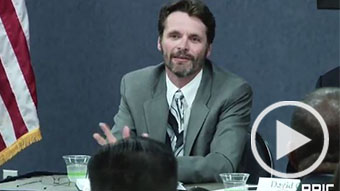
The Common Core Standards are fundamentally altering the way students learn and have generated broad debate nationally. Their implementation in California was the focus of a panel discussion in Sacramento yesterday. PPIC sponsored the event in conjunction with the release of two reports, Implementing the Common Core State Standards in California and California’s Transition to the Common Core State Standards: The State’s Role in Local Capacity Building.

The reports show that California’s shift to the Common Core—which emphasizes conceptual understanding and problem solving—is off to a slow start. They also note that California has treated the transition as a district-level issue, with the state Department of Education reviewing instructional materials and providing a professional library of resources that can be downloaded by teachers. Speakers at yesterday’s event saw both points as positive.

Patricia Rucker, a member of the state Department of Education, said taking a thoughtful approach was more important than being out in front. California can learn from states like New York and, ultimately, lead by incorporating the lessons from others, she said. She also noted that California’s careful approach has helped avoid the backlash over the new standards that other states are experiencing.

David Gordon, superintendent of the Sacramento Office of Education, said the state’s decentralized approach to implementation offers opportunities. “A lot of our districts have great talent,” he said. “A lot of the counties have great talent. A lot of the private vendor providers have great talent. I think we need to use all of that to advantage.”

Patrick Murphy, PPIC’s research director and a co-author of the reports, said California has an opportunity to be “strategic late adopters.” Echoing a theme of the reports, he said the state is uniquely situated to take a different role in education. It could, for example, set up a site—similar to Yelp—to encourage educators on the ground to exchange information about teaching the Common Core.

The speakers noted two important lessons learned so far:

  • The experience of other states shows that California’s future test scores will drop—a development that educators and parents need to be prepared for.
  • The requirement to administer tests electronically has highlighted the need for updated technology in the state’s public schools and has sparked action to do so.

No-Stakes Testing

Beginning March 18, California’s schools will pilot a new type of standardized test for students in grades three through eight and grade eleven. (A small sample of students in grades nine and ten will also take some tests.) These tests represent a significant departure from the standardized exams that were administered in school classrooms in the past.

First, the examinations are aligned with the new Common Core State Standards; they will attempt to assess conceptual understanding and problem solving skills in mathematics and English. Second, they will be given on computers, replacing the infamous #2 pencil and bubble sheets. Third, and perhaps most important, this spring’s exercise is really a “testing of the test” that will have no consequences for students, teachers, or schools. In fact, the U.S. Department of Education removed the most significant consequence last week when it issued a letter stating that the pilot testing would satisfy the federal requirement that California test its students as part of the No Child Left Behind law.

California is a member of the Smarter Balanced Assessment Consortium (SBAC), one of two multi-state consortia to get federal funding to develop assessments aligned with the Common Core standards. Since 2011, SBAC has been working with teachers, college professors, testing experts, administrators, and technicians to develop a new generation of tests. Though there will be some multiple-choice elements, these new exams will feature open-ended questions as well as tasks for students to perform that involve showing their work. (Some of the open-ended and task-oriented questions will have to be hand-scored by professional readers.)

In theory, the SBAC tests represent a big jump forward in trying to measure learning. This pilot exercise will put that theory to the test, as students try out the questions and the technology used to deliver the tests.

This past summer, the state legislature made some important decisions regarding the transition to the new testing regime (AB 484) that we will now watch play out. One of the biggest was that the pilot tests would replace the old Standardized Testing and Reporting (STAR) assessments, saving time for teachers and money for the state.

Because the legislators decided that there would be “no consequences” to this pilot, no letters will appear in the mailboxes of parents over the summer with colored bar charts declaring whether or not their children are “proficient.” The results will not be used to develop accountability scores for schools; nor will they be associated with individual teachers. The purpose of this year’s testing is really to determine whether the tests are doing what they were designed to do: assess student learning.

The demise of the STAR tests will probably warm the hearts of more than a few students. There is a downside to this transition, however. First, it is likely that the results will be publicly reported in the broadest terms, which will limit the chances of anyone other than SBAC to learn from the exercise. Second, given that 2014–15 will be the first full year of SBAC testing, we will have to wait at least until the 2015–16 school year to begin measuring our progress.