Groundbreaking Dam Removal Moves Forward on the Klamath

This is part of a series on issues facing California’s rivers.

The Klamath River has seen its native fish populations plunge and its water quality decline, in part because of four hydropower dams built in its middle reach a century ago. In the coming years, these dams will be removed, creating the largest dam removal and river restoration project in the country. We talked to Lester Snow—board president of the Klamath River Renewal Corporation (KRCC) and a member of the PPIC Water Policy Center Advisory Council—about this effort.
photo - Lester Snow

PPIC: What is the status of the process to remove the dams?

Lester Snow: Right now we’re working through permitting. This process literally requires every environmental permit you can think of. More permits are required to tear these dams down than are needed to build the proposed Sites Reservoir, for example. This effort requires NEPA (National Environmental Protection Act) and CEQA (California Environmental Quality Act) compliance, permits under the Clean Water Act, endangered species protections, and approvals from the Federal Energy Regulatory Commission.

KRRC has hired a range of consultants and contractors to plan, design, and remove the dams and restore habitat. We’re still a couple of years away from major construction. Right now it looks like construction will start in 2021, and the dams will literally be empty in early 2022.

PPIC: How might dam removal improve the health of the ecosystem and native fisheries?

LS: Two basic improvements will come from this project. First, it opens up about 400 miles of historic salmon habitat that was cut off by the dams. The dams alter natural flows and block salmon spawning habitat. And second, it will improve water quality in the lower basin. The reservoirs get toxic algal blooms in the summer―you can’t swim in them or eat fish caught in them.

There will also be ecosystem and cultural benefits from the dam removal. Salmon runs all along the west coast have been under assault for 50 years, and many are in dire shape. So this ecosystem restoration is an important step for Pacific salmon populations. And salmon are a traditional and essential part of life for local tribes—including the Hoopa, Yurok, and Karuk. These tribes have had many of their cultural resources taken from them, and we have an obligation to make amends for the damage that’s been done to their communities.

PPIC: What are some tradeoffs in this effort, and how are they being dealt with?

LS: One issue that is personal for people in Siskiyou County is they’ve had the use of these reservoirs all their lives. Some families will lose lakefront property when the lake is gone. And that raises concerns about how dam removal could affect the local economy. Also, draining the lake might affect some groundwater wells.

We’ve put a lot of time into listening to local communities’ concerns and working out how to address these kinds of issues. We expect a healthier river will result in improved commercial and recreational fishing and increased regional tourism, which can offset potential impacts.

PPIC: What are some key lessons learned from this process that could inform future river restoration efforts?

LS: That’s a good question, and there isn’t an easy answer. The magnitude of this project makes it really complex and unique. No one’s ever taken down four dams at once. By removing all four at once, the sediment behind the dams can be flushed out in one go, to minimize impacts on the fishery. Scientifically, we’re going to learn a lot from this project, and it will be important to document what we learn as we go.

A key lesson is you have to listen to the people who will be directly impacted―even if they don’t trust you or are against the project, you have to engage with them. And you have to have some accommodation for their concerns.

This project is also an incredible illustration of the need for coordination between state and federal permitting authorities. The Klamath is an environmental project where everyone could save time and money if we could figure out how to streamline the permitting process. We still need to figure out how to coordinate permitting without rolling over someone’s authority or losing key protections.

Maybe the biggest lesson on this project is that failure is not an option. It’s been talked about and committed to for decades, and now is the time to get it done. We know there will be unexpected roadblocks along the way, but these dams are coming down—no question about it.

Salmon photo credit: Mid-Klamath Watershed Council
 

The Citizen’s Redistricting Commission: Open for Business

Today marks the first day of the open application period for California’s next Citizens Redistricting Commission (CRC).  The CRC is the state institution vested with the authority to redraw district lines for the state legislature, board of equalization, and Congress. This process occurs after every decennial census to reflect population shifts. The commission’s 14 members will use the new 2020 census data, along with testimony from the public, to draw new districts by August 2021.

If this sounds like the operation of a typical government agency, it is anything but. The CRC is a bold departure from the status quo that was first used in the last redistricting process, in 2011. Most observers felt it worked well the first time around. Today, the state embarks on a second attempt that hinges on a key question: can it work again?

In the past, authority to draw district lines resided with the state legislature. Legislators are of course chosen by the general public in normal elections, where many different issues are always at stake. They are politically connected by definition. When legislators were responsible for drawing the lines, they were not required to (nor did they) hold many public hearings about the redistricting process. Their decisions were subject to few constraints and did not need to be justified or even explained.

The CRC now follows a very different process. The commissioners are chosen through a public application process run by the nonpartisan state auditor. The potential applicant pool is incredibly broad: any registered voter who has been continuously registered with the same political party for five years and has voted in two of the last three statewide elections can apply. (There are a few conflict of interest provisions but they don’t apply to many people.) All the commission’s proceedings must be conducted in public. The lines it draws are subject to a long list of constraints, and the commission is required to produce a report explaining and justifying its decisions.

These rules and constraints may sound good on paper, but the success of the CRC ultimately rests on the quality of the people who serve on it. That requires a deep applicant pool, and the state was fortunate to get one the first time around. The auditor initially received almost 25,000 qualified applications, of which almost 5,000 were willing to fill out a far more detailed follow-up application.

Numbers this large might seem like overkill for a 14-member commission. But a surplus was helpful because the first applicants were not representative of the state as a whole. One of every two initial applicants was a non-Hispanic white male, well out of proportion with their share of the state’s population. Northern California was also overrepresented relative to Southern California, with Sacramento itself producing double the applicants that would be expected from chance alone.

However, with such a large pool to work with, the auditor was able to select a group of final candidates who looked much more like the state as a whole. The final commission was well balanced ethnically, geographically, and politically. Even more than that, the commissioners had a mix of experience and professional backgrounds. The members included a principal, a chiropractor, and a bookstore owner; they also included two civil rights attorneys, several people with experience in city planning, and a former director of the US Census.

The CRC helped to launch a redistricting reform movement that is now sweeping the country.  Four states recently adopted commissions, and the first bill out of the US House this year included a commission reform modeled on the California experience. Many eyes are watching to see if the CRC can work a second time.

Needless to say, success the first time does not guarantee success again. The auditor will need a lot of applicants to create a diverse commission fully representative of the state. Anyone who supports the CRC’s mission and meets the basic requirements should consider throwing their hat into the ring.

The open application period closes on August 19.

2020 Census: Counting California’s Homeless Population

This post is part of a series examining challenges involved in the 2020 Census and what’s at stake for California. 

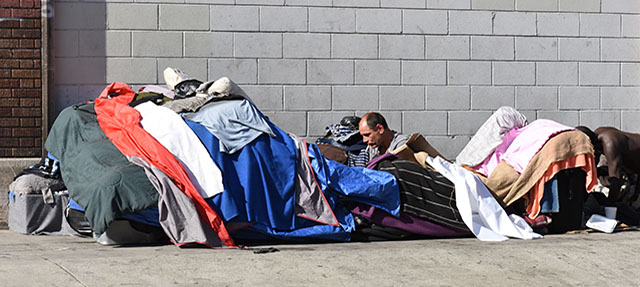
Accurately counting the homeless population is notoriously difficult. People experiencing homelessness can be hard to find—they tend to move around a lot, and at any given time, they might be in a shelter, in a car, outdoors, or couch surfing with family and friends. They may also conceal their living arrangements for privacy reasons or to avoid law enforcement.

The issue is particularly urgent for California as the 2020 Census approaches. California has the most homeless individuals of any state, with 130,000 people living in shelters or outdoors, according to estimates from January 2018. Since this count doesn’t include people staying temporarily with family or friends, it’s almost certainly an underestimate.

Undercounting homeless Californians could affect political representation and lead to reduced federal funding for low-income and homeless families, especially in urban areas with large homeless populations. In addition to determining congressional seats, the census is used to allocate billions of federal dollars for health care, education, and housing programs, including Section 8 housing vouchers for low-income families.

The goal of the census is to count all residents “in the right place,” meaning where they usually live and sleep. People who are couch surfing without a permanent place to live should be included in the household where they’re staying on Census Day (April 1, 2020).

What about people staying in shelters, living outdoors, and residing in other temporary locations? The census bureau has two approaches:

  • Census workers will interview and record responses from people experiencing homelessness at service-based locations or outdoors. These sites include emergency and transitional shelters, soup kitchens, mobile food vans, and targeted outdoor locations (e.g., under bridges, in parking lots, in encampments). This effort will take place from March 30 to April 1, 2020. Census workers in 2010 counted nearly 28,000 Californians in homeless shelters and about 64,000 Californians at other service-based locations and outdoors.
  • Census workers will go to “transitory” locations to collect responses from people who don’t have a usual home elsewhere. These locations include RV parks, motels, campgrounds, racetracks, circuses, carnivals, and marinas. This effort will take place from April 9 to May 4, 2020. Census workers in 2010 collected data from nearly 24,000 transitory locations in California.

The Census Bureau works with local partners to identify service-based and outdoor locations. Input on the latter is particularly important, as California has high shares of homeless individuals who are not living in shelters. The bureau’s new construction program allows governments to submit addresses for new shelters and transitory locations that are expected to be completed by April 1, 2020.

Getting input from local officials and on-the-ground organizations will be critical. They likely have the most up-to-date information about service-based and outdoor locations in their communities, as well as on those who have been displaced due to fire or other disasters. Individuals with experience working directly with the homeless population may also consider applying to be census workers—speaking with a trusted person from the community can help encourage participation among those who might otherwise distrust government officials.

Together, these efforts could go a long way toward motivating homeless individuals to participate in the census, while also ensuring that census workers have accurate information about where to count these Californians.

Fostering Sustainability in the San Joaquin Valley

California’s largest farming region faces two linked challenges: balancing groundwater supply and demand in overdrafted basins, and addressing water quality in the region’s aquifers. We talked to Ashley Boren, executive director of Sustainable Conservation, about tackling these issues in the San Joaquin Valley.

photo - Ashley Boren

PPIC: Talk about your organization’s efforts in groundwater recharge.

Ashley Boren: We’re focused on trying to get stakeholders in the San Joaquin Valley to think about doing more recharge―and expanding recharge approaches―to make a dent in the overdraft problem. Climate forecasts show that California will have fewer but more intense big storms in the future, with a lot of water coming at once. When that water comes out of the Sierra, we need to let it spread out across the land—including on suitable farmland that can handle large volumes of water and has good soils for recharging groundwater. There’s a lot of opportunity to do more recharge.

We’ve definitely seen an uptick in interest among farmers in recharging on their land—the state’s Sustainable Groundwater Management Act has been a huge driver for that. We’re trying to provide tools to help farmers and irrigation districts recharge as much as possible. For example, we’ve got some demonstration sites where we help growers who accept water onto their land to measure the results and impacts. We use our findings for education and outreach with other farmers. And with our partner the Earth Genome, we’ve created a tool that runs scenarios on how landowners and water agencies can optimize recharge using a combination of dedicated recharge basins, fallowed land, and active cropland. It combines publicly available information on things like soil types with water agencies’ proprietary information on canal capacity and location. It’s cloud-based and easy to use.

We’ve also joined the Department of Water Resources’ Flood-Managed Aquifer Recharge effort, which explores ways to marry flood management with groundwater recharge and habitat creation to achieve multiple benefits. There are more than 200 stakeholders involved so far.

PPIC: What needs to happen to scale up recharge?

AB: Several things need to happen. Improving conveyance infrastructure is the big one, so we can move water to where it’s needed most and where conditions for recharge are suitable. We need more landowners willing to accept water on their land, and also more recharge basins. And we need to figure out how much water is available for recharge by watershed, so water agencies know what they’re working with and how much they can capture.

We’re collaborating with the State Water Board to enhance current regulations that would greatly boost recharge efforts, and exploring ways to expedite permitting while ensuring existing water rights are honored and environmental water needs are covered.

PPIC: You’re also working with dairies to help them address water quality issues. What are key lessons from this work?

AB: We’ve been working with San Joaquin Valley dairies on how to manage manure to protect water quality for nearly 20 years. We’re helping dairies apply nutrients more precisely to their feed crops in order to reduce nitrate leaching into groundwater. But reducing the use of manure on croplands means dairy farmers have a lot of leftover manure. Manure is a valuable resource, so the industry is trying to figure out how to create products with excess manure that can be exported off farms to avoid nitrate leaching. Studies indicate we will have to export up to 40% of the valley’s manure to comply with water quality laws. The good news is the industry is actively working to figure out the market for manure products.

We’re also really excited about a partnership with the irrigation company Netafim, supported by the USDA, which allows dairies to apply their nutrient-rich wastewater very precisely to their feed crops to limit leaching of the excess nitrogen into groundwater. So far we’ve seen up to 40% less water and up to 75% less nitrogen applied to fields at our demonstration projects. An added bonus is this system also reduces nitrous oxide emissions into the air by 90%. If dairies could get credit for reducing this very harmful greenhouse gas, it could help pay for installation of the systems.

Watch a video with Ashley Boren and other panelists discussing how to prepare California’s water management system for the impacts of climate change.


LAUSD’s Measure EE and the Parcel Tax Vote Threshold

On June 4, voters in the Los Angeles Unified School District (LAUSD) will decide the fate of Measure EE, a historically large parcel tax that would generate about $500 million a year. Like all parcel taxes, Measure EE has a high bar to clear: two-thirds of voters must approve it. More than half of all proposed parcel taxes have cleared this bar since 2003.

The California Legislature is considering a constitutional amendment to lower the parcel tax vote threshold to 55%. If the legislature approves this proposal, California voters will weigh in. The amendment’s success at the ballot box is far from certain: the April 2019 PPIC Statewide Survey found that just 39% of likely voters would favor such a measure. But what might happen if the legislature and voters did ultimately approve the lower vote threshold? If the state’s recent experience with school bond measures is any indication, we would expect to see more parcel taxes placed on the ballot, with more of them passing.

The parcel tax is a California phenomenon. Proposition 13 (1978), which placed strict limits on commercial and residential property taxes, included a provision allowing cities, counties, and other districts to impose “special taxes” if two-thirds of voters approved. While the majority of parcel taxes levy a flat dollar amount per parcel—a lot or piece of property—Measure EE ties the dollar amount to the square footage of the building(s) on each parcel.

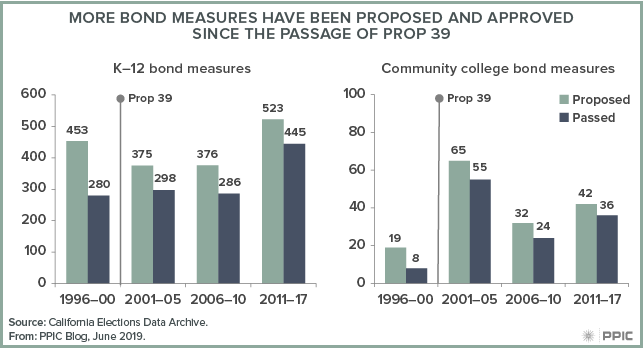
California voters lowered the approval threshold for school and community college bond measures to 55% when they approved Proposition 39 in 2000. The passage rate for K–12 bonds increased from 62% in the five-year period before Prop 39 to 79% in the five-year period after it was approved, and both the number of measures and rate of passage for K–12 bonds have been rising since 2011. This increase is especially striking given that the median bond amount has more than doubled (from $20 million to $45 million) since the threshold was lowered.

The trend has been similar for community college bond measures, though there are far fewer community college districts (73) than school districts (1,026) in the state. After Prop 39 passed, more colleges placed measures on the ballot—especially from 2001 to 2005—a higher share passed, and bond amounts increased. Passage rates increased from 42% before Prop 39 to 86% since 2011. The median amount has more than tripled since 1996 (increasing from $87 million to $350 million).

figure - More Bond Measures Have Been Proposed and Approved Since the Passage of Prop 39

The vote on Measure EE will be important for LAUSD—the resources that the parcel tax would generate are critical to the district’s future finances. The vote will also be worth watching with the pending constitutional amendment in mind. If the measure is approved, lawmakers may see less need for lowering the parcel tax threshold. If it is defeated, the amendment may gain momentum.