Californians Favor Stronger Efforts to Reduce Greenhouse Gas Emissions

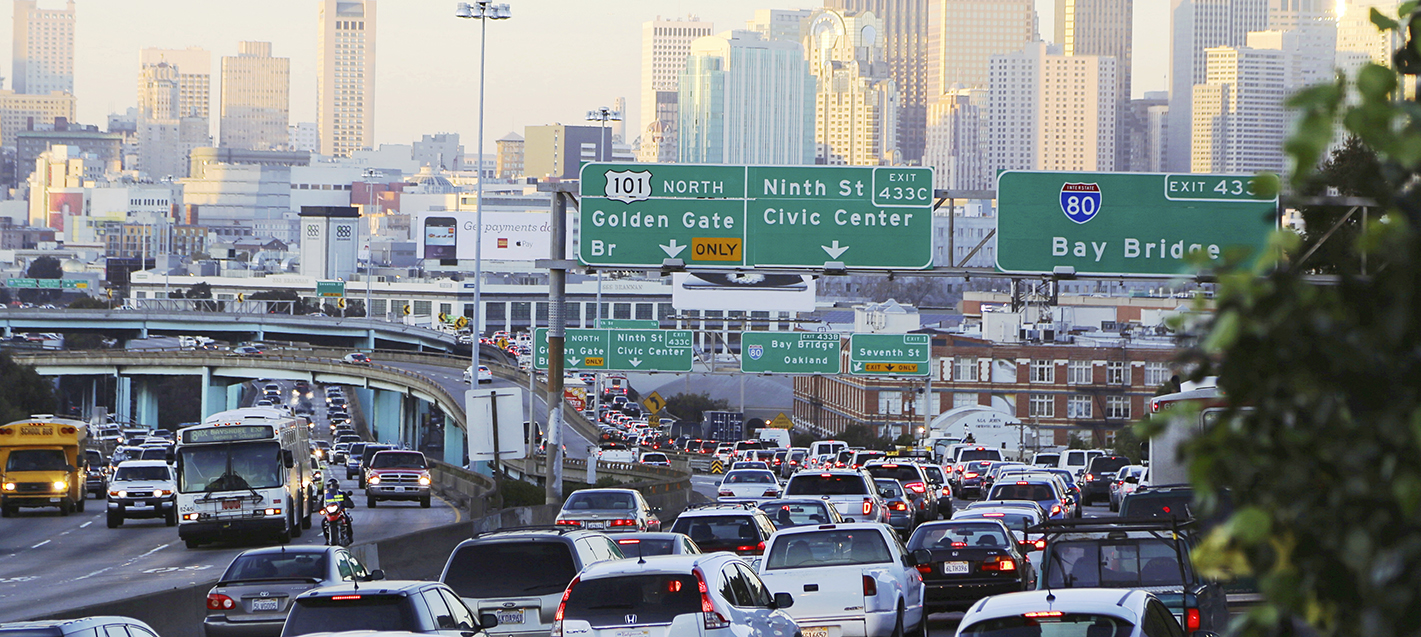
Last month, California officials reached a groundbreaking deal with four major auto manufacturers to toughen greenhouse gas emissions. According to PPIC’s latest survey, an overwhelming majority of Californians (75% adults, 76% likely voters) favor requiring all automakers to reduce the emissions of greenhouse gases from new cars. Californians express strong support for other efforts to reduce emissions as well.

The new emissions standards are more stringent than those proposed by the Trump administration and counter the administration’s efforts to restrict states’ ability to set emissions guidelines. Under the agreement, automakers will increase the fuel economy of their new vehicles by improving fuel efficiency and selling more electric vehicles and hybrids. While the stricter standards only apply to California, the automakers said the agreement is meant to show general support for a national emissions standard.

While most Californians favor requiring automakers to reduce emissions from new cars, support is slightly lower than it was when we first asked this question in 2002 (81% adults, 79% likely voters). Today, Democrats (90%) are much more likely than independents (73%) and Republicans (49%) to favor this policy. Strong majorities (at least seven in ten) across regions and demographic groups are in favor.

A strong majority of Californians (74%, 68% likely voters) also express support for encouraging local governments to change land use and transportation planning so that people can drive less. Support has declined somewhat since this question was first asked in July 2008 (81% adults, 79% likely voters). Today, Democrats (87%) are nearly twice as likely as Republicans (45%) to favor the proposal, and three in four (75%) independents express support. Majorities across racial/ethnic groups are in favor, but Asian Americans, Latinos, and African Americans express the highest levels of support. Strong majorities across regions favor the proposal.

figure - Strong Majorities across Racial/Ethnic Groups Favor Efforts to Reduce Emissions

While three in four Californians favor these specific policy approaches, slightly fewer adults (67%) and likely voters (63%) support Senate Bill 32, the state law requiring California to reduce its greenhouse gas emissions to 40% below 1990 levels by 2030. Although partisans are deeply divided, majorities across regions and demographic groups are in favor, with Asian Americans (77%), San Francisco Bay Area residents (76%), and college graduates (76%) expressing the strongest support.

figure - Partisans are Divided on the Reduction of Greenhouse Gas Emissions Required by SB 32

Earlier this year, Senator Scott Wiener introduced legislation (Senate Bill 50) that would require local governments to change zoning for new developments from single-family to multi-family housing near transit and jobs centers—one goal of the bill is to encourage less driving. In our May survey, 62% of Californians (57% likely voters) favored this proposal. Although the bill failed to advance out of a key committee, it is likely to be reconsidered in the 2020 legislative session.

As California’s leaders continue to pursue a variety of climate change and energy policies, PPIC will monitor emerging legislation on greenhouse gas emissions as well as the views of Californians on these proposals.

Video: Californians and the Environment

In the wake of the devastating wildfires over the past few years, a record-high share of Californians are very concerned about wildfires becoming more severe as a result of global warming, and majorities support the newly established wildfire insurance fund. At a lunchtime briefing in Sacramento last Thursday, PPIC researcher Alyssa Dykman outlined these and other key findings from the latest statewide survey.

Eight in ten likely voters see environmental issues as very important in the 2020 presidential election. With the California presidential primary seven months away, Kamala Harris (19%), Elizabeth Warren (15%), Bernie Sanders (12%), and Joe Biden (11%) have the highest levels of support among Democratic and Democratic-leaning likely voters; a quarter of these voters are unsure about how they will vote.

More than half of Californians see the state’s leadership on climate change as very important, and majorities support state and federal efforts to address climate change—from renewable energy to land-use and transportation planning that reduces greenhouse gas emissions.

Other survey highlights:

  • Two in three Californians oppose allowing more oil drilling off the coast; seven in ten support offshore wind power and wave energy projects.
  • Majorities view pollution of drinking water as a more serious problem in low-income communities and support the state’s creation of a clean drinking water fund.
  • Many Californians value ocean and beach conditions and say plastics and marine debris are a big problem.
  • There are wide partisan differences on climate change and what the state should do about it.


Record-High Share of Californians Worried about Climate-Fueled Wildfires

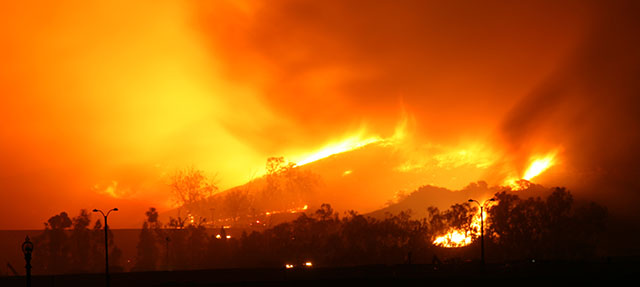
Two devastating wildfire seasons have put Californians on edge about future fire risk. Their concern is reflected in PPIC’s latest Californians and the Environment survey.

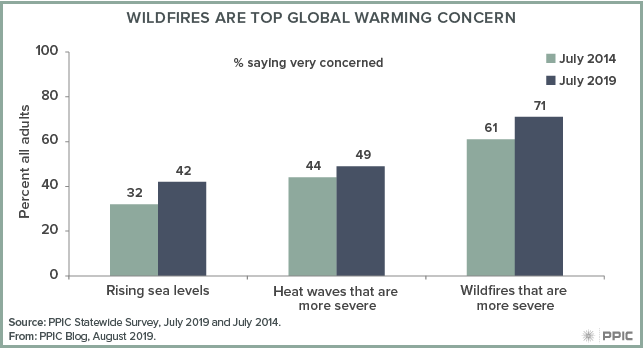
A record-high share of Californians (71%) report that they are concerned about wildfires becoming more severe as a result of global warming. This is an increase of 15 points since 2011 and 9 points since 2018. Concern over climate-fueled wildfires is significantly higher than concern about other potential global-warming impacts—this year it’s 29 points higher than concern over rising seas, and 22 points more than concern over worsening heat waves.

figure - Wildfires Are Top Global Warming Concern

About six in ten Californians (63%) say that global warming has contributed to recent wildfires, a share that has remained steady in recent years. Today, residents of Los Angeles (71%) and the San Francisco Bay Area (69%) are the most likely to hold this view.

Overwhelming majorities of Democrats (85%) and independents (70%), and about half of Republicans (45%), say they are very concerned about more-severe wildfires. Women (77%) are more likely than men (65%)—and young Californians (78% age 18 to 34) are more likely than older residents (66% age 55 and older)—to hold this view.

Back-to-back years of destructive wildfires brought attention to a lack of funding for post-fire recovery, especially following the Camp Fire, when PG&E faced record-high wildfire liabilities and filed for bankruptcy protection. Governor Newsom recently signed into law a $21 billion wildfire fund that will reimburse investor-owned utilities for payments they make to victims of wildfires caused by their equipment. The fund will be paid for evenly by utility investors and ratepayers.

PPIC’s survey found that the governor’s wildfire fund is favored by a majority of Californians (57%). Support is much higher in the San Francisco Bay Area (67%) than elsewhere. The plan is also popular among minority groups, with 73% of African Americans and 68% of Latinos in favor, compared to Asian Americans (55%) and whites (49%).

Post-fire recovery funding does not address the need to reduce wildfire risk factors, however. Our report Improving the Health of California’s Headwater Forests outlines reforms to ensure long-term forest health is a top priority for guiding agency rules, policies, and management practices in one of the more fire-prone areas of the state. It also describes ways to make the most of available funds for forest treatment needs.

The state has been taking steps in recent years to manage wildfire risks. In 2018 the legislature appropriated $1 billion for fire prevention and fuel reduction activities over five years. In April, the governor declared a state of emergency throughout the end of this fire season to spur proactive forest management, especially near high-risk communities.

This year’s state budget allocated significant financial resources to mitigate the funding gap in forest management as well. And the state just added 393 more firefighters to its ranks. Changes at the federal level in 2018 are also helping to reduce wildfire risk on federal lands. These changes give California a chance to increase the pace and scale of ongoing wildfire risk-reduction efforts and to prepare for a new wildfire reality.


Proposed Changes in Admission Requirements at CSU

For the first time in over 15 years, California State University (CSU) and the University of California (UC) may have different course requirements for admission. CSU is currently considering changing its three-year high school math requirement to a quantitative reasoning requirement of four years that broadens the list of eligible courses.

The proposed change—scheduled for a November vote by the CSU Board of Trustees—would create a difference from UC’s three-year requirement, meaning that some students who would qualify for UC may not qualify for CSU. Both CSU and UC have historically defined their math requirements around algebra, geometry, and advanced algebra, as well as any advanced courses (e.g., pre-calculus and calculus) that require these subjects as prerequisites. Under the proposed change, students could continue with the traditional math sequence or take applied courses in the fourth year, including personal finance, laboratory science, computer science, or statistics. The new requirement would first apply to the high school graduating class of 2026.

The goal of the change is to better prepare students for success at CSU and to enable more students to pursue STEM majors once they enter college. But critics cite access and equity concerns, arguing that the changes may disproportionately affect low-income students in districts that are struggling to hire enough math teachers. CSU, which trains a large share of California’s K–12 teachers, has recently announced an expansion of its Mathematics and Science Teacher Initiative to increase the number of new math and science teachers.

CSU and UC have had the same course requirements since 2003, when UC adopted CSU’s visual and performing arts requirement, thus fulfilling “the long-sought goal of giving UC and the California State University a common set of subject requirements” (2000-05-24 Notice of the Meeting, Assembly of the UC Academic Senate).

The proposed change could cause confusion for students who may want to apply to more than one system. Complicating the issue, UC is currently considering adding another year to its science requirement but has not yet scheduled a vote by the UC Board of Regents.

Students in California would benefit from clearly organized admission requirements, but the state lacks an entity that could help K–12 and the higher education systems coordinate these requirements. A higher education coordinating body could provide expertise around this decision, clarify its goals, and help determine whether the proposed requirement is the best approach to meet those goals.