Reconnecting the Klamath

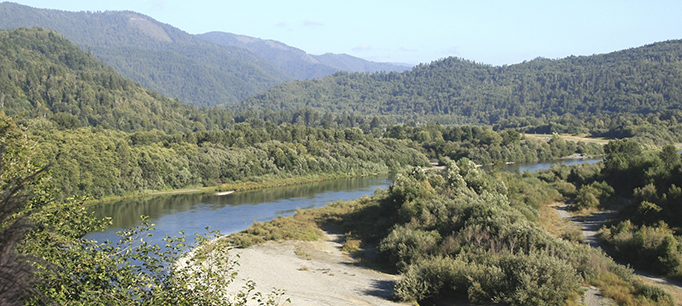
State and federal officials recently signed two agreements to reshape the Klamath River. If these agreements are fully implemented (and there are still some important hurdles ahead), they would lead to removal of the four aging hydropower dams that separate the Upper and Lower Klamath Basin, perhaps as early as 2020. This restoration effort would be the largest of its kind in the US, if not the world.

We were members of the 2001 National Research Council committee that first reviewed the environmental management challenges in the Klamath Basin. Our report, which focused on conflicts over habitat and water for threatened and endangered fishes, made many recommendations, including dam removal. We are gratified to see progress toward this objective.

There are many good reasons for removing these dams. They harm water quality, block access to spawning grounds in the upper watershed for declining stocks of wild salmon and steelhead, and are a financial liability to the company that owns and operates them. Their removal is both inevitable and appropriate.

While the agreements represent a major milestone, we had another conclusion: dam removal will not solve the Klamath Basin’s problems, although it is a necessary first step.

There is an understandable perception that reconnecting the Upper and Lower Klamath will lead to dramatic improvement of conditions for salmon and steelhead. After all, the largest dam removal in US history to date—the Elwha Dam in Washington—resulted in rapid improvements for these fishes and the ecosystems that support them. Other dam removals have had similar responses.

The Klamath, however, is very different. The removal of the Elwha Dam opened up 70 miles of pristine habitat, all protected within a national park. In contrast, the vast expanse of marshes in the Upper Klamath Basin through which the upstream rivers flow have been drained and farmed for more than a century. And the remaining lakes, including Upper Klamath Lake and Keno Reservoir, have significant water quality issues. If these and other problems in the Upper Basin are not addressed, the environmental benefits of taking down the dams will not be fully realized.

Dam removal will not solve the Klamath Basin’s problems, although it is a necessary first step.

For these reasons, dam removal on the Klamath is a commitment, rather than a conclusion. Sustained, well-funded efforts to restore and monitor habitat in the tributaries (where most salmon and steelhead spawn and rear), and to improve water quality in the Upper Basin must continue for decades after the dams come down. The agreements recognize this, but it is easy to lose focus once the primary objective—dam removal—is achieved.

The story of the Klamath dam removal effort is an object lesson for the deeply entrenched combatants in the Sacramento–San Joaquin Delta. The Klamath agreements are a triumph of negotiation over confrontation and litigation. These agreements represent more than a decade of hard work on the part of the federal and state governments, farmers, environmental groups, and Native American tribes, who are especially critical to its success. Long-time adversaries climbed out of their trenches and negotiated a comprehensive fix. Agreements like this are, by virtue of their many compromises, naturally imperfect and difficult to come by. But in today’s complex, politically charged environment, they are the only way to make meaningful progress on resolving contentious water issues.

Learn more

Read a summary of policy recommendations from Improving the Federal Response to Western Drought (February 2016)
Visit the PPIC Water Policy Center

State’s Ecosystems Face a Flood of Changes

With El Niño making an impressive new year’s debut, talk of drought has turned to worries about floods. How will the state’s drought-starved ecosystems adapt to the taps being turned on again? We talked with Joshua Viers, an ecological engineer at UC Merced and a member of the PPIC Water Policy Center research network, about California ecosystems’ response to flooding.

PPIC: Are floods “natural disasters” for nature?

Josh Viers: Disturbances like floods, droughts, and fire are regular features in California, and our ecosystems are fairly well adapted to these extreme events. There has been a lot of evolutionary adaptation to these disturbances over time, and this is one reason California has such high biodiversity. What compromises our ecosystems’ ability to be resilient to extreme events is that many habitats and species populations have been degraded by human activities. That makes it harder to gauge an ecosystem’s ability to snap back after extreme drought or floods.

Flooding can be quite good for aquatic ecosystems, especially after years of drought, because it reorganizes the physical habitat by moving rocks, logs, and sediments. If water overflows into the floodplain, it can recharge shallow groundwater, replenish soil nutrients, distribute seeds from native plants, and create new habitat for animals and plants.

PPIC: How does California’s flood-control infrastructure affect the ability to manage water for the environment?

JV: California has one of the most elaborate water infrastructure systems in the world. Over the decades, it has had both positive and negative effects on our ecosystems. Our system of dams and canals has degraded habitat, and severely altered the natural variability of river flows, which can disrupt ecosystem functioning and species’ life cycles. But we’re increasingly able to manage the system to mimic rivers’ natural flows and improve long-term ecosystem functioning. As the climate warms, however, we will need to manage water flows to ensure downstream water temperatures don’t get too high for many of our native fish species.

PPIC: What changes to our flood management system could improve environmental conditions?

JV: We need better forecasting on the amount of water coming into reservoirs, so we can minimize the impacts of sudden high releases from dams, which can damage ecosystems downstream. Being able to “pre-wet” ecosystems dried from the drought can help reduce the effects of a sharp change. For example, in fall the Cosumnes River had many native fish waiting to swim upstream to spawn, but its dry channel forced them to wait longer than normal. The first rains just saturate the streambed. Pre-wetting it allows these rains to become streamflow and help get those fish moving upstream on time.

A longer term fix would be to set back more levees, which would give rivers room to flood. This can have ecosystem benefits and reduce property damage from floods. We’ve identified a number of aquatic ecosystem benefits from this approach. The wider channel slows floodwaters and supports growth of phytoplankton, which are the base of the food chain for a whole host of creatures. Juvenile salmon grow much bigger and more quickly in this environment. That means they can survive their ocean migration much better and are more likely to come back to spawn. Additional benefits include forest regeneration, nutrient and sediment deposition (which creates new habitat for riparian plants), and local groundwater recharge. These whole-ecosystem responses have human benefits as well.

Learn more


Read our policy brief California’s Water: Preparing for Floods (from California’s Water briefing kit, April 2015)
Visit the PPIC Water Policy Center ecosystems resource page

A Pragmatic Reason to Protect Freshwater Fish

California’s freshwater fish are in trouble. The causes are many and include the way we manage water and land as well as this unusually warm drought. The decline of these fishes can lead to broader consequences, particularly if they are declared threatened or endangered under the federal Endangered Species Act (ESA).

There are pragmatic reasons to avoid this outcome. Listings under the ESA lead to “emergency room” actions to prevent extinctions, often reducing flexibility for water management and bringing significant economic consequences. Of the 30 California freshwater fishes now designated as threatened or endangered, 14 have affected local and regional water supply management. Three—delta smelt, winter-run Chinook, and spring-run Chinook—are a dominant constraint on the Brown administration’s proposal for new water conveyance in the Delta (California WaterFix).

To illustrate the scope of the problem, here are some examples of fish that are in decline but are not yet federally listed. If listed, the measures needed to protect them will have significant effects on the water supply:

  • Central Valley late-fall- and fall-run Chinook salmon. These are the last unlisted salmon runs in the Central Valley. Both—particularly the late fall-run—may be future candidates for listing. Fall-run Chinook are the basis of the state’s salmon fishing industry. Federal listing would add new restrictions, ensuring year-round constraints on water supply operations in the Central Valley and the Delta.
  • Upper Klamath–Trinity fall- and spring-run Chinook salmon. Both runs are increasingly at risk within the Klamath Basin, with the potential to complicate efforts to complete the Klamath Basin Restoration Agreement, the California Department of Fish and Wildlife’s effort to improve habitat on Klamath River tributaries such as the Scott and Shasta Rivers, and operations of the Central Valley Project, which diverts water from the Trinity River to the Sacramento River.
  • North Coast steelhead. Two populations of steelhead—Northern California and Klamath Mountains Province—have been in decline at least partly from the effects of dams. The expansion of marijuana farms and the drought have increased stress on these populations. Federal listing would complicate recently launched efforts of the California Department of Food and Agriculture and the State Water Board to license medical marijuana farms and better manage water resources in this region.

Improving the way California manages water for environmental purposes is key to preventing new ESA listings. The development of environmental water budgets would create an opportunity to more flexibly and effectively manage the aquatic environment. The details of this proposal are contained in the PPIC Water Policy Center report Allocating California’s Water: Directions for Reform.

Although establishing environmental water budgets would often require setting aside more water than we do now to protect at-risk species, this approach is likely to be more flexible and less disruptive than regulations arising from ESA listings. California needs new tools, such as environmental water budgets and the willingness to take proactive steps to keep species out of the emergency room.

SOURCE: US Fish & Wildlife, ECOS Database Species Search.

Learn More

Read the report Fish Species of Special Concern (Moyle et al., July 2015)

California’s Environment Needs a Water Budget

Allocating water for environmental needs has been one of the more controversial, and perhaps most misunderstood, aspects of water management during this drought. The aquatic environment has been particularly hard hit, with many fish species close to extinction.

California needs to change course to prevent extinctions and further declines in our river and wetland ecosystems. Our recent report Allocating Water in California: Directions for Reform calls for modest changes in how we manage water in times of scarcity that could significantly reduce the social, environmental and economic costs of drought. A practical solution to the aquatic ecosystem crisis is to establish “environmental water budgets” (EWBs) for priority watersheds where threats to ecosystem health and native species are high.

It would work like this: the State Water Board, in partnership with the California Department of Fish and Wildlife and other agencies, would use available information to prescribe the water needed to maintain fish and other species in good condition. Local water users would help develop procedures for meeting these requirements (much as they are now required to do under the Sustainable Groundwater Management Act). As part of this effort, local stakeholders—with state support—would be encouraged to improve the scientific basis for setting these allocations and propose alternative ways to meet environmental needs.

A novel principle is that this baseline water budget would belong to the environment and be managed by a designated environmental water manager. The manager could purchase, trade, and even sell water to best serve environmental needs. Surplus water sales would raise funds for other environmental uses, such as habitat improvements, or for water purchases during dry times. This system would provide greater flexibility and security than the current approach of setting minimum environmental flow and water quality standards (which are often relaxed when times get tough for other water users).

There are two ways to implement this idea. The water board could establish the EWB as a regulatory set-aside—which would ensure that the EWB water could not be diverted by other water right-holders. Or, similar to the Australian approach, the water board could define the EWB as a water right—one that would have top priority within the water rights system, with the exception of emergency public health and safety needs.

Some existing water right-holders may be resistant to the environment leap-frogging ahead of them in seniority. But the environment already effectively has the senior right under a variety of laws protecting water quality, critical habitat, and endangered species. The problem is that these regulatory standards are often ignored or too easily modified when water is scarce.

The EWB approach offers value for water right-holders. It reduces regulatory uncertainty by giving the environment a water budget that it has to operate within. It provides flexibility in managing environmental water. And it encourages cooperation with local water users, who have a stake in its successful implementation.

This proposal makes the environment a cooperating partner in water management—one that sits at the table when tough decisions are being made. Partnerships, rather than competing interests, are a more effective approach to managing water during challenging times.

Learn More

Read our policy brief California’s Water: Water for the Environment (from California’s Water briefing kit, April 2015)

Read our report What If California’s Drought Continues? (August 2015)

Saving Native Fishes from Extinction

Native fishes have been hit hard by the drought, with 18 species—including many salmon runs—at high risk of extinction if warm, dry conditions persist. But there are actions we can take now to avert what could be the largest loss of native freshwater fish biodiversity since the arrival of Europeans in California.

The state and federal fish agencies entrusted with preventing these extinctions face formidable challenges. The species at risk cover a very large geographic area and in many regions the options for emergency management actions are limited. Additionally, the total amount of funding allocated to managing the environment during this drought is very modest: $66 million, or roughly 2% of total state drought spending. (We showed this in our report What If California’s Drought Continues? in Table 1.)

The California Department of Fish and Wildlife has taken many actions despite limited resources (see this summary), with more than 30 projects underway. But more can—and should—be done now to prepare for continued drought. Here are some suggestions:

  • Initiate an emergency conservation hatchery program. This should start with fish at risk of extinction that are not already the focus of intense conservation. These efforts can be as simple as building temporary holding tanks or as elaborate as temporarily converting production hatcheries to rebuild these populations.
  • Establish a robust environmental water emergency fund. This would enable fisheries managers to purchase or trade water to maintain adequate flows and water quality for at-risk fish. It could be modeled after projects by The Nature Conservancy and the Natural Resources Conservation Service. These initiatives use temporary water transfers to flood farm fields in key locations to create waterbird habitat. During times of high stress for native fishes—usually due to low flows and high temperatures—strategic investments that temporarily return water to streams can help keep fish healthy.
  • Develop a reservoir drought-operations plan. State and federal agencies should conserve cold, fish-friendly flows at strategic reservoirs next summer. A margin of safety should be built into these allocations to address unusually warm conditions and modeling uncertainties, such as those that decimated winter-run Chinook salmon below Shasta Reservoir the past two years.
  • Develop a drought biodiversity management plan. The state should harvest the lessons from management successes and failures during this drought to develop this plan. Environmental management will be more efficient and effective if we have a plan in place before a drought that sets priorities for emergency actions intended to improve species’ resilience. We need to start on this now, while the lessons are fresh.

Many more actions can be taken (examples are outlined in California Species of Special Concern). However, it’s essential that some actions be taken now to prepare for continued drought. While it’s tempting to hope that the record El Niño now building in the Pacific will solve our drought problems, the only sure thing about El Niño is that it is not a sure thing.

Learn More

Visit the PPIC Water Policy Center’s ecosystems resource page
Read “Extinction Risk for Native Fish if Drought Persists” (PPIC Blog, September 10, 2015)

Stressful Times for Drought-Stricken Delta

The SacramentoSan Joaquin Delta is one of the West’s most important estuaries, and a critically important water source for millions of Californians. But decades of water exports and human alterations have transformed this aquatic ecosystem, and a few dozen of its native species have dwindled to the point of extinction. We interviewed Phil Isenberg, vice chair of the Delta Stewardship Council and a member of PPIC’s board of directors, about the state of the Delta.

PPIC: How is the Delta faring these days?

Phil Isenberg: From an environmental perspective there’s not a lot of good news. The Delta is a severely damaged environmental site of great importance, and the damage has continued for more than 100 years. Very little restoration activity has taken place compared to the vast development of water supply infrastructure that has gone on in the past century. More housing is being built in flood-threatened areas, and urban growth continues on the boundaries. Some areas like Stockton are rapidly encroaching on agricultural and environmentally sensitive areas in Delta. The state’s Delta tunnel proposal has a greatly reduced environmental restoration plan—only about 30,000 acres of land will be put in protected status or restored for environmental purposes. It’s not insignificant, but certainly not as positive as the 150,000 acres which was part of the Bay Delta Conservation Plan.

PPIC: What is the role of the Delta Stewardship Council in managing this important resource?

PI: Our mandate is to achieve two equally important goals: to provide a more reliable water supply for California, and to protect, restore, and enhance the Delta ecosystem. It’s the latest legislative attempt to create a legally enforceable governance and management plan for the Delta. The Delta Plan was adopted in 2013; within 30 days we were sued by 27 plaintiffs, ranging from agricultural interests, state and federal water contractors, the city of Stockton, and several environmental groups. Interestingly, no state agencies or counties have sued. Their legal argument seems to be either we went too far or didn’t go far enough—which suggests to me that we may have struck the right balance.

PPIC: What does the latest science tell us about the Delta’s condition?

PI: Besides being severely damaged by human actions over centuries, the Delta has also been damaged by the drought and by the diversion of water for human purposes during drought. Scientists are skeptical about the ability of government or society in general to be able to rapidly improve the environmental condition of the Delta. We have altered the ecosystem in too many ways. We’ve channelized its waters, put in more than a thousand miles of levees, allowed people to move into the floodplain, brought in invasive nonnative species, and allowed pollutants to flow in from industry and agriculture. The best science we’ve received over the years is that the Delta’s environmental troubles can be managed better, but we will not likely be able to save all species in face of these threats. The political process demands immediate action, but science tells us that it will take decades to improve a Delta damaged over the past 160 years. A big part of any real solution is to involve independent scientists in decision-making and then follow their advice.

PPIC: What’s the most difficult tradeoff we’re facing in the Delta?

PI: The biggest problem is the conflict between illusion and reality. Basically, the water supply in California has not expanded since we began keeping track in the late 1880s. Worse, the water supply remains highly volatile. As our society has grown, demands for water have increased; our demands now exceed available water in many years. People have unrealistic expectations that ignore the limits of our supply. Although it is state policy to reduce human reliance on the Delta—and to compensate for that with heavy investments in water conservation, recycling, and the like—a lot of folks want more.

PPIC: What’s your biggest hope or aspiration for the Delta’s future?

PI: The Delta is constantly changing; we can’t freeze it in time. The Delta that existed before extensive human changes cannot be recovered. California hasn’t always done the right thing regarding water, but over time we get it right more often than not. So I hold out a reasonable level of hope for an improved Delta in the future. A successful Delta future for me is one that stops urbanization and protects its environment and the agriculture that remains. Will it work? Ask me in 100 years.

Learn more:

Managing Wildfires Requires New Strategies

Severe wildfires have been dominating the news this summer, with good reason. The persistent drought, coupled with the legacy of poor forest management practices, has produced historic fire conditions in California and much of the West.

In the month since the publication of our report on the California drought’s major repercussions—which projected a growth in extreme fires if the drought continues another few years—California has experienced several new fires that are among the largest or most damaging in recorded history.

Since this drought began in 2012, California has experienced two of the three largest fires on record, and four of the top 20, as measured by number of acres burned (see table). The newest “top 20” is the Fresno-area Rough Fire, which continues to spread and rise in fire rankings since its start in July. From September 11-17, the Rough Fire consumed around 20,000 additional acres and rose from eighteenth to fifteenth largest wildfire on record.

As of mid-September, this year’s Valley and Butte fires ranked third and seventh on the state’s list of most damaging fires, as measured by number of structures destroyed (see table). At this writing, neither fire was fully contained.

All three of these wildfires continue to burn despite a massive fire-suppression effort by the Department of Forestry and Fire Protection (CAL FIRE).

UC Berkeley wildfire expert Scott Stephens explains that the current statewide drought has affected the frequency and behavior of recent wildfires. Hotter temperatures and dry conditions have “reduced moisture in both live and dead trees, as well as shrub leaves and tree needles, which allows for more efficient fire initiation and high intensity burns,” says Stephens.

A century of wildfire suppression and inconsistent fuel reduction efforts—such as thinning out trees and introducing more frequent, low-intensity fires—has increased the risk of major wildfires in California’s forestlands. Unnaturally dense forests create ample fuel for wildfires once they ignite.

One new drought-induced characteristic is that wildfires are continuing to grow throughout the night, Stephens notes. Historically, lower temperature and higher relative humidity at night would slow wildfire growth and give firefighters a chance to suppress the burn. The Moonlight (2008), Rim (2013), King (2014), and Valley (2015) wildfires burned intensely throughout the night.

Stephens warns that that we need to rethink our approach to forest management. Intense fires have the potential to convert forests to shrublands, permanently altering their ecology. To avoid this, the state must increase fuel-reduction efforts to ten times the area that is currently treated. “The good news is this is possible,” Stephens says. “We have the techniques and research to show forest restoration treatments are in line with the ecology of these ecosystems.”

Short-term fire suppression is extremely important for protecting human life and property, but experts agree that California needs to take a longer range view of forest management to limit damage from wildfires as the climate warms, and reduce the ever-growing cost of fighting fires. Fuel reduction efforts require sustained application over large areas for decades. The fractured ownership of California’s forestland makes implementation difficult. Some efforts are underway on private lands in California, but this has proven more difficult on federal lands (roughly half of our forestlands) due to permitting constraints. Until private and public forestland owners coordinate long term fuel-reduction efforts, California can expect to experience larger, more frequent, and increasingly severe wildfires.

Table notes: *Number of acres burned or structures destroyed may increase until wildfire is fully contained. Wildfires in bold started since the drought began in 2012.

Table source: CAL FIRE, Top 20 Largest California Wildfires (updated by PPIC with current wildfire information as of September 23, 2015); CAL FIRE Top 20 Most Damaging California Wildfires (updated by PPIC with current wildfire information as of September 23, 2015).


Extinction Risk for Native Fish if Drought Persists

If the California drought continues, many of California’s native freshwater fishes are at imminent risk of extinction. This is a key finding of our recent report What If California’s Drought Continues?, which projects the potential consequences of ongoing drought on key sectors, including the environment.

Managing scarce water resources to improve the drought resiliency of the state’s rivers, wetlands and forest ecosystems, and the native biodiversity they support, has proven to be the most vexing challenge of this extended drought.

Our research finds that 18 native fishes could go extinct if the drought continues for several more years; this map shows their distribution in the state’s watersheds. We estimated each species’ extinction risk by evaluating the response of these fishes to factors such as reduced flows, increased water temperatures, stress from habitat changes or competition caused by invasive species, and the impacts of hatchery-bred fishes on wild fish populations. (Learn more about our methods in the report’s technical appendix.)

The results are disconcerting. The state’s “anadromous” fishes—those that spawn in fresh water but rear in the ocean—are being hit particularly hard. Coming into this drought, historic water- and land-use practices had diminished their populations. Low flows and high temperatures have made matters worse. Most of the state’s salmon runs are at risk, along with many runs of steelhead trout. Other species—some well-known (delta smelt) and some obscure (unarmored threespine stickleback)—are also in trouble.

The state needs to prepare now for addressing this problem, because if there is another dry year or two, many fishes are likely to go extinct. Recommended actions include acquiring or allocating water (particularly cold water) to improve habitat in strategic locations, relocating some fish, restoring spawning habitat, and improving access of fish to spawning and rearing areas. As a matter of urgency, these species should be brought into conservation hatcheries so that they can be reintroduced to the wild when conditions improve.

Along with the conservation-oriented goal of protecting the state’s native biodiversity, there are also very practical reasons for taking urgent action to protect these fishes. Half of the 18 species at risk are not currently protected under the Endangered Species Act (ESA). Listing species for ESA protection brings legal obligations to stop population declines; experience shows this can be disruptive to water supply operations and incur considerable long-term costs. An ounce of prevention, in this case, would be worth many pounds of cure.

Video: What If California’s Drought Continues?

Four years into a historic drought, the environment and some rural communities are most at risk if hot, dry conditions persist. At an event in Sacramento last week, Ellen Hanak, director of the PPIC Water Policy Center, gave an overview of findings from the new report What If California’s Drought Continues, touching on the higher risk of large wildfires, increasing land subsidence from groundwater pumping, and the growing crisis affecting freshwater ecosystems and species. A panel of experts then dove deep into the drought’s perils—and success stories—before a capacity crowd.

Jeffrey Mount, senior fellow at PPIC and a co-author of the report, moderated the panel, which included Wade Crowfoot, deputy cabinet secretary and senior advisor to Governor Brown; Laurel Firestone, cofounder and co-executive director of the Community Water Center; and Kevin Hunting, chief deputy director of the California Department of Fish and Wildlife.

Asked to describe the successes and “pleasant surprises” in the state’s efforts to manage the drought, Hunting said his department has had to redefine success. “In the past success for us would be stable populations, recovering populations of endangered species,” he said. “Unfortunately, we’re in a situation now where success means avoiding extinctions … and really, plugging the gaps in the biggest risk areas.”

He said the agency has also brought creative approaches to managing fisheries and wildlife with a dwindling amount of water, including partnering with private water users to deliver water at critical times to support fish and waterbirds.

Firestone said major strides have been made in state-run efforts to get emergency water supply to rural communities facing water shortages. Beyond the state’s programs, she cited the efforts of volunteer and local agencies in these communities—”local people just trying to help their neighbors.”

Crowfoot gave his short list of drought successes, topped by water conservation across the state. “The real heroes of the California drought are actually everyday Californians,” he said, noting the latest water conservation statistics showing a statewide reduction in water use by over a quarter. He also cited the work of local water agencies, legislation—such as groundwater management reform—that crossed political boundaries, and unprecedented cooperation by state and federal agencies.

The panelists noted that much more needs to be done to both build on these successes—and strengthen efforts to address the challenges of continued drought.

The Carmel River Gets a Boost

The Carmel River is a shadow of its former self these days, due to overuse of its waters, drought, and dams. But an ambitious project to remove one of its two large dams will bring some life back to the overtaxed river.

The removal of the 106-foot-high San Clemente Dam, now filled with sediment, will be the largest in the state. It will open miles of spawning and rearing habitat for threatened steelhead trout and restore some of the river’s natural flow of sediments. The restoration of sediment flows will support the riparian ecosystem downstream, create gravel beds used by spawning fish, and help replenish sands at Carmel Beach.

The 1920s design of the dam does not meet modern safety standards. Removal of the dam involves many complex challenges, but the biggest by far is managing the 2.5 million cubic yards of sand, silt, gravel, and cobble behind the dam that have displaced all of its water storage capacity. The dam’s remote site precludes removing these sediments mechanically; instead, the project will create a permanent sediment storage area by rerouting the river for half a mile.

Removing San Clemente Dam will help improve habitat, but it isn’t a panacea for all of the river’s problems. Upstream of San Clemente Dam, Los Padres Dam blocks the best spawning and rearing habitat, which is in the Ventana Wilderness Area. Questions still remain about the fate of this dam and fish passage around it. However, removal of San Clemente Dam sets the stage for addressing other aging dams that are ripe for removal around the state.

California has more than 120 reservoirs—most of them small—that have lost at least 75% of their storage capacity to sedimentation. At least three dams in the Coast Ranges are prime candidates for removal: Matilija Dam on the Ventura River, Searsville Dam on San Francisquito Creek on Stanford University property, and Rindge Dam on Malibu Creek. While removing these dams would open up habitat for migratory fish, a key issue hindering their removal is what to do with the decades of sediment accumulated behind them.

Dams are often the principal factor causing degradation of the river ecology. Removing them can often be the single action with the greatest restoration benefits. But other factors affect river health, too, from land use to water abstractions. The Carmel River is not just constrained by dams, it also has been subject to excessive diversions of its waters. Starting in 2017, the river will get increased flows in response to an order by the State Water Resources Control Board to significantly reduce water diversions. Thanks to these efforts, the Carmel River is looking to be a rare success story for the state’s troubled rivers and native fish—and one that is even more important given the huge setbacks the environment has suffered during the drought.

Watch the removal of the dam via webcam.

Learn more about reducing the negative impacts of dams in chapter 5 of Managing California’s Water: From Conflict to Resolution (pp. 228-238).