Better Reservoir Management Would Take the Heat off Salmon

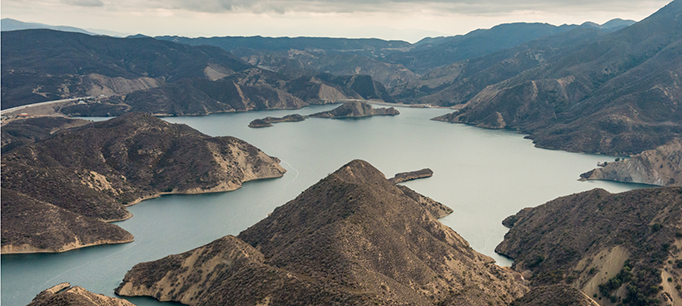
Over the past few weeks, the state’s largest reservoir—Shasta—has been in the spotlight as managers struggle to meet multiple demands with dwindling reserves. Surface reservoirs are central to managing California’s water supplies for a variety of purposes. However, during extended droughts, when the amount of water in reservoirs gets low, water allocation decisions can involve difficult trade-offs. This year the trade-offs at Shasta are particularly challenging, since the survival of a run of endangered salmon may be on the line.

Most of Shasta’s water goes to agricultural water contractors in the Sacramento and San Joaquin Valleys. The reservoir generates abundant hydropower and supports a large recreation economy. Shasta, along with Folsom and Oroville Reservoirs, is also the principal source of water for controlling freshwater outflows from the Sacramento-San Joaquin Delta. These outflows are necessary to maintain water quality for both human uses as well as fish habitat.

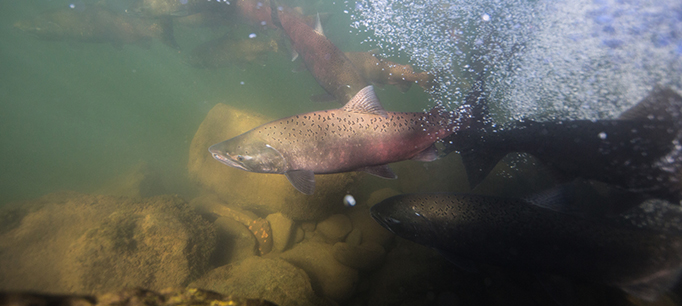
Balancing all of these demands for Shasta water is made more complex by the needs of winter-run Chinook salmon—an endangered species that is edging close to extinction.

The Sacramento River was blocked by Shasta Dam in 1944. This shut off access to spawning grounds for millions of winter-run salmon that historically migrated to the river’s headwaters in late winter. Their eggs—deposited in the gravels—survived the hot California summers because of the abundant cold spring flows in these headwaters.

Today, the dense, cold water that collects at the bottom of the reservoir in winter and early spring is the only available source of cold water for these fish. Spawning is now restricted to a relatively short stretch of the Sacramento River immediately below the reservoir where temperatures are kept low enough by cold water releases.

In late summer of 2014, the water released from Shasta was too warm, resulting in the death of almost all the winter-run Chinook salmon eggs. According to a report by the U.S. Bureau of Reclamation, temperature models used to forecast dam operations failed to fully account for reservoir water temperatures and the performance of gates used to selectively draw water from various depths. By the time the errors were discovered, early season water releases for irrigation had used up available cold water.

This year the weather circumstances are roughly the same: low winter and spring inflows and unusually warm temperatures. In a report to the State Water Resources Control Board in early spring, the U.S. Bureau of Reclamation provided assurances that temperature needs for winter-run Chinook could be met while allowing water releases for irrigators and meeting water quality requirements in the Delta.

But in late May, reservoir managers revealed that winter-run salmon eggs were at risk due to high temperature releases for a second consecutive year. This year’s miscalculations were different than last year’s. Operations staff failed to incorporate water temperature data that showed that the lake had warmed rapidly in the spring. As before, these errors led to overly optimistic projections for available water.

State and federal officials have committed to trying to stave off another complete loss of winter-run Chinook, acknowledging that failing to do so may lead to extinction. They say themselves that this is going to be no easy task given the warmth of water in the reservoir.

These difficulties in managing Shasta Reservoir highlight a significant policy challenge that needs to be addressed during this drought, and that also has implications for managing future droughts.

Uncertainty—whether from data collection or failures of technical models to adequately represent extreme conditions—needs to be more explicitly integrated into decision-making. When water supplies are very limited, there is great pressure to meet all competing demands to the maximum extent possible, leaving little room for adjustment to unanticipated conditions or events. This is especially true for cold water in reservoirs because early season releases for irrigation or other uses limits options to adjust later in the season.

To incorporate uncertainty into drought planning, priorities need to be clearly defined, and a margin of safety established for top priorities, such as preventing extinction of endangered species.

A greater margin of safety would likely have prevented the loss of winter-run Chinook salmon in 2014 and helped avert the challenges this year. To be sure, this would have meant increased water scarcity for some downstream irrigators. But this scarcity would not be permanent, since the rains will eventually return. And policies such as crop insurance and emergency drought support can lessen the financial costs of water shortages to farmers. For the salmon, there will be no second chance: extinction is permanent, regardless of whether it rains again.

New Strategy, New Challenges for the Delta

Last week, Governor Brown announced a new approach to managing the Sacramento-San Joaquin Delta. For the past eight years the state’s focus has been on the highly controversial Bay Delta Conservation Plan (BDCP). That plan was intended to be a “big fix,” simultaneously improving the health of the troubled Delta ecosystem and the reliability of water supplies for the cities and farms in the Bay Area, Southern California, and the San Joaquin Valley that depend on water exported from the Delta.

The BDCP was intended to meet the 2009 Delta Reform Act’s requirement to manage the Delta for co-equal goals of water supply reliability and ecosystem health. To achieve these goals, the BDCP aimed to restore more than 100,000 acres of habitat and build tunnels underneath the Delta to ship water that now goes through the Delta’s channels to the giant pumps at the Delta’s southern edge. The tunnels would improve the quality of water exports and, importantly, make exports less susceptible to disruption from levee failures. By taking a comprehensive approach to ecosystem restoration, BDCP hoped to receive a 50-year permit for water exports.

But in the end, uncertainty over the benefits of the restoration—particularly in light of a changing climate—made a 50-year permit unacceptable to federal and state regulators.

The governor’s new strategy is to disentangle ecosystem restoration from water supply infrastructure improvement. Under a new program, entitled California Water Fix, the state would proceed as planned with the tunnel project, and with restoration of 2,000 acres of habitat to mitigate the impact of construction. As before, the tunnels would be funded by the water users who use Delta exports.

To improve the health of the Delta, the state will implement California EcoRestore, a scaled-down effort that focuses on completing or improving projects already required by federal regulators to reduce the environmental impacts of water exports. This effort would begin restoring 30,000 acres of high-value habitat in the next three years—an ambitious timeline. The funding for this work is already available—largely from the same water users. (It is worth noting that funding for ecosystem restoration under BDCP had yet to be identified.)

Both Water Fix and EcoRestore face daunting challenges. For Water Fix, financing may become an issue. Under BDCP, the 50-year permits would have provided greater regulatory certainty and thus greater water supply reliability for those who depend on water exports. Reverting to the regulatory status quo—and associated uncertainties—reduces the overall value of the project and may make some water suppliers reluctant to invest.

For EcoRestore, the key challenge lies in meeting the ambitious three-year time frame for initiating restoration projects. Our recent assessment of environmental stressors affecting the Delta found that institutional fragmentation is a major obstacle to improving ecosystem health.

For example, one of the proposed projects that has been in the works for years—restoration of McCormack-Williamson Tract, an island in the northern Delta—will require the acquisition of 10 permits, consultations on 10 statutes, and demonstration of consistency with nine programs under 18 state, federal and local agencies. (An overview of the numerous agencies that need to provide regulatory approval and oversight for Delta projects can be found in Stress Relief: Prescriptions for a Healthier Delta Ecosystem, see Table 4, page 19).) The current timetable for EcoRestore has this project beginning early next year—a tight timeline indeed.

As we’ve described elsewhere, the BDCP’s original habitat restoration goals were likely too ambitious—conditions in the Delta limit the availability of lands likely to have a major impact on ecosystem health. So it is reasonable to scale back from the original plan. But to successfully improve habitat in anywhere near the timeframe proposed, EcoRestore must be accompanied by significant reforms that integrate and streamline management, most notably the permitting process (see our recommendations).

Presumably, these and many other issues will be addressed in the environmental documentation that will be released in June. However, as commonly occurs in management of the Delta, changing course is never easy, and always brings new challenges.

Experts Weigh In on Drought Solutions

Along with their morning coffee, readers of Sunday’s Los Angeles Times were treated to an offering of nine bite-sized opinion pieces on solutions to help California better manage droughts. Contributors included representatives of urban and agricultural water agencies, environmental organizations, the private sector, and research institutions. The topics were equally broad. We both participated in this forum, and our two pieces highlight the importance of strategic investments in a couple of key areas: water storage and water accounting systems.

On storage, the message is that we need to think comprehensively about our water system when deciding how to invest the $2.7 billion in state bonds that voters recently authorized for new projects. People often assume that these funds will go to expanding surface reservoirs and tend to forget that storing water underground in the state’s aquifers is often more cost-effective. An especially promising approach to preparing for future droughts and adapting to our warming climate is to manage our storage network as an integrated system. This means putting more water for dry years into groundwater basins, which can free up space in surface reservoirs for summer irrigation needs and the higher flood flows likely to come with a shrinking snowpack.

On accounting, the message is that California has some serious catching up to do to better understand where, when, and how much water is used in different watersheds. This drought has exposed the tremendous challenges in managing scarce supplies because of an antiquated, incomplete, and inconsistent set of water use and water availability measurements. Updating our water accounting systems is a top priority we identified in a recent check-up on how California is faring during this drought. State officials have begun to take up this challenge. But more work is required to make this information sufficiently transparent, consistent, and integrated across the various state agencies and offices that deal with water management to facilitate allocation decisions that benefit the state’s economy, society, and environment during droughts.

Farms that Help Wildlife

When we hear that agriculture accounts for 80% of human uses of water in California, attention often turns to water intensive crops like rice and alfalfa (almonds—a water intensive but high revenue crop—have been much in the news as well). The suggestion is often made that farmers stop growing low revenue crops in order to conserve water. There are many reasons not to dictate what crops to plant. One not often discussed is that some crops that generate low revenues per unit of water may actually have high environmental value, particularly for birds and fish.

California’s freshwater landscape has been transformed, most notably in the Central Valley where less than 5% of native habitat remains. This transformation has reduced the habitat for waterfowl and shorebirds in the region. Land conversion, in conjunction with water resource development, is also the principal cause of the decline of native fishes such as salmon and steelhead.

Yet the very agricultural fields that contributed to the decline of these species may today provide the opportunity to ensure their future.

It turns out that some agricultural fields offer good habitat for both birds and fish. Farmers who flood their rice fields in the winter to help break down rice straw provide valuable wetland habitat for waterfowl and shorebirds that migrate to the Central Valley during the winter. Decades of research have helped develop practices that benefit both farmers and birds.

Researchers at UC Davis and the nonprofit California Trout have recently shown that these same rice fields can be used to rear juvenile salmon, mimicking the habitat that floodplains provided in the past. Thanks to unlimited food availability, juveniles in rice fields grow at three times the rate of those confined to river channels. They can also find their way back to rivers if given the opportunity. Their larger size increases the likelihood of survival as they pass through the Delta and head to sea.

Even alfalfa—much maligned for its high water use and low revenues—has habitat value. Swainson’s hawks—listed as threatened under the state endangered species act—and long-billed curlews make extensive use of alfalfa fields because these fields house their favorite insect and rodent prey. Alfalfa also provides nesting and foraging habitat for many other birds and has been reported to support some of the highest biodiversity among row crops.

There are many other examples of farmers providing valuable habitat for birds and fish. With modest changes in farming practices they can increase the quality and extent of this habitat. This prospect lies at the root of efforts made by the Natural Resources Conservation Service, Central Valley Joint Venture, and TNC Birdreturns, which help farmers improve the value of habitat on working lands. And projects like the Central Valley Habitat Exchange are providing incentives to farmers to set aside lands for wildlife habitat.

Increasing water scarcity and high commodity prices are creating pressure to shift to crops that generate higher revenue per unit of water used—most notably perennial crops like nuts, fruits, and grapes, which generally don’t provide good habitat. This pressure is likely to have the unwanted consequence of reducing the extent and quality of wildlife and fish habitat. Financial and other incentives may be needed to encourage farmers to plant annual crops that have environmental benefits—even if those crops are low revenue and water intensive.

Managing Tough Trade-offs in the Delta

One key source of conflict over the Sacramento–San Joaquin Delta is the competition over who gets to use the water. During droughts, this competition becomes acute, especially when it comes to decisions about how much water flows out to sea versus how much gets exported to cities and farms in the San Joaquin Valley, Southern California, and the Bay Area. New data from the 2014 water year illustrate the tough trade-offs California faces.

Those seeking more exports sometimes perceive the water flowing out of the Delta as “wasted to the sea.” But it is important to remember that these outflows, which are counted as water for the environment, serve two distinct purposes:

1) By pushing back seawater, outflows keep Delta water fresh enough for urban and farm uses.
2) Outflows also support habitat for endangered fish species.

Although the flows in the first category often help fish and wildlife as well, they would be needed to maintain water quality for people even if there were no fish or wildlife to worry about.

We estimate that 11.5 million acre-feet (maf) of surface flows were available within the Delta’s watershed in 2014—it was one of the drier years on record. This total included 9.5 maf from winter and spring rains plus 2 maf that had been stored in reservoirs from previous years. These low flows translated to greatly reduced use of surface water. Cities and farms that divert water upstream of the Delta, along with Delta farmers, used 5.4 maf—well below average. Just 1.9 maf of Delta water was exported, the lowest volume in decades. Water users made up for much of this shortfall by pumping extra groundwater.

Roughly 4.2 maf flowed to the sea last year—a near-record low, but still large relative to Delta exports. The State Water Resources Control Board estimates that the most of this outflow—3 maf, or 71%—was needed to keep Delta water fresh enough for human uses (see figure). In addition, 450,000 acre-feet of water (11%) generated by three storms could have been exported, but Delta export pumps lacked the physical capacity to capture the water.

Meanwhile, the additional 750,000 acre-feet of water that was required for fish habitat—which causes the most heated debate—was just 18 percent of total outflows (and 7% of all surface water in the watershed). Under current regulatory rules, that amount would have been higher, but the water board lowered the requirement by 400,000 acre-feet to ease hardship among people dependent on Delta exports.

Given tight water supplies, there’s little doubt that this additional water flowing from the Delta could have been used for other purposes. But some of the fish species that depend on the Delta are struggling mightily during this drought. Reallocating more water to other uses almost certainly would have caused further environmental harm, and increased the chances of stricter future regulations to protect endangered fish.

The relatively large amount of water flowing out of the Delta to manage its salinity sheds light on new approaches being taken as we enter a fourth dry year. Governor Brown’s latest executive order calls for the erection of “salinity barriers” in the western Delta. These barriers will make it possible to keep the interior Delta water fresh enough to export to farms and cities, with less flowing to the sea. The water savings could also benefit some salmon runs, because more cold water could be saved upstream for release later in the year.

But this approach will also involve new trade-offs, because reductions in Delta outflows are likely to harm delta smelt as well as salmon migrating through the Delta. This is yet another example of the tough decisions water managers are having to make during these exceptionally dry times.

FIGURE SOURCE: State Water Resources Control Board, 2015.

Nine Policy Challenges for California Water

Two bills recently signed by Governor Brown—AB 91 and 92—will provide drought relief and help to enforce prescriptions for reducing water use that were outlined in the governor’s recent executive order. However most of the bills’ funds are allocated to efforts aimed at improving water management in general. Indeed, most of the funding goes to flood management.

These bills are a reminder that while drought is the crisis of the day, the state must grapple with multiple issues to put water policy on a sustainable and constructive path. These issues include improving water quality, restoring degraded ecosystems, finding new funding mechanisms, adapting to climate change, and reducing the risk of floods.

In reality, water management in California is a perpetual work-in-progress—never to be fully resolved. To help inform this process, the newly launched PPIC Water Policy Center has just published California’s Water, a collection of nine short policy briefs. The center’s research network—made up of more than 40 top experts in biology, economics, earth science, engineering, and the law—collaborated to prepare these briefs.

A common theme running through these briefs is California’s tremendous capacity to adapt to changing conditions and tackle new challenges. We hope this collection will be a useful resource for those who wish to become more familiar with California water policy and to join the conversation about solutions.

The nine topics include:

Climate Change and Water. California’s climate is changing, becoming warmer and more variable, while sea level continues to rise. The state is in the early stages of devising water policies to adapt to these changes.

Managing Droughts. The current drought is one of many in the history of the state, with more to come. Reducing harm to cities, farms, and the environment will require creative approaches to improving supply and reducing demand.

Paying for Water. Funding improvements in California’s water management systems has proven difficult, leading to funding gaps of $2-$3 billion annually. Although the recently approved state bond can help, new funding tools are needed to fill critical gaps.

Preparing for Floods. One in five California homes and more than $700 billion in structures are vulnerable to flooding. Reducing flood risk will require improving flood infrastructure while creating incentives to insure existing development against risk and keep new development out of harm’s way.

The Sacramento–San Joaquin Delta. The Delta is the fragile hub of California’s water supply system. The state will need to make strategic decisions about the future of the Delta that consider water supply reliability, ecosystem health, and the Delta economy.

Storing Water. California’s variable climate makes the state very dependent upon storage of water in surface reservoirs and groundwater basins. The state faces big choices in how to increase and manage storage capacity to adapt to a changing climate and shrinking snowpack.

Water for Cities. California’s cities have made considerable progress in managing water resources and reducing per-capita water use. Still, new efforts to reduce demand and to diversify water sources will be needed as the population grows.

Water for the Environment. Forty years after enactment of major environmental laws, California’s freshwater biodiversity is still in decline. Efficient allocation of water for the environment will be one of the biggest water challenges of the 21st century.

Water for Farms. California’s farms are the most productive in the nation, but they are increasingly vulnerable to water shortages. Major changes in groundwater and surface water management, including expanding water markets, will be needed to create a sustainable future for agriculture.

Five Things You Need to Know About Water

We marked the launch of the PPIC Water Policy Center by convening a panel of leading experts to discuss key issues in state water policy. Participants were Richard Frank, director of the California Environmental Law and Policy Center at the UC Davis law school; Matthew Rodriquez, secretary of the California Environmental Protection Agency; and Karen Ross, secretary of the California Department of Food and Agriculture. Moderating the conversation was Lois Kazakoff, deputy editorial page editor at the San Francisco Chronicle. We invite you to watch the full presentation and discussion.

Before the panel discussion, I gave a brief opening talk called “Five Things You Need to Know About Water.” Here is a summary of the five points:

Water is complicated. There are no silver bullet solutions to California’s water problems—whether it be desalination, new reservoirs, or conservation. We need to be thinking about combining a lot of different tools and strategies. This also means that there are almost always unintended consequences, even for solutions that seem like no brainers. As an example, there’s a lot of public interest—and funding—now available for increasing local drought resilience by reusing treated wastewater. However, more water reuse often means less treated wastewater gets returned to rivers and streams, where it provides important environmental benefits and supplies for downstream communities. This doesn’t mean we shouldn’t be doing these projects, but it does mean we need to be aware of the consequences and trade-offs.

We have to go after more than the low-hanging fruit. The low-hanging fruit types of solutions tend to be incremental and piecemeal in nature. This is fine for things that can change incrementally, like improving water use efficiency. But some tough problems—like meeting the co-equal goals of water supply reliability and ecosystem sustainability in the Delta—will require tough, expensive, and politically difficult solutions.

Water solutions almost always have both winners and losers. This is obvious in a case like the Delta, where it’s simply not possible to find a fix that will make everyone better off. That’s because every available option involves tradeoffs in which at least one party doesn’t fare as well, whether it’s farmers in the Delta, farmers in the San Joaquin Valley, urban residents south of the Delta, or the Delta’s native fish and wildlife. It’s also true for projects that people like to think of as win-win, such as flood protection projects that move levees back to make more room for rivers. These projects also improve wildlife habitat, but they usually cost more than traditional flood control projects. As a society, we can aim for solutions that get the most benefits per dollar spent, but we also need to consider how to soften the blow if some groups are disproportionately bearing the costs.

Crises create hardship, but also opportunity. In particular, crises create openings to achieve major reforms that might not be possible in normal times. Thanks to a string of crises—and to bold action by leaders at the local, state, and federal levels—California is now experiencing a period of extraordinary change in water policy: In 2007, in the wake of Hurricane Katrina in New Orleans, we enacted legislation that doubled the federal standard of flood protection for cities in the Central Valley. In 2009, in the third year of drought, we adopted a legislative package that required more conservation, better water use reporting, and a new governance structure for the Delta. In 2014, in the midst of a much more severe drought, we enacted historic legislation that empowers and requires local agencies to sustainably manage our threatened groundwater basins. Much work lies ahead to effectively implement all of these reforms, and more big changes will be needed in other areas, such as finding ways to fill critical funding gaps in our water system.

It’s hard work, but it’s not hopeless. We’ve been making progress in addressing some key challenges, including improving the reliability and quality of our water supplies, and preparing to weather droughts and floods. Perhaps the toughest—and most conflict-ridden—challenge we face in California water is reversing the decline of our native aquatic ecosystems, which have been failing despite several decades of well-intentioned environmental laws and investments. But even here, one can point to promising approaches. There’s the example of Putah Creek, where the reintroduction of natural, variable flow patterns—albeit with just a fraction of the water nature used to provide—has favored the return of native species. There’s also the example of the Knagg’s Ranch in the Yolo Bypass, where leaving fields flooded a little longer before planting rice is making it possible to fatten up young salmon before they make their way back to the ocean, giving them a better chance of survival. These are creative examples from the playbook of “reconciliation ecology,” a pragmatic approach to managing our ecosystems alongside continued human uses of water and land resources.

These five immutable facts about California water guide the work of our center. California needs to ground policy decisions in reliable, non-partisan, science-based diagnoses of problems and potential solutions. That’s how we—along with our research partners throughout the state—hope to contribute to a better water future.

Welcome to the PPIC Water Policy Center

California is at a crossroads in managing water. The drought has sparked significant policy activity, but much work lies ahead. With changes expected in the state’s population, economy, and climate—and pressures from aging infrastructure and a deteriorating environment—California needs to develop meaningful, lasting, forward-looking water policies.

Today, we are pleased to announce the establishment of the PPIC Water Policy Center to help meet the state’s urgent need for timely information and innovative water management solutions. The center builds on the successful model of independent, nonpartisan research and constructive engagement that defines all of PPIC’s work.

Over the last decade, PPIC laid the groundwork for the center with high-quality research on major water policy issues and productive conversations about solutions. The center represents a significant ramping up of investment in this critical area, and we thank the S. D. Bechtel, Jr. Foundation for the seed funding to launch this effort.

The PPIC Water Policy Center will focus on three critical, interrelated water management challenges facing California in the 21st century:

  • Ensuring clean and reliable water supplies. Investigating and encouraging comprehensive, integrated approaches to water quality and quantity.
  • Building healthy and resilient ecosystems. Promoting the development of healthy and sustainable ecosystems using practical approaches to watershed management.
  • Preparing for droughts and floods. Helping California adapt to an increasingly variable climate.

The PPIC Water Policy Center staff will work closely with a broad, interdisciplinary network of top researchers from around the state—and with a wide range of policymakers and stakeholders—to strengthen the bridge between research and real-world policy debates.

In conjunction with the launch of the PPIC Water Policy Center, PPIC is releasing California’s Water, a set of nine short policy briefs on the state’s most critical water management challenges and the actions needed to address them. This briefing kit is designed to inform state leaders and to raise awareness more broadly about the important water management issues facing the state.

We invite you to download California’s Water and visit our new PPIC Water Policy Center online. We also invite you to stay up to date with PPIC Water Policy Center activities:

Drought Watch: Getting More Pop per Drop

This is part of a continuing series on the impact of the drought.

With the state still facing drought conditions, the Senate Budget and Fiscal Review Committee held a hearing yesterday titled “Water: State and Local Funding Relationships and the 2015-16 Governor’s Budget.”

PPIC senior fellow Ellen Hanak testified to the panel about the recent history of the state’s water finance. (Here is her slide presentation.) She noted that California has been relying increasingly on state bonds to finance water projects, using six bonds to raise almost $20 billion between 2000 and 2006, in addition to the $7.5 billion bond that voters passed last November.

She recommended that the state gather more information on water use so that water can be fairly allocated when supplies are low. She also said the state Fish and Wildlife Department is doing a good job managing ecosystems during the drought but that California could benefit from a more strategic plan to do so, as Australia adopted during its recent drought.

Noting that the state needs to find ways to stretch scarce water supplies, Senator Mark Leno (D-San Francisco) said he was going to adopt a line from Ellen’s testimony as the “mantra” for the committee: “greatest pop per drop.”

Commentary: Set Water Priorities to Prepare for Drought

This commentary was published today by the San Francisco Chronicle.

There are still two months left in the rainy season, but all indications are that California’s drought is extending into a fourth year — even with the soaking Northern California is expecting this weekend.

Already, state officials are making tough choices about priorities for water use. Nowhere is this more difficult than managing water for the environment . . .

(Continue reading on sfchronicle.com.)