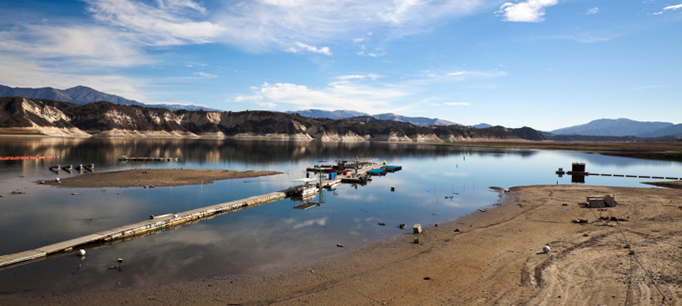
This is part of a continuing series on the impact of the drought.
California is entering a fourth year of drought. The welcome, wet conditions that appeared earlier this winter gave way to dryness during the latter half of December. Although forecasts suggest that wet weather may return later this month, the long-term moisture deficit is unlikely to be erased, leaving the state to continue grappling with water scarcity.
As unpleasant as droughts are, they offer an opportunity to assess how well prepared California is for managing its water resources. The usual approach to learning from droughts is to conduct assessments after the drought ends. Unfortunately, once the rains come—as they certainly will—the pressure to prepare for the next drought is greatly reduced.
Recognizing the need to learn from drought while it is ongoing, PPIC will hold a half-day conference on January 12 in Sacramento. The event, supported by the California Water Foundation, will include two keynote addresses—one on current drought conditions by the state climatologist and another from a member of the Australian National Water Commission on how that country managed an unprecedented, 13-year-long drought. In addition, there will be a conversation with four members of the California State Legislature on legislative priorities for addressing droughts. Finally, panels of state and local leaders will focus on institutional responses to the current drought and proposals for policy reforms in three areas:
Managing urban and agricultural water scarcity. To date, the consequences of the latest drought have varied greatly across California’s geographical regions and economic sectors. Impacts in large urban areas have been modest, while many smaller community water systems have faced significant shortages. Agriculture has been hit particularly hard, but the intensity of the crisis has varied depending on geography and availability of groundwater. The panel will explore wide-ranging proposals to reduce the effects of future droughts on urban and agricultural sectors.
Conserving ecosystems during drought. Acute water scarcity has posed a major challenge for the state and federal agencies charged with managing ecosystems that support fish and waterfowl. Difficult decisions, including temporary reductions in environmental standards and trade-offs between species, were made “on the fly” with limited scientific information. The panel will review lessons learned during this drought and consider new approaches.
Water allocation during drought. The state’s century-old law that governs water rights played a central role in managing the drought during 2014. For the first time since 1977, the State Water Resources Control Board had to restrict surface water use by some water rights holders. In addition, the board had to make tough choices about how to manage water for the environment and how to allocate water to protect public health. The panel will examine the strengths and weaknesses of the current approach to water rights, along with alternative approaches that might reduce conflict during drought.
The conference is now fully booked, with more than 400 participants registered to attend. But you can follow the proceedings via live webcast. PPIC will also post videos of the sessions after the event.
 The
The  Since 2000, California voters have approved six water bonds, totaling nearly $20 billion dollars. These bonds looked a little different than Prop 1. Ecosystem improvement and flood protection were the main priorities, with smaller amounts for drinking water quality, integrated management, stormwater, and water supply projects (these bonds also had large amounts for parks and public access). While these bonds provided welcome support to these areas, they also came with fiscal tradeoffs: bonds are repaid with general fund tax dollars that also support other state programs.
 Rivers designated as “Wild and Scenic”
  Here’s how we think this could work. The legislature (or state voters) would pass the surcharge and set broad criteria for funding eligibility. The funds would be apportioned to the state’s 12 principal hydrologic regions—the large basins that are already used to divvy up bond funds. But rather than having state agencies award the grants, this task would go to new Regional Water Commissions—regional counterparts to the California Water Commission, the state body tasked with awarding matching grants for storage projects under most bond proposals.
 The 2000s were a big decade for water bonds, with approved funds totaling almost three times as much as the three previous decades combined. Even so, bond funds currently only contribute about $1 billion a year to the water sector, a small portion of the $30 billion that is spent annually on the state’s water system.
 For activities that more readily raise funds from local ratepayers—such as water supply and wastewater management—future bond support should be limited to projects that generate broad public benefits. This might include water supply projects that promote better integration of our water system (e.g., by capturing stormwater, which can improve both water supply and prevent pollution) or ecosystem recovery (e.g., by improving the quality or quantity of water to support fish and wildlife).