Governor’s Budget Banks on Voters Passing Water Bond

Governor Brown’s proposed budget―the last of his tenure―highlights his priorities for the state. For water, the proposal includes new funding to address some pressing public safety and environmental health issues, including improving drinking water quality in low-income communities, flood protection, groundwater management, and air and water quality at the Salton Sea.

Carrying out this proposal will depend not only on passing the budget, but also on getting additional approvals from California voters and the legislature for some of the needed funds.

To pay for most of the new initiatives, the governor is banking on California voters approving a $4 billion parks and water bond (SB 5) that will be on the ballot in June. More than $400 million in proposed spending on water for 2018–19 is contingent on SB 5, including safe drinking water projects ($63 million), flood management ($99 million), groundwater sustainability ($146 million), and restoration of the Salton Sea ($30 million).

To improve water quality in impoverished communities, the budget proposes using $4.7 million of general fund dollars to administer a new program to cover the ongoing costs of providing safe water. But the governor is counting on the legislature to approve a funding stream for the program itself—on the order of $100 million annually. One current measure (SB 623) would do this by assessing fees on agricultural chemicals and water bills. Or the governor may propose a similar measure as a trailer bill to the budget. Like any new tax, this kind of fiscal measure requires approval by at least two-thirds of both houses, which can be a significant hurdle. To date, water agencies have opposed this measure.

The budget proposal’s heavy reliance on bonds to pay for water projects continues a tradition that voters have supported over the past two decades. Since 2000, seven state general obligation bonds—voter-approved debt reimbursed with general fund taxes—have provided roughly $22 billion for water projects. State agencies are still awarding funds from Proposition 1—a $7.5 billion bond approved in November 2014. Bond funds have generally gone to “fiscal orphans”—areas of public and environmental health that do not have adequate alternative sources of funding. But bonds have not created a reliable way to fund ongoing needs.

The current proposal to create a steady stream of funding for the costs of safe drinking water programs is one way to break from this tradition. But it can also be a more difficult path. Setting up long-term funding streams, such as new taxes and fees, will require going beyond bonds. Leadership at the state and local levels are needed to pave the way.

Building Community to Support Healthy Forests

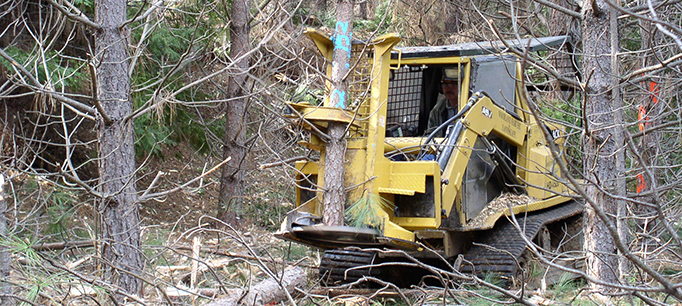
California’s mountainous headwater forests are in crisis, and an all-hands-on-deck approach is needed to improve their health. A combination of factors—dense forests with too many small trees, abundant ground fuels, and large patches of dead trees―leaves them increasingly vulnerable to severe wildfire. The best way to address the impacts of tree mortality and improve forest health is with strategic use of fire and mechanical thinning.

A big challenge to increasing the pace and scale of forest management is the patchwork nature of California’s headwaters. Implementing forest management is particularly challenging for many people who own family forests (parcels less than 5,000 acres in size), which make up about a quarter of the Sierra Nevada headwater forests. The high cost of forestry work on these small land holdings is a major barrier for many owners.

Resource conservation districts (RCDs) are one of several locally governed entities that can play an important role in helping landowners improve forest health. RCDs are authorized by the state to perform a variety of resource and land management functions, including forest stewardship, fuels management, and watershed planning and management. There are about 20 RCDs covering most of the Sierra Nevada headwater region. RCDs are well versed in local resource management issues and often are more trusted by local landowners than state or federal agencies.

RCDs can organize forest management projects across multiple private properties. For example, in 2017 the Placer County RCD used grant funding to pay for dead tree removal on family-owned forest properties in the rural community of Foresthill—an area that was hit hard by tree loss caused by drought and pests. RCDs could also assist groups of forest owners in identifying common management needs and pooling private resources to pay for on-going management.

RCDs are well placed to facilitate relationships between forest owners and other potential partners in management projects. For example, the Sierra RCD in Fresno County is implementing a district-wide carbon management program that makes use of dead trees from the massive tree die-off. With the help of the California Association of Resource Conservation Districts and the Governor’s Office of Planning and Research, the Sierra RCD is working with CAL FIRE and the US Forest Service to process these dead trees into a charcoal-like product called “biochar,” which can be used to increase soil health on nearby agricultural lands in the Central Valley.

Steve Haze, the district manager of the Sierra RCD, says these kinds of strategic partnerships can help “carve out a niche and add value to the effort” of removing large numbers of dead trees. Many RCDs are in a unique position to find overlapping interests and turn them into projects with multiple benefits in their districts.

While many RCDs may be keen to take on new roles and responsibilities to meet their local forest management needs, establishing long-term funding to support these efforts is a major challenge.  Less than 15 of the state’s 99 RCDs have adequate funding through local property taxes; the rest are supported by less-stable sources such as grants or appropriations from county governments. Finding durable funding sources for headwater RCDs could help spur long-term forest management work that would bring benefits to entire watersheds.

Learn more
Read Improving the Health of California’s Headwater Forests (PPIC, 2017)
Read California’s Water: Protecting Headwaters (from the California’s Water briefing kit)
Visit the PPIC Water Policy Center’s drought resource page


Farming Wetlands to Grow Birds

California has lost 95% of its natural wetlands. Managing what’s left is complicated by inadequate water and infrastructure. We talked to Ric Ortega, general manager for the Grassland Water District in the San Joaquin Valley, on what is needed to maintain wetlands in this difficult environment.

PPIC: What are California’s biggest challenges for managing wetlands?
Ric Ortega: About 25 years ago Congress directed the US Department of the Interior and the state to provide adequate, reliable water to the last remaining wetlands in California. But on average, only half of the spring and summer water required to meet the needs of wildlife is delivered. Drought years are far worse with most habitat remaining dry.

Remarkably, even the water that is available can’t always be delivered to the habitat. To mitigate for the impact of building the federal Central Valley Project, 19 wildlife refuges were established. Currently, five of the 19 refuges don’t have infrastructure in place to receive the water that is allocated to them.

Sadly, 14 refuges south of the Delta—including ours—are chronically short of water. It’s also getting more difficult to move refuge water supply through the Delta on a schedule that the wildlife requires. Maintaining timely Delta exports to refuges is critical, especially in drought years.

PPIC: What is your district doing to improve ecosystem conditions?

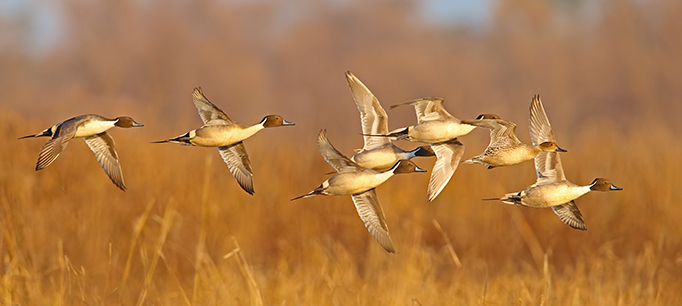
RO: The Grassland Ecological Area is home to the largest remaining block of wetlands in the west. It supports 300 species of birds, many of which overwinter and breed here. Our biggest challenge is delivering adequate water to the habitat when the plants and animals need it.

In good water years, we basically have to farm the remaining habitat to feed the 10 million birds that move through the Central Valley along the Pacific Flyway each year. What I mean by that is we try to maximize the productivity of the marsh, and that starts with growing the grasses that produce food for the birds. We need adequate spring and summer water to grow those grasses and provide breeding habitat.

Private landowners in our district manage their habitat to produce crops of beneficial food plants for migratory waterfowl. These efforts also benefit many other species—for example, the threatened giant garter snake and the endangered tri-colored blackbird. We work closely with farmers and partner groups like the California Waterfowl Association and Ducks Unlimited to leverage grant funding and share costs for habitat restoration projects and water supply improvements. And we work closely with organizations like Audubon and the Nature Conservancy to provide specific habitat for shorebirds and song birds at the right times of the year.

PPIC: What changes are affecting how your district manages water for ecosystems?

RO: Funding is becoming a larger problem.  The cost of buying and moving water has skyrocketed―our conveyance fees tripled during the drought. We rely on a “restoration fund” managed by the US Bureau of Reclamation. They use some of this to acquire water from willing sellers and also to deliver that water to the habitat. The fund also provides a vital revenue stream to our local economy—about $15 million goes to local agricultural districts that sell and move water to state, federal, and private refuges.

Implementation of the Proposition 1 water bond will be a huge step forward for California wetlands. It included $89 million to help build needed infrastructure so all refuges can receive their water supply. The water storage portion of the bond also has some projects that could help wildlife.

Our refuge’s water system is intricately linked with local agricultural water supply. As farmers get more efficient with their water use, less farm runoff is making it to the refuges. Also, with less water moving through the system, water quality degrades. We need to manage our water resources more in line with the hydrologic conditions at hand. Water conservation is paramount in dry times, but in wet years we should promote more flood irrigation to recharge the aquifer, spill into the marshes, and flush salts from the basins. We also need more flexibility to move environmental water around the state to support wildlife and the Pacific Flyway.

Learn more
Read “Reforming Water Management for the Environment” (PPIC Blog)
Watch a panel discussion on partnerships for healthy ecosystems (with Ric Ortega)
Visit the PPIC Water Policy Center’s Ecosystems resource page

Photo courtesy of Gary Kramer

Information Gaps Hinder Progress on Safe Drinking Water

The short answer to the question, “How many Californians lack access to safe drinking water?” is, “Too many.” Everyone deserves to have ready access to clean water. But understanding the extent of the problem is less straightforward. Some recent strides have been made in compiling data on communities with drinking water violations, but more work is needed to help scope solutions, prioritize actions, and track progress.

The biggest data gaps are for domestic wells or very small water systems that are not regulated by the federal Safe Drinking Water Act (SDWA). Estimates of this population vary widely—from 1 to 2 million—and the state lacks good data on how many of these residents face water safety problems. Developing tracking systems for this population is an ongoing priority.

California also has data gaps for the thousands of water systems regulated by the SDWA that serve the vast majority of the state’s residents: community water systems with more than 15 connections and other public systems such as schools. The State Water Board’s new Human Right to Water (HR2W) portal reports monthly compliance, population served, location, and pollutants present in the water. It provides an easier way to see which systems are currently failing to meet safe drinking water standards. But information gaps in the new system make it hard to translate the data into action.

As of November 2017 this portal showed that just over 300 water systems, serving roughly 490,000 people, were out of compliance. About 13% of these systems are schools, serving roughly 13,000 people; the rest are community water systems. More than 90% of the non-compliant community systems are small, serving fewer than 3,300 people; 75% serve fewer than 500 people. Small systems are more likely to violate drinking water standards and to lack the technical, financial, and managerial capacity to resolve these issues on their own.

While the HR2W portal provides a valuable snapshot, it falls short of providing the detail needed to understand and track drinking water challenges in public systems. The information is not organized to enable users to see relevant patterns, such as long-running violations or multiple violations per system. Knowledge of safe drinking water regulations is required to parse which systems are in the most trouble. This tool would be more useful if the data were summarized by water system, with an overview of how long a system has been out of compliance and how serious the violations are.

A useful model for organizing safe drinking water data comes from the US Environmental Protection Agency, which publishes Enforcement and Compliance History Online (ECHO) to track a variety of regulatory programs. ECHO reports the number of quarters within the past three years in which drinking water systems were out of compliance. It also uses a point system to reflect the seriousness of the problem. For instance, systems exceeding standards for nitrate and pathogens get 10 points per violation, since EPA considers those problems most acute. Systems exceeding less serious standards get 5 points per violation, and each monitoring and reporting violation gets 1 point. Points accumulate for issues that remain unaddressed. ECHO provides a compliance summary for each system, and enables the user to drill down into violation details.

Using information from ECHO, we find that more than 80% of California’s non-compliant drinking water systems, serving 280,000 residents, have been out of compliance for at least three years (see figure). Nearly three-quarters of these systems have at least 20 unaddressed violation points. As expected, problems are most persistent and severe in small—and especially very small—systems. And they are most prevalent in the San Joaquin Valley—home to roughly 10% of California’s population and nearly half of the state’s non-compliant water systems.

California should draw from the federal ECHO model to improve its HR2W. The state might want to customize the ECHO point system to reflect local conditions―for instance, where state standards are stricter than federal standards. The state is working on adding new metrics, such as water affordability, to HR2W. Additional priorities include providing indicators of progress in addressing violations, such as funds allocated. And instead of flagging only systems that have a safety violation, the state could track systems that are behind on monitoring and reporting because this could foreshadow future violations of water quality standards.

More accessible and transparent data would help build momentum for action. This is especially important in light of ongoing efforts to create a sustainable funding source for safe drinking water in affected communities—such as the current legislative proposal to levy surcharges on agricultural chemicals and urban water bills. Such a program would require a robust tracking system for efficient governance of the funds. With some improvements, HR2W could help prioritize actions and investments in communities that need it most.

A Look Back at the Year in Water Policy

A year of extreme events—from heavy rains that strained dams to high heat and massive wildfires—revealed the many ways California’s variable climate can impact water management. In 2017 the PPIC Water Policy Center explored how the state is managing such extremes and suggested improvements to help us prepare for an even more volatile future climate. Here are a few highlights.
  • Our evaluation of California’s urban water systems revealed that they have become adept at drought management thanks to diversified supplies, cooperation with neighbors, and programs to manage demand. But the state’s conservation mandate in 2015 opened a debate on how to manage water scarcity. We reviewed evolving state and local roles in urban drought management and described areas for improved cooperation to strengthen resilience.
  • Five dry years took a toll on groundwater, a critical drought reserve. Some farm areas saw steep declines in local aquifers. Our assessment of water stress in the San Joaquin Valley—California’s largest agricultural region and “ground zero” for groundwater concerns—summarizes sustainable management solutions. Our survey of groundwater recharge practices by valley water suppliers sheds light on what more can be done to advance recharge efforts.
  • The state’s headwater forests are in poor health and at increased risk of severe wildfire. Our review of current management practices explains steps needed to shift the emphasis from fire suppression to forest management and how to pay for these improvements.
  • The way California manages water for the environment is focused on responding to crises rather than building capacity to weather future dry spells. We undertook an in-depth evaluation of how to improve conditions for native fish and reduce conflict over water for the environment. We also proposed a better way to account for environmental water, with an example from the Sacramento–San Joaquin Delta.

The PPIC Water Policy Center’s efforts were collaborative in nature—involving research teams from across California and conversations with policy makers, water managers, and other stakeholders—and we broadened the conversations through a series of public events.

This year will bring major decisions on funding for safe drinking water, investing in water storage, sharing scarcity on the Colorado River, and conveying water through the Delta. To help inform the debate on these and other complex issues, we created a policy brief that summarizes problem areas and priorities for action. This brief was released in conjunction with our second annual water conference, which brought together leaders from across the state to discuss the ways forward.

Looking ahead, the water team is working on the potential effect of climate change on future droughts, pathways to water sustainability in the San Joaquin Valley, and the impact of drought on water quality and wastewater management.

The mostly dry December has left many wondering what 2018 will bring. But one thing is certain: we’re thankful for the opportunity to promote creative and collaborative solutions to California’s most difficult and pressing water challenges. And we are thankful for your support of this important work.

With best wishes for 2018,

Ellen Hanak

P.S. If you’re not yet receiving our weekly blog post by email, you can sign up here. And if you’d like to support the center’s work, learn more here.

Flood Prevention 101: Stay Out of the Floodplain

What did the catastrophic hurricane season of 2017 tell us about how we’re managing flood risk? We talked to Nicholas Pinter—a flood and floodplains expert at the UC Davis Center for Watershed Sciences and a member of the PPIC Water Policy Center research network―about improving flood management.

PPIC: Why did Hurricane Harvey result in so much damage to Houston?
Nicholas Pinter: Houston has had very bad land use planning—it is built on flood-prone land, and its inadequate storm drainage makes flooding worse. Combine these glaring flood-management flaws with the unprecedented rainfall that Harvey brought and you’ve got a truly epic flood disaster. Harvey’s damage is clearly a product of both human choices and the storm’s intensity.

The number and magnitude of recent extreme storms are consistent with predictions for a changing climate. There’s a nagging feeling among some of us who study flood disasters that maybe we’ve reached a sort of tipping point, with short-duration storms dumping unprecedented rainfalls.  Harvey may be an example of this.  And if it is happening, our window of opportunity to improve flood systems may be shrinking.

PPIC: What are your top priorities for reducing flood risk?

NP: One thing that scientists, floodplain managers, and many politicians agree on is that we must limit floodplain development. A lot of the damage from Harvey was supposed to be prevented by the National Flood Insurance Program (NFIP). But the program failed in Houston in large part due to the failure of its primary goal—to discourage development in floodplains.

With the enactment of the NFIP in 1968, the US government agreed to provide subsidized flood insurance in exchange for local controls on building in floodplains. Communities that prohibit development on their floodplains can get underwritten insurance through the program (private flood insurance options are very limited).

But enforcement of the NFIP’s floodplain rule is very mixed across the US. A good example is Illinois. For the past 25 years, that state has aggressively enforced floodplain regulations and limitations. On other end of spectrum is Texas, where they embraced development and seemed to see floodplain limitations as job killers. Differences in enforcement explain many of the documented differences in flood damages and flood resilience.

PPIC: How are we doing on flood management in California?

NP: California is doing a lot of things right, and is learning from its past mistakes. A lot of money has been invested in improving levees. California is enforcing NFIP standards and trying to limit new construction on its floodplains (though with exceptions). But the Oroville crisis was a big wake-up call. If the emergency spillway had failed—and we were within hours of it—Oroville could have been a lethal disaster similar to Katrina. All eyes are now on aging dams as well as levees.

One issue I’d like to see improvement on is flood insurance. While many other states are net recipients of NFIP, California receives something like 14 cents on every dollar it pays in premiums to the program.  This appears to reflect California’s more rigorous effort to limit flood damage in its floodplains.

FEMA (the Federal Emergency Management Agency) recognizes wide differences in NFIP enforcement nationwide and has proposed a national disaster deductible to push back on states with poor enforcement and benefit those doing a good job. A second option being considered is a state-by-state rating system. And yet another option is for California to create its own flood insurance vehicle.

PPIC: Is there an argument for learning to live with flooding and rebuild after disaster strikes?

NP: A century ago the strategy was largely to live with floods. People clustered near rivers and had a tolerance for getting their feet wet occasionally. Fast forward to current times: a big leap in the density and value of infrastructure has greatly diminished that tolerance.

It’s very easy to creep forward gradually onto floodplains and much harder to back away from the flood hazard this brings. So the first and most valuable lesson is to stop creeping forward and strictly limit new floodplain development.  In some cases, opportunities exist to set back levees and reconnect rivers to their floodplains. These kinds of efforts often can provide valuable, multi-layered benefits.

Commentary: California Should Plan as if Drought Has Returned

This commentary was published in the Sacramento Bee on December 20, 2017.

The unusually warm, dry start to this winter—along with intense wildfires in southern California—has many Californians experiencing “drought deja vu.” Despite this uneasy feeling, we are not in drought. But it might be prudent to act as if this is the beginning of the next one. Here are some short-term priority areas for drought planning that we think can help the state prepare.

Read the full commentary on sacbee.com.

Modernizing Water Systems in Disadvantaged Communities

The water supply problems of disadvantaged rural communities can reflect not only a lack of resources, but also weak connections to the broader professional water community. The Mojave Water Agency in California’s southern desert has an innovative program to help small systems under its jurisdiction make improvements. We talked to Lance Eckhart, the agency’s director of basin management and resource planning, about this program.

PPIC: Describe the program.

Lance Eckhart: It started a few years ago when we to updated the agency’s regional water management plan, which included getting public input. Our agency covers 5,000 square miles—so we took our planning process on the road and visited many disadvantaged communities that previously had been underrepresented.

We have 40 small water districts scattered across the region, which are a backbone of these rural desert communities. We learned that they needed a lot of help. They hadn’t been keeping up with system upkeep. The rules had changed over time, and they weren’t always aware of best management practices. Maybe they hadn’t raised water rates in 20 years. They didn’t have the capacity to make many upgrades that the county wanted.

We’re a water wholesaler—we have no experience running very small community water systems, and we needed help. We engaged a local nonprofit, the California Rural Water Association, to join us. They help build technical, managerial, and financial capacity. We initially asked our board for $200,000 in “seed money” for the program. Half of that was to “get stuff done”—basic engineering, legal analysis, audits, system checks—anything that can be stapled to a grant application to help raise funds for capital improvements. One condition to get our help is that agencies have to upgrade their technical, managerial, and financial practices. It’s more of a leg up than a handout.

Another really important element was to develop training systems so these agencies can manage themselves. We hold free quarterly operator trainings on skills tailored to the region’s needs. This allows people who were fairly isolated to talk to each other in one place, and gives us a venue to share information about the program.

PPIC: What are some problems that rural water suppliers in your basin need help with?

LE: There’s a general lack of maintenance. Many have inadequate flow to fight fires. Too many have no redundancy if the local reservoir fails. Some are dealing with natural contaminants. Many systems have no financial reserves, so if a pump breaks they have to pass the hat. Many don’t have emergency plans if the well goes down or a fire or power outage cuts off water. A lot of these systems don’t have meters, so they don’t know if they have leaks or when to conserve.

With our help, water suppliers are now talking to each other and looking for ways to back up neighboring systems—for example, with interties. We are starting to bundle many systems in to one grant for the region.  For example we grouped 26 disadvantaged systems together for a leak detection grant program, which will be the foundation for future capital improvement grants—something likely not possible if individually pursued.  Also, some systems are realizing their best path forward is to consider consolidation with bigger agencies, which is a big change.

PPIC: What are your hopes for the future with this program?

LE: We’re excited that this model is now being adopted for a much bigger area. The granting agencies and state Department of Water Resources are beginning to encourage local nonprofits to partner with water agencies. I’d like to see this kind of partnership expand even more. While each underserved water system is unique, there are repeating problems. We know we can create a formula that can be used over and over again. We’ve shown how to bundle different small systems into a single grant. Being efficient in addressing this problem is good for the state, and good for the locals.

I also hope that the disadvantaged communities continue to realize they are not alone. I hope they continue to have a collective voice and stay cohesive—because that’s the best way to keep this issue alive and on the radar of the state and bigger agencies.

Read Priorities for California’s Water (PPIC policy brief)

How California’s Water Bond Is Being Spent

California has many unmet needs in its water system—most notably in the areas of flood protection, safe drinking water, stormwater treatment, and ecosystem support. While dedicated funding over the long term has been hard to come by, water bonds have helped fill some gaps in these areas. Looking at how the 2014 water bond is being spent can give us some insights into how bonds are turned into projects on the ground. This is particularly important as three new bond proposals are floated for 2018.

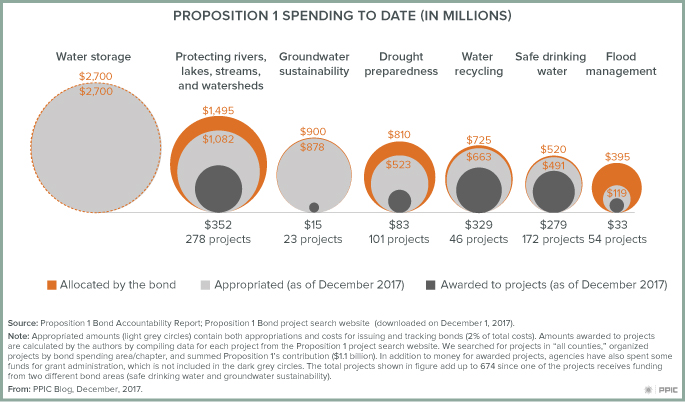
The state’s 2014 bond, Proposition 1, provides $7.5 billion in funding. The money is broken into seven funding categories. The bond language preauthorized $2.7 billion for water storage projects. For the other six areas, spending must be appropriated in the state budget. Once the funds are appropriated in the budget, the state agencies distribute them to selected projects.

With the 2017–18 budget, the legislature has now appropriated more than 86% of Proposition 1 funds. The largest new appropriation is more than $200 million for “Integrated Regional Water Management,” a grant program for collaborative regional projects to address complex water management challenges. In addition, more than $111 million was appropriated for flood management, reflecting statewide concerns about dam and levee infrastructure after the Oroville dam incident.

Of the Proposition 1 money appropriated, approximately $1.1 billion has been awarded for spending. That is roughly a billion dollars since June 2016. The number of projects has spiked since then as well, from 117 to 673. Even with this large increase in spending, only 14% of the bond has been awarded so far. This pace of water bond spending—about $785 million per year—is on par with patterns observed since the early 2000s.

Ecosystems in decline and disadvantaged communities that lack access to safe drinking water—problems made worse by the latest drought—lead the way in number of projects awarded, with 278 and 172 grants, respectively. Fifty-four grants have been awarded for the maintenance of Delta levees. Another 101 grants will foster regional drought preparedness. And 46 grants will be used for urban wastewater recycling projects.

The largest pot of money—$2.7 billion for water storage—is expected to be awarded in June 2018. In total, 12 projects—seven for surface water storage and five for projects that focus on storing more water underground—are competing for some portion of the money. The California Water Commission is now reviewing proposals. The winning bids will only receive funding for “public benefits” resulting from the new storage. At least half of these benefits must be for improving ecosystem conditions. Other qualifying benefits include flood protection, recreation, emergency water supplies, and water quality improvements.

About $900 million is allocated for groundwater sustainability—an area in which there is a growing need for funding to implement the 2014 Sustainable Groundwater Management Act. Of this total, $100 million is allocated to help the more than 250 newly formed Groundwater Sustainability Agencies (GSAs) develop their plans. The Department of Water Resources is now receiving proposals for these grants.

Looking beyond Proposition 1, three other water bonds have been proposed for the ballot in 2018. The $4 billion California Parks, Environment, and Water Bond was approved by the legislature, signed by the governor in September, and will appear on the June 2018 ballot. This bond would distribute a third of its revenue to park improvements, and the rest to environmental restoration and water and flood infrastructure. Specific areas include Salton Sea restoration, ecosystem improvements in the Sacramento and San Joaquin River watersheds, groundwater recharge, and safe drinking water.

Two other bonds—which would be put on the November 2018 ballot through the initiative process—are still under consideration. A bond proposal from Gerald Meral, a former state water official, would authorize $8.9 billion for various water supply and water quality projects, including water infrastructure improvements, safe drinking water projects, habitat protection, groundwater replenishment, and dam repairs. And a $7.99 billion bond proposed by environmental lawyer Joseph Caves would award half of its funds to drinking water safety improvements, and the rest to ecosystem restoration, and state and local park projects.

Clearly, bonds are an important source of one-time funding for some of the problems dogging the state’s water system. But state bonds only make up about 2% of total annual spending in California’s water sector. California must look beyond bonds to fill persistent funding gaps.

Learn more
Read our June 2016 blog post, “How is California Spending the Water Bond?”
Read California’s Water: Paying for Water (from California’s Water briefing kit)

New Water Rules for Marijuana Growers

Marijuana growers who plan on growing cannabis on private land next season will encounter new state requirements to address the crop’s impact on California’s creeks and streams. The success of the policy will be tested by the state’s ability to bring growers into the legal cannabis sector. Currently, an estimated 80% of the state’s cannabis crop is grown for the black market.

The CalCannabis cultivation licensing system is a new program by the California Department of Food and Agriculture (CDFA) for permitting the crop to be grown legally on private land. The State Water Board recently adopted interim policies that will affect the license, including checks on a grower’s water rights, restrictions on the diversion of water for irrigating cannabis crops, and site-specific requirements to control runoff into local streams from growing operations. Many elements of the new statewide requirements are based on pioneering regional efforts to regulate cannabis cultivation in the North Coast.

As a prerequisite for the cultivation license, growers relying on water from local tributaries must have valid water rights or apply for a new surface water right that allows them to divert and store water. This requirement is critical to the State Water Board’s new policies that compel growers to divert surface water to storage in winter for irrigating cannabis during the dry months when streams are low. Diversions are allowed to resume in winter once a stream’s minimum flow target is met. Many growers will need to obtain necessary permits and capital for constructing water storage on site. Water measuring and recording requirements will also compel growers to install devices to track their stream diversions and usage.

The new statewide requirements also seek to reduce the risk of contamination to tributaries from cannabis farm runoff. For example, licensed growers across the state will be required to provide adequate distance between cultivation operations and streams and wetlands. The requirements also establish rules for reducing erosion from access roads, increasing irrigation efficiency, minimizing runoff, and handling fertilizers, pesticides, and herbicides safely.

These new requirements will result in additional costs to many growers looking to enter the legal market, on top of new compliance costs, taxes, and reduced revenues that legalization could bring. Some experts suggest that the high cost of “going legal” could jeopardize the state’s ability to enroll enough growers to make the policies effective.

Van Butsic, an assistant cooperative extension specialist at UC Berkeley and a member of the PPIC Water Policy Center research network, conducts research on cannabis cultivation in the state. “The State Water Board’s interim policy may have a better chance of achieving desired environmental outcomes if compliance can be obtained at a reasonable price,” Butsic says. He suggests that small growers—the majority of cannabis operations in the state—will especially find it difficult to absorb the costs of compliance.

This raises difficult public policy questions on how to reduce the cost of compliance while continuing to protect water quality and the environment, how to encourage small farmers to join the legal sector, and how to effectively enforce the new rules in a sector dominated by very small farms. Resolving these issues will be vital to meeting water quality objectives in the emerging legal cannabis sector.

Learn more
Read “California Streams Going to Pot from Marijuana Boom” (PPIC Blog)
Read the report Regulating Marijuana in California (PPIC, April 2016)
Visit the PPIC Water Policy Center