California’s Snow Drought

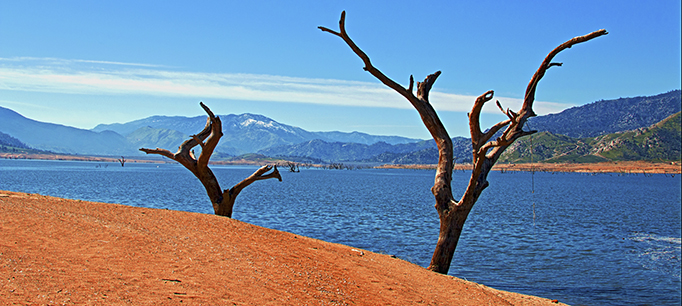
Snow—or the lack of it—has been making headlines lately. California has had unusually low snowpack for the past several years, and the winter of 2015 was the all-time lowest snowpack in recorded history. Low snowpack brought major challenges to water managers.

Snow plays a disproportionately large role in water and environmental management in California. About a third of our average annual water supply starts out as snow. It flows into our major reservoirs in spring and early summer, when water demand on farms starts to ramp up.

“Snow droughts” typically coincide with reduced overall precipitation. This is always associated with a reduced number of large storms during winter (California relies on a handful of large storms every year to supply most of its water.) Snow droughts are also associated with unusually warm conditions.

Temperature affects snowpack in several ways. During warm winters, rain turns to snow at higher elevations than in colder years. This means that a smaller area is covered by snow, and there is less snowpack. Snow—like water—can also evaporate when conditions are warm. This process, known as sublimation, can dramatically reduce the snowpack. Finally, warm conditions cause early melting of the snowpack. The thinner the snowpack and the warmer the conditions, the sooner it will melt. In an average year, California’s snowpack starts to melt around April 1. During warm drought years, it can melt as much as a month or more earlier.

A good snowpack helps bolster our reservoirs precisely when the demand for water—principally for irrigation for farms—is highest. Many reservoirs are required to maintain space for capturing winter floods to protect downstream users. The spring snowmelt is critical for refilling these reservoirs to meet water supply needs. Snow droughts add special challenges to water management because changes in the timing and volume of runoff can have a big impact on reservoirs.

Environmental management is also complicated by snow droughts. State and federal laws require that many reservoir operators release cold water to support downstream habitat for steelhead and salmon. During the warm days of summer, managers tap into the pool of cold water that accumulates at the bottom of a reservoir (cold water is denser, so it sinks). Snowmelt runoff lowers the temperature and increases the volume of a reservoir’s cold water pool. This gives greater flexibility to managers for meeting both water supply and habitat needs, which are often in competition.

Snowpack is also the source of most of the state’s hydropower generation. A small or early snowmelt can cause significant reductions in hydropower, forcing utilities to make up the difference with other sources (most typically, fossil fuels).

Finally, snow droughts may be increasing in frequency and intensity. Recent studies throughout the West are showing that temperature—rather than reductions in precipitation—may have the most significant influence on drought conditions. And most climate projections suggest that this trend will likely worsen over the course of this century. The 2012–15 snow drought—along with all its water management challenges—may become much more common in the future.

There are no simple solutions to the loss of snowpack. To adapt, California will have to shift from its historic reliance on snowpack for storing water. This will require more flexible operation of our surface reservoirs to accommodate changes in timing and volume of snowmelt runoff. We’ll have to shift more water into aquifers to support flexible operation of dams, particularly those that need to make space to capture winter floods. And environmental managers will have to find innovative ways to conserve cold water to sustain salmon and steelhead populations, especially as the climate warms.

All of these adaptations are doable and need not represent major increases in costs or disruptions to water supplies. But we’ll need new policies, changes in the traditional ways we manage water, and a willingness to act to address the snow drought challenge.


Learn more

Read California’s Water: Climate Change and Water (from the California’s Water briefing kit, October 2016)
Watch “California’s Water Challenges: Water Supply”
Visit the PPIC Water Policy Center drought resource page
Acting Locally to Address Sea Level Rise


The author is a member of the PPIC Water Policy Center research network.

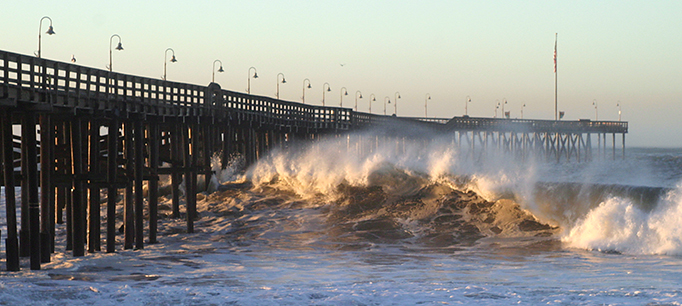
October brought a preview of some of the climate risks that coastal regions face. Hurricane Matthew wreaked havoc from Haiti to the eastern seaboard and the West Coast’s first “atmospheric river” storm brought flood warnings in some areas. The risk of coastal flooding is growing as a warming climate causes more intense precipitation and a gradual rise in sea level from Earth’s melting ice sheets. Both worsen the effect of high tides and large storms.

We have a few decades and perhaps up to a century to adjust to sea levels that are at least three feet higher than they are today. Coastal communities can expect a host of costly and dangerous problems from storms, including flooded wastewater treatment plants, shoreline erosion, industrial facilities spilling chemicals into waterways, and water supply systems inundated by seawater. The effects of floods are projected to be the most costly part of climate change. Some estimates put the global losses at $1 trillion a year by 2050, or roughly two percent of global GDP.

Although seas are rising relatively slowly, change will not be gradual at the community level. A series of strong winter storms that combine high tides, large waves, and intense rainfall can radically reshape a community in a matter of days.

For California to adapt, every coastal community will need a plan that envisions a future with higher sea levels and greater risk of coastal erosion and flooding. The plans will need to outline specific projects needed to weather changing conditions over coming decades. Communities will need to figure out how to raise roads, buildings, and critical infrastructure, and ways to enhance natural protective systems, such as beaches. Some combination of building codes and assistance programs is likely to be necessary. So far, most California communities are in the early stages of planning to adapt to rising seas.

Research shows that increasing awareness and knowledge of hazards is not enough to head off losses from disaster. A complicating factor in adaptation planning is how to make the scientific information actionable at the local level.

One new approach shows promise. A UC Irvine program called FloodRISE is bringing together experts in flood disasters, engineering, and the social sciences with local experts and community members in a number of Southern California communities and Tijuana, Mexico. As part of that program, we’re working with decision makers, community groups, NGOs, and personnel from key departments such as public works, city planning, emergency management, and environmental resources. The teams work together to create advanced visualizations of flooding. Using the latest climate science and data, local knowledge and flood modeling technology, they focus on addressing specific issues that communities care about the most.

How well we manage the problem of rising seas will to some degree depend on funding choices we make now. My FloodRISE collaborator Richard Matthew, a political scientist and disaster expert at UCI’s Blum Center for Poverty Alleviation, notes that funding for planning and preventing disaster risks is dwarfed by the resources that pour into communities after disaster strikes. In the chaos of emergency management, decisions must be made quickly and with very limited information, which too often leads to wasteful spending. Allocating more funds to climate-risk planning efforts would not only help local communities prepare for a rising sea and coastal flooding—it could help reduce wasteful spending later.

Learn more

Read California’s Water: Preparing for Floods (from California’s Water briefing kit, October 2016)
Read “Floods in California” (PPIC Water Policy Center fact sheet, February 2016)
Visit the PPIC Water Policy Center’s floods resource page

Video: Policy Priorities for California’s Water

Five years into this drought—with the possibility of a sixth on the way—what have we learned about addressing the diverse challenges of scarce water supplies? A PPIC Water Policy Center event in Sacramento last week brought together experts to discuss four of the state’s key policy challenges: strengthening urban drought resilience, managing groundwater in rural areas, addressing declining ecosystem health, and ensuring safe drinking water in disadvantaged communities.

The far-ranging conversations took the audience on a virtual tour of California’s drought hot spots. It included Central Valley towns subsisting on bottled water after local wells dried up, stressed rivers and streams with numerous fish species on the brink of extinction, and farmers anticipating big changes to rural economies as a law to maintain sustainable groundwater levels is implemented.

Ellen Hanak, director of the PPIC Water Policy Center, gave an overview of how California is managing the complex and interrelated challenges of this persistent drought. The experience can help us better prepare for future droughts and a warming climate, she said.

Cities have weathered the drought fairly well. But many urban water systems—which supply about 90 percent of California’s population—struggled to implement the statewide water conservation mandate issued by Governor Brown in April 2015, panelists noted. Now that the mandate is no longer in force, the focus is on encouraging long term water efficiency—especially for outdoor landscape water use.

A panel on the complex challenges of implementing the state’s Sustainable Groundwater Management Act raised the need for better data to inform decision making. Karen Ross, secretary of the California Department of Food and Agriculture, said a big challenge for the law is “how do we create trust so that everyone will be engaged,” especially given the many challenges facing farming communities right now.

Managing water for the environment during drought was the focus of the third panel. Jeff Mount, senior fellow at the PPIC Water Policy Center, noted that California’s aquatic ecosystems “are in perpetual drought … because of how we manage water.” He argued that we must focus on managing ecosystems rather than trying to save individual species on the brink.

Water shortages and poor water quality have also made life difficult in a number of disadvantaged rural communities—the focus of the last panel. Hundreds of communities have experienced drying wells, nitrate pollution, and other problems that threaten their water supplies.

Laurel Firestone, co-director of the Community Water Center, noted that while addressing this crisis has become a growing priority in California, more needs to be done locally and nationally to address inequities in access to safe drinking water. “Our lack of action is costing vastly more … than if we got ahead of the problem and solved it,” she said.

We invite you to watch the videos from this event, and hope you find the discussions illuminating and useful:

Learn more

Read California’s Water (PPIC Briefing Kit, October 2016)
Visit the Policy Priorities for California’s Water YouTube page
Visit the PPIC Water Policy Center

Recycled Drinking Water: The Next Frontier

California is poised to become an early adopter of the direct reuse of purified wastewater as a source of drinking water. The State Water Board recently released a report for public comment that indicates it is feasible to regulate direct potable reuse to produce safe and reliable drinking water (comments are due by noon on October 25, 2016). We talked to David Sedlak—one of the 12 experts who worked on the report and a member of the PPIC Water Policy Center research network—about this potential new water source.

Public Policy Institute of California: How can treated wastewater be used?

David Sedlak: There are two main ways we reuse municipal wastewater. The first is referred to as non-potable reuse, which is the practice of taking water from conventional sewage treatment plants and subjecting it to a little more treatment before using it for landscape or agricultural irrigation or for an industrial use, like cooling towers or boilers. The second is to put it through a conventional sewage treatment plant and then through an advanced treatment plant, and reintroduce it back into the drinking water supply. This practice is referred to as potable water reuse.

We’ve spent the past three decades making lots of investments in non-potable reuse projects and in many cases, they turned out to be more expensive than we expected and less helpful in terms of preventing water shortages. In the early days of non-potable projects, we got all of the low-hanging fruit—using the water in places close to the treatment plant that needed it, such as golf courses or oil refineries. Because the users were close to the water source, the piping systems didn’t have to be very extensive. But as we tried to build more projects, the distances got longer and the projects got more expensive.

Potable water reuse holds a lot of promise because if you can make it clean enough to drink, you can use the existing water distribution system. In California, about half of the water use in cities is indoors. Hypothetically, there is a potential to recycle all the water used indoors—though you lose about 20 percent of it in the treatment process when you employ reverse osmosis membranes. So the upper boundary for potable water reuse might allow us to expand our urban water supply by about 40 percent.

PPIC: Where are we in terms of developing more potable projects?

DS: In California, all potable reuse systems built to date involve putting the wastewater through treatment, then putting it into underground aquifers until it is needed. This time spent in the natural environment serves to break the direct connection between wastewater and drinking water. This practice is called indirect potable reuse. What’s being discussed now is the possibility that we might skip that step. The reason people have become more interested in this approach is that not every city has a good groundwater aquifer near their water recycling plant. In the case of Los Angeles, for example, they would have to build an expensive pipeline to move treated water to valley aquifers. The places where direct potable reuse is getting the closest scrutiny are San Diego, Los Angeles, and San Jose.

Direct potable reuse is already happening in Texas—three projects have been built and a fourth is in the planning stages. The main impediment here in California is that the state has never written a permit for such a facility—no one ever asked for one before. The facilities in Texas got people thinking about the feasibility of doing it here.

PPIC: What factors affect the cost of this water source?

DS: Direct reuse is not necessarily more expensive than indirect potable projects. Engineers looking into direct potable reuse are considering additional treatment steps to reduce the risk that the failure of one or more steps in the process could cause a public health problem; these additional steps would increase the cost. But that is likely to be offset by the reduced costs of moving water, as it will be piped through the normal system. At this point we don’t see any major engineering challenges in direct potable reuse that we haven’t already seen in indirect reuse projects. The panel looked at various complicating aspects but none is a deal breaker at this point. So while the cost will vary from project to project, it looks like it will still be considerably less expensive than seawater desalination and many other alternative sources.

The bigger complicating factors are not engineering ones—these technologies have been pretty well tested in Texas and in the existing plants in California. It’s whether the public embraces direct potable reuse and if the state’s regulators feel comfortable permitting and endorsing it.

Learn more

Read about the State Water Board’s process on direct potable reuse (including how to comment on the report)
Read California’s Water: Water for Cities (from California’s Water briefing kit, October 2016)
Read “Water Management’s High-Tech Future” (PPIC Blog, September 3, 2015)

California’s Fish Emergency

Three-quarters of the state’s native fish are in trouble, and options for recovery have been constrained by the drought. We talked to Peter Moyle—an eminent fish biologist at UC Davis’s Center for Watershed Sciences and a member of the PPIC Water Policy Center research network—about what can be done to bring native fish back from the brink.

PPIC: A year ago, your research showed that if the drought continued, 18 native fish would be at imminent risk of extinction. What is the situation now, and how has the state responded?

Peter Moyle: For many native species, things are even worse. Those 18 species are in the most immediate danger, and their situation has not improved. Delta smelt are on the verge of extinction. We currently know of 122 species of native fish in California, and 90 of them are in trouble in one way or the other, with 30 already listed under the Endangered Species Act. Climate change is making things worse.

The fish agencies have mostly used emergency-room responses during this drought. For example, the California Department of Fish and Wildlife did some emergency rescue operations this summer—capturing fish and putting them in hatcheries. And the US Fish and Wildlife Service sent some large experimental flows into the Delta to try to help smelt. What we really need to do is get better about planning for managing our species and ecosystems through droughts and floods, both of which are regular features of the state’s climate.

PPIC: What are your top three recommendations for managing water to prevent extinctions?

PM: The first thing is to ensure that every species has a home. We need to designate and manage “conservation waters”—core habitats to protect native species.

Second, I would ensure that every dam that blocks a stream has a more natural flow regime that favors fish. We need a systematic evaluation of the state’s 1,500 large dams to see which could be better managed to provide flows for native fish. Since virtually every river in the state has a dam, there’s a lot of room for improvement. Putah Creek is a good example of the potential—its flow is designed to mimic natural flow patterns but using a much smaller amount of water than historic flows. Fish in that stream are doing really well right now.

Third, we need to be more realistic about managing the Delta for native species. The big programs to try to fix the entire Delta just don’t work from a native fish perspective. The southern and central Delta have been so altered by human activities that it is very hard to make the changes that would make a difference. More promising is focusing on an arc of habitat in the north Delta that is all linked by the Sacramento River, from the Yolo Bypass to Suisun Marsh. Investing in habitat restoration there could make a big difference. Also, if we cluster projects in one area, they can build on each other’s ecosystem benefits. It’s a much more likely place to have a successful restoration.

PPIC: What are your thoughts about the recent effort to help the Delta smelt with flows through the Yolo Bypass?

PM: I’m hopeful about this project, which is being led by Ted Sommer of the Department of Water Resources. The idea is to expand food sources for the smelt by moving water into the Yolo Bypass, where it becomes enriched with nutrients and plankton. The water is then flushed downstream where it stimulates more plankton growth. The DWR team found plankton blooms all the way to Rio Vista. It seems to have worked, but it’s still in the proof-of-concept stage. It will be good to try on a larger scale. This is a good example of reconciliation ecology—the idea that while we can’t re-create ecosystems from the past, we can try to create conditions that will allow species to thrive within altered systems. The potential to improve habitat for native species based on reconciliation ecology is huge.

PPIC: What else gives you hope?

PM: I’m an intrinsic optimist. One thing that gives me hope is that there are a lot of very bright people working to conserve fish in this state. And there have been some recent developments in water law that make me hopeful. The major thing we’re short of is the will at high levels to do the kinds of extensive, risky projects that could bring our fish back to healthy populations. A good example of what I’m talking about is happening at Blue Creek in the Klamath Basin, which is an important cold-water refuge for migrating salmon and steelhead. The entire watershed is being purchased so it can be managed for fish by the local Yurok tribe, who’ve agreed to be its stewards. The Western Rivers Conservancy, which is partnering with the Yurok, has been extremely creative in finding funding for the project. Not only does this project help fish, it helps preserve the Yurok’s cultural traditions and creates jobs for tribal members.

Learn more

Read “California’s Ecosystems in Perpetual Drought” (PPIC Blog, August 30, 2016)
Read “Saving Native Fishes from Extinction” (PPIC Blog, October 30, 2015)
Read the report, What if California’s Drought Continues? (August 2015)

New Laws Strengthen State’s Water Safety Net

Governor Brown signed nearly 60 new bills this year that will influence how California goes about the business of managing water. Several of these new laws will expand and strengthen the water safety net for disadvantaged communities. A suite of bills signed in recent weeks will bring a much-needed assist for communities lacking reliable access to safe and affordable drinking water.

While the vast majority of residential water customers in California have access to safe drinking water, several hundred small communities still struggle to provide drinking water that meets basic health standards. In addition, the drought has resulted in more than 2,000 domestic wells across the state going dry and shortages in 100 small rural water systems. Small water districts serving low-income communities are not like their much larger counterparts—their rate bases are smaller, costs per household are higher, and their customers can’t afford high rates. In addition, these communities tend to have a shortage of managerial and technical expertise. These interrelated challenges constrict small districts’ ability to fund and maintain new pipelines, wells, and water treatment plants. Recognizing that there is no “one-size-fits-all” solution, the state has recently begun to experiment with regulatory, administrative, and financial tools to help solve the problem.

Consolidating small water districts into larger ones is a relatively low-cost and durable solution that can bring lower per unit costs and improved levels of service to small, disadvantaged communities. The State Water Board has exercised the authority granted last year to mandate such mergers with six consolidations in the Central Valley. The state also covers some costs for consolidations. One of the most notable examples is the voluntary merging of 1,800 water-stressed homes in unincorporated East Porterville with the larger and more resilient water system serving the nearby city of Porterville.

The suite of bills signed this year—Senate Bill (SB) 552, SB 1263, and SB 1456—builds on past progress to strengthen the water safety net in several ways.

  • Improving access to funding: SB 1456 makes it easier for water systems serving small, disadvantaged communities to use state financing for capital improvements such as drinking water treatment plants. The bill extends this benefit to professional water service providers that serve small disadvantaged communities across the state.
  • Enhancing technical and managerial capacity: Even where financial resources are available, a small water system lacking experienced managers or expert technical staff may struggle to maintain water treatment and distribution systems. SB 552 offers a remedy by allowing the State Water Board to hire a third-party administrator to manage the water system on behalf of the community. The administrator can set and collect water rates and apply for other funding to build water treatment plants and cover operations and maintenance costs. This new tool potentially offers a long-term solution for small water systems, especially when the community doesn’t have any neighboring systems to easily connect with.
  • Preventing new unsustainable systems: SB 1263 aims to prevent communities from developing unsustainable water systems in the first place. The bill authorizes the State Water Board to deny permits for new water systems if the applicants cannot demonstrate adequate capacity to produce reliable and safe drinking water for at least 20 years under a variety of hydrologic conditions. Instead, it encourages them to partner with neighboring water suppliers that can.

These new tools for addressing drinking water issues in disadvantaged communities show that the state is both conscious of the complexity of the situation and willing to experiment with new approaches. We’ll be keeping track of legislative developments related to water in future blog posts.

Learn more

Read “Drinking Water Quality: Perceptions and Challenges” (PPIC Blog, September 6, 2016)
Read “California’s Water Quality Challenges” (PPIC Water Policy Center fact sheet, October 2015)
Read “Building a Better Water Safety Net” (PPIC Blog, October 21, 2015)

Making Homes More Water Efficient

Outside water use varies dramatically in California depending on location—hot, dry places use more than cool, coastal cities, for example. But the state also has huge variation for inside water use. We talked to Dave Cogdill—CEO and president of the California Building Industry Association and a member of the PPIC Water Policy Center Advisory Council—who explains how California could save billions of gallons a year if older homes were as water efficient as newer ones.

PPIC: How water efficient is the state’s current housing stock?

Dave Cogdill: New homes are quite water efficient, but about two-thirds of the state’s homes were built prior to water-efficiency standards. Our studies show that homes built after 1980 are two times more efficient in water use than those built prior to these standards—mostly due to water-efficient fixtures that are required for new construction. We could save 300 billion gallons annually—enough to supply 2.5 to 3 million homes—if the state’s existing homes had to comply with these standards. We estimate it would cost $1,500 per home to convert older homes with water-saving plumbing fixtures such as toilets, showerheads, and faucets.

PPIC: What policy changes would help ensure California’s inside-home water use continues to be as efficient as possible for the long term?

DC: Finding ways to get people to retrofit is the big challenge. Better incentives would help. The drought-relief legislation passed in recent years included some money for these sorts of things, but nowhere near enough. We have to get more creative with incentive programs. It’s the old carrot-and-stick argument. Building standards for new homes are easier than addressing the problems with existing housing. The state has started to address issues with existing homes by requiring point-of-sale improvements for earthquake retrofits and pest inspections; maybe something like that would make sense for water-saving plumbing fixtures too. It wouldn’t add a lot to the cost of a house—and maybe the state could make it a deductible item.

PPIC: What steps can home builders take to increase water efficiency in housing?

DC: Inside the home we’re pretty much there—new homes save as much water as possible without requiring people to change their standard of living. While there’s not a lot more we can do inside the home, outside water use is a different story. The state’s model landscape ordinance was substantially revised this year to help respond to the drought. Our members have been very involved to make it as workable as possible. Massive savings are possible in outside water use, and in new developments we’ll be seeing a lot more hardscaping, drought-tolerant plants, less lawn, more efficient irrigation. There’s also an evolution toward using more recycled water and graywater in homes. By July 2018 homebuilders will be required to install “purple pipe” for recycled water to be used in landscape irrigation in those areas of California served by water recycling plants. In addition, the state has already taken steps to allow for on-site water recycling technologies. These more expensive “on-site” systems can add anywhere from $3,000 to $15,000 to the cost of a home, but they bring a substantial savings in water. Just to give you an idea of what’s possible, one on-site water recycling system we’re familiar with in El Dorado Hills recycles approximately 65 percent of the water used indoors. Given the price of water in many communities, these systems will pay for themselves over time.

Learn more

Read California’s Water: Water for Cities (from California’s Water briefing kit, April 2015)
Read “Water and Growth in the West” (PPIC Blog, February 18, 2016)
Visit the PPIC Water Policy Center’s water supply resource page

Ruling Muddies Waters on Clean Water Act

The California Supreme Court recently decided a case that could have profound consequences for the state’s efforts to protect water quality. The case reveals the challenges California faces in keeping polluted runoff out of waterways and coasts.

The court ruled that the state must reimburse Los Angeles and 83 other Southern California cities for certain costs of complying with a stormwater permit issued by the Los Angeles Regional Water Quality Control Board. Stormwater permits are part of the regulatory system created by the federal Clean Water Act and its California counterpart, the Porter-Cologne Act, to protect water quality. These laws regulate discharges of pollutants into the state’s rivers, bays, and estuaries, as well as the Pacific Ocean.

In this case, the permit directed the local governments to comply with a variety of conditions to clean up their stormwater discharges. The governments objected to two of them. The first required inspections of some commercial and industrial facilities and construction sites, as contaminated runoff from these areas can impair water quality. The second ordered the governments to install trash receptacles at transit stops to minimize trash washing into storm drains.

At issue is who should pay for implementing the programs. Constitutional reforms enacted by California voters in 1978 (Proposition 13) and 1996 (Proposition 218) place significant constraints on the ability of local governments to levy taxes and fees. Stormwater programs are particularly difficult to fund. New fees typically require a two-thirds vote of local residents. This can be an especially tough sell for stormwater improvements, because the reductions in pollution mostly benefit communities downstream. Because stormwater compliance lacks a steady funding source, it is one of California’s “fiscal orphans,” with an annual funding gap of $500–800 million.

In recognition of the constraints on local public finances introduced by Proposition 13, the voters amended the California Constitution in 1979 to compel the state to reimburse local governments for the costs of complying with new programs or higher levels of service required by state statute or regulation. The law makes an exception for programs or services mandated by federal law.

The Supreme Court held that the contested stormwater permit conditions were state policy choices of how to implement the Clean Water Act, but were not themselves federal mandates. Therefore, the state must pay for the costs of their implementation. All three of Governor Brown’s appointees dissented, arguing that the majority gave insufficient deference to the regional board’s determination that these conditions were the best means of achieving the federal pollution control directives.

The consequences of the court’s decision are uncertain. State reimbursement of a portion of permit costs would make stormwater improvements more affordable for local governments and their taxpayers. Yet, by shifting funding responsibility to the state, the decision assigns regional stormwater improvement costs to all California taxpayers, regardless of their contribution to stormwater discharges and pollution. With annual funding costs in excess of half a billion dollars, it is unclear whether the legislature would be willing to allocate sufficient funds to cover these costs.

Perhaps the greatest concern, though, is that the decision will deter the regional boards from imposing permit conditions not specifically required by federal law. This could have major consequences for stormwater management in California because most of the Clean Water Act’s stormwater directives are written in general terms. Therefore, it is likely that the decision will require the state to reimburse local governments for almost all specific regulatory mandates needed to implement the federal law.

For example, although the act requires stormwater dischargers to use “management practices” and “control techniques” to reduce pollutants “to the maximum extent practicable,” it neither defines those actions nor sets specific discharge limitations. Rather, federal law expressly delegates these decisions to the regional boards, which under the court’s decision makes their costs reimbursable to local governments.

If the legislature does not allocate sufficient funding to cover these costs, or if the regional boards issue permits without the specific conditions needed to achieve the federal mandates, California risks losing its authority to administer federal stormwater permitting. That means the EPA would assume permitting responsibility. Ironically, the EPA would be unconstrained by California’s prohibition against unfunded mandates and would have the power to impose all stormwater permit costs on local governments.

The Supreme Court’s effort to reconcile the realities of modern water quality protection with California’s unique constitutional fiscal constraints will likely generate more questions than answers. Yet, it is essential that the improvements needed to modernize California’s stormwater systems be adequately funded. We must hope that the court’s precarious balancing of the responsibilities of the state and local governments to pay for these improvements does not undermine the shared goal of protecting the quality of California’s waters.

Learn more

Read “California’s Water Quality Challenges” (PPIC Water Policy Center fact sheet, October 2015)
Visit the PPIC Water Policy Center water quality resource page

Water Marketing That Helps Nature

California urgently needs more practical, effective ways to improve conditions for struggling populations of native fish and waterbirds. A key ingredient is to add more water to rivers and wetlands at critical times of the year. Water trading is a proven way to do this—it brings necessary flexibility for environmental water managers while also reducing conflicts over the allocation of scarce supplies.

Buying water to support nature is not a novel concept in California. In fact, federal and state agencies helped jumpstart California’s water market during the 1987–92 drought by purchasing water for wildlife refuges and fish hatcheries. Today, environmental water purchases support wildlife refuges, increase flows for fish in the Sacramento–San Joaquin Delta and other watersheds, and reduce salt build-up in the Salton Sea.

Most of the water comes from irrigation supplies. Farmers are paid to release water they have in storage or to change the timing or amount of water they use on their fields. This offsets the farmers’ own costs and gives environmental managers access to water to support habitat priorities. In the early years, most environmental water deals were for a year or less. Starting in the 1990s, multiyear leases—lasting anywhere from 8 to 15 years—became more common.

Although both buyers and sellers have become more comfortable with environmental water trading, the trends suggest waning momentum for this approach. Environmental water purchases peaked in early 2000s, at around 400,000 acre-feet annually. They fell to just half that level during the latest drought. Environmental purchases fell from 30 percent to just 15 percent of all water trades—despite continued market growth.

Instead, the decline reflects a drying up of funding. In today’s dollars, roughly $620 million was spent on environmental water acquisitions from 1984 to 2014. Almost three-quarters of this sum came from state (53%) and federal (20%) taxes—mostly state general obligation bonds that are repaid with general tax revenues. Water users have provided most of the remainder. Notably, 23% is from an ecosystem restoration surcharge on water sold to Central Valley Project (CVP) contractors that is used to acquire water for wildlife refuges and some instream flows. Participants in a large water trade between the Imperial Irrigation District and San Diego are funding mitigation for the Salton Sea.

In the near term, funding constraints are likely to further reduce environmental water purchases. One large multiyear deal funded by past water bonds—a 60,000 acre-feet/year lease to support Delta flows for endangered smelt and salmon—is set to expire later this year, and no funds have been identified to continue the program.

To reverse the trends, California needs to develop more stable approaches for acquiring environmental water. One way is to permanently buy water rights, rather than just leasing them. Proposition 1, passed by voters in late 2014, sets aside $200 million for this purpose. Permanent acquisitions of water rights entail greater up-front costs, but they give environmental managers an asset they can count on.

Another way is to create a stable pool of funds, so that environmental managers can flexibly lease water when and where it’s most needed. Bonds are not the right vehicle for this. Instead, a small surcharge on water use—similar to the CVP ecosystem restoration fund—is what’s needed.

Either way, California needs to unleash the potential of water trading to improve conditions in the state’s rivers and wetlands. Australia, facing similar challenges and conflicts over the use of scarce water supplies, invested several billion dollars to permanently buy back water for the environment. This process has given the environment an equal seat at the table and taken much of the heat out of day-to-day management decisions. As a result, river and wetland species have a much better shot at thriving in a variable, drought-prone climate.

Figure source: Updated from E. Hanak and E. Stryjewski. California’s Water Market, By the Numbers: Update 2012 (PPIC, 2012).
Figure notes: Dry years are those classified as critical or dry for the Sacramento Valley. Wildlife refuges includes water purchased by the state Department of Fish and Wildlife and the federal Central Valley Project Improvement Act’s Water Acquisition Program (WAP). San Joaquin River flows, also funded through WAP, are for an experimental program to support salmon. Delta flows are for CALFED’s Environmental Water Account, continued as part of the Yuba Accord from 2008 to 2016. Other instream flows include water dedicated to the environment under section 1707 of the Water Code. Salton Sea mitigation includes water from the Imperial Irrigation District to mitigate the impacts of Colorado River water transfers to San Diego.

Learn more

Read “California’s Water Market” (PPIC Water Policy Center fact sheet, March 2016)
Read “Lessons on Sustaining the Environment During Drought” (PPIC Blog, June 23, 2016)
Read “California’s Ecosystems in Perpetual Drought” (PPIC Blog, August 30, 2016)

Drinking Water Quality: Perceptions and Challenges

Months after lead contamination in the drinking water of Flint, Michigan, gained national attention, the PPIC Statewide Survey asked if Californians think drinking water pollution is a more serious health threat in lower-income areas than in other parts of their regions. In the July survey, about 6 in 10 adults statewide said “yes,” including majorities across regions.

There is evidence to support this view. Contamination of drinking water continues to be a serious health risk for small water districts serving low-income customers, especially in rural parts of the state. Despite recent progress in building a stronger water safety net, this is a problem lacking a long-term policy solution.

As estimated in the PPIC Water Policy Center’s report Paying for Water, roughly 80,000 to 160,000 Californians live in small economically disadvantaged communities that struggle to provide safe drinking water on a consistent basis. A key part of this challenge is the dependence of many small rural water districts on groundwater that contains naturally occurring or man-made contaminants at levels unsafe for human consumption.

Cost is a key factor. Removing contaminants like arsenic or nitrate from groundwater requires large up-front expenditures, technical and managerial expertise, and the ability to cover long-term operational costs. In most water districts, these costs are borne by rate-paying customers. Small water districts serving low-income communities struggle to pay for this kind of ongoing drinking water treatment because they have higher costs per household than their much larger counterparts, and their customers can’t afford high rates.

In recent years, California has increased the amount of financial and technical assistance for improving access to safe drinking water in these communities. The state provides financial assistance through emergency spending (in response to the ongoing drought, for example), competitive grant-based awards from multiyear general obligation bonds such as Proposition 1, or low-interest loans and grants through the state revolving fund. But long-term solutions will require funding mechanisms that are more accessible, reliable, and sustainable. For example, the state General Fund or a statewide surcharge on water use could help solve this social equity issue. It will also be important to invest in solutions that are cost-effective and that communities can manage well over time. That’s an argument in favor of connecting these small systems to larger ones wherever feasible—something now under way in East Porterville and some other Central Valley communities.

The PPIC Statewide Survey finds that, while a majority of Californians see drinking water quality in lower-income areas as a serious health threat, there are wide differences among demographic and voter groups. Fewer than half of Republicans, whites, high-income Californians, or likely voters see this as a problem. On the subject of drought response, however, solid majorities across these groups (and 6 in 10 adults overall) say state and local governments are not doing enough. This eagerness for government action, coupled with policymakers’ willingness to address long-term water problems, may pave the way for solutions to drinking water contamination in vulnerable communities.

Learn more

Read “California’s Water Quality Challenges” (PPIC Water Policy Center fact sheet, October 2015)
Read “Building a Better Water Safety Net” (PPIC Blog, October 21, 2015)
Read “Flint, a Water Quality Reminder for California” (PPIC Blog, January 27, 2016)