The Search for Sustainability in the Colorado River Basin

The Colorado River is a crucial water source for seven states (Wyoming, Colorado, Utah, New Mexico, Arizona, Nevada, and California) and Mexico, and like many shared rivers has its share of challenges. We talked to Doug Kenney—director of the Western Water Policy Program at the University of Colorado and a member of the PPIC Water Policy Center research network―about balancing priorities in managing the river.

PPIC: What’s the basin’s biggest challenge currently?

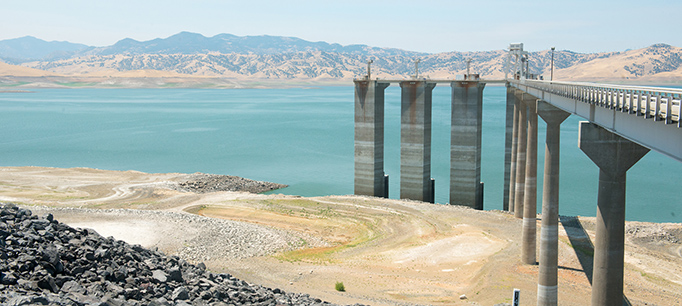
DOUG KENNEY: That depends on what part of the basin you’re in and what sector you work in. There’s no shortage of things to worry about. Right now, most would probably say it’s the effort to maintain the levels of water stored in the big reservoirs, Lake Mead and Lake Powell. Those reservoirs provide a lot of benefits—drought protection, recreation, and hydropower—but only if they have enough water in them. They’re about half full right now, which is about as low as they can go before mandatory cuts in water deliveries—or curtailments—kick in. It’s a math problem, essentially—managing water coming in versus what’s going out. So far in this century, people have pulled more water out than consistently flows in. Obviously, that has to change.

The more chronic issue is that the Colorado has been treated more like a plumbing system than a river, so there’s been a lot of environmental damage to the river. The big environmental concerns in the basin are a result of reduced flows and some water quality issues, such as high salinity, loss of valuable sediments, and increased water temperatures. The real challenge is to remind people we’re talking about a river—the most important ecological resource of the southwest United States.

PPIC: What efforts are underway to address the problems?

DK: The big effort at the moment in the Lower Basin is called drought contingency planning, which would help stabilize (and ultimately increase) the amount of water stored in Lake Mead. The negotiations among California, Arizona, and Nevada have gone remarkably well in this regard, although each state still has internal challenges to work through. For example, Arizona is concerned about looming curtailments of their water supply, while in California the big sticking point is the Salton Sea. The sea has become a critical issue as successful efforts to use water more efficiently in Southern California agriculture have reduced inflows, resulting in a host of environmental and public health issues. In both of the situations, the underlying desire is to protect water supplies for urban users in a way that doesn’t impose undue burdens on agricultural regions.

Another issue worth watching is the 2012 agreement between the US and Mexico that laid out cooperative efforts to manage the river. The agreement expires at the end of this year, and a new one is needed to maintain positive momentum and cooperation. Key issues between the US and Mexico include restoring the river’s delta ecosystem, enabling Mexico to store water in Lake Mead, and sharing water shortages during drought. While cooperation on the Colorado between the US and Mexico has gotten dramatically better in the past decade, people are worried that the tensions arising from the current political environment at the national level could spill over to the negotiations. But so far, the two sides are still talking, and people still seem pretty optimistic about reaching an agreement.

PPIC: How do upstream states view California’s efforts to manage its Colorado River supplies?

DK: Everyone in the basin pays attention to what’s going on in California. California has the largest and arguably the most legally secure allocation of Colorado River water rights. California’s dependence on the river is shaped by many factors, including other water issues within the state. For example, the project to build tunnels under the Sacramento-San Joaquin Delta—if it progresses—would go a long way to create some room for compromise and creativity on how Southern California uses its Colorado River supplies. With every passing year it becomes more difficult to talk about the Delta and the Colorado as separate challenges. Everything is connected to everything else.

PPIC: How is climate change affecting the river basin?

DK: We’re already experiencing big climate-related changes in the basin. It’s already nearly 2 degrees Fahrenheit hotter this century compared to last, and by 2050 it will be closer to 5 degrees hotter. That results in higher evaporation rates, increased water demands, and reduced stream flows. Climate change is water change, and more heat works against all our water management goals. During this drought, precipitation has dropped only slightly but stream flows are way down, partly because it’s hotter. And that will continue―this is the part of climate projections we’re most certain of. Continued warming and the related reduction of stream flows is a huge problem.

Water management is traditionally based on the premise that the future will look like the past, but that’s not a safe assumption anymore. Our physical infrastructure isn’t ideally suited to the projected future hydrology. There’s a similar problem with our institutional infrastructure. We have a pretty sophisticated management regime that is increasingly out of step with evolving conditions. The good news is that key players in the basin now understand that the climate is affecting everything they do, and that they have to cooperate to find solutions to tough problems. People in the basin are committed to putting in the work, but there’s still a lot more to be done.

Learn more

Read California’s Water: The Colorado River (from the California’s Water briefing kit, October 2016)
Watch our 4-minute video “Colorado River”
Visit the PPIC Water Policy Center

The Changing Face of California’s Water Leadership

California’s water managers face many challenges—from a changing climate to a growing population. We spoke with Celeste Cantú, chair of the PPIC Water Policy Advisory Council. Cantú served for more than a decade as general manager of the Santa Ana Watershed Project Authority and is stepping down this month. She talked about how the profession must change to better address these issues.

PPIC: What does it mean to be a “water leader” in California today?

Celeste Cantú: Currently, our water leaders primarily draw from an engineering skill set; their goal has been to manage discrete problems with precisely targeted solutions. That approach has proven to be too piecemeal for the water challenges we face today. Going forward, water leaders will need to be change agents. Water leaders will need to step out of their silos and see how their work fits into the larger context of the watershed, and think about upstream and downstream impacts. They’ll need “soft skills” such as conflict management in addition to technical expertise, because key to addressing 21st century water problems will be the ability to collaborate and develop solutions that benefit the larger system or watershed.

How we think about water is also changing. For most of the 20th century we managed water as if it were fuel you burned until it was gone. But water constantly circulates. Every drop delivered goes somewhere else when we’re done with it—usually, it’s treated and returned to a river, where someone downstream is likely to use that drop again. Historically, we water managers haven’t seen ourselves as interacting in that cycle―we see ourselves more in the context of our discipline or local agency. By thinking about the entire water cycle, we can manage the drop to get more beneficial uses from it. We get as many as 10 or 20 uses in the Santa Ana watershed before we release it to the ocean. It’s been said that a drop of water in the Santa Ana River is the hardest working drop in California! Collaborating across boundaries to get more uses from that water drop is the defining challenge of a successful 21st century water strategy.

PPIC: How have the state’s water challenges changed?

CC: I’ve seen an upward spiral of progress over the course of my career. Early on, we mostly were thinking about how to reduce pollution from particular sources. After getting that pretty much taken care of, we moved on to addressing more diffuse pollution that doesn’t come from one place. We’ve made progress but still have quite a ways to go. I’ve also seen an evolution toward integrated water management, an important strategy that addresses multiple water issues more efficiently and synergistically. It means the water supply agencies work with the stormwater agencies and water quality people to get more functionality out of that water drop. We’ve made progress on this as well. Finally, thanks to California’s leadership, we have a much better understanding how much water we use and how to conserve it.

PPIC: Will the next generation of water leaders face new water challenges?

CC: They absolutely will, due to climate change, but they also come much better prepared to address these challenges. They bring a greater understanding of the linked qualities that exist in nature and which define water resource management. They come better prepared for collaboration and not only solving problems but creating a new vision of resiliency. I am optimistic, and committed to sharing knowledge with the new leadership. After I retire this month I’ll be working with Water Education for Latino Leaders (WELL), which helps cultivate water leaders among elected officials working in Latino communities.

The incoming generation of water leaders is much more diverse. California needs water leaders who reflect our demographics, or they will lack standing or legitimacy. We’ll need to make some difficult choices and substantial investments in water in the future. Since we don’t have sufficient revenue streams, water managers will have to have trusting relationships with their ratepayers. People from the community are better able to develop those relationships.

Learn more

Explore the California’s Water briefing kit
Visit the PPIC Water Policy Center’s water supply page

Video: Building Urban Drought Resilience

The recent drought was long, hot, and difficult, and it brought a host of challenges to the state’s water suppliers. Yet California’s urban areas came through the ordeal fairly well, thanks to preparations since the last major drought. Last week a panel of urban water experts explored the various tools California’s cities, suburbs, and the state used to manage water over the past five years. The lessons learned can help us prepare for future droughts.

The panelists at the Sacramento event were David Mitchell of M.Cubed and a co-author of the new PPIC report Building Drought Resilience in California’s Cities and Suburbs; Wade Crowfoot, CEO of the Water Foundation; Thomas Esqueda, public utilities director for the City of Fresno, and Rosemary Menard, water director for the City of Santa Cruz. The panel was moderated by Ellen Hanak, the PPIC Water Policy Center director.

“Water suppliers build resiliency through their water supply investments, which reduce the chance of shortages developing during a drought, as well as through drought contingency plans,” said Mitchell in his presentation on the new report’s key findings. “Both are key to understanding a region’s resiliency to drought.” Around $20 billion has been invested since 1992 in urban drought resiliency, he noted.

Some key takeaways from the event:

  • The state’s conservation mandate resulted in strong water savings. But it threw a wrench into local drought planning and created uncertainty about state and local roles in managing drought going forward.
  • While the urban economy performed well over the course of the drought, most water suppliers were not prepared for the fiscal impacts.
  • Regular communication with water users is essential to get support for conservation, new investments, and changes to rates.
  • Regional cooperation is much more common among the state’s water utilities than it was in past droughts, which has helped make urban areas more resilient.
  • Smaller, rural communities are still struggling to recover from the drought’s effects. It will take a concerted effort to improve their ability to withstand drought and address water quality problems.

Learn more

Read the report Building Drought Resilience in California’s Cities and Suburbs (June 2017)
Read California’s Water: Water for Cities (from the California’s Water briefing kit, October 2016)
Visit the PPIC Water Policy Center’s drought resource page

Why Drought Makes Water Rates Rise

For those in the business of selling water, drought often brings financial strains. New research by the PPIC Water Policy Center found that more than 70% of California’s urban water suppliers experienced reduced revenues during the latest drought. We talked to David Mitchell—an economist specializing in water and a co-author of a new PPIC report on urban drought resilience—about the cost of water and drought.

PPIC: Why do customers’ water rates sometimes rise during drought—even after big jumps in water conservation?

David Mitchell: For urban water suppliers, most of their costs are fixed. They have to pay these costs whether they sell a gallon or a million gallons. Their infrastructure costs for treatment plants, reservoirs, canals, and other investments needed to get water to us don’t change with their water sales, at least in the short run. Some costs do drop with reduced water use—for example, energy used for pumping or treatment. But most facility costs don’t, and neither do most staffing costs. The bills for these fixed parts of the system still have to be paid.

There are instances in every drought where communities push back on price hikes. But customer backlash isn’t inevitable. Creating and empowering citizen advisory groups can help build understanding and consensus around water supply issues, for example. This is what the city of Santa Cruz did when it faced a backlash over its plans to invest in desalination for drought security. City leaders turned it into a win by listening carefully to the community. The advisory group met with city staff and outside consultants for more than a year. City staff were deliberative and respectful. Santa Cruz went from having little community support to significant support both in terms of a long-term plan for addressing drought and near-term changes to its rate structure.

PPIC: How does drought affect suppliers financially?

DM: It affects them in lots of ways. With rationing, the supplier will have an immediate revenue problem unless it adjusts rates or has significant financial reserves. They may have to defer capital investments. Droughts also drive up costs in various ways. Drought often degrades water quality, so treatment costs go up. A supplier may need to acquire supplemental water that is more expensive than usual supplies. Suppliers spend more repairing leaks to cut waste.

Drought also brings higher customer costs, through educational programs, rebates, and staffing to address concerns. For example, Metropolitan Water District of Southern California spent half a billion dollars on rebates to replace lawns, toilets, and other fixtures in 2015.

PPIC: What are other reasons that water suppliers need to raise rates?

DM: First of all, urban water rates have been outpacing inflation in most of California for a long time―the drought just put an exclamation point on it. It’s a trifecta of aging infrastructure, increasing regulation, and worsening scarcity. In some parts of California the cost for upgrading old infrastructure is particularly significant. For example, San Francisco is spending billions to renovate its Hetch Hetchy system.

PPIC: How can suppliers reduce the financial risks of drought?

DM: Rates have to adjust. That’s just simple math―if you sell less water but your costs are basically the same, you’re going to have to adjust your rates. Communicating to customers the reason for adjusting rates is key, though. Also, making these adjustments early is better than deferring them to the end of the drought, though this is something that many utilities still fail to do. Our new report recommends that utilities get pre-approvals for special surcharges that they can introduce during droughts—something very few utilities currently do. Cash reserves are also important since they help mitigate the need for large rate increases. Following a drought, utilities are sometimes tempted to change rates so that a larger portion of the bill is a fixed service charge, rather than a per gallon fee. Although this keeps revenues from falling as much when water sales decrease, it also weakens the price signal to encourage efficient water use—an important goal both during droughts and over the longer term.

 
Learn more

Read the report Building Drought Resilience in California’s Cities and Suburbs (June 2017)
Read California’s Water: Water for Cities (from the California’s Water briefing kit, October 2016)
Visit the PPIC Water Policy Center’s drought resource page

Bringing Big, Small Farms Together to Manage Water

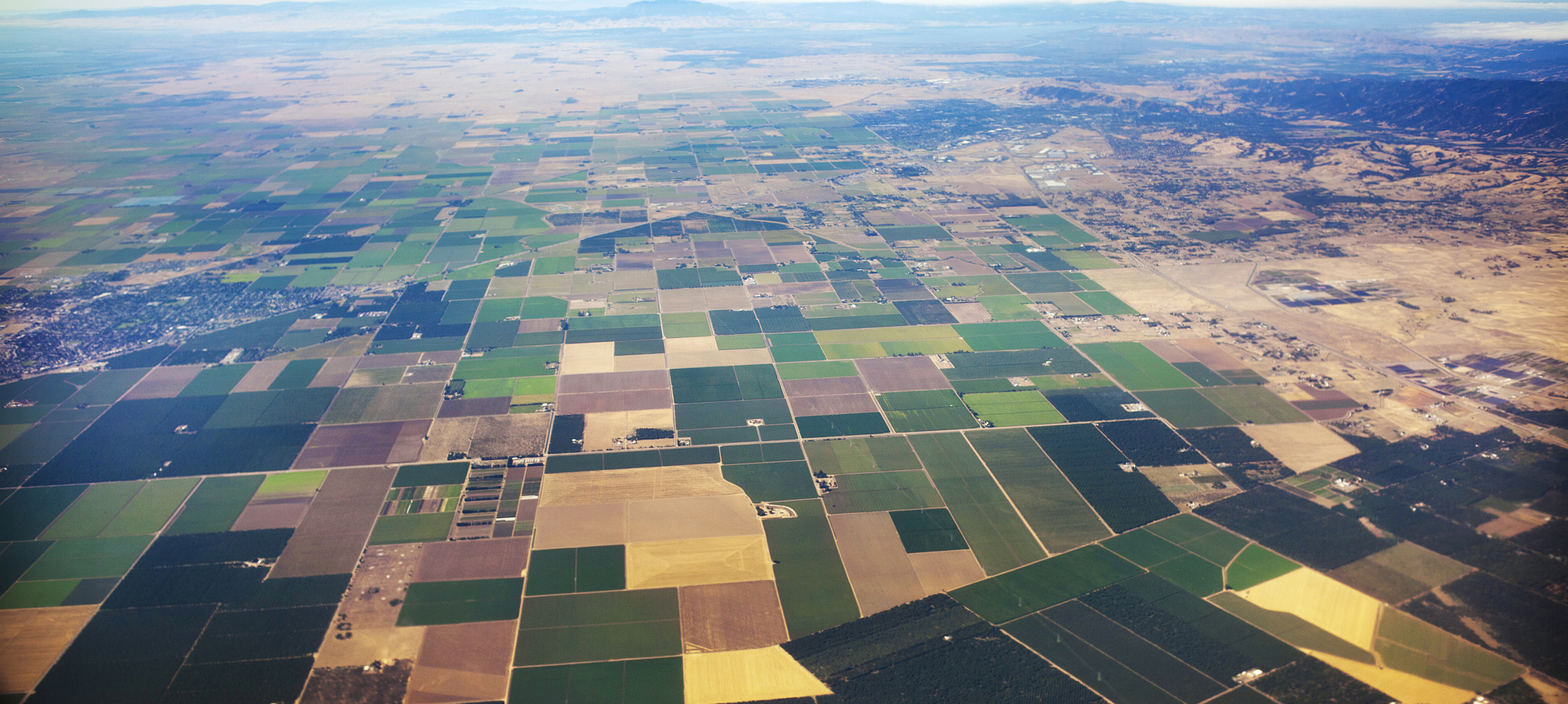
Agriculture is by far the biggest water user in the San Joaquin Valley, accounting for 89 percent of the region’s annual net water use. As such, the farm sector will have to play a crucial role in tackling the valley’s various water challenges―from sustainably managing groundwater resources to addressing a number of water-related environmental and public health concerns. Valley farms vary greatly in size, and broad regional solutions to the valley’s resource management challenges must take this into account.

Water Stress and a Changing San Joaquin Valley looked at the number of irrigated farms in the valley and their corresponding acreage over time. The valley is home to nearly 20,000 such farms, including some of California’s largest, but also numerous small and mid-size ones.

Today, the largest farms―those bigger than 1,000 acres―account for 60 percent of the valley’s total irrigated acreage. However, farms with less than 500 acres of irrigated cropland account for a quarter of total irrigated acreage. There is a geographical pattern to farm-size diversity as well. Relatively small farms and ranches still predominate in the eastern part of the valley, while large operations managing thousands of acres occupy much of the southern and western farmland.

Many of these large farms are already experimenting with water management practices that might help their operations adjust to water stress. Such efforts require significant investments of time and money—a challenge for most small farmers. And contrary to popular belief, the valley is still home to many small farms.

For instance, the smallest farms―those irrigating less than 10 acres―doubled in number from 1969 to 2012. This increase is partly due to the way the Census of Agriculture identifies farms as “any place from which $1,000 or more of agricultural products were produced and sold, or normally would have been sold” during the census year. USDA interprets “normally would have been sold” broadly – which allows some large residential properties to be counted as farms.

But the census trends also reflect an influx of small immigrant farmers to the region. The first big increase in the number of small farms occurred between 1969 and 1982. This timing is consistent with the arrival of Southeast Asian refugee farmers (mainly Hmong and Mien) who escaped their war-torn countries and started farming in the valley. Many of these farms grow more than 100 varieties of Asian specialty produce on farms that are just 2–15 acres in size, and serve urban markets across state, from Stockton, to the Bay Area and Los Angeles. The revenue from farming is an important source of income for these immigrant communities. Although the smallest farms account for just 0.3 percent of the valley’s acreage, the contribution of Hmong and Mien farmers to California’s crop diversity is oversized.

The diversity of the San Joaquin Valley agricultural sector has policy implications. In addition to time and cost constraints, many small immigrant farmers have had difficulties navigating the complex regulatory landscape in California, sometimes due to language or cultural barriers. Creating lasting, equitable solutions to growing water stress and other problems will require coordination and cooperation between various actors in the valley—and broad participation from water users. An important step to getting there is recognizing and loosening the barriers that could hinder broad participation.

Learn morERead the report Water Stress and a Changing San Joaquin Valley (March 2017)
Visit the PPIC Water Policy Center

Commentary: What Did We Learn from the Drought?


This commentary was published in the Sacramento Bee on April 13, 2017.

Governor Jerry Brown has declared the drought over. What did we learn over five years of drought that that could help us better manage the next one? The drought brought some hard lessons and gave us a glimpse into a challenging future. Record warm temperatures—comparable to those predicted by many climate scientists for later this century—made drought management harder. Improving drought resilience in this increasingly challenging climate will require a number of policy improvements. These six policy changes could help.

Read the full commentary on sacbee.com.

Californians Favor Funding Flood Improvements

California’s very wet winter has revealed both literal and figurative cracks in the state’s flood management infrastructure. While most flood-related problems this year didn’t reach the level of the Oroville Dam spillway disaster, public concern about California’s aging flood infrastructure is growing—including how to pay for upgrades.

According to the latest PPIC statewide survey, 61% of Californians say that more spending on water and flood management infrastructure is very important for their part of California. Only one in ten say it is not important. When we asked a similar question in October 2006, fewer than half (43%) said such spending was very important. Today, the view is widely held, with about majorities across partisan, racial/ethnic, age, education, and income groups saying so. Across regions of the state, majorities say more spending is very important, ranging from 56% in the San Francisco Bay Area to 65% in the Central Valley.

Governor Brown recently requested the appropriation of $437 million for flood control projects. The majority of the funds ($387 million) come from Proposition 1, the 2014 water bond devoted to investments in the state’s water systems. These funds would finance high-priority infrastructure projects―for instance, maintaining and improving Sacramento–San Joaquin Delta levees. Another $50 million of the governor’s proposal would come from the general fund for ongoing emergency needs and would cover government agency coordination and flood management equipment needs.

But even with this one-time infusion of dollars, the funding gap for flood management activities is large. Our earlier work, Paying for Water in California, estimates it at $800 million to $1 billion annually. This gap varies regionally, with areas located in floodplains needing higher levels of investment in flood-protection infrastructure.

Finding ways to close this gap will require us to rethink not only how we pay for flood infrastructure but also how we manage floods more generally. In fact, using flood management approaches that derive multiple benefits―for instance, to recharge groundwater basins and to restore ecosystems—could help improve the state’s ability to adapt to a changing climate. But just as floods are sporadic, so too is public interest in funding flood infrastructure projects. With the Oroville Dam crisis and San Jose flood still fresh in the minds of many Californians, the timing may be right to start a conversation about creating more stable financing mechanisms that can help us prepare for floods of the future.

Learn more

Visit the PPIC Water Policy Center flood resources page
Read California’s Water: Paying for Water (from California’s Water briefing kit, October 2016)

Banking on Groundwater

California’s groundwater basins can store much more water than surface reservoirs. After years of unchecked depletion of many groundwater basins, communities are now coming together to figure out how to manage them sustainably. We talked to Helen Dahlke, a hydrologist at UC Davis and a member of the PPIC Water Policy Center’s research network, about efforts to recharge groundwater basins to help bring them back into balance.

PPIC: Where do we stand with groundwater recharge?

Helen Dahlke: California has huge potential to store water underground. Over the past century, we lost more than 120 million acre-feet of groundwater in Central Valley aquifers. With increased pumping in recent years there is now plenty of space to put groundwater back into these aquifers. Local groundwater agencies are starting to figure out how to implement the state’s Sustainable Groundwater Management Act. There is growing interest in recharge and a number of new projects are underway. Many water districts have purchased land to create recharge basins. And several groundwater banks in the Central Valley buy water from state and federal water projects to store water underground for use in dry years.

We’ll need to do more. In the past 15 years or so we’ve only had three wet years. Climate models tell us we’ll see fewer wet years in the future, and recharge systems can help make the most of those years. This year—a really wet year—has been marked by not having enough space in reservoirs to store surface water. It would have been really great to have had a coordinated effort to use more of the flood runoff to recharge groundwater, but existing groundwater recharge basins—which allow water to infiltrate the aquifer―are at full capacity. We need to use good recharge lands to capture these floods and restore groundwater resources. The bottom line is, we need to put a larger fraction of winter floods into groundwater storage.

PPIC: What are some of the most difficult challenges for groundwater recharge?

HD: Besides natural recharge from rainfall, in the past much of California’s groundwater has been recharged from irrigation. Flood irrigation (in which water flows across fields or between furrows) is a major source of groundwater recharge in the Central Valley―about 10–20% of the irrigation water percolates beyond the root zone to recharge groundwater. As farmers have switched to more efficient irrigation systems―which use less water and promote better crop quality and higher yields―the amount of recharge has been decreasing. To compensate, we need to do more intentional groundwater recharge during winter when plants are dormant. However, this approach requires a larger effort and would benefit from some coordination by the state. We also need to learn more about which crops can tolerate winter flooding without increasing root diseases or reducing crop quality or yields. And if we do flood farmland, we need to take into account fertilizer use, because flooding farmed lands can result in more leaching of salts and nitrate into groundwater. We’re actively working on that now.

Learn more

Read “Reforming California’s Groundwater Management” (PPIC fact sheet, June 2015)
Read “Groundwater: Act Locally, Think Sustainably” (PPIC Blog, March 1, 2017)
Visit the PPIC Water Policy Center

Video: Water Stress in San Joaquin Valley

The San Joaquin Valley―California’s largest agricultural region―faces growing water stress that will bring significant changes to the region’s farms, communities, and economy. Increased cooperation and coordination from the region’s complex mix of agencies and water users is needed to address water shortages and water-related environmental and public health challenges. These are key takeaways from an event in Clovis last week, co-sponsored by the PPIC Water Policy Center and the California Water Institute at Fresno State.

Ellen Hanak, director of the PPIC Water Policy Center, introduced the discussion by summarizing the findings of a new PPIC report on the drivers of water stress in the San Joaquin Valley—the state’s most water-dependent economy—and some tools and strategies that can help. “The valley is an agricultural powerhouse,” Hanak said. “A lot is at stake for the region’s economy, communities, and the environment.”

The first panel looked at balancing water supply and demand, and included experts from water and irrigation districts and farming interests. Panelist Eric Averett, general manager of the Rosedale-Rio Bravo Water Storage District—an area he called “ground zero” for groundwater overdraft—said that the variety of interests in that basin makes it challenging to finding common ground for getting groundwater use to sustainable levels. “However, it also represents a unique opportunity. [We] will pass or fail … collectively as a basin. That brings us all to the common table of addressing and solving these challenges.”

The second panel covered improving the quality of the valley’s water, air, and habitat. Maria Herrera of Self-Help Enterprises noted that disadvantaged rural communities continue to struggle with water contamination and dry wells. “We need to make sure the communities understand what’s at stake for them” and include them directly in negotiations.

Michelle Selmon of the California Department of Water Resources noted that when lands move out of production, it opens an opportunity to create permanent or temporary habitat. “Instead of growing alfalfa or cotton they’re growing habitat. But farmers will need incentives,” she said.

Dairyman Chuck Ahlem of Hilmar Cheese Company said there is a need for sustainable funding for solving the valley’s various challenges, and he said he hopes that increased collaboration can help “find the dollars to address some of these issues.” And, he notes, to be effective partners in resolving these issues, farmers and dairies “need regulatory certainty that we’ll be allowed to operate 10 years from now.”

The last panel of the day looked at collaborative solutions. Former Fresno mayor Ashley Swearengin said that even though urban water use is relatively small, the region’s cities depend on a “healthy, thriving ag community” and must provide leadership on sustainable groundwater management—including with better urban land-use planning.

Dave Orth of the California Water Commission likened the valley’s water management challenges to a “ball of string”—pull on one string and you find that everything’s connected. Some of the “strings” the panel touched on included managing the Delta for both improved water reliability and environmental protection, making use of flood waters to restore groundwater, and accounting for groundwater recharge. “We need to think beyond just looking at new surface storage facilities. We need integrated solutions that bring multiple benefits,” Orth said.

While implementing these solutions won’t be simple, Fresno State’s David Zoldoske noted a key takeaway of the event is that “there’s a lot of expertise here in the valley. I’m very encouraged we will find a path forward.” 

We invite you to watch the videos from this event, and hope you find the discussions illuminating and useful:

Learn more

Read the report Water Stress and a Changing San Joaquin Valley (March 2017)
Read “Reforming California’s Groundwater Management,” (PPIC fact sheet, June 2015)
Visit the PPIC Water Policy Center

Commentary: Cooperation Needed on San Joaquin Valley Water


This commentary was published in the Sacramento Bee on Thursday, March 2, 2017.

Recent rains have not washed away the growing threat of water scarcity in the San Joaquin Valley, California’s largest agricultural region. Over time it could bring disruptive changes not only to the region’s farmers but also to rural communities, the local economy, and the state as a whole. Resolving this problem will take creativity and cooperation.

Read the full commentary on sacbee.com.