California’s Dream Act

As the federal government moves to end the Deferred Action for Childhood Arrivals (DACA) program, California is continuing to support the higher education aspirations of undocumented students. California’s Dream Act is a set of laws intended to lower the cost of higher education for certain undocumented immigrants brought to the US as children and raised in California. Thousands of California students have benefited from the program so far.

College can be especially expensive for undocumented students. For tuition purposes they are not technically California residents and therefore are not eligible for in-state tuition. Public colleges and universities charge extra tuition for nonresidents: currently an additional $28,000 per year at UC and $6,000 per year at CSU. In addition, undocumented students are not eligible for federal financial aid, such as Pell Grants or federal loans, leaving college out of reach for many who are low-income.

California passed AB 540 in 2001, which waives the nonresident portion of tuition for undocumented childhood arrivals as long as they meet certain criteria, including spending three or more years in California K‒12 schools, graduating from a California high school, and promising  to apply for legalizing their immigration status as soon as they are eligible to do so.  In addition, the state passed AB 130 and AB 131 in 2011, which allows state and institutional financial aid to be given to students eligible under AB 540.

Undocumented students cannot file the Free Application for Federal Student Aid (FAFSA) to apply for federal and state financial aid for college. This means that many do not have access to Cal Grants, one of the state’s main forms of financial aid. Instead, those who are eligible can apply for Cal Grants using the California Dream Act application.

Of all Cal Grant offers in 2014‒15, about 3% have been made to California Dream Act applicants. Of those eligible for the awards, both FAFSA filers and Dream Act filers have similar GPAs. However, those obtaining a Cal Grant through the state Dream Act application were more likely to come from families with parents without college degrees and with lower family incomes.

A student’s DACA status has no bearing on the California’s Dream Act, so AB 540 students will continue to pay in-state tuition rates and can apply for and receive state and institutional aid to help lower the cost of college, even if the federal DACA program ends. However, without a work permit these undocumented students still cannot work legally in the US, even if they obtain a degree from a California college or university. The approximately quarter of a million Californians covered by DACA will still be subject to deportation without further federal legislative or executive action. That uncertainty could keep otherwise qualified students from earning a college degree.

Learn more

Read “DACA and California’s Future” on the PPIC Blog.

Visit the PPIC Higher Education Center.

DACA and California’s Future

Figure Projected Pop Change

President Trump’s administration has announced the end of the Deferred Action for Childhood Arrivals (DACA) program, which allowed some undocumented immigrants who were brought to the United States as children to avoid deportation, obtain work permits, and continue their schooling. California is home to about 223,000 “Dreamers,” as DACA recipients are known, more than one-fourth of the national total. According to estimates cited by EdSource, about 70,000 Dreamers and other undocumented immigrants attend public colleges in California. The president gave Congress six months to come up with a legislative solution to address the issue before the decision takes full effect. Because California is home to a large share of the nation’s immigrants, including undocumented immigrants, changes in federal immigration policies are particularly important in the state.

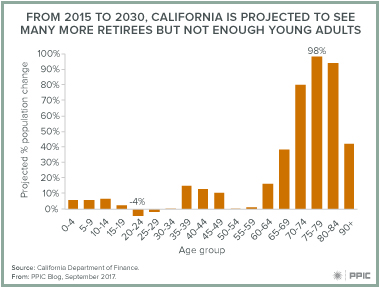
In California, as in the rest of the nation, a central economic challenge over the next couple decades will be to ensure an adequately sized and skilled workforce to meet the demands of a growing economy.  This challenge is especially daunting in the face of unprecedented increases in the number of retirees. As the baby boomers—a large group that is highly educated—exit the labor market, California and the nation will be hard pressed to find an adequate supply of workers to replace them and help provide for their healthcare and other needs. According to the California Department of Finance, over the next 15 years, the number of people age 65 and over will increase by 3.4 million, while the number of young adults age 20 to 34 will decline by almost 200,000. Requiring the Dreamers to leave the country will deepen this decline. Many of the older adults, about one-third, have a bachelor’s or graduate degree. Largely as a consequence of this demographic certainty, PPIC has projected that the state will see a shortfall of 1.1 million workers with at least a bachelor’s degree by 2030. Were it not for highly educated immigrants, the skills gap would be even larger.

The solution to this demographic, economic, and educational challenge is to make sure that more young Californians acquire the skills necessary to replace those exiting the labor market and to ensure that California’s economy can continue to grow with high-skilled and high-wage jobs. Increasing the number of young Californians going to and graduating from college is essential to closing this workforce skills gap. Because DACA recipients must be high school graduates or attending school, the program helps increase the number of Californians who are on the educational trajectory we need. The large number of Dreamers in college is evidence that they hold promise for helping the state meet its future need for educated workers.

Learn more

Read Higher Education in California: Addressing California’s Skills Gap

Visit the PPIC Higher Education Center.
California Farmers Face Labor Drought

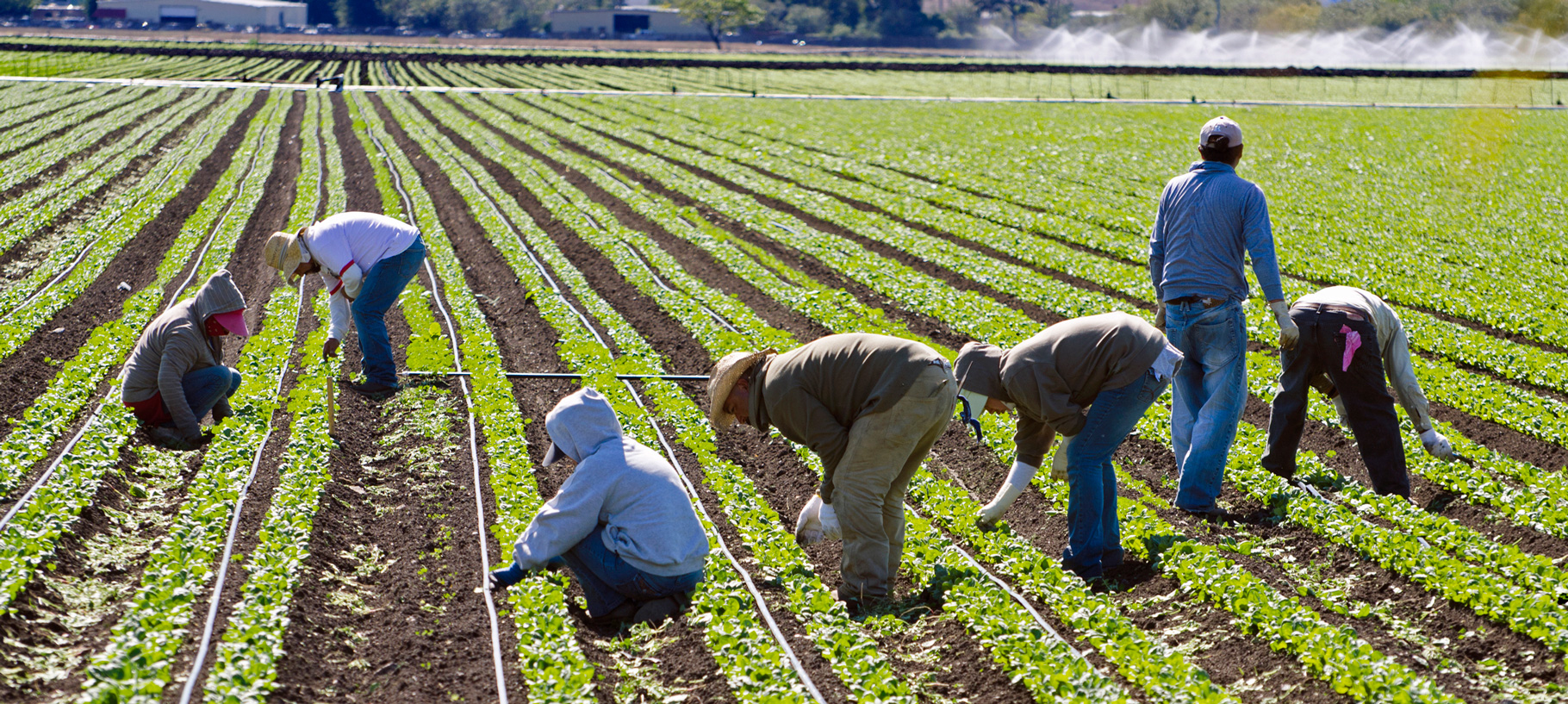
This year’s rains brought a welcome respite to California’s farmers, who had grappled with surface water supply shortages for the previous four years. But now farmers are increasingly worried about the availability of another crucial element to their farms’ productivity―farm labor. The connection between farm labor and immigration patterns was among the topics covered in a recent conference at UC Davis.

California is the nation’s largest farm state and a world market leader. This impressive productivity relies largely on an immigrant farm labor force. According to a federal survey, 9 of 10 crop farm workers in California are foreign born, largely from Mexico. More than half of crop farmworkers (56%) are undocumented immigrants.

Contrary to popular belief, immigration from Mexico to California has declined over time. In the early 2000s, close to a third of the crop farm workers were “newcomers”―foreign-born workers whose first arrival to the United States occurred within the year of the survey. The share of newcomers has fallen drastically in the last several years, and was down to 1% in 2013–14.

These immigration trends bring up short- and long-term concerns about the farm labor supply. In the long run, farm employers will have to figure out how to deal with declining immigration. The more immediate worries surround undocumented workers currently in California and the potential effects of the Trump administration’s stepped-up enforcement of immigration laws.

According to UC Davis’ Philip Martin, farmers have been employing a “4-S” strategy―satisfy, stretch, substitute, and supplement―to deal with fewer newcomers in the farm labor force. Satisfying current workers includes providing bonuses, low-cost health care, and training farm labor supervisors to improve working conditions. Stretching current workers includes providing mechanical aids to make farmworkers more productive, while substituting means replacing workers with machines where possible―or switching to less labor-intensive crops (almonds, for instance). Finally, some growers have been supplementing their workforce by using the temporary guest worker visa program. Which combination of these four strategies is likely to prevail will depend on the effects of another upcoming change―an increase in the statewide minimum wage, which will incrementally rise from $10.50 to $15 an hour by 2022.

Experts at the conference agreed it is likely that the new federal administration will build on the Obama era efforts, when a record two million foreigners were deported over eight years. A panelist at the conference argued that mass deportations are highly unlikely, mainly due to capacity constraints in the federal agencies responsible for deportations. However, the effects of increased enforcement mechanisms (such as requiring all employers to check the legal status of new hires through the online E-verify system) and other factors might shrink California’s farm labor force supply 6–9% in the short term. These effects will not be due to undocumented immigrants leaving the US (“self-deporting”) but due to their “hunkering-down”―perhaps working less hours than usual or moving from farm to farm for seasonal work less than before, in an effort to reduce their chances of deportation.

Senator Dianne Feinstein has introduced a bill that aims to shield undocumented farmworkers from deportation by putting them on a pathway to legalization. The Agricultural Worker Program Act would also provide a path to legal permanent residency to some undocumented farmworkers in the US. But immigration reform is not an easy lift, and the bill’s fate is uncertain. In the meantime, farmers will have to hope the 4-S plan can keep the crops moving from farm to table.

Learn morERead “Undocumented Immigrants in California” (PPIC fact sheet, March 2017)
Read the report Water Stress and a Changing San Joaquin Valley (March 2017)
Read California’s Water: Water for Farms (from the California’s Water briefing kit, October 2016)