Expanding Groundwater Recharge in San Joaquin Valley Cities

The San Joaquin Valley is ground zero for groundwater management challenges. While agriculture is the region’s predominant water user, its cities are more likely to rely on groundwater as their primary source of water. For this reason, the urban sector will need to play a bigger role in the regional effort to balance groundwater use and replenishment.

Our recent research indicates that cities in the valley lag behind agricultural districts in the intentional recharge of groundwater. That’s primarily because most have limited access to two things necessary for storing more water underground: extra surface water and unpaved land on which to spread it so it can percolate into the ground. But some cities have had success with recharge activities. Here are three methods that can serve as models.

  • Partner with nearby agricultural districts. The city of Tulare relies entirely on groundwater for its potable water supply. It has an agreement with the Tulare Irrigation District (TID) for purchasing surface water, which is delivered to a recharge basin that the city co-owns with TID. The basin’s location allows for the recharged water to flow into the city’s pumping zone, even though the basin itself is not within city boundaries. The cities of Clovis and Fresno have similar recharge partnerships with the Fresno Irrigation District.
  • Partner with off-site groundwater banks. The city of Tracy relies on both surface and groundwater. In years when it doesn’t use its entire surface water allocation, it stores the unused portion in one of Kern County’s formal groundwater banks. Even though Tracy and the water bank are on opposite ends of the valley, a conveyance system allows for easy exchanges of water.
  • Recharge within city boundaries. The city of Bakersfield has rights to Kern River water. The city uses a direct recharge basin located within city boundaries to store some of its Kern River allotment.

Some cities engage in multiple recharging strategies. For example, both Tulare and Fresno operate flood control basins to maximize recharge, and Tracy pumps surplus water directly into a nearby aquifer through an “injection well.”

While these are all innovative models, most are still small-scale in terms of volumes recharged. Given the state’s mandate to balance groundwater use with replenishment by 2040, urban efforts will need to be scaled up as much as possible. Expansion will require better water accounting and basin planning. Cities can raise funds to partner with agricultural districts and undertake recharge projects, but they will need incentives and assurances that they will have access to the stored water.

Another critical step is to map and protect undeveloped urban land that is particularly appropriate for recharge. Cities should take steps to prevent the paving over of suitable soils, and encourage recharge on open space lands not only within city boundaries but also in areas into which they are likely to grow in the future—called their “spheres of influence.” As the figure below shows, suitable soils in these areas are extensive, especially in Kern and the eastern part of the valley.

It’s also important to remember that cities won’t be able to go it alone. In addition to partnerships with agricultural districts, broader local and regional cooperation will be critical for managing groundwater resources in the long run.

Commentary: Replenishing Groundwater in the San Joaquin Valley

This commentary was published in the Sacramento Bee on April 18, 2018.

California’s biggest agricultural region also has the state’s biggest groundwater deficit, which has long-term consequences for the region’s economy and farming.

The San Joaquin Valley—where decades of unchecked pumping has depleted reserves, resulting in a long-term deficit of nearly 2 million acre-feet per year—has about a generation to bring its groundwater use into balance to comply with the state’s Sustainable Groundwater Management Act. Storing more water underground through “groundwater recharge” can help, reducing the deficit by about a quarter.

Read the full commentary on sacbee.com 

Image above courtesy of Jonathan Parker, Kern Water Bank Authority

Ecosystems Need Groundwater Too

Groundwater is a critical resource for most living things in California. But while human communities can increase groundwater pumping when surface supplies diminish during droughts, ecological systems often have no backup supply. We talked to Sandi Matsumoto, associate director of the Nature Conservancy’s California Water Program, about determining which ecosystems are particularly dependent on groundwater and what can be done to help them cope with dropping water levels.

PPIC: What are “groundwater-dependent ecosystems”?
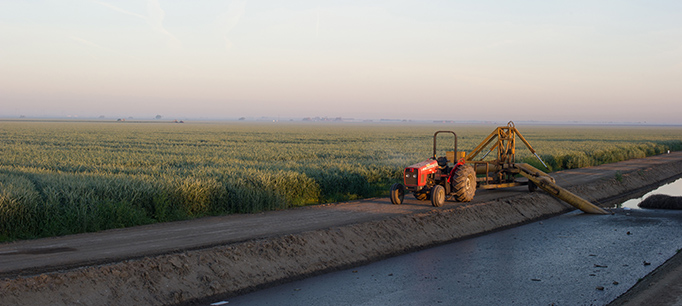
Sandi Matsumoto: These are familiar places to everyone—wetlands, rivers, estuaries, springs, and associated plants and animals that rely on groundwater to meet some or all of their needs. They’re found in nearly all of the state’s groundwater basins and are often supported by surface waters, such as rivers and streams fed by rain or melting snow. Even deserts have them—where springs support desert oases, for example.

The Nature Conservancy has been working with California’s Departments of Water Resources and Fish and Wildlife to develop a comprehensive statewide map of vegetative indicators of groundwater-dependent ecosystems. Using plants as the prime indicators, we’ve mapped 2.2 million acres of groundwater-dependent ecosystems.

PPIC: How well do we understand the connections between groundwater and the ecosystems that depend on it?

SM: We’re definitely early in our understanding of this complex relationship. To fully understand it you’d have to get a hydrogeologist and an ecologist in the same room together—and you don’t see that pairing very often.

I like to think of rivers and streams as expressions of a healthy groundwater system. In California, rivers can flow well into summer months, long after the snowpack has melted. In areas with high groundwater levels, a lot of that river flow can come from groundwater. High levels of pumping can reverse this dynamic—when groundwater levels drop lower than the bottom of the river channel, water starts seeping into the aquifer. It’s called a “losing stream.”

Going forward, I think the Sustainable Groundwater Management Act (SGMA) will bring a much greater understanding of ecosystem conditions. By monitoring certain vegetation types we could improve our understanding even more. For example, we can look for signs of declining health in plants or changes in the number of acres of these “indicator plants.”

The trend has been a decline of groundwater-dependent ecosystems. The goal of SGMA is to stabilize things, but if groundwater sustainability agencies make a concerted effort, we may even be able to reverse the decline. For example, colleagues at the Nature Conservancy in Arizona are doing groundwater recharge projects near rivers, boosting their flow and improving conditions for riparian ecosystems. In California we’re trying to mimic seasonal wetlands by flooding farmland to support migratory birds. These kinds of projects help farmers while also providing habitat and even groundwater recharge benefits.

I also think that SGMA will force us to figure out what we care about and how to sustain those things. To get to groundwater sustainability we have to talk to each other, and experts will have to come out of their silos. If SGMA is done right, we’ll see hydrogeologists working with ecologists and other unlikely pairings. That’s what I’m most hopeful about.

A Bottom-Up Approach to Groundwater Sustainability

California’s Sustainable Groundwater Management Act (SGMA) requires communities with ongoing groundwater deficits to bring their aquifers into balance in the coming years. This will be a difficult and complex process, but it’s also an opportunity to devise workable solutions at the community level. We talked to Eric Averett of the Rosedale–Rio Bravo Water Storage District about groundwater management innovations being tried in his Kern County district and lessons learned that might have wider application.

PPIC: What are the priority areas for addressing groundwater sustainability in your district?
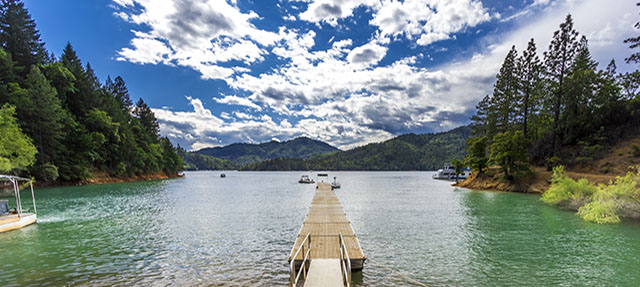
Eric Averett: The most challenging area is managing and mitigating impacts associated with demand reduction. Rather than mandating that individual landowners reduce demand, our district has pursued a path that we think gives individuals greater flexibility. The idea is that every acre will be assigned a water budget based on what the district can provide or considers sustainable. If a landowner uses more than that amount, it triggers a water charge. The district will use those funds to develop water supply programs or purchase land from willing sellers to retire it from production. Either way, this system doesn’t take anything away from landowners’ ability to manage their own water, it just gives them more options.

Another important area we’re looking at is water trading within our district’s boundaries. We’ve implemented a pilot study that empowers landowners to act as buyers or sellers in managing their water resources. We think water trading will be an essential tool to getting aquifers into balance and maximizing the value of the resource. For example, during a drought, a small grower with row crops may find greater value in fallowing a field and selling the water. At the same time, a grower who may be short of water and facing the loss of a permanent crop may enter the market as a buyer. If we don’t find a way to create these buy/sell opportunities, we strand the asset.

A third area we’re working on is creating individual groundwater bank accounts for landowners. We have a number of landowners who’ve committed to make their land available for recharge in exchange for a portion of the recharged water being credited to their account. Alternatively, some landowners have acquired a source of water and asked the district to use it for recharge on their behalf. Both types of programs were tested successfully in 2017, and we look forward to expanding the concept.   Ultimately, we’re looking at ways the district can assist landowners in becoming sustainable and mitigating SGMA impacts.

PPIC: How are you handling the issue of dry wells?

EA:  During the most recent drought, we experienced a number of wells that went dry. Kern County’s groundwater levels can be very dynamic, in part because of the groundwater banking projects within the region. These projects pump out large volumes of water during droughts, causing the water table to drop a lot and fairly quickly. We’ve developed a unique mitigation program in partnership with the banking projects. We utilize a groundwater model to evaluate the well in question. If it’s determined that the well’s failure was due to water level impacts from the banking projects, we mitigate the impacts. Within 24 hours of the well going dry they’re connected into a temporary water supply. To date, we’ve spent more than $1 million replacing and repairing wells, or connecting people with dry wells to local service providers. The proof of success is that not one landowner has pursued legal remedies, and all have been satisfied with the results. We think it’s a good template for others to try and may be a model going into the groundwater sustainability planning process.

PPIC: What’s the big lesson from your district’s efforts?

EA In all of these areas, our goal is to have the district be a resource for sustainability, not a regulator. Each landowner is unique: some have thousands of acres, and the impacts on them may not be as great as for someone with a small parcel. A lot of smaller landowners may be unable to manage the fixed costs that will arise from implementing SGMA. We wanted to address the diversity in our district and not disadvantage any one user.

We’re emphasizing approaches that let growers decide what’s best for them—whether it’s helping them put unused water into a market or compensating them for using their land for recharge. Everyone in the district will have to live with the water budget we come up with, but we want to provide as many tools and options to get to sustainability as we can.

Commentary: California Should Plan as if Drought Has Returned

This commentary was published in the Sacramento Bee on December 20, 2017.

The unusually warm, dry start to this winter—along with intense wildfires in southern California—has many Californians experiencing “drought deja vu.” Despite this uneasy feeling, we are not in drought. But it might be prudent to act as if this is the beginning of the next one. Here are some short-term priority areas for drought planning that we think can help the state prepare.

Read the full commentary on sacbee.com.

The State of Groundwater Recharge in the San Joaquin Valley

When strong winter rains finally ended the recent five-year drought, many water districts seized the opportunity to recharge depleted aquifers. How did they do, and what barriers did they face? A public forum brought more than 30 experts together to discuss the benefits, opportunities, and barriers to groundwater recharge. The event was hosted by the California State Board of Food and Agriculture and the state Department of Water Resources.

My presentation focused on recharge in the San Joaquin Valley—a region that is home to more than four million people, half the state’s agricultural output, and most of its critically overdrafted groundwater basins, where pumping exceeds replenishment. Consequences include dry wells, sinking lands, and reduced supplies to weather future droughts.

As part of our ongoing work to explore practical and effective solutions to the region’s water challenges, the PPIC Water Policy Center recently surveyed local water districts about their groundwater recharge efforts. Although such efforts have been underway for decades in some parts of the valley, the state’s 2014 groundwater law has increased interest in using recharge to bring basins into long-term balance.

About 75% of respondents to our survey said they were actively recharging this year. Large water districts with formal recharge programs are doing the lion’s share of recharge, but there’s lots of interest from smaller agencies in getting in on the act.

Agricultural districts are already employing a broad mix of recharge tools, and many see potential for expansion. In contrast, urban districts—most of which rely heavily on groundwater—are much less active. The most widespread methods—used by two-thirds of agricultural districts surveyed—include allowing water to seep through unlined canals and irrigating crops with surface water instead of groundwater, which enables basins to recharge naturally (a method known as “in-lieu” recharge). Other popular options—used by half of agricultural districts—include directing water to dedicated “recharge basins” and applying extra water on irrigated cropland. Some districts also spread water on fallowed land and open space. Of these tools, recharge basins are being used most intensively, storing more than half of total recharge reported (roughly four maf). One caveat to this last finding is that many districts have been using some popular methods (cropland irrigation, in-lieu recharge, and unlined canals) without formally accounting for how much recharge occurs.

Kern County is “recharge central,” accounting for more than half of total recharge volumes reported. It is also the hub of recharge partnership programs that enable water users to store water off-site, by districts that have especially good recharge conditions.

Survey respondents also noted the biggest barriers for their districts. Perhaps reflecting the very large volumes of surface water available this year, respondents were much more likely to flag problems related to infrastructure (72% of respondents) than to regulatory issues (30%). Infrastructure challenges included capacity constraints in several areas: recharge basins, “system” conveyance to get water to the district (e.g., through the Friant-Kern Canal or the California Aqueduct), and conveyance within the district to deliver water to good recharge lands. Many respondents also noted problems with the timing of water availability—a big issue in this very wet year, when storms brought large amounts of water all at once. Other constraints include challenges of expanding recharge on croplands because of farm-related issues (42%)—including unsuitable irrigation systems and uncertainties about the impacts on crop health—and difficulties raising funds for recharge projects (23%).

Survey findings also highlight the opportunities to expand recharge to help close the valley’s water deficit. In particular, the new groundwater sustainability agencies will need to develop better water accounting—which can help improve incentives and funding opportunities for recharge. And as water districts and water users work together to develop basin-wide sustainability plans, there’s potential to develop joint programs between surface water “haves” and “have nots.” Importantly, this includes opportunities to involve more cities and towns in groundwater banking projects and to encourage partnerships to expand off-site recharge.

For more details on these preliminary findings, see the slides linked below. And stay tuned for a report with complete survey findings in early 2018.

New Laws Ease Funding and Improve Accounting for Water

This was a busy year for water policy in the California Legislature. Governor Jerry Brown signed more than a dozen bills affecting the way we manage water. The bills cover a wide range of issues, from funding water infrastructure to reporting on new groundwater wells in overdrafted basins.

Paying for water emerged as a major theme in this year’s crop of water bills. Here’s a summary of newly signed bills:

  • Stormwater: SB 231 gives the courts guidance on how to interpret Proposition 218, which requires that a majority of landowners or a two-thirds majority of all local voters approve new stormwater drainage fees—making it difficult for agencies to pay for needed improvements to their systems. SB 231 defines stormwater as part of the sewer system. This puts stormwater services on par with water, sewer, and trash collection, none of which are subject to direct voter approval of new fees. If the courts uphold SB 231’s interpretation, this will give stormwater agencies more flexibility to raise funds.
  • Safe drinking water: AB 560 and AB 339 expand funding options for projects that enhance drinking water quality in poor communities and meet emergency water supply needs. AB 560 will make it easier for some disadvantaged communities to access grants and get more affordable terms on loans for safe drinking water projects through the Drinking Water State Revolving Fund. And AB 339 makes permanent a temporary authorization to use the State Cleanup and Abatement Account for emergency drinking water supply problems such as shortages or impaired quality.
  • Water and parks bond: SB 5 (the California Drought, Water, Parks, Climate, Coastal Protection, and Outdoor Access for All Act of 2018) is a $4 billion general obligation bond for improving outdoor open spaces and parks, protecting rivers and coastlines, and supporting solutions to a range of other water management issues such as groundwater sustainability and flood protection. This will go before voters in June 2018.

Two bills improve water use accounting:

  • AB 589 creates standards for water use measurement techniques. This addresses the relatively recent requirement that surface water diverters measure and report water use to the state.
  • SB 252 specifies types of information that groundwater users must report to their local jurisdictions when they apply to dig new wells in critically overdrafted basins. Reporting includes characteristics such as well location and depth, distance from surface water areas, estimated volume to be pumped, and category of use. The bill, which sunsets on January 30, 2020, is aimed at filling a critical data gap until groundwater sustainability plans are adopted under the Sustainable Groundwater Management Act.

Other pending water policies that did not make it to the governor’s desk this year are likely to return in 2018. To pay for safe drinking water projects in disadvantaged communities, SB 623 would create a Safe and Affordable Drinking Water Fund, to be funded by fees on agricultural chemicals and urban water use. And AB 1668 (in conjunction with SB 606) would authorize state agencies to establish long-term urban water use efficiency standards. The bill also proposes additional components to agricultural water management planning and reporting. SB 606 proposes changes to urban water shortage planning policies.

The new laws are designed to improve access to funding and strengthen existing tools for improving the way California manages water. We will keep track of updates and new proposals in 2018.

Storing Water for Dry Days

Where would California be without the ability to store water? We talked to Jay Lund―an adjunct fellow at the PPIC Water Policy Center and director of the Center for Watershed Sciences at UC Davis—about the often contentious and always complex topic of water storage.

Jay LundPPIC: What should every Californian know about storing water?

Jay Lund: Thanks to our Mediterranean climate, California has a very long dry season, which is when we use most of our water, and a fairly short wet season, when we try to gather and store water. To put water storage in perspective, California every year has a worse drought–in the form of a long dry season—than most of the country has ever seen. California has always relied on water storage, and in droughts today we rely on it even more. Almost all the water people use in summer has been stored someplace—either in a reservoir or groundwater. The state’s natural storage system of groundwater and snowpack is now augmented with reservoirs, pipelines, and groundwater pumping. This storage and conveyance system has been critical to California’s prosperity, particularly to its agricultural economy.

You often hear calls for more storage, and of course we do have some limitations in water storage capacity. But no matter how large a reservoir you build, you’ll never be able to reliably get more water out than that stream’s average flow into it. In much of the state the problem is that there’s not enough water available to store or that we can’t get water to the places where it’s needed most. The bottlenecks are often inadequate conveyance rather than storage.

PPIC: What did we learn about water storage from the recent drought and subsequent record-breaking wet winter?

JL: The drought highlighted the importance of groundwater storage. Surface storage in reservoirs is very important in the first couple years of a drought, but with longer droughts we rely more and more on groundwater storage. Groundwater will always be our primary storage for long droughts. California has 400–500 million acre-feet in groundwater storage, compared to about 42 million acre-feet in total surface reservoir capacity. Water quality is a bigger challenge with groundwater than with surface water, since pollutants can be washed into aquifers and accumulate there.

California’s geography is fortunate—we have huge aquifers under the Central Valley. Farmers made up for about 70% of reduced water supply during the drought by pumping groundwater. The longer the drought, the more important groundwater becomes. If we don’t manage to recharge enough water during wet years, there won’t be enough in drought years.

The wet year brought us the Oroville Dam spillway crisis. All of the dam’s outlet structures were compromised or broken for much of the winter. It was a good reminder that we have to maintain these structures and systems, and find funding for maintenance and independent inspections. Good inspectors will always find some concerns and problems, but few problems rise to the level of crisis. With California’s extensive water infrastructure system, if you’re not finding any problems you’re not looking hard enough.

PPIC: What will it take to made good use of groundwater recharge and storage?

JL: You need three things to recharge groundwater: porous land above an aquifer, enough water available above that land, and enough empty space under that land to store it. While local conditions are important, the big limitation for the areas of California experiencing groundwater problems is lack of surface water available for recharge. During this wet winter, people were trying to recharge as much as possible and being very creative about it. But this was a record wet year. We often lack enough water to get good recharge.

To improve recharge locally, we need a better accounting system to improve incentives. We also need more legal protections for local agencies that want to do recharge, and faster authorizations to recharge in wetter years.

Learn moreRead Dams in California (PPIC fact sheet, September 2017).
Read California’s Water: Storing Water (from the California’s Water briefing kit, October 2016).
Read “Expanding Water Storage Capacity in California” (California Water Blog, February 22, 2012).
Visit the PPIC Water Policy Center.

Fellow to Explore Central Valley Groundwater Problems

Josué Medellín-Azuara headshotI am pleased to announce the appointment of Josué Medellín-Azuara, a member of the PPIC Water Policy Center’s research network, as the 2017 Steyer-Taylor Fellow. This is the second year of a three-year fellowship―supported with funding from the TomKat Foundation, established by Tom Steyer and Kat Taylor―to explore solutions to some of California’s toughest groundwater policy challenges.

Medellín-Azuara is associate professor at the UC Merced School of Engineering. He focuses on water resources economics with expertise in water management for agricultural, environmental and urban uses, and farm adaptation to drought and climate change, among other topics.

This fellowship not only advances the water center’s work, it also adds to the state’s body of knowledge on how to address many of the challenges of sustainable groundwater management.

Medellín-Azuara will explore how California agriculture can adapt to future challenges of managing groundwater—especially in the stressed groundwater basins of the San Joaquin Valley, which is the state’s most important agricultural region and largest water user.

“We’ll be looking at future scenarios involving a changing climate, urbanization, technological advancement, and water scarcity, which will shape California’s agricultural mosaic,” said Medellín-Azuara.

The state’s groundwater law requires the valley’s water users to develop sustainable groundwater management plans by 2020.  Medellín-Azuara is part of a team of PPIC Water Policy Center researchers working on a comprehensive analysis of possible sustainable water management solutions for the region.

Learn more
Read the report Water Stress and a Changing San Joaquin Valley (March 2017)
Read “Groundwater in California” (PPIC fact sheet, May 2017)
Visit the PPIC Water Policy Center

Groundwater Quality Is Key to Quantity

To improve groundwater management we need to focus on more than the quantity our aquifers can supply. We also need to focus on quality.

Groundwater levels have been dropping in many of the state’s major aquifers, especially in parts of the Central Valley. This chronic issue was made worse by increased pumping during the latest drought. Lower water tables have resulted in increased pumping costs, the need for deeper wells, land subsidence, and salt-water intrusion into groundwater.

But groundwater supply is also harmed by pollutants, particularly nitrate and salt. Nitrate is widespread in many rural areas. Its major source is nitrogen fertilizer and manure. Salt, one of the most common pollutants, is in fertilizers, manure, and treated urban wastewater, and also occurs naturally. Both pollutants can compromise and ultimately reduce drinking water supplies. Salty groundwater is damaging to crops. In some areas, other contaminants such as naturally occurring arsenic also pose problems for drinking water.

Recently passed regulations seek to address both aquifer depletion and contamination issues with the goal of protecting groundwater resources for the long run. A suite of policies extended existing water quality protections to groundwater: the Central Valley Dairy Order, the Irrigated Lands Regulatory Program (ILRP), and the Central Valley Salinity Alternative for Long-Term Sustainability (CV-SALTS). More broadly, the Sustainable Groundwater Management Act (SGMA) directs agencies in charge of addressing groundwater depletion also avoid degrading water quality.

These regulations mark a historic shift in how groundwater is managed in California. They each provide distinct frameworks for addressing quality and quantity challenges. To reap the most benefits from their implementation, it will be important to coordinate management activities.

Under SGMA, more than 250 newly formed groundwater sustainability agencies will be in charge of managing groundwater resources. The jurisdiction and size of these agencies vary, and most groundwater basins have multiple  groundwater sustainability agencies. The ILRP, which regulates runoff from irrigated lands, includes 12 coalitions statewide and thousands of farmers with individual waste discharge permits. The most effective solutions will require coordination and collaboration beyond the boundaries of these individual entities.

For instance, one way to address groundwater depletion is through intentional groundwater recharge. Because groundwater doesn’t respect property lines, recharge is best managed at a larger scale than most farms―ideally at the scale of an entire basin. Groundwater recharge can also affect water quality.

Depending on the soil type and crop choices, intentional recharge can improve or degrade the underlying water quality. Recharging in ways that benefit groundwater quality will entail coordinating cropping patterns, irrigation systems, and agronomic practices. The ILRP coalitions have already taken steps to assess areas that could be vulnerable to groundwater quality problems, promote farm practices that reduce pollution, and improve water quality monitoring. There are likely to be opportunities for GSAs to benefit from sharing resources on monitoring and planning with entities that manage water quality, such as ILRP coalitions. Forming partnerships in the early stages of drafting groundwater sustainability plans would be a good next step.

Coordinated management has the potential to address some tough, persistent water quality and quantity challenges, but it will generally take years before the benefits become apparent. Since groundwater depletion and quality degradation affect poor rural communities most acutely, more expeditious approaches are also needed. The state has been working on solutions to address the urgent public health issues these communities face. The SGMA also brings new opportunities to coordinate with local institutions to distribute and prioritize available resources.

Learn more

Read “Groundwater in California” (PPIC fact sheet, May 2017)
Read “California’s Water Quality Challenges” (PPIC fact sheet, October 2015)
Visit the PPIC Water Policy Center