Counting Californians and Holding Elections in a Pandemic

Today is Census Day, the day to count everyone living in the country in 2020. It’s not the deadline for responses—you have until August 14 to complete your census form—just the “anchor day” for counting those living in your household. We talked to California Secretary of State Alex Padilla about the challenges the COVID-19 pandemic brings to counting Californians—and for holding elections in November.
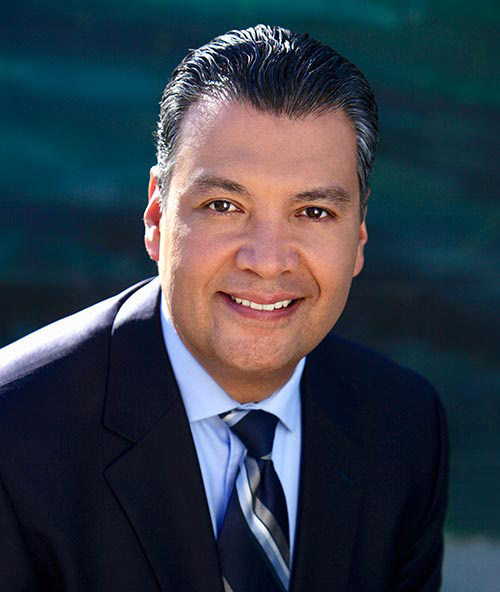
Photo - Alex PadillaPPIC: What challenges does the pandemic bring to conducting the census?

ALEX PADILLA: Ensuring a fair and accurate count is tough under normal circumstances, and it’s made more challenging by this global health pandemic. A lot of the state and local strategies for engaging the public on the census have had to be modified or replaced with ones that are more effective when people are staying at home. The good news is, this is the first time it’s been possible to do the census online, as well as by phone or paper. We’re seeing people get more creative at staying in touch while keeping their distance, whether through video chats with their coworkers or using teleconferencing to stay in touch with family and friends. We can also use these methods to remind everyone to do the census.

It’s really important to remember that participation in the census is how we ensure our communities receive their fair share of federal dollars for critical needs such as public health, education, public safety, housing, and infrastructure. This message is really striking a chord right now.

PPIC: As they shelter in place, what can Californians do to help ensure an accurate census count?

AP: Every Californian should participate in the census, but also remind people they’re in touch with to do so. Assuring a complete and fair count depends on everyone doing the census. It’s not just a count of adults or voters or citizens; it’s for everybody living here.

California has an especially high number of hard-to-count populations—for example, communities of color, young people, and immigrant families and communities. More than 70% of Californians fit into a hard-to-count category. It already takes extra effort to ensure participation by these groups. The pandemic is not making the job any easier—at a time when the job is more important than ever for ensuring the state gets its share of federal funding for critical needs over the next decade.

Based on the prior census 10 years ago, California’s most undercounted population were kids under five years old. My youngest just turned five, and especially now with all the kids at home, it’s hard to imagine forgetting to include him as he’s the loudest member of our household! Today, kids who weren’t counted in 2010 are now teens who’ve been in school for years, but their schools haven’t been getting their full share of federal education dollars. It’s a very tangible way to think about it, and it shows the importance of the census for our quality of life.

There are many options for participating in the census. Go online or call in today. Once you’ve submitted your information, help us by spreading the word with neighbors you’re checking in on and friends and family.

PPIC: Talk about the administration of the upcoming election.

AP: To put it in context, we should recognize that throughout the nation’s history, Americans have gone to the polls—in times of war, during the Great Depression, and even during the deadly 1918 flu pandemic. So it’s not a matter of if or when we’ll hold the election. We have a date: it’s Tuesday, November 3. It’s a matter of how we hold the election in a way that is accessible, secure, and healthy for everyone—voters, elections personnel, poll workers. Many things California has championed to get more people voting really make a lot of sense in an era of public distancing. You can register to vote online. Voting by mail and in-person early voting are good ways to avoid crowds. We’re diligently working on expanding those opportunities.

COVID-19 and California’s Census Count

The COVID-19 crisis has upended the carefully laid plans for the 2020 Census in ways that might have disproportionate effects on California’s count. The Census Bureau is making important adjustments, but California needs to be particularly vigilant about the potential consequences.

The Bureau began its self-response period on March 12, when it started mailing out invitations to participate in the census to virtually every household in the country. Self-response remains the safest and simplest way to gather census data because, unlike in-person interviews, it does not raise the risk of coronavirus exposure.

The virus has altered almost every other effort the Bureau had planned. The Bureau always does extensive follow-up with households that fail to self-respond. More people are likely to need follow-up in California than in the average state, so problems with that process will be felt more acutely here. Follow-up is generally in person, which raises risks that didn’t exist just a few weeks ago; at least one census worker has even tested positive for the virus. To accommodate some of these challenges, the Bureau has delayed hiring and pushed back both the start of the follow-up (from May 13 to May 28) and the cutoff date for completed self-response forms (from July 31 to August 14).

The Bureau’s plans for counting those in less conventional living arrangements have been upended as well. The original plan for group quarters such as college dorms and senior living facilities was to send out a census worker to collect information for the entire facility from a contact person. College students are supposed to be counted as if at school, but many have been sent away from their campuses. And senior facilities are protecting their highly vulnerable residents by strictly limiting access. The Bureau is exploring alternative approaches.

People who are homeless, particularly those living on the street or in cars, are especially difficult to count. Estimates suggest that homelessness is a bigger and faster-growing problem in California than in almost any other state. The Bureau had planned to count homeless people wherever they happened to be from March 30 to April 1. But the homeless population is especially vulnerable to the virus, and sending census workers out to count in person would put the workers and their communities at risk. The Bureau has delayed this effort by a month to lower the risk of contagion.

Finally, the Bureau does a wide range of communications work just to get the message out that the census is happening and is important. The Bureau’s carefully developed media campaign is likely to be overwhelmed by news about the pandemic. Moreover, a significant amount of outreach was to be conducted in physical spaces by trusted messengers in each community. All of that will need to be rethought. Not only are large gatherings generally banned, but most community spaces are closed.

Though there is some scheduling flexibility, a hard deadline looms. By law, the Bureau must submit total state populations to the president by December 31 so that congressional representation can be adjusted to reflect changes in population over the previous 10 years. This is the most basic constitutional function of the census. Changing that deadline would require congressional approval and could complicate the process of redrawing the lines of representational districts.

These challenges are significant, but a strong performance during the self-response period will mitigate them. PPIC will be monitoring and providing key analysis of the self-response process to help ensure that the state is in the best possible position before the follow-up period begins.

The 2020 Census and Political Representation in California

California’s political representation will be affected by the 2020 Census—but an accurate count is far from guaranteed. Inadequate funding and fear in the state’s large immigrant population are heightening concern about an undercount. At a briefing in Sacramento last week, PPIC researcher Eric McGhee outlined a new report that draws on population trends and research on past undercounts to develop plausible scenarios for 2020.

“I think it’s fair to say that we are unlikely to lose a congressional seat if there is an accurate count,” said McGhee. However, California is more vulnerable to an undercount than most other states. Three in four Californians belong to at least one of the populations that are difficult to count: children, young men, Latinos, African Americans, immigrants, and renters.

An undercount could cause the state to lose one of its 53 seats in the House of Representatives. It could also have an impact on political representation within California. If the state does a poor job of reaching hard-to-count populations, it might end up drawing congressional and state legislative districts that shift representation from poorer areas with larger communities of color to areas that are wealthier and less diverse.

Privacy concerns have increased both the difficulty and the cost of conducting census surveys. The current political climate is likely to exacerbate these concerns, especially now that a question on citizenship status has been added to the 2020 survey. (The addition is being contested in the courts.) Moreover, the 2020 Census will be the first to collect a majority of responses online. The Census Bureau is testing the Internet survey but lacks the resources to test outreach and follow-up. Because California has a disproportionate share of historically undercounted residents, these challenges are of particular concern.

But, as McGhee pointed out, “California’s fate is still in its own hands.” This year’s state budget allocates about $90 million for census outreach, which should help community organizations and state and local governments educate residents about the importance of the census and the security of the information collected. Californians need to know that “a better count in California could make a big difference.”