
California’s Brain Gain Continues

[vc_row][vc_column][vc_column_text]California’s heyday of rapid population growth—the post-World War II era—was fueled by millions of migrants coming to the state from the rest of the country. Those days are long gone. California’s population continues to grow (through births and international migration), but every year it loses tens of thousands of people to other states. And yet there is one group that California continues to attract: college graduates.

This interstate migration pattern—gaining large numbers of college graduates while losing large numbers of less educated adults—doesn’t happen anywhere else in the country. Over the past five years, California has attracted 162,000 more college graduates (adults with at least a bachelor’s degree) from other states than it has lost. Over the same period, the University of California (UC) awarded about 300,000 bachelor’s degrees at its nine undergraduate campuses. In other words, interstate migration provides California with half as many college graduates as the entire UC system.

figure - California Gains College Graduates While Losing Less Educated Adults

College  graduates  come  to  California  from  all  over,  but  eight  states send California substantially more college graduates than they get in return. Between 2012 and 2017, net gains of college graduates from New York (51,000), Illinois (31,000), Pennsylvania (24,000), New Jersey (20,000), Massachusetts (20,000), Florida (16,000), Michigan (13,000), and Ohio (11,000) totaled more than 186,000. California experienced smaller but still sizable net losses (totaling 80,000) to five states: Texas (29,000), Oregon (16,000), Nevada (13,000), Arizona (12,000), and Washington (10,000).

The new migrants to California tend to be quite young. Indeed, college graduates age 20–29 account for almost all of the net gains. (In contrast, California experiences small net losses of older college graduates.) From a labor market perspective, attracting young college graduates is especially advantageous. Young adults with college degrees are at the start of their careers and provide the state with much-needed highly educated workers.

figure - College Graduates Moving To California Tend To Be Young

In fact, college graduates moving to California are more likely to be employed than those leaving the state. The largest gains are primarily in majors that are in relatively high demand in the labor market, including engineering (33,000), communications (18,000), business (18,000), and computer science (17,000).

The migration of young college graduates to California is a consequence of the state’s growing demand for highly skilled and highly educated workers. But the numbers are not high enough to fully meet the state’s changing needs. Although many college graduates move to California from other states, the most important source of highly educated workers in California are the state’s own colleges and universities. Policies and practices to improve college access and completion in the state will ensure that more Californians are able to help create and benefit from a strong economy.[/vc_column_text][/vc_column][/vc_row]
Got Surface Water? Groundwater-Only Lands in the San Joaquin Valley

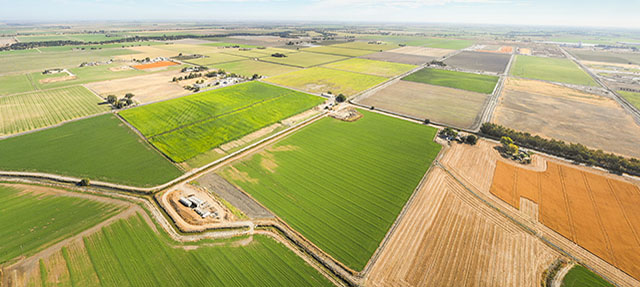
The San Joaquin Valley—California’s largest agricultural region—has the largest groundwater deficit in the state. However, water scarcity is not experienced equally across the valley. Some areas receive abundant surface water to support cropland irrigation and drinking water supplies. Most others supplement their use with groundwater. Still others have no surface water access and depend entirely on groundwater. Water users in these groundwater-only areas are particularly vulnerable to pumping restrictions under the Sustainable Groundwater Management Act (SGMA)—the state-mandated effort to balance groundwater basins.

The map below gives a broad view of where the groundwater-only agricultural lands are located in the San Joaquin Valley. These areas are present in each basin; they include irrigated cropland (shown in red on the map) as well as rangeland and other open space (shown in gold).

figure - Nearly 20% of Irrigated Cropland in the San Joaquin Valley Relies Entirely on Groundwater

We estimate that nearly 20%—or 840,000 acres—of irrigated cropland in the valley has no access to surface water. Crops are similar in groundwater-only lands and lands that have at least some access to surface water: more than half are planted with permanent fruit and nut crops. These crops provide higher revenues and employment than most annual crops. With groundwater cuts looming and no other water supply to fall back on, groundwater-only areas are on the front line of the effort to bring basins into balance. Inflexible approaches to managing this transition could result in unnecessarily large, undesirable reductions in high-value crop acreage, regional employment, and GDP.

Cooperative approaches to water management can give flexibility to groundwater-only areas and lessen the regional economic burden of reducing groundwater use. Facilitating local surface and groundwater trading would allow farmers who need more water for their orchards and other high-revenue crops to compensate other farmers for reducing their water use. Expanding surface water trading more broadly across the valley could bring down costs further and offer even more flexibility. And smart regional investments in new water supplies—particularly to capture more runoff from big storms and increase groundwater recharge—could offset some of the water use cutbacks expected in groundwater-only areas.

Cooperation will also be important to ensure adequate water supplies are available for the valley’s growing cities and small towns—most of which also rely heavily, if not entirely, on groundwater. Recharge partnerships that benefit communities are one promising way to do this.

Water conditions in San Joaquin Valley basins vary, from the size of a basin’s groundwater overdraft to the availability of surface water in the local supply mix. These variable conditions call for cooperation between those with access to surface water and those without. This will make it possible to lessen the costs of implementing sustainable groundwater management, a transition that will benefit the valley over the long run.

Video: Career Pathways and Economic Mobility at California’s Community Colleges

About a third of future jobs in California will require more than a high school diploma but less than a bachelor’s degree. By training workers for these jobs, career education—also known as career technical education or vocational training—plays an integral role in meeting California’s workforce needs and improving students’ economic well-being.

At an event in Sacramento last week, PPIC researcher Shannon McConville outlined the findings of a new report on career education and economic mobility, and a panel of experts discussed the implications for students, colleges, and the state as a whole.

McConville noted that completing a career education credential at a California community college confers a 20% wage gain, on average. But economic benefits vary greatly across program areas. For instance, returns to health credentials tend to be substantial, while business and IT credentials yield lower returns.

The panelists began by highlighting current efforts to improve students’ labor market outcomes. Marty Alvarado, executive vice chancellor for educational services at California’s community colleges, explained the system’s “two-pronged approach” to making sure programs connect to in-demand, high-return careers. One area of focus is regional infrastructure, which includes regional labor market centers that provide colleges with data on local industries. The second area includes tools to help students better navigate their program choices, “while also trying to make transparent the earnings projections for students as they move into these career options.”

Supporting students—especially low-income students from underrepresented demographic groups—in completing high-return credentials was another topic of conversation. Alvarado discussed efforts at the community colleges to streamline processes that may be creating “unnecessary barriers for students,” while Assemblymember Autumn Burke emphasized the importance of access to social safety net services so students can focus on their career.

Alma Salazar, senior vice president of the Center for Education Excellence and Talent Development at the Los Angeles Area Chamber of Commerce, noted that all stakeholders need to be involved. “How do we get the system as a whole to take ownership in helping us collectively solve for these problems? . . . It has to go beyond Sacramento. It has to go beyond the system’s leadership. It has to get to the institutional level and the people who work [there], who have to be equally committed.”

While many see the evolving nature of work and increasing automation as challenges, Assemblymember Burke was optimistic about providing a “just transition” for workers who may lose jobs in fast-changing industries. “We can train people for this new economy [and] prepare them now. . . . It’s a shortcoming to worry about losing minimum-wage jobs, because there’s so much opportunity on the other side.”