Video: A Conversation with Governor Gavin Newsom

Governor Gavin Newsom’s conversation with PPIC president Mark Baldassare last week focused on energy policy and climate change. After noting that it had been one year since PG&E declared bankruptcy, Baldassare asked the governor about his vision for the future of California utilities. Newsom responded by broadening the question. “We have to start thinking about our energy future and our transportation future and our low-carbon, green growth future in a collaborative mindset.”

In this context, he continued, “PG&E’s bankruptcy has turned out to be an extraordinary opportunity for this state. . . . It’s allowed us to ask questions . . . that otherwise weren’t front and center.” PG&E, he said, has to come out of bankruptcy with a vision for the future that prioritizes long-term thinking and public safety rather than shareholder return. The bottom line? California needs a “transformatively different” utility. And, he added, “if PG&E can’t do it, we’ll do it for them.”

Key to planning for the state’s energy future is making sure it works for all Californians. Going green, Newsom said, “can’t mean more income inequality.” It has to benefit both the “haves” and the “have nots”—creating jobs and ensuring affordable energy, and mitigating the dislocation that comes with change.

Another key area is wildfire mitigation and prevention. Newsom noted that the 2019 fire season was less damaging than other recent seasons, in part because “we’ve never been more prepared.” The state has been investing in new technology that monitors and predicts wildfires, as well as equipment for suppressing fires and responding to crises.

Wildfire prevention is complex, in part because, as Newsom pointed out, the federal government owns the majority of forest land in California. “We are doing the job the federal government is no longer doing,” Newsom said, adding that “the Trump administration’s budgets have been proposing cuts to forest management.” Land-use patterns are another complicating factor. New building codes have helped recently built housing survive fires, but there are a large number of older buildings in fire-prone areas.

As Newsom sees it, the challenge of implementing the state’s ambitious climate mandates is to bring politics and policy into alignment. “Politically, I recognize that what’s necessary may be impossible. But also I recognize from a policy perspective that what is impossible has to become necessary.” The ultimate goal, of course, is to move California forward: “The world is changing. We have to change with it.”

Fighting Sea Level Rise the Natural Way

How will rising seas affect the state’s freshwater ecosystems, and what role do these systems play in managing the coming changes? We talked to Letitia Grenier—a member of the PPIC Water Policy Center research network and a senior scientist at the San Francisco Estuary Institute—about this issue.

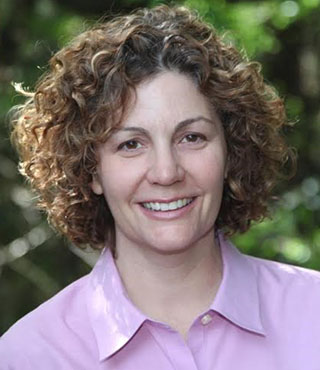
photo - Letitia Grenier

PPIC: How will sea level rise affect California’s freshwater systems?

LETITIA GRENIER: We tend to think of climate change as causing a slow, linear rise in sea level, but it’s definitely not always gradual. Depending on a host of local and global factors, we could see quick changes and sudden jumps in sea level.

Rising seas will affect how we manage runoff from major storms. It’s not enough to manage water coming down rivers and rising from groundwater—we also have to account for concurrent king tides and storm surges. It won’t work to build infrastructure that only addresses sea level rise—it must also take into account flooding coming from behind and below.

Rising seas will also push salty water farther into estuaries, including the Delta. The levee system throughout the Bay‒Delta is fragile, and could fail in big storms or earthquakes. That would allow a lot more salt water to come in, which could affect the water supply for Southern California.

PPIC: Talk about the potential for “natural infrastructure” to address rising seas.

LG: Our water infrastructure was developed to address specific issues, piece by piece. No one was responsible for figuring out how to make the overall watershed work well for all the things we need it to do. Instead, we optimized the system in each location for one function—water supply, flood control and other tasks. It’s like having many people each design one part of a car without thinking of the whole vehicle—it doesn’t work very well.

This approach to managing freshwater ecosystems changed key natural processes that actually worked for us—we interrupted the flow of sediment down rivers, blocked salmon from migrating upstream, and drained wetlands. There is huge potential to redesign systems to let natural processes help us solve some of our complicated problems. For example, if we realigned a creek so that it could move sediment to the coast, it can help rebuild marshes that would protect the urban shoreline and bring a host of other benefits.

PPIC: What are the advantages of using natural infrastructure options?

LG: Bringing more benefits is the big one. Engineered solutions are mostly designed to bring just one benefit. Compared to a concrete flood basin, a marsh provides not just flood protection but also creates habitat for at-risk species, protects the shoreline, sequesters carbon, filters and breaks down contaminants, and creates recreational opportunities. And traditional engineered infrastructure has a lifespan. Over a 50-year lifespan, will it be flexible enough to adapt to climate change? Usually not. Engineered solutions also cost more over their lifetime to maintain and upgrade. In contrast, ecosystems are always changing; they can adapt in ways that engineered solutions can’t. Let’s restore these systems so they can continue to do useful work for us.

PPIC: How do we get there?

LG: We have a lot of knowledge of freshwater ecosystems, but knowing how to use them as part of our water infrastructure system is pretty new. So we need to test more, and build more. We’re doing it too slowly and at too small a scale.

We also need to work across jurisdictions. We haven’t set ourselves up socially to do this. Our current system has too many agencies with missions that aren’t well aligned. So we’ll need to voluntarily coordinate to make our watersheds work as they should—and provide incentives to bring agencies together over watershed planning. It will take time to make this change, and we’re very short on time. I think these big social challenges are harder to resolve than the science side.

Many people think of ecosystem restoration as something that is “nice to have,” not “have to have.” But growing extremes in fires, floods, and droughts are bringing people around to the realization that we’re dependent on ecosystems, and it matters if they’re healthy.  I hope that leads to the understanding that natural infrastructure is worth investing in and can perform better than traditional infrastructure in many cases. Climate change will require us to rebuild or fix a lot of our existing infrastructure. It’s a great opportunity to make transformational change.