Five Things You Need to Know About Water

We marked the launch of the PPIC Water Policy Center by convening a panel of leading experts to discuss key issues in state water policy. Participants were Richard Frank, director of the California Environmental Law and Policy Center at the UC Davis law school; Matthew Rodriquez, secretary of the California Environmental Protection Agency; and Karen Ross, secretary of the California Department of Food and Agriculture. Moderating the conversation was Lois Kazakoff, deputy editorial page editor at the San Francisco Chronicle. We invite you to watch the full presentation and discussion.

Before the panel discussion, I gave a brief opening talk called “Five Things You Need to Know About Water.” Here is a summary of the five points:

Water is complicated. There are no silver bullet solutions to California’s water problems—whether it be desalination, new reservoirs, or conservation. We need to be thinking about combining a lot of different tools and strategies. This also means that there are almost always unintended consequences, even for solutions that seem like no brainers. As an example, there’s a lot of public interest—and funding—now available for increasing local drought resilience by reusing treated wastewater. However, more water reuse often means less treated wastewater gets returned to rivers and streams, where it provides important environmental benefits and supplies for downstream communities. This doesn’t mean we shouldn’t be doing these projects, but it does mean we need to be aware of the consequences and trade-offs.

We have to go after more than the low-hanging fruit. The low-hanging fruit types of solutions tend to be incremental and piecemeal in nature. This is fine for things that can change incrementally, like improving water use efficiency. But some tough problems—like meeting the co-equal goals of water supply reliability and ecosystem sustainability in the Delta—will require tough, expensive, and politically difficult solutions.

Water solutions almost always have both winners and losers. This is obvious in a case like the Delta, where it’s simply not possible to find a fix that will make everyone better off. That’s because every available option involves tradeoffs in which at least one party doesn’t fare as well, whether it’s farmers in the Delta, farmers in the San Joaquin Valley, urban residents south of the Delta, or the Delta’s native fish and wildlife. It’s also true for projects that people like to think of as win-win, such as flood protection projects that move levees back to make more room for rivers. These projects also improve wildlife habitat, but they usually cost more than traditional flood control projects. As a society, we can aim for solutions that get the most benefits per dollar spent, but we also need to consider how to soften the blow if some groups are disproportionately bearing the costs.

Crises create hardship, but also opportunity. In particular, crises create openings to achieve major reforms that might not be possible in normal times. Thanks to a string of crises—and to bold action by leaders at the local, state, and federal levels—California is now experiencing a period of extraordinary change in water policy: In 2007, in the wake of Hurricane Katrina in New Orleans, we enacted legislation that doubled the federal standard of flood protection for cities in the Central Valley. In 2009, in the third year of drought, we adopted a legislative package that required more conservation, better water use reporting, and a new governance structure for the Delta. In 2014, in the midst of a much more severe drought, we enacted historic legislation that empowers and requires local agencies to sustainably manage our threatened groundwater basins. Much work lies ahead to effectively implement all of these reforms, and more big changes will be needed in other areas, such as finding ways to fill critical funding gaps in our water system.

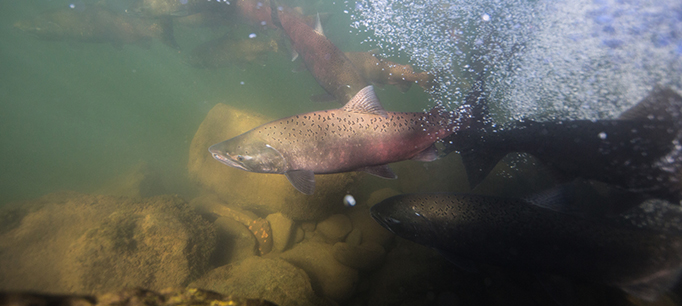
It’s hard work, but it’s not hopeless. We’ve been making progress in addressing some key challenges, including improving the reliability and quality of our water supplies, and preparing to weather droughts and floods. Perhaps the toughest—and most conflict-ridden—challenge we face in California water is reversing the decline of our native aquatic ecosystems, which have been failing despite several decades of well-intentioned environmental laws and investments. But even here, one can point to promising approaches. There’s the example of Putah Creek, where the reintroduction of natural, variable flow patterns—albeit with just a fraction of the water nature used to provide—has favored the return of native species. There’s also the example of the Knagg’s Ranch in the Yolo Bypass, where leaving fields flooded a little longer before planting rice is making it possible to fatten up young salmon before they make their way back to the ocean, giving them a better chance of survival. These are creative examples from the playbook of “reconciliation ecology,” a pragmatic approach to managing our ecosystems alongside continued human uses of water and land resources.

These five immutable facts about California water guide the work of our center. California needs to ground policy decisions in reliable, non-partisan, science-based diagnoses of problems and potential solutions. That’s how we—along with our research partners throughout the state—hope to contribute to a better water future.
Welcome to the PPIC Water Policy Center

California is at a crossroads in managing water. The drought has sparked significant policy activity, but much work lies ahead. With changes expected in the state’s population, economy, and climate—and pressures from aging infrastructure and a deteriorating environment—California needs to develop meaningful, lasting, forward-looking water policies.

Today, we are pleased to announce the establishment of the PPIC Water Policy Center to help meet the state’s urgent need for timely information and innovative water management solutions. The center builds on the successful model of independent, nonpartisan research and constructive engagement that defines all of PPIC’s work.

Over the last decade, PPIC laid the groundwork for the center with high-quality research on major water policy issues and productive conversations about solutions. The center represents a significant ramping up of investment in this critical area, and we thank the S. D. Bechtel, Jr. Foundation for the seed funding to launch this effort.

The PPIC Water Policy Center will focus on three critical, interrelated water management challenges facing California in the 21st century:

  • Ensuring clean and reliable water supplies. Investigating and encouraging comprehensive, integrated approaches to water quality and quantity.
  • Building healthy and resilient ecosystems. Promoting the development of healthy and sustainable ecosystems using practical approaches to watershed management.
  • Preparing for droughts and floods. Helping California adapt to an increasingly variable climate.

The PPIC Water Policy Center staff will work closely with a broad, interdisciplinary network of top researchers from around the state—and with a wide range of policymakers and stakeholders—to strengthen the bridge between research and real-world policy debates.

In conjunction with the launch of the PPIC Water Policy Center, PPIC is releasing California’s Water, a set of nine short policy briefs on the state’s most critical water management challenges and the actions needed to address them. This briefing kit is designed to inform state leaders and to raise awareness more broadly about the important water management issues facing the state.

We invite you to download California’s Water and visit our new PPIC Water Policy Center online. We also invite you to stay up to date with PPIC Water Policy Center activities:

Caring About Delta Levees During a Drought

When the sun is shining and our rivers are low, we tend to forget about levees. However, you can’t ignore the 1,100 miles of levees in the Sacramento-San Joaquin Delta. These levees—dikes, actually—have high water against them 24 hours a day, 365 days a year. They protect the islands of the Delta from flooding that would occur daily because island elevations are well below sea level—more than 25 feet below in some places.

This video is a simulation of what would happen if a severe earthquake hit the western Delta, causing widespread failure of levees. The simulation is a worst-case scenario: failure occurs in the summer when freshwater inflow from rivers is low. (The most recent large flooding in the Delta took place on a clear day in June 2004.) As the water drains from the channels into the islands, it pulls saltwater into the Delta from San Francisco Bay. This renders the water too salty for use by the 25 million people more than 3 million acres of farms that rely upon it.

The management of Delta levees has been a policy challenge for many decades. Most levees are managed by local reclamation districts. They are of varying quality. Yet these levees affect the reliability of water supplies from the Delta. They protect lives, property, and important infrastructure, and they control river and estuarine habitat.

In the 2009 Delta Reform Act, the legislature assigned the Delta Stewardship Council the task of determining how to invest state funds in the levees. As highlighted in our recent report Paying for Water in California, the cost of improving Delta levees ranges from $1.6–$2.4 billion, while available state bond funds total less than $400 million. Recognizing that needs far outstrip available resources, the council has chosen to set policies for prioritizing investments. This is both necessary and fraught with controversy because it ultimately determines whose needs are to be met and whose will not.

PPIC, with our research partners at the UC Davis Center for Watershed Sciences, have published numerous assessments of this problem. Over the next few months we plan to post summaries of this work to help inform policymaking and prioritization. Come rain or shine, flood or drought, Delta levees—and the resources they protect—need the state’s attention.

Drought Watch: Water Not Wasted to the Sea

This is part of a continuing series on the impact of the drought.

Northern California got a good soaking last weekend, with more than 10 inches of precipitation in many parts. This translated to healthy amounts of water flowing off the hillsides. Much of it is headed into our large reservoirs where—after three years of drought—there will be plenty of capacity to store it for later use for cities, farms, and the environment. But a significant amount made it into rivers in the Sacramento Valley. From there, that water is on its way to the Sacramento-San Joaquin Delta, San Francisco Bay, and ultimately the ocean.

To many, the notion of water to the ocean is akin to water wasted. It is perceived as serving no valuable purpose before mixing with salt water and being rendered useless.

This perception is understandable if we limit our thinking to benefits from direct use of water: manufacturing, industry, drinking, sanitation, or growing gardens and crops. But outside of improving habitat for native species, there are multiple indirect benefits derived from water currently running into the Delta.

The most conspicuous is improved water quality. January’s record low precipitation left the Delta unusually salty. A salty Delta poses problems for the more than 25 million people and more than three million acres of irrigated agriculture that make use of it. Salt is also a problem for farmers in the Delta who rely on local water for irrigation.

To keep the Delta fresh enough for exports and uses in the Delta during dry periods, water has to be released from upstream reservoirs. And a great deal of that released water has to pass through the Delta and into the Bay to keep salt water from encroaching on the Delta. The water used to create this hydraulic barrier cannot be recovered.

A wave of water coming down the Sacramento River freshens the Delta, naturally pushing the salty water out. Depending upon how we operate the export pumps, the effect of this flush can last a long time and allows dam operators to husband their stored water for use later in the year.

Last year, we had three of these flushing events in the late winter and early spring that cleaned up a very salty Delta. These events created benefits—by reducing dam releases necessary to keep things fresh—that lasted into the summer.

Indirect benefits of this water do not end at the Delta. Shorelines and marshes throughout the San Francisco Bay are eroding due to a lack of sediment. This is part of a long-term trend with many causes, but is largely due to the trapping of sediment upstream by dams and levees and a lack of sufficient river flows to move it out of the Delta and into the Bay.

Additionally, as the more than 20 operators of wastewater treatment plants in the Bay Area know, water quality is a major—and potentially very costly—issue of concern, particularly in the South Bay. Freshwater inflows to the Bay help improve water quality and help the Bay meet state and federal standards.

So when you see the brown water from this latest storm moving down the Sacramento River, out through the Delta into the Bay, keep in mind that it is hardly wasted, but rather is creating indirect but vital benefit for a broad range of users.

Commentary: Set Water Priorities to Prepare for Drought

This commentary was published today by the San Francisco Chronicle.

There are still two months left in the rainy season, but all indications are that California’s drought is extending into a fourth year — even with the soaking Northern California is expecting this weekend.

Already, state officials are making tough choices about priorities for water use. Nowhere is this more difficult than managing water for the environment . . .

(Continue reading on sfchronicle.com.)

Drought Watch: Is This the End of Our Dry Spell?

This is part of a continuing series on the impact of the drought.

This morning, the Bay Area and the Central Valley began to assess the mess created by Thursday’s big storm. And a big storm it was, with 50+ mph winds, torrential rains (more than 10 inches in some places, with blizzards in the Sierra), widespread flooding of streets, long power outages, and rivers and creeks that overtopped their banks.

This was an unusually powerful “atmospheric river” storm—California’s version of a hurricane—unmatched in intensity since January 2008. A deep low-pressure system came ashore in northern California and southern Oregon, generating violent winds throughout these regions. Spinning counterclockwise like a top, this system dragged warm, moist air into California from as far away as west of Hawaii—in satellite photos, this stream of moisture resembles a river, thus the name. All this activity led to prodigious amounts of rain in a very short period of time. And as cold air came in with the low pressure center, it produced abundant snow at higher elevations.

Beneath every headline about the intensity of the storm will be the question: Is the drought over? The answer: Not even close. It is important to remember that the state has been in severe rainfall deficit for three continuous years. One storm rarely busts a drought.

After the storm totals are added up, we will be at or slightly above average for this time of the year, and this is just the beginning of our wet season. At the same time, it has been so warm this season that total snowpack is likely to be below average, even with this big boost. The California Department of Water Resources has stated that we will need 150% of average precipitation this rainy season to recover from the drought. To have that kind of year, we need four or more additional atmospheric rivers (although not necessarily as strong as this one).

Indeed, history shows that as much as half of our annual rainfall is packed into just five to seven days of intense rainfall, highlighting the fine line between a wet year and dry one. And storms like this do little to address the problem of years of groundwater depletion. For that, we need many rainy days.

Still, despite the damage and inconvenience, this storm produced significant good. The state’s reservoirs are so depleted that there will be no trouble capturing this storm’s runoff. Small reservoirs, such as those serving Santa Cruz and other coastal communities hard hit by drought, will show dramatic improvements. The large reservoirs that rim the Central Valley—supplying water to 25 million people and more than seven million acres of farms—will get a good bump from this storm. Sometime this month, Folsom Reservoir, which does double duty by providing water and reducing Sacramento’s flood risk, is likely to encroach on the space it sets aside for flood control. (That Folsom Dam will be releasing water to protect against floods during a drought is testament to the difficulties the state faces in managing reservoirs for multiple, often conflicting needs).

This storm also was great for the environment. Native plants and animals are well-adapted to these kinds of events, and the physical changes that high flows bring to rivers and floodplains are needed to sustain habitat. One of the most important and stressed ecosystems in the state—the Sacramento–San Joaquin Delta—received a welcome flush of fresh water. During drought, the Delta becomes increasingly saline, harming habitat as well as the ability to export clean water to cities and farms. Bursts of fresh water reduce salinity and improve water quality for humans as well as the ecosystem (this is often lost on those who complain that this is water “wasted to the sea”).

In sum, this was an unusually powerful storm that caused damage, snarled traffic, and was a general nuisance for most northern Californians. Although it didn’t end the drought, this storm sure helped a lot.

Drought Watch: Water for the Environment

This is part of a continuing series on the impact of the drought.

The ongoing drought has heightened tension over how water is allocated in California. In our recent publication on overall water use in California, we show that the environment uses the largest share—50%—of the state’s water. In contrast, agriculture uses 40% and urban users account for only 10%.

The amount going to the environment may look surprisingly high, but this number is not as straightforward as it may seem. Most of what we call “environmental” water is simply too remote for people to use—or is actually reused for irrigation, drinking water, or other human benefits. In other words, most of the water that goes to the environment does not significantly detract from the overall amount of water available for other purposes.

Here, we look more closely at how the California Department of Water Resources breaks down environmental water use (also see related figure below):

  • Managed wetlands make up state and federal wildlife refuges and account for only 4% of total environmental water use. These wetlands provide critical habitat for migratory and resident birds, along with fish, plants, and other wildlife. Some provide other important ecosystem services like flood protection.
  • Delta outflow accounts for 16% of total environmental water use. The state sets standards for how much water should flow into the Delta from the Sacramento and San Joaquin Rivers, and how much should flow out of it, into San Francisco Bay. These standards seek to meet two primary objectives: protection of native fishes listed under state and federal Endangered Species Acts, and maintenance of water quality standards within the Delta—most notably for salinity—to allow irrigation of farms in the Delta and exports of water to cities and farms elsewhere.
  • Instream flows constitute 18% of statewide environmental use. These are minimum river levels set by state regulatory agencies to meet habitat needs for fish and wildlife in waterways.
  • Rivers designated as “Wild and Scenic” use the bulk of water assigned to the environment—63%. Under federal and state laws, these rivers are protected from the construction of water resources projects—such as dams or diversions—that would adversely impact them. However, most of these rivers are in the state’s remote north coast, where there is little agricultural or urban demand for water and no economically viable way to use it elsewhere. Outside of the north coast, most water in Wild and Scenic Rivers (such as those on the west slope of the Sierra Nevada) is captured in downstream reservoirs and used again for hydropower generation, irrigation, and drinking water.
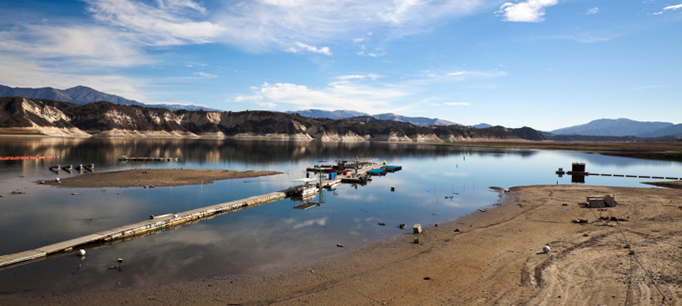
As this discussion shows, the allocation of limited water supplies is not a matter of simple tradeoffs between the environment and humans. Sometimes, water counted toward environmental use gets used again for something else. Other times, there is no practical alternative use (such as in the north coast). Understanding these basic facts is essential to resolving differences over how to manage water in California.

Drought Watch: Putting Some Myths to Rest

This commentary was first published by the Sacramento Bee on July 6, 2014. Drought Watch is a continuing series on the PPIC Blog.

As the effects of the drought worsen, two persistent water myths are complicating the search for solutions. One is that environmental regulation is causing California’s water scarcity. The other is that conservation alone can bring us into balance. Each myth has different advocates. But both hinder the development of effective policies to manage one of the state’s most important natural resources.

Let’s consider the first myth, that water shortages for farms are the result of too much water being left in streams for fish and wildlife.

Continue reading on Sacbee.com.

Videos Highlight Water Finance Event

The drought has focused attention on water supply and highlights the crucial role of funding in supporting our water system, said Ellen Hanak, PPIC senior fellow, at a half-day conference PPIC hosted last week at the Sacramento Convention Center. The conference focused on the issues highlighted in the PPIC report Paying for Water, which pinpoints funding gaps in five key areas of water management. Hanak opened the conference with a presentation of her report, starting with an overview of how California pays for water. She noted that state general obligation bonds make up just a small part of the $30 billion spent annually on the water system.Most funding, about 85 percent, comes from local sources—rates, fees, and taxes. However, legal obstacles make it difficult for local agencies to raise money. Hanak then summarized the areas in which the state is failing to deliver the level of services California residents expect. She closed with a roadmap of recommendations for funding reform.

In the first panel discussion, experts from local water agencies and the governor’s office took up the issue of “fiscal orphans” for which there is no clear revenue stream—areas such as flood control, stormwater, and safe drinking water for small, disadvantaged communities. panelists talked about their challenges and successes in building better integrated systems in these orphan areas.

The second panel tackled a series of tough questions: How can the state partner with local and regional agencies to improve water management? What has the state done well and what can it do differently? Panelists with both state and local perspectives joined this lively discussion.

The third panel considered some of the legal challenges posed by Propositions 218 and 26. Panelists said these constitutional amendments have pushed water authorities to be more transparent in their use of taxpayer funds. But the measures and the courts’ interpretations of them have also made it more difficult to fund water solutions.

Drought Watch: Saving the Fish

This is part of a continuing series on the impact of the drought.

In a recent California WaterBlog post, Peter Moyle of the University of California, Davis—a frequent collaborator on PPIC projects—highlights an issue not much discussed in the context of this drought: we ignore fish and wildlife at our peril. California is home to 122 different species of native fishes, including 32 kinds of salmon and trout. These fishes are part of the unique natural heritage of California and, as Moyle points out, most are on a trajectory toward extinction. A poorly managed drought can hasten this process.

State and federal laws that protect endangered species reflect the high value society places on native biodiversity. The sweeping Delta Reform Act of 2009, passed by bipartisan majorities, went a step further, placing ecosystem health on par with water supply reliability. Above all, history shows that failure to manage fish and wildlife well during a drought can have very expensive long-term consequences for water management once the rains return.

So what, if anything, is being done for fish in this drought?

The short answer is “not much.” Most discussion at both the state and federal levels has focused not on whether to relax environmental standards, but on how much to relax them. In the coming weeks many petitions will be filed with the State Water Resources Control Board for exemptions from water quality and flow standards. The board has already exempted the Central Valley Project and the State Water Project from meeting flow standards for the Sacramento–San Joaquin Delta, which is home to many endangered fishes, including salmon and steelhead. The emergency drought legislation making its way through the state legislature includes significant sums to provide relief to communities hard hit by the drought, but very little to help reduce stress on the environment. On the federal level, the legislation pending in the House would reduce protections for the environment, while the Senate bill—introduced by California’s two U.S. senators—offers little to improve conditions for fish.

Moyle points out that although native fishes adapt well to drought, they are hampered by the many modifications we have made to our rivers, the way we manage water, and our policies regarding fish harvests and hatcheries. He offers some well-known prescriptions for drought management and some novel ideas, including trucking fish to cool water sources and establishing fish triage panels with the authority to allocate water to keep fish alive through a drought. Equally important, his post reminds us that the actions that help the environment most during a drought are those taken long before the drought begins.