In Memoriam: Dave Cogdill

Dave CogdillFormer state senator Dave Cogdill’s death this week at 66 leaves us saddened for his family and friends and appreciative of the many ways he served California as a public servant and policy leader. Among his many efforts to address the state’s various policy challenges, Dave was a valued friend and trusted advisor to PPIC and a respected member of the PPIC Water Policy Center’s advisory council. We will greatly miss his contributions.

Dave served three terms in the state Assembly and was the Senate Republican leader from 2008–09. He also served as commissioner on the California Water Commission, assessor for Stanislaus County, chairman of the Maddy Institute at Fresno State University, and most recently as president and chief executive officer of the California Building Industry Association (CBIA).

Dave wasn’t afraid of taking on tough issues or working across the aisle. In 2010, he was awarded the Profile in Courage Award from the John F. Kennedy Library Foundation for his work on the 2009 California budget crisis. He took on the daunting issue of water with diligence and determination, playing a key role in the passage of a bipartisan package of reforms in 2009 that included the Delta Reform Act, bills to improve water use measurement and efficiency, and a water bond to support various programs, including new water storage.

“Dave negotiated some of California’s biggest water legislation ever, over two administrations,” said Deborah Gonzalez, PPIC’s director of government affairs, who worked with Dave on various policy initiatives over the years. “Water bonds are hard to negotiate under any circumstances, but he carried this one through two different governors and in true bipartisan fashion. He was instrumental in getting it passed.” The water bond that Dave helped craft was ultimately approved by voters in November 2014. Applications for state matching grants for storage projects—a priority for Dave—are due to the California Water Commission this August, with decisions due early in 2018.

At CBIA he took on the challenge of expanding housing supply to meet the needs of a growing state and made a strong effort to ensure that California’s new homes would be as water efficient as possible.

We’re thankful we had the opportunity to work with Dave.

Learn more

Read our interview with Dave on making homes more water efficient.
Read an obituary of Dave Cogdill in the Fresno Bee.
Understanding the New Federal Water Law

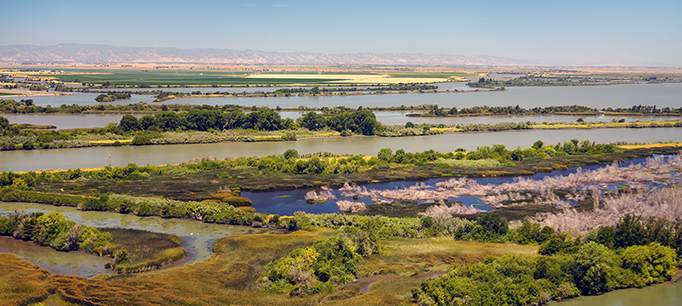
A new law signed by President Obama in December alters federal water policy in the Sacramento–San Joaquin Delta. These changes are complicated, and their likely effects on both future water supply and environmental stewardship are largely unknown.

The legislation is part of the Water Infrastructure Improvements for the Nation Act, which authorizes water-related investments around the United States. It includes funding for an array of projects in California, such as flood protection in the Sacramento Valley, watershed restoration and water quality improvements in the Lake Tahoe Basin, infrastructure for water recycling and desalination, and new surface water supply projects. It also includes funds for new fish hatcheries, acquisitions of water and land to support aquatic habitat, and programs to control invasive species that exacerbate the threats to endangered species. Before these projects can receive these federal dollars, Congress will also have to appropriate funding for them.

The most controversial aspect of the new law is a change in the way federal fisheries agencies must balance water supply for farms and cities with protection of endangered fish species in the Delta—including the Delta smelt and most species of salmon and steelhead. Under the authority of the Endangered Species Act (ESA), these agencies write “biological opinions” about how the projects must operate to minimize harm to ESA-listed species. The biological opinions that currently govern the operation of the federal Central Valley Project (CVP) and California’s State Water Project (SWP) prescribe a flexible range of allowed water exports. The new law requires the agencies to revise several terms of the biological opinions to “provide the maximum quantity of water supplies practicable” to CVP and SWP contractors “without causing additional harm to the protected species.”

Proponents of this change believe that the existing biological opinions require the projects to leave more water in the Delta than the fish need for their survival, especially during periods of high flows. Opponents believe that the legislation will add to the accumulating stresses on the fish and increase their risk of extinction. The actual benefits and risks of the operational changes are difficult to predict.

The amount of additional water the new law will make available to CVP and SWP contractors is uncertain—though it is likely to vary considerably with hydrologic conditions. We estimate that the projects may have been able to export several hundred thousand acre-feet of additional water during high flow periods in 2016—a year with average precipitation. However, it is unlikely that significant additional water would be made available during dry years—such as 2014 and 2015—when water supplies are especially scarce. In such years, most of the uncaptured flows through the Delta are needed to repel salinity and protect the quality of the water that is exported to farms and cities.

The risk of the new legislation to endangered fishes is also unknown. The existing biological opinions allow for flexible responses to account for rapid changes in water flows and temperature, information about fish locations, and new knowledge about how water supply operations affect fish. This flexibility acknowledges the uncertainties inherent in protecting endangered species in a complex and highly variable Delta ecosystem. By removing this flexibility, the new law has the practical effect of removing the margin of error in a complicated and error-prone system.

The latest drought has shown that removing flexibility in how we manage water for vulnerable species can increase the risk of extinction. How the fisheries agencies will strive to maximize water exports while avoiding additional harm to the protected species is an open and vexing question. Much depends on how the new federal administration chooses to interpret and administer the new law. And, as is often the case in California water policy, much depends on the inevitable legal challenges to its implementation.

This post was revised on January 27, 2017.

Learn more

Read a Statement by President Obama on the Water Infrastructure Improvements for the Nation Act
Read California’s Water: The Sacramento-San Joaquin Delta (from the California’s Water briefing kit, October 2016)
Visit the PPIC Water Policy Center’s Delta resource page

Commentary: A Grand Compromise for the Delta


This commentary was published in the Sacramento Bee on December 2, 2016

Conflict over water allocations from the Sacramento-San Joaquin Delta is the most intractable water management problem in California. The sources of contention are many, but three interrelated issues dominate the debate: whether to build two tunnels that divert water from the Sacramento River, how much water to allocate to endangered fish species, and what to do about the 1,100 miles of Delta levees that are essential to the local economy. Here we outline a potential “grand compromise” for the Delta that meets the co-equal goals of water supply reliability and ecosystem health prescribed by the 2009 Delta Reform Act.

Read the full commentary on sacbee.com.

Learn more

Read California’s Water: The Sacramento-San Joaquin Delta (from the California’s Water briefing kit, October 2016)

Visit the PPIC Water Policy Center’s Delta resource page


Solutions for the Delta

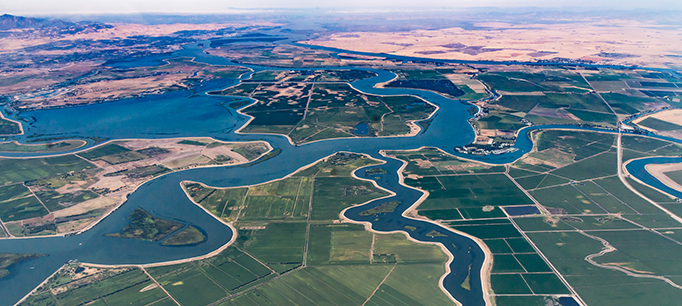
California asks a lot of the Sacramento-San Joaquin Delta. This vast, watery landscape is expected to be the ultimate multitasker—a major source of water for cities and farms, a critical aquatic ecosystem, and a center for recreation and tourism. No wonder it’s showing serious signs of stress.

At the Bay Delta Science Conference last week, experts gathered to present and discuss the science of the Delta’s many difficult challenges.

Speakers focused on ways to make this science more useful for policymakers, linking data and decisions to come up with science-based solutions, and using them as the foundation for stakeholders to find common ground over contentious issues.

Felicia Marcus, the chair of the State Water Board, said more could be done to ensure that decision makers are engaged by the science they’re presented with. For example, she said the policy process would be improved if scientists made their work more accessible and intelligible, and were less reluctant to make recommendations.

Striking a similar note, Phil Isenberg, former chair of the Delta Stewardship Council and a member of PPIC’s board of directors, called for making research actionable by focusing on solutions instead of just defining the problems. Multiple speakers noted that experts who work in teams that include both natural and social scientists are more successful at providing a path forward for policymakers because of their ability to address tradeoffs and find “win-win” scenarios.

Peter Moyle, one of the state’s top scientists on fisheries and the Delta (and a member of the PPIC Water Policy Center research network), said California needs to emphasize solutions that provide flexibility in management. An ecosystem-based plan of action brings such flexibility, which is one reason he recommends focusing restoration efforts on a specific “arc of habitat” in the north Delta.

The event also honored Jeffrey Mount, senior fellow at the PPIC Water Policy Center, who received the Brown-Nichols Award for his scientific contributions to improving the management of the Delta watershed. His decades of contributions go beyond his work here at PPIC. In addition to longstanding engagement in key policy discussions on Delta challenges and California water more generally, he is former chair of the Delta Science Board and a founder of the Center for Watershed Sciences at UC Davis. While at UC Davis, he was also a coauthor on a number of Delta-focused PPIC reports, including Comparing Futures for the Sacramento San Joaquin Delta (2008), and Stress Relief: Prescriptions for a Healthier Delta Ecosystem (2013), which looks at ways to address multiple ecosystem stressors in the Delta while stressing the importance of considering the science, the institutions, the economics, and the law.

Ellen Hanak, director of the PPIC Water Policy Center, said, “This award serves as an example of Jeff’s ability to use science to improve decisions. The community of researchers, analysts, policymakers, and engaged citizens interested in the future of California water and the Sacramento-San Joaquin Delta is fortunate that he has chosen to devote himself to these issues.”

Learn more

Read California’s Water: The Sacramento-San Joaquin Delta (from the California’s Water briefing kit, October 2016)
Watch our short video on the Delta
Visit the PPIC Water Policy Center’s Delta resource page

Video: Congressman Kevin McCarthy in Conversation

The majority leader of the US House of Representatives ticked off the issues in an ambitious agenda that he and Congressman Paul Ryan, the House Speaker, are working on in Congress. Congressman Kevin McCarthy told a Sacramento audience that they include national security, the economy, tax reform, poverty, regulatory reform, innovation in government, and water.

McCarthy shares a sense of urgency with Senator Dianne Feinstein about getting a water bill through Congress this year. But he made clear in his conversation with Mark Baldassare, president and CEO of PPIC, that he and the senator—who spoke to a PPIC audience last month—differ in their policy priorities. His include building more water storage and pumping more water from the Sacramento-San Joaquin River Delta.

McCarthy said he thought a water bill could be passed this year, perhaps in a bill that addresses the water problem in Flint, Michigan.

“I think there’s a window of opportunity,” he said.

When the conversation turned to the presidential race, McCarthy was asked to compare two political outsiders—presidential candidate Donald Trump and former Governor Arnold Schwarzenegger. McCarthy said both tapped frustration in the electorate and both brought new voters to the process.

“When I went to the rallies with Arnold it was amazing,” he said. “There’d be 7,000 people in Bakersfield. Lived there my whole life, but I’d see people I’d never met before.”

Today, he said, “the country feels as though the government is not listening to them, they’re divided on all sides, and they’re just not going to take it anymore.”

“I don’t believe it’s a bad thing at all. I believe it’s good.”

The Great Nutrient Pollution Challenge

The word nutrients sounds like a good thing—they make our food healthy, for example. But in our rivers, lakes, and bays, nutrients can pose water quality challenges. In the right amounts, nutrients such as nitrogen and phosphorus support plant and animal growth in key waterways such as the San Francisco Bay and the Sacramento-San Joaquin Delta. Excess amounts can cause toxic algae blooms and reduced oxygen in the water. Consequences can include die-offs of fish, mammals and birds, and human illness.

The main sources of nutrients in the Bay-Delta are sewage plant discharge and agricultural runoff. Jim Cloern, a USGS scientist and member of PPIC’s water policy research network, has been studying water quality in the Bay-Delta since the late 1970s.

“San Francisco Bay has historically shown resistance to the harmful consequences of nutrient pollution, but in recent decades there are signs this resistance is weakening,” Cloern says. Algae levels in the bay have increased, oxygen levels have declined, and algal toxins and toxin-producing species are sometimes present at levels to cause concern, he notes.

In the Delta, nutrient pollution has contributed to the spread of invasive aquatic plants such as water hyacinth and recurrent blooms of the toxic blue-green alga Microcystis. The role of nutrients in the collapse of many fish species in the Delta has prompted lively debates, but one thing is clear: they are a significant source of stress on California’s struggling native species. Conditions are worsening with the drought, which has reduced freshwater flows into the Bay-Delta and increased temperatures.

There is a growing understanding among wastewater managers and regulators that a new round of investments is needed.

“The Bay Area’s wastewater treatment plants will need to continually adapt to growing water quality challenges, either voluntarily or through regulations,” Cloern says.

One option on the table is increasing levels of treatment, which can be costly. For example, Sacramento’s wastewater treatment plant is undergoing a $2 billion upgrade to reduce the volume of nutrients entering the Delta. Other options can complement or substitute for treatment plant upgrades. For instance, restoring wetlands can filter out nutrients and other pollutants, while also providing valuable habitat and protection from floods.

Another tough question is how to manage agricultural runoff from animal production and fertilizer use in the Central Valley, the main source of nutrients in the Delta. These sources are dispersed, which makes treatment difficult and expensive. Controlling farm pollutants at the source is likely the most cost-effective solution. This will require working with farmers to adjust their practices.

Thankfully, the days when untreated sewage and industrial waste poured directly into the Bay-Delta are long gone. But the next water quality challenge is on the horizon. Climate change will intensify our current challenges, as invasive plants and toxic algae thrive in warmer temperatures. Cloern suggests that we need a nutrient management strategy for the Bay-Delta that “anticipates these future changes so that investments are designed in a thoughtful and scientifically grounded way.”

Learn More

Read California’s Water Quality Challenges (PPIC Water Policy Center fact sheet, October 2015)
Visit the PPIC Water Policy Center water quality resource page

Stressful Times for Drought-Stricken Delta

The SacramentoSan Joaquin Delta is one of the West’s most important estuaries, and a critically important water source for millions of Californians. But decades of water exports and human alterations have transformed this aquatic ecosystem, and a few dozen of its native species have dwindled to the point of extinction. We interviewed Phil Isenberg, vice chair of the Delta Stewardship Council and a member of PPIC’s board of directors, about the state of the Delta.

PPIC: How is the Delta faring these days?

Phil Isenberg: From an environmental perspective there’s not a lot of good news. The Delta is a severely damaged environmental site of great importance, and the damage has continued for more than 100 years. Very little restoration activity has taken place compared to the vast development of water supply infrastructure that has gone on in the past century. More housing is being built in flood-threatened areas, and urban growth continues on the boundaries. Some areas like Stockton are rapidly encroaching on agricultural and environmentally sensitive areas in Delta. The state’s Delta tunnel proposal has a greatly reduced environmental restoration plan—only about 30,000 acres of land will be put in protected status or restored for environmental purposes. It’s not insignificant, but certainly not as positive as the 150,000 acres which was part of the Bay Delta Conservation Plan.

PPIC: What is the role of the Delta Stewardship Council in managing this important resource?

PI: Our mandate is to achieve two equally important goals: to provide a more reliable water supply for California, and to protect, restore, and enhance the Delta ecosystem. It’s the latest legislative attempt to create a legally enforceable governance and management plan for the Delta. The Delta Plan was adopted in 2013; within 30 days we were sued by 27 plaintiffs, ranging from agricultural interests, state and federal water contractors, the city of Stockton, and several environmental groups. Interestingly, no state agencies or counties have sued. Their legal argument seems to be either we went too far or didn’t go far enough—which suggests to me that we may have struck the right balance.

PPIC: What does the latest science tell us about the Delta’s condition?

PI: Besides being severely damaged by human actions over centuries, the Delta has also been damaged by the drought and by the diversion of water for human purposes during drought. Scientists are skeptical about the ability of government or society in general to be able to rapidly improve the environmental condition of the Delta. We have altered the ecosystem in too many ways. We’ve channelized its waters, put in more than a thousand miles of levees, allowed people to move into the floodplain, brought in invasive nonnative species, and allowed pollutants to flow in from industry and agriculture. The best science we’ve received over the years is that the Delta’s environmental troubles can be managed better, but we will not likely be able to save all species in face of these threats. The political process demands immediate action, but science tells us that it will take decades to improve a Delta damaged over the past 160 years. A big part of any real solution is to involve independent scientists in decision-making and then follow their advice.

PPIC: What’s the most difficult tradeoff we’re facing in the Delta?

PI: The biggest problem is the conflict between illusion and reality. Basically, the water supply in California has not expanded since we began keeping track in the late 1880s. Worse, the water supply remains highly volatile. As our society has grown, demands for water have increased; our demands now exceed available water in many years. People have unrealistic expectations that ignore the limits of our supply. Although it is state policy to reduce human reliance on the Delta—and to compensate for that with heavy investments in water conservation, recycling, and the like—a lot of folks want more.

PPIC: What’s your biggest hope or aspiration for the Delta’s future?

PI: The Delta is constantly changing; we can’t freeze it in time. The Delta that existed before extensive human changes cannot be recovered. California hasn’t always done the right thing regarding water, but over time we get it right more often than not. So I hold out a reasonable level of hope for an improved Delta in the future. A successful Delta future for me is one that stops urbanization and protects its environment and the agriculture that remains. Will it work? Ask me in 100 years.

Learn more:

New Strategy, New Challenges for the Delta

Last week, Governor Brown announced a new approach to managing the Sacramento-San Joaquin Delta. For the past eight years the state’s focus has been on the highly controversial Bay Delta Conservation Plan (BDCP). That plan was intended to be a “big fix,” simultaneously improving the health of the troubled Delta ecosystem and the reliability of water supplies for the cities and farms in the Bay Area, Southern California, and the San Joaquin Valley that depend on water exported from the Delta.

The BDCP was intended to meet the 2009 Delta Reform Act’s requirement to manage the Delta for co-equal goals of water supply reliability and ecosystem health. To achieve these goals, the BDCP aimed to restore more than 100,000 acres of habitat and build tunnels underneath the Delta to ship water that now goes through the Delta’s channels to the giant pumps at the Delta’s southern edge. The tunnels would improve the quality of water exports and, importantly, make exports less susceptible to disruption from levee failures. By taking a comprehensive approach to ecosystem restoration, BDCP hoped to receive a 50-year permit for water exports.

But in the end, uncertainty over the benefits of the restoration—particularly in light of a changing climate—made a 50-year permit unacceptable to federal and state regulators.

The governor’s new strategy is to disentangle ecosystem restoration from water supply infrastructure improvement. Under a new program, entitled California Water Fix, the state would proceed as planned with the tunnel project, and with restoration of 2,000 acres of habitat to mitigate the impact of construction. As before, the tunnels would be funded by the water users who use Delta exports.

To improve the health of the Delta, the state will implement California EcoRestore, a scaled-down effort that focuses on completing or improving projects already required by federal regulators to reduce the environmental impacts of water exports. This effort would begin restoring 30,000 acres of high-value habitat in the next three years—an ambitious timeline. The funding for this work is already available—largely from the same water users. (It is worth noting that funding for ecosystem restoration under BDCP had yet to be identified.)

Both Water Fix and EcoRestore face daunting challenges. For Water Fix, financing may become an issue. Under BDCP, the 50-year permits would have provided greater regulatory certainty and thus greater water supply reliability for those who depend on water exports. Reverting to the regulatory status quo—and associated uncertainties—reduces the overall value of the project and may make some water suppliers reluctant to invest.

For EcoRestore, the key challenge lies in meeting the ambitious three-year time frame for initiating restoration projects. Our recent assessment of environmental stressors affecting the Delta found that institutional fragmentation is a major obstacle to improving ecosystem health.

For example, one of the proposed projects that has been in the works for years—restoration of McCormack-Williamson Tract, an island in the northern Delta—will require the acquisition of 10 permits, consultations on 10 statutes, and demonstration of consistency with nine programs under 18 state, federal and local agencies. (An overview of the numerous agencies that need to provide regulatory approval and oversight for Delta projects can be found in Stress Relief: Prescriptions for a Healthier Delta Ecosystem, see Table 4, page 19).) The current timetable for EcoRestore has this project beginning early next year—a tight timeline indeed.

As we’ve described elsewhere, the BDCP’s original habitat restoration goals were likely too ambitious—conditions in the Delta limit the availability of lands likely to have a major impact on ecosystem health. So it is reasonable to scale back from the original plan. But to successfully improve habitat in anywhere near the timeframe proposed, EcoRestore must be accompanied by significant reforms that integrate and streamline management, most notably the permitting process (see our recommendations).

Presumably, these and many other issues will be addressed in the environmental documentation that will be released in June. However, as commonly occurs in management of the Delta, changing course is never easy, and always brings new challenges.

Managing Tough Trade-offs in the Delta

One key source of conflict over the Sacramento–San Joaquin Delta is the competition over who gets to use the water. During droughts, this competition becomes acute, especially when it comes to decisions about how much water flows out to sea versus how much gets exported to cities and farms in the San Joaquin Valley, Southern California, and the Bay Area. New data from the 2014 water year illustrate the tough trade-offs California faces.

Those seeking more exports sometimes perceive the water flowing out of the Delta as “wasted to the sea.” But it is important to remember that these outflows, which are counted as water for the environment, serve two distinct purposes:

1) By pushing back seawater, outflows keep Delta water fresh enough for urban and farm uses.
2) Outflows also support habitat for endangered fish species.

Although the flows in the first category often help fish and wildlife as well, they would be needed to maintain water quality for people even if there were no fish or wildlife to worry about.

We estimate that 11.5 million acre-feet (maf) of surface flows were available within the Delta’s watershed in 2014—it was one of the drier years on record. This total included 9.5 maf from winter and spring rains plus 2 maf that had been stored in reservoirs from previous years. These low flows translated to greatly reduced use of surface water. Cities and farms that divert water upstream of the Delta, along with Delta farmers, used 5.4 maf—well below average. Just 1.9 maf of Delta water was exported, the lowest volume in decades. Water users made up for much of this shortfall by pumping extra groundwater.

Roughly 4.2 maf flowed to the sea last year—a near-record low, but still large relative to Delta exports. The State Water Resources Control Board estimates that the most of this outflow—3 maf, or 71%—was needed to keep Delta water fresh enough for human uses (see figure). In addition, 450,000 acre-feet of water (11%) generated by three storms could have been exported, but Delta export pumps lacked the physical capacity to capture the water.

Meanwhile, the additional 750,000 acre-feet of water that was required for fish habitat—which causes the most heated debate—was just 18 percent of total outflows (and 7% of all surface water in the watershed). Under current regulatory rules, that amount would have been higher, but the water board lowered the requirement by 400,000 acre-feet to ease hardship among people dependent on Delta exports.

Given tight water supplies, there’s little doubt that this additional water flowing from the Delta could have been used for other purposes. But some of the fish species that depend on the Delta are struggling mightily during this drought. Reallocating more water to other uses almost certainly would have caused further environmental harm, and increased the chances of stricter future regulations to protect endangered fish.

The relatively large amount of water flowing out of the Delta to manage its salinity sheds light on new approaches being taken as we enter a fourth dry year. Governor Brown’s latest executive order calls for the erection of “salinity barriers” in the western Delta. These barriers will make it possible to keep the interior Delta water fresh enough to export to farms and cities, with less flowing to the sea. The water savings could also benefit some salmon runs, because more cold water could be saved upstream for release later in the year.

But this approach will also involve new trade-offs, because reductions in Delta outflows are likely to harm delta smelt as well as salmon migrating through the Delta. This is yet another example of the tough decisions water managers are having to make during these exceptionally dry times.

FIGURE SOURCE: State Water Resources Control Board, 2015.

Nine Policy Challenges for California Water

Two bills recently signed by Governor Brown—AB 91 and 92—will provide drought relief and help to enforce prescriptions for reducing water use that were outlined in the governor’s recent executive order. However most of the bills’ funds are allocated to efforts aimed at improving water management in general. Indeed, most of the funding goes to flood management.

These bills are a reminder that while drought is the crisis of the day, the state must grapple with multiple issues to put water policy on a sustainable and constructive path. These issues include improving water quality, restoring degraded ecosystems, finding new funding mechanisms, adapting to climate change, and reducing the risk of floods.

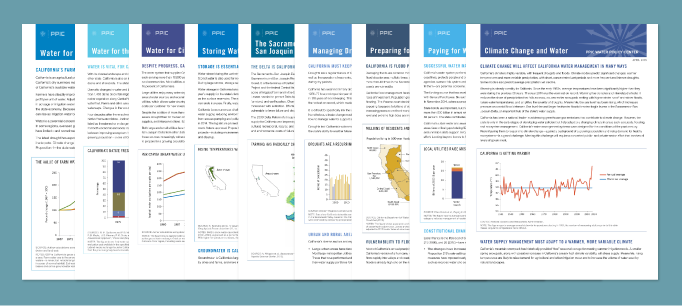
In reality, water management in California is a perpetual work-in-progress—never to be fully resolved. To help inform this process, the newly launched PPIC Water Policy Center has just published California’s Water, a collection of nine short policy briefs. The center’s research network—made up of more than 40 top experts in biology, economics, earth science, engineering, and the law—collaborated to prepare these briefs.

A common theme running through these briefs is California’s tremendous capacity to adapt to changing conditions and tackle new challenges. We hope this collection will be a useful resource for those who wish to become more familiar with California water policy and to join the conversation about solutions.

The nine topics include:

Climate Change and Water. California’s climate is changing, becoming warmer and more variable, while sea level continues to rise. The state is in the early stages of devising water policies to adapt to these changes.

Managing Droughts. The current drought is one of many in the history of the state, with more to come. Reducing harm to cities, farms, and the environment will require creative approaches to improving supply and reducing demand.

Paying for Water. Funding improvements in California’s water management systems has proven difficult, leading to funding gaps of $2-$3 billion annually. Although the recently approved state bond can help, new funding tools are needed to fill critical gaps.

Preparing for Floods. One in five California homes and more than $700 billion in structures are vulnerable to flooding. Reducing flood risk will require improving flood infrastructure while creating incentives to insure existing development against risk and keep new development out of harm’s way.

The Sacramento–San Joaquin Delta. The Delta is the fragile hub of California’s water supply system. The state will need to make strategic decisions about the future of the Delta that consider water supply reliability, ecosystem health, and the Delta economy.

Storing Water. California’s variable climate makes the state very dependent upon storage of water in surface reservoirs and groundwater basins. The state faces big choices in how to increase and manage storage capacity to adapt to a changing climate and shrinking snowpack.

Water for Cities. California’s cities have made considerable progress in managing water resources and reducing per-capita water use. Still, new efforts to reduce demand and to diversify water sources will be needed as the population grows.

Water for the Environment. Forty years after enactment of major environmental laws, California’s freshwater biodiversity is still in decline. Efficient allocation of water for the environment will be one of the biggest water challenges of the 21st century.

Water for Farms. California’s farms are the most productive in the nation, but they are increasingly vulnerable to water shortages. Major changes in groundwater and surface water management, including expanding water markets, will be needed to create a sustainable future for agriculture.