A Momentous Water Year

California was bookended by extreme events last year―from the Southern California mudslides in January to the disastrous wildfires north and south in November, and in between, a bout of record-breaking heat in Los Angeles. These events are all connected to policy challenges that California water managers and decision makers are grappling with—issues that are front and center in our work at the PPIC Water Policy Center.

  • Climate change is bringing multiple climate pressures that affect the state’s water supplies and complicate water management. We assembled a team of 30 experts in climate science, hydrology, ecology, engineering, economics, and law to review the weak points in the state’s water system and recommend actions to build its climate resilience. Our new report―published as Governor Brown’s Global Action Climate Summit kicked off in September―provided an accessible analysis of how climate change will affect droughts and summarized reforms needed to better manage future droughts and adapt the state water system to a more volatile climate. Next up is a research project on how to manage wastewater as the climate changes.
  • Two years of tragic, extreme fires stirred debate on how best to address this growing risk, and productive change is already underway. Our ongoing work has guided the development of significant reforms to improve forest health and reduce wildfire risk. Governor Brown directed state agencies to increase forest management in accordance with some of our recommendations. And a new law reflects a number of our suggested reforms to help headwater landowners better manage their forests. New federal and local policy changes will also help. We’ve begun a deeper dive into the benefits—and beneficiaries—of improved forest management as a next step to identifying durable funding solutions.
  • The San Joaquin Valley―California’s largest agricultural region—faces major challenges in managing its groundwater, a critical drought reserve. Our research on recharging groundwater basins laid out key problems that must be addressed to capture more water for underground storage and described what can be done to advance recharge efforts. Next month we’ll release a comprehensive review of solutions to the San Joaquin Valley’s many water and land management challenges that will help the valley continue on a prosperous path for the next century.
  • We hosted a large public event in November to identify water priorities for the new governor. A group of 16 experts discussed how the Newsom administration can promote water policies and practices that benefit the state’s people, economy, and environment. We also updated and expanded our policy briefing kit, California’s Water, to inform newly elected leaders on key water issues—including a new brief on providing safe drinking water. We look forward to working with the new administration to develop meaningful, lasting, forward-looking water policies.

As we move into our fifth year, the PPIC Water Policy Center looks forward to being part of the effort to find creative and collaborative solutions to California’s most difficult and pressing water challenges. And as always, we thank our supporters who enable this important work.

With best wishes for 2019,

Ellen Hanak

P.S. You can sign up for our weekly blog post. And you can learn more about how to support the center’s work.

Commentary: Peace in California’s Water Wars is Within Grasp

This commentary was published in CALmatters on December 19, 2018.

Dare we say it? The outlines of a truce in California’s unending water battles began to come into focus last week, though not everyone is willing to sign the treaty. The State Water Board adopted the first phase of a far-reaching revision to the Water Quality Control Plan for the Sacramento‒San Joaquin Delta and its watershed.

This is an effort to improve conditions for dwindling populations of endangered native fish such as salmon and steelhead. It also means an increase in water scarcity for farms and cities.

The mere adoption of the plan was significant. But something else happened in the board meeting that may in fact be more important and longer-lasting: state officials presented the framework of a peace treaty for Central Valley water wars.

With support from Governor Jerry Brown and Governor-Elect Gavin Newsom, most of the combatants negotiated the outlines of a comprehensive settlement agreement.

The Natural Resources Agency—including the Department of Water Resources and the Department of Fish and Wildlife—spent countless hours over several years convincing water users to develop a voluntary approach to improve ecosystem conditions for native fishes.

The approach state officials presented to the board would increase flows in rivers and the Delta and make major investments in habitat. And perhaps most important, it would create sustainable funding for these efforts (including fees on water diversions), while improving scientific research on and governance of restoration efforts.

To be clear, a framework was presented, not an actual settlement. But the framework contains commitments of water, habitat restoration and funding.

It also includes timelines for action from water users across the greater Sacramento–San Joaquin River watershed, and a willingness to get this settlement completed by the end of 2019. A few districts—such as the Oakdale, South San Joaquin and Merced Irrigation Districts—balked at the framework and are threatening litigation. But most of the watershed has signed on.

If this settlement is achieved and adopted by the board, it will be a major step forward in water management in the Central Valley. But a lot of work lies ahead. Water and habitat commitments—along with sources of funding—need further negotiation, and a robust governance and science program still needs to be designed. Additionally, many of the non-governmental environmental organizations that were mostly left out of negotiations need to be more involved.

Finally, the federal government can either be a partner or a roadblock to this effort. Federal representatives actively participated in negotiations and helped spur innovative approaches along the way.

But after the State Water Board’s vote, the US Bureau of Reclamation threatened litigation, and the Trump administration is seeking to roll back environmental standards in the Delta. Both actions have the potential to undo the settlements.

Despite these hurdles, there’s reason for optimism that there can be a truce in California’s water wars. What’s clear is that negotiated solutions to water conflicts are fairer and longer-lasting than top-down regulatory solutions or, worse yet, litigated solutions where judges end up trying to manage water.

Incoming Governor Newsom’s support and involvement will be essential to carry this effort to a positive conclusion. It should be a priority for his new administration.

Local Measures Address Water, Fire in the Midterm Elections

The biggest water news from the recent election was the failure of the $8.9 billion statewide water bond, Proposition 3. This was the first time voters have rejected a statewide water bond since 1990. But this wasn’t the only story for water-related measures on Californians’ ballots. The midterms saw 33 local measures go to the voters that addressed issues ranging from flood protection to fire resilience. Here we summarize a few key votes.

In Los Angeles County, Measure W passed. This measure allows the county to collect a parcel tax of 2.5 cents per square foot of impermeable surfaces (such as concrete sidewalks and pavement) to fund rain and stormwater capture and clean-up projects, in addition to projects addressing water quality and groundwater recharge. The measure exempts permeable surfaces from the tax, which could incentivize developers to incorporate more green solutions into development and renovation projects.

In the Bay Area, San Francisco and San Jose both passed local bonds to modernize infrastructure. San Francisco easily passed Measure A, which will issue $425 million in bonds to strengthen the Embarcadero seawall to better withstand earthquakes and rising sea levels. San Jose’s Measure T will allocate $650 million in bonds to repair the city’s aging infrastructure. Although almost half of this bond is dedicated to repaving streets, the measure also includes $85 million for flood protection—a response to the 2017 Coyote Creek flood that caused $100 million in property damage. The bond will fund “green infrastructure” projects in the local floodplain to reduce the risks of future floods and groundwater contamination.

Across the state, the rise in devastating wildfires resulted in nine measures addressing fire protection and intervention services in communities, to be paid for through utility taxes, sales taxes, and parcel taxes. Four of these measures passed, while five failed.

Sonoma County’s newly adopted park and ecosystem restoration bill―Measure M, a one-eighth cent sales tax increase―will collectively fund wildfire prevention, ecosystem restoration, and projects to safeguard water supplies, including rivers and streams. Measure FF passed in Alameda and Contra Costa Counties; it extended an existing parcel tax to fund wildfire prevention and water quality activities on East Bay Regional Park District lands, as well as park maintenance. But voters didn’t approve Measure P in Laguna Beach (Orange County), which proposed a sales tax to pay for wildfire safety measures. It would have funded projects such as undergrounding overhead power lines.

Although the failure of Proposition 3 caught some by surprise, it’s important to remember that state bonds play a relatively minor role in funding California’s water needs. Local revenues—from water and sewer bills to taxes—provide 85% of water funding. The newly passed ballot measures carry on that tradition, with Californians across the state voting to address their communities’ needs and priorities for water, fire safety, and the environment.

Working with California Tribes on Upper Watershed Restoration

“Fish are very important to me, to my family, my culture.”

“It’s surprising how much you rely on traditional foods if you’re in a community like we are. You don’t necessarily realize it until you don’t have it . . . especially salmon.”

“If the water quality got better, rivers and creeks would be much better and it would bring back the fish.”

These are the voices of youth from the Karuk tribe in the Klamath River watershed, as heard in a new video that explores the connections between ecosystem health and tribal well-being. Healthy local waterways and the traditional foods they support are considered irreplaceable by indigenous peoples. A new program is seeking to tap into tribal understanding of natural resources to ensure their voices are being heard and to provide a more expansive approach to how state and tribal programs can align in the management of rivers, fisheries, and forests.

As part of this effort, the state is participating in a series of “forest gatherings,” which bring people working on natural resource issues to local watersheds in events hosted by a tribe from that place. “Place matters,” said Debbie Franco, community and rural affairs advisor in the Governor’s Office of Planning and Research. “Gathering in a watershed with tribal people who have been managing that place for thousands of years is a way to more deeply understand their perspective that forests, fish, water, and food are by nature integrated and connected.”

The gatherings are an opportunity for those in attendance to explore questions such as: How can the traditional land management practices of indigenous peoples inform how we can work better together in managing the land? What ecological ideal should we strive for? How do we connect the work of indigenous peoples with statewide policy discussions?

Each gathering is designed by a team with members from local NGOs, county and US Forest Service representatives, state representatives, and the host tribe. Invitees have included academics, policy experts, local governments, indigenous people, logging interests, and regional and state agencies.

“The idea is to find the people whose relationships are necessary to do good upper watershed management and to bring them together to build relationships and create a voluntary learning environment,” said Franco.

In addition to sharing ideas, participants may find themselves physically connecting with the watershed. An upper watershed gathering this August, for example, had participants rafting the Klamath River with a tribal person and stopping at a tributary along the way to help create better environmental conditions for spawning salmon.

Franco noted that indigenous knowledge can bring new solutions to problems facing watersheds today. “It goes well beyond what we know from our 150 years here. These forest gatherings are bringing more people to the understanding that the answers to our water challenges lie in the connections between us and our natural systems.”

Commentary: A Chance to Solve the Delta Quandary

This commentary was published in CALmatters on November 18, 2018.

It is imperative to improve the health of the greater Delta watershed, a major source of water for cities and farms across the state. And various stakeholders have a chance to achieve that goal in the coming weeks while protecting important economic interests. A delay in setting new water quality standards for the San Joaquin River will give time to develop voluntary agreements regarding the amount of water to be allocated to protect fish.

Read the full commentary on calmatters.org

A Water Budget for the Environment

California’s freshwater ecosystems—and many native species that rely on them—are in decline and becoming increasingly vulnerable to drought. Allocating water to these ecosystems is contentious because it often conflicts with urban and agricultural uses. There may be a way to meet environmental needs that reduces conflict.

My recent presentation before the Delta Science Program outlined an alternative approach to managing water for the environment that is detailed in a 2017 PPIC report. 

Currently, state and federal regulators rely heavily on minimum flow and water quality standards to protect the environment. These flows are often set to meet the needs of one or more endangered species. This approach has failed to reverse the decline in native species and their ecosystems for many reasons—simply bumping up minimum flows is unlikely to improve conditions.

Instead, our report recommends establishing ecosystem water budgets. These budgets would specify a volume of water to be made available to support a range of ecosystem functions to which native species are adapted. The amounts would vary in accordance with the type of water year (e.g., wet, average, dry) but each amount would be fixed for a number of years. The volume to start with would be the water currently allocated to meet minimum flow and water quality standards. Mechanisms would be needed to increase this volume where necessary through purchases or leases.

To be effective, the budget should be flexibly managed, much like a water right—preferably by an ecosystem trustee vested with the authority to trade and store water. These budgets would focus on improving overall ecosystem conditions rather than protecting individual species.

Ecosystem water budgets are a better approach for three reasons. First, the flexible allocation of water allows environmental managers to use water more efficiently by responding to changing conditions (such as droughts, storms, and heatwaves) and delivering water to habitat in areas that are likely to have the highest ecological benefit.

Second, having a budget that can be flexibly managed makes the environment a partner in water management, not just a constraint. The ecosystem trustee would sit at the table with water managers and participate in the trading, storage, and planning that goes on in a watershed.

Finally, a budget with a set term makes the amount of water that will be allocated to the environment clear to all water users. This addresses one of the most common complaints about environmental water management: urban and agricultural users face uncertainty over regulatory actions that transfer water from economic to environmental uses.

Ecosystem water budgets would be an advance over traditional minimum flow and water quality standards, but they are unlikely to succeed without major improvements in both ecosystem planning and water accounting. Robust, watershed-scale plans are needed to set budget objectives and priorities for action. We recommend annual watering plans—vetted with local stakeholders—that preview actions to be taken every year, depending on hydrologic conditions. Equally important, California must improve accounting for water use and availability, because it’s not possible to manage what you don’t measure.

The current approach to freshwater ecosystem management is not working for anyone. The three reforms described here—ecosystem water budgets, ecosystem plans, and improved accounting—are likely to produce better outcomes for native species and result in more efficient use of environmental water. They also have the potential to increase certainty about environmental water allocation and reduce controversy. Making the environment a partner in water management is a novel, effective way to address one of the big challenges in California water.

Managing Forests to Reduce Wildfire Risks

California’s record-breaking fires have prompted a serious public discussion on how to reduce the risk of extreme wildfires. At the core of the debate is the role of vegetation management to reduce fuels. Some argue that California is not doing enough to manage its forests and that more trees must be removed. Others are concerned that this approach could result in a weakening of important environmental protections.

Both perspectives are grounded in real concerns. That said, Californians need to find common ground, because the state is in the grip of a crisis fueled by a warming climate, drought, and decades of management practices that have resulted in extensive areas of unhealthy, overly dense forests. Identifying overlapping objectives can help move stakeholders beyond conflict toward ecologically sound forest management. Here are a few observations that might help advance the conversation.

  • There are no one-size-fits-all solutions. Devastating wildfires have occurred recently in oak woodlands, scrub and chaparral, and mixed-conifer forest. Fuel reduction tools like prescribed burning and mechanical thinning may reduce wildfire threats in some ecosystems but not others, depending in part on land use practices and the frequency of fire before and after people began changing the landscape. Improving public understanding about the applicability of each approach can help move the debate forward.
  • Where fuel reduction is a viable tool, we aren’t doing enough. It has been estimated that fuel reduction on US Forest Service (USFS) lands in the Sierra Nevada would need to increase two- to six-fold to meaningfully improve forest resilience. Cal Fire (the state’s fire protection and forest management department) and USFS have both pledged to dramatically increase the amount of fuel reduction over the next few years. First priority should be given to locations where all parties can agree on management actions.
  • Mechanical thinning and logging serve different purposes. Both approaches can reduce fire risk in the Sierra’s mixed-conifer forests, and both usually require heavy equipment, access roads, and expertise in forest dynamics. But they are different in intent and design. Mechanical thinning is a forest management tool for selectively reducing forest vegetation—including small trees, shrubs, and groundcover―that can fuel dangerous fires. It is designed to retain large fire-resistant trees and to create a mosaic of trees and openings as was once common. By contrast, most commercial logging operations are more like crop farming: they aim to harvest enough trees to maximize net returns while stewarding the land for future harvests. These approaches leave very different looking forests. The costs and benefits of each approach should be at the center of discussions about which to use where.
  • Expanding forest management doesn’t require dropping environmental protections. State and federal laws require evaluations of the impact of proposed forest management projects on air, water, and sensitive species. These projects can be accomplished under current rules, but it costs time and money. Dedicating additional federal resources to environmental compliance will enable an increase in the pace of management in national forests. Small private forest owners need help negotiating the permitting process.

California’s pioneering efforts to address climate change won’t solve the wildfire problems we face today. Forest management can have an immediate impact, and it can be implemented under existing environmental laws. Defining a common set of long-term objectives and working together to increase trust and transparency can help stakeholders and forest managers move past conflict to reconciliation on this critical issue.

How Wildfires Affect California’s Water Supply

Summer marks the traditional beginning of California’s fire season, although the warming climate has stretched the season considerably. Until the winter rains arrive, wildfires will burn forests and grasslands throughout the state. Since January 1, about 3,700 fires have consumed more than 111,000 acres of land—outpacing 2017, the most destructive and deadly fire season in state history.

While public safety and economic costs deserve and receive a great deal of attention, wildfires also have consequences for the management of water—including the amount and quality of supply, and the potential for flooding.

Fire can bring short-term water supply benefits by increasing runoff for downstream use. Most precipitation that falls on hillsides is captured by plants and soils and sent back into the atmosphere. By removing vegetation and reducing the ability of soils to hold water, most burns lead to an increase in runoff. The amount of increase depends on the type of vegetation that is burned. In Sierra conifer forests, reducing tree cover by about 40% may result in a 9% increase in water yield. Conversely, burning grasslands leads to negligible increases in water supply.

Managing forests with mechanical thinning and prescribed burning simulates the effects of low- and moderate-severity wildfire—creating opportunities to improve forest health while increasing water supply. But before concluding that forest fires and active management can reliably increase water supply, it’s worth noting that increases in water can be short-lived as vegetation rapidly grows back. And in drier forests like those of the southern Sierra Nevada, most downstream users are unlikely to see increased yields.

Wildfire can also bring some serious water management challenges.

Intense fires remove vegetation that prevents excessive erosion. Soils burned at high severity can also lose the ability to absorb water for a few years after a burn. When rain falls on these fire-ravaged slopes, the fast-moving runoff can erode soils and ash, transporting them into rivers. These flows threaten drinking-water quality and fill water supply and hydropower reservoirs with sediment. Following a series of severe wildfires in the American River headwaters, Placer County Water Agency experienced significant damage to its water supply and hydropower infrastructure, including costly impacts from increasing sediment and debris. The agency is now working with multiple partners to reduce wildfire risk above two reservoirs using prescribed burning and mechanical thinning.

The damaged soils and loss of vegetation following a severe burn can also increase the threat of downstream flooding and landslides. In some cases, these slides can become “debris flows”—fast-moving rivers of mud, rock, and other materials that can take out everything in their path. These are one of the most dangerous types of flash floods in California. The most recent and deadly example of this was in Montecito following the December 2017 Thomas Fire (the largest fire by area in state history). In early January 2018, record-high rainfall fell on the fire-scarred slopes above Montecito. The resulting debris flows killed 23 people and damaged or destroyed 400 homes.

Experts are predicting another year of intense wildfire activity. Water managers in affected regions will need to address the impacts of fire on local water supply and flood hazards, and must also account for such impacts in future planning.

Remaking Flood Management to Support Salmon

California’s aquatic ecosystems and the species that depend on them are in trouble. Dramatic changes in water and land use over the past 150 years have transformed the state’s freshwater landscape, and the latest drought brought additional stress. We talked with Lewis Bair, general manager of Reclamation District No. 108, about where we need to go from here.

PPIC: What needs to change to reverse the crisis in the state’s aquatic ecosystems?

Lewis Bair: California’s water infrastructure was designed to manage floods and provide water for crops, and when it was built we didn’t really understand how this system might affect fish and other species. Now we know that the state’s flood management system cuts off rivers from their floodplains, which provide important habitat for aquatic creatures. We’re starving our ecosystem. We’ve removed 90% of the floodplains and lost 80% of the fish.

There used to be 25 salmon canneries on the Sacramento River. Between 1910 and 1930 the canneries lost 80% of their harvest. California hadn’t yet built its big reservoirs when this happened, but we had completely separated rivers from their floodplains, which were the main source of food for the fish. There are plenty of challenges for struggling species in California, but the floodplain issue is one we haven’t addressed and I think it could make a significant difference, especially for salmon.

Going forward, we need a fundamental change in our mindset, from the current focus on regulatory or mitigation approaches for habitat work to an emphasis on recovery. We need to get steady funding for recovery efforts and build the relationships required to be successful. That requires a lot of big changes—and also requires people to get out of their silos. We need better-coordinated science. And we need to review what we’ve learned and build on it.

PPIC: What does the condition of California’s salmon tell us about what is happening in aquatic ecosystems?

LB: Salmon are struggling, and it’s not a surprise. But there are things we can do to help. I’ve been fortunate enough to work on projects to restore parts of the floodplain to help salmon in the Sacramento Valley. There’s no question that floodplain restoration is the most important thing we can do for salmon right now. Our current flood management system tries to drain land quickly, but salmon and other creatures need the water to say in place awhile. The natural floodplain used to spread flood waters over a few weeks. Now the water comes and goes in just a few days. We’re working on a project that spreads water out and allows “fish food” to grow. You need 3‒4 weeks for that process to be really productive.

These floodplain efforts take place during winter, an off season for farming, which makes it a complementary practice to farming. The fish are essentially a third crop for these lands—rice is grown in summer, and the flooded rice fields support waterfowl in fall and winter.

PPIC: What’s needed to take recovery to the next level?

LB: We’re working with some environmental NGOs now to draft ideas on how to modernize the state’s water infrastructure to improve water for ecosystems. I truly believe that we have broad agreement on at least 90% of what is needed for our environment. Instead of arguing about the 10% where we don’t agree, we need to get the 90% done. The state may need something like a resources department with the authority and vision to oversee multiple agencies. The governor’s EcoRestore program for the Delta is one model for providing that leadership. Success will depend on having the locals and NGOs in key roles on the ground.

I’m very excited about the direction things are going right now. We have great NGO partners wanting to get past the perception that water users are the bad guys―now it’s all about how to move forward as partners.

Watch a panel discussion on partnerships for healthy ecosystems (with Lewis Bair)

A Path to Progress for the Salton Sea

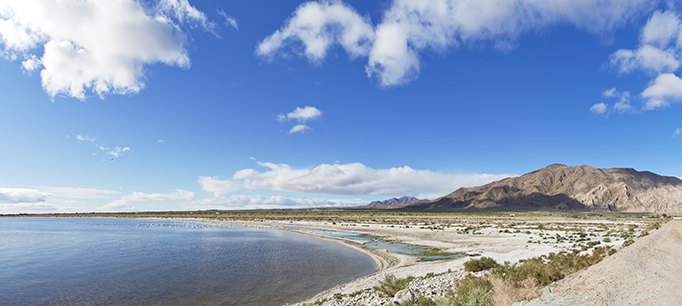
The Salton Sea—created by a break in a Colorado River irrigation canal more than a century ago and for decades dependent on irrigation runoff for sustenance—has a water problem. The already-shrinking desert lake used to receive a temporary water supply as part of a Colorado River water trading agreement that sent some irrigation water to Southern California cities. But this temporary supply was cut off at the end of 2017, which has worsened environmental and health problems caused by the sea’s declining water levels.

We talked to Kurt Schwabe—a professor at UC Riverside and an adjunct fellow of the PPIC Water Policy Center—about possible solutions. Schwabe helped organize a recent symposium on the sea that explored impacts on local communities, new research, and policy solutions.

PPIC: Why does the Salton Sea need more water right now?

Kurt Schwabe: In 2003 the State Water Board allocated water to temporarily manage the dust and ecosystem problems associated with the shrinking sea. The board set a deadline of 15 years for the state and the parties in the water trading agreement to develop a plan to address these impacts. Although the state is behind in implementing solutions, the water allocation cutoff wasn’t postponed, and now the sea is shrinking at a faster pace. The increase in dust has a direct impact on respiratory illnesses and life expectancy in the region, which raises equity issues.

Another problem is that water salinity is increasing as the sea shrinks. Time is running out for the wildlife the sea supports. As explained by researchers at the symposium, fish populations have crashed and won’t recover, thereby resulting in the loss of birds that depend on the fish. We may see new populations of birds that eat brine flies, yet without an effective management plan those birds will last only about a decade until the sea becomes too salty even for brine flies. In a nutshell, the ecosystem doesn’t have 10 years for us to find a solution. More water and less saline water―similar to the water allocation provided from 2003 to 2017―would slow the decline and buy the state time to further develop or implement solutions.

So it’s time to come up with quick and cost-effective ways to mitigate the problems. Recent passage of Proposition 68 will provide around $200 million to support construction costs in the state’s 10-year plan, but this plan is a short-term and imperfect fix. There’s growing interest in finding ways to import water from elsewhere―but that could take a decade or so to implement, is extremely costly, and does not address the worsening public health and environmental impacts happening now. An obvious near-term solution would be to extend the allocation of water to the sea until the actual rollout of the management plan. It’s a reasonable and quick fix: the conveyance to move water is already in place, it’s a tried and true solution, and it’s very cost-effective.

PPIC: What role could a water market play in managing the sea’s problems?

KS: Water markets could be a longer-term fix to replace the temporary water allocation, and would allow growers to make choices about how to best get needed water to the sea. A market would let farmers choose how best to free up that water—either by installing more efficient irrigation, shifting to less water-needy crops, fallowing land, or some combination of these. From a technical standpoint, a water market could be implemented almost immediately.

PPIC: What are the key stumbling blocks to getting more water to the sea quickly?

KS: The stumbling blocks are mostly political. Water transfer schemes have been used in the region for more than 20 years and typically involve Southern California municipal water agencies leasing water from irrigation districts in Imperial County. This isn’t to say that getting such a fix approved is an easy task, since the politics surrounding California water are notoriously challenging. Yet I would argue that the dire and worsening human health consequences being borne every day by local communities near the sea justify urgent action.