The Myth of Water Wasted to the Sea

A common lament is that water is wasted when it flows out to the sea rather than put to use irrigating crops or supplying water to cities. But when rivers flow to the sea the water brings benefits to people and ecosystems that are rarely acknowledged. We asked Jim Cloern―a scientist with the US Geological Survey and a member of the PPIC Water Policy Center research network—to explain.

photo of jim cloern

PPIC: What are some benefits that river’s provide when they make it to the sea?

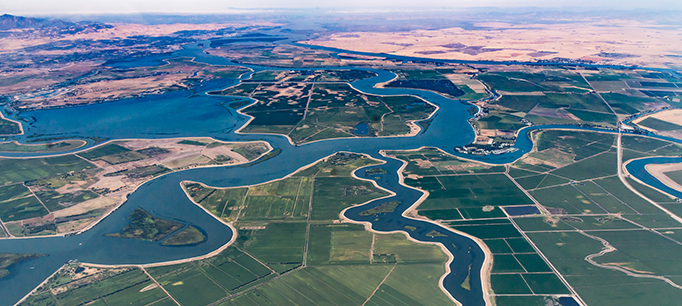
Jim Cloern: Runoff from rivers brings many benefits to coastal communities, the Delta, and wetlands. For example, if you live in or around the Delta, river flows repel saltwater moving upstream. If the flow is too low, water in the Delta becomes too salty for growing crops or drinking.

Rivers also carry sediment, which is really important to the San Francisco Bay ecosystem, especially for sustaining tidal flats and marshes. We’ve invested hundreds of millions of dollars to convert salt ponds back to wetlands. Collectively, the restoration of wetlands in the Bay Delta is the largest such effort west of Rockies. We’ve breeched levees and seen these areas become colonized by wetland plants and transformed into habitats for birds and fish. The soils that form the base for these habitats have a natural inclination to sink and need continuous replenishment. Rivers also carry sand beyond the bay to the ocean, which is essential to keep California’s beaches intact. Without river sediment our beaches would disappear from natural erosion.

A third benefit is to the Bay-Delta. San Francisco Bay is an estuary that sustains plant and animal communities not found in other ecosystems. These communities are an important part of California’s remarkable biodiversity. We’ve learned from other estuaries around the world that these communities can disappear if river inflow falls below levels required to sustain them.

River flows also flush pollutants out of the bay. San Francisco Bay has been called an urbanized estuary. Sewage effluents, industries, and urban runoff carry nutrients, toxic pollutants, pharmaceuticals, and micro-plastics into the bay. Large river flows like we’ve seen this year dilute and carry those contaminants out of the bay.

PPIC: What might happen if more water is diverted from flowing to the sea?

JC: The essential question for managing the Delta is, what is an appropriate amount to divert? It’s question #1 for the State Water Board. If we divert more, particularly during dry periods, we run the risk of increasing salinity of the Delta and the bay. The bay could become saltier than the ocean—this happened in the 1976–77 drought. A hypersaline bay would affect what kinds of organisms could live in it, including microorganisms―the largest component of life in the bay. We don’t know a lot about them, but we do know that some microorganisms provide really valuable services to us. For example, bacteria in bay sediments convert nitrogen from agricultural runoff and sewage into nitrogen gas, removing an important pollutant out of the water. This process is used in some sewage treatment plants. We don’t know how increased salinity would affect these “pollutant scrubbers.”

We also have to think in terms of how higher temperatures in a warming world would interact with lower flows. This combination, coupled with nutrient pollution, could be a perfect storm for generating harmful algal blooms. We also need to consider the potential loss of new wetlands we have invested so much to restore―they might not be sustainable if river sediment flows are reduced at a time when seas are rising. And how might the function of the bay as nursery habitat for species such as Dungeness crab and English sole change? What would be the effect on the livelihoods of those who fish these species? These are big issues to consider. They also remind us that there are many downstream benefits of fresh water flowing from the Delta into San Francisco Bay.

Water Law Aided Ecosystems in Drought

California’s latest drought may be over, but its effects live on. The 2012–16 drought included the driest four-year period since record-keeping began in 1895 and the two warmest years in state history. This combination triggered numerous unhappy milestones in California, especially for the state’s natural environment.

Although urban and agricultural water users incurred significant surface water shortages, in many respects they responded to the drought with great resiliency. The urban economy remained robust, even as residents and businesses responded to calls to save water. Farmers adapted by improving water efficiency, shifting to higher value crops and increasing their use of groundwater.

The environment was not as resilient, and the drought presented a potential calamity for aquatic ecosystems and the fish and wildlife that inhabit them. These ecosystems were strained well before the drought began. In 2010, 82 percent of California’s native fish were either extinct (5%), listed as endangered (24%), or classified by biologists as vulnerable (53%). The recent closure of the commercial salmon fishery off the Northern California coast illustrates the ongoing effects of the drought on fish, despite recent record-setting precipitation.

As ecological stresses increase during drought, aquatic species depend almost entirely on the array of laws and regulations that protect water quality and stream flows. Yet these legal protections can spark considerable controversy when they restrict water for cities and farms.

We worked with a team of students in the Stanford Law School to learn how the laws that are designed to protect California’s aquatic environment functioned during this drought. The project was part of an ongoing study of drought and the environment conducted by the PPIC Water Policy Center.

The team produced four case studies that evaluated several watersheds—the Russian River; the Stanislaus River; the Yuba River; and Deer, Mill, and Antelope Creeks (in one case study). These watersheds presented a mix of challenges involving water rights, regulations, and water management. The students reviewed how various parties—including state and federal regulators, water managers, and communities—fared in providing water to meet vital environmental needs. The goal was to learn how California can improve its environmental water management for future droughts.

These case studies provide remarkable lessons. In each watershed, the parties faced the reality that there was simply not enough water to go around. Yet in some cases, they were able to both provide water for the environment and meet water supply objectives.

Their successes and failures illustrate a number of crucial lessons:

  • Planning for drought makes a significant difference in protecting water quality, stream flows, temperature, and aquatic habitat. All of the case studies illustrate this to some extent, but perhaps the best example is the planning on the Yuba River, where an agreement negotiated over many years among competing interests in the basin―farmers, fishers, agencies, tribes, and others―played a critical role in facilitating cooperation during the drought.
  • Clear “minimum flow” targets for rivers can foster collaborative deal making. On the Yuba River, for example, the State Water Board mandated minimum flows to protect endangered salmon. Farmers and others concerned about possible restrictions on their water use came up with a collaborative settlement that protected fish but also eased some elements of the mandate.
  • Good data on river flows and water usage is vitally important. In particular, lack of specific and reliable data on water use in the Russian River watershed triggered a rush to collect information and hampered decision making.
  • Water transfers have considerable potential to enhance stream flows and reduce the economic impact of water shortages during drought. On both the Stanislaus and Yuba Rivers, water transfers to downstream users helped supplement supplies, provide revenue to upstream water users, and augment stream flows.

The case studies illustrate these lessons and numerous others in specific contexts, but their lessons are of broad applicability. We hope each of them will inform planning and decision making that can better prepare the state’s ecosystems for the next drought.

Better Information Can Help the Environment

We know that California’s aquatic species are at risk from a host of stressors and that drought pushes them closer to the brink. Yet there are significant gaps in our understanding of key factors affecting ecosystem health that make it difficult to effectively manage water for the natural environment. Good practices from other dry places offer lessons for protecting our struggling species and improving conditions in troubled ecosystems.

Water accounting―tracking how much is there, who has claims to it, and what is actually being “spent”―can provide a clearer picture of how and when to allocate water for the environment. Other states have improved their water information systems and reduced environmental problems.

For example, the Colorado Water Conservation Board has a network of high-tech stream gages to monitor freshwater ecosystems. These gages send text or email alerts to state environmental water managers within minutes of approaching low-flow conditions. Staff can respond quickly by requesting an evaluation of priority water needs among local water users and, where possible, shifting water to meet environmental needs.

By comparison, California lacks stream gages on half of the rivers and streams that support critical habitats. This makes active management of environmental water during droughts very difficult, if not impossible, in many parts of the state.

Better accounting can also help us prepare for drought, rather than just respond to it. Making better use of water during average and wet years can stabilize or enhance at-risk ecosystems. This increases their resilience to drought.

For example, drought-prone Victoria, Australia, uses sophisticated water accounting tools to coordinate environmental flows for all types of water years. Victoria also collects and organizes information on a number of critical ecological indicators for thousands of miles of streams and wetlands. This inventory informs Victoria’s short- and long-term decision making about where and when water will be most beneficial to ecosystems and thus helps build drought resilience.

California has a significant body of research on freshwater ecological indicators, but the information isn’t organized in ways that make it readily useful to environmental water managers.

Managing water for the environment is more than a technical challenge. It’s a social process that relies on complex decisions made by water users, regulators, and other stakeholders. Examples from other arid regions suggest that this social process is improved by having access to accurate and timely information. Strengthening water accounting in California is key to improving our ability to manage water for the environment and building the social license necessary to act. Before the next drought pushes more freshwater species to the brink, we would be wise to follow the lead of other semi-arid regions and invest in accounting systems that improve our understanding and management of our rivers and streams.

Learn more

Read the report Accounting for California’s Water (July 2016)
Read “Three Lessons on Water Accounting for California” (PPIC Blog, August 8, 2016)
Visit the PPIC Water Policy Center

Commentary: What Did We Learn from the Drought?


This commentary was published in the Sacramento Bee on April 13, 2017.

Governor Jerry Brown has declared the drought over. What did we learn over five years of drought that that could help us better manage the next one? The drought brought some hard lessons and gave us a glimpse into a challenging future. Record warm temperatures—comparable to those predicted by many climate scientists for later this century—made drought management harder. Improving drought resilience in this increasingly challenging climate will require a number of policy improvements. These six policy changes could help.

Read the full commentary on sacbee.com.

Wetlands at Risk from Federal Rule Change

The federal government’s Clean Water Act includes dozens of regulations to reduce water pollution. But it doesn’t include a clear definition of what types of water systems it covers. The Trump administration recently ordered federal agencies to begin the formal process to repeal an Obama-era rule—called the Waters of the United States rule. We asked Richard Frank, an expert in California environmental law and a member of the PPIC Water Policy Center research network, what President Trump’s executive order could mean for wetlands in California and beyond.

PPIC: What was the purpose of the Waters of the United States rule?

Richard Frank: It was intended to fix ambiguity in the Clean Water Act relating to federal jurisdiction over wetlands and water pollution control. In recent years it was left up to the courts to figure out if a specific waterway was covered. There’s wide agreement that this kind of case-by-case litigation is an uneconomic and inefficient way to address the problem—going all the way to the US Supreme Court.

PPIC: What aspects of the rule are controversial?

RF: From the time the Clean Water Act was enacted in 1972, the issue of what is a wetland has been far and away its most controversial aspect. For many years the agricultural community, developers, and business interests have complained that the Environmental Protection Agency (EPA) and the US Army Corps of Engineers, which jointly administer the wetlands provisions of the Clean Water Act, have been excessive in their assertion of jurisdiction over wetlands. It’s a Goldilocks situation: farmers and developers thought the agencies were too bold. Environmental interests complained they weren’t robust enough in interpreting what a wetlands is. The statute doesn’t provide a lot of help—it’s based on a terribly imprecise definition.

PPIC: What will happen next?

RF: The president directed EPA and the Corps to withdraw the Waters of the United States rule, which had not yet gone into effect. The tougher question is will it be repealed or replaced, presumably by a narrower definition of wetlands? In the meantime, there will be no regulatory guidance at all for at least a year or two. From a public policy perspective this is the worst possible outcome—we’re left with an ad hoc process that is time consuming, expensive, and unpredictable in its outcome.

PPIC: How does this affect California?

RF: The rule would have provided greater protection for California wetlands. Some might argue that the cow’s already out of barn, since the state has already lost 90% of its historic wetlands and 95% of its coastal wetlands. For the next couple of years, at least, that additional protection for our remaining wetlands is removed, unless the state steps up in some way.

In the meantime, I’m confident that the wetlands protection provisions of the federal Clean Water Act will remain the most controversial and heavily litigated provision of this bedrock environmental law for the foreseeable future.

The good news is that the state already has broader authority than do federal regulators. California actually has the power to regulate wetlands more broadly than the federal government. But despite having a strong clean water law of its own, California currently lacks a comprehensive state system of wetlands regulations that could fill the current regulatory gap left by the president’s repeal of this rule. I hope and expect that the State and Regional Water Boards will fill this regulatory vacuum in the near future.

The Clean Water Act’s wetlands protection program has had another important effect over the past 45 years: it has raised public awareness about the many positive societal values wetlands have, from providing increased flood protection and cleaner water to providing essential wildlife habitat.

Learn more

Read “A State of Water Independence” (PPIC Blog, January 4, 2017)
Visit the PPIC Water Policy Center’s ecosystems resource page

Remaking the Salton Sea

The Salton Sea—California’s largest lake—faces an environmental crisis. The already-shrinking desert lake will receive less water starting next year, which will accelerate the exposure of toxic dust along its shore, increase its already high salinity, and reduce a food source and habitat for hundreds of bird species that rely on the lake.

The sea, which was created by a break in a Colorado River irrigation canal in the 1900s, for decades relied on irrigation runoff from local farms for sustenance. In recent years, the sea received a temporary water source arranged as part of a Colorado River water trading agreement that is sending some irrigation water to cities on the Southern California coast. But these temporary flows are slated to end in January 2018, after which inflows to the lake will decline.

Various proposals to restore the sea over the years were deemed too costly (both in dollars and water). Now, a recently released 10-year plan by the state proposes to address both dust and habitat problems for a price tag of $383 million—down from earlier, longer term restoration plans that were projected to cost as much as $9 billion. The plan will include farm runoff to the sea through a new canal and new bird habitat areas.

We talked to two experts who have a long involvement in trying to resolve this complex water challenge: Fran Spivy-Weber, who as former vice chair of the State Water Resources Control Board was involved in multiple programs to address the sea’s problems, and Lester Snow, who has worked on the sea for more than a decade in his various capacities in the state’s water agencies and most recently on behalf of the Water Foundation. Both are members of the PPIC Water Policy Center’s advisory council.

“For so long, nothing was done. Now there’s a realistic plan that can help guide expenditures,” Spivy-Weber said. “It’s not a gold-plated plan. The state is trying to create something that does the job as cost effectively as possible.”

Dust has been “a sleeping giant of a problem that brings serious public health risks,” Snow said. The region has some of the highest asthma-hospitalization rates in the state, and dust from the sea has worsened already bad air quality. “I believe the lake’s dust problem is now getting the attention it needs, with a number of legislators now focusing on it.”

The plan is to build thousands of acres of shallow ponds to cover the dust-prone exposed shore; these will double as wildlife habitat. In other areas, hillocks will be built to stop blowing dust—an approach that has worked at Owens Lake, which dried up from overuse after its source was diverted to Los Angeles.

Because California has lost nearly all of its riparian and wetland habitat over the past century, the Salton Sea is now a critically important stop for birds migrating on the Pacific Flyway. “Many species of birds adopted the sea as a critical part of their migration path, so maintaining its habitat functions is important,” Snow said. More than 400 species rely on the lake, some of them endangered.

The state plan has a 10-year scope, which Spivy-Weber noted will make it more adaptable to changing conditions. “If you tried to do a long-range plan you’d probably have to change it at 10 years anyway,” she said. “Let’s get started and show some real progress, and start to think about how to address things like how quickly the sea is receding, how the cost of water is changing, and what we want to do about developing the large geothermal resources in the region.”

Spivy-Weber said the plan’s success depends on sustained interest from Sacramento. “We’ll need the next administration to be as interested and as flexible as this one has been in implementing plans and appropriating money. It’s also incredibly important that the legislature makes the Salton Sea as a priority and ensures that some funds go into projects for the sea every year.”

The multi-state commitment to improve management of the Colorado River brings momentum to the effort. Arresting the sea’s decline is tied to an agreement on sharing the river’s over-allocated waters. “We need to bring rational water management to the Colorado River, and live within our means,” Snow said. “The Salton Sea is a linchpin to our sustainable management of this important resource.”

Learn more

Read recommendations from the state’s Salton Sea Task Force
Read California’s Water: The Colorado River (from the California’s Water briefing kit, October 2016)

A State of Water Independence

The presidential election has raised questions about how changes in federal environmental policy could affect California’s water resources management. Concerns include the potential loosening of endangered species protections and changes to federal regulatory jurisdiction under the Clean Water Act. These questions are especially pronounced in California, where the United States is both an environmental regulator and operator of several of the state’s largest water projects.

While there are areas of uncertainty, California’s water rights and environmental laws are both robust and comprehensive, and thus will provide something of a firewall to changes in federal policy. Although many of these laws apply in tandem with their federal counterparts, California’s laws are also largely independent of federal environmental standards. Here are a few examples.

Reasonable use and the public trust: The California Constitution’s “reasonable use” requirement and the state’s public trust doctrine recognize a strong and continuing public interest in protecting the ecological integrity of the state’s waters. In 2009, the California Legislature declared that these principles “shall be the foundation of state water management policy.”

Water rights: The State Water Board has permitting authority over a majority of surface water rights, including those for the federal Central Valley Project (CVP) and California’s own State Water Project (SWP). These projects supply water to more than 25 million residents and businesses across the state and to almost four million acres of farmland in the Central Valley. Permit conditions require the projects to release water from reservoirs and to limit pumping from the Delta to protect water quality, fish and wildlife, and other instream uses throughout the Sacramento–San Joaquin Delta ecosystem.

Federal law directs the US Bureau of Reclamation to operate the CVP in compliance with all requirements of California law, including conditions in its water rights permits. This is an important mandate because CVP operations are coordinated with the SWP, and the two projects’ water supply and environmental stewardship functions must be synchronized.

The bureau also controls the distribution of water diverted from the Colorado River for agricultural and urban uses in Southern California. Although federal law generally governs, the State Water Board has significant authority over the use of this water through its constitutional authority to prevent waste and unreasonable use.

Water quality: The State Water Board and the nine Regional Water Quality Control Boards also set water quality standards and issue permits governing discharges of pollutants. California’s water quality laws implement the federal Clean Water Act, but they also function independently. California often sets stricter pollution limits than required under federal standards, and the state permitting system applies more broadly than its federal counterpart (covering discharges to groundwater, for example). Equally importantly, California’s water quality laws do not depend on the Clean Water Act for their existence and would continue even if significant changes are made in federal law.

California’s authority to protect its water resources will be largely insulated from changes in federal environmental policy.

Stream flows: In addition to the State Water Board’s power to protect stream flows through water quality standards and the reasonable use and public trust doctrines, the California Fish and Game Code compels all dam operators to release water to support fish. In litigation to restore flows and salmon to the San Joaquin River, the federal courts ruled that this law applies to the CVP.

Endangered species: The California Department of Fish and Wildlife has extensive authority to protect vulnerable species under the California Endangered Species Act. Although the state statute is more limited than its federal counterpart, it does prohibit the unauthorized “taking” of protected species. If federal endangered species policy were to change, the department could use this authority to place conditions on water project operations to prevent or minimize harm to state-listed species. The department also could expand the list of state-protected species to fill any gaps created by federal policy changes.

Wetlands: The federal government has extensive jurisdiction under the Clean Water Act to regulate activities that may alter wetlands, and the state and regional water boards often implement this federal law. But California also has independent authority to protect wetlands through discharge permits and land use regulations. This regulatory authority would continue even if, as expected, the new administration reduces the scope of the federal wetlands rules.

In light of these laws, California’s authority to protect its water resources will be largely insulated from changes in federal environmental policy. Of course, Congress could amend the statutes that require federal compliance with California law. But such a change would contradict a long history of federal deference to state water rights law and support for state administration of water quality protections.

These policies reflect Congress’ understanding of the benefits of comprehensive and integrated water resource management and its recognition that the states are best suited to decide how to allocate and manage water in light of local conditions and local needs. Indeed, in the recent federal legislation that changes endangered species management in the Sacramento–San Joaquin Delta, a large and bipartisan majority in both houses of Congress reconfirmed the United States’ continuing “obligation to act in conformance with applicable state law, including applicable state water law.”

Going forward, it would be extraordinary for Congress to depart from this foundational policy.

Learn more

Read California’s Water (PPIC briefing kit, October 2016) and Managing California’s Water: From Conflict to Reconciliation (PPIC 2011).
Visit the PPIC Water Policy Center’s water quality resource page.

Commentary: A Grand Compromise for the Delta


This commentary was published in the Sacramento Bee on December 2, 2016

Conflict over water allocations from the Sacramento-San Joaquin Delta is the most intractable water management problem in California. The sources of contention are many, but three interrelated issues dominate the debate: whether to build two tunnels that divert water from the Sacramento River, how much water to allocate to endangered fish species, and what to do about the 1,100 miles of Delta levees that are essential to the local economy. Here we outline a potential “grand compromise” for the Delta that meets the co-equal goals of water supply reliability and ecosystem health prescribed by the 2009 Delta Reform Act.

Read the full commentary on sacbee.com.

Learn more

Read California’s Water: The Sacramento-San Joaquin Delta (from the California’s Water briefing kit, October 2016)

Visit the PPIC Water Policy Center’s Delta resource page


California’s Changing Headwaters

Much of the state’s water supply originates in forested headwaters high in the mountains. Yufang Jin is a UC Davis professor specializing in ecosystem change and remote sensing (gathering aerial images of the earth). She is also a member of the PPIC Water Policy Center’s research network. She talked to us about how a warming climate and extreme wildfires are changing these crucial ecosystems.

PPIC: How are large wildfires changing our watersheds?

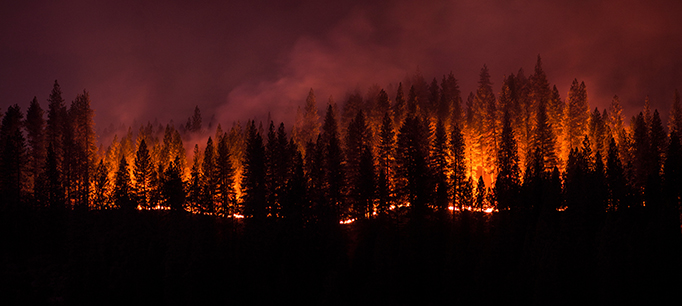
Yufang Jin: We’re seeing intensifying wildfires in California, especially in the headwater regions where our rivers originate. More intense fires have significantly changed the composition and structure of forest ecosystems, affecting both water quality and quantity—though not always for the worse. For example, large fires can significantly reduce the amount of vegetation covering the land, which reduces the amount of water consumed by plants. Burned areas also have much less water circulating in the soil. Both of these post-fire processes have a positive impact on streamflow, as more water works its way into the water table and streams. But the loss of groundcover plants from intense fires also increases surface erosion, which can cause landslides in the rainy season. Ashes and sediments flowing into streams harm water quality.

PPIC: What are catastrophic fires teaching us about managing forests, wildfires, and water in California?

YJ: They’re pushing us to use management strategies that recognize the relationships between forests, fires, and water supply. In the past most forest management focused on wildfire suppression. There’s now recognition that solely focusing on suppression led to unnaturally dense forests, which in turn led to larger and catastrophic fires. So now there’s a growing effort to use forest thinning and prescribed fires to reduce fire hazards. Some pilot projects indicate that allowing natural fire to thin forests can lead to increases in water quantity in the watershed as well. A lot of federal and state agencies are now emphasizing watershed restoration strategies that bring multiple benefits. They are paying more attention to approaches that reduce fire hazards and may also increase water yields.

PPIC: How will climate change affect the severity of wildfires in California?

YJ: All climate models predict that the warming trend will continue in coming decades, and will often be accompanied by drier conditions. There is consensus that with these conditions, we can expect more severe wildfires across California and in the West more generally. One of our recent studies showed that the average area burned in Southern California could increase 70 percent by mid-century. Another effect of climate change is that forests in the western US will become more vulnerable to drought stress, making them more prone to diseases and beetles, leading to greater tree mortality and more fires.

PPIC: What kinds of technological advances can help us improve watershed management in the state?

YJ: There are two technologies that can provide more informed water management. One is obtaining images from satellites with remote sensors to learn about ecological and hydrological conditions on the ground. The other is using big data analytics and cloud computing, which can help us interpret the huge amount of data you get from remote sensors and translate it into information that farmers and water managers can use and act upon.

Basically, remote sensors can be used to monitor factors like water temperatures, the range of particular plant types, or the amount of water being released from plants. You can observe relatively large areas over time in a cost-effective way. For example, remote sensors can help detect algal blooms and invasive aquatic species throughout the watershed. Water managers can use remote sensing to estimate how much water is being used by crops or by natural vegetation, and how that water use changes from season to season or year to year. It can also help figure out how ecosystems will respond to a changing climate or how changing land use can affect water use. For fire management, remote sensing can track when and where fires occur, how effective fuel treatment projects are in reducing fire severity, and how vegetation recovers after fires.

While there are no simple technological solutions for managing the effect of a changing climate, having tools like these will make it much easier to get the quantitative information that we need to develop adaptive forest and watershed management strategies.

Learn more

Read California’s Water: Protecting Headwaters (from California’s Water briefing kit, October 2016)
Read “Managing Wildfires Requires New Strategies” (PPIC Blog, September 23, 2015)
Visit the PPIC Water Policy Center’s drought resource page

Solutions for the Delta

California asks a lot of the Sacramento-San Joaquin Delta. This vast, watery landscape is expected to be the ultimate multitasker—a major source of water for cities and farms, a critical aquatic ecosystem, and a center for recreation and tourism. No wonder it’s showing serious signs of stress.

At the Bay Delta Science Conference last week, experts gathered to present and discuss the science of the Delta’s many difficult challenges.

Speakers focused on ways to make this science more useful for policymakers, linking data and decisions to come up with science-based solutions, and using them as the foundation for stakeholders to find common ground over contentious issues.

Felicia Marcus, the chair of the State Water Board, said more could be done to ensure that decision makers are engaged by the science they’re presented with. For example, she said the policy process would be improved if scientists made their work more accessible and intelligible, and were less reluctant to make recommendations.

Striking a similar note, Phil Isenberg, former chair of the Delta Stewardship Council and a member of PPIC’s board of directors, called for making research actionable by focusing on solutions instead of just defining the problems. Multiple speakers noted that experts who work in teams that include both natural and social scientists are more successful at providing a path forward for policymakers because of their ability to address tradeoffs and find “win-win” scenarios.

Peter Moyle, one of the state’s top scientists on fisheries and the Delta (and a member of the PPIC Water Policy Center research network), said California needs to emphasize solutions that provide flexibility in management. An ecosystem-based plan of action brings such flexibility, which is one reason he recommends focusing restoration efforts on a specific “arc of habitat” in the north Delta.

The event also honored Jeffrey Mount, senior fellow at the PPIC Water Policy Center, who received the Brown-Nichols Award for his scientific contributions to improving the management of the Delta watershed. His decades of contributions go beyond his work here at PPIC. In addition to longstanding engagement in key policy discussions on Delta challenges and California water more generally, he is former chair of the Delta Science Board and a founder of the Center for Watershed Sciences at UC Davis. While at UC Davis, he was also a coauthor on a number of Delta-focused PPIC reports, including Comparing Futures for the Sacramento San Joaquin Delta (2008), and Stress Relief: Prescriptions for a Healthier Delta Ecosystem (2013), which looks at ways to address multiple ecosystem stressors in the Delta while stressing the importance of considering the science, the institutions, the economics, and the law.

Ellen Hanak, director of the PPIC Water Policy Center, said, “This award serves as an example of Jeff’s ability to use science to improve decisions. The community of researchers, analysts, policymakers, and engaged citizens interested in the future of California water and the Sacramento-San Joaquin Delta is fortunate that he has chosen to devote himself to these issues.”

Learn more

Read California’s Water: The Sacramento-San Joaquin Delta (from the California’s Water briefing kit, October 2016)
Watch our short video on the Delta
Visit the PPIC Water Policy Center’s Delta resource page